Online Startup Office Hours - October 27, 2016
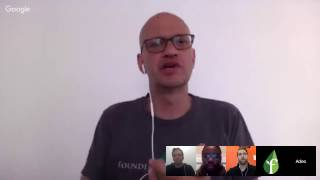
Adeo Ressi and Kevin Siskar mentor five founders pitching ideas from urban gardening hardware to fintech. They critique each on problem clarity, target customer, and revenue model, then push for concrete next steps like manual production runs and customer research before fundraising.
Chapters
Hello everyone, my name is Adeo. Welcome to office hours today. I'm joined by my esteemed associate Kevin in New York, and we're going to be doing office hours with various people who are thinking to apply to the program, have applied to the program, or enrolled. Let me do a second and introduce myself and the Founder Institute, then I'm going to turn it over to Kevin. This will give people an opportunity to stream in while we wait. My name is, again, Adeo Ressi. I'm the CEO of the Founder Institute. I've been a serial entrepreneur for the last 22 years and created about $2 billion in shareholder value from scratch. I can tell you that it's super hard, right? So what we've tried to do with the Founder Institute is make it easier for the next generation of entrepreneurs to build great businesses. Let me talk about that quickly and then pass it over to Kevin and we'll get started with your ideas. The Founder Institute runs a 3.5-month-long program with a session once a week at night. The purpose of these sessions is to help founders build world-class technology companies. Each session, 3 CEOs come in and talk to the founders about their experience building a business. Then the founders are given work to do and all the sessions follow curriculum so you do work in logical order. And then last but not least, you're paired up with peers. That combination of mentorship structure and peer support leads to very good outcomes. Well over 80% of every company we've created worldwide is alive, 70% are doing well, and over 50% are funded. Let me turn it over to Kevin quickly from New York. Kevin, why don't you introduce yourself and then we'll jump into the agenda and getting through some companies. Maybe you can tell a little bit about New York and the deadlines.
Definitely. Hey everyone, my name is Kevin Siskar. I'm the managing director for the New York Founder Institute. Part of what we're doing in New York is we're really ramping up, running full-time. We do about 2 to 3 semesters a year where we've helped countless startups now, really do what Adeo just said, get from beginning to end, right? So if you're pre-seed, if you just have an idea, anywhere in there, we'll help you get incorporated, set up, grow, and really build that solid foundation to launch from.
Awesome, great. Well, that's exactly our objectives here. So let me talk a little bit about online office hours. And we'll allow anyone to submit their one-sentence pitch and biggest question facing their business, as well as what they think their next steps are. We're going to review that, hopefully with video, so fingers crossed that it doesn't suck. And then we'll start— Kevin and I will start talking about it, giving you some feedback. Now, you selected 5 founders to present. You're more than welcome to chat about the companies, and we're also going to be trying to answer questions that come through the chat. So this is— even if you don't get to present on video, um, you're certainly going to get the opportunity to ask questions. And if we have time at the end, we'll go through some of the people that are submitting other businesses in the chat as well. Um, okay, each person that comes up— so we're going to call up these 5 founders that have been pre-selected— will have about 60 seconds to describe their business. My timer phone is over there, but we'll figure out a way to time. You gonna time 'em, Kevin? [Speaker] Yeah, I gotcha. [Speaker] Good. And then we're gonna just have an open discussion and give you some feedback. So, and we're gonna look, as I said in the beginning, for everyone who's on these 5, plus anyone else who's there, we're really looking for the questions of the pitch, the biggest question you're facing, and what do you think your next steps are. So Zachary, you wrote a great submission and we got referenced. We want to hear your pitch, so why don't you come on screen? Are you there?
Yeah, thank you so much for having me.
So you got 60 seconds and then we'll start giving you feedback.
Alright, I don't think I'm gonna need 60, but— so my company, Grow Squares, we're developing a gardening platform to help urbanites, really people in the 100 largest cities in America that have outdoor gardening space, grow better plants and vegetables using data gained exclusively from their phones and from cloud data as well. So my big question right now right now. We've made a few of these things, about 20, 25. We're constantly iterating, but I make them by hand, me and my co-founder. And our real big question now is about scaling up. How do we scale production?
Um, okay, so that's, that's your question. Um, what do you think your next step is? I would guess it's production, right? Getting to production.
Yeah. So, it's a two-part platform. So, there's both an app that identifies essentially the microclimate of any user, and then the end result of the data gleaned from those sensors, stuff, is a custom-tailored, I guess it would be called a garden topper. And they're a foot by a foot by a foot, put them right on top of, you know, whatever exact spot you want to garden, and contained within are all the remediative properties that—
okay, you were going over here. Don't over-answer, under-answer.
I apologize. Sorry, it's one of those feedback.
So we did well on time. We're going to try and give each person, you know, a few minutes, but not, not like 10, um, because we want to give time for everyone watching to ask as well. Uh, I'm happy to go first, but Kevin, uh, you're, you're the guest of honor in many ways. Do you want to, uh, do you want to start with your feedback and I'll go second.
Sure. So, um, just like feedback on the real quick pitch, I didn't totally understand what exactly the tech was. Um, so maybe just a little more concise on that answer. Um, I know urban farming's on the up and up. I, I like that it integrates both the cloud and the phone data. I want a little— know more how— I'm assuming there's an app that works with a piece of tech that you're putting in these urban farms, is that correct?
Uh, for the most part, um, it's— yeah, why not?
Okay, all right, so we— okay, sorry, keep going.
Yeah, yeah, no, uh, so I guess I, I just wanted to be a little clear on what, what the business was from the pitch. Um, as far as scaling production, um, that's definitely something that you're just Like, you're gonna have to figure out— have you got any quotes yet?
I'm sorry, can you say that again?
Have you reached out to anyone? As far as scaling production, have you got any quotes or anything yet?
So we've met with some co-manufacturing facilities. Oftentimes they have minimum orders that are just tremendous. And we do have some LOIs, but nothing of the scale that these guys need to make. We've taken a look at, you know, small-scale production, doing things like shipping containers, partnering with, you know, perhaps some people, but but we're talking about minimum order sizes that are tremendous.
Right, all right, so let me— Yeah, so let's just follow a little more structure here. So I would say the pitch was so-so, you know, 'cause if you look at the pitch, the biggest question and the next steps. So the pitch was so-so because even though you've added some information, as Kevin indicated, I still don't really know what you do. Right, and I actually have no idea what the business model is. You're making something that you sell, obviously you make money there, but then like in theory, that's like one-time sales in theory, and you have an app that helps it. I don't know if you can monetize the app, it just seems like it's like a necessity to have alongside the product. My guess is that you need, you'd want some sort of subscription income to make it really interesting, right? And so, but that wasn't brought up. So that, my first thing is like, I don't know what it is. So I get it that it's a thing and I get it that you have the phone, but is there any tech in the thing itself? Is there anything that might be a subscription platform or some way to make money beyond the first sales? All that stuff was out, and that's pretty important stuff. So I think the pitch is a long way to go. And then that leads to sort of, you know, biggest question, what's next? And, you know, Kevin and I can banter about this a little bit. So yeah, if you— the minimum order issue is a problem. I think you would agree with that, right, Kevin?
Yeah, I mean, if you have letters of intent, It totally depends on how big of a scale. You might not be able to hit that scale right off the bat, right? You might need some, some smaller orders like Adair was saying, and that might impact the way you manufacture it early on.
Right. So my guess is you're not going to be able to go to the manufacturers. Well, okay, so let's, let's take a step back. You've got supply and demand, right? And so most people who build hardware-based businesses sort of do a bit of a seesaw where they build demand and they build supply, then they build demand and they build supply. And so they're always a little over- or under-optimized because, you know, they build supply at a certain point, then demand goes over. Now they're under-optimized because they can't produce quite enough, so order volume or order delivery times slow down. So you're always going to be under-optimized. But, you know, I think just hearing what you say, I think you're, you're exactly right to continue manufacturing them by hand until you have better product-market fit and a more viable long-term revenue model, because you can probably scale up your by-hand manufacturing to quite a few a day. You get a small warehouse or something like that, you hire some people, uh, and you really start working on, uh, little manufacturing, uh, plant, if you will. And then once you're getting a few a day and your demand goes above what your own manufacturing can handle, then you scale the next level. But that's not what I would worry about right now. What I would worry about right now in your shoes refining all the other pieces of the business that make it long-term viable. Do you have some sort of subscription model figured out yet?
There is no subscription model. The problem— oh, the thing is the nature of these plants, they are seasonal. So after one season, essentially you are done. Now, at a certain point, you have remediated the soil entirely, and then we are going to start pivoting between becoming a data player more of a data broker. These are— it's a network good. So we're able to identify what's going on with some of your neighbors, if there's perhaps disease vectors that we can analyze early on. And so that's a—
but I mean, you just said if it's seasonal, I mean, what are your thoughts, Kevin? I mean, it would seem to me like you can make a subscription business.
Yeah, I mean, I think if it's seasonal, you could, you could do a subscription business. And I would also think about I mean, it may be seasonal where you are currently, but seasons change everywhere, right? So think about where you can go and take it when the seasons aren't in peak, you know, maybe where you currently are, right? So it might be worth taking some of your time looking at logistics and thinking about how you can get this to other areas, other geographic areas, to eliminate some of that seasonality out of the business and keep recurring subscription revenue going a little more frequently.
Right, but I mean, in terms of subscriptions, so Kevin's point about seasonality is right, that like people may not buy this in the winter, but if you go to Arizona, there is no such thing as winter, right? Winter is actually like summer everywhere else, and summer is like hell. But back to the point, the seasonality though in places where there are seasons is very good because you can send them seeds and nutrients for the soil in theory so that they can grow different things. So I think seasonality could be your friend. Hassan from the audience had a question: most folks that garden are older, how are you tackling the age equation since most would be tech adverse? Which is a good one.
So the platform, it's not discrete part of an all-in-one kind of encompassing product. So we've actually made things much easier for our older audience. They are actually some of our first users, and they're much more excited, I think, than some of the younger users because both in terms of the ease of which they can transport things— they don't have to run to the store, everything is shipped to them— a lot of the complexity and difficulty about what to choose is taken out. So we've actually had a good number of, or a lot of interest into older gardeners who are revisiting the platform for the first time in a while. They've stepped away because of difficulty. For people who are really good and know what they're doing, we're not the optimal play.
Right. Well, let's go back then. Here's my final recommendation for you. Would be as a next step. So I would say in terms of your question, continue the manual production for the foreseeable future, and if you need to ramp it up. But really, in my mind, the next step is for you to be thinking about a viable long-term revenue model, and the most likely way to go for that is some sort of either recurring product sales or subscription. And Kevin, I don't know if you want to add anything before we move on to Bobby— I mean Patrick. So Patrick, you're next.
No, I think I pretty much just second what you said there for next steps.
All right, good luck, keep it up, and think about model, model, model, model, model, model. Because if you're going to ramp up that local production, you're going to need to make money. Alright, so we're going to Patrick next. We were going to go to Rahul, but he's experiencing some connection problems. Patrick, you want to come up?
Hey guys, how you doing?
I see you, Kevin. Here we go, Patrick. There you are. Cool. Alright, Patrick, so you're artistpreneur. You got 60 seconds. Tell us your one sentence pitch, your big question, and the next steps in your mind. Cool. So Artistpreneur is a platform for artists to learn how to monetize their talent. I think this question is how to find, you know, independent/aspiring artists who may not be on a platform that you can just find emails for, like most B2B type of, you know, business personnel. My next step is to, you know, create an ebook, um, some sort of artist roadmap, how to do the basic steps to license your music or release it or publish it or whatnot, things that people don't know. And then create a newsletter format, uh, to just have consistent content and grow my— And what, what's your biggest question? You kind of skipped over there. What's the biggest question you have? How do I find individual, um, independent or aspiring artists, because websites like Advertising Workbooks, you know, you can get contacts for people at companies, you can always find different resources for, you know, those types of people, but someone who's just interested in art, you can't really— Yeah, we got it, we got it, we got it. All right, um, do you want me to go first since you I went first last time, Kevin?
You were right on 60 seconds, actually, so you were pretty good. Yeah, you can go first today.
OK, so we got 3 components— the pitch, the biggest question, and the next steps. The pitch wasn't very good. Your written pitch was better. So you've got a lot of work to do. Like, I presume you're in New York, yes? Yeah. Okay. So, you know, finding aspiring entrepreneurs in New York is— aspiring artists, excuse me, in New York is relatively easy. So I'll come back to that in one second. So you got like, if you want to help aspiring artists get better, get more contacts and get this. So really you've got to state what their problem is in your pitch. So I'm going to go through your pitch and answer the question and give you some next steps. So if I were you, I would say, you know, in America today, 5% of the population or, you know, some, maybe even 10% of the population, about 20 million people, excuse me, 37 million people consider themselves aspiring artists. And for many of them, they struggle with the next step in their career in order to make money from the craft. With Artistpreneur, we're providing X, Y, and Z to help these 30-something million aspiring artists in America sell work to use it, how it works for buyers, blah blah blah, whatever you're doing, right? So now what have I done there? I, I don't know what you're doing, but what have I done? You start with your audience group. How big is it and what is their problem? Okay, then you've told— you tell me what, what you want to do to solve it. So we're going to create a roadmap in their career so that they can whatever, sell more work to galleries, sell work to consumers. I don't know what it is because you didn't tell me, so I would just be guessing, right? So once I know who your audience is and how big it is and what big problems they have, then you tell me your solution, right? And how it solves their problem. And then last but not least, you might want to sprinkle in how you make money. So you might want to say, and we, We give it away. We understand that the starving artist is a real meme, so we give away the product for free, but we take 10% of anything that they sell, um, after going through our program. Right now, I don't know if you do that either because you didn't tell me, so I literally have no idea of the market you're serving, what you're offering that market, or how you're making money from it, but I made those guesses. Now quickly, I'll go through the biggest questions, next steps. So again, finding aspiring artists in New York, which is like one of the art capitals of the world, if not the art capital of the world, is very, very easy. You just go to— I mean, there's gallery openings. You wouldn't— I wouldn't even go to gallery openings in like Chelsea I'd go to like gallery openings in like Brooklyn, right? Because if you're in Chelsea, you've already made it. If you're at some bar in Brooklyn, you're 20 steps away from Chelsea. So that's easy. And in terms of next step, you had this thing like some sort of artist development. I mean, what I would do is go to some art show in Brooklyn, right? Find a bunch of aspiring artists and help them, right? Be like, I'm just going to be your— your helper, right? So I'm going to help you become more successful, right? And so maybe you find 10 of these people and you work with them day in and day out, and then you take that learning and turn it into a process, and that's your business. Right? I don't know, Kevin, you might disagree with some of them, but shoot with your thoughts.
[Speaker:KEVIN] No, I— so we had one of our— we had the New York grad meeting last night, and we had one of our mentors come in and talk. And he tells a story how he got started. He literally just went to meetups, he hung around when they were over, maybe it's a gallery opening, right? And like, you know, someone, whoever's running the event probably needs help. And he just started putting up, cleaning up the chairs. And the guy running the event was like, what are you doing? He's like, I just want to help. He's like, okay, alright. And he just kept helping, and eventually they built a long-term relationship. The guy ended up hiring him, and now he has an email list of 100,000+ people, and that was the start of that long-term relationship, right? So definitely do events. There's a thing here in New York called the Internet Creators Guild, which which is an association of all the internet creators. So I host a podcast, I'm a content creator, so I'm a member of that. And then the other, so you could check out that. And then the other thing too is think about from a tech perspective, from a scalable perspective, what can you offer content creators or artists, right? Maybe it's a tool. So I know there's a tool called Social Bluebook, which lets people figure out how much they're worth for sponsorships, right? Which is something a lot of people struggle with. So maybe it's how much an artist should charge for a piece of art or gallery opening, right? So think about how you can publicize that information in an easy and efficient way. And I think you'd be surprised how much gravity you can create around yourself and your business.
Yeah, that's a great idea. Especially— sorry, finish your point. That was a great idea, Kevin.
Especially in New York. That's what I was thinking.
Yeah, so Kevin had a couple great suggestions that I just want to double down on. So the meetup platform itself, and you didn't actually, you implied it but you didn't say it, is in New York, I think, is where they have the most members, millions and millions of members, right? And there's artist meetups as well. So there's like crappy bar gallery openings and then there's like artist meetups. You can go to the artist meetups, and that's right, that's a great idea, Kevin. And then I'm going to take Kevin's idea of some sort of blue book tool for what you should charge, but I think Kevin's exactly right to find some sort of tool. Like, once you start helping these artists, turn it into a tool, but you're only going to know what to build after you've actually worked with them long enough to see what their hardest problems are. And you really can't work with one or two. It needs to be like 10, right? Because one artist might be good at business and the other artist is not. One artist might be good at sales and the other artist is not. So you've got to try and find some common problems between different artists. So that you can build your product around that. Now, I wanna— is anything else you want to add, Kevin? Or we're going to move on, uh, we're gonna keep the, the, the train running on time here with Bobby. But anything else? No, we're good. All right, thank you. Good job, Patrick. Bobby, come on in.
And if you—
audience members, we gotta 30-some-odd people on here. If you have a question, please don't be shy and pop it open. So we're into the chat and the team will relay it to us and we'll get it out there. Bobby, are you there? Can everybody, Kevin, can you hear me?
Can you hear me now?
I can hear you.
I have my mic muted too. We can hear you now. All right, there you are, boom, hey Bobby.
How you doing?
So 60 seconds, your pitch, your big question, and the next steps.
Okay. My company Spree is developing an iPhone app that helps fashion-conscious women discover and buy ready-to-wear outfits on their phones through live shoppable videos curated by their favorite style bloggers. Our biggest question is which VCs or companies have an interest in investing in the retail space, specifically social commerce or mobile commerce. And our next steps are to launch the app this November to earn some revenue to show some traction, grow our user base, ramp up our digital campaign, and then eventually raise funds so that we can develop for Android.
All right, how, how's he doing on time? It seemed like about 60 seconds.
About 5 seconds left, so pretty good.
So anything you want to add there, Bobby?
Um, just milestones that were our milestones that we want to reach in 12 months. That's about it. No, we want to get to about—
well, we don't need to get there.
Oh, okay, then that's it. That's pretty much it.
You're gonna be good. Good. All right, um, Kevin, I went first last time. Please, uh, you run, you run the, uh Spanish. Yeah, so I think what I—
Bobby, what I would like to hear a little more is a little more differentiation. Um, so what I pulled out of it was curated fashion styling e-commerce app, um, which is, which is great. There's just a lot of it out there, right? So I need to know a little more what the differentiator is. Maybe it's the level of curation, right? Maybe the curator is, you know, Emma Roberts or, or Gigi Hadid, some celebrity. That's unique, right? But if it's just really a curate, you know, it's curated by maybe you guys and there's fashion on it and you can shop stuff, I didn't really understand how that was any different from like an e-commerce store or any other, you know, buying at Zara or shopping at Lord Taylor online, but through an app. So I just wanted to hear a little bit more about the differentiator. And I think that's what a VC is gonna wanna see too, right? So your question, which VC firm or company has interest in investing, you're definitely gonna have to nail that differentiator before a VC will take interest. But they're out there, right? There's XRC Labs here in New York. They invest in fashion tech companies.
Ecstasy Labs?
Yep, yep.
So they're definitely out there. You can definitely find them. Check out Crunchbase and some other places. But Adé, what do you think?
Well, okay, so I'll go through the three. Okay, starting with the pitch, I pretty much agree with everything. Kevin said. I would, but I liked it a little bit more than it seemed like you liked it.
I hear French all day in New York, so that's probably why I'm a little burned out from it.
Yeah, yeah, yeah. So, okay, to be fair, that's exactly right. So I'm more of a Silicon Valley guy, Kevin's more of a New York guy. Fashion, by the way, and art are big in New York. They are not big in Silicon Valley. Some people think they're big in Silicon Valley and they're wrong. But back to the point. So I don't hear these type of ideas as frequently as you do. What I liked about it— so what I liked about it was you're going after like video phone cell. Right, and ready-to-wear. What I don't like about it, so that's pretty compelling. You didn't really get in, and Kevin sort of referenced this about your target market. Remember how we were just talking about this artist scenario and now we're in fashion? So like you said women and you said, I believe, stylish women, but like, you know, You know, that's almost an oxymoron. I think every woman in the world wants to consider them, I mean, self-stylish, like every man in the world wants to consider himself handsome. So you need to be more precise in your demography. So is it young professional women? Is it, you know, older affluent women? You know, then you can be precise in age range, you know, 18 to 30-year-old, young professional women. You know, the problem with that is that, you know, so you brought up fashion bloggers, right? If you're— most fashion bloggers that I've seen, and we've had some grads and mentors in the fashion blogging space, they tend to be on the younger end, like 35 and under. So, you know, it's an oxymoron if you have fashion bloggers making videos and you're going after 45-year-old women, because most of the fashion bloggers that I've seen, again, are 35 and under. So you're really looking at, if your content is coming from fashion bloggers, your audience is probably who they target, and they tend to target, you know, 18 to 30-year-olds.
I thought I said young.
Did you hear young, Kevin?
I thought I said young. It's young fashion-conscious women. Actually, our target market is 20 to 30.
You wrote it in there, I didn't hear. Okay, 20 to 30, exactly. So say 20 to 30, you know, I would say fashion-conscious working professional women aged 20 to 30, right? That's boom. And okay, now the other thing that, so then you have a channel to market issue. And I would say there, since you're going at the fashion bloggers are producing some of the content for you, so they may also be your channel to market, and you could probably fit that in your one-sentence pitch as well. On the big question front, I agree with Kevin 100% about you've got to be differentiated to be interested in VCs, but you're not VC ready. I mean, a VC's not going to fund a fashion company. Until you have, I don't know, like at least $1 million a year in gross revenues, at least. And the problem is if in your particular way you're doing business, $1 million a year in gross revenues is like $100,000 a year in net revenues. So that's not a lot. I mean, you might need like $10 million a year in gross revenues before you could go to a VC. Which would be $1 million a year net revenues, right? So I'd be, or something like, some ratio like that. Maybe it's 15, it's 10 to 15%. But back to the point, so you're gonna go after angels first and angels are gonna look for, and you can go to AngelList or GUS or one of the platforms to look for those angels. But angels are gonna wanna see the product because of what Kevin was saying about differentiation. And then, you know, launching this holiday season, I mean, yeah, I mean, the holiday season is starting in a month, less, less than a month. And are you close?
Yeah, we actually developed the app and we use this similar technology to what Periscope uses at Wowza, and we're in the top 5 of the contest that Wowza's having that's gonna be announced in California on Saturday, see if we win their contest for implementing live streaming technology. So they're using it right now, they're testing it, we just started a pilot program testing with that company, Style Bloggers here in New York. We've been getting Style Bloggers on the platform by reaching out to them individually and having them communicate with us, sending us their phone numbers to download the app through a link. They're creating content. [FOREIGN LANGUAGE] What differentiates us is that we create all the brand relationships already and all they do is when the style bloggers blog, they pick the clothes from whatever brands. Every store, Barney's is on board. And when people watch their videos, they can touch right on the screen and buy them right on the screen, it ships right to their house. Rather than going to different apps.
Yeah, so actually, my fiancée is a fashion blogger, colorsofcaroline.com. And no, it's interesting because in that space, like to know it is the big thing. For those that don't know, you like a photo on Instagram and you immediately from liking it get an email in your inbox with a link to go buy, right? So I do like that that's the direction the tech is heading in. But—
Can I say something, Kevin, about that? We actually took— we took Instagram, Like to Know, and Apple Pay, and we integrated it all into one app. So instead of when Style Blogger goes and puts that link into Instagram and clicks on it and then waits for their— while it waits for email, when the Style Blogger is actually talking or taking a picture of the product right on the screen, their followers can just press on the screen right on the item, and Apple Pay will drop that. Boom, and it ships to them, and that's it. And the style blog gets a commission.
It's interesting. It's actually pretty compelling compared— so you should think about baking some of that into your pitch, right? So upfront, people understand what makes you different and not just another e-commerce app, right, where you buy things. And then just doubling down on what Adeo said, definitely think about how you can find some angels, angel list, just, um, and go that route first. Friends and family, then angels, then VC.
Yeah, the other thing I'm gonna— the final thing I'm gonna add though is, um, so you've got a problem in that you're in the affiliate business and you're actually sharing the affiliate revenue, so you're actually getting a relatively small portion of a small portion because affiliate percentages are small and you're splitting it or whatever you're doing. So you're getting a lot less of it. So you're double small. That's gonna be very, very hard to scale. So you're not gonna, you know, what I would say is prove that you can get lots of users. And while you're doing that, you better figure out another way of getting out of the affiliate revenue stream because, you know, taking a small piece of a small piece is just generally a bad business practice. So you're not gonna be able to successfully raise angel and certainly not venture capital until you have, you don't need to have solved the problem, but you need to say, here's what I would say if I were you. Right now we're launching and we're working out all the tech and we're collecting affiliate revenue and sharing it with our style bloggers, but eventually what we're going to do is take possession of inventory that we know is popular at a wholesale rate and we're going to keep paying the style blogger their affiliate revenue, but now we're going to earn 30% versus 6% because we're buying wholesale and selling retail, right? Unless you have a plan like that, you're going to be in a lot of trouble. Definitely.
Yeah, yeah, because we've been— when we first started this, we would go right to Barney's, we'd go right to the major stores and talk with them and find out all their problems. So that was the issue. They want us to really prove out that there is actually a market for this because those stores are already creating Their salespeople create profiles on their pages. They also send out—
Yeah, but stores aren't going to be good for you because their overhead's way too high. You'll need to eventually go wholesale to get the kind of margin to build a true e-commerce business. Abby is next. Thank you very much, Bobby. That was awesome.
Thank you guys. Appreciate it. Awesome.
Yeah, yeah, yeah. Let's hear what Abdi has to say. Abdi, Abdi, I'm sorry, Abdi, Abdi, are you there? I see Bobby. Now I'm—
You might have to unmute yourself, Abdi.
Control room. Earth to control room.
Hey, can you hear me?
We got him.
Okay, how do you say your name? Abby?
Yeah, it's Abby.
Abby, okay. Sorry about that if I got it wrong. 60 seconds. One, one, your pitch, big question, next steps.
Boom, let's go.
All right, uh, my company WeNurture is developing a web application that helps engineering leadership from like engineering managers to CTOs at small to mid-sized tech companies confidently onboard, train, and grow their junior developers with a practical curriculum of best practices like regular check-ins, mentorship, and access to a community of other fellow junior developers. So my biggest question is like, how can, how can we prove, given that this is just an idea for me now, that there is a market for the solution and the size of that market? For me, the next step is to interview my target audience and like collect a lot of like customer data on whether they feel this pain enough.
I can take this one first, Kevin, because you went first last time. Well, I like the market space. I think so. Look, so we'll start with a pitch and go through your question and then the next steps. I like the market space, okay? Very, very interesting. You know, like onboarding in my view is the most important piece of hiring. And, you know, every hiring platform is very transactional. It's like you got, oh, you got the guy or the girl, check, done, we're out, right? It's, you know, and they make money on it, right? So it's either they get paid per head or paid per post or paid per lead. Yeah, so the monetization is very easy to do if in the recruiting space on the getting the candidates. Then the candidates come in and the onboarding is really bad. So I think your market space is very interesting and very smart. Um, the, the— but with that said, I still think your, your, your pitch could be improved greatly. But to And to be fair, the way you would improve it is through customer development. So you basically got 3 types of businesses in the world, small, medium, and large. And then you got all sorts of sectors and everything else, right? Generally speaking, small businesses are hard to sell to. Medium businesses are a little easier. Big businesses are also hard. So it's a bit of a bell curve, right? Now, if you're selling, my guess is that your small businesses have the problem, they don't have the money, they're hard to sell to. So you probably want to count them out. Big businesses, the sales cycle's too long, blah, blah, blah, they probably have some solutions. So you're really going after sort of larger versions of small businesses. So really it's called the SMB market, but you might be going after just the S. For medium-sized businesses.
Okay.
And then I would go into industries like, because you said engineering leadership.
Yeah.
But, um, what type of medium businesses have engineers, right? They're probably like mid-sized technology companies, right? So I'm going to help mid-sized, uh, you know, the CTO. I would even go more precisely and say I'm going to help the VP of engineering or the lead engineers at mid-sized technology companies onboard their employees by blank, blank, blank. Yeah, right. So just get really right in there. Engineering leadership at mid-sized technology companies. Okay. Now that's all back to your biggest question. That's a hypothesis that they care about onboard. Yeah. So, but once you sort of forge that hypothesis, Right? That's when you go start interviewing, right? Because the purpose of interviewing isn't talk to as many people as possible and figure shit out. The purpose is you have some sort of model in your mind. It could be loose, very loose, like onboarding is important, right? Well, onboarding, who onboards people? Sometimes it's HR, sometimes it's the division. So You know, I might even go in, but let's say, you know, that selling the small is hard and selling the big is hard. So you're going to go to medium. I'd go to medium-sized businesses and I would interview their HR people and I would interview their engineering managers. And I would start with something like, how important is onboarding in your organization? Do you think you do it well? What are some things you wish you could do better when you onboard an employee? What are some, you know, success stories of onboarding? What are some failures of onboarding? Right? And now when you ask the HR manager that, and when you ask the engineering manager that, you'll find out who has the bigger problem. You probably will find out who has the budget. Yeah. Right? So, so I think generally you're correct, but you need to be a little more specific with a hypothesis, and then you take that hypothesis into an organization and test it with your questions. Kevin, do you want to go with anything? And audience members, if you have any feedback.
I have a bunch of notes, so I'm actually going to expand on what Adair said. So So to your question, right, how can I— how can you quickly prove there's a market for it? Everything that they have said. And then also, like, point to your competitors, right? They're probably million-dollar businesses for a reason, right? So you can use that to point to them. One of those— and so some of those, I would say you're most accurately described as a learning management system, what a lot of people call LMSs from an HR perspective. So someone in the comments here, I think it was Craig, said this would work best if you could customize the content. So we actually have one of our FI New York grads, Pathgather, does just that. They're learning management system that is customizable by leaders within the organization. Yeah, you could use it for onboarding, but you can also use it for bigger things throughout, throughout the industry. Now the reason I say that is the current industry is owned by like Taleo, which looks like it was built in 1991 still. And like 2 other people. So there's plenty of room for disruption. It's a big market. But the reason I say that about Eric's company, Pathgather, is you need to start niche, like Adeo said. So you're starting with junior developers, but then you need to sell the larger vision, right? Think about how you can grow beyond that using the same tech and replicate it, right? So after you master junior developers onboarding, you're then gonna go to onboarding, you know, the next, the next table, the next desk over, right?
Right.
You know, the product manager, and start scaling that way, and then show a clear path from where you're starting niche to where the larger vision is, and really be clear on how you're gonna get there as the company grows.
Okay.
So how does something like Greenhouse fit in? 'Cause I mean, I've been part of like small startups, small meaning like 50 people or less, and like, and like larger companies—
That's not small, by the way.
Sure, yeah, so that's a medium-sized—
Medium-sized.
Great, yeah, so like, and so like, and a large company with like thousands of employees, and like, when, how do they afford something like Greenhouse at a smaller organization? Like, if I'm gonna try and be like, okay, Greenhouse does this much, but then this is handing off from Greenhouse and giving you—
Why do you think you need to go to a smaller organization?
I just want, I want to go, I was thinking of going there first because I feel that they have this pain of like, they, especially smart tech companies that value culture, where I don't have to sell them on the value of onboarding. They want onboarding. They just don't have time to execute it. They just like, I've been part of organizations where like, no, we want to do an onboarding system, but it's just like, it's, it's not prioritized.
I think it's less about the size of a company and it's a lot more about the culture of a company. Company and finding those ones.
But you just said something, hold on, I don't want to lose it, Kevin. He said he just spoke with people and they said they care about onboarding. He said the same thing, that it wasn't a focus of theirs. That's a problem, right? If you're getting that feedback, that's good market feedback. Now, If you go to 3 people in an organization and you get that same response, then, you know, you can pretty much count out that company from being a customer, right? If you go to 5 companies in the space like that one and you get the same answer from each of the companies at 3 different people you talk to, yeah, you can pretty much count out that sector or industry. Right? And this is— this now, that doesn't mean you shouldn't do it. Yeah. But it definitely means that you're going to have a much harder time at it. Right? So, Kevin, I didn't mean to cut you off, but that was an important thing that he just said there that I didn't want to let slide by. Yeah.
No, it's great.
I was done anyway. So I think that's great. Do you have any other questions, Abby?
No, I think we talked about everything right now. Actually, you know what, I wrote some down. So I totally wrote down that we could expand from just like junior development onboarding and I was trying to think of it more like, I totally understand the LMS and I heard your podcast with like Eric on, I totally saw that, but I was thinking of it more like a, you know, regular check-in and then provide like data and value that your employees are happy that, you know, that doesn't exist now.
And, and, and—
well, that's not true. Employee satisfaction stuff exists ad nauseam. I think if you can take your assessment and onboarding and combine them so that assessment exists for sure. There's 360-degree review tools, all this type of stuff. Yeah, but if you do some assessment and onboarding, so you could say, hey, the onboarding system worked, look how happy people are. But this goes back to making the market versus selling. Um, okay, so I was going to make a comment on this Um, when I interrupted Kevin, uh, sorry about that. Uh, so if you go to a bunch of companies and they all say they don't want it, yeah, and therefore you don't think, uh, you can sell it, you could make a market by making a market, but it's not necessarily recommended. You would essentially have to do a lot of writing. I saw Craig was taught— some people in the chat were talking about this— that you have to, like, publish articles and write ebooks and do studies, and then you've got to, well, maybe run a conference, and then you convince all these engineering leaders onboarding, and then we're the onboarding product.
Yeah.
So boom, you sell the product. Now, that's great, except it's really hard to do. Yeah, right. Now, it just takes a lot of time and effort. So you put 5 units of time for 1 unit of sale, and then what you hope is that, like, you're doing all this building of the market, that— and usually what happens, unfortunately, is the first person that builds the market gets decimated. Because they spend so much time and money making the market, then a competitor comes in, it's like, oh, look how easy it is to do that. They clone you.
Yeah.
And then you're, you know, and they don't have to spend all the money to get the customer acquisition. So it's just, it's brutal, uh, for you now. So I don't necessarily recommend doing that. So what I recommend doing very strongly in your case is do everything in your power and find someone who really wants what you want to build. And if you can't find them, then you need to change what you want to build. All right. I see some people are asking about pitching. Any other final feedback for Avdi? Because we're going to do Rahul via text because he's having trouble getting video connection. Any other things, Kevin?
No, no, pretty much sums it up.
All right, thank you.
Yeah, of course, don't run, we got some more coming on. So I'm gonna put your good-looking mug up, Kevin. Do you want me to read the Rahul stuff, or do you want to read it?
I can read it.
I got it.
All right, you got it?
Well, I went first this last time.
How about this?
I went first last time, so I'll pretend to be Rahul. And then you go first with the feedback, all right? So, um, my company Studio 6 is developing a mortgage servicing platform to help current mortgage servicers, such as banks and REITs, to service mortgages over a 30-year time horizon effective and efficient now. Uh, my big question is, how can I set up and implement the technology platform needed the service mortgages. And then the next steps, I believe I should start interviewing my target audience.
Now, um, that's a great question, Raul.
My team members have posted, uh, the, uh, pitch into the chat so you can follow along. Raul's in the chat. Uh, Kevin, why don't you go first with any comments?
So fintech can be really hard, right? Uh, There is so much, there's so much regulatory and you need so much money upfront just to overcome that regulatory before you can even launch. I mean, we're talking sometimes hundreds of thousands of dollars. Um, so how can I get set up is kind of a loaded, loaded question because there's a lot of nuances there. So I would say first find a good lawyer, someone or a mentor or advisor who's been in that space, knows some of those regulations and can kind of help you distill them. Here in New York, there's plenty of Wall Street guys. We see, we see a lot of fintech companies. And then as far as servicing mortgages, I mean, for more of like a customer acquisition perspective, again, kind of going to what I said earlier with the artist, right? I think it's, it comes down to building some sort of tool, right? That makes it easier, makes it easier to get a mortgage. There's a lot, there's a crowded space. I know there's Quicken has that Rocket Mortgages or something. There's a lot of other tools. LendingTree has some stuff.
Rocket Loans or something.
Rocket Loans, that's it, yeah. So I think maybe taking a look at those, thinking about where they fall flat and trying to find those holes and really out-execute them is something that you might need to have to do.
Okay, so let's talk some turkey here, gobble gobble. My, uh, I'm gonna act— agree with everything that Kevin said and go one step further in that, um, it's hundreds of thousands of dollars in regulatory to launch, just on regulatory, not on anything else. And it could be millions and millions of dollars on regulatory if you got into scale. So, um, here's the problem though. So let's start, let's go through the pitch the big question and the next steps. So my concern with this is, um, your— the way you're pitching it does not demonstrate mastery of the marketplace, which is also evidenced by your questions. So just to give you a sense here, um, uh, the, the Like you're saying that you're going to help mortgage servicers, banks, REITs to service mortgages over. So here's what the problem is. Mortgages get sold.
So I'm not—
I understand what mortgage servicers are, but like, and I'm not sure what you mean by service mortgages. Are you talking about collecting the income? I mean, And then, by the way, so these businesses become very nuanced very fast, and you sort of, you say, I mean, your pitch says we're gonna help mortgage servicers service mortgages, you know, okay, but the mortgage servicers service mortgages in like a lot of different ways, right?
A ton of different ways.
Right, so you could actually, you should be a little bit more precise, and then that goes right back to what Kevin was saying, because there's a lot of things you can do that are regulatory permitted, and there's a lot of things that you can't do, because without getting very expensive licenses, permits, et cetera. So, you know, I would be very, very, very precise in this, in this, in this, and this goes back to some of the other feedback that we gave There's no such thing as a mortgage servicer, right? There's a woman or a man with a job that has something that they do and they need help with. So I would say, you know, I would help the collection officer, or I help senior collection officers at banks that service over 1,000— and regional banks that service over 1,000 mortgages per branch, right? Get an overview of their mortgage portfolio and give them detailed analysis of default risk. All right, now that's pretty precise because now you're talking about a person who has a real problem and you're really helping Right. So until you can get that to that level of precision, you talk about doing customer interviews, but that's not going to be very helpful. So we got a few more minutes. Let's take some questions. We got one from Abhinav. Do you have anything you want to add on that?
No, that's pretty much it. You want me to read this one and then you can go first?
Okay, perfect.
All right, cool. So the question is, how do I quantify my market of employers whom we help to hire tech talent cheaply and quickly by giving them access to a pool of pre-assessed and pre-trained candidates. And I think it's also in the chat there.
Yeah. Tech talent seems like a cookie in there. Well, that's pretty vague because again, like it could be pre-trained chefs for like fast food restaurants or it could be pre-trained technical talent for tech companies. So I always like— this has actually been common and this is one area the Founder Institute will help you guys. So if you haven't done so, I recommend that at least everyone who pitched and probably most of the people are listening because I've been reading the chat, please apply and enroll. One of the most important things you can do is precisely specify who your customer is. It's not a company, it's not an industry, it's not a theory. It's oftentimes a man or a woman in a role, right? And when you look at the roles, right, in a company like, like whatever. So if you're going after a large company that does complex manufacturing and you're targeting project managers, they tend to be in their 40s and 50s. If you're going after a, you know, small to mid-sized technology fund, project managers tend to be in their 30s and 40s or less, even their 20s. So, you know, you've got to be really precise about the role, the function, the demographic, and then you want to start talking to those people and find out if they really have the problem you want to solve. Now, a lot of times they don't, and— but they might have another problem that's pretty close, and And but you've got to have the ears to hear it, right? So it's really, really, really important for you to specify who might be your customer with as much precision as you can and really spend a lot of time talking. Kevin, do you want to add anything?
No, I think, yeah, find a KPI, a key performance indicator, right, that really drives the bottom line revenue. And put that up against, right? Exactly what Adeo said, the pitch is pretty vague, so that's really about the best advice I can give you on that, which is also unfortunately sort of vague. But yes, storytelling is so important, and I know it sounds cliché, but it can really make a huge difference in how people perceive your business and how they perceive you. And nailing it and practicing and practicing and practicing and then finally nailing it is so important. And so really think about how you can refine the pitch and now the storytelling here.
Yeah, this is— I'm gonna have to second that. So I mean, we've got our New York program coming up. Everyone on the call is from the greater New York area, so I hope, but for the webinar. And if anyone else is not, you're welcome to apply to New York as well. You want to throw any deadline and application information out for the people?
Yeah, sure. So we have the fall semester is— the enrollment deadline for the fall semester is this Sunday. So if you're thinking about starting a company, if you think you're in the area that we talked about earlier and this has been helpful, definitely I encourage you to apply. I think we got the link up in the chat there, fi.co/apply/newyork. If you have any questions, feel free to reach out to me. You guys can find me on my website, syskar.co, also on Twitter. Email me at kevin@fi.co, whatever you want, and I'll be happy to answer any questions you have too.
Yeah, Kevin's one of our best directors worldwide. He's full-time, so he, you know, he does some other brand stuff on his own, but he works on the New York chapter all the time, which makes New York one of our one of the best chapters worldwide as well, runs most frequency, produces a lot of grads, very engaged mentors. It's a lovely program and I hope you all guys have a chance to apply, enroll, and join. I come to New York a few times a year, so I get to visit every once in a while and say hello. I'll bring the Silicon Valley side and Kevin will bring the art and fashion side. I was like, damn, you know a lot about art and fashion businesses. I know barely nothing.
New York FinTech. The last thing I'll say is we're graduating the summer cohort on Tuesday. So if you are in New York, you can go to our Meetup page and check that out. It's open. So the deadline to apply is Sunday, but if you want to also come check out a great event on Tuesday and see some of the New York grads pitch, definitely go to Meetup and grab a ticket.
Alright everyone, thank you for your time. We covered a lot of stuff and it was a pleasure to have you all. I hope to meet you in person in the sessions.
Thanks everyone, take care everyone, thanks for the questions.










