Peter Pham & Adeo Ressi on Fundraising: Persistence, Velocity & Serendipity
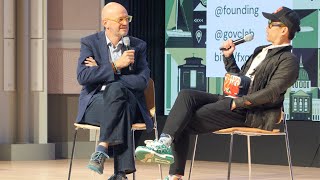
In this candid conversation, Adeo Ressi, founder of the Science venture studio and serial entrepreneur, shares his journey from early internet ventures like Photobucket to building a portfolio of successful startups—including Dollar Shave Club, MeUndies, Dog Vacay, and the fast‑growing beverage brand Liquid Death. He explains the unique venture‑studio model that embeds founders in shared office space and emphasizes the importance of culture in driving change. The bulk of the talk focuses on fundraising tactics: embracing a high volume of "nos," treating each rejection as a fast signal, and maintaining confidence. Ressi stresses concise, story‑driven pitches that reduce jargon, the power of demonstrating velocity (speed of customer acquisition, market expansion) over static revenue numbers, and focusing on three high‑impact priorities each quarter. He advocates pitching 70‑90 investors per round, using serendipity and a systematic investor index, and being transparent—always presenting progress as one step behind reality to preserve leverage. Throughout, he blends humor, cultural analogies (Tesla, music, dating), and practical advice on investor psychology, term‑sheet negotiation, and the mindset needed to sustain relentless fundraising.
Chapters
Hey everybody. We're moving fast, so we want to get everybody to drinks and then casino night later. What are you doing later? You're up from LA.
Hannah's going to play?
Maybe. Uh, you know, this is full circle though.
So I was a mentor— how long, how long ago was that?
2009.
And one of the companies, Udemy.
Yeah.
And Aaron is actually— him and I were just hanging out in the back. He's now Carbon Health as well.
Like, yeah, that's—
yeah, I'm glad to be back.
Yeah, no, welcome back. Yeah, so you were from the early days and now you're doing science among other things, so Well, give us an update on you. I got lots of questions for you.
So real quick, but I've been here, internet stuff, like 2005. I was on the founding team of Photobucket, if you all remember MySpace, which you can only share like 6 photos on MySpace. We built a site where you can share photos. We sold it to MySpace. I did another startup with Bessemer, who I just was up in the city with. We incubated at Bessemer called BillShrink True Access. We sold that to MasterCard. And I moved to LA about 11 years ago to start Science. Venture studio incubator. We're one of the first ones. Uh, our model's a little bit different. Founders move into the offices when we had an office. We still do. And like, what do we do today, this week, this month, this quarter? Like, I always think most founders never had more than $10,000 in a bank account. They have no idea what to do with a million dollars. Um, so Dollar Shave Club was one of the first things that started out of our office. Uh, MeUndies, Dog Vacay, which merged with Rover, which went public. Uh, we built the first influencer network. We've done a bunch of stuff, pretty Pray.com, and our newest one I'm always repping is Liquid Death. Starting off, it's one of the fastest growing beverages of all time.
I didn't notice that was, 'cause the Liquid Death, everyone here know what Liquid Death is? Raise your hand.
Where are you guys looking? Where's the rest of you guys been?
Okay, so it's—
Look it up, go on Instagram.
It's like water.
Water in a can, come on. It'll murder your thirst.
Right, in cans versus plastic bottles, and maybe you could, I hope you can pitch it better than I can.
It looks like a beer, right? Big Skull, Liquid Death, it's all comedy, like 9 million followers on Instagram and TikTok. We spent probably $5 million marketing, got about $500 million in reach last year. Our Travis Barker enema kit, enema of the state, his first, Blink-182, if any fans, their first album was Enema of the State. We did an enema of the state kit, 1.6 billion impressions. It was the funniest thing. It's on Instagram, watch it. But we have sparkling flavored water now for them. ICE Teas, we're the number one selling iced tea. Amazon, Target, and we've already diversified 80% of our revenue away from just water.
And the idea is just get rid of these plastic bottles that wind up in—
So teaching culture is everything, right? So if you look at Tesla, that's less about the fast car, it was a culture of like, hey, this is fucking cool. And the biggest change is that he convinced the entire world, every car manufacturer, to move electric. So we don't preach it, we do death to plastic, we donate We make a lot of fucking hilarious stuff about plastic, but the reality is teaching a culture that drinking from a can's cool and also it's not going to give you diabetes, it's 3 grams of agave, it's all natural, like making that cool, then change. Look, we'll sell hundreds of millions of cans this year, but like Coke and Pepsi sell billions a week in plastic. So if we can convince them that, hey, just like Tesla, we should go that direction, that's change. But it's, uh, Amen, right?
Social good and actually being cool. So you can be cool and do social good at the same time.
But also as an investment, if you think about it, trust me, and we can talk about raising money. Water in a can, 4 years ago, people thought I was insane. I had like 80 nos. Monster is a $59 billion market cap company. It is the best performing stock over 30 years on the S&P. 33% IRR every year for 30 years. So, you know, better than most software companies. In fact, it is better than most every software company in the last 30 years. So, you know, there's money in that even though we're a tech—
Let's, since you brought up fundraising, I was gonna, I want to talk a little bit about, because you were one of the first venture studios, and venture studios are like the new black. So I want to go into, you're like, you have more experience in venture studios than anyone else. So, but before we go there, let's— you brought up fundraising, let's go to fundraising. So let's start with the 80 nos. Like, you are a great fundraiser. How was it to get 80 nos?
I've had— I'm at somewhere around 8,000 nos now. So difference— I raise every round for every one of our companies, right? Of the 8,000 nos, I've gotten 135 rounds done. So, you know, a couple hundred yeses. It used to piss me off when people say no, right? Now, every partner at every firm I've pitched 50 to 100 times, it doesn't bother me. What it is, it's like music. I love, I go dancing every weekend.
He is a great dancer.
I'm the best dancer in this room. I mean, also, look at this.
It's actually true. But we can have a competition at the end if you want.
So think about this. It's like music. You hear a song, you either you like it and you add it to your playlist immediately, you might look up the artist, you start listening to other stuff. But if you heard a song you didn't like, your friend's like, "Adel, I swear if you listen to it 5 times." No, it's never happened. You've never added a song later where the first time you're like, "It's not me," and, "Oh, I just kept listening to it and it just, it hooked me." Startups are the same way. So if a VC says no to me, that's fine. Fast nos. If you are investing, I swear to God, reputation is fast nos. Don't be that person. Slow nos, maybes, hanging around the hoop, waste of time. My skill in life is to read nos. So it's pitch, understand the pitch, simple. I do a session on pitching, it's very simple. The world used to look like this because of this, we're taking advantage, now the world's gonna look like this. But if that VC, if you're a GP, just say no fast, move on, and that's the only reason I'm ever going to come back to you. And you have to just keep adjusting the story. I have a whole process of raising money that I go through with founders, but my superpower is probably taking idea, rephrasing it so it's a pitch, an elevator pitch, and just remember that whatever you're telling somebody, it's a cocktail game. They're going to have to tell somebody, their coworker, their spouse, their friend, and if they can't explain it, they start feeling stupid and they'll just shut down, they'll just forget about you. And if they don't respond within 24 hours, they don't, they have not, it's always a no. It's never been a yes after 24 hours.
Oh, okay, so I wanna unpack, I wanna talk about what you, a lot of what you just said actually. So let's start with, you're in a meeting, right? You said what the tell is afterwards. How do you know it's going well versus how do you know it's going badly? And then one thing, can you turn it around?
Yeah, look, the goals of everything is that your story is going to continue to change. The whole goal is how many things can I say in a short amount of time to reduce the number of questions, right? So every time I hear, oh, they didn't understand that, redo the pitch so I can explain that early on in the conversation so that question doesn't come up.
All right, let me double-click on that. Did everyone hear that? Because that's super important. If you're getting the same question over and over again, it means you're pitching—
it's not them, it's you're not explaining it to them. And the tough thing is You're in your head, you know the business so well, right? You think everyone understands the jargon, the language, and the things you're saying even though it's gobbledygook. If they're asking questions, you're not explaining something. And if there's a question, try to figure out in the pitch somewhere to data set explanation why so that doesn't come up. And pitches that are going good, generally, I try to like, if it's an hour, which I It's like, get through 20 slides max. Any deck you've ever created, I've always said reduce the amount of words by 20%. And once you give it to me, I'm gonna say reduce it by 20% again. I have ADHD. Everybody actually does. If you're an investor, you've seen so much, you know what he wants to read. Like, get to the point very quickly and then get to questions and see if there's engagement. The moment the yeses are, the moment they say we, right, or they start giving you ideas. They start kind of thinking in their brain, "We could do this." The point of it is to me to tell you something, a startup story, and you with the ego that you have believe that you know more than I do and that you can't wait to give me money because I don't understand the value of the business, but you do, right? That's the whole secret. I need to convince you.
That's pretty good actually.
I think I know, but you really know. Yeah, you're so smart. You're so much smarter than me. That you can't wait to give me money to take advantage of the fact that I don't know what he knows, and it's going to be so much bigger. So I never talk, you know, there's nothing that ruins a raise better than numbers. There's nothing that—
Can't numbers help a raise though?
No, no, literally, here's the thing. Numbers lets people start imagining and understand the terminal velocity of the value of the business. I never tell people projections. What if in my head the company's $100 million, but in your head it's a billion? I say it's $100 million, you're like, "Oh, it's too small." I want the other person to imagine how big it's going to get. So you want to give them a story so they start imagining it much bigger than I could ever imagine it. The other thing is linear is flat.
I really like that, but I need to digest that one for a moment because It's sort of counterintuitive.
Look, obviously seed numbers are terrible. A's, eh, product-market fit. What you want to do is in the A is correlational information and data that shows that there's something there.
Yeah, obviously Series B numbers are super important.
But even in all cases, in every round, you take 3 things in your business that over, I call it, raise money over 90 days. For 30 days, as a CEO and founder, you got 20 priorities. Pick 3 priorities of which you can move the needle. I don't care if it's flyering parking lots, calling customers, showing up people's houses to move numbers. There's 3 things, and what you want to show is by cohort, hey, look, 6 months ago, it used to take us a month to sell into a company. 3 months ago, 2 weeks. Last week, like self-service. Oh my God. Acceleration, something's happening. I don't talk about how much revenue, I talk about what's happening. Somebody else gave me money and I got smarter and I'm doing it faster. Adel feels really good right now because some jerk-off over here gave me money and now he's learning off the backs of the last person's money, right? And a confidence that if you give me money, I will do it faster and learn more, which creates value. So velocity, if you ever show a graph, if it does not show velocity, don't show the graph. Velocity is a year ago it was this, or let's say by city. When we launched in LA, it took us 6 months to get to $1 million. When we launched in New York, it took us 3 months. When we launched in Arizona, 2 months. Last week, we launched over here in San Diego and we did it in a week. Oh my, something's, right? It's like this thing. Something's happening, I don't know what, it's all core and it has some correlation. Maybe forget revenue, you could just say the time it took to get people to do X. It used to be a year ago, you know, we'd get 1,000 downloads and only like 1 person would be around a week, a month later. Now, like 90 of them are, right? So it's velocity, linear. Okay, it's flat. Here's why. Revenue this month is a million, next month is a million, next month after that. It's growing technically, right? But it's flat. As an investor, well, I'll just wait 12 months when you're at $12 million. Well, it's more expensive, sure, but I will trade risk all day, right? Yeah, I'll pay twice. The valuation is 2x. But I've reduced my risk by 90% because you hit those numbers. Velocity means if I don't come in now, FOMO, like I can't calculate the value. 3 months ago we were doing $100,000. 2 months ago, $250,000 a day. Now it's like $80,000 a second. I can't do the math. Holy shit, I need to invest. But if it's constant— I can't do the math.
I must invest.
I'm Asian. Math is good. Right? But if it's constant, 1, the next month 2, next month 3, 4, great.
I 100% agree. You can't get too—
So pick 3 things in your business. It doesn't have to be revenue. It can be things that show velocity increase, customer engagement, conversion number, retention decrease. I don't care if you're a SaaS company or consumer internet company. It just took less time over time, and that's velocity. It all relates to to the health of the business and that something's happening. There's product market fit, revenue's growing, it's special, net revenue retention's increasing, right? All these things, I don't care the category, it doesn't matter, it's the same story. Do those things, 90 days. 30 days, focus on it. 30 days of raising, oh, you know, we weren't going to raise, but look what's happening. 30 days of pitch, hopefully get a term sheet at the end of 30 days. Diligence. Things got to keep growing. That's why it's 90.
And also, you know, let me ask, I have a lot of questions. I'm going to—
I'm going to put 70 to 90 pitches per round minimum. I don't care if it's seed A, B, C, D, E, or F. 90 minimum.
Well, we just heard that from Aaron a little while ago. So let me, let me dive in. Let me dive into that bit. So you're getting a lot of nos, right? And everyone's going to get a lot of nos. I've gotten a lot of nos. I think everyone will. So what are— you seem pretty okay with getting a no, but it's a shitty experience. I mean, I'm sure no one here likes to get a no, right? I'm assuming so.
So many nos, it's you, right?
Like, so if you're pitching 70, 90 people, you're going to get 69, 80.
You get mostly nos, but what you should start focusing on is like, what's the story and who am I pitching? Serendipity, unfortunately, it's funny, I've been doing this, I've raised a couple, I would say almost a billion and a half for my own companies, I probably raised another 2 to 3 billion for other friends, and it's the same, it's like, it's so serendipitous, it's weird, there's no system, still to this day that I don't have a simple system And YC is probably the only one, but they do it on the seed only, which is like, go. Yeah, it's— you run into people constantly that just randomly happen to look at that thing. A lot of nos are, oh, we just shut down a company in that same category, just got burned in that category. Like, it's a lot of venture people, they are terrible at— I'm a goldfish, I don't fucking remember what I ate yesterday, right? Like, you have to forget because If it didn't work 2 years ago, timing, team, so many reasons why it doesn't work. So a lot of people, the nos are they're just hung up on something that happened traumatically. You never know. You just caught them on a bad day, right? Like some people just have a bad day and they're not even listening. Sometimes serendipity is like, oh, we were just looking for that thing. And that, it just, it's weird. It's luck, but then finding that thing. I have a whole index of types of investors. If you're a GP investor, by the way, do not tell people. I invest in everything. I'm never going to call you, right? Like, be known. Seed, A, B, enterprise, SaaS, CPG. It's like, now I know as a brand I need to know who I call. If you're a generalist, you're just going to get lucky, right? So your network better be massive. But the reality is, if I'm pitching and looking for people, like everything, if I go In-N-Out, I know what I'm getting. If I go to Chick-fil-A, I know exactly what I'm getting. Be great at one thing, right? There's very few Cheesecake Factories that are successful.
So you're getting lots of nos. Yeah, the Cheesecake Factories suck, by the way. So you're getting lots of nos, and you're able to keep a super positive attitude, and you're able to walk in every pitch. So you learn from that.
I've only failed one in my entire career, failed one fundraise, and it was the founder just gave up. It just, this mental wall just broke. He's like, I gotta go. I'm like, what are you gonna do? I don't know, I'm gonna go work at Starbucks. It was crushing. But other than that, I have not failed to fundraise in my life.
Right, so how do you keep that positivity up between the different times you're going out?
Look, it's tough, right? The studio model for us is a little different. I take the burden of the fundraise from the founders. My job, the founders, Founders, they're great at one thing. If they're great at fundraising, they wouldn't be building this company. Like, if you think about it, like, they'd be banker. I'm really good at this. They're good at building whatever it is they're building. I want every hour— I always tell the founders, did you go to school to be a teacher? They're like, no. I'm like, why are you teaching everybody about your business? All these VCs, all they want to do is learn. If you think about, like, VCs, all they do is learn. From people for free. It's weird. Like, like you just learn them. Well, tell me about your business. Tell me all your secrets. And CEOs, founders just tell them everything. Like, why did you just tell them everything? Like, how long did it take for you to figure that out? This is like, if you want to know, write a fucking check, right? Like, there's secret sauce in your business.
So you can pay me and I'll tell you.
This is important. It is mentality and attitude, confidence. If you go in feeling desperate, people smell desperate, just like dating, right? Confidence is, hey, my shares in my company that I'm building are fucking valuable. In a way, you need to convince me why I should sell some shares to you, because it's just money. Like, it's fucking money, commodity. There's 8,000 VCs now. I was just at a Raise event last week. 8,000. That's insane, right? Zoom changed everything. I used to be on Sand Hill. I used to like map out, I'm like, okay, in a day, my best day on an 8-hour shift, like I can go to 6 VCs just because I'm like, okay, IVP's here, Red, you know, Andreessen's across his way, NEA's next door. Like I could like route things perfectly. I used to use Microsoft Maps to map this, but it's how old school I am. Now it's like Zoom every 30 minutes. So know that you're a commodity, right? And so bring something to the table. And so as an entrepreneur, feel confident that the other person is just a checkbook. Now, maybe I like you more. Maybe you actually might make some introductions for me. So always have some confidence of asking, hey, what are you going to do for me, right? Hey, you know, what have you invested in? Why are you interested? Because I don't— my shares are special. Once you have that confidence, again, even if you're running out of money and you are desperate for a little anything with confidence, people lean in. The moment you're desperate, I don't want to give money to a desperate person. They're out of money. Like the bridge to nowhere? No, thank you. I'm going to give you— wait, you're out of money and you have no plan to make money? I'm going to give you a check right now? Are you insane? Right? So it will come off in attitude. So it's a mindset. Before founders walk into a meeting, I'm like, Your shares are special, know that. Know that they need to also sell why they should be owners of your shares of your company and why they get to be present. So it's a slight, just, it's a small thing, but it comes off in a pitch.
So let's talk, let me double dip on that for a minute because that's a very good point, right? A lot of founders are like pitch, pitch, pitch, pitch, pitch, and then they're like, you know, give me, Am I gonna get the money? Am I gonna get the money? And they're like, no.
But I get that all the time. Yo, still, hey Peter, so-and-so we talked to 2 weeks ago, should we ping them? Like, no, that was a pass, dude. Like, think about this. If I pitch, if someone pitches me and I love the deal, what am I doing tomorrow and the next day and the day after that, that I'm so busy? I'm a VC, fricka. I run a studio. I'm actually really busy. Most VCs, they do how many deals a year, right? How many?
8, maybe.
8 fucking deals a year. What do they do with all their time? You're telling me they can't take a break to text you, email you? They can't cancel some lame lunch or meeting with somebody? Look, unless a death in the family, having a baby, or getting married, those are like, okay, fine, you can ghost me for a couple days, but I need to know. Other than that, like, why didn't they get back to me? Because they didn't. They're not thinking about you. Trust me, you pitch them, if they're not— I'll even take a like on a tweet as engagement, but if they're not thinking about me, right, they didn't send me an email, they didn't text me, they didn't ask for follow-up, they didn't ask for reference, they're not pinging people I know, I don't hear that, right, they're not doing anything.
They didn't like your tweet.
They're not investing in the thing. A week, two weeks go by, trust me, they don't even know who the hell you are at this point. Point. What they're doing is an option, right? What most investors, they're like, oh, they say nothing and they wait for another signal. What is that other signal? They're kind of lazy. Well, well, it was Fidel invests. I'll call me then, right? They're, they're sheep, not most of them, right? They want social proof.
I'm pre-apologizing for all the investors in the room. I don't, I don't feel like 7,900 other people No, but look, we all do that.
It's hard to have conviction without it, right? I hate people who I invite to dinner and they're like, who else is coming? I never respond to that answer. Who else is investing? I never—
That's terrible. That is terrible.
I never— In fact, you will never be invited to—
Not you.
Right? You will never be invited to one of my events if the moment you say, "Who else?" Done. Same attitude. Because you don't have enough conviction. You don't think I'm entertaining enough. You don't think I invite the best fucking people to my dinners. Are you shitting me? Trust me, if you've been, you know. Right? So same thing. If you, who else is investing? Why does that matter? Are you a child? Do you need somebody else to tell you what to do? You are a GP of a fund. Why do you need to know who else is messing? So I don't even answer that question. In fact, I neg them.
So, okay. Thank you.
Now when I'm desperate, I tell them. Or I have a really good lead and I want to negotiate. And there's also that. The flex is hard. It's really interesting. I've seen so many times the psychology that goes around the moment you get a term sheet. Man, the founder gets cocky, right? I'm like, why don't you have that confidence before? Think about it. The moment someone says yes, all of a sudden all the other investors come in. So again, that goes back to day zero. Come with confidence. And the last thing is, whatever's happening in the round, tell the truth of one behind. So when you say, how long have you been pitching? I just haven't talked to anybody. I've already started talking to people. Once I do second, third meetings, you ask me how far along. Oh, we're just there setting first meetings. The moment I do partner meetings with people, right, you ask me where along am I in the process. Oh, we're starting second or third meetings. Once I get a term sheet, you ask me how things are going. I said we're starting to have partner meetings. Here's the reason. At any point this breaks, I have a fallback. But if I keep him paced in reality of what's happening, I lose my term sheet or I get the final terms and it's not what I want, I'm fucked, right?
Yeah, yeah.
So I'm always telling everybody else the truth of one step behind where I actually am, just in case.
In term sheet That's actually really good advice. I'm like, whoa.
Things fall apart because long form, as we all know, term sheet and long form are two fucking different things. So I always set it up first. Term sheet, what do you mean? What's in the— what is going to be in the long form? I want to see a draft of your previous company's long forms. ROFRs, board seats, blocker, right? The ones you want to look for. Dude, blocking right bullshit stuff. 2x preference stacks, weird stuff like that. Like, it's the things that matter. Oh, ESOP of 20%. No, that's just repricing the whole damn deal. So know these things, be one behind so that you negotiate.










