PraxiLabs is a 2019 Pitch for Purpose impact startup Finalist
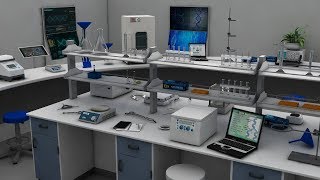
In this Pitch for Purpose 2019 finalist presentation, Khadija, founder of PraxiLab, outlines a problem of rising STEM dropout rates (≈60%) driven by limited access to traditional laboratory experiences, high construction and safety costs, and inflexible scheduling. She proposes PraxiLab’s 3D, web‑based virtual lab platform—built in Unity, accessible via browsers, and available in Arabic and English—as an affordable, safe, and anytime‑anywhere solution. The platform offers 55+ experiments, lab‑partner feedback, curriculum‑agnostic but first‑year‑university‑focused content, and supports both B2A (university subscriptions) and emerging B2C models. PraxiLab reports early traction: 10 institutions, 20,000+ students, $280k revenue in year one, and a $300k annual cost saving per university. The business targets the MENA region first, aiming to serve emerging markets and refugee learners, while also expanding globally. Revenue streams include subscription fees, premium B2C access, and data‑insight services for institutions, plus potential governance contracts (e.g., Egypt’s Supreme Council of Universities). The team combines ed‑tech, marketing, sales expertise, and a PhD in HCI, with advisors from Catapult Accelerator. Khadija addresses technical questions about VR readiness, curriculum integration, scaling strategy, partnership with top UK universities, and differentiation from competitors like Labster, emphasizing language localization and focus on emerging markets. The pitch concludes with a call for funding and partnerships to accelerate expansion and impact.
Chapters
Okay, I'll start now. Hi everyone. Did you know that the dropout rates of STEM students is continuously increasing and is now reaching almost 60%? At the same time, the demand for STEM graduates is increasing. Just last year, more than 2.4 million jobs went unfulfilled in the US alone. So imagine the rest of the world. And one of the major reasons for the dropout is the challenges facing traditional labs. Students' biggest problem is the restricted accessibility. It's always fixed amount of time, so no second chances, nor the ability to learn at your own pace. While universities do suffer from the very high costs of lab construction and maintenance, let alone safety hazards and ethical challenges that they need to overcome. I'm Khadija, the founder of PraxiLab, a platform providing 3D interactive engaging simulations for science students to be accessible anytime, anywhere, at an affordable cost, with no constraints to safety or ethical challenges. And studies have shown that using virtual labs, students became more proficient and familiar with the lab procedures and surroundings, leading to an increase in their performance by up to 60% and their retention by 80%. But that's not the only benefit, because the increased proficiency of students also resulted in requiring less time in the real lab and using less consumables, two factors affecting the spending on a lab, which on average reaches $300,000 a year. So we are also saving money for universities. And in return, we also make money by taking an annual subscription fee depending on the number of students and the number of experiments. In just one year, we got 10 education institutions using our labs, benefiting more than 20,000 students and resulting in over $280,000 in revenue. And we are currently the first mover in the MENA region, leveraging on our competitive advantage as we provide our simulations in both Arabic and English. And the opportunity is huge to reach thousands of universities across the globe, especially that our labs not only help universities in developed countries to improve their students' learning outcomes and retention, but also those in emerging markets which might not even have a real lab. And that's where we see our greatest impact to provide an equal opportunity for science students everywhere. Our team has years of experience in edtech, marketing, and sales, and I myself have a PhD in human-computer interaction, and that's where I'm getting my passion for Proxy Labs, together with advisors from Catapult Accelerator, one of the top in the world. Finally, we are currently raising funds to speed up our expansion and growth and seeking partnerships with well-established universities. So please vote for us if you are interested in joining our mission of providing the world with more scientists. Thank you.
Really well done. Thank you very much. Uh, anyways, so, uh, I'd love to give the judges an opportunity to ask questions, but I want to start with one of my own questions. And if you have questions in the audience, we're going to be pulling them on screen. So please pop them. So you showed a, I guess, like a shot of the virtual lab in the deck, and obviously that's an alpha. Are you— I mean, that new Oculus Quest is incredible with the— you can actually use your hands. So is this a sort of isometric 2D thing that you're using on a computer, or do you see this as like a VR thing for like an Oculus Quest experience?
Sure. So I'll answer this in two ways. So first of all, one of the things that we already doing is that our code is built on Unity, so it's cross-platform, so it actually can work on VR if we wanted to. But right now we are doing 3D simulation, so it's not 2D, it's 3D simulation on a computer, it's not VR. But basically, there are reasons for that. One of them is that we are targeting markets that we are saying they are needing a very cost-affordable solution, and we don't want to have a blocker in scaling to these markets. This is the first thing. So we don't want to have each university or student have a different tool to use it. And the other thing as well is that VR, although it's useful and it's used in different entertainment and education things, but some of the people are still debating on its use. For example, after using it for some time, you might get a dizziness, etc. So we do not see it recommended for now to education, and that's why we say our code is ready for that, but until it's really the technology and everything is mature enough and we want to go there, we will be able to.
Okay, try and keep your answers super short though, because there's going to be a lot of questions coming. Let's give Noah first crack at this because you're a huge STEM fan, I know, and then Christine, you're second. Noah?
No, I, I'm personally very excited about digital education and, you know, the ability to, you know, to globalize, you know, high-quality education. That's a massive opportunity. Um, do you tell us a little bit more about how the product works? Will it have like a curriculum would be tied into what the course curriculum is? You know, will there be guidance for the student or is it, you know, more like a self-exploration platform?
Okay.
Can you do me a favor and just speak a little slower? So because your connection's a little choppy. Thank you.
Okay. Currently we have—
Speak slow but fast.
Currently we have 55 experiments in our portfolio. So we are building a portfolio of experiments. It's not going to specific curriculum, but we are targeting the first year of university now because they are having the most challenges. And we build them with our subject matter experts from around the world. How it works, so the student goes, for example, in the lab, sees a DNA extraction experiment, needs to go through the exact procedure as we would do it in the real lab to practice it. And they will get also some— they see the feedback going from the lab partner. We have something called lab partner, and they give them feedback.
Noah, anything else?
No, I think Christine, I'll hand off to you.
Microphone on. So, so I love, love this concept. And so how are you thinking about scale and expansion, or what are the demographics, you know, in terms of, you know, are you looking for underserved potential students, or are you trying to better funnel, you existing students? Um, you know, what communities do you see, you know, internet, you know, well, for you internationally, that's— but, uh, are you seeing folks in the US? Are you seeing folks in Europe? You know, how, how are you thinking about that?
Okay, so demographically, first of all, we are focusing on the Middle East and Africa. This is our first market because these are the emerging markets that really need this product. In terms of how to scale and which ones are we going to work with, actually, the very— the great thing is that our product can can be used by two different types of students. So those that are already in university, that would help them improve their learning outcomes and also motivation to stay in science and do not drop out. But also we've been talking to other— to a lot of refugee organizations and things like that to really let the ones who cannot even go to lab or to university to access these labs and learn science as well.
What ages are you targeting?
For now, it's for the students in the first level of university and the second and third, It depends on the faculty. So for instance, pharmacy would be able to use it because in second and third year, because they're different from medicine, etc. So it depends on the 55 experience that we have now, but we are actually increasing them all the time.
Right. So you're basically saying because, and this goes to a couple of questions here from like Chris, because it costs $300,000 for most American and European universities, afford it. North Africa and their region, they definitely, it's much harder. Chris was asking, and I saw you have some decent revenues posted, what is your revenue model? How are you billing for content development and distribution? And I guess you mentioned you were charging the university. What is B2A? What's the A?
It's, so sometimes they call it B2A because it's academia. So it's not like organizations, it's academia, it's universities, yeah. It's universities or educational institutions. Because we're actually not only targeting universities, there are also like STEM discovery centers who have bought our lab. So going back to the revenue model, we charge the university, not the students. So currently the university subscribes and takes, for example, they say we want 500 students subscription, so we give them the the lab for 500 students, this is how they pay it. Did I miss the other part of the question? I can't remember, there was another part. How do we charge in English?
Yeah, are you billing for content development or distribution?
Yeah. So now what we do is we work with Spanish matter experts in different areas to give us these experiments, and we give them the— we give them— basically they are contracted with us. But what we're really aiming to, and will help us scale so much, is to have an academic partner. And that's why I've been to UK and to search for that really well-established academic partner that will give us the big picture. For example, we've been talking now to UCL and Oxford and Imperial last week to actually work with them on the full portfolio, and they will be the side that gives us the content, and we will be able to develop it because we focus on the technology, not the science part. Good.
And this relates to the next question that we took from Khalid. And you had mentioned, for example, pharmaceutical, but what skills or learning paths are you developing is what Khalid was asking.
So in terms of skills in the lab experiments and this kind of to have the students really learn by doing, this is the maximum. This is the most thing that we are focusing on to have students really practice and do it lots of times so they have also productive failures. They can learn by mistakes. They can do the thing and learn from the experiment that they did something wrong and then do it again. So we focus on making the student learn the experiment, but also do specific mistakes that are according to the learning outcomes. So the professors themselves tell us, for example, this experiment, the biology DNA extraction, The students can do it. They are usually doing these mistakes, so we allow for certain mistakes to help students do productive failure and also to subconsciously know the exact procedure that they will need to do in the real lab. So for instance, very simple things like the safety, like closing the lid and closing the bottle before going on to the next step. We focus on that so that they actually don't forget and go on without that.
Oh, your mic's off.
Yeah, I cannot hear anything.
Oh, sorry about that. Yeah, try and speak a little slower. A couple people in the chat are saying you're speaking really fast. Thank you, Noah. Ankit was asking— I hope I pronounced her— Ankit was asking, how would a student actually use this, right? Can you walk us through, like, They load— is it loaded software? Do they go to a website? And like, do they drag with the mouse? Can you just walk us through an example?
So it's an online platform. So you only go to the, for example, the website of a university. If we are integrating with the learning management system, you go to your website of the university, you go to the username, you enter the username password, you go to PraxiLab. So for example, you have these there's certain experiments open to you by your university. You choose biology DNA extraction, you open it, and then you have these tools on top of the shelf that, like it was shown in the, in the deck. So you start the experiment, you have two ways to go through the experiment. Either you already know it, so you can drag by the mouse, take the pipette and go to the solution, take it and etc., go on and do all the procedure. Or if you don't know even the experiment, We have a lot of additional content there to help you as well. So it was not showing there, but we have a PDF for reading all the steps. We have a video curated just for you to see the experiment and see the video before going on and trying the experiments. We have also exercises that you can use and assess yourself after you do the experiment. And you have the lab partner there to help you if you got stuck on a specific step. You click on the partner, it tells you what to do next. And of course it can be disabled in case of exam.
Oh wow, so you can use it for exams as well. Mark was asking what, what are your technology partners? Um, do you have—
yeah, so we are building, we are building using Unity platform now, and we have all— so we have everything done in-house. We have a team of developers and designers in-house and they are doing everything. So basically we don't have except Unity and Amazon for hosting, and that's it.
I want to turn it back to Christine and Noah. Any other questions that have come up? There's some more in the chat, obviously, we're going to try and get to.
You know, I, I want to ask, are there ways of monetizing the product or, you know, revenue models that go beyond selling to academia? Because that, you know, can go fast with leading adopters, but with sort of the mainstream academia tends to be pretty, you know, slow, bureaucratic.
True. That's true.
Do you see other revenue models?
Yeah, sure. There are two different other models. So one of the things that we are also looking at is B2C, but we do not— we didn't put a focus on it at the previous model to test the product and see the traction, etc. But we just opened it two months ago just to enable the traction and for free. So it's premium model. And we're seeing traction from students now. And later on, we were actually thinking of using that not as B2C at the moment, but to go to university and leverage that and say, for example, we have 200 students from your own university using the labs. Why don't you take it to the rest of the university? And we'll give you a lot of data insights integrated into your learning management system, like the performance of the students, the progress, the time it takes them, when they are ready to go to the real lab, because it saves a lot of money for the universities to know the actual time they are really ready to go on. So that's one revenue stream. The other one, quickly I'll say it, is from the governance, because there are lots of governance now going into that. And we've done a pilot, a quick pilot last March with the Supreme Council of Universities here in Egypt with all the 21 public universities. And we are actually now talking to them on taking this further.
Great, thanks.
Christine, do you have anything? And I got a whole bunch here coming from the audience.
So do you feel like you need to measure your success more by the number of students that have been able to go through your program successfully or by the number of jobs that have been secured on the company side?
Yeah, actually, that's a really great question. And we've been working on that with several of the accelerators and things that we've been to, and measuring the success and the social impact is very important. But because our, our products have not been used through several years after each other now, we want to see it after several years to see how students go from the first year and don't drop out actually, because this was the main, main problem that we are solving, at least to actually graduate, not to get jobs, but to graduate from the science. And not drop out completely from college or leaving to another major. So that's one of the metrics that we are looking at.
So get them through without dropping out and faith that the job will be there.
And improving their learning outcomes, of course.
Yeah.
Yeah.
Well, when you're looking at the area, the region, and you're talking about pharmacists and other things, these are highly skilled jobs in demand, I'm sure, in the region. A couple other questions from the audience. And it looks like our next presenter is getting ready. I'll jump to one I think. What is your— how is your platform better than some competitors like Labster?
Okay, I hear that question all the time. So it's actually our only and main competitor. So the others are mostly 2D and not that interactive like us, and that's why we always get the question. So it's really cool that we are compared to them because they've been around more than us for 7 years, and they've raised just last $10 million and even more. But the good thing is that proves evidence in the product itself, and they are completely in a different market. So they are in Europe, they are actually focusing in, uh, they are based in Denmark and going to US rather than we are going to the emerging markets in the Middle East. And we have the first mover there with our Arabic language, so it's completely different. The market can actually take us both, so I don't see a problem with that.
All right, thank you very much. Well done, well done. Uh, Thanks, Frank. And again, working on something that really matters.










