Rise and Scale: Bermuda Business Accelerator
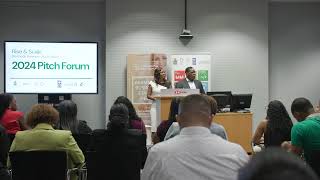
Six founders pitch businesses at Bermuda's Rise and Scale accelerator, a five-week program backed by UN Women and UNDP. Ventures range from Courtney Clay Studio's hand-drawn Bermuda prints to Tricia Warner's legal-education app for teens and Sherilyn Lilly's mental-health coaching led by a blind entrepreneur. A panel of female founders shares advice on investor pitches and building networks.
Chapters
I'm Tenilia.
I'm Wayne.
And I'm Jamaro.
Welcome to Bermuda!
¡Hola!
My name is Jamaro Marville, Program Analyst from the UNDP Jamaica Multi-Country Office, and I'm delighted to be here with Founders Institute for the culmination of the Rise and Scale Bermuda Business Accelerator Program. Today concludes with the pitch competition, and this initiative is a part of the Build Back Equal joint initiative, which is led by UN Women. UNDP is pleased to be here with other stakeholders such as the Ministry of Youth, Social Development and Seniors, and the Bermuda Economic Development Corporation in the successful implementation of this amazing program. Over the last 5 weeks, we have been working with entrepreneurs, primarily women, youth, and persons with disabilities-led enterprises, in building their capacity for their products and services for the international market. We are ensuring that this evening we are placing these entrepreneurs in front of international investors. We are building the capacity and their confidence, ensuring that they are able to take their products and services to the next level so that we can definitely see an increase as it relates to productivity here within the Bermudian landscape. Once again, we're delighted to have each and every one of you here with us this evening, and thank you once again.
When I visit other countries and I'm a visitor and they say, where are you from? I say Bermuda, and they say, oh, the Bermuda Triangle. And so Bermuda is known for the Bermuda Triangle, but what we are not known for is our products and services enough, or as much as we would like to. We know that economies run off of people and having access to other people and the goods and services that other people produce and provide. For any economy, that is a plus and that is a win.
I, I, I think that the entrepreneurial journey is a difficult one. It oftentimes is a solo one, but I, I really wanna express that it doesn't have to be. Uh, there are people, there are networks, there are organizations that wanna support every single entrepreneur through their journey. And, and it's also important to understand that not every idea will be a success, but failure is only a means to an end, right? It is not a determination of who you are. And so it's important for us to support support entrepreneurs in that journey and be exposed to opportunities for inclusion and impact.
I want people to receive me just like they receive everybody else, but the truth of the matter is I'm blind, so I will always need that additional support. But if I don't ask for it, I won't get it, and therefore I end up blocking myself.
Morning!
Morning!
I said be careful, there's a local celebrity.
Hey Bob!
Are you getting in there?
Some of the colors—
it's pink, red. I didn't wear it all March, April, May. So I'm from the more central parishes and I moved to St. George's about 20 years ago and And that is when I really truly fell in love with the history of the country. I bought a bookshop that was actually next door in the historic building here. And being in that historic space, looking up at the cedar beams, I think, you know, I'd wonder whose ancestors cut these beams, who carved this block. This town is hundreds of years old. And just being here inspired me to be more involved with learning about Bermuda's history and then sharing what I've learned with the world. So in Bermuda, we have lots of women-owned businesses. When we're talking about supporting a woman's own business, you know, she's often supporting her family, she's heavily involved in her community as well. So for empowering a female entrepreneur, you're empowering a community. Here in St. George's, so many of the businesses are women-owned. The people that are heavily involved in running the leadership of the town, doing cultural tours and experiences in the town are women. So for me, I feel like when you're investing in a woman, you're investing in a community.
Underrepresented segments are are the most powerful ones, and I feel like they are overlooked a lot of the time, and a lot of the talent is hidden, and a lot of the talent doesn't get the platform that it needs.
One of the major challenges that I have faced is access. Access to resources, access to, um, international experts, access to capital, and partnering with organizations that are outside of Bermuda who have more of a breadth of knowledge and access to those resources was the significantly benefit us in Bermuda, helping us to reach our goals and objectives with our companies.
I found in Bermuda women are doing phenomenal things and have opportunities to do such great things that may not have been thought of as women's roles in the past. And so I really believe that because women have children and they understand about how to take care of children, they understand about how to take care of generations below and above, they are quite often in that sandwich, you know, the sandwich generation, as we say, having children on one side, parents on the other, and they're able to handle it all. And so with compassion and with a heart in lots of different ways. And so I believe that this is the year, the decade of the woman, as we see all over the world, women in leadership. And I believe it's that time for women here in Bermuda. There's no limits. We can do anything. The sky is truly the limit.
Good evening, familia! Good evening! Okay, so fabulous to be with you guys this evening to just celebrate this wonderful event. We're celebrating Recording in progress. Okay, let's do that again. Good evening, Bermuda! Okay, thank you guys for coming out. We are thankful for having you here this evening to celebrate this wonderful achievement of the Rise and Scale Bermuda Business Accelerator and Pitch Forum. So I'm Tanila Phillis, local leader of Founder Institute Jamaica, and I have my leaders here with me as well. Wayne Beecher, also a local leader of Founder Institute, and Jordan, Jordan Dracos. He is the reason, one of the reasons why we're here today. So first, before I start thanking, you know, all the partners that helped us with this journey. I'd like to thank HSBC in particular for this beautiful location, their Harbourview Centre, right on the waterfront in Hamilton. It's fantastic, we love being here. Thank you so much for being such generous sponsors. But if in case you don't know why we're here, in an effort to accelerate gender equality and women's empowerment in Bermuda, we came together— we as in the Government of Bermuda, the Ministry of Youth—
Recording in progress.
The Government of Bermuda and the Ministry of Youth, Social Development, and Seniors The Bermuda Economic Development Corporation, the United Nations Development Program, Jamaica Multicountry Office, and UN Women, as well as Foundry Institute. We all came together under the Building Back Equal program, and that was basically to invite women, youth, and persons living with disabilities to apply, who had businesses in Bermuda, to apply to this program. 21 founders responded and applied to the program, and these are the businesses that we are going to introduce today. Our founders who were taken through a rigorous 5-week program to prepare them to come in front of you today. Let me just reemphasize that— one month. So this is a tremendous opportunity for both for the Faunas Institute and for the Faunas themselves. Tonight we're asking, because we have an ask, we're asking that you not only see these businesses as wonderful opportunities for themselves, but that you also engage them in helping them to find support in getting strategic partnerships, in helping to introduce them to mentors. And, you know, some of them will need meetings with investors. So we're reaching out to the Bermudian community as well as the international society because Bermuda is a country that has a strategic location. They have a strong international partnership and of course they also have a strong economic— sorry, educated workforce. So you can get access to these things as global leaders, and we're in a global age now. And so this is a great moment for not only Bermuda but for the world. So we're here to celebrate women entrepreneurship. Indeed, we are here also to celebrate these, these graduates of this fantastic program that you're going to hear later on today and understand the businesses that they have put out and that they've developed. Before we go into that though, I'd also like to thank the mentors that made this possible because dozens of mentors participated in shaping these founders and the businesses that you're going to meet tonight. And if it wasn't for your support, and these founders were from all over the world, including some from London, they actually came on meetings minutes to midnight. So they have done us a great contribution to this program. And if it wasn't for them, I think that this program may not have been such a success. So thank you, mentors, for your contribution, and thank you for your support. My apologies, I'm having technical troubles now. But I don't want to forget anybody. So the success, I think, of this program is going to be demonstrated by the businesses that you hear from tonight. And so I'm not going to draw, you know, I'm gonna let them introduce themselves and you're gonna see what I'm talking about in a few minutes. So without any further ado, I'm gonna stop talking so you guys can help me in giving a big round of applause, because tonight is a celebration and I want you to applaud HSBC for being such fabulous sponsors of this venue. The mentors and sponsors who made this program possible, and the businesses— because if it weren't for these businesses, we wouldn't be here tonight— the businesses that you're going to hear from later on today. So first of all, I'd like to welcome to the stage— The minister in the—
not yet?
Okay, great. So fantastic. I would like to welcome the Honourable Minister Tina Tinei. Sorry, I'm so sorry. I was practicing all evening.
Good evening to everyone. Welcome to the Rise and Scale, and this evening we will surely see why the title is Rise and Scale. As I stand here this evening, I am proud.
I was—
I'm proud to see that video, and I'm I am proud to see representation of Bermudians. It has always been a goal of the Ministry to be able to provide opportunity for Bermudians to not just have opportunity in Bermuda, but to have opportunity outside of Bermuda. And so I am warmed, my heart is warmed, I am excited. I am excited for every Bermudian in this room who has the opportunity to pitch this evening. If you have nerves, shake them off. You're going to do just fine. And I believe in you, and I know that you will. But it is a pleasure to see so many champion entrepreneurs in the house tonight. And the creativity and determination that you will share this evening is going to pave the way for programs to come. So I want to again extend my gratitude, which has already been mentioned, to HSBC. Yes, thank you, HSBC. As well as the organizers and the mentors and everyone who contributed to Rise and Scale, your efforts in this innovation and the opportunity to make it accessible to all. I'm eager to see the positive effects and the businesses out of the Rise and Scale for years to come. This event represents a step forward for the Ministry of Youth, Social Development, and Seniors in its mission to support vulnerable populations, right? So a lot of people ask me, well, why did it fall under the Ministry of Youth, Social Development, and Seniors? Because BDC also did a lot of work which came up, comes under the Ministry of Economic Development, the Department of Economic Development. The idea was to make sure that we provide an opportunity to groups that were not, not looked at as, as often. And women, we know through funding mechanisms, we knew that women received receive less funding for their businesses than men. We know that youth is another group that can sometimes be overlooked as well, and we definitely know persons living with disabilities also have difficulty with, uh, rising and scaling their businesses. And so this is why it has fallen under the Ministry of Youth, Social Development, and Seniors. But tonight, Bermuda Founders will have the opportunity to pitch to esteemed mentors from the Founders Institute. A big thank you to the Founders Institute. Jordan, where are you, Jordan? You disappeared. And Tenelia, thank you. And Wayne, can Wayne, can you raise your—
yes.
These mentors have provided critical guidance throughout the Rise and Scale Accelerator program, helping founders to refine their business strategies, expand their skills, and develop robust pitch decks. Beyond tonight, the founders will have individual sessions with their mentors and complete development assignments. So you still have homework to do. Which will continue to fuel your growth. Each pitch we hear tonight underscores Bermuda's commitment to an inclusive and resilient economy, an economy that aligns with the Sustainable Development Goals and ensures that everyone has an opportunity to succeed. So without further ado, to the entrepreneurs tonight, wave your hand. Yes. Congratulations, congratulations on reaching this milestone, and your commitment and your vision will be expressed this evening for a stronger and more inclusive Bermuda. And this is an exciting time for entrepreneurship in Bermuda, so we just, we want you to know from the government that we are all so very, very, very proud of you. Thank you.
Thank you very much, Minister. Good night, ladies and gentlemen. I'm Wayne. I'm a part of the facilitators with Faunus Institute. Tonight, I want to just quickly bring the team that made this possible to the podium to be recognized and to give brief remarks. A year ago, I was called by one of the two musketeers, one of the two musketeers from One UN and asked to put together a curriculum for a gender-sensitive and gender equity accelerator program. It took us 5 months to design it with the assistance of UN Women.
Recording stopped.
They didn't want you to hear that part, right? And then subsequently we were asked to execute this project that should have been executed over 12 weeks in 5 weeks. So what you're about to witness tonight is something that has never been done before. First in Bermuda, Minister. First in the world. Yes. So in recognition of that, and to make that possible, we have to call on an expert to get it done. And there's no other championship of entrepreneurship and execution of entrepreneur programs in Bermuda than the Bermuda Economic Development Council and its executive director. I don't know why she said yes to this madness, but she did. And so what we're standing in now is a moment of possibility made possible by thinking outside the box. Yeah. So at this time, I'd like to introduce Erika Smith and ask her to come forward and make some brief remarks tonight.
Thank you, Wayne. I am a little vertically challenged, so hopefully you can see me. Thank you for those kind remarks. I first and foremost want to absolutely say thank you to the Ministry of Youth, Seniors, and social development and seniors, because, you know, the project started with them. It started with the minister, right? It started with a vision to bring gender equality and women's empowerment to Bermuda. And the ministry, the minister, you know, Cleita, the PS, they took the riverboat, they had the riverboat to say Well, who can we bring around the table to help in this endeavor, right? So honestly, BDC wouldn't be here without them first saying, let's bring some partners to the table. And we were absolutely on board to say, how could we help in whatever way we could? It's an incredible partnership, not just for the entrepreneurs that we have been helping, you know, for the last 2 and a half years, but also for us as an organization. And I think any time that you can learn and grow and scale yourself is a good thing. So we came with some deficits. We came with some barriers. But I can fundamentally say now, after 2 and a half years, I've learned some stuff. Because I thought that we were helping every single entrepreneur in this country. But we soon learned that we weren't. And so how could we be better? How could we do better? Because everyone has an opportunity to be the best that they can be and to achieve their dreams. And fundamentally, entrepreneurs worldwide, not just in Bermuda, but worldwide, solve problems. And we have some big problems in this world that need to be solved, not just by governments, not just by private sector, not just by, you know, philanthropic organizations, but by entrepreneurs. And I fundamentally believe— and now this program after 2 and a half years has actually confirmed that— that we have world-class entrepreneurs. World-class entrepreneurs who have the ability to rise and scale given access to support, mentorship, capital, and anything that they need to have in order to do so. So we are committed, we are on a journey, we're on a mission to make that happen. And fundamentally, Bermuda Economic Development Corporation and our partners will do whatever we can to make that happen. I also want to say we knew that we had some brilliant women entrepreneurs. We've always seen that. No one could tell us any different. We've seen it every single day. But what we didn't understand was some of the barriers that these women entrepreneurs had in order to be as successful as they needed to be. Access to care for their children, the ability to feel confident to say, you know what, I'm going to step out and do this full-time. How can we remove those barriers? But through this journey, we also found that we were missing out on some other key demographics. Fundamentally, youth entrepreneurs. How can we create a country, an ecosystem that prepares young people to make the decision to be self-employed if they want to be and to grow their own businesses instead of having to work for somebody else, right? Like my friend here, Zan. Zan Sinclair.
Right?
Zan is on a journey, right? And you've just started. But I have no doubt that you will make an impact on this country, right? But we also recognize that we have people who have disabilities who have entrepreneurial dreams themselves, like my friend Sherilyn, right, who is speaking to truth what she can accomplish if we just remove the barriers and make these things possible. And BADC, with help and assistance from our partners at the ministry, of Youth, Social Development and Seniors, United Nations, UN Women, UNDP, Faunus Institute, we are committed to making that happen. And there are going to be some things that happen that you guys will see in the future. So I'm going to bring it to a close here because it's not about me, right? It's really about the entrepreneurs who have gone through this journey. I don't know how they did it in 5 weeks. Like, honestly, you know, when UN Women and UNDP said, oh, We're going to do this in 5 weeks. They said, what? Right? But, you know, these entrepreneurs have stuck with it. Incredible, right? On in the evening times, 8 o'clock, 9 o'clock at night, right, running through their pitches, getting access to mentors. Meanwhile, children in the background, you know, husbands asleep and trying to figure out how to make meals. I don't know how they did it, right, because I can't even handle myself. So literally, you know, as we go through this process and we see these incredible pitches, Understand that these guys have come a long way in a short period of time. They all have fantastic business ideas. I think they all have the ability to scale and be impactful. And whatever decision you make after this is up to you, but know that you are seen and you are appreciated. So thank you, guys.
And thank you very much, Erika. You talk about an ecosystem, right? And it took an ecosystem to pull this challenge together, an ecosystem within an institution. So this project has been brought through a program called the Joint SDG Fund, which is an internal organization within the UN group. But for this particular program, we have UNDP and UN Women who led the initiative jointly, which is amazing, right? Because multilateralism. Don't really normally work together. So in that regard, I'd like to invite Jamaro Marville to bring brief remarks on behalf of the UNDP. He will be followed by Gail.
All right, good night everyone, good night, good night. First of all, before we go any further, could we give a round of applause to Founders Institute for that video? I mean, I literally Literally, I flew into Bermuda yesterday. I shot that literally right outside of BDC. I wasn't sure if I was going to make the cut because of my 1 or 2 takes, maybe 10, but it was amazing to see the production that came from it and the quality of it as well. For those entrepreneurs who were in it, I really encourage you to get your snippets so that you can use it for the promotion of your enterprises. First of all, I just want to say thank you so much to each and everyone for being here tonight. This has been a journey, as has been communicated before, and we could not have done— we could not have done it without very key stakeholders here within Bermuda. Minister, you have an amazing team, and I just want to say to continue to empower them in a way that you do. We could not have done it without the Ministry of Youth, Social Development, and Seniors. I know we have communicated this, but I also have to reiterate it from our end. Also the BEDC. I always tell Erika she is somewhat of a superwoman in the way how she communicates and the way how she champions the efforts of entrepreneurship here within Bermuda. I mean, operating in other spaces, we don't necessarily see this level of passion coming forward. So Bermuda, you guys have a gem. Continue to work with the BDC in terms of everything, all the opportunities that are being put forward. So now that I have said those thank yous, I also want to say thank you to the entrepreneurs. I know that when we put out this call for persons to apply, saying a 5-week program was a little daunting, as we would have mentioned, it was actually originally supposed to be 12 weeks and we had this amazing curriculum put in place. That we worked so hard on, but because of some challenges that we had, it was kind of reduced to the 5 weeks, but it was an amazing 5 weeks. I was able to join some of these sessions, and I was so pleased to hear about some of the businesses that maybe ideation or those mature ventures, how you guys are moving forward and pushing boundaries. And I just want to encourage you to continue to do so. From UNDP, we also want to share our commitment to the entrepreneurs here within Bermuda, because we will continue to work with Founders Institute in several ways. So first of all, I also want to say that the cohort of this group, you guys will continue to work with Founders Institute over the next year in terms of continued mentorship, continued capacity building. And I just want to say thanks so much for Founders Institute to be open to this. So a round of applause for Founders Institute. So it does not end here. One of the reasons why we also chose Founders Institute is because they have this amazing toolkit, their alumni toolkit, which you guys have lifetime access to as it relates to resources, as it relates to investment opportunities, as it relates to the mentorship network. You guys will— I think Tenille would have mentioned it in one of your sessions— they are your friends for life. So continue to tap into these networks, continue to tap into these resources. As you rise and scale your respective enterprises. And then also, through this program, we're also going to be giving the opportunity to one of our entrepreneurs to be able to pitch at the FunderX conference, global conference, which will be happening. Now, similar to— so similar to what's going to be happening tonight in terms of entrepreneurs being able to come before for us to pitch your respective businesses, we're actually going to take you to the location in which the conference will be happening to pitch in front of global investors for opportunity for continued investment and mentorship to take place, which I believe is phenomenal because as we were having our discussions with the respective stakeholders, we recognized that this was a need for Bermuda. and we're really happy that we were able to plug that gap here. So I'm going to take a moment of hush because we really want to get into the pitches, but I just want to say congratulations to the cohort. I really wish you guys the best in terms of all future endeavors and know that UNDP and by extension UN organizations are here to support you in any capacity outside of this program ending.
Thank you.
I must pause to properly recognize and acknowledge UN Women. But before I invite Gail to the podium, I must indicate that Faunus X is a big deal, and so that's a prize worth competing for. It's going to be in Texas this year, and it's co-located with another investment forum. And so all the top investors will be there globally. I think Elon Musk was there one year. I don't know who will be curated this year, but it's a big deal. And to have representation there, definitely a thumbs up. So you would tell by the composition of the cohort that women representation is strong on the agenda, right? And that's not by accident, that is by design, right? Because we have UN Women as one of the key protagonists in the design of this program. And so to bring brief remarks, I'd like to invite Gail Golub, who represents UN Women for the Caribbean, to bring her remarks.
Thank you, Wayne. Good evening, everyone. It is a pleasure to be here. On behalf of Miss Tony Broadbent, the representative of the UN Women Multicountry Office of the Caribbean, who— this entire program, Building Back Equal Through Innovative Finance for Gender Equality and Women's Empowerment, is really Tony's baby. Tony pushed and pushed and pushed to get it through, and what we have here today is a culmination of 30 months of work that we have been doing through UN Women, UNDP, the Ministry, and BEDC. And so it's really a pleasure to be here, to be working again with the entrepreneurs in Bermuda, to see what you're doing for us. It's just to see you here after 30 months, after many of you— Zane, Joyce, you know, we have seen you throughout. And so it's It's good to, to watch you now rise and scale, and, and, um, it's a pleasure for us. I just want to reiterate what Jamaro said, that Bermuda is special, and you all have a champion in the minister, Minister Herbert, and a champion in the Ministry of Youth, Social Development, and Seniors, and a champion in BEDC. And don't ever underestimate that, and please call on them. They will get you where you want to go. They will facilitate what you need. And we at the UN agencies, it's just, we do our part. We try to do our part, but we're just a little step in your journey. And to see you in just a short time, 30 months, 5 weeks, get here to be on this stage and whoever goes on to the Founders Conference, you know, to just see that makes us know that we're doing something right. So it's a pleasure. Good night, good luck to all of you, and let's start.
I'll go with you, Wayne.
Thank you.
Thank you very much, Gail. And now we have a special treat for you. We're gonna hold in suspension for pitches for a little longer, right? Um, we have a special treat. We tried to get one keynote speaker, but we ended up with three. That's how special you guys are. So, um, just to give you a taste of the kind of conversation we had during the, the, the accelerator program, we invited three special ladies to present their journeys to us in a panel discussion that will be hosted by Tenille. Tunilia, I'm handing over to you now, Miss Moderator. I could do it.
Hello, hello, hello.
Hi. So over to you now, Tunilia.
Take it away.
So I think I'm having a technical challenge.
Give me one second here.
Hello again. Hi.
Welcome.
Okay, it's always so strange when we have to do these hybrid events.
Technical difficulties and challenges are definitely going to happen.
Yes, for sure.
But, uh, we'd like to invite 3 special women tonight.
We have Laura Acosta, founder of Literally Academy, one of the top female creators on LinkedIn. And we have Regina Gwen, co-founder of Black Women Talk Tech and Forbes BLK member and VC in residence at Pipeline Angels. So welcome, Regina. Thank you. And Esosa Ighodaro, please. I hope I'm not— yeah, I got it.
Great.
Co-founder of Black Women Talk Tech and founder of Accelerator Com.
Ladies, thank you very much for coming out tonight. It's a pleasure having you.
Thank you for having us. Absolutely. Looking forward to the conversation.
So am I, and so we all are. Uh, first of all, we want to get an idea of your experience being female entrepreneurs and entrepreneurs as women of color and, um, and minority groups. So, um, what we're going to ask you tonight, we just want to get your feedback on like what's— what are some of the key challenges that you had faced, like being a female entrepreneur, and how did you overcome it? I mean, anybody can answer this question, so feel free to go ahead. Regina.
So I'm happy to start. Since we're all chipping in here. So being a female entrepreneur is definitely something that we constantly think about in Black Women Talk Tech because we live in the intersection between being a person of color and being a female founder, especially in technology where there are so few well-funded companies from these tech scalable business, and generally it's no. And so we are here to give more people a chance to be more visible, and a big part of how we've built was really building collaboration with people and making sure we create networks and safe spaces for us to connect and communicate. And that was really in the beginning of our entrepreneurial journey because we understand entrepreneurship can be very lonely. And when building with— across each other, we learned a lot from each other to be able to grow and scale our companies and allow us to really be fierce competitors in the marketplace. And so a big part of us being able to scale Black Women Talk Tech is being able to, to support one another with advice, networks, access to capital, all different things that make the difference for our counterparts. We also need to make sure that we have our share, our space at the table.
That's fantastic. I mean, what you, what you women have done is so incredible, and it's such an inspiration to other female entrepreneurs like myself, and especially for the entrepreneurs tonight, because I don't think we get a lot of validation on this journey. It's such a lonely journey for us females, and so it's great that you guys have a network and you had actually done something that created this sort of community. What I want to ask, um, Laura, because you, you are now a top voice on LinkedIn, and you know, how did you leverage that platform to create meaningful business opportunities? And what advice would you give to the entrepreneurs tonight in building their personal brand on LinkedIn?
Well, thank you so much for having me. I'm so honored to be invited, so thank you for that. And, um, yeah, for those who don't know me, I've been on a platform for Nearly just 2 years. I started posting in May 2022, and I managed to build so quickly because I was simply obsessed with the idea of having visibility, especially as a female entrepreneur. I always felt like the men were above me, and I just would never ever ever get a voice. But then I just sat down and kind of like thought, okay, what can I do to grow as fast as possible without losing myself? And that was through storytelling. Too many people try to outcompete others when it comes to experience, expertise, and even network. And I had neither. I was just a broke student finishing university with no job prospects. And so I decided to lead with my story and how I felt and what I was doing in my current situation and what I was learning. And throughout that, I started practicing my writing muscle, which is what LinkedIn is known for. It's a writing-based platform, like text-based platform, not video. And so as I went along, I told my story of how I was like trying to build a business, how I was trying to get clients. And 2 years later, I am one of the biggest female entrepreneurs on the platform. Simply because I decided to believe that my story was worthy of hearing. And with that came a lot of, you know, I had to literally rewire my brain to believe that I was worth listening to. And so I think it's building a personal brand has not only been beneficial for me as an entrepreneur, but also mentally as someone that didn't believe in herself a lot. At the start, especially with entrepreneurship, is super lonely. Uh, you don't have many people to relate to. Your old friends don't really know what to say. Your work colleagues, they don't get it. And you're only just learning. But on LinkedIn, you find people that are literally at the same place in time as you, like trying to grow. So I would say how I grew the most was through telling my story, but how I grew the fastest was building a community of like-minded people.
Great, thank you so much for that. And I'm glad that you mentioned, you know, that you also felt what we would call imposter syndrome, because, um, we don't get a lot of validation for what we're doing for most of the journey. And because of that, we're not even sure that we're doing the right thing. And entrepreneurship is a, is a space where failure is everywhere, and we fail more often than we succeed. And so we're not even sure if we're doing this thing properly. And it creates this sort of thing. But I just, I'm glad that you say that because I think that entrepreneurs tonight need to hear that, you know, that you can do it, that all you need to do is believe in your story, that people want to hear it. Thank you. So I just want to move to Regina and You built Black Women Talk Tech with your co-founder, and, you know, as VC in residence, what is your advice that you would give to female founders when pitching to investors?
Um, so there's a lot of different considerations as it relates to raising venture money, right? So, um, as we think about different types of capital, Venture is one of them. It's not the only one, and ideally you will have refined your pitch pitching to people who aren't investors, right? Like your friends and family, you know, considering an angel round, you know, looking at your banker, your, you know, lines of credit, grants, pitch competitions. And so definitely making sure that your quote-unquote elevator pitch is, is strong and also really you know, for, for investors, um, that are investing in early stage startups, they're investing in the founder, right? Like how passionate she is, but also how knowledgeable she is about the market. Um, she should know every competitor within her space. She should have done the research, um, know the numbers and be very comfortable talking about numbers. I know that oftentimes, you know, unfortunately, fortunately, unfortunately, whether it's true or not, but, you know, oftentimes women have, um, challenges in feeling comfortable talking about margin, inventory turn, you know, what's the return on the investment of the current business, what's the traction, you know, all of those pieces. And investors want to know if they're going to give you money, whether or not you know how to talk money. So, so definitely making sure that those are some considerations if you're— when you're pitching anyone, you know, whether it's a venture, you know, a venture manager or a banker, anyone who can in fact, you know, give you funds. You should have those, you should have that information ready like the back of your hand.
That's great.
I'm glad that you said that because I think storytelling is important for us. I think I'm going to move to Esosa because I want to just drive this home. You know, Laura spoke about storytelling, spoke about community. You now, Regina, you're talking about understanding, knowing what you are talking about so that when you're talking to investors, you know, you know exactly, you know, what you're talking about so you can be confident in that. So, Esosa, like, what strategies could you recommend for building a community that amplifies underrepresented voices in tech?
I think the biggest thing around really representing underrepresented voices, the biggest piece I think that matters the most is being able to give a very clear mission and vision. So that people understand why you're here and it's well-defined. And so because Black Women Talk Tech's mission is to support Black women in tech and scalable founders to find and offer those resources, education, and partnerships, it's clear who our stakeholders are. Then it's also important to foster inclusive spaces. So we do that through Roadmap to Billions and different 10-pot events to help support entrepreneurs grow and scale and build that network. We also make sure that it's important for us to have leverage partnerships with organizations across mission-driven and shared values with us. And that's important for us to make sure those things happen. I also think it's also important to remain consistent with your network so that as you start to grow, you can see continuous impact within our group of founders. And I think that's what has allowed us to really be able to tell the stories that matters, the success stories through our network that matters. So more and more people can not only just be inspired, but know where to go to connect and find those resources for connection.
Fantastic. Um, you know, in Founder Institute, we do a lot in terms of mentorship, and mentorship play a very important role in career development and business success. I mean, how early should founders approach funding? Find— sorry, finding the right mentors to help guide them along the way.
You know, I think that the idea of finding a mentor should always be on your radar. You know, being able to get help, you're going to need a lot of it. You know, this entrepreneur journey is hard. Trying to figure it out on your own, building a product that does not exist You're going to need a thought partner, an accountability partner, a strategic partner that can help you through that journey. So, you know, if you can happen upon like your first advisor, great. But as you're out in the market, you know, you're connecting with people, you're talking, you're, you know, you're networking with, you know, within multiple groups. I strongly advise having a very diverse advisory team with people who don't look like you, with a gender that's not yours, you know, just so that you really have diversity of thought that can allow you to also leverage networks that you're naturally inclined to. So being able to start thinking about those types of people that you want on your team should happen, you know, as soon as humanly possible. 'cause it's gonna take time in order to find the right, find the right fit. As you know, when you actually recognize like what good looks like. So having those feelers in the market early is important.
And that's why we emphasize mentorship in the phone institute program, because this is what helps them to to see other perspectives so they can come out of themselves and see other possibilities for their business. So I'm glad that you mentioned, you mentioned that diversity, having that diverse team. You know, Laura, I want to come back to you just a second because you did something tremendous on LinkedIn. And we live in a social media world, and I know I just had a conversation with one of our founders and she was like, you know, um, I'm not into the whole social media thing, I'm not quite good at it. What can you How can you— what can you say to explain how you balance the creativity in your storytelling with your business strategy and your approach in content creation? And, and how can you help founders to find that balance?
I think, um, social media creation has become an entirely different job, and that's why it is very scary for founders you already have a full-time business. Content creation literally takes for me, even if it's like my entire job, it's still 5 hours of my day for my personal brand. And the only way I can emphasize the need for someone to build a personal brand, anyone, is that personal branding is reputation at scale. And LinkedIn specifically, to me, it is a networking event that never stops. So if you're posting every single day, you get the chance to be discovered 24/7. And to me, that is worth so, so, so, so, so much because there was a time where people are there today, people are paying for ads, they're paying for billboards, they're paying for to go for a bit to events. People are even paying to be invited to speak on stages. Right. I am here right now because you guys found me on LinkedIn 2 years ago. I wouldn't have had that opportunity. Right. So Things like that happen for a reason, and it's because you make yourself visible. For women specifically, we've always had a problem with being visible and like being on top. Right now, for the first time ever, especially for an en— in the entrepreneurial world, I feel like we have the main advantage to actually be like, hey, maybe I don't get a seat at your table. I'm going to make my table and I'm going to do whatever I want and I'm going to present myself however I want and I'm going to showcase myself and people are going to come to me because they like it. And that's exactly what I did. I stopped trying to conform. So for example, I was trying to build my personal brand on Instagram and trying to build my personal brand on TikTok. That wasn't aligning with me because it wasn't honestly intellectually stimulating. I didn't like the vanity of it. So on LinkedIn, it was more about what I did, what I was learning, what my business was about. And so I started attracting like-minded people. And in order for a founder that's busy to just kind of like generate ideas, which is where people get stuck, is I look at the, at the screen, it's a blank piece of paper and I don't know what to write about. You write about what you're going through. So most of my founders and all, I guess all of you here, you have interesting things that you talk to clients, investors, raising funds, a new problem that came up and how you solved it. Those are things that you can talk about on your LinkedIn. You don't have to have the crazy story like rags to riches. We just, uh, raised $100 million for like our B2B SaaS. It doesn't have to be that because people wanna relate more than ever. Now there's like connection crisis. I always talk about this since the pandemic. And people wanna follow people that are like 2 steps beyond them or like 3 or 4 or like that, where in the exact place like they are at. So you have to meet people where they are at and then inspire them. And so I feel like that's what's given me the most leverage when it came to my personal brand because I appeal to the students cuz I just graduated. I appeal to the young entrepreneurs who are in business just recently and to the older generations that see themselves in me. Like the drive, the passion, the grit, whatever it is. And it's because I'm consistently sharing the day-to-day, not just the here's how to write on LinkedIn. It's also here's how I learned to write on LinkedIn, even though I didn't know copywriting 2 years ago. That is very relatable for anyone that's trying to grow and build their LinkedIn following. It goes with that. It's the connection aspect that's missing.
So that is such fascinating insights, and I'm glad that you were able to come on tonight and just share that with us. And I know that in this group, it's a fascinating group of women that were graduated tonight, and I'm sure that they took something away from all 3 of you that you had to say. I just want to say, to wrap up, in one word, or two words, what would you want to say to the entrepreneurs here tonight?
Two words: fail fast. So always wanting to test new products, test new strategies, test new approaches, but do it quickly and also fail cheaply. You know, you want— you don't want to necessarily spend a lot of money on these tests. Because you want to reserve the dollars for when you've identified what the actual product market and even channel fit is, and then you can pour gas on it. So definitely fail fast, fail cheap.
Thank you very much, ladies. So we're very— thank you for having you here tonight. Thank you so much for your insight and for your time and for coming out to talk to these women. We really appreciate it. Thank you.
Thank you.
Thank you so much.
Bye.
That was good. Yeah, that was good. That was good. But I know why you're here tonight. You want to hear the pitches. So the moment has arrived. The nerves, we're ready to go. So most of the work done in the 5 weeks was about building a credible pitch deck. We have a rating system, so every week the founders have to pitch. We rate from 1 to 2. 1, not so bad, not so good. 2, not so bad. There are no middle ground, so there's no 3. And then there's 4, it's really really getting there. And 5, we're ready to invest. It's that good, right? And so most of the persons there— I mean, there are a few of them that start with no business ideas, much less a pitch deck, right? And so we've got them to the point where they are now all 4s and above. All right. Yeah, all 4s and above. So we're gonna take the pitches in the following order. We're gonna take the first 3. So we know you have to go, but only 3 minutes, and you get for each pitch, and so you'll get at least 3 pitches in 9 minutes. So the first person pitching tonight is Antonio.
Good evening, everyone. I follow instructions.
Just gonna do a quick tack check.
Okay, thank you.
Good evening.
Good evening.
My name is Antonia Holder. I am the founder of Kids Digital Wellness and the inventor of the DigiRoot case. In 2020, at the height of the pandemic, when we were all catapulted into the online learning environment and working from home, I began to notice my own daughter's posture when she was on the device. I didn't realize what the long-term implications would be, but I knew that it was not good for her. So I began to do my own research, and what I found was that kids were spending up to 6 hours a day on digital media. That has increased to 9 hours a day in 2024. We don't really know what was happening. They were hanging their heads down, and we still do. They hold their heads down very low. They get access to it at a very early age, and many people are unaware of the effects. Can you imagine putting imagine a 40-pound kettlebell around your neck. That is the pound of pressure that we put on our necks and shoulders when we are in the texting and scrolling position. So what's going to happen if we continue with this trend? Tech neck. It's a global phenomenon sweeping the globe right now. Basically, the stress and pressure that you feel on your neck, back, and shoulders is called tech neck.
TACNAC.
We have it and our kids are getting it at a much earlier age. One chiropractor was even found saying that he was seeing 20-year-olds that had the spinal health of 40-year-olds and that it was an epidemic. And so I'd like to introduce to you my patented, first of its kind, height-adjustable tablet case for kids specifically designed to mitigate TACNAC. We are in, we're currently in 4 stores in Bermuda, in one local school, and have had hundreds of sales online. As of today, at the end of this month, we will be reaching another milestone and launching in our first school in the U.S.
Thank you.
The kids tablet market value is currently $14 billion. North America, it is valued at $900 $540 million, and where DigiRoot will target, it's valued at $523 million. DigiRoot is the only ergonomic, non-toxic, portable, durable, height-adjustable tablet case for kids. Our target market includes parents, but also other caregivers, educators, and physiotherapists. Our current channels of distribution include direct-to-consumer, retail, and online Amazon.com. As we continue to grow, some of our next milestones will be securing placement in big-box retailers like Target, Walmart, and Best Buy, additional schools in the US and eventually the world, and physiotherapist associations across South America. Our COGS are currently $18 per unit, our retail rate is $69, and that is a 69% profit margin. I am currently seeking $450,000 in exchange for 20% equity in the business. This will help us to grow and scale into North America. With your partnership, we can do things like launch a nationwide marketing campaign, continue research and development on expansion products, including a product for adults, and PO financing for when we land that target deal. As a founder and CEO, I'm on a mission to help preserve kids' spine health everywhere. We have a lean team at the moment with a chief operating officer, a manufacturing design firm, publicist, and two advisors. We are also a social enterprise. I would welcome you all to follow us on Kids Digital Wellness and be champions of this mission to preserve kids' spine health globally. Thank you.
That's pro level, right? That's pro level stuff. And she's going to be followed by another pro level stuff. Yeah? So welcome to the stage, Adaranca, of AB Wilson Consulting.
Hi, good evening everybody. I understand that if you go second, you get 20 minutes, so, but I'll only take 3. This is a picture of me on a mountaintop in Indonesia. At this particular point, I was making a decision about the rest of my life. What did I want to do? I made the decision to start my company, A.B. Wilson Consulting. I have more than 30 years of communications experience. I've worked for the government of Bermuda. I had my own company several years ago. And I've also worked for the private sector. I do change management. I'm a certified project manager, and what I provide to the market is workshops on change management. The workplace is very diverse. You have lots of generations working together. You have many hybrid workplace environments, and there's a lot of change taking place. And people are feeling isolated and lonely, and they're bringing that to work. And so we have opportunities to bridge that. We're also finding that absenteeism associated with loneliness and associated with the massive change is equivalent to lost productivity of $154 billion a year. And so imagine the workplace in a completely different space. Imagine that you're thriving. Imagine that managers are working together across the board and doing the best work with their staff. What I bring to the table is the use of appreciative inquiry, which is a strengths- and successes-based methodology together with the change management methodology of ADKAR. And so my ideal clients are HR managers and team leaders, and I'm looking for businesses that are small to midsize and are experiencing growth spurts. The industries: healthcare, government, education, technology. And so what are the benefits of working with a small company like mine? We nimble, we understand the market, we create bespoke solutions for our clients, and we're able to move quite quickly. So my ask today is for connections. I want to work in Caribbean countries, I want to work throughout Bermuda. I'm passionate about working in African countries. I would like access to networks. I'd like introductions. And over the next 2 years, I'd like to grow my company. Right now, I have a grand total of 1.5 employees. I want to grow that to 8 employees over the next 2 years. This is where you'll find me. This is all my social media and my website, abwilsonconsulting.com.
We're working on a deal for regional expansion, right? Don't tell anybody. Our next presenter is Mariana. It's to innovate in the health sector, right? So please welcome her.
Hi everyone, so I'm Mariana Parks with Hana Health and we are a self-care video platform to reduce healthcare costs and improve employee productivity. 1 in 2 employees suffers from muscle or joint pain, and they are the most limiting work condition in the US. In 2016, they were the leading driver of healthcare spending, costing the US $600 billion. So with 13 years of experience as a physical therapist and frustration with the current healthcare system delivery, combined with my desire to help people on a larger scale, I developed a platform to provide personalized care to help people prevent and self-treat pain. So once you sign up to the platform, you choose your goal, like for example decreasing pain, getting stronger, moving better, and then from there you are directed to the best exercises for your condition based on your response to specific movements and tests. And we've done that through our proprietary back back-end system. We also collect data to track users' progress inside the platform and to track the program effectiveness. So we start the software development in February this year. We have currently 20 American physical therapists and Daimler Truck North America sign up as beta testers. We also secure a 1-year contract with Argus, a local health insurance company here in Bermuda And today we have developed over 400 exercises in our proprietary backend system. We are expecting to launch in February next year. So we are a subscription-based, per employee, per month fee. And we also generate patient referrals, and then we charge physical therapists a fee for this referral. We focus on American and self-insured companies companies in Bermuda as well with 13.5 million employees. We focus in our specific target market, which is small manufacturing businesses with 1.5 million employees. Our differentiator is that we don't need a physical therapist to prescribe a personalized home exercise program. We do that with our exercise that adapt based on individual's feedback. Our go-to-market One effective strategy is to find online communities with HR managers and wellness coordinators on LinkedIn and then engage with them there. And from there, build an email list and send them a warm outreach email. I am licensed in Brazil, in the US, and in Bermuda. And in my advisors team, I have Dr. Thomas Dreisinger, and he is, uh, who has led successful venture-funded injury prevention programs for Fortune 500 companies. And right now I'm looking to connect with HR managers and wellness coordinators to bring this solution to more companies.
Thank you. Well done. And so now we have the youngest member of the cohort. And the only thorn. But he's the fastest as well. He went from zero to a concept to a pitch deck in 5 weeks.
Like they said, I'm the only man in this program, so please soak me up, soak me in while I'm up here. I have a quick question for everyone while I get started. Have you ever seen a property and been like, wow, this place has so much potential? That's the exact angle my concept is looking to take advantage of. Homestead is looking to identify derelict and underutilized properties in strategic areas and cultivate them into productive and thriving gardens. Once they are in the thriving stage, we're looking to use those natural resources and create sustainable activities and experiences, cooking classes, food preservation workshops, floral arrangement sessions, taking the natural resources and making these experiences for people to experience. And I know a thing or two about, you know, a bit of turning derelict properties into thriving productive gardens. When I was 17, I started my first business, Sincar Seeds, where I help customers, you know, develop their properties. I'm 21 now, So I'm looking to use those 4+ years of experience in spearheading this new endeavor. So why even invest in our services? You know, through our hybrid compensation model, we're looking to kind of reimburse, you know, our investors, our property owners, by giving them an opportunity to actually profit off the produce they produce, and as well as actually getting a base usage fee for allowing us to use their properties. And with that, we create a unique all-in-one experience, allowing people to adventure and experience and engage with properties they wouldn't usually have a chance to see or step foot in, which is not offered through traditional tours. As well as getting to eat some of the fresh, local-produced food. I don't know if you guys have gardens, but the best food comes from them. As well as to learn and engage, creating immersive experiences where they get to sharpen their skills and learn. We're looking to pilot this in St. George's, and through that we're looking— I identified it because it's a mixed zone. It has economic activity as well as residential facilities, huge tourist hub. I think it would be a great place to get exposure and develop this pilot. Great opportunities for collaboration with awesome entrepreneurs there in the St. George's hub. I think it's a great ecosystem for collaborating with other entrepreneurs, you scratch my back, I scratch yours. As well as, you know, it takes out— that takes advantage of one of the most popular market trends, you know, within the industry right now in the business world, ESG. I think there's an awesome opportunity not only to develop the environmental landscape in Bermuda but also the socioeconomic health in Bermuda as well. And with that, you know, our angle, our long-term goal is to scale. We've identified cruise port communities as one of the strategic locations due to their mixed zone landscape, as well as the high tourist traffic there. This year it's estimated that 35 million passengers will board cruise ships this year, so it's a growing market and I think there's a lot of opportunity in that. Some of our attraction, we've secured our first client, as well as through my experience leading Sinclair, thank you for the question, and for the invitation. Great ecosystem. I have great friends, mentors, networks, and, you know, people willing to help. And I hope you help me rise and scale this concept. And my ask today is $60,000 to assist with startup costs and getting the equipment I need, website development, marketing. And I hope that you guys help me out there.
Thank you. Another customer in 5 weeks. Zane, the man. We have seen a lot of transformation in this program. He's one of them. And the next speaker is also a transformational individual, right? You know, these things take a lot of nerves and to share ideas to the world, but I'm going to introduce you to a lady who is revolutionizing the educational space. Education on Tech and Methodology. Welcome to the stage, Kelly.
Good evening, everyone. So indulge me for a moment. Does anybody remember their childhood experiences? Sorry, I should— does anybody remember their childhood experiences? Like, what was your best childhood experiences? Being able to come home before sunset, climbing those trees. How about pretending that you were Tarzan swinging from tree to tree, right? I feel like this is the age bracket here. So, how about beach combing? Like, some— those were some of our best experiences, right? So, But what was really happening to us? We were learning life skills that was natural, that has suited us well for our future as adults, right? Wakhan's Creative Art in Nature for Smolies has come up with the idea of having outdoor programs for children to mitigate the problem of technology addiction. So we think that this was exacerbated by COVID and has increased mental health, mental health, and has also increased isolation. These outdoor experiences are to be able to bring people together, to reduce stress by 40%, and also attention for children to increase by 20%. As well, when we bring these families together, these relationships are growing and becoming a lot stronger. Sorry, I have to remember to do this. So our CANs approach: Explore, Connect, and Create. Patent pending. We have brought these combinations together together as a powerful way to be able to get a greater outcome through— sorry— through being able to speak to the problem of what has become the norm of technology. We have now created a program that will be able to reach everybody, not only children. So our structure is that we're doing outdoor, fun, engaging outdoor programs for everyone, and that we gain our revenue through subscriptions, memberships, and individual bookings. And our market size is about 20,000. We would like to be able to get a small amount account of that for about 1,000 people. Right now we're serving about a third of that. We don't have any real competition right now as we're a holistic program and it's pretty unique, but we do have substitutes and alternatives to those programs. So through our social media we have reached 300 people and about 50% of that are returning customers. So a slow start in 2010 with nobody wanting to have anything to do with it at all has grown very slowly. But as you can see, our aim and our goal is to reach 1,000 children in the next year. We think this is attainable by getting the word out there, And as we, like I said, we're only, we're already doing about a third of that now. So my team and I, my husband, my managing partner, 2 advisors, and a marketing director all agree that it's now time to pivot. And we're asking that you help us to scale into finding funding for our program in a prime location in nature and to be able to renovate it so we have a spot to be able to continue our services. You can find me on these platforms to let Khan's experiences be your best teacher.
Took a lot of work to get here. Excellent, well done. Our next presenter is Donnie. She's creating a tech platform to champion female-led technology from Bermuda.
Good evening, everyone. My name is Donyae Hollis, and I am the founder of DLOX. I started my website as a blog showcasing my art and design, as well as highlighting events that I attended and local products that I found at these events. The problem I found was after attending these events, if I wanted more of a product, it was hard to get the product because of lack of social media and websites for businesses. So the problem is, is lack of unique and quality products found in one location, and it's difficult for customers to support small businesses due to the lack of efficient service. The problem for local businesses as well is that online platforms are very costly as well as renting store locations, as well as they are unable to reach more local customers and international customers. So our solution is for customers to use our website as a one-stop shop for goods. It's an easy and efficient checkout process. And for local businesses, we eliminate the cost by facilitating the transaction through our website, and we also help them reach international customers via worldwide shipping. Our company is a worldwide shipping online marketplace, and it was developed to help online users who are working women ages 25 to 45 shop for everything they need in one place. I feel like this is my target market because these women shop for themselves, their family, their friends, and their household, as well as their children.
Traction.
So far this year we've had over 10,000 website visitors. We have over 700 subscribers. We signed our first vendor this year as well. And we have 40% returning customer rate. Our market, since we are online, it's over 2.5 billion online users. 52% of those online shoppers are ages 25 to 45, and 52% of them are female. We also realize that 57% of online shoppers order from overseas retailers. Our business model is transaction fee revenue model. We charge a $35 monthly fee for vendors. Our commission is 6 to 25%, and we also have inventory storage fees, which is optional. We also see this business model working in other small island to help them grow their local businesses.
How it works.
So customers will browse their products they would like to buy, add to cart. Each vendor will receive a notification when an order is placed. We collect the order from each vendor and consolidate it and deliver it or ship it to the customer. And then the vendor will receive their earnings minus our commission fees. Each vendor will only will also have their own link so customers can click and go to— sorry, go directly to their products. The asks. We are looking for assistance and connections to build an app to accommodate— to accompany our website, find a workplace to station our office, and create content for the business owners, as well as hold inventory so when orders are placed, we pack and ship. And also build a team to help grow our website. Here is our contact information.
Thank you very much.
Great job, Donye. You know it took Amazon like 20 years to make a profit, right? And you're already there. Phenomenal. Next, I'd like to invite Razia to the stage.
Good evening, everyone. Do you guys like what I'm wearing today? This is created by our Ardi is a clothing brand inspired by Bermuda's beauty. We design in Bermuda and our products are made by skilled artisans in Pakistan. Our artisans are treated with respect and dignity, and we pay our artisans sustainable wages. These are a few of our products: our dresses, our activewears, our sun-protected shirts. We started when we saw a gap in the market. Bermudians and tourists were looking for Bermuda-inspired products, but they had to choose between quality and affordability. We are bringing good quality to our home, Bermuda. Our market customer— our market opportunity is Bermuda's tourists. We have 800,000 tourists annually in Bermuda, and we have potential for them coming online and buying through our website. And we collaborate with the retailers in Bermuda. These are a few of our present customers in Bermuda. Our key figures: we have 60% profit margins, we are working with 5 customers, and we are in terms talking with 3 more customers. Till now we were working with customers and designing for them. Now we are launching our own collection. We have collaborated— we have collaborated We have created Bermuda's Odd One Society and we plan to give them a share of revenue. This is our way to give back to the community. We are looking to raise $100,000. We have $50,000 in cash and we want to launch our new collection and start our own retail shop. We will give 10% of our company. This is our team. I'm the founder. My kids are my inspiration. My husband helps me with accounts. Asad is our graphic designer. And our most important part of our company are artisans. Thank you for your support. Support our journey, story of craftsmanship culture that we share together.
Thank you. That is excellent, right? Social entrepreneurship, you know, e-commerce all bundled in one, and she's launching a brand. Excellent stuff. Well done. And same, we're keeping a theme in fashion. So our next presenter is Courtney.
Now I was not expecting this to be this tall, first of all. But good evening everyone, my name is Courtney Clay, founder of Courtney Clay Studio. So since I was about 5 years old, I always had a love for fashion. I would I'll be designing clothes for my dolls, for myself, playing in my mom's closet because, you know, I'm always a fashion girly. So from there I went on to study and I got my bachelor's in fashion and my master's in printed textiles for fashion and interiors. So that is how Courtney Clay Studio was founded. We are a print and textile brand who specializes in hand digital drawn prints by me, and we also collaborate with other companies, but we specialize in fashion and interiors. So the problem that I was finding is that Bermuda's culture is not really known as a brand besides the triangle, as Miss Furbert said in her video, and Bermuda shorts. That kind of sucks. So our solution was to create unique prints that highlight Bermuda's culture so that people all over around can represent us. So, so far in our first year, we've had two major accomplishments. The first one is we won our first Best Bermuda Award for Local Accessory Designer 2024. Our second major thing is we were hand-selected to design pocket squares, ties, and scarves for the Bermuda Bermudian Olympians going to Paris Olympics 2024. At the time, I didn't know how major it was, but as it happened and I was watching them on TV, it was just amazing. So here are our products. Our first product that we have are satin scarves. You can find them on Courtney Clay's— for individuals, everyday individuals seeking for a pop of color like this young lady here. And also homeowners who want to add a little print and pop to their home. So our unique selling point: we believe in culture, limited collections, because you don't want everybody wearing the same thing as you. I surely don't. Designed in Bermuda and also hand-drawn prints by me. So our community: I'm also co-founder of Bermuda Is Love Charity, where we advocate for the right to clothing, other human rights as well, of course. But Courtney Clay Studio, we collaborate with these. So, so far we've had 2 sold-out collections, which is amazing because I wasn't expecting that. We've had 40% returning customers and 60% new customers. So as you can see, there is a need for what we are doing. The role of fast fashion is declining so quickly, and the need for custom and sustainable pieces is increasing. Here is our product expansion plan and our roadmap. We want to build a product suite, be in pop-up shops, local retailers, also duty-free shops, eventually the big boys like Selfridges and Harrods, and then of course Fashion Week, because why not? So my ask today is for mentorship, access to resources, and connections for people who are in the fashion industry. You can find us on courtneyclaystudio.com or on Instagram @courtneyclaystudio. Thank you for your time.
Take a break, guys. Take a deep breath. Let's check in. We're good. Yeah, I got a message that the minister had to leave 30 minutes ago, so we're doing something right, right? She's still here. And minister, we're almost at the end, so you might as well stay for the ride. Our next presenter will blow your and then relax you in the process. Welcome to the experience of joy.
Good evening, everyone. I am excited to be here this evening. I am Joyce Chesney Hayward. My company is Fusion For Business, and I am excited to tell you about how you can woosa in Bermuda. I have started as helping people from a young age. As a ballerina, I helped other little girls with their toe shoes. When I was in high school, I helped with the debits and credits because I got it and nobody else did. And when I got to college, I realized I wanted to be an accountant for some crazy reason, and I wanted to help people to be profitable. I now have a business, Fusion for Business, where I help people with their profit freedom, the name of my book.
Book.
And one of the other things I have done is became an ordained minister. And I am flipping this the wrong way. And so with all the hats that I wear, I have found that really helping people is the thing that I do. And with that, over 40 years, believe it or not, of being a CPA, I have found that busy business owners are stressed tired and just need to—
who's that?—
in, of course, Bermuda. And so what we are looking to do is to bring people to Bermuda for business retreats, not like your usual business retreats where you're busy from the beginning of the day to the end of the day, but relaxing retreats where they can come for also relaxation retreats, like my sorority sisters. I'm the sorority of Kamala Harris, by the way, and where they can can come and woosa. Thank you for the clap. And then also, of course, faith-based retreats. And so one of our sample retreats is to come on a Wednesday and have a winning Wednesday. Enjoy your stay. On Thursday, we will show you the African Diaspora Heritage Trail, as well as different tours on different cruises, different times that people come, because we believe in giving back to the community. That's one of our of the founding things is how we're connected to the trail and the diaspora. But it's going to be a relaxing day. Freedom Friday is when you do the spa or the various things that you will really relax and be free from all those things that you're thinking about from home. Satisfied Saturday where we have some surprises on Satisfied Saturday. And then Sanctified Sunday which, of course, you can eat in church with the meal of the word or you can eat eat a lot of food wherever we decide to go in the afternoon. And then of course there's Mellow Monday because you have to leave at some point, or you can continue to stay. What we are looking to do is move forward. The future is now. We want to bring technology to the African Diaspora Heritage Trail and some of the other tours that we offer. We're looking to bring back like the music festival, like an Essence Festival in Bermuda with our own special twist and spin. Then we have pioneering new experiences where we're looking at paintscaping and holograms and all kinds of things that we will be looking forward to bringing to Bermuda. This market is bigger than I even realized when I started this because I have lots of friends that always want to come and woosa in Bermuda. The business market, $50 to $100 billion. Our relaxation retreats worldwide will be $1.1 1 trillion by 2030, and then 1.8 to 3 billion for faith-based retreats and travelers. Our team is phenomenal. They help to curate your experience. Whatever your group is, they'll make sure that it's right for you. Of course, I'm the owner. We have a great team. We have the person that is known for African Diaspora Heritage Trail Tours with us, and of course we have artists because we'll be doing some and things different with our tours. And so with our ask, we are looking to connect. We're looking for you to let us know who can come to Busaa in Bermuda. We're looking for mentorship and collaboration, and we're of course looking for funding eventually so we can expand into these alternate things and the technology. So I want to thank you. Can everybody inhale? Exhale? That's Woosa. And it is trademarked, so it's mine.
Thank you, everyone.
Great stuff. I told you you were in for a treat. And I could tell you a story about that, but I won't because I can't tell a story like the next presenter. Welcome to the stage, Our greatest storyteller of all times, Kristin.
Hi everybody, I'm Kristin. I'm excited to talk to you about my company, Long Story Short. Bermuda is more than just the beach, but many visitors and even residents don't really know about the island's rich history and culture. That was me. I'm Bermudian. I've lived here my whole life, but it really wasn't until, as I said in the video, until I moved to the eastern end of the island to the historic town of St. George's. That is when I truly fell in love with my country and embraced my role as a storyteller. I've been a storyteller pretty much my whole life. The top row are key moments in media in my life. So the first, I wrote a story when I was 5 years old and it got me in the newspaper. I was telling everybody last night, like, it was award-winning, but it was really just like a plagiarization of Eric Carle's A Hungry Caterpillar. But that's still one of my favorite books. And then I've always been into books, reading, writing, and so in 2012, when my favorite bookshop in St. George's was closing down, I bought it so I could save it. It was located in a historic building, and that really awakened and deepened my love for learning more about the history of the island. At that time, I was also the tourism manager of St. George's, and there was like a limiting belief that visitors weren't really interested in history, so I was like, I'm gonna prove them wrong. And so I started my very first history tour, a theatrical nighttime walking tour called Haunted History. You can see me dressed up in my makeup there, and that got me my first big international feature in the USA Today. Since then, my small tour, my small shop has grown from out of the cellar of the building into a larger space. We're not just books anymore. Tonight I'm wearing some things that you can find in my shop. So yeah, so we're not only books anymore. And also my tours, of course, have grown as well. I do tours for probably over 1,000 people every year, everyone from celebrities and international influencers to local leaders, educators, and hundreds and hundreds of schoolchildren. So I have been growing the tours for quite a while, and it is really about me now pivoting and scaling up to be able to offer more experiences for large groups. I started getting a lot of these requests, large groups coming to the island or corporate groups that are based here in Bermuda and wanting to have walking tours with me. But doing a walking tour for 75 people, like, no matter how much I can project, is just not ideal or safe. And so I started really expanding the way that I was offering tours and evolving them into full-blown cultural experiences and multi-day itineraries rooted in what I feel is my personal powerful brand of storytelling, art, and community. So imagine you're on a walking tour, but at a certain point an actor or an activist or actress pops out to engage with the group. You're getting a cocktail in the kitchen of a home built in 1731, made with ingredients from that property, trees that have been on the de— on the grounds of the property for decades. It's a 3-course dinner where you're learning to make a Bermuda kite. So I have a lot of different people that work with me to create these tours, and so they're also generating income for artists, historic sites, museums, and small businesses in my community. This is just a sample of some of the incredible people that help me to create the unique experiences that I do. So we have been gaining lots of traction in the group travel market, which, as Joyce was pointing out, is really a booming market— $200 billion and growing every year. And we get all of these groups in Bermuda. I've worked with groups in every single one of those categories, from corporate retreats, incentive trips, to wedding— destination weddings. And so this is really a key market for Bermuda. You can look at the Bermuda Tourism Authority market measures, and you can see that the group travel market is growing from destination weddings, business travel. You can look at group room nights are up, visitor spending is up, and the way that I've been currently tapping into the market is just through my personal relationships with destination management companies, hotels, wedding planners, and of course the Bermuda Tourism Authority. So over the last 3 years, I've offered experiences for probably about 40 large groups, everything from the global board of Bacardi to a 90-person experience called Passport to Saint George's, where everybody Everybody gets their little passport and they walk through the town, they get stamps in their passport. So yeah, so lots of experiences, preferably in St. George's. I also leave St. George's too, even though people think I don't. And so yeah, these curated immersive experiences are really growing and expanding. And so over the next year, my goal is to expand the team even more, really bring on some dedicated marketing and sales, uh, uh, resources. I'm also moving my current retail and tour company into a vibrant new space, and I just identified and found a new space. I'm very excited about that. And I'm also purchasing my own fleet of electric bicycles. So in every story— you've heard my story now— I'm wanting you to be part of my story. There's a— in every classic piece of literature, there's a classic character called the guide. And the job of every guide is to introduce some resources and wisdom to the protagonist. So I'm asking for you all to be my guide, to connect me to resources, grants, and to really spread the word about Long Story Short.
Thank you.
[FOREIGN LANGUAGE] That's what Jordan said last night.
Yes, yes, well done. I told you she had a story, right? And our next presenter is multi-talented. You know, most entrepreneurs go on to become serial entrepreneurs. So from the medical field now to the legal fraternity, I know she's disrupting legal tech. Please welcome to the stage Tricia.
Good night, everybody. My name is Tricia Warner, and I'm here to present to you Meet Law for Teens. It's a new revolutionary app that I would like to introduce to teenagers.
Teensagers.
I'm the founder, Master's in Law, Bachelor's in Law, medical as well. My main goal is there is a problem in Bermuda and also in various jurisdictions whereby we have teenagers, young people getting into difficulties at an early age. However, they don't know the penalties associated. So our aim and our goal is to bring the law to them in their hands, in the forum that they most appreciate, they know. So our main goal is to— 4 Ps: we protect the youth, we provide education to them, legal education, We prevent crime and we preserve the next generation. So our solution is Law for Teens, an interactive, fun, exciting app so that we target the market in Bermuda with the goal to expand in the future to the Caribbean and various jurisdictions. Sorry. So the main thing is to bring it to them in a way they understand, in a way they want, in a way they would respond to it. So it's interactive, gamified, and in the future augmented or VR reality. The main goal is to bring it to them in a happy, fun, and exciting way. So they would select a teenager with a crime or something that they would like to know, and then the law would populate so they would understand the penalty associated. So it's what is the— what is the— so we have traffic offenses, we would have criminal offenses, whatever, to bring it into their hands. The basis is to bring the law to them. So this is the en future gamified version where they have some character running in a store or something, and this is the other option. The main goal is to have legally intelligent youth, reduce crime, and a safer Bermuda. At present, we have no computer is nothing like it, so we're looking at approximately 95% of the population. The expected to increase exponential— it's expected to increase as we go along. Right? We could formulate in such a way like a monthly subscription, yearly subscription, And we're looking to partner with the Ministry of Youth, Ministry of Legal Affairs, Ministry of Education, whereby we find a way to bring law to teenagers. Legal mentors, parents, any way in which we could educate the youth to prevent crime or reduce crime. So we hope to have happy, fruitful youth in the future.
Thank you.
I'm glad we all stayed for the last pitch. It's going to be special. I'm making room. So she's being escorted to the stage because she's special. And I'm gonna allow Tenilia to do the introduction of this Special.
Hi, good evening everyone. Just came back from teleportation. In case you guys don't know, HSBC has a teleportation device. But no, tonight we have a very special guest, Charlene, and I'm gonna let her explain what her business is and you're gonna understand why I say she's special. No, she's special to me because in 5 minutes of meeting this wonderful lady, she has actually transformed my life. So I hope that she will transform your life in the next 3 minutes.
So I don't have a pitch deck, but I am going to tell a story. Okay, so good evening everyone. If you are comfortable closing your eyes. I want to invite you to close your eyes for a second. What do you see? Most people would say nothing or black, and herein lies one of the biggest barriers to why people do not find their way to success. It's a lack of sight. You can open your eyes. My name is Sherilyn Lilly. And I am the owner of Numa Counseling and Consulting. As a counselor, coach, and blind entrepreneur, I move people to discover their vision beyond their physical sight. In private practice as a clinical mental health counselor and certified life coach, I work with clients all the time who have lost their ability to dream big, and to use their imagination to propel them into their success simply because they only focus on what they can see. They allow their limiting vision, their situations and circumstances in life to keep them from, prevent them from leading with resilience. This message actually resonates with me because at one point in my life I was that person. As a survivor of childhood trauma, domestic violence, suicide, and my diagnosis of retinitis pigmentosa, which was the cap on the bottle to me losing my ability to dream, it would take the loss of my 30-year marriage to propel me and to push me and to thrust trust me into my own journey of self-discovery, healing, and resilience. I would have to dig deep. I would have to quiet the limiting voices, and I would have to ignore what my circumstances were trying to dictate to me in the moment. Instead, I would go off, earn my bachelor and master's degrees in psychology and clinical mental health counseling. I would become a certified wellness coach. I would start two businesses and found a charity here in Bermuda advocating for persons with disabilities. And all after I had lost my vision.
¡Gracias!
So alongside providing the best therapeutic and wellness services to my community, it is time for me to share my story in the form of professional public speaking. I have already prepared my first speech entitled I always get it backwards, hold on, entitled Embracing Vision Beyond Sight: Leading with Resilience. This talk will be a blueprint to help one identify your blind spots, understand what you believe, understand how those beliefs can get in the way of how you overcome challenges, and then help you to decide what you need to do to reclaim your life and lead with resilience. In addition, um, oh, in addition, I also, uh, This aligns, I'm sorry, this also aligns with my, one of my core values as a therapist, which is to move marginalized populations from hanging out on the outskirts of their life and becoming immersed in their pursuit and their achieving of their successes. So here I am again today, ready to level up, reclaim my life and move into my next level of success. I have spoken on platforms all over. For the first time last year, I spoke at a professional psychological conference, the only blind presenter and the only one that did not have doctor in front of her name. I have spoken all around the United States and here in Bermuda. Recently, I was highlighted on Black Enterprise, Classes in Session podcast, The Joe Project podcast. Last week I recorded a podcast called Why She Stayed that deals with my story of domestic violence, and there are so many, many more, too many that I couldn't even remember. And so I want to invite you today to help me My ask is to help me to have opportunities to market my story, to gain mentorship and guidance in curating my story and executing it with efficiency and collaboration. So, will you join me in taking your blindness off to seeing this blind girl's vision to life? And joining me as I go around the world leading throngs of people to finding their vision and their dream. Thank you.
I just want to say, before my co-host gets started on the thank-yous, you know, I'm sure we can't see what I saw in the room a while ago. And you know, you guys here at the front, You didn't see either. I mean, the gentlemen were kind of fidgeting in the chairs. I think everybody knows what that means. And the ladies were so attentive. And I think all of us can admit within ourselves that we felt something, didn't we? She's a powerful woman, and, you know, she has transformed this cohort. She has transformed even what we do here at Founder Institute. She speaks a story about the importance of having things, about accessibility in your business structure, so that persons are not hindered by doing business with us because of whatever challenges that they may have. And so thank you, Sherry, for sharing. I also want to say that, and I don't know if all of you know this, but with Founder Institute, all the businesses that you see here will continue to get support after this has gone, years to come, because we support our founders for lifetime. And so without further ado, You want to say thank you.
Thank you for coming. It's been great. I think this program was enriched by the mentorship that we're able to leverage globally and locally. We see one of our mentors here. Where is Ray?
Thank you for coming.
And Robin. And Robin.
No, I think we want to say thank you for the mentors. Some, you know, very late in the evening for them. And then want to thank the HSBC for hosting us here tonight. I think they did a marvelous job. I want to thank the government of Bermuda for allowing us to do this experiment. And thank you, Minister, for staying here for the entire time. And behind the minister, there was a quiet force of nature. Madam pitcher that made everything possible, us getting the wheels going. So I want to recognize you and thank you very much. And from the United Nations, would like to recognize Jermaine McKenzie. Yes, Jermaine, he's the glue behind the One UN. And we also want to recognize some United Nation Development Program. You already spoke, so I want to recognize him for speaking. Jamaro.
And, and you forgot, you forgot Wayne, the business inputs that he's going to give these businesses.
The surprise. It's not a surprise. Oh, it's not a surprise. He told him already.
Yeah, they said it, right?
Yeah.
So in case you didn't hear because you didn't remember, these guys are getting business business inputs from the UN to continue to develop their business. So aka the UN is the first investor in these companies.
And also have to recognize the UN Women team. Gayle spoke to us and bring great remarks. But I also have to recognize Alex who volunteered to stay back with us to 10 PM last night for the final pitch coaching. Thank you, Alex. And of course, couldn't do this without Found Institute and the management structure that they brought. One person didn't see, but he's always present, is Andrew, the financial manager. So we'd like to recognize him as well.
And we also want to give a special thanks to Jordan Jackass. He's our entrepreneur in residence for innovation, and he assisted in making all of this, all of this possible.
Thank you for the video work. That was totally voluntary. We're not going to pay you for that.
And it was a one-man crew.
Yes.
Yeah. So we also want to give a special congratulations to his partner, Robin Lindner. She was also a mentor in the program, but also they just found out here in Bermuda that they're having a girl. Congratulations, guys. And final announcement as we wrap up here, I know that we want to celebrate a little bit more.
All right.
And we want to network a little bit, which I advise you to do because you have some incredible people in this room. But we want to take our celebration elsewhere. So I invite us to go and join us at the Hamilton Princess Dockside Bar. Ask for the Dockside Bar, right? And we're gonna catch— well, we missed the sunset just by a few minutes. I think I need to go around the Bermuda Triangle and come back. But there is also a Purple Gala event there, and I think that's also an opportunity to network with those attendees and the Women's Resource Center who is also attending the gala. So I want to invite you guys to come with us and join us there so we can have an after-party and drinks. Don't get drunk, drink responsibly. And without saying anything else, I think y'all are tired and ready to drink. So, au revoir!
Goodbye!
We have been here for the first time in Bermuda, and we have to say we have to come back. Good evening, ladies and gentlemen!
Good evening! Well done, guys, you did great!










