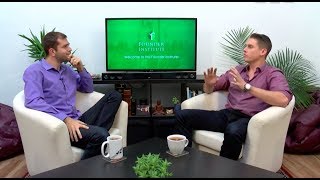
In this interview, Ryan Micheletti, Director of Global Operations at the Founder Institute and co‑founder of VetTech, explains how his six‑year service in the California National Guard sparked his passion for entrepreneurship. He describes VetTech as the nation’s premier accelerator for military veterans, connecting them with Silicon Valley advisors and the Founder Institute’s global network of over 200 cities, 3,000+ companies, and 10,000+ mentors. Micheletti emphasizes that the founder’s personal qualities—leadership, execution ability, and a strong sense of purpose—matter more to investors than any idea, and he draws a clear distinction between a “founder” (a creator building a legacy) and an “entrepreneur” (someone who realigns resources to generate economic value). He notes that veterans often possess a “virtue test” mindset that aligns with entrepreneurial purpose. The conversation also touches on the Simulation Fellowship partnership aimed at turning scientists into entrepreneurs, and on the varied dynamics of startup ecosystems worldwide, from Kabul to São Paulo, highlighting common threads such as individual mindset, limiting beliefs, and the need for meaning‑driven work.
Chapters
It's a pleasure.
And we have, you have 4 years behind you at, as the Director of Global Operations at Founder Institute, which is a pre-seed accelerator for companies, startup companies that have meaning, that have purpose, that are driven. We also have 6 years at, uh, as the founder of Vet Tech, Right?
Correct.
And with the Veteran Founder Initiative. So we'll be unpacking that as well.
I really—
we have, we have a cool partnership that we've struck up as well, the Simulation Fellowship. So this is going to be really exciting, catalyzing more scientists to become entrepreneurs. And so we'll be unpacking that as we go through. Let's just start talking about this from a perspective of you. I'd like to hear more from you. About how you got started with being so passionate about entrepreneurship, passionate about veterans. Teach us about that.
Sure. Yeah, so, um, I guess my entrepreneurial journey really started, uh, when I was in the military. So I did 6 years in the reserves in the California Guard, and I noticed that there was a, a big correlation between, uh, military service and entrepreneurship. Things like leadership, the ability to execute, right? The ability to overcome like very, very large odds, right? And really kind of stretch your, what we call, adversity muscle. And so, you know, being born and raised here in Silicon Valley, I knew that the front line of innovation was here. And so I decided to jump headfirst into entrepreneurship. And so I co-founded VetTech, which is the nation's premier startup accelerator for military veterans. We help veterans all over the US and even internationally if they're stationed abroad work with Silicon Valley advisors, investors, and plug them into our local Silicon Valley network as well as our international network of resources using the Founder Institute as one of our engines. I love how you said adversity muscle.
They're really strong at being able to execute, to be able to find that vision and bring it forth into the world, and that's really good that you're making that happen with Silicon Valley ecosystem.
Yeah, yeah. If you look at, you know, what makes a great entrepreneur, right, you know, they have to be smart, they have to be open, right, to new ideas. But, um, you know, if you ask any great investor, go up and down Sand Hill Road, they'll tell you that the most important thing is the founder themselves, right? The idea is very important, but you can't take a great idea with a bad founder and make it successful, right? You can take a good idea with a great founder, and that could be a massive success. And so that's why at Founder Institute We're the Founder Institute. We focus on the individual first, right? Because we know that great companies start with great people.
Yeah. And the network's gotten massive. It's almost 200 cities, 3,000, over 3,000 companies, over 10,000 mentors. Wow. That's a huge network. And especially being able to plug veterans into that as well, into the Founder Institute network. So then, so then as you transitioned over to, from service to entrepreneurship and helping entrepreneurs, you were, you know, you're discussing the importance of the, of the founder themselves. What else have you found to be some of these really important? Because we sometimes on the show, we like to say that entrepreneurship is the best thing you'll ever do, that it drives a lot of meaning to people's lives. So like, what do you What do you think about that?
Yeah, well, so I think their entrepreneurship is a growing topic. I mean, we're in 200 cities, and so what's really interesting is seeing the local dynamics. So whether it's launching companies in Kabul, Afghanistan, or São Paulo, Brazil, right? Every market's a little bit different, but there's common threads. And I always like to make a distinction that there's a difference between a founder and an entrepreneur. An entrepreneur is someone that like realigns resources to create economic value. A founder is a creator. A founder is someone that's doing something that's like, okay, here's my legend, here's the thing that I'm going to do to build my legacy. And so I don't think I've heard that distinction before.
That's an interesting one.
Yeah, yeah. I mean, you know, and I would go as far as to say that, you know, if you— it's really about your life purpose and what you want to achieve. And I think that I've worked with plenty of entrepreneurs all around the world, and the ones that tend to succeed have really found that meaning. Like, why are they here? What are they supposed to do? And usually it's tied towards some greater purpose, right? And that's another kind of thread that you see with a lot of military veterans, right? They kind of passed what we call the virtue test, which is, you know, country's at war, I'm gonna volunteer my time and my service and potentially risk my life. To do something and contribute something greater to myself. So right off the bat, we're working with a group of people that kind of get that, right? And so I do think there's a big difference between the founder and an entrepreneur. And I would go as far as to say that it really takes someone to have deep introspection to figure out what it is that they want to do in the world.
Yeah. It's easier to take people that already have the mentality of building something bigger than themselves or serving a goal that's bigger than themselves than it is to try and train that into, into someone. So that's a huge advantage with working with, with veterans. Okay, so you— so everything from São Paulo to Kabul, right? That's crazy. There's like big distinctions in those entrepreneurial ecosystems. They're totally different places. What have you noticed is going on around the world in the different entrepreneurial ecosystems as they sort of flourish? Because there's a lot of things that hold people back, like women getting involved in entrepreneurial space or in the founder space. Yeah. Yeah. So yeah, teach us about that.
So, well, there's, there's a lot to that, right? And a lot of it depends on like how robust is the ecosystem, what are some of the socioeconomic What's that climate look like? I think ultimately, like, you know, regardless, and I've seen this across like almost every city, like, and it goes back to starting with the individual person. Sometimes people have limiting beliefs about themselves that keep them from taking the steps and doing the things that can help get them to achieve something great. And I think, you know, as you said, like entrepreneurship can be one of the greatest things that a person does. It's also one of the hardest things a person can do. So there's— and, you know, I'm looking here, right?
Yeah, yeah, that one's so good.
Dreams don't work unless you do. Well, so, you know, at Founder Institute, we basically provide like the global network and the framework to build something incredible, right?