Scaling to Your First Million & Beyond, AMA with Chase Harmer of ProfitPay (3 Feb 2022)
Chase Harmer, CEO of ProfitPay, explains how to reach $1 million in revenue by building a core product first, using beta customers to iterate, and bundling services into flat-fee packages. He emphasizes repeatable processes, disciplined hiring, and leveraging existing customer relationships over nickel-and-dime pricing.
Chapters
Done. As I, as I mentioned, I'm thrilled to introduce Chase Harmer. He's the founder and CEO of ProfitPay and the director of Founder.inc. ProfitPay is enabling the future of the digital economy by innovating around what's next in payments. It's an all-in-one platform solution for card issuing, digital banking for merchants and consumers in the US, EU, and Canada, and helps internet companies to make more money. So yeah, Chase is a top-rated mentor. He has expertise Sales management, payments, obviously a payments company, ProfitPay, customer success, contract negotiation, and more. Chase Harmer, welcome and thanks for being here today.
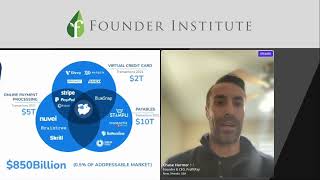
Yeah, thanks so much, Dustin. I appreciate the opportunity to talk to everybody and, you know, I'm glad to be here. You know, so today we put together slides that kind of talk to how to make your first million if you're innovating software or building some sort of technology. You know, there's a few different things. I think making your first million is easy. After that, it becomes more complicated because you have to build processes around all that stuff. But initially, I'm going to flip between a couple different decks here. I have— I want to talk about the size, residual, and longevity of the business. When we actually started our company, we did a competitive landscape, and there's 3 things that I really look at, and that's the size of the market. You know, obviously we're in the virtual card space, just $2 trillion annually in '21. Online payment processing, huge opportunity. And payables, which is owned by banks for the last, you know, forever. And it's, you know, trying to convert those into cards. There's a $10 trillion market there. So the size of opportunity is, is there. There's big competitors in that space. And the residual opportunity for all these things— are people going to be utilizing this stuff in the future? Um, you know, and the answer is yes, maybe in different ways, but payments is always going to be a part of it. So 3 things that I always look at, and I think that's important to start it off with. Um, so back to here, how to scale in millions in capital, uh, or revenue without millions in capital. I'll just repeat this first part just real briefly so you can see what I was talking to. I was talking to this slide here, which basically shows the size of the market that we're in you know, the different competitive landscapes that we're addressing and what we think we can, how we think we can insert ourselves into that equation. And when I was talking about virtual credit cards, online processing and payables and the longevity of that, it's credit cards might not be around forever, ever, but there's always gonna be some sort of payment mechanism that's moving money from your bank account to someone else's. And we wanna be a part of that. So going back into, oops, here, I'm gonna present here. So being brave and innovative, all you guys have those, you know, all you guys are thinking along those lines and scaling to millions is totally possible. It's actually probably easiest to get to your first million if you're building something unique, but after that it's building process around that so your product can scale and I think that's really important. The revenue model and how it works. You know, one of the most important challenges that you guys are gonna face is capital. So how do you address that when you're trying to build technology? Maybe you didn't raise a lot of money, maybe you have the ability to raise money and that's great, but let's just pretend that, you know, you haven't raised the money yet and you're trying to survive the pre-seed funding round, you know, hiring employees, duplicating yourself and delegating some responsibility so you can grow. Empty businesses don't get funding unless you are just a great, you know, you're able to present the idea in a way that people really understand it, they can grasp it if it's thin air. But if you have a business that you're building, you want to be able to have some sort of revenue that's generated to raise more money. And how you do that is COGS in the business. You know, there's cost of good, doing goods for you to do that business, but Are any of those products and what you're building, are you able to resell some of those services? So what I'm comparing that to is when we started our business, we're a payments company. Before I had any capital, I brokered deals for a few years and then I started, then I became, then I made enough money to actually launch the idea and start revenue, but with a core book of business that already existed and then built off of that as I grew the business. So I think a lot of times people get so caught up in building the technology and the idea that they get stuck. But if there's partners that you're doing business with, there's, um, you know, other ways for you to make revenue that aren't, um, you know, being built, that already exists, that you can tie into the business, it's a great way to actually start earning revenue and building a business around that. 'cause it's easy to then take those customers that you have that book of business and actually go out there and make them beta customers for your new product. It's people want to be on the cutting edge of what's new and what's innovative and what could save them time and money. So if you're able to get them with the core business, the boring stuff, then you can sell them the innovative stuff and people will buy into the concept and they'll be your getting big customers. And those are really what you need in order to start scaling the revenue in the business. So think about your business and think about the partners that you have and if any of those are able to resell those products and services and make those part of what's going to plug into your model. As you're building, there is no real perfection on phase 1, getting it out there, and everybody wants to wait until it's ready, but you'll never know what's, what's working the way that you want it to and what's not working the way that you want it to without actually going out there and testing it. And customers are going to do more testing than you because they're thinking about ways to, in their business that you're not probably thinking of. So having those beta customers and just getting it out there is, is, is half the battle for most entrepreneurs. You know, Elon Musk says if you're not failing most of the time, then you're not doing something right. So if you're innovating something, don't worry, it's hard. It's hard. You just need to get it out there and get customers that will test it with you. That's why having those core products, going back to getting revenue in the door, having those core products that are working already in the market that you can tie into an existing innovation, that's, that's a great way to start earning revenue and actually not worrying about what's going on with the build. Making your first million, getting to the nuts and bolts here. Mining your opportunities, knowing your market better than anyone else. So, and I'll compare this back to our story. So I started in the credit card processing business, knocking on doors, setting up merchant processing machines. Then I became, a conduit for the bank and became our own sales office. We started growing that, and as we started growing that, we started noticing different things in the business that were all segregated. Our, our— the fintech business is very siloed. You have, you know, fraud prevention companies, processing companies, card issuing companies, gateways. So because I had been a part of every single one of those sales cycles, like connecting merchants to these, to these platforms, I really understood the business and saw the business differently than anyone else. And so I think, you know, being able to understand every single nook and cranny of your business is super important, but it also helps you find the opportunities. And that's really where, you know, you can scale the business by getting one customer plugging in 5 different products because you understand that they need a gateway, you understand that they need payments, you understand that they want to do card issuing because they're buying ads on the internet. I think, you know, understanding that clients are doing all that gave us the ability to service all those. And I think that's what you need to think about as you're scaling revenue, not think about getting them at that core product and then, you know, letting your cross-sells and upsells do the rest. Insular sales, ancillary products, monthly costs, and you can bake these into quarterly or annual figures. Without actually being aggressive and nickel and dime me. You know, think about Comcast. Comcast, if you buy cable or try to get internet service at Comcast, for some reason you end up signing up for a phone, TV, and internet. And it's because the bundle works better and it doesn't feel nickel and dimey, but you always wonder why the heck you have a phone service when you have your cell phone and you never use that phone because it's a better deal. Well, you can bundle things together, and I think that's, that's a bad way to do it, but you can bundle actual products together so you're not charging 5 cents here, 12 cents here, a dollar for there. You can bundle it together for a flat fee that actually makes sense, and people will buy in because it's ease of use, it's user-friendly, and they know what they're going to pay at the end of the day. You can bundle all those things together and still make margin, and I think Doing that allows you to really sell more products, earn more revenue, and not look like you're being aggressive with the pricing. Stop being shy. When you create new technology, even if you're reinventing a new idea or something that's already existing, like moving money, for instance, you, you're really creating a new category. So you don't have to look at how the existing sales are being sold. Like, so for instance, people are doing interchange plus pricing in, in the credit card processing business. Well, just because that's what exists in that particular market, when I build all these new things, you can, you can build a new pricing model that works for the new economy that you're trying to go after. If you look at Stripe, did a really good job of that. You know, they made the market 2.9 and 30 cents, but you're getting all of these things. And I think, you know, don't worry about going out there and setting, being wrong. You can test it and see what works. But in order to scale it, you have to test and you have to test with a good market segment to understand what's gonna be scalable and what's gonna be repeatable and duplicatable. SaaS businesses are very attractive. So whether you're raising money and you have an existing book of business or you have a model that allows you to go out and earn new revenue and overages, but you have some sort of baseline revenue that you can take with you. And some examples of that is like maybe a monthly access fee that, that's, you know, with every single user, even if it's $0.99. If you're an application that's getting millions of users, $0.99 is a lot. You know, Cardom for us, like for virtual card processing and issuing, card on file fees. So you can, if some, if you have firms that utilize hundreds of thousands of cards every month, If there's a card on file fee, then you're earning revenue on all those cards every month, and that's actually a great thing. Flat fees, tiers, you know, we also have credit monitoring type products. So, you know, if you're getting something, you can mark those up, but you have it on every single user or a certain amount of those users that's predictable and duplicatable. And, you know, people that are going to give you money or or if you're trying to build a book of business, that's, uh, that's money that you can count on every month. And that's, uh, that's key. Scalable, predictable revenue is really the game changer. And this is coming from a guy that, you know, I raised, you know, $20-some-odd million. We built a lot of product. We made millions and millions, lost millions trying to figure out how to make millions, you know. So the, the key is to have that stable revenue because when you are running out of cash or if you're getting light on cash, you know that that money's going to be there and it'll take care of you in the future. So plan your opportunities, build a pipeline and make sure that you have some anchor tenants in there that are large enough to keep you self-sufficient so you don't have to worry about where the money's coming from. When you set your price, you're really in control. And I feel like when we came out and started our— when we built our platform and came out with some pricing, you know, I was really thinking about how do I— how do I— how am I going to compete with this? Because this is out there and you do have to think about those things. But if you're unique enough and you're solving a problem that, you know, really saves time, saves the customer money, but they don't have to think about it, there's convenience. You're able to set a price and people will pay that price as long as it's competitive. And you can look at, even do free trial programs, 30-day trial programs where people, if your product is good enough to get people in the door and keep them, then 30 days you actually can build in the monthly models on the backend of that 30 days and people will pay them, you know, but you'll get a lot more people to try it. Um, let's see here, one second. Let me go back to here. And this is kind of, um, here we go. Okay, can you guys— I think you guys can see this, but talking, getting people in the door, right? So getting people in the door, um, readers must see themselves on their individual landing pages. And I think in the fintech, we're the worst offenders of this because we sell the platform, we sell you know, the services that we do, not necessarily how you're going to connect with it. So I think this is really important for anybody that's listening, you know, that you need to make sure that you're talking to your customer and that, you know, even having this on your landing page, not this exactly, but, you know, who's looking for your product? Are you this? If this is you, then this is what you get, right? If this is you, this is what you get. And also, you're going back to Stripe, do It's why they were able to connect with users. So Slack did a really good job of connecting with users, you know, as small business owners, because we all understand the problem of the small business owner or the founder. You know, Slack had an infomercial that had a bunch of people in a closet, like having a meeting. And I think as a founder, it's funny and people can relate to it, but they also understand, you get me. You understand me. And I think if you're trying to drive real sales and massive amounts of revenue, it's really all about connecting with your client, you know, and it has to be, you know, for us it was driving awareness, driving consideration, and driving conversions, attaching those to KPIs. And I think you really have to measure those statistics, you know. So once you have your use case defined, once you have your audience defined, Once you've kind of figured out the money, it's really about building that brand and scaling it to the next level. And I think there's a lot of processes that are involved in scaling that revenue and continually to make more millions on the millions that you first made. But if you can build in a residual model, if you can build in a monthly SaaS fee, um, if you can afford to get people inside of your system and let them try it for 15, 7 days, 30 days, you'll have a lot more success getting people into the door and scaling revenue then just becomes how much, how much is it costing to acquire customers through, you know, social media, through YouTube, through the different channels that you're running traffic. And that's pretty much, that's pretty much the deal there. I mean, bundling products, you know, going back to the beginning of the presentation where I talk about if you're building product while you're building that MVP product, you know, try to look at services that you're working with or that you're going to be doing business with that support your core product. How can you go get those clients? And those will be your beta clients when you start doing it. And that's what we did. We got the processing core revenue, and then we went and said, hey, listen, we're going to be— we're, you know, revolutionizing the world, but we're actually doing these things, and I know that this could benefit you. Will you try it? You know, those are the best type of clients because they'll let you screw up. And you know, if you screw up too much, you know, they'll tell you to stop till you get it right. But you know, they'll give you an opportunity. I think that's part of the biggest hurdle to making a million-dollar, billion-dollar company is getting out there and testing it without ruining your reputation. That means that you have clients that are willing to take the ride with you. Dustin, that's all I got here.
Awesome. Thank you so much, Chase. I'm going to take away the screen share here really quickly. I neglected to mention at the top, Chase is here to answer your questions, so please don't be shy. As he was saying, just like when you're selling products, you can't be too shy. Put your questions, if you have questions for Chase, in the chat, and we'll ask them. But I'll kick it off here. You talked about all the right ways to scale, I guess, but my first question is, in your experience, both as a founder and as a startup mentor, like in the fintech space or more widely, are there particular common mistakes that you see founders making with regards to scaling or problem areas, whether it's like hiring the right kinds of people or allocating budget in the right places or like otherwise not laying the groundwork properly to transform from like this small organization to a bigger one? What are kind of— I think— Areas can't go off the rails.
I mean, you said a lot of things there, but I— and I think that really it's about building process. I think most entrepreneurs are like, hey, listen, oh dude, we got 20 sales, we got like, we got this, you know. Then you just start throwing a lot of money at it, and then you realize how broken you are because you didn't build any process to actually support the business. And I think it all— it's when, as you're scaling the business, it's really all about processes, you know. How are you going to handle those sales? How are you going to like thinking about what if the product doesn't work right? How are you going to refund? How are you going to credit? How are you going to do all these types of things? You need to think about it all and you have to have processes and people that are willing to execute that for you. Because if you want to throw $20,000 at it and you got something pretty shiny that people want to take a bite out of, you have to be able to support that. And I think that's the, that's where the rubber meets the road.
Yeah.
Yeah.
One thing I've often heard is like when you're earlier stage or when you're really in the startup stage, it's you want to have a lot of generalists around you who can juggle and have those different hats. But then as you are really ready to scale up, like post-funding, you need to start bringing on more and more specialists that I guess you build those kind of processes around. Um, yeah, but, uh, sure.
And you get those people to help you build those processes, right? Because you might not know— I was a non-tech founder, so I didn't know what I didn't know. And, you know, you hire the right people and you, they, you build those processes together. So Number one, you can keep them accountable, you know, and number two, you know, you understand you guys are both aligned going towards that same place.
Yeah, okay, so we have a question here in the chat, the first one from Kyle, who's asking, uh, how do you get residual monthly payments, uh, if you're selling some kind of knowledge? He says, uh, once there's knowledge learned, there might be no reason for a monthly fee. So, uh, that's very general question.
I mean, I think it's, uh, like, so ongoing, right? Why don't you think about building, uh, you know, like an ongoing type of subscription, like, hey, you want more, you want more value, we got a lot more of it, and this, but you have like a $9 a month subscription or something like that where you can start building a residual and you not just give that one piece of information. If that one piece of information was good enough, you can get them to say, hey, you know, you want more information like this, you know, you need $90 a month, you build in a subscription program, and there you go.
Yeah, yeah, that makes sense. A question here from Reem is about approaching organizations at this MVP stage. So how to approach organizations to access beta users, whether that for their MVP that they're building. You have any tips, talking points, or what kind of mindset you've used to approach these early possible users?
I think, well, going back to what I was talking about earlier, and this is how I did it, is you know, I had a product that I could sell that was kind of— I can merge into whatever, you know. So I think payment processing, our core business, I could go get a client and I can broker that, but I can still make residual income and I can actually plug it into the— now you have them as a client because this product works, you know. Hey, this product works, you know, it's not going to screw up, it's going to be slow, it's going to be steady. Then you say— then 30 days later you say, hey, listen, you know, we've been doing business together for a few— you see that the value that I'm bringing to you, We have these new products that we're, you know, what we're putting in the market and we'd love— I know that it'll help you. Are you interested? Will you be interested to take that journey with us? Become a beta user. That's how we did it. And that's, you know, we had a lot of success because we— you get the client first with something that works, you know, that's something that they need, you know, and you add value there. Then you can, you know, as you're building this technology, you can kind of shuffle them into the framework. And they'll do it because, you know, you help them.
Yeah, yeah, you've established that trust. That, that makes sense. I, I really liked kind of two things that I wrote down while you were presenting is that I really liked was this idea of knowing your market better than anybody else. And then this other thing that you just talked about, this importance of having— you didn't use the term Rolodex, that's like an old school term— but this Rolodex of existing customers who you've built up this trust and then you can use them as a platform to like launch a tech-enabled solution and Yeah, those two things, like knowing your market and having like kind of a network around you of people, they both kind of point towards— I think this is your story— like being a true, like, deep industry expertise before you're a startup founder. And I just wonder, like, in your experience, not just your personal founder story, but the founders you've worked with, do they tend to be more successful? I mean, versus somebody who's like kind of entering an industry cold, like if you built up all that knowledge and those connections that can only benefit you when you're ready.
It certainly doesn't hurt you, you know. I mean, having all those connections, all that stuff, you have to build the railroad tracks no matter where you go. So if you build it ahead of time and then you're like, you know what, I know all these people, I can do this and this, you know, add value here and these guys will listen to me. I mean, that's the way, you know, is do something that you're already in the weeds with And you know, you can easily connect other players and make a business out of it.
Yeah, there's a question here from Richard that I want to ask, which is he says, when you're in a competitive market and you're fighting for traction with other perhaps better-funded competitors, what are your thoughts on these guerrilla tactics? And for an example, he says using MOUs in place of a competitor's call to action. Any thoughts on that, of just being really scrappy and fighting low-budget battles against, uh, better-funded competitors out there?
Yeah, no, I mean, I've been both, you know. So like, I, you know, started from nothing, and, uh, you know, we, we were scrappy trying to just go out there and compete against the Heartlands and the First Datas and the Teases of the world, right? So they were like a million times bigger than us. And even today, you know, Stripe's the 800-pound gorilla. So it's like, you know, you do have to be scrappy to go grab the business and do something that's, that's innovative. I'd say that You know, don't worry about them. How big is your market? You know, if the market's all taken by one player, maybe think about something else. You know, like, I mean, or if you have a value proposition that's good enough, hey, that really is a problem all these guys are experiencing, then you have something, there's an opportunity. And I think that's what you focus on. You don't focus on, hey, I'm the small guy. It's like you focus on, hey, look at, like this cool problem that we're solving that you're not taking advantage of today. I think everybody has a problem. If you help them solve that problem and focus on that problem, that's where you can make money.
Yeah, and that's where the real industry experts know what those deep problems are, those pain points that maybe people, it doesn't like the first thing that comes to mind, but it's like, yeah, just these industry kind of pain points. Right. Yeah, question here from Han that I wanna ask, it's a little different, but he says, could you elaborate more on the making readers see themselves immediately on landing pages? And since you're a payment solution, you presumably have a lot of customers. You've been on their websites and seen their landing pages. His follow-up question is, what are the key success factors that you've seen that make landing pages effective? Don't expect you to be an expert on landing pages, but you've probably been on a ton of software companies. What stands out for you?
So people talk about B2B and C2B and B2C. It's like so different. I'm like, Wait a second, no, it's not. I said, at the end of the day, we're all consumers, right? And we've been trained by, you know, this process of buying stuff on PayPal and Stripe. And we've been trained like that for years now at the consumer. So I think, you know, it's really about giving, just focus every, when, if they're coming to fix a toilet, you know, like the toilet's the problem, right? You know, and they have the problem, they need to fix it. So it's like, really just focusing on what does your product do? You know, like it solves this problem. We solve this problem, you know, because that's how consumers are seeing it. It's like, I need to fix my toilet. Where's the toilet fixing guy? Like, let me Google toilet fixing guy, you know, but this is what we do. We fix toilets. That's what we do. You know, okay, like I believe this guy, you know, so I think that's really just focusing on the problem, not necessarily we sell plungers, You know, was like, fuck, do I need a plunger for this or do I need, you know, I don't know. But, you know, I know I have a broken toilet.
So yeah. Yeah. One thing it's like I've seen a lot of is you can often, especially early stage companies are not when they're not addressing the problem solution framework, they're like they're talking about all these different features and they're like they're trying to sell features and, and that's not a good way. So it's better to speak to the problem itself.
I mean, you're talking to a guy that did that for a long time, and then I realized like that's not the way, you know. So yeah, yeah.
Okay, uh, I only see if I get some more audience questions. I know I have at least one more question I want to ask you. I would have you for a few more minutes here, which is just like, uh, yeah, you're always thinking about digital payments and online businesses at ProfitPay. And yeah, as you mentioned, like fintech is such a huge area, uh, and I guess because it's a category that's about enabling solutions for other kinds of entrepreneurs, which makes it interesting. Yeah. And now, but now with all the DeFi and the crypto payments stuff, like all that, it's like even more confusing now to know what tech is the most relevant or interesting from. So where from you sit, what's the most exciting or the most important area of payments that's on your radar right now that maybe you think is going to change the most in the next decade, or how people exchange money online? What are you watching?
I think it's all about marketplaces, honestly. So by 2023, they said about over 90% of all digital payments online will be some sort of marketplace. If you think about marketplaces, there's Amazon, Facebook, but there's all these things in one thing. You can go there, you can get t-shirts, you can go whatever. There's— but everything's there. So I think every, every, um, business that's going to be digital at, um, is going to have some fintech component built into it. Um, and that's just because it's got to have convenience. I got to be able to, you know, spend the money and make the money, do all these things. And it's got to be, um— so I, I feel like marketplaces is really where we're focused. I mean, I think crypto is— we're— it's like crypto, I compare it to like the Tesla Like, the Tesla's cool, but like, it's only battery. Now try to ride— drive from Reno to Nevada to, uh, the Bay Area. It's like you're kind of scared because there's only one, um, Superstation in between, like, the whole way. So it's like, it's not— the world's not ready for the whole— just to go full battery yet, you know? It's like the world's not ready for crypto all the way yet. But is it exciting?
Yeah, for sure.
And I think it's the future, but it's just not— it's like it's not there yet all the way. Needs more to stay mainstream.
That makes sense. I want to be cognizant of your time because we're running past the half hour here, but I don't know if you have other stuff up against this, but time for at least one more question here.
Yeah, for sure.
Okay. All right. This is a good one to end on. I feel like Reem might have asked another question earlier, but asked, what's the biggest challenge that you faced as a founder and that you overcame? Does anything come to mind? Personal kind of anecdote stories?
Yeah, I mean, I think going back to processes, we didn't have any. We launched, we got like super, we had super amazing reception, but we weren't ready for that when we did it like initially. So I think that was a mistake, you know, not actually building process around scale. We didn't initially and then we had to go back and take steps back to go forward. So I think, you know, as a founder, probably my best advice would be sometimes go, you need to go slower to go faster. And, you know, it feels like there's so much stuff going on, the world's burning, you know, there's a million different things that you gotta look at. But if you just keep charging, you're not gonna see the whole picture. And I think a lot of times you just need to take a step back and do things that probably you don't want to because you know it's time-consuming. But if you do them, when you scale, it'll change your life, you know. So I think that's, that's the thing that I would say is probably, you know, it would make the biggest impact if you understand that. So just don't try to rush and go forward and charge, uh, so fast. Take a step back, you know, look at what you're doing and make sure that it's the right way, you know. Don't just charge through it.
Yeah, yeah, that makes a lot of sense for, yeah, setting yourself up for success and just, you know, being ready to kind of take the next step, but, you know, having, yeah, the right mindset to slow down when needed. Yeah, that makes a lot of sense.
That's hard because, you know, it's like the world's burning, you know, so you're like, dude, I can't.
What are you talking about? You're always putting out fires, like it always feels like, yeah, yeah. So it can be hard to have that mindset, that perspective.
Yep, yep.
Well, thank you so much, Chase. Yeah, this has been a really interesting, yeah, conversation. Yeah, thanks so much for your time and the presentation.










