Seed Funding & Financial Planning: A Guide to Raising Your First Funding, (Finmark CEO Rami Essaid)
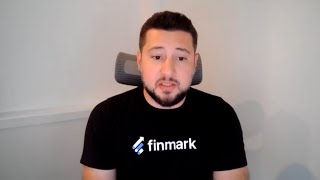
Rami Essaid, CEO of Finmark, walks founders through seed fundraising: how to pitch, model finances, and negotiate terms. He breaks down investor types, explains why pitch decks need unit economics and TAM, and covers equity dilution norms of 10-30% per round. Warm introductions and modest founder salaries matter more than you'd think.
Chapters
Hey everybody, welcome to this Founders 2 webinar. My name is Jonathan Gritchen. I know we have over, I think at this point, 600 people that registered for this webinar today. So we're super excited and it seems like the topic resonated well with the audience as well. So I hope you're excited too. We are expecting people joining from all around the world. So if you are there in the audience, let us know where you're joining in from. I'll even say hello everyone here in the chat. This is a 100% live event. But believe me, these events are much more fruitful, much more interesting for everybody, not just for you, but for us, the speakers as well, when there's interaction and when you're asking questions. So I'm already seeing here Maine, US, that's awesome. Colombia, Israel, San Francisco, Germany, Albania, Croatia, Sweden, DC, Montreal, Denver. Awesome. Amazing international audience. And I think the topic that we're talking about today is one that's spans all cultures, all countries, all continents, and that is getting the first round of funding for your startup, which I think— and I'll just bring on Rami here as well. Rami, the first round is the hardest, is it not?
Oh, it's— the first round is definitely the hardest one. It's like plowing the road with your face.
That's a good one. Plowing the road with your face. That's a good one. I know. I remember too, it was, so his name is escaping me right now. He's the founder of TrueCar and a bunch of other companies. And this guy has raised over a billion dollars in funding. And the way that he described it, even though he's raised countless funding rounds, he's like, it never gets easier. It's like every time it's going to kind of suck. You just start to get a little bit more sensitized to some of the nos and things like that. Would you agree with that general sentiment too?
You know, it's never easy. I do think it does get easier as you get more experience, you build a network, those, it does make it a significant amount easier, but it's never easy. And you do learn not only, you know, to be desensitized from the nos, but how to avoid some of the nos, right? I think that's part of why it's so painful your very, very first time is that you're just casting such a wide net and you just bounce off the wall a lot. You're just, you know, you're throwing stuff at the wall and seeing what sticks. Whereas as you get more experience, you get more narrow in your focus and you don't have to get rejected as many times.
Awesome. All right, so that's what we're going to be talking about today. And I kind of buried the lead here, but Rami is the founder and CEO of Finmark, which is an awesome new startup that's helping startups financially plan and forecast their business. And Ramy's also founded several companies and raised a bunch of funding. And I believe you do some angel investments as well. Ramy, do you wanna kind of give us a little bit more background?
Yeah, yeah, thanks, Jonathan. So as Jonathan mentioned, my name's Ramy. I'm co-founder and CEO of Finmark. We just, we help companies, especially early-stage startups, not run outta money, right? We help you manage your runway, forecast your revenues, keep track of your expenses. Instead of doing it all in a spreadsheet, which is error-prone, we built software to hopefully make it a little bit easier for founders to keep track of their finances. I think it's really important for finances to be part of the narrative, the story, the entire journey of your startup. And so we built Finmark for that. Before that, I had started two other companies. One got acquihired, one we sold for nine figures, raised $80 million in venture capital across my three different companies. I am also an angel investor and a partner at Idea Fund Partners, which is a seed stage VC on the East Coast. And so I've been there, I deploy capital, I invest in entrepreneurs, but at the same time, I've felt this pain firsthand. I've had to raise money several times and Hopefully I can teach the audience a little bit of about my, my, through my experience to help them avoid some of the pain.
Awesome. All right. And just along those same vein, along that same vein, for anybody in the audience, we want to make this interactive. The way this event is going to work is that Rami is going to get into a presentation here in just a moment. Rami, if you want to start queuing that up. But after he's done with the presentation, we are going to take audience questions. So throw any questions that you have into the chat here. For Rami. We have members of the team that will be taking those questions and getting them ready and queuing them up. Then when he's done with the presentation, we'll go through your questions. All right, so I think with that all being said, we're good to go on the presentation, Rami. If you want to get that started, I'll turn my camera off and mute my audio. And then again, once again, for anybody in the audience, at any time, throw any questions in there and we'll address them after the presentation. And Rami, take it away.
All right. Thanks so much. So before we get started talking about how to raise money, what you need to do to communicate to investors to raise money, first, I want to level set, right? What we're talking about today is raising venture capital. And so in venture capital, there's very specific types of investors, and I want to make sure that we understand what those investors are. And I also want to mention for everybody on here, you don't have to raise venture capital money to build a startup, to build a thriving business. You can find— there's a number of different ways to build businesses. You can get grants, you can get loans, you can bootstrap your company. Venture capital isn't for everybody. If you're raising venture capital dollars, that means that you are signing up to try to accelerate more quickly, to do things at a faster pace, to have an exit. There's an expectation when you take venture capital dollars that you will be selling the company in some form or another in 5 to 10 years. Right. That could mean going public. That could mean the company getting acquired. That could mean a number of different ways. But at the end of the day, investors in venture capital want to see returns, and that comes in the form of a change of control or selling the company. So if you want to keep a long-term company, you may find that venture capital might not be the right stage for— the right place for you. But if you do want to raise venture capital, let's talk a little bit about that ecosystem. First thing to understand is that there are a lot of different types of VCs out there. It actually starts before even venture capital. It starts with angel dollars. And angels are just individuals that have money and they want to invest in startups. They write personal checks, They range anywhere from thousands of dollars to hundreds of thousands, maybe even millions of dollars on the really high end of angels. These people tend to be faster in decision-making. They tend to need less conviction. They have less of a thorough process. They invest a lot more quickly, and it's oftentimes the best place to start raising money is through angels. The next step above angels are small funds, seed funds, or micro VCs. These are smaller funds that invest in early-stage companies. And then you have the next level up, which is a true venture capital firm. And this is a firm that raises money from other people to reinvest in startups. So they're not investing their own dollars, although every partner usually puts in some money into the firm. What they are doing, though, is raising money and then deploying that capital. Now, these firms oftentimes have a thesis around what they're going to invest in. And so the number one lesson to understand who you're going to— to make you more effective in fundraising is understanding who you're pitching and what their thesis is and make sure that you match within that. So the first thing that they have a thesis around is the stage or the risk that they're willing to take in a startup. Right? Some VCs, some firms invest really early on. At a pre-seed or seed stage. Some firms like to see a little bit more traction. As your revenue goes up, as your traction goes up, the risk is decreased. And as the risk is decreased, your valuation goes up, right? And the amount of dollars that people are willing to invest goes up. So when you're talking to a VC, make sure you have alignment around what stage you're in and what stage they like to invest in. The other thing that they might have a thesis around is what industry or sector they want to invest in. Right? They may have a bias or an appetite towards enterprise software versus consumer software versus biotech, right? Make sure that the firm that you're talking to invests in your type of company. More importantly, make sure that the firm— the partner that you're talking to at the firm invests in your type of company. What you'll find is a lot of times there's specializations within the partners at firms. right? And so you'll talk to a partner and you see, oh, well, Andreessen's invested in a consumer company, and I'm a consumer company, I should pitch them. Well, make sure the partner that you're pitching invests in consumer. They split up the type of things that they invest in and they work on based off of their industry sector. And the last place, we're talking to an international audience, you might find geographic distribution or a geographic bias in terms of their investment thesis, right? Some firms don't invest internationally. Some firms are very local. Some firms are global. So make sure you understand, will they invest in my region before you initiate conversation? If you don't do all of these things, as Jonathan and I were talking about in the first couple of minutes, you're going to get a lot of nos needlessly. It's going to be a lot harder to get them to move past their thesis. It's not to say that they won't. Sometimes there's always exceptions to the rule, but it just takes a much higher level of conviction to override one of these key theses And so it's important to start there and filter out who you talk to. Now, the other thing that's really important to understand about the venture capital ecosystem is that every VC, whether it's an angel or a big firm, is only looking to invest in billion-dollar unicorns. That's it. And it seems irrational, seems like it doesn't make sense, but here are the numbers that I think point to why it's so important for them to invest in unicorns. Of all the deals that get done in venture capital over a 20-year span, 6% of the deals made up 60% of the returns. What does that mean? Most of their money is made by the top 6% of their deals. Those unicorns that they invest in, the few unicorns that they find, the 6 out of 100, are making up most of their returns. So that means that everything else is secondary to them. And that's why the entire venture capital ecosystem, from seed all the way up to pre-IPO, is all looking to invest in billion-dollar unicorns. Everything else is just gravy to help pad the rest of your portfolio. If you can't articulate how you're going to be a billion-dollar company, you're probably going to have a hard time getting investors excited about you. And so let's talk about that journey. Let's talk about the, you know, pre-seed all the way to your exit journey. It starts with your early-stage capital, right? Your incubators, your foundries, your, you know, the people that invest in ideas, right? This is oftentimes before you have a product, before you have customers, you might find an accelerator that's willing to give you $100,000, $100,000, $250,000, sometimes even more on just an idea. Then you're going to go on and raise maybe a pre-seed round. Right now, that's getting bigger and bigger. All of this seems to have ballooned in the past couple of years. It used to be that a seed round was $1 to $3 million. Now a pre-seed round is $1 to $3 million. This is where your angels come in. This is where your micro VCs, your scout funds come in. Oftentimes, this is done on something called a SAFE or convertible note. This is to not price the company. It says, hey, the company, we're going to give you money that's going to convert into your next round. Then you raise a seed round once you've had some market traction, and we'll talk about those milestones. Then you go to raise an A round, and you're starting to see a real bifurcation here in the A rounds. There are some companies that you hear about that are just very, very hyped. And when they're hyped, those are the companies that are raising a $20, $30, $40 million Series A, and that really crazy valuations. But most people are still raising $8 to $10 million in a Series A at a $30, $40 million valuation. Every single one of these rounds, you typically give up anywhere from 15 to 30% of your company every single round. It's like clockwork. It doesn't vary too much lower than that and too much higher than that. Your growth-stage capital, which is your Series B and beyond, that is when things are executing, when things are working, when it is a machine. Investors, there's specific types of growth investors that give you money to continue to build that machine, to continue to scale your revenue. And then you have your late-stage investors that really are now taking the place of what used to be public, going public. Instead of going public when you're $100 million a company like Microsoft did. When Microsoft went out 20, 30 years ago to go public, they were worth— I think they went out and they were worth about $70, $80 million as a market cap. Now you have later-stage VCs keeping you private longer and investing capital in you to help you grow. And then at that point, then there's the exit, which is an acquisition, a SPAC, or an IPO. Once you've gotten through this gauntlet, let's talk about the— now that we've seen the entire gauntlet, let's talk about the very beginnings of it. Right? And when you're talking to angels, VCs, microfunds, any of them, you want to have a common language. You want to explain what you do in a way that they've understood it or seen it before. This often comes in the form of a pitch deck, Right? And the pitch deck has some key parts to it. You want to talk about the problem that you're solving, the solution to that problem, how you're solving that problem and why it's different, the team behind it, the competition around you, how you're going to market your business model, the size of the market, how you're going to use the money that they're giving you, the milestones that you're going to achieve, and maybe some traction and metrics along the way. I'm not going to cover the first 4 parts. There's lots of content around that. This is so bespoke to you as a company. And there's a lot of great examples of how to articulate the problem solution in the team. What I'm going to focus on are the business side of things. As a financial modeling company, as a company that helps founders with their financials, what's really interesting is all of these slides, your business model, your market, how you're going to use your funds are all tied to how you put your company together financially, how you're planning things out. So it all kind of ties together to the financial model, and you should be able to back up each one of these slides with actual data and actual assumptions, and we'll talk about how to build those things up. The first one is talking about your business model. How do we make money? This is something really, really— seems like it's really, really straightforward, but a lot of founders mess this up. And this is probably one of the most important things to get right. What you want to talk about is how much you make on average per deal, per company, per sale. You want to kind of bring it all together to a lowest common denominator and say, on average, our customers pay us this. And that has to come off as reasonable, right? If you're selling widgets and you say, "We're going to sell this widget for $500," whereas right now people are only spending $20 on that widget, that may not seem reasonable. That may not seem like it makes sense. If you tell me that on average you're going to make $20 per bank and you're going to go sell to all the different banks around the globe, Well, all of a sudden it doesn't really feel like you're gonna build a big business, right? So you wanna make sure to talk about the average deal size and make sure that it resonates, it makes sense with the target audience. And the other big mistake that I see here that a lot of founders do wrong is not focusing on the primary revenue stream. We are talking today about our early stage, our very first money that you're getting, or your, you know, your pre-seed, seed rounds. At this point, you may not have any revenue, let alone having, you know, 4 different, 5 different types of revenue models or revenue streams coming in. And I see this all the time. You say, oh, I'm going to make money 7 different ways. Well, you don't have any money coming in, so how are you going to project that you're going to make money 7 different ways? Focus on the first one. Communicate and articulate effectively how this main one is going to grow and scale over the next 1 to 5 years, and then you can maybe start layering in other ideas, but you want to be able to show that you can get one right. So let's take a look at an example of what this looks like. This is Airbnb, right? This is their pitch deck, their seed deck, and they made it really, really simple. They said, hey, we're going to expect that we're going to have 10 million trips booked with Airbnb, and we take a 10% commission on every single transaction. On average, each trip that's taken is 3 nights, and on average, people spend $70 a night. So 10% of $210 is $20 times 10 million trips. That gives us $200 million in revenue. This is how we make money. Look at the granularity that they broke it down in, right? You can now check all of the assumptions. $70 a night. That seems reasonable for not a hotel, for something that is a room or a bed or not quite a hotel. It does seem reasonable that most people stay 3 nights on average on vacation or on a trip. And then so the fees add up. It all comes together. 10% seems like a reasonable take rate. And then $200 million. It's hard to argue against this. Seems really straightforward, and it comes out to a really big number. $200 million in revenue is nothing to sneeze at. Now we know that Airbnb has blown well past that, but this is how they got started. This is the assumptions that built their business to help them explain to investors how they're going to make money. Now that once you've built out the business slide, You can actually piggyback off of that to explain to investors the size of the market. One of the biggest questions that I hear early on investors ask is, how big of a market opportunity is this? Especially if you're doing something different or new that they've never seen before. In my last company, we were the first bot detection and mitigation solution out there. Before us, there was no— there wasn't a category called bot mitigation. And so every investor that I went to asked me, "Well, this doesn't exist right now. How do I know this is really a thing? How do I know how big this was?" And I would always like try to explain and try to explain why every website needed it. And it just, I never articulated it well. But the best way to do it is just something called a bottoms-up total addressable market. And the way to do that is to take your average revenue that we just came up with, in the last slide, multiply that by the entire universe of potential customers. That's a really simple calculation to say, hey, I'm going to make this much money off of each customer, and there's this many potential customers, that's our addressable market. And as long as that adds up to over $1 billion, then you're good. If it ends up being under $1 billion, then that— then investor's going to get skittish. And why is that? Well, the investor wants you to be a billion-dollar company. And they also know that if you are successful in what you're doing, there's going to be competition. No one company owns 100% of an addressable market. Right? And so the back-of-the-envelope math that they think about is, let's assume they get 20%, they're really successful, they get 20% of an addressable market. That means that if you have a billion-dollar market, then you can get to $200 million in revenue. And that makes you a billion-dollar company, check. But if you have a $500 million market and you get 20% of that, or you get 10% of that, then all of a sudden, there's no path for you to be a billion-dollar market. And that's why it's really, really important to articulate a B behind any addressable market figure that you talk to or pitch an investor on. The next— so let's take a look at an example. Kovi is a car rental and car sharing service in Latin America, right? To articulate how big of an opportunity they have in their seed round, they said, hey, there are 3 million drivers in Latin America expected in 2024. And then 70% of those drivers are renting their cars to work. And we make $5,000 a year. So if you multiply 3 million drivers by 70% of them renting a car by $5,000 a year, which is how much we make to rent out our cars, we're going to have a $10 billion market opportunity. Really simple math, made a lot of sense, resonated, and they've raised hundreds of millions of dollars and they're worth over a billion dollars today. Right, but it started with very basic assumptions, bottoms up to calculate an addressable market. Past the addressable market, you want to talk to an investor about how much money you need, right? This is a funding slide or a, you know, a slide that talks about your capital raise, right? You want to be— you want to lead with how much you want to raise. You don't want to be coy about it, but you want to be sure about the amount of money that you need to raise. So on the back of it all, that means that you've done the math to understand that if I raise this much money, it's going to give me this much runway, and I'm going to be able to accomplish this much worth of stuff. And then you want to summarize that here in the slide. This is what I meant earlier when I said, guys, make sure that you build a model, that you put your ideas down on paper, to communicate all of this, right? You're not just picking numbers out of a hat or looking at my earlier slide and saying, well, most seed rounds are $1 to $3 million, so I'm going to pick $2 million. No, you want to understand what that's going to allow you to accomplish and how you're going to go out and accomplish that, right? So the things that you need to tie in here are what milestones are you going to achieve? With the money that you're raising. Where is that going to take you from here to where? And typically that's in revenue, and we'll talk about those milestones in a little bit. You want to make sure that the milestone that you're going to achieve gets you to the next round of funding, and we'll talk about that in a little bit. The other thing that you want to make sure to articulate in this is where are you going to deploy that capital? What are the key areas of investment that you're going to make? right? Are you going to hire engineers? Are you going to hire salespeople? Are you going to hire— what are the 2 or 3 key places, the bulk of the money, where are the 2 or 3 exist— areas that you're going to invest the new capital into growing? Again, venture capital is about doing things quickly. So when you get a ton of money, they expect you to start doing something different with that. So let's take a look at an example here. Substack. Everybody's heard of Substack, have had a tremendous amount of success. Their very first seed deck, their very first round, they had raised $1 million. They were looking for another $1 million to go big. This is literally what they put in. And what they want to do is hire developers and use cash advances to get some high-profile writers. Two key areas that they're going to invest in accelerate their growth and go big. And that the milestone that that's going to achieve for them is that's going to take them to $5 million of ARR. That's it. Really straightforward. This is how much we need, where we're going to put that money, what that's going to do for us. Makes it super cut and dry for an investor to get excited about giving you money. Now, we talked a little bit about the milestones previously. I said, make sure that the milestones that you articulate meet or exceed the next round of funding that you're going to need. Venture capital works like step functions. You accomplish a bunch of goals and you're going horizontally. You don't have any more money. You're just burning your money and moving horizontally. Once you've gone through that gate, then you unlock more money and you step up. If you guys remember the old arcade game Cruising USA, as soon as you get past a checkpoint, you get more time on the clock. That is literally how venture capital works. So what you want to make sure is you're going fast enough and you're going to achieve the next milestone, and you're going to set your goals to make sure that you get through that checkpoint and you get more time on the clock. Otherwise, your company's going to die on the vine, right? So let's talk about where you are today. And what those milestones are. In your pre-seed round, what you want to— to raise a pre-seed round, you want to show that you have a new novel way of solving that big problem that you articulated earlier, right? You want to have an MVP of a solution or a prototype, ideally a working prototype of what you're trying to do, right? Your software either works or you've at least at the bare minimum drawn it up in Figma and connected the buttons so you can kind of get a feel for what's going on. Oftentimes, pre-seed rounds means that you've built something and there's some people that are using it. At this point, they're investing in you. It's mostly about your storytelling abilities and why you are uniquely situated to solve this problem and to build this product out. Now, to raise your seed fund, at this point, you need to be able to articulate and show that you found some early product-market fit. And what does product-market fit mean? Product-market fit means that you have people using your software and they like it, right? They really like it. The easiest way to do that is to show that they're willing to pay for it, right? Because we vote with our dollars. So if you have a couple hundred thousand dollars of annual recurring revenue, then that tells the investor that, you know what, people are willing to spend money on your product, but doesn't always have to mean that you have money. Coming in that people are paying you. It could just be that you have people that fucking love what you're doing. They're fanatic about your product, and they know that you're on the right track. At this point, you also want to have a minimal viable team. You want to have a team that feels well-rounded. To raise your next round, your Series A, you're going to have to show that you have a proven revenue model. That you've achieved product-market fit, and now you're building your growth engine. So that means you absolutely need money at this point, anywhere from a couple hundred thousand dollars of revenue all the way up to like maybe $4 million of annualized revenue. And, and it's really important now to show that you're also growing quickly. Venture is all about high-paced growth, and we'll talk about that in a minute and why that's so important. But you want to show that you're growing 3 to 5x in the next 12 to 18 months. After that, it's all about showing that the numbers are working and that you're scaling things up and that you'll get more money to invest in future growth. But let's go back down here to the seed and pre-seed round, right? If you raise a pre-seed round, make sure that the money that you get allows you to get to a place where you have some paying customers, where you have a product working and people that love what you're doing. Right. It's not enough to just build the product off of your pre-seed funds. You have to build the product and show that people love it. Right. If you raise seed funds, make sure that that gets you far enough along that you have meaningful revenue starting to come in, that you've proven your revenue model. Right. If you don't, make sure that you build your plan to get to that next milestone, even if you think that you're going to be profitable, which is unlikely, it's really hard once you start taking venture capital dollars to turn profit— to profitability. Even if you think that that's going to be the case, just make sure that you can get— raise another round in case you want it. Now, coming back to the point that I was making earlier, why growth is the thing that excites investors more than anything else. Growth tells people that you are on a fast-paced trajectory. It is the faster you're growing, the more excited investors are. Why? Because that is what public markets reward the most. If you look at a correlation of market cap and any other metric, the most highly correlated metric to a revenue multiple, to how much you're worth as a multiple of your revenues, is how fast you're growing. And that percolates all the way down to venture. They know that when you exit, the faster you're growing, the faster the investors will pay for it. And so they want to invest in fast-growth companies. And so when you look at it, the best companies, the absolute best companies, start by growing 500% year over year. It's understood that over time, your growth rate's going to get lower. right? It's always going to decay because it's hard. When the numbers get bigger, it's harder to keep up that level of growth. But the higher up you start, the less you drop, right? You start high and you drop, you're going to end up higher in the end, right? So the best, best companies grow at 500% year over year. The bottom companies are growing, you know, anywhere between 100% to 150,000% year over year. Right? And so if you're growing under 100% year over year in your early, early stages, you're going to have a hard time attracting investors or getting investors excited. So what does that mean? That means that you need to have a narrative or an explanation of what's going to change, how you're going to start accelerating, why you're going to start seeing additional growth. Right? For your seed round, your growth rate doesn't matter, but you want to be able to show your future projections to have really high-paced, fast growth. A rule of thumb for this is something called the triple, triple, double, double, double, right? You get to a good baseline off of your seed capital, right? Somewhere a couple hundred thousand dollars of ARR, maybe a million dollars of ARR, and then the 2 years after that, you triple, and then the 3 years after that, you double. If you do the triple, triple, double, double, double, You can see very quickly how in 7, 8 years, you go from very little revenue to over $100 million of revenue. And if you're growing at that rate, then you're worth at least 10 times your revenue. So that's 10 times 100, that makes you a billion-dollar company. That makes you really, really exciting for an investor. So if you stray too far from this, then you're either going to feel unreasonable or outlandish to an investor, right? Or you're going to seem not exciting enough. To go back to this chart, right, if you tell investors, hey, I'm going to grow at 1,000% every year for the next 5 years, they're going to be like, no, no way. Nobody does that. Maybe Slack, but nobody else, right? But if you tell them, hey, we're going to grow at 50% for the next 10 years, that's also not going to be exciting, right? So the rule of thumb, Try to stick to around triple, triple, double, double, double. How are we doing on time?
All right.
Milestones. The other milestones that exist are all around the metrics that you want to communicate, especially if you don't have revenue, right? And so let's take a look at some of these metrics that might be also meaningful for you to achieve and discuss with your investors, right? If you don't have revenue, then you can talk about the number of signups, the size of your waitlist. You may not have paying customers, but you— there are other ways of showing investors that people love what you've built, right? It's not all about just paying customers. It could be the number of beta users. It can be by sending out a net promoter score or a satisfaction survey. You can also just show them how often people are engaged with your product, with your app, with your service, right? Your daily active users, your monthly active users, your your weekly active users, right? That shows that people like what you've built. So there's a lot of different ways. You can get— collect testimonials. It's not just about revenue. There's a lot of different metrics in which you can articulate people love what we're doing and we're growing really, really fast. Now, when you're talking about revenue, before you have revenue, the next best thing to talk about if you don't have revenue today is again, your total addressable market, and then your serviceable addressable market. And then the last piece here that's important is telling the narrative about yourself, right? Your years of experience, why you're uniquely situated to solve this problem, or the partners, the suppliers, the business relationships that you can bring to the table that are gonna help you build a meaningful business. Now, once you start having revenue, right, we talked about your seed round, you should have some revenue. At this point, this is where you want to talk about growth, growth, growth, growth above all else. How many month over month, how fast are you growing? And then you still want to talk about retention after that, right? Because retention is a mechanism to make sure that you're growing more quickly. If you have a leaky bucket, it's nearly impossible to grow quickly. If for every 5 people you bring in, you lose 2, then you're never going to accelerate fast enough to achieve 500% growth. So the first thing that people look at is your growth rate. The second thing that people look at is retention. And then from there, you want to talk about total revenue. And then they all always want to understand your burn rate, your runway, your efficiency that helped you achieve these things. So let's take a look at some benchmarks, some examples of these metrics, right? I talked about ways of explaining that people love what you have. That's a net promoter score, right? There's one version of it, and you want to have a net promoter score of over 50. That's the benchmark of what's good. There's also a product market fit survey. If you haven't read Raul from Superhumans, explanation of how he achieved product-market fit. It's a really, really great blog article that you can Google online. And in that, 40% of people saying that they'd be very disappointed if they didn't have your app is a great, great benchmark for that product-market survey. For number of referenceable customers at your seed round, you want to have at least 10 B2B referenceable customers. And B2C, it scales up. If you're talking about paying users on an app, maybe about 100 monthly active users. If you're talking about a free app, it goes up by a significant amount, right? Because the barrier to entry is so much higher. You need to have maybe 100,000 free users to get some meaningful scale before an investor gets excited about you. There's some other metrics around CAC payback or renewal rates that matter a lot. This starts coming into play with your Series A, right? You wanna have over 100% growth rate. You would like to have a net renewal rate of over 100%. Net renewal, it means the people that churn minus the people that upgrade, the dollars that churn minus the dollars that upgrade. Hopefully, without getting any new customers, your existing customer base is growing organically. Right, some people are leaving, but more people are paying you more, which results in a net renewal rate of over 100%. And there's an efficiency score, a cash conversion score, customer concentration. I'll link in, in this presentation at the end to a glossary of terms that helps explain each of these for you if you're not sure what we're talking about. I'm going to try to power through here so we can get to some questions. Other thing that's really important to understand in your journey is how you should be thinking about your model, your financials, and then your financial discipline as a company. Early on, it's totally fine to do your own finances. But as you raise your seed round, you want to start standardizing, having that common language that investors are used to. And that comes in the form of bringing somebody with expertise. Look at Pilot, look at Fondo, look at these outsourced firms. They're a couple hundred dollars a month, but give you basic accounting done for you in a way that is very, very standardized. But by the time you raise your Series A, you want to either hire a VP of finance or have, you know, a fractional CFO that's working 20 hours a week alongside you to help you maintain your finances. And then by the time you raise your Series B, you want to have a full-time in-house head of finance, you want to have a full-time controller in-house. The other thing that you want to explain is the financial model. And we did a great webinar with Financial Institute about how to build a financial model. Look that up if you're not sure. But the depth in which you're going to have to explain things gets more and more granular over time. Early on, it's all about just showing when we might make money, how much we're spending right now and who we're gonna hire. But over time, you wanna be able to explain how you get more revenue. What are the drivers that drive your growth, but also what are the drivers that drive your expenses? You wanna be able to articulate for every new customer, we need this many, for every 100 customers, we need this many customer support reps, we need to spend this much on shipping, we spend this much on credit card fees, All of these things that are cost of goods sold or cost of revenue impact your margin, and people want to make sure that you have a business that grows and scales and can grow efficiently. And then by your Series A, you want to have nailed down these metrics that we were just talking about to be able to articulate that the unit economics of your business is going well. Now, to do this, to build this model out, to make it a little bit easier, that's literally what we built Finmark for. So a little bit of shameless self-promotion. If you're getting tired of spreadsheets feel overwhelming and you wanna reduce the errors, you wanna, you know, evaluate your runway, you wanna calculate how much money you should raise and share that model with your co-founders, check out Finmark. We have a special offer for the Founder Institute where you get 50% off for 3 months. We'll actually spend time with you to help you think through your model. But the other thing that we wanna throw out there for Founder Institute members that are coming into Finmark is that we also have a new feature launching that we're giving beta access to through Finmark. It's called Get Funded with Finmark. If you're a Finmark customer or even as a trial user, you can go in, build your model, and then upload your pitch deck, and we will connect you to over 50 of the most prestigious firms around the globe. We'll send them your model, we'll matchmake you to the right partner based off of what your model is, what your company is, and the type of investments that they make, and hopefully help you have more conversations more quickly. And then we'll send this deck out on our blog. We tried very heavily to explain, you know, what these terms mean, how to think about building your business, even when you should hire people, how you should think about your first hires, how you should think about, you know, your revenue and your operations. We're hopefully a good resource for startup founders, so check out our blog and our glossary if you have questions about building your company.
Awesome. Thank you, Rami. And we're gonna— we'll be sending copies of this to everybody, and we've had so many questions in the chat throughout this presentation about if we were gonna send this presentation and the video. You're going to get the presentation. You're going to get the videos as long as you've registered for this event. Event. And then also we'll send out some of those resources that Rami just mentioned as well. So I have a couple— I mean, and wow, I have been like, you know, going left and right here trying to process all of these questions. And that really was an amazing presentation, Rami. Lots of kind words here in the audience. I'm going to just pick out a couple of high-level things real quick. And then I'll get into a couple of the specific questions. So when we always do these presentations or these events on investment, they almost always start with questions on how do I find investors, right? And that's where this started predictably. But I think one of the key takeaways from your presentation, I loved the analogy of Cruising USA. Very often use the analogy of, look, it's a video game. It's you're reverse engineering an outcome, right? You're selling a story to an investor saying, okay, I intend to get here. In order to get there, I'm going to have these checkpoints where I either need to raise more money or where I either need to be at a point where I'm making enough revenue to hire more people to grow the company, right? So the milestones are super important. And I guess You know, what would you say to somebody? Because there's a bunch of people here who've said, okay, this is my first round of funding. I don't have a product yet, right? So I'm not going to have maybe some concrete metrics. What are some ways that I could still, you know, tell that story of like, yes, this is where I want to get. I need to get to this next checkpoint. I need to get to this next milestone, and I need your help to get there. Then that milestone will then unlock this next version of my business.
I mean, I think to me, it's all about putting your ideas down on paper and coming up with assumptions, right? You don't have the answers, you don't have metrics, but you wanna come up with data points that say, here's what we plan to do, right? You're not going into it blind. You want it, you should again, reverse, revert to your point, reverse engineering the outcome. If you wanted to be here, how do you, what do you think you're gonna do to get here? What do you think you're gonna charge? What do you, how many customers do you think you're gonna get? When do you think you're gonna start making money? Those are basic assumptions that you just need to take a stab in the dark at. I promise you, every single model, every single assumption you make from now until you exit is going to be wrong. What some of them, what some models do, what some assumptions do is help guide you. Some of them are useful, and that's what you're trying to do. You're trying to learn and continue to refine it. I remember the very first time I pitched an investor, I told them I was going to be $100 million in my last company. I told them I was going to be $100 million in revenue in 3 years, and we were at $0 in revenue. Do you know how outlandish that is? That like— and somehow, like, they didn't laugh at me. I would've snickered. I would've called them out. But like, you want to make sure that your expectations are reasonable, and that's what you want to communicate to an investor.
[Speaker:DAVID_SHERMAN] Right. And I think what gets lost here too is a lot of people, like, When I tell people, hey, you have to tell a good narrative, a good story, they start thinking, oh, well, that's— you're misleading people. Like, no, it's not. You're reverse engineering an outcome, right? So you had $100 million in 3 years, whatever it was, right? And you presented them a plan and they saw your thought process of getting to that $100 million, right? I'm going to do this. I'm going to reach this milestone. Then I'm going to need to hire these types of people. Then I'm going to get to this milestone, raise this much money, and that will unlock this next version of the company, right? Like, that's what the investors want to see. And if you don't have— if you're at zero like you were, right, you don't have— if you have the metrics numbers and the growth numbers, that's the ultimate kind of cheat code, right? But if you don't have that, you have to present that plan because, like you said, a lot of these financial projections, hockey stick graph, you know, decks and stuff, they're all kind of BS. Investors like to see those because they want to understand your thought process on how you think you're going to tackle each of those steps, right?
That's exactly right. It's exactly right.
Yeah. Okay. So with regards to, let's see here, I, wow, there are so many questions here. I guess I'll get started on the co-founder side, right? And we're gonna hone in on just the first round of funding. When you were getting some of your first rounds of funding, did you have a co-founder and how important would you rate that? For that first round, whether it be an angel or a pre-seed VC or whomever?
I'm personally biased in this. I believe very strongly in co-founders. In my companies, I've brought in co-founders. My last co-founders from my last company didn't want to sign up for another startup. They were burnt out. They wanted to rest and invest. And I brought two new co-founders. I didn't need co-founders at this point. I could have fundraised on my own. I could have built a company on my own. But I see a lot of value in co-founders beyond just raising money. Raising money is a big help. People don't— you're distributing the risk. You're having— you're bringing more to the table early on. They're investing in people. And so you have to be— if you have 3 people that you're investing in versus 1 person, that 1 person has to be 3 times as qualified as the sum of those 3 people. It's literally that simple. But for me, I also value the benefits of co-founders because It is really, really lonely building a company. It is really, really hard to be an executive. It is a hard journey. Like, I'm here with you guys. I don't want to talk you out of it because I love entrepreneurs, but we're all crazy. We shouldn't be doing this. On a risk-adjusted basis, we would make more money going to work for Google or Amazon, right, on a risk-adjusted basis. But I love that we're doing this. I love that entrepreneurs want to invest in that, but it's hard. And the thing that gets you through that over the years are your co-founders. And so I like having co-founders. That matters to me.
Okay. So on the finding investors front, because we did— there were so many questions there. So I do want to get there, right? So let's go back into— so, you know, Rami v.05, right? So before you've got some good some good, you know, successful exits under your belt and that kind of stuff. Like, where were some of those first investors, uh, coming from when you really, you know, when, when you didn't have, you know, great metrics on this track record? Like, where were they coming from?
Yeah, so the first thing that I learned is, um, a warm introduction is better than a cold one, but a cold one still works, right? And so if you don't have any connections, any way to get in Go to Crunchbase, or there's a lot of— we'll actually drop this as a link. There are a couple of AirTables out there of investors that are open to cold intros with no introduction needed. Like, hey, investors have said, hey, like, I'm looking at deals, email me, and I'll take a look at your deal. Here are the things that I'm interested in. And so there are resources online that give you lists of investors. And reach out to them. Say, "Here's what I'm doing." Be very concise, very quick. And you're going to have a much lower at-bat average, but you might find some conversations that come from that. The next level is a warm introduction. That's why we built Get Funded with Finmark, because I have a network. I want to get clients. I want to help people get connected with investors. I want to make that warm introduction. But it's not just your service providers or Finmark. It's your lawyer. It's your, you know, if you're in an accelerator, it's your accelerator partner, it's your accountant, it's your, you know, all of these people that are helping you build your business have connections, especially if they're startup people, right? And that's why it's actually really important to use people that are purpose-built. Oftentimes, I always tell people, make sure you have a lawyer that only does startups, because then they can introduce you to other investors. If you have a lawyer that does very few startups and they don't have a network. Going to Pilot for accounting, they have perks to connect you with investors. Using Mercury Bank for your banking, they have a program to connect you with investors. All of these different programs and services that are geared towards startups are also there to help you get connected. And then the last one that people are shy to ask, but I recommend you do it, If you know a founder and they know you well, ask them for introductions. We should help each other as entrepreneurs. And if you're a founder and you're not, you don't feel, you don't want to share your network, it's not competitive. You introducing a VC to another great entrepreneur, even if that VC hasn't invested in you, it actually endears you with that VC. You're creating value for that VC outside of them just giving you money. That means you're taking them deals that you believe in, and they're always looking for deal flow. Another founder saying, I believe in this founder, is the best way to get introduced to founders. Now, I'll just asterisk real quick. I'm sorry, I'm blabbering on, but don't ask founders that aren't going to vouch for you, because the VC's always going to ask that founder, hey, would you vouch for this person? Is this person somebody you trust, or is this just a cold introduction? You know, kind of a, you know, an acquaintance. If it's an acquaintance and they say, I really don't know this person from Adam, it actually is a negative, not a positive, right? So only ask people that know, that you know and trust.
And a lot of the— always, this is what I see. It's like, what platform? What platform, right? Like, let me just put this out there right now. There is no magic platform that you can just sign up for, like one size fits all, right? And like, oh, some VCs— it's not like an online dating, Match.com, right? Oh, perfect VC, this kind of thing. Like it takes the hustle, right? And as Rami was just saying, Crunchbase, whatever business you're building, there are other businesses that are built like that. And those businesses have investors. And that information is online. It's not gonna be perfectly, you know, it's imperfect information. So you're gonna have to Google around. Crunchbase, great place to start. AngelList. There's a bunch of others, right? But you just, you have to Google around and kind of find that stuff. One other thing I'll say here is Meyer was saying, This I find interesting. Meyer is complaining that his cold emails to VCs and individual angels were only getting a 20% response rate.
Oh, that's great.
That's an amazing response rate.
My first round, when I was raising my first round of capital, would, you know, Rami, 0.5, right? Like, as you joke. Yeah. I had 113 no's before I got my first yes. That wasn't 113 emails. That was 113 meetings. I had sent hundreds of emails to get to those 113 meetings that had 100, and 112 of them were no's before I got that first yes. No, this is plowing the road with your face. Again, this is what I mean. It is painful. It is a gravel road that is unplowed and you're just trucking along. You're going to have to get used to saying no.
Yeah, yeah. So, so, so, Meyer, I brought you up not to, not to ridicule you, but to say if you're getting 20% response rate, um, on, uh, on cold emails to VCs and individual investors, that's amazing. Okay, um, you're gonna get 100 nos, and as, as Rami was saying, like, you know, that, that's gonna be like 1,000 emails, not, not a, you know, so you are, you're doing well on the response rate now. Cold emails, I wouldn't recommend that as a process, but what I would say is even on a normal marketing email, 20% response rate as well. Right. And that's on an email. If you're selling a $0.99 toothbrush, you're selling something much, much deeper than that. So you're actually on the right track. Okay. Some other questions here. How much more time do you have, Rami?
I can go over. I can go over past the the top of the hour.
Okay, let's go maybe another 15 minutes. Is that okay?
Totally fine. Let's do it.
Okay. All right. Another 15 minutes. I'm sorry, I might have just pressured Rami into missing his next meeting. If I did, I apologize, but there are so many awesome questions here. All right. So let's see, in terms of, okay, regional fundraising, Rami, How important is it now if investors or if founders are going to be reaching out? And again, let's use the context of all first round of funding, right? Should they still be looking regionally? And I guess that could change in Europe regionally, maybe in a couple countries in the US regionally may even mean a couple of states, right? But for that first round of funding, do you think the regional is really super important now, or has that changed?
I don't think it's super important, but I actually think it's easier. Right. The regional VCs actually tend to pitch their— remember, they have to raise money. Right. So they raise money and they say, my thesis is that I'm going to be regional. That's my competitive advantage, is that I'm going to know this area better than those San Francisco investors that know nothing about, you know, Kansas, right? And so if you're in Kansas and you're an entrepreneur, they wouldn't know every entrepreneur in Kansas because it's a small ecosystem. So those regional investors might be easier to break into and have those first conversations, but the pandemic has blown it wide open. You don't have to stay regional. You can have access to countrywide easily. And then, you know, even beyond that, I think continent-wide is pretty easy from what I've seen in Europe. Past the continent, it does— there are still borders, there are still barriers, right? You're going to find a lot of people that have a hard time investing in, you know, Asia or Africa, or, you know, some are okay with Latin America, some that are not, if they're like a US investor, for example, just because they don't know the space as well, right? And so you want to make sure that, you know, there's some alignment there.
Yeah, and at least from what I've seen too, it's the region's becoming less and less important. It's just more, and you alluded to this in your deck, just about the types of companies, the stage, and the sector, right? And yeah, so let's see here. How, so, okay. So it seems like, so you mentioned about 10 to 15% or so per round. Or was it 15 to 20% per round?
It was about 15 to 30%. I think, you know, 10 to 15 on the low end and about 30% on the high end. Yeah.
So I know, I, you know, I know that there's a lot of variance there, but a couple of people have just been asking like, where is that variance? And if you could dive into some of that a little bit just to give them some insight.
Yeah, the variance comes in Oftentimes in how pragmatic a VC is about a certain ownership percentage, a lot of firms, for example, they want to make sure that they own 10% to 15% of a company. That's kind of their math of saying, "Hey, we want to have a billion-dollar company. We have a $150 million fund. We want to invest in companies that'll pay back the fund. So I want to make sure that I own 15% of this billion-dollar company because then it'll pay back the fund." It's weird math. And so there's this notion here. So if they want to own 15% of your company, right, then they, you know, your other investors might be in there along them in that round, or other investors might be doing pro rata. And so there's, you know, 15% new money and then another 5% in pro rata, and then there's all these weird deal terms that, you know, they want you to create an option pool, for example. Oftentimes there's a 10% option pool, And that I calculate as part of the round. You didn't have an option pool before. You have to take 10% dilution in your own equity to create this option pool. So those are ways that these deal terms get inflated. It changes. It depends on how much you're trying to raise and what mechanism you're trying to raise it on. Oftentimes, you can give away less equity if you do a SAFE note or a convertible note. Because there's less mechanics in that. So you can get, you know, a million dollars or a couple million dollars on a note and not have to give away the 30% in a round. But if you're doing a formal round, it's hard to get out of a formal round in under 15%, 20%.
Right. And I think a key thing here is a lot of people don't realize that in the earliest stages of fundraising for your company, you don't have to put a valuation on it by using a SAFE note. Or convertible debt, or one of these vehicles. At Founders Institute, we have a warrant, for example. It's a similar mechanism. Everybody knows that coming to an agreement on what something is worth is not an easy decision, and it could be expensive and contentious. And that's why some of these things that pump that decision down the road have been invented, like SAFE notes and some of these mechanisms.
I think that's probably one of the most important things said all day today, Jonathan. What you just said is that I love SAFE notes because it lets you punt the decision on how much a company is worth early on. Right? If you have to put a stake in the ground today on your first round of funding, people are going to say, like, you have nothing. You have no customers. You have no revenue. Maybe you're worth $1 million. Maybe you're worth $2 million, maybe $3 million. But if you do a note, the mechanics of it work out so that you say, hey, we are worth no more than X, the cap, right? But if the next round we are worth only $2 million, then you get $2 million plus a discount to that, and it reduces the risk and it makes it so that you can kick the can down the road. I totally agree. I think it's a very, very useful tool for your first round. I'm going to incorporate that into my deck. I love that. I should have mentioned that. Great point.
I generally think a lot of early-stage founders focus too much on the valuation of the business. And yeah, I think if you don't— and I'm just spitballing here, right— if you don't have metrics that could actually— as you mentioned before, right, a lot of investors are financial engineers, right? They're gonna plug things into models and stuff. So if you don't have those metrics and you don't fit into one of those models, you're probably going to only be able to fit into some of those other early-stage deals where it's just like, look, we don't have enough metrics on this business, but we will, right? Shortly with your funding, we'll be able to get to a point where we will have those metrics so that maybe the valuation could be set in the future.
Yeah.
Okay. So I know I'm not gonna keep you longer than a couple more minutes, I promise. And I apologize to anybody whose meetings may have been canceled with Ramy, but Ramy, we super appreciate you. Being around. So let's see here. How detailed— so White's is asking, how detailed do you think people need to be in the financial modeling? Is there a timeframe in some of these early deals? Right. So is it 12 months, 18 months, 24 months? And how deep do people need to provide some of this financial modeling in those initial decks?
Yeah, that's a really good point. In the deck, the deck is a summary, right? The deck is just slide, a slide. Some people put in like an income statement or a profit loss statement as like an export that's quarterly. But I think that's too much detail. You want to take the key takeaways. This is how much runway we're going to have. This is where we're going to get to. You don't want to put the model in your deck because you want to get them interested. The whole point of your deck is not to close the deal. The whole point of the deck is to get them interested to talk more. And then they're going to dig in, they're going to look at your model. I personally think you should have at least 24 months planned out. 3 years is a little bit of a stretch because you're really spitballing at that point. Past 3 years, hell, it's anybody's game. I give zero credence to year 4 and 5 in a model because at that point, what do you actually know?
What's going to be on the top right of the slide?
Yeah. Yeah. So, so, but, you know, I'd say 18 to 36 months is the right, the right level, because again, you want to be able to show not just the next milestone, but inflection points, you want to be able to show a little bit past that next milestone. And what that, you know, what that starts doing, you want to be illustrative in the story that you tell to show that, hey, you're going to be up into the right.
Okay, and then I'm gonna ask you a question now, and honestly, I don't even know how to answer this question, so thanks, Jonathan. It's how do founders compensate themselves? Oh, uh, right, it's a tricky one. Um, now, yeah, how do founders compensate themselves? Uh, so, you know, after investor puts skin in the game was the exact question that Michael asked, but I guess I can infer from that You know, probably the intent of Michael's question was, you know, as you're raising your first round of funding, how, you know, how do you handle that? Like, it's that, okay, I need this money to make this business, and this is how much I'm gonna pay myself, or how much we're gonna pay ourselves. Yeah, I don't know the answer to this. I'm definitely throwing a grenade on your lap, and I apologize for that, but I've grappled with is a lot as well, because it's sort of a— there's definitely not a one-size-fits-all answer to this question, but I'd love to hear some of your thoughts on it.
Yeah, I mean, I think you're absolutely right. This is a loaded question for a couple of reasons, right? There's the expectation of investors that you are playing in a venture ecosystem, you're building the startup for the exit, not for the salary, right? That is an unset expectation And so the bigger your salary, the more that they question your long-term desire or your belief in that long-term exit. The challenge for me personally is that investors, they're spreading their risk across a lot of different companies. We know that 1 in 10 startups make that exit. So they get good returns because they can distribute it across 20, 50 companies, whatever. But what they're really asking us to do as founders is roll the dice and be— and they're asking 9 out of 10 of us to be poor. That's why it's really hard to see repeat entrepreneurs. They're asking 9 out of 10 of us to be poor and 1 out of 10 to really be rich. Right? Like, you get— for every Elon Musk or Jeff Bezos, you have thousands of others that, like, grinded away at a startup and made nothing for it. Right? So I personally struggle with that. I think the balance that you want to strike is that you're not— you cover your bases. You're not living a lavish lifestyle, but you're not worried about money. If you're worried about like going to the doctor, you're worried about like if you cannot focus on just the company because you have monetary concerns, then you need to push your salary up. But I took— my last company, when I started, We were paying ourselves at first $50,000 and then $70,000 a year when me and my co-founders came from six-figure jobs. We were in our mid-20s. We were doing really well. I was making $180,000 a year. I cut it down to $50,000 and then $70,000 for a couple of years. And even then, after I raised my Series A, I paid myself $100,000, $110,000 a year. Then our Series B, I started to normalize. It's tough. It's a tough balance, but I never got to market rate. Right. I never got to a place where I thought, hey, is this— if I went to work as a CEO of a company I didn't found, how much would they pay me? They would always pay me more. Right. And so that's the level that you want to look at. If you're looking for a benchmark, there are a couple of resources out there. And we'll drop them into the end of the slide that talk a little bit about founder salaries versus non-founder salaries.
Yeah. And I think you summed that up pretty well. Like, yeah, the investors just want to see, because that question was if an investor has a skin in the game, right?
Yeah.
And it's the same thing. They want to see that you have the skin in the game, right?
Yeah.
Because yeah, most founders of early-stage companies, 90% can go make more money salary-wise on a big company. And, um, you know, the whole point is to see, okay, like, it's not, um, yeah, I think it just has to be somewhat reasonable, right? And at least, uh, to your point, I've seen at least here in the United States, right, and I'll just, I'll throw a number on it, like, I've seen, yeah, founder salaries, it's not going to go over $200K, um, and it's probably going to be under $150K. At least on some of these early rounds and probably under $100K on some of the more risky businesses, at least in the tech space. And I know we have an international audience and that will probably sound very large, but it is for a lot of those same people could probably get $300K to $400K to $500K jobs at some other businesses if they were to go work for an Accenture or something like that.
I'll throw one tangential thing back at you, Jonathan, and I have an opinion on this, but I'd love to hear yours. To raise money, do you think you have to be full-time on your startup?
I do. Now, we have seen some scenarios where this has changed. I think, look, if you are— if you have a track record, all bets are off, right? But if you were a first-time founder and you're trying to convince people on what you're doing, we have seen very few circumstances where non-full-time founders have been able to raise that first round. If you are, yeah, if you have a track record, then honestly, every rule is kind of different in what you're doing.
Yeah, no, I agree. I think, you know, it's hard for an investor to make a bet on you when you're not betting on yourself.
Exactly. It's the same skin in the game thing.
Yeah.
Yeah. Okay. Well, it's a, it's a, we got maybe 10 seconds left. So thank you so much, Rami. Everybody in the audience, I super appreciated all of the questions today. Everybody will get a copy of this video. You'll get a copy of all of those resources, that amazing slide that Rami shared that had all these amazing resources. And there was a special deal there as well. Please check out Finmark. Rami is, Look, he's been doing a couple of these webinars with us here. As you could probably tell, he's here to help founders. He's not here to push any agenda or anything. He's been through the mud and he's plowed a road with his face, as he said. So check out Finmark and yeah, you'll get the video. Thank you so much, Robbie.
Hey, thanks so much for having me. I love the audience and I'm hopefully I helped a couple of founders with a couple nuggets of success, of wisdom. It's tough, it's tough, but don't, don't give up. It's, it's a special breed of us that want to do this.
Yep. All right. Thanks, Rami. Take care. And thanks everybody. Check out more FI events at fi.co/events. Have a good one.










