SoundMind Founder Brian Femminella: Tech for Music Therapy & Mental Exercise
In this interview, Founder Institute community manager Dustin Betts talks with Brian Femminella, co‑founder and CEO of Soundmind, about the company’s mission to use an audio‑visual music‑therapy platform to lower stress hormones, improve memory resiliency, and mitigate emotional and auditory triggers. Brian shares his personal motivation—stemming from a friend’s post‑traumatic stress—and how research at USC led to the idea of leveraging music as a therapeutic tool. He explains Soundmind’s core product: a platform that tracks users’ listening habits, mood, and stress levels to generate a personalized "sonic profile," offering both individual and B2B (HR) insights. The conversation covers the mental‑health crisis affecting college students, frontline workers, first responders, veterans, and Gen Z, emphasizing COVID‑19’s lingering impact. Brian details the scientific foundation, citing his research team’s work on how music influences brain regions, reduces cortisol, and improves sleep and concentration, and mentions ongoing clinical studies. Measurement relies on onboarding surveys, AWS‑backed analytics, and future integration of bone‑conduction headphones. Upcoming features include a creator platform showcasing artists, a community‑map similar to Snap Maps, a rapid‑response tool, and expanded B2B partnerships. The founders stress the importance of user trust and data privacy, predicting that trust will be the key driver of product adoption in the next 5‑10 years. Brian offers advice to early‑stage founders: listen, accept you don’t know everything, and wear many hats regardless of title. He wraps up with roadmap highlights for 2022: a new office, creator platform launch, national studies on sleep and efficacy, B2B expansion, and a potential in‑person concert at the Grammy Museum.
Chapters
My name is Dustin Betts. I'm a community manager at the Founder Institute, and I'm here today with Brian Femenella. He's the co-founder and CEO of Soundmind, which is a Silicon Valley Founder Institute portfolio company helping people lower concentrations of stress hormones, increase memory resiliency, and mitigate emotional and auditory triggers. Brian Femenella, thanks so much for joining us.
Of course. Well, thanks for having me, Dustin. Really excited to be here. Seems like it was a decade ago that I I got to work with Founder Institute. Time flies and really excited to, you know, join you today and share our progress.
Awesome. Yeah, we're excited to hear it. And yeah, thanks again for having us. So before we dive into your company Soundmind, the first question I always like to ask is please just tell us a little bit first about yourself or your own startup story. You know, what were the experiences of yours, professional or personal, that led you to founding this mental wellness startup?
Yeah, absolutely. So For me, a little bit about my personal story. I decided to start looking into research when I got to USC because I had a close friend of mine who was struggling with some post-traumatic stress and also other kind of mental health illnesses. And I got looking into research and what kind of factors could help mitigate post-traumatic stress, anxiety, depression. And with doing that, I came up with music being one of the most powerful options in doing so. And I think for us, my co-founder and I, we really decided that this was something that we wanted to do. And we discussed the potential of either an application or an online kind of universe. I guess today people say metaverse, and that's kind of where we came up with the whole idea and collaboration to build Soundmind.
Perfect. Yeah. And we're going to dive into it and talk about it. I guess I know because I'm somewhat familiar with Soundmind as a Founder Institute company that you're helping users to relax Reset and Refocus. But please kind of give us your short version, your short pitch for those who have never heard of it before. What is Soundmind?
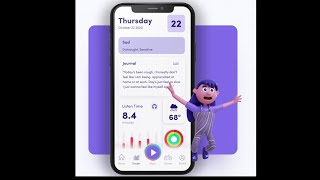
Yeah, absolutely. Soundmind is an audio and visual music therapy platform that allows users to engage and interact with our current music, both visually and audibly. And then we're able to kind of give you a sonic profile of metrics based on how you're feeling every day, what kind of music you're listening to, what genres, You know, how is it affecting your mood? How is it affecting, you know, when are you listening to Soundmind the most? What is your daily usage? Taking all of that and kind of allowing individual companies from their HR, you know, employee assistance program teams and also the individual user to really see what's going on based on your interactions with our application. We're really providing those users with an ability to use music as a therapeutic as opposed to potentially meditation. Not saying one is better than the other, just saying that we're giving different options that are not mutually exclusive.
Yeah, absolutely. Definitely not mutually exclusive at all. And yeah, you mentioned the users. I kind of wanna talk about that in a sort of problem solution framework to your company. So there's a number of different like archetypes for people using Soundmind. This is like just sort of from your website, but it makes sense. So you talk about like college students, frontline workers, first responders, active duty and military veterans, as you talked about post-traumatic stress disorder. Specifically, and I guess this is like no accident. I mean, it feels like today everybody is dealing with increased stresses and mental health challenges. So I guess to just kind of frame this up, can you talk to us sort of about the full scope of those challenges? You know, what kind of mental— how do you see mental wellness today, like in the modern world? I mean, are we— how bad is it? Are we in a wellness crisis? Sort of how do you think about that framing for for the problems that you're addressing?
Yeah, absolutely. So the first thing is, no doubt COVID-19 is still a thing. We now have the Omicron variant that our healthcare workers are currently battling. And I think a big issue we have is Americans and everyone across the world is now quote unquote done, and they're forgetting the fact that healthcare workers are still facing it every single day where they signed up for a job to you know, save lives and they're continuing to do that. But they never expected being in 3 years, on our 3rd year now of being away from their families, being away from their loved ones in order to battle this pandemic. So are we in a mental health crisis, especially for first responders and for our youth and Gen Z? Yes. And it's only going to get worse as the pandemic continues to slow down. Hopefully again, we're gonna be able to sit there and self-reflect and realize what issues are currently persisting in our own lives we haven't had the time to address. But now with back online or schools being back, you know, on a virtual environment, people are able to feel more isolated again and kind of lose that sense of human interaction that drives that engagement that we have in users between mental health and also their own personal stability. And I think that it's only going to get worse. And I know in a military perspective, you know, our main focus is going to be, you know, working with youth schools and colleges and really targeting those in Gen Z and the youth population first, because that's what we want to continue to help and provide for and allow schools to offer additional resource like Soundmind to be able to help individuals that really are struggling. And I think that we're only going to see that kind of get worse before it gets better. And, you know, call it my colleagues over at other mental health applications and, you know, other nonprofits. We're all trying to team up together because, you know, although it is a market and, you know, we're all trying to sell, it's also a collaboration, a community to try to help people that need it the most.
Yeah. Yeah. And that kind of ties into what you said before about, you know, music therapy is sort of being complementary to meditation or, you know, that the things are not mutually exclusive. And so you actually linked, I think, to some pretty interesting white paper research on your website. But so talk to us about, you know, why music therapy specifically, you know, why is this a key solution for addressing some mental health issues? Challenges today.
Yeah, of course. So I'm going to give a lot of this credit over to my chief of research, Sydney Brock, and my head of neuro, Lucy Schaefer, who really come from both diverse perspectives in research and in the scientific community, who really helped us at our company be able to figure out a way that we're able to not only change the way we're looking at music therapy, but how we can aim to provide data, metrics, and statistics that showcase how music therapy is able to help the user so the user's able to visualize that. So for us, we recognize that music therapy and music in general immediately affects the brain. Certain parts of the brain are currently impacted by what's going on in the therapy, quote unquote, space. And we're able to kind of help and change that based on how our audio is able to not only help the user in terms of how it affects certain parts of the brain, but also how it overall reduces stress hormones and reduces feelings of anxiety and tense muscles. And then also seeing how music's also able to help and contribute to one's overall relaxation and calming, I guess, when you're really talking about bringing in the science behind Soundmind. And I think the last thing I'll leave you with that scientifically, right now we're studying how music and how our app is able to help in terms of sleep, in terms of concentration, and in terms of overall effectiveness that we've already seen in our already pre-testings with reducing of stress and anxiety that we're able to test. So we're really not only, you know, have created and continuing to change and make better and iterate Soundmind, we're also able to really be innovators in the research community of how music is able to play a critical role in terms of actually clinically backed research that we're currently working on.
Perfect. Yeah, that's awesome. And it makes a lot of sense and it really actually kind of steals the next question that I was gonna ask you about, which is sort of, Yeah, how do you measure it? I mean, how do you quantify it? Because I guess, and you talked about some of those specific areas within the app. I mean, maybe so you could kind of rehash that, but maybe tell us how are you thinking about building mental wellness as an outcome, you know, as a founder who is delivering that? Like what kind of, you know, impacts can individuals achieve in terms of like their, I guess, personal success or making progress on their mental wellness or, And you kind of talked about some of those areas like sleep. So how does that work within the app? Is it like user reported or how do you think, how are you thinking just about measuring, I guess, positive impact as a founder in this space?
Yeah, so I think the one thing we recognize right now is we kind of have a longer survey in the beginning for the onboarding process that, you know, we're probably gonna change. I think a really big thing we're trying to do is integrate more of the AWS backend and allowing us to really show our HR companies that are our sales contracts. How, what is the user engaging with? What are they using? What are they saying? How are they feeling? And that's all going to be done by their engagements and their interactions with our platform. So we're never going to have a user have to input on a graph or make a chart. It's going to be done for them in a way that produces their own, what we called our sound or sonic profile that the user is able to really see and see their mood, their stress. What are they listening to? Are they listening to visuals more? Are they listening to our binaural beats audio? Are they listening to just our regular soundscapes? What is the user really interacting with? And then another really unique thing is we're also looking at headphones and my head of neuro is looking at bone conduction headphones and how that takes a large role in maybe eliciting even less of a traumatic trigger and more of an anxiety and stress reduction tool and, you know, a mitigator itself aside and in conjunction with the Soundmind platform.
Awesome. I understand, I don't know if you've mentioned this yet, that you're also building like a rapid response tool sort of into the Soundmind app. Are there other, you know, key features that we haven't talked about yet or that you wanted to highlight? And, Yeah. And how do I get started using Sound Finder?
Yeah.
Hearing this in English.
So the one thing I'll tell you is for us, we have a big release coming up probably in the end of the spring. We're gonna be releasing a major update that's going to include some of your favorite artists, some of incredible lo-fi creators. And really we're gonna be introducing and launching what we call our creator platform, which is gonna really showcase the artists and their story behind their music. And we cannot wait for everyone to not only see that addition, but also see what more we're going to be adding to data and the metrics behind how we're measuring a user's interactions and engagements. And then also stay tuned for looking at, you know, how we're really able to integrate the community piece. So if you are a Snapchat user and you ever looked at Snap Maps before, now imagine if you can do that, but have people in your same struggle or in your same industry, like the military or healthcare, that are going through the same thing. Well, then we're going to open up those Snap Maps for you, but on Soundmind. And that's going to really be a way in a kind of similar to Snap Maps, but a little bit different that we're really going to bring the community together and allow you to engage and interact with people across the world. So a lot of updates are coming, a lot of positive things are coming, and we have a full-scale team ready to go and ready to continue to grow our team. And, you know, we're really grateful for the opportunities we've already been given and granted. And I think 2022 has a lot in store for our team.
Yeah, definitely. Those features on the roadmap all sound really, really interesting. And yeah, especially the creator piece. I love my— the music that relaxes me when I'm sitting and working is definitely lo-fi. So yeah, it all sounds super interesting. And the maps feature too on the front for 2022. So yeah, very exciting things coming. This is the part where we always ask our founders to make a prediction in your industry space. So how do you think— this is obviously part of a big trend. You know, competitors. It's, uh, you know, not mutually exclusive to, you know, have multiple apps that are helping you on your wellness journey. But how do you see technology ultimately, uh, helping people to achieve greater wellness over the next 5 to 10 years? Sort of where are we on the curve of the product adoption as you see it?
Yeah, so the first thing is product adoption is going to continue to fail unless that product and that corporation can teach trust. I think the number one thing is trusting in terms of allowing users to want to share their experiences, share their well-being, share their hardships. They want to know that they're— especially for us, I talk about data, data, data, but showing that that's not going to be sold, showing that that's not going to be, you know, like given to people for a price and that people are, you know, purchasable is a big way forward. And I think that with the pandemic, that, you know, hopefully it's over, you know, at the end of this year, you know, who knows, we're going on year 3. So, you know, the world is wild. But I think that, you know, one thing we're really able to recognize is like mental health is prominent. It's prevalent. 3 years ago, your employer would never offer you Calm or Headspace or anything. And now employers are putting this at the forefront of their agendas during their board meetings, during their advisory meetings, because they want to make sure that their employees are being taken care of, especially in a virtual environment. Think about Apple, think about AWS, think about Google. Companies that own, you know, tens of billions of dollars in terms of the market space are now fully virtual or have the option to be fully virtual. And that takes a toll because the job doesn't get easier just because you're online in your home. It might provide a sense of comfort, but that sense of isolation is still there. And we're really going to have to see a lot more services come out that are not just like wellness-focused, but that really tackle working with the HR teams to help their organizations and give that trusted, critical, personalized care that's missing.
Yeah, I think that's definitely a strong prediction that trust is kind of being at the center of it. Makes a lot of sense. I've heard about that a little bit recently. Yeah, just within the last couple of months about people talking about user data in the context of some of these apps. Applications. And so yeah, that trust piece, it seems very critical. So that makes a lot of sense. What advice would you offer, Brian, you know, where— from where you sit now on your startup journey, you know, you've made a lot of traction to date, obviously, you know, looking forward always as a founder, have a long way to go. But for somebody who's very early stage or an aspiring entrepreneur that's just getting started, what advice would you offer to them?
I think the biggest piece of advice is accept that you don't know everything and listen. I think when I first started, it was just gung-ho. This is what we're doing. I'm not listening to anything. This is the path. I have tunnel vision. And I think that the biggest piece of advice I can give you is accept that you don't know everything. The people who are surrounded around you, don't take that for granted. Learn and listen. A big, you know, self-goal of mine for 2022 is to listen more. So now on our big team company meetings with the whole company, I sit there and listen and I listen to, you know, everyone's feedback, everyone's comments, because, you know, you have to understand when you're a founder, you know, when you talk, people are not going to really— even if you say, hey, what are your comments on this? People are going to be afraid to say something. And that's not the environment you want to create. You want to allow an inclusive, collaborative, productive environment where people can speak freely no matter what your title is. And I think that, you know, that's my second thing. So the two things I really leave you with is, you know, one, accept that you don't know everything and listen. And two, titles don't matter when you are in a startup, especially in an early stage. You are— if you are the CEO, you are also the COO, the CTO, the product manager, the sales representative, the graphic designer, you're everything because you have to wear multiple hats in order to get to a stage where you can continue to do what you do best. And accepting that and accepting that regardless of your title, you're not better than the person to your left or to your right is the most important thing as you continue to grow an inclusive company culture, but also an inclusive and productive sales team.
Definitely. Yeah, I think that advice makes sense for pretty much any founder out there. So yeah, good advice. A final question that I have for you, Brian, is just where is Soundmind headed next? You talked a little bit about that product roadmap already, but are there any news or updates you want to share with the community? Any asks for the audience who might be watching this or otherwise just want to rehash any of those other exciting updates that you have coming for 2022?
Yeah, absolutely. So where is Soundmind heading? So Soundmind's gonna most likely get our first office where, you know, big office in California somewhere in the end of 2022. So stay tuned for that in about 3 quarters. But also want to share that our company is also going to be really building out our creator platform. So if you're a creator, you're a musician and you want to be involved in this community of mental health and exposing, you know, that artists have a story too, please reach out. But also for us, Soundmind is working on 3 additional nationally supported studies that focus on sleep, focus on our app in terms of our efficacy, working with different hospitals in the Baltimore area, working with different schools in the Los Angeles area. We're going to be growing our B2B platform. And then finally, if all goes well, Soundmind is looking to host, you know, a, you know, launch of our creator platform with a little in-person concert depending on COVID and depending on, you know, how everything goes. Probably towards the end of 2022. So it's going to be a bright year and a fun year. And, you know, recently we just had a lot of success. We just launched our first free version of our application at the Grammy Museum, at the Recording Academy, downtown Los Angeles, and had a lot of different, you know, innovators, CEOs, musicians, creators, you know, industry professionals. And we're going to continue to build that community. And I hope you are not only able to enjoy the ride by watching our updates, looking at our team's profiles, But also give your comments, give your feedback, because that's what we're here for. And we cannot wait for the future of this company and what '22 is going to bring for us. It's going to be the most telling year. So I just want to thank Founder Institute for believing in us when we started about a year and a half ago and where we were able to grow in the last 18 months and how we have the next 18-month trajectory in front of us and how it's bright. So thank you for that.
Yeah, there's tons of definitely stuff exciting on your calendar for 2022. So yeah, that is really, yes, just lots to look forward to. This has been really interesting for me, you know, learning a little bit about the intersection of mental wellness and tech-enabled solutions to wellness challenges. And yeah, as you mentioned, you know, we're all really looking forward to keeping up with Soundmind, we at the Founder Institute, and where you're headed next. But Brian Femenella, thank you so much again for joining us today.
Thanks, everybody. Thanks.










