Startup Best Practices with Phil Libin & FI Silicon Valley Graduation
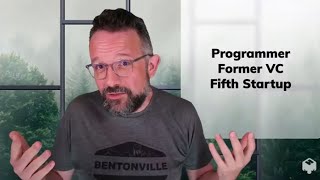
Phil Libin, co-founder of Evernote, keynotes the Founder Institute Silicon Valley graduation. He tells founders to stop recreating old realities with new tech and instead exploit distributed work's superpowers: zero-cost investor outreach, global hiring, no commuting. Graduating startups pitch everything from pet-buying platforms to payroll software.
Chapters
Good morning, good afternoon, and good evening, everyone. Welcome to the Founder Institute Silicon Valley graduation event. My name is Ryan Micheletti, and I'm head of global operations for the Founder Institute. And so most of you probably already know that Founder Institute is the world's largest pre-seed startup accelerator. Over the last 12 years, we've launched over 5,000 portfolio companies across 200 cities, with the largest mentor network in the world of 21,000 mentors. And we also launched a company called VC Lab, which is the world's largest VC firm creator. It's a venture capital accelerator program where we help emerging managers launch their funds. And so over the next 5 years, our goal is to launch over 1,000 new venture capital funds and another 5,000 startup companies through Founder Institute. And so as head of global operations, I work with startup leaders all over the world to help them launch companies and build their startup ecosystems. And in addition to that, I also run our flagship Silicon Valley program as a managing director. So I'm proud to say that FI Silicon Valley is one of the toughest programs in the world for early-stage founders. Our cohort for the Silicon Valley Summer 2021 cohort, which is graduating today, it started with over 100 founders, of which the top 20 are graduating and have earned the title Founder Institute alumni. And so before we jump into the event today, let me give you a brief overview of the agenda. So in a minute, I'll introduce Eric Lowe, who is a Founder Institute alumni from our previous Silicon Valley cohort, and he's going to provide an alumni update. Then Eric is going to introduce Phil Libin, who is a longtime Founder Institute mentor. Phil was the co-founder of Evernote, turned venture capitalist at AllTurtles, And then he is now the CEO of Mmhmm, which is one of the coolest video companies coming out of Silicon Valley. And then after Phil's keynote, we're going to dive right into the founder pitches. So we have a handful of the 20 founders that will be doing their 3-minute pitch today live during the event. And so if you're in the audience, you can use the chat to ask questions and connect with the alumni afterwards. And so finally, at the end of this event around 11 AM Pacific, We're going to do a global founder networking session on Airmeet. So we're going to move from Zoom webinar over to Airmeet, and this will allow you and the audience to meet with other founders, Founder Institute mentors who might be joining us today, investors of the program. And so Airmeet is sort of what we use to connect you, people through our global network, to startup mentors, experts, and resources that will help you with your startup. So join us there afterwards. It's gonna be a lot of fun. We'll probably stick around and do about an hour or so of networking, and we'll send that link for Airmeet at the very end of this event. So before we get started, I'd like to give a big shout out to Founder Institute Santa Cruz and Silicon Valley and the other programs where we have open admissions. If you're a founder or if you know a founder who's interested in being backed by the largest startup network in the world, Go to fi.co/enrolling to check out the programs where we're accepting applications globally. And so without further ado, I'd like to welcome Eric Lowe, who is a friend of Founder Institute, Silicon Valley alumni, and the CEO of Crato, which is helping make plant care fun, easy, and high-tech. Eric, it's really good to see you again. How are you doing today?
Great. Yeah, it's great to be back. A little surreal that I'm here today, graduating only a few months ago, but yeah, happy to be here.
Awesome. So do you want to give us just a quick update on your company and cover any points that you'd like to discuss?
Sure.
Yeah. So yeah, just like Ryan mentioned, we graduated in the spring cohort, which was in May. And since then, we've been able to maintain the momentum, and we have been funded by Pelion Ventures, received our first check from a venture fund. And we have raised almost $500K to date since then. And that has just accelerated our development process. So now our beta products will be launched in 6 months from now. And, you know, with the goal of getting our 10,000 customers on our waitlist by then as well. So it's been awesome and crazy. You know, I thought I would get a break from FI, but that never happened.
Yeah, that's, that's pretty typical. You know, founders get done with the program, like, oh man, that was really hard. And then the real work begins. So take note for the alumni who are graduating today.
Yeah. So yeah. So congrats on, you know, everyone for making it this far, but exactly right. It's, you know, I think in addition to the long road ahead and all the hard work, it's really key to keep this momentum going.
Right.
You guys all have a lot of momentum right now. You put in a lot of time and work and energy. And, uh, yeah, just keep it going. That was my biggest concern coming out of the program was I couldn't keep it going.
Right.
Cause you were at all these deliverables and assignments and expectations. And, um, and so far we've been able to keep not only keeping it going, but leveling it up each time. And so it's just getting bigger and bigger and bigger. And now it's just, let's just see how high we can keep taking it.
Awesome. Well, I'm excited to see your progress and, uh, let's connect offline. Cause I think there's some things we should catch up about.
Absolutely.
Yeah.
Are you gonna keep asking me questions or what?
Yeah, I think we're ready to introduce Phil.
Okay, great. Well, yeah, I'm really honored to introduce Phil. First time I've heard about his company, mm-hmm, was a TechCrunch article and the headline was just, mm-hmm, raises $100 million without a pitch deck. And I was like, what? How can you, like, how's that possible? And so that really caught my interest and, you know, found out it was Phil and Of course, he's got an amazing track record and a lot of expertise behind him. And so it's not a surprise that he's able to take his company, his newest company, to where it is. So really excited to introduce Phil and to get to hear what he's going to present today.
Great.
Thank you. Hi, everyone. My name is Phil. I was born in what used to be the Soviet Union back then, Russia now, in the city that used to be called Leningrad. Now St. Petersburg, a long time ago. And I'm a programmer by training. I'm a former VC, and I'm on my 5th startup. If I were to give this talk, I've been mentoring at Founder Institute for a long time. I think maybe since like something like 2009. And so if I speak in the beginning of a semester, I usually just tell everyone how you should Definitely not start a startup. It's not too late. Just quit now. It's a really brutal experience. So most of my advice is about how not to be an entrepreneur. Certainly not, you know, maybe not the first time, certainly not the second time. The fifth time is a little bit too much. But I'm talking to you at graduation, so it's way too late for that. You guys are at a later stage. So I'm not going to talk about why not to start a startup. I'm going to talk about why this is actually the best time in the world to start something. And congratulate all of you on graduating. So I am currently the CEO of All Turtles, which is a product studio where we try to build meaningful products that are hopefully a little bit good for the world. And as Eric said, my newest company is called Mmhmm, which is a video company that's trying to give you communication superpowers, really transform the way that the world thinks about video, thinks about communicating. Before that, I was the co-founder and CEO of Evernote, and then a few companies a while back. And since I, as I mentioned, I grew up in what was the Soviet Union, I went to first grade there in school, I was pretty indoctrinated with quotes from the Soviet founders. And there's one quote in particular that I remember well, which I think is very applicable to startup thinking and startup timing. It was a quote by Vladimir Lenin. This is how I remember Vladimir Lenin. And I don't know if he actually said this. This could be apocryphal. It's also a little bit suspicious because I very much remember hearing this quote, but I remember hearing it in English and I didn't speak English when I could have heard it. So maybe it never actually happened. Who knows? Anyway, the important thing is the quote was, sometimes decades go by and not much happens. And then weeks go by and decades happen. And I think that's what we're living through right now. I think right now we're living through the changiest time in my lifetime. The most active, the biggest change that the world has seen in the past, you know, 50 years at least. Decades are happening every couple of weeks right now. And that's— it's very scary. It's very scary to the vast majority of people because people are fundamentally conservative and change is scary. When change happens, especially at this rate, it usually has all sorts of negative consequences. And people very much try to resist, to try to hold it back, try to go back to a previous time. And I think the main thing that defines entrepreneurs is we're a little bit crazy. We run towards the change, at least the good ones. We're not, we're not afraid of it. We want it. We seek it. When we see change happening over the horizon, we really try to run at it. We try to dance with it. We try to make it something good, even though very often there's a lot of destruction that goes on, which is what we're seeing in the world right now. There's a lot of bad stuff. There's a lot of destruction, but there's also a lot of change. Everything is getting thrown up in the air. Decades are changing. Decades are happening every few weeks. And whenever that happens, that's a very good time to actually make some of those pieces that have gotten thrown up in the air, make some of them land in, in configurations that you think would be better for the world. So this is, because of that, because of COVID because of video, because of people's profound different understanding now than what happened, than what they had 2 years ago, probably the best time in the history of the universe to actually start a company, to actually make a startup, to actually try to make a difference. So what is, What is this change? I think it kind of comes down to this. We have a motto at mmhmm and Alturtles. We're a fully distributed company. Our motto is you should work where you can have the best job and you should live where you can have the best life. It's very basic. Work where you can have the best job, Live where you can have the best life. And the difference is for the first time ever, for the first time in the history of the universe, hundreds of millions of people can make these two decisions, where they can have the best job and where they can have the best life, independently of each other. That was never true before. It was only true before for very, very rich people, very small number of people that actually had the opportunity to do that. The vast majority of us could never decide where to work and where to live independently. It was always a compromise or one of them would dominate the other. For instance, in my life, I've never before this had an opportunity to ever ask, where do I want to live? I never even considered that. Where do I want to live? Because it was always about where the job was. You know, I was in San Francisco because that's, that's where the job was. That was the best place to build a company. Did I want to live there? Well, I mean, I don't know, probably not really, but I never, that was never even a luxury I had. And this year for the first time in my life, I could think about, well, where do I want to be? What kind of life do I want to have and not have that affect where I work? And it isn't just me, it's every single person that works for any of our companies can make that same choice because we're fully distributed. We pay people the same regardless of where they are. People can live anywhere. We hire people globally. And not just true for people in my company, it's true for a few hundred million people who are fortunate enough right now worldwide to work in a fully distributed company. And hopefully over the next 5 or 10 years, it's going to go from a few hundred million people to 2 billion people that can make this decision. And the ripples from that, the ripples from that change will affect everything in society, will affect everything in the world. There's never been a change like this in recent memory. This is bigger than This is bigger than when I started my first company. When I started my first company, the big change was dot-com, it was the internet. This is in the late '90s. Everyone ran around saying dot-com, dot-com. The internet was going to change everything. And it did. When I started Evernote in 2007, 2008, the big change was smartphones, was mobile. Everyone was running around saying smartphones, mobile, it was going to change the world. And it did. This is bigger. This change of Distributed work and distributed life is a bigger change. It's more profound. It's going to affect everything. It's going to affect how we think about school, how we think about work, how we think about shopping, how we think about entertainment, how we think about education, how we think about food, how we think about money and retirement. What does it mean to work and then save up so that you can retire, so that you can enjoy life when you're old? If your dream is to live on a beach and surf every day, you can do that today and keep your job if you work for a company that's fully distributed. This is profound. This will affect the very fabric of how we've thought about and how we've structured our lives and our societies. And whenever change is this monumental, people are terrified of it. But you don't have to be because as entrepreneurs, we can run towards this change and we can try to make it We can try to make it good. That's where the opportunity comes from, the opportunity to actually affect the world and to make it better. So I think for young entrepreneurs, for people just getting started in their first startup, there's kind of one main piece of advice that I have, other than don't do it, don't start a company, but it's too late for that. I would've told you that if I was Talking at the opening ceremony, not at the graduation ceremony. You already probably started it. Too late not to start it. So the second best piece of advice, other than don't start your company, is this, is to avoid skeuomorphic thinking. Skeuomorphic, skeuomorphism is a word that means when you try to recreate a previous reality using a new technology. This is the number one move. That existing companies always do, that people always do. Whenever there's a big new reality, a big new change, the incumbent players try to recreate their old reality slavishly, skeuomorphically. A typical example of this was, if you guys remember the first iPhone. When the first iPhone came out, I think it was actually the first and the second, all of the icons were like really beautifully rounded glass, like bubbles with reflections and stuff. And like the calendar app had like a leather texture. It was like this beautiful leather texture on the calendar app. That's skeuomorphism. That's like trying to recreate leather and wood and other types of reality on a digital device. It's a very typical early move. Apple had good reasons for doing it because they could, no one else could. But then they stopped pretty quickly because most skeuomorphic thinking fails. And this is the opportunity for startups. This is the opportunity for entrepreneurs. You find a big change and you find where the existing players, the existing companies are thinking skeuomorphically, trying to recreate the old reality and you change it. So one example of that is imagine skeuomorphic thinking.
Okay.
Think about the very first films that were made when movie cameras were first invented. This was in like the late 1800s, the early 1900s, they invented movie cameras, but they hadn't yet invented cinema. So back then, people knew, they knew theater, that was the old reality, right? They were trying to recreate the old reality. And the old reality was theater. So it was a couple of actors on a stage. And so the first films were, you point the camera at a couple of actors on a stage and it was pretty weird. And I'm sure there was lots of, you know, lots of early theater critics in 1910 that watched the first films and said, ah, these newfangled movies are a very bad substitute for theater. Sure, like they're cheaper maybe, but they're a very bad substitute for theater. And they were right, because films aren't a substitute for theater, because what they were watching wasn't really cinema yet. It wasn't films because it took a few decades. It took people who were native to the technology to realize that a movie isn't trying to duplicate the old reality, it's trying to be something totally different. And you have to invent close-up shots and multiple camera angles and film editing and dialogue and all these other things. And of course now we still have theater, movies didn't replace theater, but they're 1,000 times more popular because it's a different thing. And then the same thing happened in my lifetime around Evernote. When I started at Evernote, 2007, 2008, the big change was smartphones. Everyone had smartphones for the first time. And, but people weren't really sure what smartphone apps were gonna be like, smartphone experiences. And so the incumbent players like Microsoft said, okay, well, we know what PC apps are like. PC apps are like Microsoft Word. And you know, a smartphone is just a small PC that you can put in your pocket. Literally, you know, the Microsoft smartphone product was called Pocket PC, 'cause they literally thought it was a PC that you put in your pocket. Stupid. Skewomorphic, not stupid, skewomorphic. And so they said, okay, well, I guess smartphone apps are just going to be a shrunken down version of a PC app. And the first smartphone apps were like that. And of course that's not what smartphone apps became, but it took the native generation, it took Evernote and Uber and Airbnb and Dropbox to invent, to say, wait a minute, wait, smartphone apps aren't anything like PC apps. It's a totally different experience. It's not a replacement. Today, smartphone apps are nothing like PC apps and PCs are still with us, but smartphones are 1,000 times more popular. This is happening again right now with this distributed world. In what we're working on around video, there's a big change. Everyone was forced all of a sudden overnight to be on video because of COVID and the incumbent players, Zoom and others, they did the skeuomorphic playbook. They try to recreate the past reality. And so they said, okay, what is our past reality? Well, our previous reality was meetings. And what were meetings? Well, meetings were a bunch of boring, tired people sitting in a boring conference room talking about something boring for an hour. But now they can't be in the same physical room because of COVID But we're going to try to recreate it. How do we get as close as possible to a bunch of boring, tired people sitting in a boring room talking about something boring, but on a computer. And when you think like that, you get the first generation of video software. You get, you know, Google Meet and all of that stuff. Nothing wrong with it. It's the obvious play, but of course video is not going to be like that. It's going to be something native. It's going to be something totally different. It's going to be something like what we're building at mmhmm and what other startups are building right now. But video is just one example. Of skeuomorphic thinking. Once you use this as a model, you wait until there's a big change in the world, and then you find people who are trying to adapt to that change by recreating the old realities. That's your opportunity to make an impact, to make a big change. And the way that I suggest doing this is to embrace this distributed world. One way to embrace it There's a rule that we have, which is what I'll leave you with, which is this: we're not remote. No one is remote. We don't talk about ourselves as doing remote work. We're not remote workers. We're not remote because remote means this. Remote feels like other people are gathered somewhere and in person, but you're not. And so you're at a disadvantage. Remote is fundamentally about about loneliness, about disadvantage. We're not remote, we are distributed. We've chosen to be distributed, kind of in the same way that the internet is a distributed system. And the people who made the internet made it distributed. It was distributed by design, not because they didn't know how to make centralized networks, but because they understood that making it fundamentally distributed gave it massive advantages and superpowers. And certain things are harder because because the internet is distributed. A lot of things would be simpler if there was one big server somewhere that ran the internet. But obviously no one thinks that that's what we should do because you couldn't have the internet that way. It wouldn't, it couldn't exist because being distributed gives it such amazing superpowers. Well, that's what we've done. We have designed our companies and we're trying to design the rest of the world to be distributed. Not because we don't know how to sit in an office, but because we choose to be distributed because of the superpowers that it gives us, because of the massive advantages. And I think you can find ways to do that in really every industry right now because of this change. And this is the best opportunity, the best time ever to make a startup. Now, if you decide to take my first, my earliest advice and not make a startup or abandon it, which is still a good idea, then yeah, we are definitely hiring. So go to mmhmm.app/jobs. 100% of our jobs are global. You can be anywhere in the world for all of our jobs. And so if you decide to give up on your ideas for now, come join us. You can still— we can still make the distributed world together. If you have a better idea for how to make this distributed reality, then I very much look forward to your thoughts. Thanks.
Awesome, Bill. That was great. You know, I'd like to ask a couple of questions. I see there's some questions here from the audience as well. Let's talk about distributed entrepreneurship. And, you know, back before the pandemic, you know, I think it was even like as soon as like, you know, 4 years ago, over half of all the billion-dollar companies were being built in Silicon Valley, and then a large chunk was over in China, and then you started getting some to pop up all over the world. Now, if you look at the distribution of these kind of billion-dollar companies or unicorns, they're popping up everywhere. And so seeing that you live in this kind of distributed world, what best practices would you recommend for these entrepreneurs who are building distributed startup companies?
Well, I don't live in a distributed world. I live in Bentonville, Arkansas, which is important because I live in an actual community and I have friends and I go out to eat dinner and, you know, I like my life is my life. I work in a distributed world. And that's the big change, right? Is like, this is not a fake life. This is not a virtual life. This is a real life. In fact, it's actually much better. It's actually much easier to have the right balance and the right separation. It doesn't really matter geographically where you are. You should be where you're enjoying yourself the most. And yeah, I completely agree. I think— I think the reason I came to Silicon Valley, the reason I came to San Francisco is because that's where I wanted to build Evernote, because that was the best place to build it, because all of the investors were there. And many of the investors would really wouldn't talk to you unless you were from there or there, not from there, but at least there now. It was harder to hire people. You could hire really amazing people in Silicon Valley. That's where all the partners were. So if you wanted to go and do a deal with Apple or with Google, They were right there. You didn't have to get on a plane to fly. So those massive advantages. And that was really bad. It was really bad for the world because that kind of— the fact that that opportunity was so concentrated in just one region meant that other people who were brilliant didn't have the same opportunity. But it was also bad for the region. I mean, have you been to San Francisco lately? It's not that great. And it's not an accident that this place that was like the hub of technology is actually a really like pretty inhumane city to the people who live there. So I think it's amazing that we're going to see this, that we are seeing this complete distribution of entrepreneurial opportunity where now, obviously, you can get investment, you can hire people, you can make deals, you can sell things, and you can do this regardless of where you live. It's one of the best transformations of the world.
Trey Lockerbie What do you think some of the biggest challenges that an early-stage startup founder will face with this new kind of distributed entrepreneurship reality?
I wouldn't worry about the challenges. I think this is a very, you know, this is a very like human question. It's very natural to think about the difficulties, because when you focus on the difficulties, the challenges, it's easier to seem smarter that way. You know, when you're talking to someone, like it's just, you just look smarter if you're talking about the problems. And it's very natural. And then of course there's challenges.
Of course.
It's actually, I think, much more useful, especially for entrepreneurs, to get into the habit of thinking about the advantages of being distributed, the superpowers, the amazing things that you could never get if you weren't distributed. And really, and say, not just how do you overcome the challenges, but how do you double down on the superpowers? How do you get the most out of the advantages? Because the challenges are the challenges, you'll deal with it. But the advantages are like something you can do an infinite amount of, something that somebody can never take away from you. For example, it is now zero marginal cost to talk to an investor. If you want to talk to an investor, you would usually have to go to Silicon Valley. How many could you talk to in a single week? I don't know, one, two, depending if you were from there. Even if you were in San Francisco, you would have to sit in an Uber for 2 hours to get to Palo Alto or something to do that call. Now, your marginal cost of talking to an extra investor is literally nothing. Make a recording of you and your pitch, use mm-hmm, send it to 1,000 people. Why only talk to 10 when you could talk to 1,000? And then the ones that are interested hop on a call and do. That's a massive superpower. When I was raising money before, every single investor meeting, every new investor that I talked to had a high marginal cost, and now that cost is zero. So I'm never giving that up. You can hire people from everywhere in the world. I'm never giving that up. 0% of the people in my company have to spend, have to waste time commuting. 0%. No one wastes time commuting. Everyone has like 2 extra hours every day. I'm never going to give that up. These are the advantages. I think people spend too much time thinking about solving the problems and not enough time appreciating and doubling down on the advantages. So I would very much encourage that instead.
Amazing. Well, Phil, this was great. Thank you for joining us today. And also thank you for being a mentor for this many years. I mean, I still remember when I first started running the Founder Institute Silicon Valley, it was probably in like 2015. You came in and you gave a presentation. I think it was on branding and design. And one of the things that you said to me that had always stuck was that, you know, as an entrepreneur, I'm going to misquote you here. So feel free to jump in, but I As an entrepreneur, the world is gonna look like potentially two different scenarios in the future. It's either gonna look like Mad Max or it's gonna look like Star Trek. And my job is to go out and make sure that it looks more like Star Trek than Mad Max. And so that's something that's always stuck with me and I've carried with me throughout all these years of helping founders and launch companies all over the world. So thank you for everything you've done to support founders around the globe.
Well, thank you.
That's very kind. Thank you for the opportunities.
Awesome. Well, so we're now going to transition over to the alumni presentations. And so as a reminder, we'll have about 7 or 8 founders do their 3-minute pitch live during the session today. If you have questions that you'd— or you'd like to connect with the founder afterwards, just use the chat feature, you know, put your questions in there. When they're done presenting, they can answer the questions. And then also we'll be doing the global founder networking session on Airmeet in about 30 minutes after this presentation. So without further ado, let's go ahead and start with our first presentation today. So, Alea, welcome, and it's good to see you. So Alea is the CEO of Meditrania Technologies, and we'll go ahead and put her information here in the chat. Are you ready to share your screen?
I absolutely am. I'm a little intimidated to follow after Phil's inspiring presentation, but I'm going to don my graduation cap before I start.
Looks great.
Let's get going. Thank you very much. I worked very hard on this, as hard as I did on making this pitch. So, um, hi everyone. Um, so today, um, I'm going to introduce you to a corporate wellness app that can make chronic disease disappear. In fact, we've already gotten 3 companies interested in early adoption during the course of FI so far. So I'm Aaliyah. My expertise is in biomedical engineering and health psychology, and I'm the youngest to be named a top 100 healthcare leader by IFA this year. So take it back to high school. I started having these weird episodes of chest pain, but doctors could never find the diagnosis. So of course I didn't care until I had a heart attack. So it took me almost dying to learn that disease actually starts before diagnosis. Because until something drastic happens, we don't care to prevent a problem that seems far away. Now, only 8% of employees are receiving the care they need to avoid disease, which as a result costs employers billions in healthcare dollars and lost productivity. And then below the surface, HR is stretched way too thin to provide any intense intervention that those people need to reduce that trend. But what if we could help them provide proactive care without needing extra money, time, or manpower. Meditreen enables this by providing a personalized digital care program where you don't have to leave work, you don't have to disrupt your life whatsoever, but you can still receive as much guidance and support as you need to eradicate your risk. So in the app, we start by getting to know each user as a person, gain their trust, get them basically mentally prepared for trying out new behaviors. Then they get to pick a Meditreena health coach to work with who becomes a friend that they can feel accountable to. All of the interactions with the coach and the app apply behavioral science to each user's personal hobbies and interests. So now it feels like you're gamifying life by achieving healthy goals around stuff that you already love to do. We can integrate with smart devices to quantifiably measure outcomes without the risk of human error. We also sync with calendars to make smart recommendations that can fit into schedules. We're starting out with a focus on diabetes and are already on track to become CDC recognized for diabetes prevention and employer wellness training. We have 6 end users and 3 businesses who agreed to help us pilot the idea. While most of the costs can shift onto health savings accounts, companies are only paying for positive health outcomes achieved, or to white label the app. And we focus our attention on mostly sedentary industries and geographic regions with the highest diabetes rates. Unlike other companies, we're building self-efficacy instead of relying on it being there, then evaluating how effective outcomes are on the employer savings goals. And in the same way that some companies can pledge to go green, we're starting to lead campaigns where execs can pledge for more proactive healthcare for their workers. So we're doing this by flying our flag at expos, building partnerships, and crafting web content. But today we're seeking our product development team and health coaches, as well as advisors who can help us with HIPAA compliancy and health system partnerships. Thanks for watching, everyone.
Awesome, Aaliyah, great work, and it's been a pleasure working with you in the program, and I look forward to seeing your success here in the, in the future. All right, up next is, uh, Phyllian. Uh, Phyllian, whenever you're ready, go ahead and share your screen. Uh, Phyllian is the CEO of Xemengot, and we'll put the information here in the chat. As a reminder, if you have questions for any of the founders, you can go ahead and put it here in the chat, or we'll give you a chance to speak with them at the networking session after this.
Okay, thank you, Ryan. So hi everyone, my name is Phyllin. I'm the co-founder and CEO of Sumangan, the next generation employee management and payroll app for Southeast Asia. Our team has deep payroll and accounting experience, including Harmadani, who has been building payroll system for the last 8 years at JPayroll. Is one of the leading payroll software providers in Indonesia. And myself, I am a serial entrepreneur who previously founded Fendi, an agency that helps SMEs scale up. Aligned with my experience in one of the Indonesian unicorns, I also work closely with SMEs. So in Indonesia, it is hard for SMEs to manage their employees' payroll. Because it takes an average of 5 days to do payroll calculations. Also, there are huge chances of errors due to the manual system. At the end of the day, you will have to pay fines for any miscalculations you make. As for SMEs, every single cost is very important. That is why Semangat is here to help them save time, reach productivity, and increase their revenue. We want to make employee management accessible for every SME, so we streamline all the processes into just 3 easy steps. So we have run Sumana for 3 months until today. We officially incorporated, we got 15 companies to join our trial, we formed integration partnerships with some well-known companies in Indonesia, and finally got our first paying customers. All of them are very satisfied with our product and service. And based on our customer archetype, we decided to focus on these 5 types of industries right now. And in 2025, we are targeting 25% of the total market share for small and medium companies in Indonesia. As Semangat will focus on subscription business model, we want to reach $23 million annual recurring revenue in 2025. So here is our competition matrix. As we can see, Semangat is greater in automated features and low cost. To make it clear, we divided our competitors into 3 groups of players. As Semangat stands in both A and B player side, which means We provide all of their advantages and we develop their weaknesses to be our strengths. We perform direct sales and content marketing as our go-to-market strategy until today. And here is the result. Now we are raising $250,000 to bring our solutions to wider coverage area and further development. Thank you so much.
Awesome. Great work, Delian. I'm really excited about what you're doing. Payroll and just even just tracking employee hours is so painful, especially across like larger companies. So you're solving a really big problem here. Excited to see what you do. Up next is Dan Stratford. Dan, when you're ready, go ahead and share your screen. Dan is the CEO of Standpoint. I'll let you take it from here.
That's good. Thanks, Ryan. Hi, so I'm Dan, founder of Standpoint, the mobile app that helps you feel confident talking about anything. So a little bit about me. Learning has been at the center of my life and career. So I've got a major, two minors, two master's degrees, MBA, MA Education. And I spent the last 10 years in edtech. So I've been a teacher. And I've been at Google for a few years building global education programs. And in my free time, I learn for fun. For example, I've done 120 Great Courses. And there are some problems that are hard to learn about. These tend to be the problems that have, you know, don't have a clear right or wrong answer. And I've noticed that there's a lot of busy, thoughtful people who lack confidence discussing these complex topics. Often it comes down to they don't really have the time to do their own balanced research. It could be really time-consuming. So they end up remaining unclear about where they stand on these topics. And the unfortunate result is that all too often it's loudmouths with overly simplistic opinions who who sometimes dominate the conversations online or offline. But now with Standpoint, those thoughtful, busy people, they can become the most respected person in the conversation. And they do this because they can learn deeply about the topic in a way that fits their busy life, so they can articulate a nuanced standpoint with that credibility, and then be the person in the conversation who's bringing clarity and empathy to the conversation. So that, that's what we're building with Standpoint. You would choose your topic, and then the app takes you on a guided learning experience where you master foundational knowledge, you explore areas of debate, and you do this all in bite-sized intervals that fit around your busy schedule until you arrive at your— until you get your standpoint, at which point you can easily share and compare with friends to facilitate deeper conversations. 140 people have joined our beta waitlist because this solves a problem for them that they are experiencing right now. And here are some of the things that Some of them say, you know, funneling through information, understanding, you know, it can be so time-consuming. Or the choice was to either say nothing or spend 30 hours researching, but being apolitical is actually not cool, so I felt judged. Or I want to be engaged and informed, but as a working mom with 2 kids, it's so hard, and I hate that. These people have told me that they'd be willing to spend $8 a month for an app that does this well, and we can keep our acquisition costs low by taking advantage of the natural inclination to share with others and compare where they stand on different things. It's a freemium app, so a percentage of the content would be free for all users. It's a growing market, so education apps is $21 billion growing at 26% CAGR, and there are already examples of apps that are doing this really well. For example, Duolingo built a $4 billion business around learning languages in these fun bite-sized intervals and tracking your progress over time. We're doing the same thing, but with these important complex topics. Existing solutions that are out there often don't approach this as a learning problem, and that's where Standpoint can really shine with these really guided experiences to your own nuanced standpoint, all in bite-sized intervals. So we're launching our beta in January. In the meantime, we're testing prototypes and recruiting, recruiting the team. So my ask today is around team. So looking for, looking for people to help with development with consumer app UX, with content curation. If you or someone you know is interested in creating a more thoughtful, more informed world, please reach out to me at dan@standpointlearning.com. Thanks so much.
Awesome, great work, Dan. This is such a cool concept. I'm really excited to use the beta when, uh, when it's built. This is great. Up next is Tuodros. So Tuodros, when you're ready, go ahead and share your screen. Tuodros is the CEO of Synergy.
Hey Ryan, thanks. Hi everyone, my name is Theodos. I'm the founder of Synergy, meet your diversity and inclusion goals through ERG engagement. Employee resource groups are groups that are created by passionate volunteer employees. 90% of Fortune 500 companies today have ERGs because They can benefit from recruiting and retaining top diverse talent. However, most ERG leaders fail to meet their diversity and inclusion goals because attendance and engagement is low, it requires significant amount of time investment, and at the end of the year they need to produce reports which require a lot of effort, especially if the data is not available. That is why my company, Synergy, is building an internal communication tool for employee resource groups leaders to engage members and allies. They can also automatically track reports, track engagement, and share reports with upper management. Synergy empowers employee engagement through safe and open discussions. They can— ERG leaders can also gain insights into their groups through advanced analytics. We're devoted to safeguarding employees' private information. That is why Synergy uses the latest technologies in text, audio, and video synthesis to completely change personas online. This allows for real issues to surface without having to worry about job security. We offer software as a service. Our revenue model is an adaptive subscription model where enterprise ERG leaders pay $5 per member per year. We expect our revenue to be $1.1 million by 2023. Our addressable market is the $313 million diversity, equity, inclusion, and belonging marketplace, which grew threefold since 2019. To date, Synergy has been incorporated as a C-Corp in Delaware. We've had 3 enterprise directors of diversity and inclusion say that they'd be interested in using the product, and we've already joined the largest ERG leader network with over 850 members. We're currently working on an MVP, which will be available next month. None of our direct competitors have our advanced privacy or our mobile-first. We also don't require enterprise buy-in. Our indirect competitors are impractical for ERGs with 150 members or more. Our objective over the next 18 months is to acquire 100 ERGs And to do so, pre-launch, we're leveraging the ERG networks that we're already a part of. Post-launch, we aim to optimize our digital marketing efforts and affiliate marketing strategies. I am a technical founder with a master's in it from Carnegie Mellon University. Currently have 2 advisors on board for customer acquisition and product strategy. We are seeking $500,000 to reach 1.1 million in annual recurring revenue by 2023. Help empower diversity leaders. Feel free to reach out to me or learn more at synergy.group.
Thank you.
Awesome. Great work to Wodros, and thanks for staying up. I know it's evening where you are right now. I really liked your presentation. We also had Misty Langford, who is the CEO of Fleet Fleet. She was going to give her presentation today, but she's actually sick. She has a cough, and she wanted to postpone. Misty, I see you're here. Maybe you could share some details about what you're working on here in the chat. And I would also encourage the other alumni who are part of the cohort, go ahead and share your information, websites, description, etc., in the chat here. So up next, we're going to move over to Fabian. Fabian, when you're ready, go ahead and share your screen. Fabian is the CEO of Scriptmall.
Perfect.
Thank you very much, Ryan. Perfect. Hello everyone, my name is Fabian and I am the CEO of StreetMode. Shop local online. Local retailers are losing business because they are failing at selling online. In fact, 60% of them do not have an e-commerce website. Although 70% of customers shop and support local retailers, and thanks to what happened in the last year, now 8 out of 10 customers shop online. That is why Street Mall brings a unified marketplace where customers interact and shop from their local retailers all under one roof. We created a personalized shopping experience across locals, local retailers where they will receive tailored daily specials in over 18+ different categories, one gift card for all of the stores, same-day delivery, buy now pay later as a financing option, and we will extend their social, uh, to social media shopping from our retailer's social media accounts. That is part of our main and core offering. Uh, transactional fee Fees are our main business model where they will— our retailers will receive a free online store profile. If they don't sell, they don't pay. Advertising packages will be available as well to those retailers that are ready to take their sales to the next level. In fact, out of customers interviewed, 70% of retailers are ready to join the marketplace 30% of them are ready to advertise with us. Out of 4 million retailers nationwide, we are aiming to sign 25,000 of them to reach $500 million. Competition, we are focusing specifically on street mall retailers, but we want to transform the way we shop and we shop local. That is why we're adding a personalized customer shopping experience. We are launching our pilot in Las Vegas, and as to attract retailers, we are getting the endorsement from city authorities. We are joining Chamber of Commerce local groups, and we are negotiating directly with 3 malls' administrative teams so they can bring us retailers by hundreds while we offer to all of them free online store profiles. As far as attracting customers, a good combination of PPC, PR, email marketing, and direct mail will be the foundation for bringing thousands of ideal customers. I have 18 years of experience in marketing, advertising, strategy, design, and sales. And even when I don't have— as I do not have a CTO as of yet, I put together strategic partnerships that will help me create, launch, and succeed with my company. To make it happen, I am raising $250,000 to assemble a team, create the Marketplace 1.0 version, sign 100 retailers, and generate $1 million in transactions. Join me and let's transform street mall retailers forever.
Awesome work, Fabian. So let's go ahead and move. I want to be mindful of time, so we're going to get through the last two pitches here really quickly. Ragavendra, you are up next. Are you ready to share your screen?
Yep.
All right, looks like tropical paradise in the background. Go ahead.
All right. Hi everyone, I'm Ragavish. CloudKey is an online marketplace where landlords like me outsource property management. I am the business guy with 15 years of real estate experience. My partner has 16 years of technology, product management, and software development experience. We've both been landlords for the last 5, 6 years, and we have a software development team based in India. Over the last 8 years, I've been working for an owner managing and developing 40,000 rentals, and we saw we could definitely do the process much better. Today, especially for solo landlords, the process is very painful. They only have two options: either self-manage, which is the most hated second job, or hire traditional property managers that can charge up to 20% of rent for managing and finding tenants. But finding a reliable manager itself is tricky because it's a fragmented industry. Our solution is a TaskRabbit-like online marketplace where the whole process can be outsourced to gig economy freelancers using technology workflows. It not only saves you time, but because transparency is built into every, every step, gives landlords peace of mind. It brings down the cost by half compared to the current model. And because the service is the same across states, you know exactly what to expect. Our three-way rating system that treats managers, tenants, and landlords keeps everyone honest. Every manager undergoes ID and background check. And real estate training. The app makes it really easy to choose a property manager and helps those managers find tenants, and then brings all three parties together to coordinate maintenance activities. And it even includes video and photo updates of the property once a quarter, and finally visual and text documentation of the property before and after the lease term. We're getting a lot of interest from landlords and managers, currently undergoing 5 pilots with 5 different landlords and managers, and another 20 landlords signed up to use the service. We're looking to launch our manager training content by November and looking to launch the platform early next year. CloudKeys keeps 25% of the revenue on the platform. Our service can be broken down into manage only or find tenants only. We're looking to capture 3,000 rentals here in Hawaii where we are located and starting from and California by end of next year, leading to an ARR in excess of $2 million. In the US, there are 23 million rentals owned by solo mom-and-pop landlords, accounting for $74 billion of property management revenue. By year 5, CloudKey hopes to capture 150,000 rentals, leading to an ARR in excess of $100 million. Offers full service and provides economic lead. We already have landlord contact information and are primarily relying on direct sales and the network effects. On the manager side, we are looking to focus on gig economy workers and upskilling them. We're raising $350,000 to grow user base here in Hawaii and California and reach ARR of over 2 million by next year. Thank you.
All right, amazing job. I hear the, uh, the birds in the background reminds me of, uh, when I was remote in Hawaii last year. So let's, let's go ahead and we're going to move to our final presentation. And as a reminder for everyone here, we are going to do our global founder networking session right after this. So Dustin will put that in the chat in a moment. But before we do that, I would like to welcome Ali to the stage. Ali, whenever you're ready, let's go ahead and share your screen. And Ali is the CEO of FinderPets.
All right, you guys ready?
Ready to go.
Okay, let me know if you guys can see everything clearly like last time.
Yep, good to go.
All right, so hello, my name is Ali, former pet scam victim and co-founder of FinderPets. We help finding your new pet safe and easy. I want to share my journey with you on how I got here. I was so excited to get my new Persian cat Simba after spending hours online searching and putting in my order and deposit until it never came in. I got scammed. Then I thought to myself, this couldn't possibly be only happening to me. So the problem is searching for the ideal pet is a difficult and tedious process. Navigating through all these websites takes— it is time-consuming and expensive. It takes an average of 48 to 72 hours to find your ideal pet. And according to the BBB, over 80% of these pet ordering websites are fraudulent and scam up to $700. Pet scamming also involves the harmful practices of pet mills and backyard breeding, which will bring harm to pets mentally, physically, and possible health issues. Our solution is to help you find a new pet safe and easy. We have made the process very convenient with our easy-to-use app that saves you time and money. Rather than spending hours to search for your pet, we help you find your ideal pet within minutes. We connect, we connect future pet parents to reputable breeders from AKC and TICA adoption rescue centers using proper screening procedures, secure family gateways, and verified pet shipping partnerships with IPATA that transports these pets to their new homes. Just simply search for your ideal pet, find your match, place your order, and wait for your pet to get delivered to you. It's that easy. So since June 10th, we've had over 60 vet bill payers sign up with us. We've had almost a dozen adoption and rescue centers sign up with us, and we have over 600 customers awaiting for our launch. Our business model is that we charge a 10% transaction fee for every pet order. We are, we are projecting 10,000 transactions within the first year based on the kind of pet that you order. Our CAC is about $5 per pet. Our immediate average value per pet runs at $250, which brings a 50-to-1 ratio, and we have additional ways to milestone in the community. We also have an Order a Pet, Save a Pet pledge that promise that we donate a percentage of these fees to adoption rescue centers throughout the country. Here are our market numbers based on the TAM of the total pet market. We are targeting millennials and Gen Z, and based on that percentage for the pet breeder and adoption market is our $4.5 billion for SAM, And the $2 billion represents the buyers who have already been scammed. Our 10% transaction fee ensures safe transactions, transportation, tracking, and safe transfer of documents electronically. We plan to market primarily through word of mouth and then advertising, contacting riders, search ads, invites, and ASOs. Here are our competition against the main competitors. What separates us is that we have a flat fee for delivery. We have a modern, uh, design that keeps our targets engaged. and with our duration time increasing. Our go-to-market, we are targeting millennials and Gen Z through word of mouth. We are acquiring reputable breeders, adoption, rescue centers through APIs. Following our target trends, the demand for pets have increased, especially in bigger cities where our targets are having less kids and are having more pets, which will increase our supply. 45% of our survey customers are ready to be early adopters, and with our strategy, we are projecting 10,000 transactions the and make a minimum revenue of $1 million. Here's our team, my co-founder and I. And we are seeking $250,000 to have at least 10,000 transactions at a minimum transaction fee of $100 per pet. That'll make us the $1 million revenue from the first year. John Goodman, Senior Director of the Humane Society, has said, "If you're looking to buy a pet online, you're most likely to get scammed." We are here to create a better way to find your new pet and avoid the risk of online pet scamming and the harmful practices of pet mills. And backyard breeding. We are Find-A-Pet. We are here to help you find a new pet safe and easy. Thank you.
All right. Great job, Ali. When you're ready, you can go ahead and unshare your screen. Thank you so much. So this was awesome. And before we begin the Global Founder Networking event on Airmeet, I'd like to just share some quick closing advice for all the alumni here who are on the call. So first is that although the structured part of the program has ended, The support for your company has not. And so we'll be setting up follow-up meetings with each of you to go over updates sometime over the next few weeks. And in addition, make sure you stay engaged with your monthly— with your fellow alumni through your monthly alumni meetings. This is your point of trust. This is your tribe and your community that will help you succeed. And we have founders who graduated years ago who still meet monthly with their cohort because they have the shared upside in each other's company. Over the next 3 months, it will be extremely critical for you. We, we discovered something called speed out of the gate, which basically shows that the trajectory of your company is determined by what happens over the next 3 months. So make sure that you give yourself aggressive monthly targets and sprint to achieve them. So we're not here to push you anymore. So you got to push yourself. So push hard, stay focused and disciplined and keep yourself accountable to hit weekly metrics. And then the last piece is, for those of you who are interested in Funding Lab, the next program will begin in December, and it will likely continue through early spring. And so this is a free program for all of you now that you're Founder Institute alumni, where we will help you raise your next round of funding. So if you're looking to raise early in January, make sure that you keep your email up to date, keep us informed of what's going on, and we'll send you the applications for Funding Lab. When, uh, when they open in late November or early December. And finally, I'd like to thank all of you from the audience today for joining us. Uh, at Founder Institute, our mission is to help founders build impactful global companies for the entire life of their startup. And so if you're interested in joining one of our accelerator programs, you can go to fi.co/enrolling to see all the locations with open applications. So everyone's going to receive a copy of this recording via email over the next few days. Dustin, go ahead and share the link to Airmeet. For those of you who have not used Airmeet before, this is what we do for networking. So you can either join a speed networking session where you're going to be paired with someone from the audience randomly in a quick 3-minute one-on-one meeting, or you can join a table and you can meet with people one-on-one, or you can meet with a group of people at the same time to talk about what you're doing. And so the networking room will stay open for several hours, and I definitely recommend doing the speed networking piece because that's how you're going to meet most people. So let's go ahead and head to the lounge. I'm going to keep this line open for a little bit just so everyone can click the link. I see that there's a lot of people putting information here in the chat, so we may just have to keep pasting this in here just so everyone has it. And I want to thank the, the mentors who have helped the founders throughout the entire program. And mentors and founders, thank you so much for everything you've done. We're going to go ahead and end this presentation now, and we'll see everyone on the other side. Thanks so much.










