Startup Funding Insights from experts Ali Kazmi and Seren Rumjancevs
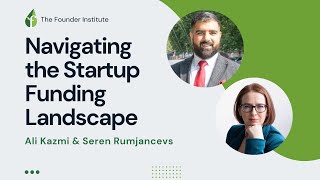
Seren Rumjancevs and Ali Kazmi discuss angel investing and startup funding. Dealum connects 25,000 investors and 87,000 startups globally. Funded startups typically have three co-founders, and both speakers warn against over-dilution and raising rounds that are too large.
Chapters
often founders forget, you know, how cap tables often work. So yes, it's all good trying to go out and get $10 million, $100 million, or whatever you want, but when the impact hits your cap table, you then realize, well, hang on, maybe I shouldn't have done that.
If you are in the angel market, if you're an angel yourself, uh, pretty well every single angel that I know, especially the top angels, are on this platform and they're using this platform to help source their deals through their local startup angel network. And so Dealum is, I mean, it's really the, the biggest platform, um, on the planet, I think, for this. Correct me if I'm wrong once I do an introduction, but it's really the next generation angel investing and angel group collaboration tool used by the top angel investors globally. Dealum is an incredible platform, and please put your hands together for the CEO and founder, Serran Ramyunsevs from Estonia.
Hello. Oh, bye. Yeah, maybe they'll just send me around. Hello everyone. Thank you for a very grand entrance introduction. Yes, yes. So currently we are one of the leading platforms and we have around 230, I think, investor groups across the globe. Majority are from North America, but it will cover the, you know, almost all the continents at this stage. And what we do is we provide a software platform for those early-stage investor groups. They can be angel investor groups, they can be accelerators, they could also be potentially early venture, you know, companies who invest in early stage. So there's a variety of players on the platform. And together, they bring on around 25,000 individual investors who are all part of the platform. And we're currently at, I think, 87,000 startups strong as well. So although our main value, or the main user is is the Angel Group who manages their deal flow and all the investment-related activities. Then we have a very strong founder community on platform as well, and they can find new fundraising opportunities from there, as well as some assistance and helping in raising better or more efficiently. So, so yeah, we are building on both sides. Uh, and I think more value as we go.
Yeah, thanks for that. Uh, and so next up I'll introduce, um, our other guests. So if you haven't used this tool, it's a relatively new tool, but it's actually very, very cool. So it's an angel investor simulator. So it's built for founders and investors to simulate and learn and accelerate their journey across the private market. So you can imagine, um, breaking day. They've built in a lot of AI features so you can kind of chat with it and you can run simulations. So it's a really cool tool. I'm not going to give it too much justice of introducing it because I'll wait for our founder. So I'll welcome our founder to the stage, Ali Kazmi. So, Ali, you're there. There we go, perfect. And Ali, maybe really quickly, do you want to tell us about the platform?
Yeah, thank you, Jordan, for that. Um, hi everyone, good to be here. Um, so yeah, Angel Investor Simulator, empowering founders, um, and, and also the next generation of aspiring angel investors. The question always is, how do we get people to the start line so that everybody understands what the race is and how they run it fairly? So we've come up with a clever tool called the AI Simulator, Angel Investor Simulator, that enables anyone— so either if you're a founder, aspiring founder looking to launch your technology business and you're not sure what the journey looks like, Or if you're an aspiring angel and you want to start deploying capital into early-stage startups and you're not sure what the journey looks like. And therefore, we've created a sandpit environment for them to learn. And it's all about democratizing education and where we quite align nicely with Foundry Institute, where we share that ethos and getting people back to the start line. We all know the horrendous statistics. I won't go into them right now, but 1% goes into underserved communities. So I'm sure we could do a lot better than that through education. And yeah, education is key.
Very cool. Okay, so I think our other two speakers are running late, so we're just going to get into it without them. If they join, we can bring them in. But maybe we'll start with you, Seren, just in terms of like your journey and how did you even get into entrepreneurship in the first place? So maybe kind of give us a bit of that background and what motivated you to help start the company.
Uh, well, I've been in the technology, technology scene from after I graduated from the university, so I was working in data science work. So it was kind of daily activities where technology-intensive companies, all the latest innovations, everything that's exciting, new, very technology-oriented. So that kind of popped into me, and I was working there for 10 years and seeing the other startups succeed, sometimes fail, you know, but seeing all this buzz and excitement and kind of how the life of the startup looks like from the side, then it really appealed to me and it looked so exciting, and I really wanted to start my own startup. So So at that point I did start another one which was shortly, briefly hot on the local scene. It was a fashion tech company based on some of the 3D modeling and some of the mass manufacturing technologies. But through that I got to see the other side of the table. So before I was advising on startups and showing the way, helping them, assisting with all the tools that we that resources at Science Park helped in the incubation center and accelerator and whatnot. And then I kind of really quickly jumped onto the other side where I started running the startup on my own, which was definitely what wasn't expected. I know it looks like how tough it is and how much that support is really needed and appreciated. But that startup unfortunately, as they do, failed. So I got back into kind of a bit more governmental side and eventually landed on the, on the D-Lum offices where the, let's say, it's almost like a third side. So eventually I started with the governmental support, then I went to startup, and now I'm more on the investor side. So I can feel like I've almost made the whole circle around the table in a way. And with D-Lum, I definitely Definitely see that, I think the advantage is for me to not only know how investors are thinking, but also having had the experience of the startup myself, then I can help the platform build in a way that supports also the founders who are not kind of the customer that we are aiming for, But who are, who bring, who are like a really, really important part of the ecosystem on the platform and, and who need all the assistance they can get, to be honest, especially in the early stages.
Well, and was there an event horizon that happened? Because like, I remember one day I was like in the startup ecosystem and talking to founders and like had never heard of Deelum, and then all of a sudden Deelum was everywhere. So like, did something What was it that all of a sudden changed? Because now like every VC that I— well, every angel that I know is basically on the platform, at least in North America it seems.
I think we had a— it's a tiny bit of luck, tiny bit of our approach to how we acquire customers. So our very first customer on the US market is one of our biggest fans. And I think in general, again, the approach that we really do take the feedback very seriously. And building the product based on that feedback. So we call it customer-led roadmap. So we have high-level understanding of where we want to get to, but how we get there is actually defined by our customers. And that includes also startups and their needs as well. So having that really strong fan base from the initial early adopters, and to this date, we mostly rely on really kind of the referrals and word of mouth marketing. So I think it's just that kind of together, those two sides have built the platform that really helps. And this is, is liked and recommended to everyone. And, and that's as bigger groups onboard, more and more founders also find their ways on the platform.
Yeah, just from, I mean, from my end, unsolicited feedback, you know, on the on the founder side, I found that they really like it because it means that all of a sudden they have to just do one submission. Um, so like analogous to like a big accelerator, um, submission, but they just have to do one submission and then they can then aggregate that to other angel networks. Whereas before the platform existed, it was kind of like a dog and pony show where it was like, okay, you had to manually apply to pitch at this one location. And then, you know, you had to then hopefully get on the circuit and like it was just very complicated for founders. And then I think for, from the angel side, the feedback that I've been getting is that it's great because it's basically streamlined everything. And, you know, it's, there's consistency in the questions and things like that. The deck is uploaded and it's recent and they just have to go through and it saves a lot of time on the angel side too. So yeah, great job. Okay, maybe Ali, we'll bring it over to you. So yeah, how'd you get into entrepreneurs and then kind of what brought you to coming up with Angel Investor Simulator?
Yeah, I mean, I wish I could sit here and give you a fancy story of some kind, um, but, uh, I mean, when COVID hit, um, everything locked down, I lost my job. So, um, it was more about, you know, I need to be doing something to, to make ends meet. Um, but I've always been passionate about startups and the, you know, the journey that the entrepreneurs actually go on in order to fundraise ultimately and then scale up some sort of technology product. And then obviously on the other scale, you've got at the other end, then you have the angel investors that either make it happen or they don't. Um, and then it was, it was within that. So obviously my background as a specialist, I'm a tax specialist, I've always advised startups for the last 10, 15 years or so. Um, whether in the UK or in the US. Um, and then once I started diving into actually what is the education process that founders go through, um, so that, you know, they could effectively successfully fundraise as opposed to wasting a lot of time and not knowing what they don't know. So the unknown— so the private markets is one of those unknown areas where there's so many different nuances and everybody's journey is unique and it's different. And, you know, Ultimately, it's about how you navigate through that and have that resilience. So that's a long way of saying that, you know, when we were looking a lot of the journeys that the founders go through, there wasn't really a standardized process. Yes, you have the accelerators, incubators, and they churn people through and it's great. But actually, what about the other 99% that don't make it through the accelerators or incubators? You know, what happens to them. So we then thought, actually, how do we democratize education and some sort of mentorship that is done through the platform? And that's where we came effectively through to what it is today, the simulator. So the key things that we— that are on there that empowers the founders is about, you know, knowledge. You know, firstly, what does the journey look like? Yes, you know, you could go to your accountants and your lawyers and they will tell you a very unique thing or a part of the startup journey, but it's never end-to-end. So where do you go to, to get the end-to-end journey? So we created the simulator. So everything from, you know, e-learning modules, everything around tax and legals, but often founders forget, you know, it's the human side. That actually makes the deal happen? You know, can you connect with the investors and the soft skills that are required in order to communicate your proposition effectively? So that was, you know, all the e-learning modules. Then, you know, can you spot, you know, there's a build a deal feature. Can you spot the hallmarks of a unicorn? So everybody's running after this unicorn status, but what makes a good unicorn? Why is it? So we're trying to standardize some of that, you know, the proposition, the team behind it, the solution. Does it all make sense? And then, you know, what we also through research found, not everybody has access to a mentor. So that's where we created the AI mentor so that, you know, if you've got those burning questions as founders, you know, when we're staying up 1, 2 o'clock in the morning trying to work through the fog, can we communicate with someone that can reply back with a credible answer? You know, we live in a day and age where everybody's a mentor these days, or everybody's a startup consultant of some sort. But actually, you know, do they have valid knowledge? Have they been there, done it themselves, and got their fingers burnt? Until you have, you know, and you haven't, then, you know, it's a whole different story. So we're trying to bring it all together in a packaged way so that, you know, we someday— I hope someday we could stop hearing the bad statistics of 1% has gone to females or 1% has gone to ethnic minority backgrounds or underserved communities, disabled communities. You know, everybody should have an equal chance and a fair chance of raising capital. So therefore you know, going through the simulator process, whether you're in the UK or the US, that's the two pathways we currently have. It should give you enough information of knowing or staying one step ahead of what is about to come in your own startup. So this isn't just about a fancy MBA of some sort, it's about, it's taken from real-life examples from founders and aspiring angels or angel investors. And packaged up for individuals like myself, including that, you know, I wish I knew this, or I wish I knew what was about to come 2 steps ahead so that I can better plan my journey and what it looks for me. Because ultimately I want success. Yes, you know, we should celebrate failure too. You know, failure, particularly in England, is seen as a bad thing, but there's a lot of learning that comes out of it. That you could implement for your second startup, third startup, and do it that way. It's all about staying one step ahead. But on the other side, on the founder side also, when we interact with universities, we also hear that actually we've got about 3,000 students coming through our doors. How do we pick the best ones to go into our incubator? We then now use this simulator as a filtering tool to cherry-pick the best founders so that we can then pass them on to the other startups, uh, the other incubators, accelerators, so that they could work their magic. Because what we also find is within those incubators and accelerators— I'm sure, Jordan, you could vouch for this— is that where there's the knowledge isn't there for the founders, you're ultimately becoming, you know, the, the, the teacher of, of teaching them the basic stuff about startups, whereas actually if they come with a baseline of knowledge, you as a coach, as a mentor, you could add real value to the business, as opposed to talking about what is a business plan, what's a financial model, how do you put a pitch deck together. So trying to, you know, as bizarre as it sounds in this day and age, we're trying to democratize all of those things that we take for granted that the other founders are unsure of. And then on One final thing I would say on the flip side, on the investor side, is what formal training do they go to to become angel investors? You know, yes, they tick all these boxes, but actually, if they had a better education of how to deploy money, hopefully they can make better returns.
Yeah, no, I totally agree. I think, especially with— I mean, one of the biggest learnings from Silicon Valley is just the Silicon Valley mindset of like accepting failure, as long as it comes with learning, you know, and putting yourself out there, because it's the only way you can improve. So I think, yeah, that's great. And, you know, it is true, it's like, if I were ever to write a book about angel and startup investing, you know, it'd probably be called Rigged, because like a lot of times, you know, it's just, you're not— when you're going through it the first time, and you know, you're a little bit ignorant, or just unaware, you start to realize just how rigged the game is sometimes in the sense that, you know, I've had— I've seen angel investors, the first question that they ask is basically, how wealthy are you and your family and your network? And that's how blunt it is. I mean, I've also seen investors not invest because people had different color socks on, but that's a whole nother story. So I think the, yeah, any tool that democratizes process that empowers people to help level the playing field so that the best ideas and the best founders shine through, as opposed to just the best connected. Um, yeah, is awesome for just overall startup ecosystem and viability. Okay, so, um, I want to kind of transition to today because a lot of startup founders, uh, you know, they're actively trying to fundraise, they're having challenges, um, you know, depending on the market that they're in, depending on the vertical they're in, they're in So maybe we'll start with you, uh, Seren. Can, can you maybe kind of give us a snapshot as to like what the angel market is right now? Because a lot of this data a lot of times is not that public. Um, and so yeah, I mean, from your perspective, what's it like to be an angel investor right now or a founder?
It's, uh, last couple of years it's definitely been tougher for everyone, uh, not just founders who struggle to fundraise, but also for major groups who struggle to keep their value proposition to the members and whatnot. So we have seen the decline in general investment activity. At the same time, uh, we have had some of our customers comment that— not necessarily a bad thing— that's, uh, that the the deal flow is better quality, so it's easier to filter out the better deals at this stage. So they saw that although it is in decline, since the valuations are more attractive, the angel investors are more incentivized to actually invest. So it kind of balances out. All in all, we see that that it is getting more difficult. So for, for angel groups also, because of the decline and the squeeze from the capital and the environment, the economy, then lots of groups start consolidating in order to become more professional, in order to reduce the costs that it takes to manage an angel organization, for example. So the number of angel groups is actually reducing, but the number of angel investors in them is necessarily not. So, and the number of angel investors is kind of the same or maybe even slightly growing. So, for founders, it's in a way a positive change because there are less groups or less places to approach. And at the same time, the angel groups, since they have more members and more investors in them, are able to fill the round within potentially one group. So the the closing might be easier within that one group in general. But also, also the groups are starting to collaborate a bit more and syndicate between the groups, so, all in order to get those rounds filled.
No, that's a great insight. I think that, I mean, we've just seen that on the ground as well. Like the consolidation of resources within the angel groups. So like either the creation of like an overall body to help advocate on behalf of a smaller group, uh, or vice versa. Um, so yeah, no, that's a great insight that the amount of angels hasn't necessarily changed, but the amount of groups has, um, has shrunk. So yeah, that's interesting. And then Ali, from your perspective, I mean, what are you kind of seeing, um, come across your platform and just the types of questions either on the investor side or the founder side.
Yeah, I'll start with the, um, and the investor side. So actually, um, I would probably contradict what Serena just said, particularly in the, in the UK where we are actually creating more angel investors through the platform, um, that are not, not just angel investors as in high net worth individuals but actually sophisticated investors that actually know what they're doing at the end of it. So there's normally, within the regulation in the UK, there's a 6-month process that they have to be part of an angel group or a syndicate or part of an education trade association that enables them to then certify as that. So, so for us, yes, on the founder side, it's still hard particularly depending on which background you come from, to raise capital. You know, it's that— that's just the fact. People are tightening up their belts in, in how they deploy capital or becoming a bit more smarter. But however, on the, on the angel side, we are seeing the growth of additional angels coming to the market. But also what is driving that, funnily enough, is the bad statistics that are being shown in terms of who gets what access to what capital. And we are seeing actually founders themselves, okay, not necessarily super rich, but actually are deploying small amounts, but on a regular basis to help fellow founders get off the ground. So we are seeing a pattern there where founders are supporting fellow founders coming through to have a slightly better journey than what they've had. Because they can align themselves with it and they know how hard it is. So overall, we are seeing a positive movement.
Yeah, and anytime you have a big winner, um, you know, it's like the PayPal mafia kind of analogy where it's like, you know, I'm in Canada, for example, Waterloo, and Shopify has been fantastic and it's created some billionaires and a lot of millionaires actually. And then that It's kind of trickled down to them becoming angel investors, and yeah, it's great for the entire ecosystem. So for sure. So knowing that, um, so things are kind of, um, depending on how you look at it, uh, maybe there's less startups, uh, being launched, um, maybe less funding overall. But moving forward, um, you know, politically we're seeing a lot of change happening over the next year or two. not just within Europe, but also in North America and really globally. Um, so, you know, where do you see kind of things going over the next, let's call it 5 years? Is it going to get better? Um, you know, some sources like PitchBook basically have said like, it doesn't look like it's going to get better until the end of the decade. Um, you know, from your viewpoint, is it an optimistic future for founders? Um, or is it kind of pessimistic? I think maybe Sirine, we'll go back to you.
If I had that crystal ball, it's super difficult to predict that. As far as we think, it seems to have stabilized, at least on our platform, for now. So the activity has kind of— it's not declining anymore. So, that might mean that the balance has been found between the deal flow and the capital that's available. We do hope that with this consolidation and this kind of collaboration between the groups, that increases the chances for founders to find that capital. It's usually, it's very, very tricky to, if you're in a niche as well, to to find sufficient amount of investors who know anything about that, for example, that sector. So in a way, if on our platform, if they can collaborate and find those, you know, experts and investors who do some specific technology or verticals, then when they put their knowledge and funds together, then that's definitely gonna help everyone. So we hope that with this kind of, you know, trends of doing things together and also giving more opportunities for diverse backgrounds, it will— good founders will find the funding hopefully. But I can't really say on the long term. I mean, it's still lots of investors still keep to their current funds in order to support already their portfolio companies who need to raise bridge additional rounds or needs additional funding. So just going to make sure that those are also funded. So they might be a bit more tighter with new opportunities compared to the existing portfolio.
No, it's good insights. It's, um, the fact that the good finders will find— good founders will find a way. And I think, uh, I know a very successful founder that is in space tech that he talked about who does like angel investing as well. Um, he said like fundamentally his thesis is really looking for cockroaches, so like resilient founders that will succeed no matter what. Um, so yeah, Ali, from your perspective, I mean, where do you think we're going over the next kind of 5 years?
I, I think so. I think it would be ironic for me to, to sit here and say that, uh, there won't be other angel investors given that what our business model does. Um, I think, I think you're right about— I think good founders would always find the capital. Um, that's always been the case, even on downturns. Um, you know, if you've got a good network and you've got access to the right level of people, then, um, you know, they will get the money, period. But, um, you know, for us, and what we really want to disrupt is, as I say, adding more angel investors to pool, but actually giving them the right level of training so that they could make a difference. And that's what we're about and what our little business model is about. So if we can achieve that, you know, over the next 5 or 10 years, however, however long it takes, then I think that's a, that's a good thing. So we definitely don't want to be, be seeing less angels. We definitely want to be seeing more. But even if they're making smaller amounts, which is what we're doing in the UK, We have an aspiring angel program, and what we're actually saying to them is, you know, bunch together in numbers. Yes, it's smaller amount each one is putting together, but actually, and collectively, you have the volume in how you deploy that capital. Then that is far more meaningful just than rather than one person trying to put, you know, $100 grand or, you know, $50 grand. Then the math doesn't always work out. In that way.
Okay, let's keep rubbing the crystal ball here because I think it's, um, you know, founders want to know insights and tips and tricks and how they can just be better. Um, so, you know, we hosted Founder X, uh, last year in November in Silicon Valley at Oracle's, um, like former headquarters. And one of the keynotes that we had was Jason Calacanis, so kind of self-proclaimed best investor in Silicon Valley. And like from his perspective, it was like, okay, for 2024, in order to be like a funded startup, you know, gone are the days of the solopreneur. You know, we're looking for teams, teams that basically can be self-sufficient. So, you know, it's like the typical hacker, hustler, hipster. But I think the idea is like, you know, a team that within just the resources of their sweat equity, can build anything that they want and sell anything that they want. You know, there's also talk of like the rise of like the solopreneur, totally counteractive to that, of someone that can basically create a billion-dollar company with just one employee and a lot of AI leveraging. So it's like a lot of mixed messaging. It's hard to know, you know, and obviously at the end of the day, you need a fantastic startup with like a lot of terminal velocity that's just taking off. Um, but maybe, you know, in terms of insights from the angel side, you know, what is it that angels right now are looking for in awesome founders and awesome teams and awesome startups? So maybe, uh, Seren, over to you. Like, is there— are there markers that these angels are looking for that, um, are kind of, uh, you're seeing a pattern?
I think there are two kind of directions that angels often take or what we see on the platform is that they focus on their regional reach. So their goal is to help their local ecosystem to grow. Then they focus primarily on within their home grounds, let's say. To find the best startups from there. So, so like having these kind of local, uh, local angel groups or early-stage capital is, is always gonna continue the same way. But we also see that there's lots of this kind of specializing into specific verticals, niches, and then those kind of investor syndicates or they're more informal. So that might be, you know, you are an expert in some specific, super specific deep tech topic, you have connections in Australia, Brazil and whatnot, and then you come together to kind of find that deal flow and invest in those kinds of companies because you have that expertise. So, this kind of informal formation of the groups is also getting more and more and more common. And in that case, they are global, investing globally, and they are investing in those fields that are not necessarily that attractive on a regional level because there's just nobody who understands anything about that. And so, Yeah, we see this, this specialising is happening. Of course, there's lots of this impact and, you know, diversity investing and whatnot. So, so it's kind of really well balanced in a way. Traditionally, the angel investing has been very much local, and we see that it is getting more global or more collaborative, more cross-border. Within Europe, but also further away. So hopefully these trends continue because I think that's, you know, sharing that deal flow globally is how those non-obvious winners get better funding because, you know, there's just more investors to approach or more funding to approach.
No, those are great insights. I mean, tech is very mobile. I mean, especially if you have an EU passport, you can kind of pick the ecosystem that you want to grow up in, kind of right across Europe. And I think the, you know, the regional perspective, you know, I like to make the joke that investing is, if the odds of a successful startup are like 10%, let's say, then You know, it's 10% investing and 90% local philanthropy. Um, because, you know, a lot of times these investors are fundamentally supporting local startups and trying to get them off the ground. And then I think, um, yeah, it makes a lot of sense that, um, things would— and we're seeing that too on the investment side of like, it makes a lot more sense to centralize around like, you know, like what's called like a vertical angel fund. You know, if medtech is really big in your ecosystem, then it makes sense to get behind medtech startups naturally, because if the black hole is going to attract those startups in, then it makes sense to kind of double down on those types of startups. So yeah, that's, that's great feedback.
And then, yeah, go ahead. I think they're going to go to the lines between this, where which organizations invest in what kind of deals is maybe getting a bit more blurred. Uh, so angel investors are investing more and more in later rounds, and the VCs are coming in earlier. So it's kind of— it's getting more blurred. So it's not as much like staged anymore. So there, there are fundraising opportunities, uh, from different and various organizations. So that may be something to keep in mind for founders as well.
Yeah, it makes sense. The, um, just FYI for everyone, if you have questions, please put it into the Q&A there. We're gonna start getting into Q&A in a second here, but maybe just, Ali, back to you. You know, are there insights that you're seeing across the platform that, you know, are a bit of a pattern for the types of startups that are getting funding?
Yeah, you know, I'm going to be somewhat controversial here. I'm sorry, but 99% of investors don't know what they're investing in. Particularly what we see with the syndicate mentality is that, you know, one person leads the round and supposedly has done the due diligence, and then all the friends jump on the back of that, um, without, you know, looking under the bonnet. So, you know, there's no surprise when the company then fails. Most startups fail, um, and then they do. If investors knew what they're investing in, you know, why is there such a high failure rate? Yes, the founders might need to be a lot more smarter but so do investors, you know. Can they really pick out the best ones? Um, I think it's just, you know, you've got a number of examples, and one of the ones that immediately comes to mind is, is Bad Blood, um, Elizabeth Holmes, for example, where people are just pouring money in constantly in the hope that something might work, but actually nothing was there to begin with. Um, so, you know, all of that then comes, and also when you have the VC mentality, um, as to you know, 80% of the portfolio is going to fail and 2 of them might then outstrip the whole portfolio to make a better return, or 2 will then go on to become unicorns. I don't think that's a real strategy as to, you know, investing wisely. I think that's just trying to fill in a gap. But having said all of that, I think in terms of trends, who gets the investment, I think anything that's tech-related is a massive tick, you know, only because it's scalable and all of that stuff, you know, it can be borderless and everything, you know, it could be done really quickly. But where we, I think, seeing missed opportunities, you know, within deep tech, for example, because they take such a longer process and a longer time, require more funding, I think people often give up, you know, they're like, oh, well, actually hasn't made a return in 2 or 5 years. Therefore, you know, we don't want to do follow-on rounds. I think follow-on rounds are important if you believe in the concept and the impact that it could have. And that's where, you know, Serene made a valid point where impact is on the rise, where there's a slight shift in terms of how impact investors are investing. They're not looking so much at what the tech is or what the business is doing. It's more of the founder, giving the founder the opportunity that they desperately deserve. And back to the point about Jordan, about, you know, a bit like philanthropy, giving the founders the opportunity to get off the ground and do something good in return, as opposed to, yes, this is a groundbreaking tech. And, you know, how does anybody has, you know, do you have the ability to judge how groundbreaking a tech is? You know, we have the likes of Uber, for example, you know, the customer acquisition is through the roof. Yes, of course that's going to become successful at some point in the journey. You know, the more you invest into the noise and get people behind it, yeah, of course it becomes successful. But actually, you know, what we're seeing is, you know, the concept on paper that should be doing really good are not doing so good because they can't get access to capital or they haven't got the right networks, the connections, or they can't make that noise because there's so much noise being made by the big boys, as it were, because they've got all the capital.
Yeah, no, that— yeah, that could be a whole, um, separate topic just on its own, which is very fascinating because the, you know, it's like the typical exit strategy is to be sold out by a big company, but then, you know, we don't necessarily like monopolies. And so what is the ideal access strategy? Okay, why don't we get into some Q&A? So again, please feel free to put some questions in the Q&A box you just see in the top right, and then, you know, producers are going to pull forward a question we'll ask the panel here. Uh, okay, so I would like to know how solo entrepreneurs can find support in building a startup from scratch. Would people fund you when you were just at early ideation stage? And how, uh, how do we find co-founders? Um, well, I mean, you could join Founder Institute and we'll help you out, but, uh, but yeah, I'll hand it over maybe back to you, Ali. Uh, you know, do you have, uh, suggestions for solo honest.
I think, look, you know, uh, again, you know, I've fallen out almost with my other, other founders in running two technology businesses. But I think having somebody there, I think, is quite key, having a team around you, because entrepreneurship is lonely. It absolutely is. You know, you're stuck in your little box and with your thoughts. So I think, you know, um, it's, it's about it's breaking out of those, you know, skill sets, teams, people invest in teams. And if you're a solo entrepreneur, I mean, there's nothing wrong with that, but you're— there's a barrier to, to, from investors because you can't do everything and be in every place. So I think it is starting to become difficult. So there's an expectation, at least with some of the incubators that we deal with in the UK, that, uh, you know, you, you know, before they even take you on, you need to have a co-founder, um, with you, or they help you find a co-founder. And, and I think that's the right approach, definitely. If one of you were hit under the bus, what's going to happen to your business? Um, it's solely reliant on one person, is super, super risky. So I think that's not a bad thing. Yes, people probably can do solo entrepreneur and go and do be successful But the risk is very high on that, and trying to raise investment on the back of that, I think it shuts a lot of investors off immediately because you're just seeing that super risky.
Maybe, Seren, do you track, um, so of deals that come through your platform, do you track how many founders are part of the, the core team? And then are you able to correlate that with potential funding? Like, is there a magic number of like It's like 3 founders, 4 founders, 1 founder.
Um, we did run that query once. I think it was, uh, it was 3 founders was kind of average. Uh, so, and with, yeah, with 5 founders it might get a bit messy. Uh, but I think, I think it's kind of, you know, what Ali said is, is important, that it is about the risk management as well. And it's also about the daily processes. If you're running a company and you start fundraising, fundraising is a full-time job. It takes so much resource. And if you're a solo entrepreneur, then that means the business stops while you fundraise. Like nothing happens because you don't have the resource to actually do business while you fundraise. So that's, that's why you do need a bigger team. Might not necessarily be founders, but at least a team. So that's really important to take a look at. So yeah, and in addition, I think, I'm not sure how in India, but in Europe there are so many this kind of governmental support organizations. There are the local business consult, like city government arranged the business support agencies and whatnot. So there's a lot of those, uh, there's sometimes governmental programs on how to develop, build your business, and then, you know, different training programs, different courses, whatnot. So try to utilize all those opportunities that you find, which are usually for free. And of course, to find co-founders, it's all about networking. It's something that not everyone loves and enjoys and is good at, But it is really one of the places to find people. So when I was starting my own first startup, then I went to the hackathon and I pitched my idea on the stage, got the team from the crowd, and we won the hackathon. So although it wasn't a success in long term, that was how I found my four co-founders.
No, and that's a great strategy. And honestly, I mean, if I were quitting everything and just launching a fund, you know, I think my thesis in many ways for finding talent would be hackathons. I think, you know, I just found that like typically the best talent are competing at hackathons, but most importantly, intrinsically, they're usually in it for the best reasons. You know, they're not in it to make a whole bunch of money or anything. They're just in it to solve problems and like for free. And yeah, I think it's an amazing place to meet co-founders. I totally agree. Okay, why don't we pull another question here? So we'll queue up another question. Tips needed for going big funding. I love it. Okay, so Um, let's say you're shooting— it's a moonshot and you're gonna need a lot of money. Is there any tips and tricks?
Uh, yeah, well, firstly, why do you need, um, that amount of money, right? Um, and also don't forget, at some point dilution is going to come and hit you really hard. Often founders forget, you know, how cap tables often work. So yes, it's all good trying to go out and get 10 million 100 million or whatever you want. But when the impact hits your cap table, you then realize, well, hang on, maybe I shouldn't have done that. So I think chunking it is the best stage. Once you hit milestones where your valuation is increasing as your rounds go on, I think is the best strategy, as opposed to just trying to go all in at once. You know, we need the 100 million because some success already has been highlighted. For marketing purposes, and everybody thinks that that is the norm. You know, we live in that world, but unfortunately, it's your own race. Run your own race at your own pace. Take it easy, relax, you know, enjoy it. As opposed to, you know, somebody's put out an announcement that they raised $100 million and we, you know, everybody must do that. So my question would be, you know, again, there's no tips that I have. My question would be more cautious approach. As to why you need such a big round, um, you know, depending on which, you know, where you are in your journey.
It's like, yeah, okay, we're doing a new AI company, we need $6 billion in fundraising, but it's possible. It's possible.
Yeah, it depends on where you are. If you're like fresh out of the oven and then raising $100 million, it's probably not gonna happen. So it's just, uh, that needs to be accepted. But when it's going to substantial round, the next round, then what you need to do is utilize your existing investors because they know you, they know what are your positives, what are your— why you are worth an investment. If they say you are not worth investment, then you're not gonna raise the round. But if they really believe in you, they will, you know, pull out all their cards, all their network, all their connections to make those introductions. So use your existing investors to take this, you know, level up your investment game. So, uh, so yeah, I would recommend that approach and first raising smaller rounds and then, you know, growing from there.
Okay, we're gonna do one quick question and then we're gonna break into networking. So we'll do one quick one. Um, so this one's a fun one. In the case of a deep tech startup where there's a lot of experimentation involved where the technology is something that is, uh, something that's not been seen before, how likely is it that investors are interested? Um, because a lot of times you got to sell the dream first so that you can, you know, run experiments in the lab and things like that. It can be very expensive. Um, so yeah, maybe, uh, Seren, we'll start with you.
Yes, so there are, um, there are some investors and some groups groups. And, and there are of course definitely governmental grants that focused on that deep tech side. There are people who understand it better, uh, though in, in like your average, uh, widely, um, you know, with wide interest range angel group, you might struggle finding those who understand it. So you do need to kind of go to, to those experts, potentially start with, uh, if If there is some, you know, person who is advising you on the technology, for example, maybe they can find someone, they know someone in their circles who might have the funding or who might introduce you to some capital. So, you need to, you know, kind of like untangle this mess a bit to get closer to what you need. And I think that the ones who actually know the specific industry, for example, also in medtech, the investors who invest in there, they know it takes ages, they know it takes so much money and they're prepared for it. And that also means that they come with like realistic expectations of the exit timeline about all those aspects. If you go to, you know, if you somehow French, push through, uh, the, you know, uneducated investor capital, then they become very disappointed very fast, and they don't have the connections or anything. So I think it's not even potentially worth pursuing, but rather going directly to those, uh, those connections and contacts and capital who know what they're doing.
Yeah, and Ali, from your perspective?
Yeah, so, um, so funnily enough, um, Good timing on this question. So we're currently writing a paper on this matter for ACA in the US, trying to encourage more investors, individual investors, into deep tech and helping them understand. I think the first thing is, look, you know, deep tech is a long-term game. It's not an overnight thing. And helping them understand that, you know, because there's a duty on the founders to help them understand get there and help their investors understand that it's not an overnight thing, it's a long-term game, and they have to go on that journey with them. And it might be that there are multiple rounds that they participate in. But, you know, I suppose the good thing is that normally when there is a deep tech or some sort, quantum, medtech, or AI, you know, is usually some sort of universities associated with it. So, you know, where it comes out of, so Having that network around the university, those investors, not so much, I wouldn't say angels, but whether VC, deep tech are geared up towards that, it's good because there's less selling to them because they already know somewhat what the journey looks like and the expectation is realistic that it's not an overnight success. But I think still a lot more needs to be done for individual investors to get involved and play that long-term game and see this as a long-term investment as opposed to an overnight success.
Yeah, and I would just add in terms of advice, uh, because I mean, we've done a lot of failures in deep tech. We had like biosensor companies, millimeter wave, all sorts of cool stuff. Um, but you know, I think it would be that, um, at the earliest stages, I would really focus on bringing together like an amazing advisory board. You know, and in the early stages, you don't even need to promise potentially equity or advisory equity, which like if you check out fi.co/fast, you can see kind of like what an advisory agreement potentially looks like. We basically invented it. Now it's been kind of syndicated by law firms globally. But, you know, I've seen a lot of luck when deep tech companies had really strong advisory boards. And on that advisory board, also, I would add like an IP lawyer, um, and having a very strong IP strategy from the very beginning, as well as like a rock-solid agreement if you're collaborating with the university and using one of their labs, let's say, um, with the commercialization department, or no agreement at all ideally, uh, so that there's no connection to it, because I've also seen that come back to deep tech startups where like they engage with a commercialization office at a higher educational institution. And even though they didn't really work with them, the fact that they had like just met with them and had conversations with them basically predicated that, um, you know, the university had a stake in their, their invention. And then it kind of backfired and it went to court, and then it gets messy. And so anyways, enough about that. Huge round of applause for the both of you. Thank you. Sorry about the other two not showing up. We had to change the date of this originally because it conflicted with like a huge event that we were running. And so that's why we were scheduled. And I think they just couldn't make it at the last minute. But maybe just before we go, Sherynne, is there anything you need help with? Are you hiring? Are you looking for angels? Are you looking for angel groups? You know, how can we help you? To grow the platform?
Well, we are always looking for new customers, so if you have an accelerator or an angel group, then please do get in touch and then, uh, and then we'll show you around. We hope you like it. But also maybe a shout out that we have— if you're already a startup and you're using our platform, then you might have seen a little announcement for the Founders newsletter. So please do join our newsletter as well. We'll be sharing our knowledge and insights and all, all, uh, all the information we gather, uh, uh, with, with the founders to, to also help you get better at fundraising and then hopefully be successful.
Yeah, and any founders and startups looking to fundraise, I mean, I definitely encourage like setting up a profile on the platform. And then, you know, then you can start to look for different angel groups because it's, uh, it really has been a fantastic early stage tool. So yeah, good. Thank you for everything that you've done really to the venture space because it's injecting a lot of capital in the early stage startups that wouldn't normally have access to capital in the same way. So yeah, huge, huge thank you. And then Ali, anything you need help promoting on your side? Obviously joining the platform and testing it out.
Yeah, yeah. And again, it's free to use, um, whether they're on the UK pathway or the US pathway, so there's no charge. So, you know, um, to make the most of it, I suppose. Um, for us, our ultimate ambition is to be in the US. Um, that's where we want to be. So if there are any institutions that, you know, we could work with or partner up, you know, even if it's, you know, we're not if there's no commercial element to it, we'll be more than happy to discuss that because for us it's about democratizing the education. So if we could do that for students or first-time founders or aspiring angels in the US, then we'd love to do that. We'd love to partner up with universities, accelerators, and incubators so that we could have a better ecosystem. So yeah, if there's any that would love to reach out, from the US, then yeah, please do. I'd love to continue the conversation.
Awesome. Okay, so that concludes, uh, this session. Thank you so much. Um, so we're pretty soon going to go into the main room. Everyone can network. It's also— we're hitting our 15th anniversary for Founder Institute, so we're going to launch it this week, next week. So it's a huge party. Thank you everyone. Uh, thanks for attending. We can't do this without you guys. Feel free to stick around for the networking and see you soon. Thanks again, Serena and Alex.
You did it, babe. Thank you.
Thank you all. Thank you.










