Startup Fundraising Q&A: Meet Investors from the FI Venture Network
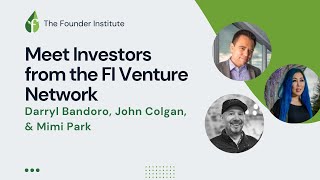
The Founder Institute hosted a live VC AMA on Airmeet, moderated by Eon Isaacs, featuring three investors: Darryl (VU Venture Partners, Ottawa), Mimi (Deal Partner at Ganas Ventures, FI alum), and John (Partner at VU Venture Partners, former Google litigator). The session covered a range of early‑stage fundraising topics driven by audience questions. Key discussions included: how to craft effective cold outreach emails (personalization, storytelling, avoiding generic templates and AI‑generated copy), appropriate cadence for update emails and respecting investors’ inboxes, evaluating accelerators (program quality, mentor access, time commitment, and fit), methods for early‑stage valuation (market conditions, revenue multiples, comparable deals, and focusing on milestone‑driven runway), the role of traction and MVP (bootstrapping, proof of market demand, industry‑specific sales cycles), optimal pitch‑deck length and format (short meeting‑focused decks vs. detailed reader decks, use of data rooms), choosing between B2B and B2C focus (segment profitability, go‑to‑market strategy, and iterative testing), guidance on how much to raise at pre‑seed, seed and Series A (raise enough for 18‑24 months runway, justify amount with milestones, avoid over‑ or under‑raising), and outlook for 2024 (longer fundraising cycles, tighter capital environment, importance of early relationship building). The panel wrapped up with final advice for founders to plan conservatively, maintain strong networks, and focus on value creation.
Chapters
Hey everyone, how's it going? My name is Eon Isaacs. I'm the head of global growth for the Founder Institute. Super excited, uh, for this is one of my favorite events, as everybody knows who joins me at least once a week. But today it's really, really, um, special. We have our VC AMA event. You know, we host these every about 6 weeks or so. The idea is to really get top-notch VCs over here so you as a founder can ask them any question. This is your time to really get to know some of the VCs we have across the Venture Network, but also just for you to just ask like, you know, what are the best practices around fundraising? I have this particular question, what type of financial model and all of that type of stuff, right? So before I go ahead and start introducing our panelists today, which is really, really awesome, I'm super grateful for them all being here, I think what I would like to do is just some brief housekeeping. So as you can see, this platform is called Airmeet. If you're joining on your mobile, it's not the cleanest experience. If you're joining on a tablet or your desktop or laptop, it's pretty simple to utilize. As you can see on the right-hand side, there's a chat. Please let us just use that to communicate with the general audience. Let us also know right now where you're calling in from. We had about 350 people sign up for this event. We're about 102 people live. I think we'll get to about 180, 190. So I just see some initial— okay, I see Santa Cruz, Naples, Algeria, Hamburg, Germany. Where else? Armenia, Cologne, Germany, Toronto, Canada, San Ramon, California. I didn't even know that existed. Tokyo, wow, okay. Ottawa as well. Okay, we have Darryl's from Ottawa. So you got quite a bit of people from Ottawa here, Darryl. Minneapolis, Abu Dhabi. So really, really excited. San Francisco Bay. So really, really cool. Thanks everyone for participating. Right underneath the messaging, and this is most critical, folks, there's a Q&A button. Please use the Q&A button from now. Start feeding us your questions and upvoting others because I will be using that religiously going forward to bring up questions and present it to our panelists today, right? So while I'm introducing the panelists, please start feeding us your questions. Look at what other people are asking and upvote that so we just avoid— we typically try to go through about 20 to 30 questions in this. We have 55 minutes, let's make good use of it. After we're done the session, you will kind of jump into what we call the virtual space and over there you'll be able to, hopefully as long as our mentors can stick around, you can join a table, speak to them for about 10, 15 minutes and then hop off. So we'll try to wrap up everything within, like I would say, 60 to 65 minutes. And last but not least is we have some emojis at the bottom of your screen. You know, if you feel like the content and the mentor is resonating, whatever the mentor is saying is resonating, please, yeah, exactly, thumbs up. There's some heart emojis, party emojis, whatever you think is appropriate. All right, enough about me. I would love to introduce our panelists. What I'm going to do is I'm going to switch the view here so we can just see everyone's faces. All right, I'm going to— just because he gets a bit of preferential treatment because he's from Ottawa and I did my undergrad in Ottawa, I'm going to let Darryl go first and then we can move to Mimi and John. All right, Darryl, do you want to just self-introduce yourself and then we'll move over to Mimi and John and then we'll just dive straight into questions.
Perfect. Thanks, Ian. That's a— That's great. Yeah, so I'm a venture investor with VU Venture Partners based in San Francisco, California, but I am physically located in Ottawa. Just as a very brief background, you know, I was thinking back on my career earlier this week, and essentially, I love to be able to act as a guide to help people navigate through complex problems. And I spent my first 20 years doing that in the financial services sector. Before jumping into the startup realm and co-founding a fintech startup. Did that for a couple of years before moving to the role that I'm in now.
Perfect. Thanks, Mimi. Do you want to go ahead and introduce yourself?
Yes.
So I also have a background in finance. I worked for 10 years for a lot of the major wirehouses and banks on Wall Street before joining the startup world. I'm also located in the San Francisco Bay Area. I'm a deal partner with Ganas Ventures, which is a woman-owned $10 million venture fund. We invest in pre-seed and seed companies in the US and Latin America that are community-based. And best part is I'm also an alumni of Founder Institute of Silicon Valley.
Awesome. Great plug. Appreciate Mimi. We should get you on more of these webinars because I didn't even tell what Founder Institute do. But I'm assuming everyone who joins here knows who we are. But yeah, John, do you want to give a brief introduction to yourself?
Great. Yes, I'm John. I'm also at VU Venture Partners. I am a reformed lawyer. I spent over 20 years doing high-tech litigation, most recently for Google for over a decade internationally. I'm really drawn to interdisciplinary pursuits, which drew me into venture. I'm a generalist, but tend to avoid biotech, pharma areas, areas outside my expertise. I'm really passionate about the technology's ability to solve problems. My particular focus, I love working and talking with pre-seed, seed, Series A companies. I will, in addition to working with a few venture partners, I will also angel invest and do advising, mentoring. As well if there's a particular fit with the company.
Okay, thank you so much, John. Okay, folks, you have a diverse panel set all bringing very different experiences to fundraising. Would love to kind of dive deep in. We already have some questions coming in. Let's keep bringing them on and please, please use the upvote function. All right, let's get things started. So the first question that's been upvoted 9 times is by Sean from Miami. He said, what's the best way to do cold outreach to potential angel investors? So Mimi, I'll kick this over with you and then maybe Darryl and John, if you wanna follow up with it, that'd be great.
Sounds good. So my number one thing I will say right now is one, don't use a like blank template letter that you send out to every single person that says the exact same thing. We can tell off the bat, we get a lot of these and it looks like when you don't take the time to say why you want to work with a particular VC that you haven't done research and it might not be a good fit. So definitely do some homework about why you are pitching this particular firm, why you think it'd be a good fit for your company, and how we can help you and work together. The second one that kind of ties in with that, don't use ChatGPT, please. I see so much of those and they all basically sound the same. It doesn't sound human. I can tell a real from a fake one. So take the time to, you know, even if it's just a few sentences, be sincere and really let the VC know who you are and why we should reach back out to you.
Yeah, that's definitely a question we get a lot at FYI. It's like, how do we do cold outreach? We actually ran a bootcamp earlier on that and it was like a lot, it's very research driven. Um, I guess John or Darryl, do you have anything else? I, I guess Darryl, let's start with you. Anything to add to that and then we can go to John.
Sure, certainly. In terms of, uh, method, I, I get a lot of messages on LinkedIn and, uh, it becomes difficult to go through all of them. So email for me anyway, personally, is preferred. And the one thing I'll probably bring up a few times during this chat is founder's abilities to tell stories will be always extremely helpful. So even if it's just in one line, preferably something that really distinguishes yourself, if you're able to communicate what you do and the value proposition that you have in one or two lines and include that to sort of catch my attention, catch my imagination, that's always gonna be helpful as opposed to something like Mimi said, that's just extremely generic.
Well put together, nothing to add to that. But John, do you wanna add something?
Yeah, I think there's an art to being succinct and still communicating a lot of information. And I think that you should really challenge yourself to do that. Consider yourself having like a, 4-sentence limit, what are the most 4 important things you wanna communicate in a cold email outreach? I'll also too, I mean, if I am interested, it would be nice to already have your pitch deck in the cold outreach if you're reaching out over something you can attach where I can dig in further if I'm interested. It doesn't need to be your full pitch deck if you're concerned about communicating too much information or you wanna make sure there's interest before doing that, but If I am interested, my next follow-up is, can I see a pitch deck? Because I wanna review that before deciding whether it makes sense to meet. It would be nice to sort of reduce those cycles. So a little bit of a, a practice point that at least, uh, I like when, when entrepreneurs, uh, add in, uh, the pitch deck to their, uh, short, concise email or reach out.
Okay, perfect. I wanna do one add-on or follow-up, just, just the notion of signaling. So, We had an instructor and other investors come like, hey, it's pretty good you do the outreach, but like, it's like, hey, I just wanna like let you know this is kind of what we're up to. Would love to kind of put you on my like eventual, like my updates list and like hit you up when we're actually ready to fundraise. I just wanted to get a quick like litmus test with this panel. What are your thoughts on that? So if I reached out to Mimi, John, and Darryl, be like, hey guys, FYI, I plan to fundraise in like 3 months 3 months, this is kind of who I am, this is my traction to date. Would love to get your consent if I can add you to my updates list. Do you think that's a good tactic? Do you think that's a bad tactic? Well, just what are your thoughts? I guess Mimi, if we could start with you and move on.
I think it depends. I think that's a great way to not assume that they'd want updates from you. It's really hard when you speak to someone and they assume you want to be on their mailing list afterwards and you get a ton of emails, that's always nice to ask for permission. I think what you mentioned about saying, can I connect with you when we have and show you our traction and things like that, that's really good to do too. I think that's a great way to do it. I'd say it depends on how many updates you do as well. I mean, if you're doing like a weekly update, we probably don't need to know. Maybe just when you've hit a certain milestone to give us an update and say, hey, we spoke at this point and since then, this is what we've achieved.
Yes, that's actually a very solid piece of advice, the frequency. Otherwise I'd be texting you like, Mimi, just spoke on with a prospect, didn't go through, but I'll text you on the next prospect meeting. Uh, yeah, John or Darryl, I would love to hear from either. I guess John.
Yeah, I think, uh, the cadence of update emails is a useful consideration for this. I do think too, if you are wanting to do early cold outreach, maybe there's a more junior member of the team or the fund that you're looking at. They're going to be tasked with trying to find deals and sourcing largely, and it's not always an easy task to do it. And so if you're able to connect with maybe some more junior members and get their time, they might appreciate that, especially if you're being more selective with your cold outreach. Consider who at the firm you might want to reach out to. Is there a way to personalize the reach out, get their attention? Are they junior enough that they might appreciate, yeah, having some early access or exclusivity, um, feel to it? Or maybe they're the only one at the firm you're reaching out to try to get attention. That might be a strategy that makes this a bit more effective.
Perfect. Daryl.
And I'll just, you know, sort of second Mimi's thoughts there. Unsolicited outreach is somewhat annoying, or at least in terms— outreach is fine, but the update emails, you know, if we don't actually agree to it, having your inbox filled with updates that of a company that you're not interested in is quite annoying. So I wouldn't take that approach. But on the flip side, I'm very open to learning and to this being staying in the loop. On companies as they grow, and very much of an opinion that, you know, if the investment might not be a fit for our fund at the moment, it could be in the future. So I do appreciate well-crafted, maybe once a month or every few months updates. And I would say that most startups don't actually deliver on that. And so it's unfortunate sometimes when you do see an interesting company and you know that they will be raising or most likely will be raising in the future and you don't see updates and you only see something again when they're about to raise and you haven't been able to follow along with the story.
Yeah, that's sound advice. All right. All right, let's try to get through some more of these other questions. Let's go. So, Shashank from Stockholm is asking, how would you evaluate an accelerator for early, uh, investment? Um, this is interesting because I know a lot of people, just to add to this question, is people are considering Venture Studios, startup studios, or whatever you want to call them. They're going to the Techstars and YCs, and they're kind of joining these accelerators, even Antler for that matter, and I think Entrepreneur First. There's a bunch, right, that would— they're, they're getting okay terms, right? Like $100,000, $150,000 for a convertible note or whichever would be helpful. Like, as a founder, how should I evaluate that? Like, what's the— like, what is the things I should be thinking of to think this is a good deal for me, right? Um, yeah, maybe, maybe, uh, let's start with you because, you know, you graduated FI and like now you're running your fund. Like, I think it'd be good to hear your thoughts.
Yeah, absolutely. So I went to FI and graduated from their Silicon Valley chapter in 2020. And one of the things that drew me to FI in particular in evaluating the different accelerators was, you know, one, what did their program look like? Who were they connected with? Who would our mentors be? That's a really important part. Because when you're a part of the accelerator, you want to say, who's teaching you? Who do you get to meet? Who do you get to network with? The second thing is, can you commit to the schedule? So with FI, it was, you know, pretty grueling. It's about 50 hours a week of work. It was, you know, deadlines, it was things like that. Make sure that you have access and get along with the mentors as well. I would say the terms, you know, they're all pretty across the board for a lot of accelerators. So the differentiator is really what are you getting is the value in return for it. And with FI, I got a lot of connections.
Okay, yeah, thanks, Mimi. I guess, Darryl, do you want to just give it away?
Well, I'll take up— take the moment to plug a local accelerator here in West Ottawa that I participated in when I was a founder. It's a bit of a different animal in that it is government-funded for the most part, though they certainly have other sources of funding, and they don't take an equity position. So It was a very easy yes from us to be able to participate. And there was quite a bit of, quite a bit of value provided. So, but the one thing I would say is obviously talk to other people who have gone through the program before, have discussions with, with past cohort members, and make sure again, that it is a fit, because there are literally hundreds of accelerators out there. And some of them will provide value, some more, some less, and some on terms that may or may not be appropriate for your stage. So simply just have lots of discussions with people who have done it previously, and then hopefully that'll help you find the right fit.
Perfect. And, uh, John, do you want to, uh, add any final closing thoughts?
Yeah, I'll take the question from a bit of a different angle. So from a VC angle, looking at different accelerators, and there, there are certainly There are funds that just try to get as many Y Combinator companies on there. So there are particular strategies that some funds have around particular accelerators. So be mindful of that. But I will say, building on the cold outreach question to this, you do want to find your way into more warm outreach funnels for fundraising. And so if we're looking simply at fundraising, raising accelerators or the right accelerators can help get you on more of a warm introduction path, which might help your business, especially if you don't have a network yourself that you can tap into, or at least leverage the network of your network. So I would look at it from that angle as we're— and so, you know, if I'm looking at a company that's been through an accelerator, it probably is a notch above of a cold outreach for me, at least when I'm looking at a company. And then there also might be, you know, relationships I have with folks at that accelerator that I can reach out to and get some more insight. So from a VC evaluating accelerators, I think it does give you a notch above where you might otherwise be.
Okay, perfect. Thanks. You said the golden word there. You said valid— you said valuation, but I'm gonna take it out of context. And that's, so the next question is, you know, you guys know this, but how, how should we look at measuring startup valuations? Keep in mind our audience is mainly pre-seed, seed, and that's really tough. Like, you know, comps analysis is very, very hard. So like as a founder, like how should I go and be thinking about my valuation? This Kevin, this question has been asked several times, but this particular one's from Kelvin from Bendog Indonesia. Thanks for joining us so late, Kelvin. But yeah, maybe let's start with you, Darryl, this time, then we'll go Mimi, then John.
I mean, early-stage valuation is always a little bit difficult, and I'd love to hear what the other panelists have to say about it. One of the ways, the reality is just what is the market conditions at the moment? You know, what is sort of industry standard given market conditions? Another way to look at it is a multiple of revenue. Obviously pre-seed, you may not have revenue even in the seed stage. That's, that's often the case. But we'll, we'll often take a look at something from the perspective of, you know, if it is a SaaS enterprise, you know, highly recurring revenue system, well, then maybe 10x might be an appropriate rate to 10x might be appropriate. So if we look at what you're valuing it today, what you're likely going to raise in the next 18 months, you know, can you grow into a valuation that makes sense? So if, you know, today you're worth $5 million, and you say in 18 months, you'll be doing a raise of $10 million, you know, will you have a million dollars in revenue at that point? That's a very rough way of doing it, and obviously is very subjective. Beyond that, really, it's just about what other comparables are, do you have in the marketplace? As an investor, myself, we're obviously seeing lots of different companies, all the time with at various stages. And then when you see someone who has, you know, barely an MVP, and they're asking for $10 million valuation, and then you see another company that has $800,000 in ARR, or $800,000 revenue, maybe some of it's recurring, some of it's not, and they have a $6 or $7 million valuation. Well, it's sort of an easy decision to make on, on that. All of that being said, my last final thought is if it's a fantastic company, amazing traction, tons of opportunity with a huge market, addressable market, and you're making transformational moves in the markets, the value, exact number evaluation is less important as opposed to just the ballpark of where you are.
Perfect. I forgot who I said would go next, but yeah, Mimi, do you want to go ahead? Sure.
I would say we know for early, since in particular at GONNOS we work with early pre-seed and seed companies that the valuation isn't going to be exact. It's just a ballpark that seems reasonable given, like Darryl said, of market conditions, what other comparables are doing, and your current revenue and a reasonable projection of that. That's a good way to do valuation. I know some people do like, you know, large multiples saying, you know, the market's really hot, things like that, but always err on the conservative side. That makes you know, it looked more reasonable.
Yeah, thanks so much, Mimi. John, do you want to go, uh, just give us your final thoughts?
Yeah, I think some of it is driven by your business. How much money do you need to get to your next milestone, right? And, and be prepared to give up 15 to 20% for that, for the amount of money that you need. Um, you know, you should be thinking about the next milestone and where you can get and being able to use that money and those resources efficiently to get there. But some of it is just driven by, yeah, math expectations of how much you're going to need for your business to get to the next milestone. There isn't sort of a, well, I'm at this stage. I don't like when it's like, I'm at this stage of company and therefore, like the market says, I should be raising. $1 million on a $5 million valuation, like, does your business need $1 million? Like, how are you going to use it? Like, what is it going to allow you to do? And so I would think about it from that level. What do you need to get to the next level, knowing that, yeah, 10 to 20, 15 to 20% dilution at an early stage tends to be pretty standard. I'll also echo what Darryl said. In some ways, there's not a lot of price sensitive. There's not a lot of valuation sensitivity at a very early stage if you're presenting a really great opportunity. If you put yourself in our shoes, we're trying to find opportunities that compound our investment by 50 to 100x potentially. I'm giving up a little bit on the front end to get into a deal that actually might give me that. I'm not going to be as concerned. I want to be in the good deal. And so, you know, focusing on creating value, trying to show value, trying to show that you can get to a point where this could be a company that gives a large venture return will make it maybe less pressure on figuring out what the perfect valuation is, because investors will give you a little leeway there to get into a good opportunity.
Perfect, thanks so much. Um, all right, let's— thanks for being true, tripping this out. I think, uh, yeah, you guys get the format now. We're just going to keep going until we have another 20 minutes. I think we can probably do another, like, I would say 7 or 8 questions. But, uh, yeah, I hope, I hope everyone else is having fun. I'm having— I enjoy these a lot. I hope the panelists are enjoying it because usually my, my thought around this is usually when we do a keynote that you only do like 3 or 4 questions and the audience like, oh, but I really wanted to ask this. So now like, like the audience has full access to the panelists and stuff. So all right, let's bring up this question from David. Um, uh, we talked a little bit about traction, but like what about MVP generating revenue? Like, like, I guess, can you guys just briefly explain like how do you see traction from your side and where does that fit along with the pitch? David is based in SF and he's giving people, other people shout out as well. With that being said, maybe Mimi, do you wanna start us off? Like, give us your thoughts on like traction, MVP. We had a lot of questions on like, do I need an MVP? When should I go and raise? Like, should the MVP generate enough revenue, then I go raise? Should I bootstrap first and then raise? So if you can kind of like, address those points around MVP traction, bootstrapping till you're ready. Maybe that would be helpful.
Yeah, so I would say bootstrapping until you're ready is usually my preference in evaluating startup companies. We want to see that this idea is somewhat tested. You have to keep in mind that you're asking us to potentially write a large amount of money, so we need some kind of proof to see that this has been accepted in the market. It's something that there is a demand for. Things like a social media presence, I mean, that can be great, but it doesn't necessarily translate into revenue. You can be really popular, have a lot of followers, but that doesn't necessarily mean this is something that's going to give us a large return on our money. So something that shows that your model has gone out there, there was demand for it, is successful, and you can always, you know, obviously fine-tune the model from there. But we need to see some sort of I guess, gauge of how the market accepts and wants your product.
Got it. Darryl, do you want to?
Certainly. So I would just first say, obviously, traction is always ideal and be able to show that there is a market demand, as Min was saying, is fantastic. The other caveat though, I will put in there is that it will depend slightly depending on your industry. For instance, my, my experience as a founder was in a fintech firm, you know, we took us 2 years essentially to build the product. And in the interim, we were just spending a lot of time, and it was also an enterprise sales. So there was very long sales cycle. So my suggestion is, if possible, or where possible, you know, work with friends and family to get the initial funding, maybe a few angels. Build the product, get your MVP, have some traction, and at that point, you can go to more sophisticated investors and say, look, we have proven ourselves by doing X, Y, and Z. And we may not have a ton of revenue, we may not have any, but, you know, there are a number of milestones that we've been able to achieve. And the product is ready. And, you know, we're in great discussions, we're in pilots, etc. So if you have those types of those milestones achieved, then at least I think that will, uh, get the attention of more sophisticated investors.
Perfect. Thanks, John. Any additional thoughts?
Yeah, I think you'll see VCs run the gamut of what they're expecting. Some are much more comforted by early metrics, some are very, very skeptical of early metrics. It's kind of like, um, like horse racing, you know, you look at the, you get your like programming, you see, oh, look at these speed ratings, look at this horse run the last race, you know, how reliable is that data for what's going to come next, right? Past is not always prologue. So in some ways, right, showing some early revenue or showing some early traction in and of itself doesn't tell me much. Like how was the race run? Is it repeatable in the future? If you're going to, you know, look at your early metrics or you think that's something that's a strength of what you've been able to build, I would definitely pay attention to emphasizing the predictability that it shows for future revenue or traction. With respect to bootstrapping or even raising, you know, money from strategic angels early, I do think it depends on your business as to whether you need to do that or whether you need to jump in and raise money upfront. I think for the most part, showing some resource efficiency is actually really helpful. So whether that's bootstrapping or whether that's small angel checks and being able to prove out, prove your concept, or at least get enough signals from the market that you're on the right path. Is very helpful. So no one approach, but having something to go to at your— when you're raising money to show that you had some ideas that you've been able to, you know, either prove or at least show you're going in the right direction are very helpful.
Okay, perfect. Super helpful. Thanks so much for that. This next question is by Janu from New York. How long is the ideal pitch deck? So maybe if the panel can give us a little bit of like, we see pitch decks in all shapes and sizes. Do you prefer brief ones? Do you prefer long ones? Are you just quickly reviewing it to book a meeting? We advocate for pitch decks obviously at FI very differently, you know, if you're doing an investment pitch deck versus a general pitch deck like at a conference. So I would love to like just have somebody share their perspective on that. John, since you've been going last, do you want to maybe kick us off?
Yeah, I think making it easy to consume, right, the friction for consumption. So thinking about how much information you want on individual slides, where you can use graphics to tell your story, are more important than the particular length. So if I'm able to consume and understand your messaging in an easily digestible way, it can be a long pitch deck and I'll just be able to spend less time on it because it's clearly communicated. I do think early stage, creating data rooms early is probably a skill that I don't see enough. I've had some early-stage companies have their data room ready to go along with their pitch deck. Now, it may be a data room that doesn't have the most sensitive information, but it gives you more. And so if I'm interested, then I can go into the data room and take a look, and that's all prepared for me even very early on in the fundraising. So, you know, the pitch deck is— should communicate your story and give me information in an easily digestible way. And then maybe a strategy is to have a data room that has more of that information if I want to dig in, dig in myself. So think of the pitch deck as your storytelling and the data room as your more, yeah, substance.
That's interesting. I haven't heard somebody communicate that way where it's like it's the pitch deck to like get you to the data room. I've known it's pitch deck to get to the meeting, so that's interesting. Mimi, do you want to give your thoughts.
Yeah, I don't have a specific amount of pages that I would say a pitch deck has to be. It has to be long enough that I have an understanding of what your company does, who you are, and why you, and why should I book a meeting with you and proceed forward? I want to know, again, enough. I don't know if I necessarily want to see a data room, but I want to see enough that I have an understanding that your company is, you know, worth booking a meeting with, that it has traction, that you've, you know, validated your idea and that there's been acceptance in the market. And this is something that I should definitely, you know, get on my calendar to hear about.
Okay, so you're going more of the meeting route. John's going more data room. Darryl, where are you? Are you meeting or data room?
Well, I'll say it depends on what you're trying to achieve, pitch deck, right? So the length of the deck is directly correlated, and frankly, the contents of the deck directly correlated to what your, what your next step is. So if you are trying to book a meeting, my preference is have it short and sweet, you know, 10, 12, 8 pages, whatever slides, sorry, whatever it happens to be, but really serve me up something that's impactful. You know, really tell a story, make sure that it's crystal clear from one of your clients' perspective. Typically, you know, what is the challenge that they have? What are they— how are they dealing with it currently? And how is your innovation going to substantially, by a significant order of magnitude, change the dynamic such that they will want to purchase or use your product? and that can be done in just a few slides. At the same time, on the flip side, if you are, if you've won the meeting and we are sitting together, then of course a longer pitch deck where you can explain your business in greater detail, 15, 20+ pages might make a lot of sense there. So again, depends on the objective of the meeting. Also, I often, advise founders to maybe create two decks, the sort of reader deck where you're just sending something for me to consume on my own, and then the deck that you would actually present. With the deck that you actually present having far fewer words on the slide, more image-based, so that people are paying attention to you, the speaker, and can still get the essence of what you're speaking about. Whereas maybe a reader deck might have a little bit more information because presumably you are not there and they need to absorb the information simply by looking at each slide.
Got it. Thanks so much for your responses. All right. The next question is by Richard, who's based in Abu Dhabi. I actually like this question. I think founders overcomplicate things sometimes. He has a product that has appeal to B2B, B2C. He's asking, is it better to stick to one of these when pitching to investors to show focus? But if he does that, he's gonna downplay the market opportunity. So at FI, we advocate the rule of one, you know, one product, try to solve one problem for one persona with one product, with one idea, you know? So especially with B2B to B2C, I'm happy to give my thoughts on this towards the end, but love to hear our panelists. Maybe, John, do you want to kick us off?
Yeah, I think it's a good question.
The—
what I would focus on is, in some ways, it's a market segmentation, customer segmentation question, like which segment, is it the B2B or the B2C that gives you the largest market opportunity? What does your product unlock for each of those segments and what's most exciting, right? And in the end, I would assume you have a product that it might solve a problem or it might allow your customer to do something great. Which of those segments or which of those customer segments are going to be able to do the most with what you're giving them? Right? Are you solving a big problem for them? Are they able— on the B2B side, are they able to generate a lot of revenue? So thinking about what's the most attractive, because that's going to tell me where you're going to focus initially. There is often some tendency to be a little bit too short-term execution focused when you're talking about your company and opportunity, which is why I kind of like the question. While we do, want to see some understanding of customer and where you want to start. I do think having a story as to how this expands is important, but I do want to know that you've been able to think through who your product is most likely to benefit and have a go-to-market strategy that's more focused than, well, I can do all of these things. So it's a bit of both, having a good go-to-market understanding of what your product does best, as well as being able to tell the broader market story.
Perfect. Thanks so much, John. Mimi, do you want to add to that or give your thoughts?
Yeah, I would say tell us your reason why you think it's good for B2B and B2C. Why you would potentially choose both. Is it that they're both equally profitable? They're both, you know, would take the same amount of time to execute. So you just go both. It doesn't make a difference. I would say if one obviously could go to market sooner, has less legal risk or has more profit, that's the one that you usually choose to focus on. I usually don't see a company that starts off out the bat that chooses both right away. I would pick the one that makes the most sense and then maybe expand from there. Like be Uber and then make Uber Eats. Don't try to be both at once. Do one thing well and execute.
Yeah, I really like that piece of advice. Darryl, closing thoughts?
Absolutely. I think obviously focus with startup. You have so many things you could be doing and Being able to narrow down one customer segment obviously is ideal. I will say though that often we see clients or startups who at the early stage aren't sure which area to focus on. So they have a product that, you know, could— they could go direct to consumer, you know, B2C, or they go enterprise to consumer, you know, B2B2C, and they don't have a solid understanding at the very early stages as to what is the most accessible route to profitability or to growth. So definitely, I'm open to startups who are playing both options because they haven't figured it out. Maybe they've started with B2C, because that's just the simplest way to execute on. They learned something about their target base. And they then decided to switch to approach enterprise clients after they've integrated some of those learnings and evolved their products. So ultimately, we want them to figure it out and have a focus. But early stages, it's sort of understood that sometimes there's some market testing that's required to, to understand which vertical makes the most sense.
Good. Awesome. Thanks so much. There was a question and it just kind of disappeared. Um, we have— we've had quite a bit of questions on like how much to raise. Um, so this platform is super buggy, but so this is essentially breaking out like what are the benchmarks you should be raising if you're a pre-seed, seed, Series A. I'll try to find it and bring that up, but like Mimi, do you want to kick us off? Like if I'm a founder and I'm looking at like, hey, what's a good amount to raise for pre-seed, Seed and Series A. What's your— what would your advice be to the founders that are looking to raise at those different stages?
I don't know if I would say a particular number amount because each type of company and industry has their own, I guess, different amount of runway. It's really individual to the company. Um, I would say raise enough that you don't need to interrupt your growth and what you're doing to have to raise again. Don't do little checks and say, I'll take anything. Here's, you know, $100,000. And then, you know, a few months later you have to raise again. Raise enough that you can keep going, show some good milestones that you did, you know, achieve what you wanted to with that money and go on to go raise again and you'll be a lot more successful.
That is sound advice. Raise enough for to not interrupt your growth. I like it. That should be like on a t-shirt somewhere, Mimi. I guess, John, do you want to give your— I can't find the question, it's kind of buried somewhere there, but just to recap, pre-seed, seed, Series A, any benchmarks you'd like to offer or suggest?
Yeah, yeah, I think I said it before in one of the other answers, I'm less concerned with what the expectations are at that level. You know, how are you going— how much money— have you thought about how much money you need to hit your next milestone in your business? Are you raising to that amount? Regardless of sort of what expectations are. Now, it's helpful to understand some guidelines as to what others have raised at certain stages. So if you know that if you're coming in with an outlier number, that you're prepared to answer questions about why it's either an outlier opportunity in either direction, you're raising more or less than what I might expect as an investor. But I'm not looking— It is a bit of a red flag for me if someone comes in and I ask them, well, why are you raising this particular amount? And their answer is, well, this is a standard amount, or they don't have a great answer as to, well, I thought about this amount because it allows me to do X, Y, or Z, gives me an 18-month runway to achieve these milestones. Like, that's the answer I want. That's the thought I want to put in. I don't want someone raising because they've noticed, you know, 4 competitors have raised similar amounts and that's what they think they should do.
Yeah, um, 100% agree. Darryl, any closing thoughts on this?
No, I mean, I'll just summarize, I guess, the, the other 2, um, uh, 2 panelists here. I mean, raising, uh, an amount that makes sense for between now and your next raise, so thinking about your runway 18 months is sort of just the general rule. You generally don't want to have to go to the marketplace again in, you know, less than 18 months. So you should be planning out what your spend will be and hopefully conservative revenue projections if you are on the revenue path. And then, and then on the flip side, having been a founder, you know, fundraising is a tiresome task, it drains a lot out of you, and most of the founders I know would rather be working in their business than trying to fundraise at the same time as doing other things. So you really want to raise enough, and you want to make it such that— but you don't necessarily want to overraise, we can have a whole discussion as to doing that, but just really be sensitive to what your particular company and your industry requires and understand your comparables and go from there.
Yeah, I'll just add, we're not in a low— we're not in a low interest rate environment right now where you're trying to grab the last big check because, you know, it's going to dry up like that time. Maybe the advice would have been a little bit different, uh, 2 years ago when interest rates were low and when, when the cost of capital was lower. Um, we're not in that environment. I mean, I do think there is something to be said You know, when you're thinking down the line about this question, that market environment might change things, but we're not in that environment now.
Got it. Okay. So I guess because you brought it up and like, you know, we're getting close, I want to make sure there's some time for networking. Let's kind of wrap up with the last question. It was like, let's talk about 2024. This year has been a little bit dicey, but, you know, as investors that are, you know, you all are managing a portfolio, looking actively for startups at the pre-seed, seed, and Series A level. What do you— what's kind of your— maybe a little bit of your vision, or, and kind of what's your plan or attack for next year? And like, what would you like to see founders doing more of or less of, and all that type of stuff, you know? And we can wrap up as this question for the panelists. Uh, so Mimi, let's kick off with you. Like, what's your plans for 2024? What should founders be paying attention to?
And then Yeah, I'd say one thing to pay attention to, particularly it kind of ties in with the last question that we had, is raise enough money. I know a ton of VCs that were hit recently with their founders coming back to them saying, we just ran out, we don't have money. We don't want that. We don't want emergency calls and situations saying, well, we didn't plan enough, we don't have enough runway. So raise enough that you could keep going, that if something like a downturn happens, that you can weather it through. Talk to your mentors and, you know, your investors and your board about things like that. Like, have we planned for every situation? Yeah.
Perfect. Thanks, Mimi. John, do you want to go next?
Plans for 2024? I think it'll continue to— to fund your fundraising cycle. It's going to take longer than you probably anticipate. That'll probably continue to be the case. I spoke with a company that just ran out of money during fundraising. It took them 2, 3 months longer and their lead backed out at the last minute. Like, these things happen. If you're raising a follow-on round, maybe the health of your VC that you were expecting a follow-on round check from, maybe they're being much more selective. So I do think fundraising is going to take more time. I will copy Mimi's advice, which is, yeah, raise enough money, maybe your 18-month runway becomes a 24-month runway. Maybe you should be thinking about it like that. Or if you've raised to 18 months, maybe you also along the way maybe manage more towards 24 months depending on how you see the market going. And so I would plan for longer cycles. What maybe doesn't change in 2024, maybe actually what continues from 2023 to 2024 and beyond is maybe more of a return to, at least from an investor's standpoint, more of a rational environment, getting to fundamentals. And some of this is maybe not like the quantitative checkpoints that are easy to follow. Some of it is qualitative, like are you creating value? right? Do you have an insight in the marketplace that no one else does? Are you executing on it? Are you creating outsized value for your customers? Are you focusing on large opportunities? Just those fundamental questions, I think, become more important as capital becomes more selective. So I would be thinking about if you give any thought beyond, you know, running your business to to, to what your VC might be thinking about, anchoring a little bit of your thought process and how their thought process is, um, in a more fundamental way than, than you may have experienced, uh, you know, 24 months ago.
Perfect. Thanks, Darryl. Do you want to give your concluding thoughts on, I guess, what's 2024 in check for you? What's your recommendation for founders? Where do you see the market going?
Absolutely. Before I jump into a more detailed thought on it, I just want to add on to John's point about, you know, long fundraising cycles. What I've seen some fundraise— some startups do successfully is, you know, even before you're looking to fundraise, start building relationships with, uh, with VCs, with angels, and what have you. You know, reach out, have those conversations. I think we touched on this earlier. But if you can get some FaceTime or email time or what have you, and you could just say, look, we're not raising yet, but I'd love to tell you a little bit more about the, about my business. And it is intriguing. It always, it's helpful to have that relationship. So if, you know, if a company's raising capital, but they've been in communications with me for the last 3 months, I've been able to see them grow, I've been able to see them set targets and hit those targets. then going into that fundraising process, there's already a little bit of momentum. So that's just a tip for those who are looking to fundraise in the not-too-distant future. In terms of 2024, you know, John alluded to earlier that, you know, last couple of years, a couple years ago, the market was flush, interest rates were low. So there was a lot of money flowing into the VC space, and that as a result, into startups and founders as well. Things have tightened up, certainly. I'm sort of optimistic in nature, so I'm hoping 2024 will be a little bit looser. But as we've seen in the last few weeks, you know, inflation has gone up a little bit. We're still not really sure about rates. And while that's not the end-all be-all, it is an indication that things might still be tight. So plan conservatively, i.e., plan for long fundraising cycles, plan for a longer runway, i.e., raise more, um, and, uh, to make sure you last 18 to 24 months. Um, but, you know, if, if things turn around a little bit in 2024, it might become a little bit easier than now to fundraise, and that's what I'm hoping for anyway.
Awesome. Well, thanks so much. Let me switch the view here so everyone can see. Darryl, Mimi, John, thanks so much for taking the time. Audience, I hope you found this valuable. You know, please share. Okay, we're getting some heart emojis, some thumbs up, claps. Awesome. You know, this format is really different. We just want to make sure that audience is asking, you know, we do see like the usual suspects in terms of questions, but It's always a great engagement to come on these events and just kind of hear what's happening in the market. So I do appreciate all of you taking the time. You know, we had a pretty global audience. I think what I want to do is make sure that everyone has some time to at least speak with you for at least 5 to 10 minutes. So what we're going to do now is we're going to end the session. Everyone will be transported— well, speakers, you need to exit this and go into your table. If you can stick around for 5, 10 minutes, take some audience questions. On your table, that'd be great. But yeah, thanks so much. I appreciate you all jumping on. And then yeah, everyone else who's logging on today, you know, good evening, good night, good morning, wherever you're dialing in from. And hopefully we'll see you in more of these, fi.co/events. We do 2 global events a week. You know, we do events like this, stuff on fundraising, stuff on pitching, ideation, We did one on enterprise AI, so just come attend, have a good time, and just learn and be part of the greater community. That being said, I'm going to wrap things up. Once again, speakers, thank you, and audience members, thank you for attending. Hopefully we'll see you on the roundtables.
Thank you.
Awesome.
Thank you.
Thanks.










