Startup IdeaFest: How to Build & Share Ideas with Potential Customers (Jan 2021 Event)
Jonathan Grecian from the Founder Institute explains how to validate startup ideas before building. Startups win by solving one problem for one specific customer with one product. He walks through customer interviews, cheap MVPs, and audience building as proof methods.
Chapters
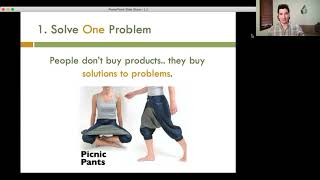
Welcome everybody to this first ever Startup Idea Fest. My name is Jonathan Gretchen. I'm a co-founder of the Founder Institute. I'm broadcasting live today from Colorado here in the United States. And because it is the morning here in, or for most of the US, we are expecting, and we got registrations from people, it was something like 40 different countries. It was crazy. All right, we're expecting people from all over Europe. We have people from Africa. We even had a couple people that were joining from Asia, which to me is a little confusing because it's really, really late there, or early, I guess, however you want to call it. But wherever you're joining in from, let us know in the chat. I see, all right, Ahmed is calling in from, or dialing in from Bahrain. We have Lucy in Luxembourg, Switzerland, France, Germany, Another Germany, Portugal, Austria, Germany, Germany, Amsterdam, Ottawa, Tunisia, India, India. It's pretty late there too. Thank you for joining us, en, chile. So yeah, this, this is definitely going to be a very international event, which is great. Okay. And it's great because the point of this event is for you to, number one, learn how to— some of the best practices for creating and validating startup ideas. And then number two, to share those with other actual real people. Okay. One of the biggest things that we see in the Founder Institute is, and this probably resonates with a lot of people now, just the political climate of the world is that when you share your startup ideas, usually it's within an echo chamber, right? It's usually it's with your friends, your family, who always just want to tell you, yes, it's a great idea. Keep going, keep going. Right? When in reality, you need to be sharing that idea with the real actual people, right? There's a whole industry where big businesses do focus groups, right, to speak to real actual people. And that's kind of the idea behind this, this first Startup Idea Fest. So I'm really excited to see how things go today and, and, and get feedback and improve it in the future. All right. So once again, let us know where you're calling in from. This is a 100% live event. Okay. This is not prerecorded. I see here too, we got another one from Switzerland, India, Peru, Calgary, Canada, not too far away. Houston, Austin, and Seattle, okay, Ted. So Ted's figured out a way to be in 3 places at once. That's a good startup idea, Ted. You should share that with the crowd today. And we have howdy Josh from Texas as well. All right, so anyway, let's get started. So I'm gonna share my screen here and we will get started on this startup idea fast. All right, so, um, as I said, my name is Jonathan Grecian. I'm a co-founder of the Founder Institute, and this event's gonna go in two— it's gonna be two components to this event. Number one, you're gonna have a presentation on ideas and basic validation for ideas. I'm gonna try to keep it to about 20 minutes, but I'm sort of notorious for being a little bit verbose, so I apologize in advance. It may go a little bit longer. But after that, we're going to go into a feedback lounge. And for anybody who joined this event a little bit early, you saw This, this platform is pretty cool, Airmeet, where it actually, it sort of emulates a conference, right? Where there's a bunch of different tables. You could sit down at different tables and talk to people and you could do random one-on-one chats. So we're going to do the majority of the event is going to be that where you could speak to other people about your ideas and get feedback. Now we sent out a worksheet in the reminder emails yesterday. Now, if you registered last minute or you just ignored our reminder email, which is also fairly common, you can get this worksheet at bit.ly/ idea-fest. And I do recommend downloading that worksheet because it's, that's where you're going to see how the format is going to go with the idea feedback session. All right. And then really quick, I wouldn't be much of a marketer if I didn't at least do a quick plug. I am the co-founder of the Founder Institute. We are the world's largest pre-seed startup accelerator. Pre-seed means that we work with people that all the way from the point where they only have an idea and they may even still be full-time employed to the point where maybe they have a small team, but they still have not raised funding, or they've raised a very small amount of funding and they really haven't gotten the traction that they need to really bring the business to the next step. We've been doing this since 2009. We're now in over 90 countries. We've helped over 4,900 companies launch and build their business. And those companies have raised close to $1 billion in funding. So if you want to learn more about the Founder Institute, obviously in this age of COVID all of our programs are now virtual. You can go to fi.co/training join/IDEAFest or see all of the cities where we're currently enrolling. And I think it's something like 70 cities around the world right now, fi.co/enrolling. Okay. So with that being said, the first part of my presentation here is going to be about how do the basic best practices for building a startup idea and good startup ideas and things that we've learned now in the, in the almost 12 years of the Founder Institute. And really at the end of the day, if there's one thing that I can impart on you, today, right? And this is why I'm putting it at the top, is that if you're going on this journey to build a startup, realize that the cards are stacked against you, okay? There are a million advantages that big businesses have against you as a startup. There are only two advantages that you have to, to go against all of those big businesses, all right? The first advantage is speed. For anybody who's worked in a big company— I did for, for about a year, and I still how much that sort of crushed my soul, to be honest. But for anybody who's worked in a big company, I'm sure you'll see that, you know, there's bureaucracy, right? The speed at which a big company can learn how to build a product that actually satisfies their customers' need is very, very slow. Whereas in a startup, you can move really, really fast. You don't have to go through levels of bureaucracy. So you can really be nimble to the needs of your customer much more quickly. And you have what I like to call a compounded learning curve, right? So it's— forgot, somebody used to say that, you know, it's a very famous quote where compounding interest is like one of the— it's like the 9th wonder of the world, right? It's like helped create this whole society that we built is the concept of compounding interest. When you're a startup, you can compound your learning, right? Every single week you can be running experiments, immediately implement the learning from those experiments and build the next version of your product better and better. And better and better. Whereas a large company, the best that they could ever hope for is to have sort of a gradual learning curve. So that's one advantage that a startup is going to have. So if you're not fast, you're going to lose. The second advantage that a startup can have is their niche focus. Big companies have shareholders, they have— even if they're not public, right, they just have a lot of constituents that they need to report to. So they're never going to release a product that could— that targets a niche audience with the perfect you know, with the perfect product for that audience. They're gonna cast a very wide net. And usually what that means is that they create products that are good for a very large number of people. They're adequate for a very large number of people, but they're not perfect for any one consumer. They don't create that like, aha, like, oh wow, this is an amazing product for any one consumer. As a startup, you have the ability to focus on a niche, right? You don't have shareholders in the beginning. You don't have anyone to report to necessarily. You can focus in on a very small niche, build, give them a perfect product, and they will be so enthralled by the fact that they have a perfect product because they're used to having all these mass market products from big companies shoved down their throat with advertising and all this kind of stuff, right? If you can give them a perfect product, they'll tell all their friends about that product, and then your business can build organically from there. That is how startups are built, right? If they're built on a premise of being able to be fast and focusing on a very small niche in the beginning and then growing that niche out from there and utilizing those network effects and the fact that their audience that really loves their product is going to share it with all of their friends. So there is one thing that you can do that negates both of these advantages, and that thing is being unfocused. The number one killer of startups— it is not a lack of funding, it is not whatever— it is that they're unfocused. All right. If you only have 2 advantages and who you're competing against is our big companies and they have a million advantages, if you can't even utilize those 2 advantages, you will fail, right? You will fail. And it doesn't mean that you're not thinking big or you're not trying to build an awesome company. It just means in the beginning, you have to realize that your 2 advantages are your ability to go fast and your ability to focus on a small market in the beginning. And if you don't use those advantages, you will fail. Before you even get any kind of traction. So being unfocused is actually even worse than being wrong. Okay? If you're wrong, if the business that you're trying to build is wrong, but you're focused in figuring out that it's wrong, you're going to learn super quickly. If you're unfocused, you're not going to learn anything and you're just going to be kind of going on and on and on trying to build this business. It doesn't make a lot of sense. And this is a term that a lot of people in the startup industry refer to as zombie startups, right? They're walking around, they're still sort of alive, they're still walking around, right? But they're dead. They just don't know it yet, right? So you don't want to be a zombie. That's actually the worst thing that can happen to you because that's a great way to burn a lot of money and burn a lot of time, right? Be focused, learn if you're wrong quickly, adjust, and try to get closer to being right. All right. So I do realize that just saying, okay, you need to be focused is a broad term and maybe it doesn't mean very much, right? So let me give you a framework on how your startup idea can be focused. Number one, it has to solve one problem for one customer with one product, one killer feature, and one revenue stream. All right. Anything else is a rookie mistake. And I'm going to go through all of these components now. One by one. All right. So the first thing to understand about startup ideas is that nobody cares about your product. Okay. People don't buy products. People buy solutions to problems. That's what people care about right now. I do realize I picked a funny image here, right? But I would imagine that whoever came up with the picnic pants idea was like, oh, wow, this is such a cool, you know, product, right? But they never thought to go back and think about, okay, what is the actual problem in the mind of a consumer that they have that would compel them to search, find, and purchase my product, right? It's just the way that our brains work. As soon as the startup idea kind of factory starts going on in your brain, you're going to think about what the product is going to look like years down the line. Oh, it's going to do this. It's going to have all these different features, right? And you're going to lose sight of actually what the core problem that you're solving for the consumer is, right? You have to solve a problem. We're all freaking busy, right? We're not necessarily looking for nifty things that add a little bit of value here. We all have problems as humans. We're all looking to solve those problems. You have to focus on a problem that you can solve. And customer development, and this is obviously a very common term in startup land. I believe it was, it was termed by a, by a gentleman named Steve Blank, but I could be mistaken on that. But it's used in Lean Startup methodology by Eric Ries and a lot of the best practices for startups that are out there today. But customer development is essentially the process of finding a problem that's actually worth solving and then understanding that problem so well that you can build a perfect solution, right? So if you go back to what I was saying before, you have to build a perfect solution for a niche audience. And that's what customer development is. And you can Google that. You'll go down a pretty large rabbit hole there. But it is, it is an extremely important thing that you need to do in order to fully understand the problem, the one problem that you're going to be solving for a customer. And that problem, in order for the business to be worth solving, or for the, for the problem to be worth solving, that problem needs to affect a lot of people. In other words, it needs to possibly equate to a business that can be sustainable. And number 2, it has to be enough of a problem that those people are willing to pay to solve that problem. There's a lot of problems that I have that are just weird little small problems. Those problems generally aren't worth solving. You want to find a problem that annoys people so much that they'll pay to actually solve it. That's the litmus test, right? If you ask your mother, you ask your cousin or whatever, they're going to say, oh yeah, it's a great idea. But if you really get to the brass tacks of saying, will you pay to solve this problem? That's how you know if this is something that's worth building or not. And the first step in solving and figuring out what problem you can solve and validating that problem is in creating a problem statement. So the Idea Fest worksheet, which you can see here, bit.ly/ideafest. This is gonna be the first thing, and we're gonna, I'll dive into this a little bit more later in this presentation, but this is what we're gonna do today here during the networking sessions. But the basic problem statement is, I believe that a defined audience has a specific problem, okay? And an example would be, I believe first-time mothers have difficulty buying supplies they need for their children before they run out, right? Or if it's a B2B business, I believe HR executives just see way too many applications in the current day. But the first step is to actually start to define the problem that you're trying to solve. And then the second step is to interview those customers. All right. And this is a big component of customer development. And there's a lot of templates that you can find out there to interview customers. This is the one that we like to use sort of right off the bat. Simple stuff, right? What's the hardest part about whatever the problem is that they're trying to solve? Why was it hard? Have you looked at other solutions? If you haven't, why or why not? Why was that solution not perfect? And is this something you'd be willing to pay for? Now, one thing that you should notice in these set of questions is that not one of these questions actually talks about your solution. Okay. If you start to bring your solution into your interviewing of customers, that's going to sort of, you know, move their mind into a very certain direction. It's going to create a lot of bias in any of the feedback that they give you. As an entrepreneur trying to validate a problem, you don't want to talk about your solution just yet. You just want to talk about your problem. You want to start to understand that problem. Okay. Now in the workshop today, we're going to talk about, you know, you're going to be allowed to talk about your ideas and that kind of stuff because this is an Idea Fest. But just when you are working with customers, you want to not talk about your solution. Okay. You want to talk about your problem. You want to understand the problem. So the second part, right? So now you've figured out a problem to solve. Now you have to solve it for one customer. Now this is a big thing that we see is a problem that we call customer confusion. Your customer is the exact person who's going to pay for your product. Now in some cases, it could be the person that directly influences that payment decision, right? So maybe it's a parent, for example. Obviously a child's not gonna whip out a credit card. In most cases to buy your product if you're building something for children. But even though the child directly influences that purchase decision, the number one person is the person that actually takes out the credit card and pays. Okay. So that is the number one person that you should be worried about. And you need to really, really have a focused definition of who they are. I can't tell you how many startups pitch me and I hear, oh, I'm helping women, like, really? You're helping like half or whatever, close to half of the population of the world. That tells me that you're pretty lazy in trying to understand who your consumer is and what their problem is, right? You have to be specific. Something like single women aged 22 to 34 in the US that practice yoga and work full-time. Similarly, if you're building some kind of small, you know, if you're targeting small businesses with some kind of SaaS product, again, you can't sell a small business. right? It's not the small business who whips out the credit card. It's going to be one specific person in that small business who has their own set of KPIs, who has their own set of goals they need to reach to get their next raise. And you have to be solving their problems. So the more defined you can be on the consumer or the customer that you're focused on, the better. And again, you know, being really niche and really focusing on one customer is, is not— I'm not trying to limit your aspirations here. Okay, Jeff Bezos with Amazon, right? He first focused on people that wanted to buy books that were hard to find in physical stores. Mark Zuckerberg, it was a social— not even a network, it was just a place to see pictures of other people in your dorm, one dorm at Harvard, right? Big businesses are built by focusing on a niche audience first, understanding that audience really well, and then essentially creating a playbook to build out more and more audiences, more and more geographies. Etc. From there, you have to start niching. You have to understand that audience. The third thing is you have to do this with one product. All right. I hear so many people tell me, oh, I'm going to create a whole brand, a whole line of things, right? And it's, believe me, it's hard enough to create one product for one customer that solves a problem they're willing to pay. If you try to do multiple at one time, like at least any investor or anyone that knows what they're doing in startups is just going to sort of roll their eyes at you. All right. And these are some of the rookie phrases that I hear: a family of products, suites of products, lifestyle brand, whatever, right? You have to start super focused. And the beauty of it, and this is one of the beauties of the internet and all the different tools that we have here, have now, is that you can validate the customer demand for your product before you spend a lot of time or money building it. Okay, here's the wrong thing to do is to have your idea in your head. You thought about what this thing is going to look like years from now. Then you go online, you pay some developers somewhere where developers are cheap to build it. You put it out there and you realize that, you know, you're a solution trying to find a problem, right? Nobody wants your product. Now you're screwed. You're out of money and you're out of a lot of time. The right way to do it is to validate. Now, And at the Founder Institute, this is one of the big things that we do with our, with our companies and with our founders that come through the program. We've had portfolio companies that have achieved amazing things literally before writing one single line of code, right? Not only does that save them time and money, it puts them in a position of strength, whether it is to raise funding or hire awesome people before they actually go out and, you know, put their livelihoods on the line, so to speak, to build their businesses. So the first method to validate your business is to interview customers. And I mentioned this before, and this is part of what the, what the goal of today's event is for you to interview people that could be potential customers. The second method is what is known as the concierge MVP. So for those of you who don't know, an MVP is a minimum viable product, okay? And this is a first or an early version of a product that you put out there into the marketplace where it's clearly not the final product you're going to build. It's clearly not something that's ever going to be sustainable. The only point validation of the product is sort of to use a scientific method where you can validate yes or no whether, whether people want this product and whether it could become a viable business. So, um, Xerocater, which is an interesting company out of Silicon Valley, uh, I really enjoy telling their story because to me it's just sort of brilliant. Okay, so they essentially had a couple of guys who realized, okay, it's really hard. They worked at a small, uh, small, uh, company in Silicon Valley and they realized, you know, it's really hard for the office managers that these companies to order lunch for everybody every day. Okay. The office managers have a budget. The office managers get, you know, kind of crap when, if they keep ordering the same thing every day and the office managers have a shit ton of other stuff to do. Right. It's not, it's not easy being an office manager. So what they realized was, okay, what if we could figure out a way where they could quickly and cheaply get a variety of different food to order for their office for lunch? Every day, right? So literally, before building anything, they literally did a spreadsheet. They called restaurants in their immediate area and said, hey, if we were willing to give you bulk orders, how much of a discount could you give us, right? Then they started reaching out to office managers. Hey, if we could give you bulk orders on this, is this something that you would subscribe to, right? So they literally just created a spreadsheet. Then they created a landing page using probably like a $5 tool where people could fill out their information. They manually put it in there, and they manually created those matches. All right. And between the difference of the discount that the restaurants were giving them and the discount that they were giving to the, to the business managers, the office managers, they were taking a profit. This is what they did. They were able to do that, to hire people and raise money. Again, they're doing this manually. They're sort of like a little hamster wheel in the background of this business. To the consumer, they think that there's some algorithm perfectly matching them, right? But they're really just doing it manually. So again, this is not something that is sustainable over the long term. It's just to prove the business case before they really then quit their jobs and went all in to build this business. So this is something that's known as a concierge MVP because on the front end it looks like, oh, this is, you know, amazing algorithms are doing all this. On the back end, it's just a bunch of people on a hamster wheel kind of concierge-ing it out, right? The second thing is the piecemeal MVP. So Sprig is a company that was founded by Gagan Bihani, who was also one of the co-founders of one of the most successful FI companies company's Udemy. And what he did here, it was a company that was essentially trying to get you, you know, freshly cooked healthy meals within 15 minutes or less, right, in your city. So they focused on San Francisco. What they did was literally to test out the economics to see if it could work was they hired chefs and drivers off Craigslist. They took orders on Eventbrite, All right. So they went on Eventbrite and they created a quote unquote event, right? And instead of a certain type of ticket, oh, you can buy a VIP ticket or you could buy this kind of ticket. Those were actually the dishes that you could order for dinner on a specific night. And then they shared it out through various Facebook groups to all their friends and things like this. And then in order to track and optimize where all the drivers were in San Francisco, they used the Settlers of Catan board, literally. Okay. So they pieced all of these things together in one night to see if the model could work. and they proved that it could work. Now, eventually the business failed because a lot of these businesses failed. The food delivery space was a really tough one, but the business was around for several years. They raised a ton of money, and it was just a super interesting way that this business was, was able to validate what they were doing without spending really much money at all. As a corollary to that, the piecemeal MVP, there are so many no-code products out there right now where you can piece together technologies from a lot of different products to create something that, that resembles what you want to build in the future. Okay. I forgot again who said it, but they said, you know, if you don't— if the first thing that you release, you're not kind of ashamed of or embarrassed by, then you're doing it wrong, right? With all of these tools, depending on what type of business you want to build, you can cobble something together that it could at least help you hedge your bet and figure out, okay, is this actually a business worth building? And if you want to learn more about some of these no-code things, I would recommend nocode.tech. And then the last way that we see a lot of people kind of start to validate before they build businesses is through building an audience first, right? So let's say that you wanted to build an app for runners or something like that. You know what's going to be really helpful when you're building that app for runners is to actually have a community of runners. Under your control, so to speak, right? So start a meetup group for runners, start Facebook groups for runners, start a newsletter, start a blog, like start those things now as you're building the business and build those things out. Because over time, number one, that's going to give you an audience to help you validate that business. And number two, that's actually going to give you a built-in first customer list. Okay? Traction trumps everything. If you have a first customer list when you're building your business, that's probably the most important thing that you have. So if you have an audience that you're trying to target with the business, maybe you're not sure exactly what you're trying to do with them yet. Start building that audience now before you actually start building a business. It will be an invaluable resource for you. Okay, so I'm going to wrap up here in a second, but the fourth rule is one killer feature. All right. There's a common misconception that consumers want choice. And you could see here, this is a screenshot from, I think, Dell, right? It's probably from a couple of years ago, but it's a bit overwhelming, right? I mean, look at the number of permutations you could do here is, you know, probably in the thousands, tens of thousands of all these different options that they're giving you. Consumers don't want choice. Consumers want freedom of choice. Okay, think about it. Let's say that you're searching for an app on your phone to schedule a meeting easily or something like that, right? That's one problem that you have. You just want one app that does that really, really well. You're not going to download an app that's an all-in-one schedule meeting collaboration, blah, blah, blah platform, right? You want to solve one problem. That's your mindset as a consumer. That's what you're looking for. Okay, you want to find that one killer feature. Because believe me, this is another kind of hack that companies use that eventually will drive them out of business, is that they can't find that one killer feature, they just start adding on all types of other features, right? And believe me, having 10 decent features is nowhere near as valuable as having one great feature. Your goal is to find that one killer feature, all right? And if you can find that one killer feature, if you can solve that one problem with one feature, Customers will tell you, they'll help you build your product roadmap after that. They'll help you understand what are the next features that you need to build. There won't be any guessing in place. All right. You just need to have that match of an audience. One killer feature solves one problem for them that is really important to them. And then after that, they'll share your product out. They'll give you feedback. They'll make you understand where your product can go. Take all the guesswork out of it. And then finally, one revenue stream. So one of the biggest pushbacks we get on this is people will cite, oh, well, Google didn't start with the revenue stream, or Snapchat, or Twitter, or whomever. And that's true, right? But that's also— that argument is like saying, okay, well, you know, Brad, Brad Duke here won the lottery, so I should play the lottery too, right? Like, the lottery is a good strategy to make money, right? You don't want to isolate out The people that essentially won the lottery, all of those businesses rode some of the fastest growth patterns in startups that the world has ever seen to get where they were. And they had so much growth so quickly that so many VCs were willing to just throw blank checks at them to take their money, that that's how they were able to grow without a revenue stream. So if you're thinking about a strategy, it's probably best best if you assume that you're not going to win the lottery and that you're going to have to have some kind of sustainability right off the bat. Now, the other thing that I'll say is not advertising. Okay, this kind of pisses a lot of people off, but do some simple math here. A CPM is cost per thousand. This is kind of just how advertising works. A $5 CPM— I'm simplifying things a lot here, okay? But a $5 CPM, which is sort of an average, general average, means that for every 1,000 people you show an ad, you're gonna make $5,000. So that means, do the math, you're gonna have to show an ad to a million people to even make $5,000. All right, that's nothing. That won't even cover your server costs necessarily, right? Um, it's certainly not going to cover full-time salaries for a lot of people, for anybody that needs to sell the advertising or anything like that. All right, advertising in general is not a great revenue stream. Now again, obviously If you can become a Facebook level, Twitter level or whatever, then they are able to vastly increase their CPM costs because they can target people so well, right? The math starts to change. But generally speaking, advertising is not a good way to get started. And usually when I see an early stage startup say that they're going to make money on advertising and they don't have a massive amount of traction, it's sort of a laziness on their part. It's, it's, I read it as, okay, you don't have a revenue stream, right? The other thing about revenue streams is that you don't want to get clever. There are so many other ways, so many other parts of your business where you want to get clever with the revenue stream. You know what the best revenue stream is? I sell you a product, you give me money. Okay. Or an extension of that is subscription, where you agree to, to do that exchange for many, many months over time. right? That's the best revenue stream. Simple. You don't have to say, okay, I'm going to provide this value to this customer, then they're going to do this here, and then I'm going to get money on the back end from this person, the money from this person, right? You don't, don't be like, what's his name here in The Hangover, and try to, you know, piece all these things together. Simplicity is what's important in revenue streams. All right, so in summary, solve one problem, One customer, one product, one killer feature, one revenue stream. All right, so now we are going to go into the next part of the event, which is the idea feedback. So here's how Airmeet works, okay? Airmeet's sort of a new platform. I'm assuming that a lot of you maybe are joining on an Airmeet event for the first time. The first thing that I'll say, number one, is if you're joining from a mobile device, cell phone, or if you're joining and not using, uh, Firefox or Chrome, you're not going to be able to participate in the networking session, which is what's going to come next. Okay, sorry, there's nothing I can do about it. Airmeet's a fairly new platform. It's a great platform, but there are, there are limitations. Now, once I close this session of my speaking, you're going to go back into this networking and idea feedback lounge. Okay, you see in the top picture here, the base lounge shows a number of tables. Those tables are going to be labeled either B2C, you know, a consumer-focused business. So this may be a consumer app or some kind of, you know, device that any kind of consumer could use, or they're going to be a B2B business, right? If you're trying to build a business to sell to other businesses. All right. So that's kind of the way that we're delineating here. So obviously, depending on the types of ideas that you have, you can join different tables. The other option that you have is to join random one-on-one chats. That you could see is that the— it'll be on the top of your interface, and then you get randomly matched with one other person. I believe it randomly matches you for 6 minutes or something like that, right? Now, if at any time you connect with anybody during this event, and we really hope that you do, by the way, right, you can direct message them by— and you see here on these screenshots on the right side, there's an attendees tab. You can search that attendees tab for their name, Once you find their name, once you find the person, you know, maybe you recognize their avatar, you can roll over their little box and there'll be 3 dots, and then you can directly connect with them. So the way that we recommend you do this idea feedback session, all right, because the whole point of this event is for you to start getting feedback from other people about your startup ideas or what you're trying to build, you know, that are other than your friends and family, all right, random random people. So if you download the worksheet, it's at bit.ly/idea-fest. Once again, this is what you'll see on the worksheet. And essentially what we're thinking here is that if you go into one of these group tables, about 5 minutes per person, okay? That person first, they give their problem statement, all right? State the problem you were solving. I believe that my defined audience has or have this specific specific problem. Then you briefly describe what your solution is. I'm developing a defined offering, right? So be simple, all right? I'm developing an e-commerce subscription service, or I'm developing a website, or I'm developing a mobile app, or I'm developing a, you know, piece of hardware. Just be super specific there. And you're trying to help a defined audience. Once again, the defined audience should be specific. Don't say women. Okay, you guys are all here with me. If anybody tells you that they're targeting women, stop them right there and tell them to be more specific, all right, or anything else similar to that. You're helping them solve a specific problem, and secret sauce is generally, you know, kind of the differentiator that you have, right? So in the example that I gave here, and I'm not saying that this is a good business idea, but at least it's simple and people can understand it, right? The secret sauce would be that that, you know, you're helping first-time mothers get all their weekly baby supplies because it's automatically shipped each month, right? It's something that they don't need to worry about, right? So we want you to state your problem, briefly describe your solution, and then here are some of the questions that you want to ask the audience, okay? Um, is this a real problem that you face right now? Some people on the table may not be your target audience. That's fine. Some of them will be. You want to hear from all of them. Number 2, you know, what are some of the substitutes, right? What are other ways that people could solve this problem? That doesn't necessarily mean that it's a direct competitor. You know, a lot of times people solve problems by doing really unconventional things, cobbling a lot of different things together. You want to ask if your solution— does it— does what you're proposing actually solve the problem that you're trying to solve? And then finally, do you think you or, or your customer would actually be willing to pay to solve this problem. Is it a big enough problem that they could actually pay to solve? So please download the PDF bit.ly/idea-fest as you go, as you go through this feedback session. Just a couple of guidelines. As I said, if you want to participate in the feedback session, Firefox or Chrome on a desktop or tablet. Do it. Alright, sorry, if you're on a mobile, it's just not gonna work. The second thing is listen with the intent to learn, not argue. Okay. This is a big thing. When people come into the Founder Institute, they, they're pitching their ideas, they're getting feedback from a number of different mentors every single week. And we know pretty quickly when people come into the program if they're going to be receptive to feedback or not. If you're going to argue with somebody about the feedback they're giving you, that is you taking up time where they're not giving you valuable feedback about your business. Okay, maybe their feedback sucks, maybe it's stupid, whatever, that's fine. Take notes. All right, the more you talk, the less they talk, the less feedback, the less information you're getting. All feedback is good feedback at this point. Do not, uh, come into this— this is not a debate club, okay? And again, I'm counting on everybody on the line here. If somebody just wants to argue just say, hey, look, like, just, just listen to the feedback. That's the point here, okay? Uh, and then the last thing is don't be a jerk, all right? 5 minutes is, is what we'd like to allot for each person, give or take a maximum of 5 minutes, okay? If you want to stop before that, that's fine. And if you don't want to pitch your ideas, that's fine too. You could just be there to provide feedback and other ideas, right? And also don't be a jerk, and as soon as you get your feedback, now you just go to another table, all right? Believe me, You hearing other startup ideas, you hearing feedback that people have to other startup ideas is extremely valuable for your idea as well. Believe me, you will see the parallels. Okay, we get this all the time in the FI program as well. A lot of the best insights for your business can be found by hearing other people critique other businesses because you know what, it's a lot of the same dynamics. The last thing that I'll say is nobody's going to steal your idea. All right. If you're coming into this thinking that, okay, I'm going to share my idea with this person, they're going to now go build a billion-dollar business with it. Think about the number of steps that would happen for them to do that. Number one, your idea has to be so brilliant and valuable that this person is going to devote their life to it, execute on it properly, and build an amazing business. You could go back to that lottery slide there I showed before, right? It's like winning the lottery or losing, you know, the person who would actually do that is like winning the lottery. The fact of the matter is, is that ideas in and of themselves don't have much value, right? All the value is created in the execution. So what your goal should be today is to get as much feedback on your idea as possible to number one, figure out, okay, is this actually an idea worth pursuing? And then number two, to gain information that will allow you to execute upon that idea as efficiently and as effectively as possible. So if you're worried about somebody stealing your idea, you know, honestly, the best way to spend a lot of money and time building something that nobody wants is to keep the idea to yourself, right? You have to share your idea. If you haven't done it before, use today's event as a stepping stone to start getting into that, getting into that mindset. All right, so that's all I got. Thank you, everybody. Have fun. If you want to apply to the Founder Institute, you can go to fi.co/join/ideafest. We also run a number of Founder Institute information sessions that you can see at fi.co/infosession. Learn more about how the program works at fi.co/overview. But honestly, whether you, whether you decide to apply to FI or not, do me a favor, use this time today to talk to these other people, to pitch them your problem, pitch them your idea, get feedback, be open and receptive to that feedback, and also try to provide that same value to others. Okay, because again, as I said, hearing other people's ideas are going to help get your juices flowing and they're going to help you gain some new perspectives on, on any of the business ideas that, that you have as well. All right, so I'm going to shut myself off here. You're all going to be transported back into that networking session and I hope you meet some interesting people. And again, follow those guidelines, fi.co or sorry, bit.ly/ idea-fest is where you can get that worksheet, and I'm sure we put it into the chat here. And try to stick to 5 minutes. Don't be a jerk. Nobody likes a blabbermouth. Everybody here should, should be sort of self-policing. If somebody's going on and blabbing, tell them to start to wrap it up. And, and yeah, try to go to a couple different tables, try some of the one-on-one chat, and, and hopefully you'll make some good connections and get some great feedback today. All right, thank you everybody, and I hope I'll meet you all soon.










