Startup Pitch Feedback: Founder Institute Hotseat (April 21, 2020)
The video records a Founder Institute Global Hotseat where Director of Global Marketing Rachel Shepherd, Alumni Success lead Mike Supravici, and Head of Global Operations Ryan Micheletti review a series of early‑stage startup one‑sentence pitches submitted by founders worldwide. After outlining pitch formatting guidelines—clear company name, defined offering, specific target audience, problem statement, and unique value proposition—the moderators provide blunt, constructive feedback on each pitch. The feedback repeatedly stresses the need for clear differentiation, a well‑defined customer archetype, a viable business model, and consideration of COVID‑19’s impact on market viability. Specific critiques are given for a budgeting‑automation app (Soquette), an AI meeting assistant (MeetGeek.ai), a fashion‑styling app (Hanger App), a soft‑skill recruiting platform (eDork), a travel‑cost‑reduction platform (Entrado), a drone‑pilot training program (Black Girls Drone), a legal‑accounting SaaS (Datamind), a 6‑degrees dating app (Fancy), a robotics education program (Cloverdale Robotics), a sustainable community for women veterans (Green Villages), and an intergenerational rental platform (HomeShip). The session ends with reminders about upcoming webinars and the Founder Institute pre‑seed accelerator.
Chapters
Welcome everyone. Welcome to our Global Founder Hot Seat. Thank you to everyone for being here today. My name is Rachel Shepherd. I'm the Director of Global Marketing at Founder Institute and the co-creator of the Female Founder Initiative. I'm joined today by Mike Superbici and Ryan Micheletti to review some pitches. So Mike, Ryan, do you want to introduce yourselves?
Hello everyone, my name is Mike Supravici, as Rachel mentioned. I lead the Alumni Success Group at the Founder Institute, and we basically oversee a portfolio of over 4,000 companies, and our role is to help our alumni scale, and we do that in any way that we can. Sometimes we do it via one-on-one feedback, other times we do it through various virtual programs as well. So, you know, I've been able to see a lot of companies and I can definitely provide you some feedback. Also, before that, I was a founder, started a company, went through kind of all the steps that you probably have gone through. So I could probably share my stories there as well.
Hey everyone, my name is Ryan Micheletti. I'm head of global operations for the Founder Institute. Mike and I both run the Silicon Valley program. And so we've helped, you know, hundreds of companies around the world launch their startups. And so we're excited to be a part of this today. My main role at FI is to work with our local leadership teams that run the program for us in 180 cities around the world. So it's very exciting, and we're happy to be here.
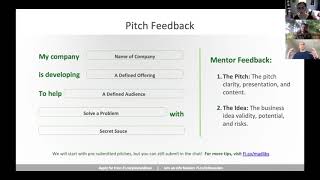
Awesome. All right. So the agenda for today, we're going to go through a little bit about the pitch guidelines, and then we'll start reviewing pitches. We have some pitches that were submitted in advance, and so we'll be going through some of those. But please do submit your pitch in the chat in this format. So going through it really quickly, you want to make sure you include your— the name of the company. So my company name, the simpler the better. Is developing a very defined offering. So make sure that you're, you're being clear about what you're defining as your offering and also not using too many descriptor words. Just be clear about it— mobile app, website, online store, etc. To help a defined audience, be as specific as possible. That really helps us be able to review your ideas much better. So instead of just saying women, say stay-at-home moms 24 to 36 in the United States, if that is your defined audience. Solving a very clear problem. So if you don't solve a problem, you don't have a business with a secret sauce. So what makes your business unique and what is your unique sales proposition? So in this format, you can visit it if you need to on your computer. It's fi.co/madlibs. But please present your idea in the chat and we will be reviewing those as well. Um, and then next up, Ryan's going to go through a little bit about the Founder Institute.
Hey everyone, um, so for all of you on the call, you've probably already seen Founder Institute. So, um, just a quick high level, we're the world's largest pre-seed startup accelerator. Since 2009, we've helped over 4,000 alumni launch their companies. We have the largest mentor network of 14,000 mentors. It's actually closer to 15,000 now, and we're still operating programs virtually in 180 cities around the world. So we know, especially in times like this of massive disruption and massive change, that it's a really great time to start your company. And in fact, Founder Institute was started right after the 2008 crash. And so, you know, we believe that entrepreneurs are gonna have the biggest impact on society. And so our mission is that if we wanna make global change possible. The best way to do that is to empower smart and virtuous people to launch companies and technologies that will have a positive impact on humanity. So that's what we do every day, and we do that by helping early, early pre-seed entrepreneurs get to traction and funding by giving them, you know, a devoted support network locally. Then when they graduate the program, they work with our team here in Silicon Valley to help them fundraise, build their products, and do other things along those lines. So if you're looking for a support network that can help you launch launch your company, Founder Institute is the place to be. So let's— you want to start with pitches?
Yeah. So we're going to get started reviewing pitches. Just a warning up front, our feedback is meant to be constructive, but it's going to be very blunt as well. This is what we do. We review a lot of pitches. We see a lot of ideas. And so we're going to be very honest because we believe that's what helps you best. Okay, so let's get started. First pitch is from Masa. My company Soquette is developing budgeting automation mobile app to help young professionals to build financial freedom with 24/7 SMS-based financial planner.
So you want to jump in real quick? So, you know, this is, this is a highly saturated market, um, and I'm sure Michael, Michael will give you some stuff on the, on the pitch, but Just in general, like, I don't think SMS is enough of a differentiation for you to break through the noise, right? And there's a lot of opportunity here, especially millennials, like that, you know, a lot of— there's a lot of really good fintech companies coming out there. So there is an opportunity in the market, but you have to show like why millennials care about the SMS factor. Sure, it's quick, it's easy, right? But I mean, like, it's— that's more of a feature, right? You're not really— And that's not gonna give you enough of a competitive advantage 'cause there's other platforms like Wealthfront that could easily roll out a chat feature. There's other systems out there that could duplicate it. So you really wanna think of like, what can you do that will make this 10 times better than what already exists? And you might have an interesting insight that you could build the rest of your company around.
Good feedback, Ryan. With, again, with a pitch like this, it's super important that you identify kind of what the competitive landscape kind of looks like. And you really highlight your secret sauce. So, you know, for example, like there's other companies like Acorns that have the secret sauce where they basically take— they round up whatever you're paying. So if you pay for something to be like, you know, $2.75, the extra $0.25 to get it to $3, that goes into your savings and that helps automatically do it. And that is really helpful. And I'm not saying that's good or bad. I'm just saying for your pitch, you probably need a little bit something like that. To really go through it and to kind of understand it, because otherwise it's really hard to understand why the— how the SMS even plays a role here. Is it, you know, a warning? Is it like, you know, I shouldn't be spending money on this or whatever? I think that's important. You know, I also think kind of like the customer archetype is really important here. So rather than just saying young professionals, maybe talk about like the type of professionals that would need this kind of service and where they're located, you know, so they could be like you know, young professionals in the United States that, you know, also happen to be employed by technology companies or whatever, right, or another sector. Because you're probably going to get traction with a product like this with a very like defined audience. And so make sure that you try to do that as you, as you kind of build this pitch. But there's definitely a lot of opportunity here, which is why there's also a lot of competition. But it's really important for you to kind of figure out where kind of in that, in the competitive landscape that you fit.
Fantastic. All right, next up is Dan from Bucharest. He says our company MeetGeek.ai is developing a virtual meeting assistant that helps organizations increase their productivity of their meetings through the use of artificial intelligence technology.
So, you know, you already mentioned AI earlier. I wouldn't mention it again like again in your pitch, it's just not enough. Like it's not enough to say that I have AI, so AI enables us to do that. What's more important here is talking a little bit about how you're able to help with these meetings. Maybe, you know, somehow like your AI is able to crawl everybody's calendar, is able to find the right time and is able to just automatically schedule something. And that allows you to basically be able to do this really, really well. I don't know. But just the fact that it's AI is just too broad, right? And it's not really like super valuable. Also, you gotta be kind of careful with when you use terms like AI, right? Because if you actually talk to like a sophisticated investor that knows it, and it turns out that you don't really have AI, what you have is basically machine learning or whatever or something like that, they're gonna get like really deep into that. So they might actually drill you on like the quality of your AI algorithm or what this is. And if it's not, what you said it was, then you've automatically lost credibility. So in general, it's not even worth mentioning AI. What's more important is mentioning kind of how you're able to make this work and why this is super valuable for organizations. So start with the problem, right? Like, what's the problem here? Is it that, you know, people aren't able to set up these meetings? And if that's the case, what's the cost on the organization and who's buying this? Is this the director of human resources? Is this like director of product management or whatever? right? Because they're the ones that are going to be paying you. So make sure you build your pitch from their perspective and then kind of build out kind of like the solution as well.
Yeah, I totally agree. I think the how and the why are super important with this. And just like, you know, a caveat for everyone on the call, like we know that you can't cram everything we're telling you to cram into one sentence. Like you can have a super clean one-sentence pitch and I would say this one's pretty good. The goal of the one-sentence pitch is just to get to the next meeting, get someone curious, right? The feedback that we're giving you is just some things to think about based upon your one-sentence pitch. So Mike's going in talking about like, hey, you got to drill down into the problem, those sorts of things. You can certainly integrate a lot of that into the one-sentence pitch, and I highly advise that you do, but we know that, you know, it's going to be, you know, maybe that's the 60-second pitch, and so just take the feedback you know, from a high level and say, okay, based on my one sentence pitch, this is the feedback that I'm getting. And so here are the different angles and approaches that I can take when I build upon it. The other thing I would do is like, you know, the value prop here is, so specifically going to your pitch, you're increasing productivity of their meetings. So, you know, is it, it really comes down to me like time, right? You know, and we spend a lot of time in a lot of different meetings. You know, I'm having like back-to-back 15-minute calls with people all over the world. I've had 10 meetings this morning, it's like 9 AM. But I think like from a high level for me, right, as a power user of this, it's really about saving time, right? Productivity is one thing, but really what is productivity? It's your ability to essentially make money in less time and like to just be more productive. So like for me, like saving time would be a really important factor here. And again, like you have to go into a little bit of how you do that, right? But overall, I think that, you know, it's interesting. There are a lot of companies out there that are trying to do this. We actually had a company in Silicon Valley that, you know, in our last program that was trying to do this before for the digital nomads, people traveling around the world that want to meet, but, you know, it's hard to coordinate schedules. And so I do think that there's a nut to crack there.
Awesome. I would say one other thing too, if you're putting your pitch in the chat, we'd love to hear where you're from in addition to your name. Just sometimes that gives us a little bit of context on the pitch and the company as well. So next up is Huy Hassan. My company, Hanger App, is a shopper and style guide to help young urban professionals getting styled for the next important event in the local fashion boutique shops with the ready-to-try-on outfits in the fitting room on the go.
So with your pitch, it's super important that you address COVID-19 and how that basically changes everything that you do about your business. Because the way people are going to be trying on different outfits and things like that is just fundamentally changes, right? We, in many cases, you know, the shelter-in-place orders are going to be longer and people might not be able to do that and therefore the company might not be viable unless, of course, you know, you're able to figure out a way around it. So if it's a, if it's virtual that you're doing this, which is interesting, right, then what you want to do is talk a little bit about like how virtually you're able to help people try things on and see if this is a good fit and things like that. And what have you, what's your kind of secret sauce there? You know, if this is like in person or if this is some sort of a delivery type of product where you're delivering these outfits and people have, then you really need to hit on kind of like the sanitary practices and all the things that you're doing essentially to ensure that this is super viable with you know, with respect to the COVID-19 pandemic, which will be with us probably for quite some time, right? It could be with us for a year, it could be with us for 2 years, and in terms of startup years, that's basically the difference between life and death a lot of times, right? And so you want to make sure that you have a good strategy to be able to withstand, you know, this and how society will interact as a result of this.
Yeah, you're gonna have a really hard time trying to manage online inventory and like make sure that the inventory that you're putting on your site for these urban professionals is actually accurate and reflects what's in the boutiques and what's in the shops. And getting like, what's gonna get those boutique shop owners to like snap a picture and upload all of their outfits, right, to the website? I think that there's a motivation there, but I would kinda look at this and think of a couple things of like, who's gonna be the person that pays you? I could see the shopper paying for this, like maybe you could charge a service fee, but I think in reality, this is really a distribution platform. You're broadcasting, you're helping distribute these different apparels and outfits to essentially customers, to people that will buy it. And I think that to a certain extent, that's creating a lot of value for the business themselves, not just the millennial, the person that's paying for it. So, you know, I would think a little bit about like, how would you onboard these boutique shops? Like, how can you get them to really keep the inventory current? Because, you know, especially if you're a boutique shop, I mean, you don't have a ton of inventory. So maybe that's it. Maybe you just get like super specific into like, we only do like very, very high and like premium fashion. So therefore you're delivering this premium experience. And I think like, you know, you might need to get a little bit more specific in that regard, but you know, I think it's interesting, you know, you didn't mention anything about like having a virtual avatar or trying on outfits at home, you know, and to Mike's point, I think, you know, having some kind of, you know, plan for COVID-19, 'cause a lot of these boutique shops right now are struggling, a lot of them are probably gonna shut down or they're gonna, there's this massive opportunity where they move it all online. That's exactly what you would do, right? So like, Think about like there was the world before COVID and there's like this, you know, I could kind of see how you're coming at this problem like, you know, in this kind of pre-COVID context. But then there's the world that's after COVID, which is like, you know, these companies are just gonna either die or they're gonna have to go online. And so how can you create a ton of value for them that they'll pay you to do that for them?
Fantastic. Up next is Portugués. My company eDork is developing a website to help students get job placement and help companies to get employees based on their soft skills by analyzing students' behavior over social media through machine learning.
So recruiting, recruiting, this is fundamentally basically a recruiting company, right? And there's quite a bit of competition in the recruiting space. And oftentimes folks in this market will say, we're using this type of like machine learning to kind of help. And it's just because of that, it's a little undifferentiated. This is just from someone that has seen a lot of companies in the space. So what I would do with your company is, what is the ideal customer archetype for this? I know you're getting these from like, the certain types of students from certain universities, but who's going to be paying you for this? Is it going to be recruiters that are paying you for this, or are you the recruiting service for certain several companies? And if they're companies, then what kind of companies? Is it like, you know, the software-based tech companies? Is it, you know, retail or whatever it is that it is? And then start kind of building the entire narrative of this pitch from their problem, right? So the average companies looks at 1,000 resumes to pick somebody, and even then they have to go through this really difficult interview process to ensure that they're not a good fit. So what we do is we basically send them really qualified candidates based on XYZ that we determined from like their social media profiles and these other things to ensure that this— that has a higher probability, which then saves them time and money, right? Or something like that, right? So just trying to kind of weave that narrative into into the pitch. Otherwise, you're going to get bucketed, just like kind of how I started with this, uh, Mike McCall. You're going to get bucketed with hundreds of like recruiting tech type businesses that are out there that are all using machine learning, AI now, right? Because it's kind of a fundamentally a big like dataset issue, right? So just kind of try to find that secret sauce and try to weave it into your pitch.
Yeah. Um, I also think that, so this is not the first time I've heard this pitch, and I do think that there's something to be said about looking at people's behavior on social media and using machine learning to determine a fit for a particular job. I would, you know, one way that you can break through the noise, 'cause there's a lot of companies out there, 'cause there's a lot of money to be made, right? This is a big opportunity. But one of the ways you can break through the noise is to maybe pick a specific type of job you're recruiting for, Right, because like if you're placing like college coders, right, and software developers versus salespeople versus, you know, customer support, there's like a whole like slew of different types of jobs out there. But if you can become known for like being an expert at like one of them, like we place college coders in companies because they're cheaper, right, and they're also more hungry, so they're willing to work harder, and we're able to analyze the soft skills, right? You know, you can kind of see how you can kind of build this really compelling narrative around it. But at the same time, like, if you're looking at soft skills, maybe it's a sales job, right? Maybe you can kind of identify like early influencers or people with really good networks, right? Maybe you can see how they, they respond to people on Facebook and say, hey, this person be like a really good like customer service rep, right? And so like, if you can really like focus in on like the specific type of job, I think that will help you cut through the noise. You just do one thing and you do it super well, and there's a really compelling business argument as to why a college-level person is a better fit for that role than someone else. And it could be based on cost or experience or, you know, there's a variety of factors, but I would narrow it down to one specific job to start with.
Yeah, I love that advice, by the way. You know, you mentioned soft skills and you mentioned kind of like math experience or whatever, right? There's several like areas that are really helpful where you can actually— this could actually make a lot of sense. Like you mentioned sales, like a lot of times companies prefer having salespeople with limited experience because they can like kind of mold them as long as they have like the DNA, because sales is kind of a fundamental like DNA type of process where you need a certain type of person to be able to kind of do that, right? So maybe work backwards from there, right? Maybe start doing a couple of interviews with some of these, you know, large, you know, sales organizations that are looking for good people right now and kind of understand what their problem sets are. And see if you can use your solution to try to address those needs.
Awesome. Just really quickly, a reminder in case you're just now joining us, please do— we're reviewing pitches live and we have some already, but we are reviewing pitches live in the chat. So if you have a pitch or a company, please use the format on the screen and put your pitch in the chat. That'd be great. Next up is Christian. My company Entrado is developing a travel platform that helps 3 million travel companies make more direct sales and cut half of their costs through a rewarding system for users, agents, and business partners.
So that's pretty vague. Travel is like totally disrupted right now, so it's kind of a double-edged sword, right? There's a big opportunity, especially if you can actually deliver and like, you know, cut costs and increase revenue, right? So I think there's an opportunity there, but at the same time, like, you wanna be careful using the word travel Because right now, it's like, I don't know any investor or person that's like, oh, I wanna invest in a travel company right now, because it's just like, there's so much disruption happening. And I would dive in more to how you do it. Right now, it's just too vague to know if it's of interest or not. And right now, if I see that, I'm gonna say, okay, this company has a higher chance of failure because they're doing travel. Yeah, so I would show a little bit more of your secret sauce with the pitch.
You also need kind of a thesis about what the travel world is gonna look like as a result of COVID-19 and how that's gonna affect your customers, if you know, and where you fit in. If you're doing a travel business and COVID-19 is not in your pitch or not on your website or something like that, then it's gonna be really hard for you to get attention of people just because it's kind of still top of mind for everybody. And it's very likely that this is going to affect travel for a very long time, right? I think here in the United States, something like 75% of flights are down just because of shelter-in-place orders. And it's unclear how that's going to open back up and how willing people will be to do so. So if you can basically have a thesis, say like, you think that the travel industry in this type of area is going to kind of reopen slowly over the next year and a half, we're thinking Q3 is going to look like this and Q4 is going to look like this. What we will do is we help these, whatever, let's say it's hotels, and I don't know what exactly your customers, but we basically help hotels to keep people engaged by, you know, providing them with the tools to ensure that they stay top of mind so that when people are ready to actually book a hotel, then they go ahead and and use our product, right? And that helps these people reduce costs because, you know, they don't have to hire more people or something like that, right? Or, you know, it could be, you know, tour operators or whatever the case may be, right? So make sure that you kind of build your narrative around that because then that will actually help people see that this is basically viable, right? Maybe you're part of the rebuild, you're part of the, like, the post-COVID-19 rebuild. Maybe this is the way the entire industry essentially gets rebuilt because it has, you know, your tool as a foundational piece for being that. So, you know, start thinking about that, start thinking about how you're gonna basically power the rebuild in the travel industry, and I think you'll be in pretty good shape.
Fantastic. Up next is Ernada. She says, my company Black Girls Drone is developing an online training platform— program, excuse me— for underemployed women in underserved communities with aeronautical training by using flight simulations to become FAA-certified drone pilots to eradicate poverty and provide creative job opportunities, i.e., entrepreneurship and continued education in STEM roles.
Yeah, I mean, from a high level, I really like the idea. You know, your name is clever because it's, you know, similar to Black Girls Code. And I would look at it like, you know, the true economic opportunity for these women is going to be the job that they get afterward. And like, I don't know how rigorous the training is to become an FAA-certified drone pilot, but I do think it's a growing industry. I do think that this is sorely needed and it's pretty unique. You know, my question goes to scalability. And so like, this doesn't seem to me to be something that's like venture scalable. And what I mean by that is like, you're probably not gonna raise like a $5 million Series A, and that's totally fine. Just make sure that's built into the roadmap. In fact, you know, less than 1% of companies raise venture capital. So it's not that you need it. It's just like, make sure you're not planning to go to market with like this process of like raising capital. You could basically go out and just through, you know, even Google Docs, you could put this together right now. And there's lots of organizations that are doing kind of training and like online education. And so this is something where it's like you don't really need a lot of tech to do it and you could start generating revenue and proving out some of the assumptions right now. By putting together like a small fundamental course. And we do this every day too. Like we're experts in online courses. So I think this is pretty interesting.
I love your mission as well. One thing I would say is it would really help you to quantify, you know, where the future is going to be with drones and drone operators and what that looks like because It's really unclear how large of an opportunity this is. You know, it could be a very niche opportunity where there's a very limited amount of drone operators, or you can build a case that everyone, you know, like drones are gonna be a huge part of like humanity's future, like on farms and public safety and other things, and you need drone operators for that. And this is why this is a big opportunity. This is like kind of one of the big sectors. It's it's kind of like software development and there's like, you know, and I don't know if that's true, but based on your research, you really should think about how you can quantify this opportunity so that this actually makes sense and you can actually build a viable business. Because for your business to work, you need a lot of volume, right? You need lots and lots of people basically taking your classes every single year, every single year, you know, thousands of people, right? So if you're creating thousands, if not hundreds of thousands of drone operators, The market needs to support that. Otherwise, people are going to become like drone operators and there's not going to be any work for them. Right. So, you know, I don't know. I don't know what the market actually looks like here, but I think I would really, really encourage you to kind of build around that. And then what you can do is you can actually build the pitch backwards again, kind of like I've been giving other folks the feedback. You can almost build a pitch backwards like, look, every single police department in the United States has, you know, a drone a program that they're looking at or evaluating right now. And I don't know if it's true, but I'm just making this up. As a result, we believe that there's going to be a demand for millions of drone operators just in the United States alone. We help address that need by providing qualified pilots, for example, right? So if you can kind of do that, I think that would be really, really helpful for the pitch.
Fantastic. Next up is Alton from Belo Horizonte. He said, my company is Datamind, and delivers the legal provision for companies' litigation and solves the problem of errors in the company's balance sheet with the use of statistical analysis of the recurring value of court sentences.
So you're kind of mixing the legal part and the accounting part in this pitch, and that makes it really confusing, right? And I get it that there's like a cost associated with legal, and that's kind of like where You know, maybe some of the value prop comes in because if you can have legal errors, they can be very expensive and that's part of the ROI. But it makes it really, really kind of like discombobulated, right? So make sure that you kind of talk about spotting the legal error, right? What is the actual impact of that legal error on the company? It could be hundreds of thousands of dollars in damages or whatever the case may be. And that's how you essentially solve that. Also, which is the type of company that needs something like this, right? Like, what's— give us an example of a specific company that has lots of legal contracts that they need to be looking through or something like that. Otherwise, you run the risk of not having a product that is used on a recurring basis. And if you don't have a product that's used on a recurring basis, it's just really hard to build a business, right? Because you want people to keep paying you for this, right? It's kind of essentially fundamentally kind of like a SaaS play, right? So you need to be able to charge every month for it or every year. And so in your pitch, identify a customer archetype that has lots of these, you know, legal challenges that need to be identified by your, by your tool. Talk about the frequency that they occur at, right? And basically then talk about exactly how you solve them by spotting errors and highlighting them and making recommendations.
Yeah, um, I I agree with Mike's feedback. You know, maybe there's like a translation issue, but like balance sheet in the US is a very specific term for accounting, and maybe there's like some, you know, other type of balance sheet that's used in Brazil or maybe in legal departments. So just be careful using that term. And then, yeah, you know, you want to be specific to these large companies that are basically like, you know, is it worth fighting this, this, or should we just settle? But they have to have a high frequency of this type of software, and maybe it's like Honestly, this could be used for insurance companies. I mean, they're dealing with lawsuits all the time, and that actually might be a larger market, and more— you might get this kind of like more frequency or frequency of use if you're targeting insurance companies, because, you know, they're the ones that are really looking at like the statistical analysis and risk and reward. And so you might want to think about like doing some customer development there, because insurance companies would use this probably every single day.
Okay, all right, next up is Nancy. She says, my company Fancy is developing a 6 degrees of separation dating app to help 30+ year olds in London find serious love through a network with kindness and feedback.
So dating is very, very competitive, and it's, it's just a challenging market mostly because like the main players are able to to generally outspend people for customer acquisition. And that's why there hasn't been that much innovation in the space, so to speak. So you, if you're gonna do a dating app, you need to have like this really, really amazing like differentiator that's gonna enable people to switch over to your company for free essentially, or because it's, they've heard it from word of mouth because it's really hard for you to basically buy those users or buy those customers. Customers just because, you know, they're really expensive, you know, and all the main competitors out there spend a lot of money on them. So really kind of hone in on that secret sauce. And I just, based on how the way you positioned it in this pitch, like it was really unclear to me what's the biggest value prop here? Like how does this network thing help you have a better experience and things like that, right? You need to be able to have a really good experience, right? So that people stay on it and tell their friends about it.
Yeah, you know, and it sounds like your secret sauce has to do with the 6 degrees of separation, right? That's sort of like the theme here, but you got to talk about why it matters, right? Who cares, right? How is that going to result in more dates, higher quality dates, whatever, whatever the outcome is that you want to drive. You want to basically show that. And like, you know, in, in, in companies and markets like this, like, you really, really want to make sure that you have something that's going to like pull these people into your app naturally. Because as Mike said, you're not going to be able to outspend the competition. They just are going to have more resources and more money to buy the users, so to speak. And so like, in order for you to like just organically attract people. This goes back to what I said earlier is you got to figure out like the 10x rule, which is like how do you make something that's just so much better, offers so much more value that it just organically grows. People talk about it and people switch and they're willing to switch and set up a profile without you having to spend a lot of money like just buying users essentially. So, you know, dive in a little bit more into the secret sauce and, you know, put that into the one sentence pitch.
Awesome. Rajesh says, my company Cloverdale Robotics is currently focusing on robotics, electronics, and coding classes for middle and high schoolers in British Columbia, Canada, and we have online and in-school programs that cover most local school board curriculums.
So, um, we actually had a company who, who did this. It was called Virtual Robotics League. And it was a little bit different. It was more around like competitions, but like they essentially created a video game that could teach kids about robotics and they ended up pivoting, right? Because like one, selling into schools is extremely hard. He had pretty high engagement in terms of like the students had good outcomes and the teachers really liked it. It's just, it's a real big pain trying to sell to schools. And so a big part of this isn't really going to be like, what's the secret behind, you know, your program? It's going to be what's your secret behind penetrating the school system in a really compelling go-to-market strategy to help you scale, right, in this typically like hard-to-scale market.
Just some thoughts there. Well, first of all, congratulations on your initial traction.
That's great.
Great to hear. You wanna consider is that right now because of COVID-19, like everything's been disrupted, including education, just because, you know, kids are at home now and school districts find themselves desperately seeking all sorts of solutions to kind of address this. It's kind of like one of these like life opportunities of a lifetime for people that are trying to sell into ed tech. Generally, before COVID-19, as you're probably well aware, just because you close a couple school districts, it could take you like a year to close a school district, just because of the bureaucracy. But now they have no choice but to basically listen to folks, so you can kind of help them address their needs, because it's unclear how the school system will basically resume in the fall. And so consider figuring out a way to have some sort of like virtual, like, type of program that you can basically complement these school districts, because then it might actually help ease your go-to-market. So it won't be so expensive for you to basically acquire some school district, right? Because spending a year to close them, or 6 months to close them, or 3 months to close them is expensive. So maybe if there's some sort of online offering that you can basically help you get in the door faster, you may be able to close more and you may be able to start spreading this out across Canada to various other, you know, ecosystems and things like that, and then eventually globally. And then it could be kind of an interesting value prop for the school district.
Great. Next up is Elizabeth. She says Green Villages is a 30-acre L.E.E.D.-built, nature-rich, revenue-generating sustainable community that provides housing and support for at-risk and veteran women to combat climate change and homelessness as we catalyze the masses to embrace clean, green, healthy, wealthy lifestyles.
So there was, I remember a couple years ago I worked with an organization that was doing something similar. I think it was in Pennsylvania where it was like sort of like a recovery home for veterans with PTSD and they would do like horse therapy and all these things. So I definitely think like, you know, you're, you're onto something there. It sounds like you're already operating, which is great, but it also seems like based on that description, you're boiling the ocean because I heard women veterans, homelessness, climate change, and then sustainable like community. And like, yes, there's threads that can tie all that together. But like, you want to think about like, what is the, What is the goal from this one sentence pitch, right? Who's the audience for it? Because like it's gonna change from like investors to potential users to, you know, just general marketing, right? And right now it's like I'm picturing a farm with a bunch of women on it who are like basically like working to, you know, accomplish something, but it's not clear to me like what the business opportunity is and what this is. So From like just a description standpoint, I would basically like get a little bit more specific into like, you know, what's the one goal of Green Villages? Like what are you— what's the outcome you're trying to drive? And then focus on that because like, sure, like healthy, wealthy lifestyles, clean and green, like those are all like, you know, I get the picture but I don't get the outcome. And so I would get a little bit more specific and just try to focus it a little bit more to one specific thing. And it could be like, you know, I'm just going to make it up, but like horse therapy for women veterans, right, to help them recover from PTSD, right? So you want to get that specific where it's like a very linear kind of logical conclusion instead of saying like it's for, you know, horse therapy for women veterans where they're also, you know, combating climate change and trying to live healthy lifestyles. Because then if you don't understand what the outcome is and it becomes a little bit more confusing as to what your goal is.
So the foundation for you to be able to accomplish a lot of these goals, which are very noble and are great, and I agree with, with kind of where you were, how you view the world and where you're trying to go with this. I think it's overall like really great, but in order for you to be able to achieve these, the foundation has to be an enduring and sustainable business. Okay. That makes money, that's able to grow, that's able to basically attract more customers and things like that. So not only with your pitch, but just in general, how you think about this is like, how can you build a really solid business here that basically is able to support all of these aspirations that you have, which are again, very noble and very important, right? And so in your pitch, rather than spending the time, like as Ryan said, boiling the ocean of all these things that could happen as a result of this great business opportunity. Talk about like, why is this a really good business? Talk about how the business actually works and how, you know, how you actually make money. Who's your customer, right? Is, is the veteran your customer? Do they pay you? Or is it, you know, the VA that's paying you as part of the insurance program, right? And in that case, you're solving a different problem for the insurance company versus the actual vet, right? Because it's different customer. So whoever pays you is your customer, and that's who you're solving the problem for. So try to weave that in a little bit so that we can have a little bit more clarity. And then once you have a really good sustainable and enduring business model, then you can, you know, use that to do a lot of good with.
Fantastic. All right, we've got our last idea we're gonna review for today. Beatriz says, my company HomeShip is developing an online platform for intergenerational rentals that helps university students with a tight budget and elderly people facing social isolation to find the perfect match for home sharing in a hassle-free, fully supported process.
So you probably want to mention that there's like some sort of home sharing between the elderly maybe and the, the college students, I think. Otherwise I have to kind of extrapolate from that and be like, oh yeah, no, this is, this is where this business is going to go. And so, you know, if that's not the case, then again, then that's actually a problem because then I really don't understand what the value prop is, right? But I assume that that's kind of where you're going. And then what you want to show is again how this actually makes like really good business sense, right? I get that it's kind of a— again, you're coming at this like from like a noble perspective. I want to basically help elderly have more interaction. If this is in fact true, and I want to help, you know, young people save money, which is also probably in fact true, but then what's the business opportunity there? Like, how does this become like a large enduring business that can support this is the next step, and I think that's really important. So you want to kind of define that, and you want to kind of define kind of what the market opportunity is, like how big can this business get? Is this like a local kind of like situation, or is this something that can kind of scale globally.
Yeah, what threw me off in the beginning was the word intergenerational. And like, you know, after hearing the whole pitch, I kind of get what you mean by that. But when you said that, as soon as I heard intergenerational rental, what I thought was like, okay, there's like this family and there's like grandparents, and they have like a house that needs to be rented and the kids need to manage it, right? And so it's like a management platform for like these intergenerational rentals. That's what I thought this was just by that description. So, you know, this is a good lesson for everyone. You can kind of see how like each pitch is like this blank slate and like every word you add to it is like a picture that's drawing this like this picture of what it is. And so you want to be careful of, you know, what pictures you're drawing for people because then, you know, you're able— that determines the outcome, right? So I would I would either remove intergenerational or I would get more specific and just say like, we're a website that helps, you know, the elderly rent their homes to college students. It's like, okay, very clear as to what that is, right? And, you know, I think there is an opportunity there. It's kind of interesting. And this is also something that you can basically do like with really low tech. Like you don't need to build a fancy website for it, right? You could probably start off like, you know, putting out some ads on Craigslist in college towns. You could kind of prove some of these assumptions that like college students want to live with elderly people. And maybe you're targeting MBA students, ones who are serious, that want a quiet household versus the undergrads who want to live in a giant house with all their friends so they can party every single night. And so it's sort of like even within the university student ecosystem, there's probably some types of students that are more likely wanting to rent a house or rent a room room from, from an elderly, elderly person. So I would, I would look at that and I would do some testing. And like, if you can kind of prove the assumptions, this is something where you could very, very easily, even through like a Squarespace website, like start generating revenue. And then from there you can kind of build it out and scale to multiple cities.
It's so important to be clear with your pitch, and this is a great example, right? Ryan and I thought you did something completely different. And so just being able to narrow it out so you don't have that kind of reaction is really important moving forward. So keep working on, you know, making the pitch even more specific so that you can get really valuable feedback moving forward that's in line with what you're actually doing.
Fantastic. All right, thank you to everyone who joined us today. Thank you for submitting your ideas. If you're looking for more free startup-focused webinars, you can visit onlinestartupevents.com where you'll see our full list of webinars we have scheduled for the next few weeks. If you're interested in learning more about Founder Institute's Pre-Seed Accelerator, you can learn more at fi.co/join/webinar. Thank you, Mike and Ryan, for your time and your feedback. Have a great day, everyone.
All right, everyone.
Goodbye, everyone.










