Steve Jurvetson Discusses Tech at FounderX Q&A
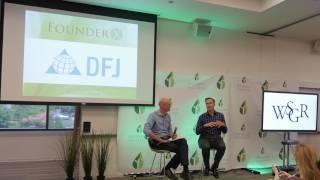
Steve Jurvetson backs companies like Tesla and SpaceX because their missions matter more than quarterly returns. He looks for founders with deep conviction and a 20-year vision, and sees software-defined hardware cutting costs by 1,000 times. Satellite broadband and deep learning will bring billions online and democratize who can start a company.
Chapters
Now, Steve, you know, you're— I'm a fan. Let me just start with saying that. So, like, why? Why do you fund these, like, crazy things? Like, why not— like, you could have chosen so many things, but you just decided to go into venture capital, and then not just that, but like fund really like big things that almost seem crazy. I mean, a car company, like who the fuck funds a car company? And a space company, who the fuck funds a space company?
You do.
So like, and that's about it, right? I mean, like, so why?
You know, the answer that I think has shifted over time, the answer sitting here today is it's the most exciting, fun, rewarding, and sort of, how should I say, way in which I can best learn about the future. I can contrast that to investing in ad networks or enterprise software or something that's in the mainstream herd that's generally regarded as a good idea, and there'd be a variety of ways in which that'd be less satisfying. I know it's being serviced pretty fine already by other investors. I know that at the end of the day, it probably won't be something history books are written about. But most of all, if I'm honest, it's just more fun. It frankly is fantastic. And so a flip to the question could be, why would a car, rocket, satellite, robot, industrial feeling kind of investment make sense today, where over the past 100 years, people may have invested from time to time in automotive companies and they generally lost their money? So there are some things— exactly, there's some things that have changed that make this a good time to be looking at a variety of industries. And we can get to that later. But back to the personal motivation, I've found that If I have a career that I define around lifelong learning, it's sustainable. It also means that I'll be passionate as much today as I, in fact, in some ways more so than when I first joined. It means that 21 years into this job, it's not the least bit boring because it's completely different, right? The sectors and the areas of interest. And then a derivative thing that I only learned after I invested in these kinds of companies is that when you invest in a passion-driven business, a mission-driven business, and I would put SpaceX and Tesla clearly in that. I mean, every employee knows what the mission of the company is. Profitability, by the way, it's not revenue growth, it's nothing financial, there's a mission, and that, all the financials are derivative and byproduct of that mission, I find those are the best companies. Those are the ones you wanna invest in, not only because when they change the world it's meaningful, by definition, the mission, the employees love it, the partners love it, the customers love it and evangelize your product and service, everything about it pays dividends in ways you can't quantify at the front end. It's just a better way to build a business.
Whoa, you leave me with so— I almost fell over too. That might be okay. So figuratively and literally. So, you know, that brings up so many things I want to ask you about. I don't know where to start, but I know one of the topics were these purpose-driven entrepreneurs, and I know we have a lot of purpose-driven entrepreneurs in the room today and people who are inspiring purpose-driven entrepreneurs. Maybe you can talk about that. How do you— I mean, okay, so we have a company right here, From Fat to Finish Line, and what they do is they help overweight people get into the field of running. There's just really, that's clearly a purpose-driven company, right? But there's some that may or may— We have a company here doing solar. And he has new ideas on how to make solar work for commercial. So, you know, there's some that are kind of obvious, and then there's some that may not be so obvious. So how do you know if someone's a purpose-driven entrepreneur? Is it always obvious or—?
Right. So, hmm, let me think about that for a sec. I'm going to have background processing on that in a moment because it is a difficult question. A related question would be, if you have a formula of here's what I'm looking for in a business plan, well, couldn't everyone just fit into that mold and say, yup, I got a purpose, I have a mission. So in a sense, what it could be is, is it a good mission? Is it a mission that if you succeed, you'll be on the right side of history? So helping the world move to solar feels like it's on the right side of history. Extracting more oil out of the ground on the margin, probably not so much, right? So if a new fracking technology, they could say, I mean, right? You could be just as passionate about fracking, as natural, as solar, and in fact, you'd have more economic impact in the next 5 years. If you look back 10 years and say, what's had the biggest impact on the energy landscape? It's fracking. Oh my God. I mean, just incredible impact in a variety of ways. Not an important mission, not on the right side of history. So I think both the examples you mentioned, I'm going to guess there's some deep passion the entrepreneur has. And so specifically, do you like the mission, and does it feel like that person has a reason to be passionate about it? So if it's an ex-banker, ex-consultant, they're going to really have to explain that one. About their youth or their experience or something that says now's the time as opposed to, hey, it's hot and happening, I'm doing, pshew, microbiome or deep learning or whatever the buzzword is du jour, and that's about the depth of their conviction, is that thin veneer. So that's pretty easy to find when you just ask a few questions like, when did you first think this was something you wanted to do, why do you wanna do this? And then a zinger question that really usually reveals whether they are passionate about the mission or not is just say, what does the business look like in 20 years? And if they're like a deer in the headlights, they're probably not a mission-driven business. Right, because they haven't thought that. They haven't thought that. I'm punched out 5 times over in 20 years.
I'm going to be driving my boat in the Caymans. Why, you? No, that's interesting. All right, so right side of history. Right side of history. I mean, that's obviously a phrase, but— Oh, I don't know. I borrowed it. A lot of meaning, right? What is the right side of history? Because I think, look, looking around the room today, these people are making history, right? Or making the future, and in turn therefore making history. And there's a lot of judgment, right, than being on the right side of history. And I'm just interested, what does that mean?
It could sound— yeah.
What does it mean oil is not on the— I mean, who thinks oil is on the right side of history? There you go.
So that's an easy one. Oh, I didn't hear the— Olive oil. Olive oil. So I obviously picked a pretty easy example. And your follow-up question does make me realize I should caution to say it's not like I'm that judgmental that each and every company is clearly on one or the each other. I think I picked a pretty extreme dichotomy, and the examples you picked felt like they're pretty passionate. It'd be— in other words, if your other— if the other side— I mean, I'll speak honestly, I wouldn't want to invest in Snap knowing everything I know about Snap, right? So let's just be controversial for a sec. I think there's certain things that are just so fundamentally—
finances— oh yeah, that making money hand over fist.
But if you take advantage of youth and exploit human attention in a way that doesn't seem scalable, healthy, or just right. And then little things sometimes give you hints, like, oh, we'll let you clock and prove how fast you're going when you take a screenshot and you're speeding in your car. It's like, why would you possibly enable that for any good reason in the hands of teens, right? It's just wrong. Or pay money to prove you're somewhere different from where you took your photo, right? That's just so you can lie. Pay money, you can lie. It's like, where is the ethos in this company, right? And so I might put that as an example of something I just probably am ignorant about its better virtues, but I just wouldn't wanna be part of a company like that.
[Speaker] So what's getting you excited now? Because I think you've had a pulse on the right side of history. And I might even go a little deep on your personality, like how did you get that pulse? But we can maybe say, if you wanna answer that, you can. [Speaker] Well, I'm not sure.
Maybe you can tell me. Okay, later.
But so you have been on the right side of history for a while. And so what are you thinking about now that you're saying, wow, this is important today?
Sure. And remember, you have something attached to your arm. Anytime, yeah. You can cut me off too and I'll try to pick up the thread. No, seriously. So what industry sectors? And again, let me caveat again, because I see you like this phrase, the right side of history. I may not always be on the right side, and I'm not so moralizing as to say everything has a right and a wrong, but I do want to try to pick things that are game-changing and important and will help humanity progress in some way. OK, so this falls in a few major buckets or categories, if you will. One is the various applications of deep learning, and that may seem a little decoupled from everything we were just saying, but it's, I think, going to revolutionize a number of industries. This is a form of machine intelligence, machine learning that can be applied in many ways.
And Don Dodge is here, and earlier today he was talking about TensorFlow and all this.
Oh, cool. So people just got some exposure to that. Perfect. We can get more into that, but I'll first give you an overview, and then you decide if we want to dive into any of these. Somewhat related loosely is the sort of conversion of a number of really crappy industrial businesses into really rich, vibrant, think about automotive today, think about, aerospace industry today with Tesla and SpaceX as examples, but robots, satellites, drones, industrial robots, that is, all kinds of other really provably bad historically sectors are being really interesting as they become software-defined hardware where it's the software and services layer that defines the product and its advantage over the incumbents. And you find these big juicy markets that just haven't seen a new entrant in ages and really haven't seen much improvement. And so there's a lot of pent-up potential to improve things. In some of these industries, we see thousandfold improvements. And prior, there was nothing like that in any investment sector I looked at in the '90s. You might see 100x in terms of cost advantage over incumbents, maybe a 10x. A 10x was a dream. 100x was a pipe dream. 1,000x, no one even joked about it. It wasn't even proposed by crazy people. So to actually see that, and in multiple instances, is astounding. It tells you something's really pent up. I think stepping back also more broadly, there's a bunch of sectors I don't yet have a great investment in. I've got things around the edge, but I'm looking for things like revolutionizing how meat production occurs and agriculture in general, solutions for free healthcare forever for everyone via a smartphone, and we can get into why I think that's an essential product that has to happen. I've found some close, but I'm still trying to find the perfect way to enter the market to reach the inevitable, what I see as the inevitable endpoint that, you know, 20 years from now we'll get diagnostic information about our personal health much in the same way we can do a Google query. We wouldn't think to pay for such things because there's all kinds of other business models that can hang off such a thing being the information conduit for the person and their personal health. I think there's a bunch of stuff in, generally speaking, what people lump in the category of AI, so going back to deep learning, it's going to be everything from sort of a sensory cortex for the planet that makes the Internet of Things a thing, that allows us to have trillions of sensors, literally trillions of sensors around the planet, and yet not clog the Internet as we know it. You have to push the intelligence to the edge essentially to make that happen. But that as a phenomenon itself is an enormous thing, right, that people suspect and market forecasts say will happen. But the key thing that makes it happen is having little neural networks, little inference engines in cameras and hearing aids and everything, cars, you name it, right?
We have founders for all the things you just talked about in the room.
I'm like, that guy, that girl. Oh, fantastic. That's right. And my guess is if I was more, you know, aware, because by the way, another thing I should mention, very rarely do I identify a company idea myself. So perhaps this free healthcare forever on a phone may be the first and only example in my entire career where I've put a stake out there saying, I think there should be a company like this. And maybe there already are several, but that's rare. What's much more common is like someone in the room comes up to me and says, you know, I got this really unusual idea for something I had never thought of before. And those are my favorites, the proposals that are unlike anything I've ever heard before. That's what I— Yeah, that's what I try to invest in.
Right, well, I imagine you hear a lot of stuff, like thousands a year, and so they cluster.
But they cluster, oh boy.
The breakaway ones are interesting. Let's talk about the people for a moment because we're both kind of Elon fanboys. Oh, yeah.
It's hard not to be. Yeah.
He's kind of—
Well, it used to be hard. Now it's easy to be a fanboy.
He's an unusual one, so maybe not the best case study, but maybe he is the best case. I don't know. That's why I'm sort of asking. You funded some great entrepreneurs. Earlier today we were talking about grit, right? Don also brought that up and a bunch of other people, and traits of these entrepreneurs. I'm not asking you so that you can say, "Just be like this and be successful," but what are some of the things that you think an entrepreneur that you've seen be successful need to have?
Because this will be helpful. I'm happy also to talk about Elon as a case study, but generalizing and not specifically thinking about Elon, but all of the entrepreneurs Some of the attributes, I would say having enough self-confidence to be humble. And what I mean by that is it's this paradoxical element that if you have a reservoir of self-confidence, like I'm an awesome coder or I'm a really great marketeer, you generally are therefore able to face and acknowledge the places that you're not great at. And almost every startup that's been successful, I shouldn't say that, that sounds like a vast overgeneralization. A lot of the startups that are successful tend to be a founding duo, not a founding individual. And the duo exhibits a lot of cognitive diversity. So one of the sort of caveats to any founder question I might add is make sure you think about founding team, not individual, because that pair, like a Jobs and a Wozniak as a mental model, for example, extrovert, introvert, marketeer, engineer, you know, a whole bunch of like opposite traits, not only is helpful in that you might get the best of both worlds that might not be possible to fuse in one human, but you also tend to hire more cognitively diverse teams. So there's almost like a systems-level analysis one could do to say it's not the individual, but maybe the founding pair and their founding DNA that ripples through an organization that has cognitive diversity. That's one avenue. Back to the individuals though, being open-minded enough to hire someone who's unlike yourself is one of those signs, right? Say, I don't know marketing, I'm gonna hire a marketing person as my co-founder. Other attributes can revolve around this, it's what I might call infectious enthusiasm. For whatever it is you're doing. And there have been times when I've had people come in for basically waste management, sewage plant re-engineering, which actually became fascinating, these en-trained microbial solutions. And I've visited the sewage plant.
I deal with a lot of shit too.
Oh, exactly. My trip to the San Jose waste treatment facility, amazing. Or even more boring are some derivative financial services products deep within the bowels of the healthcare industry. I actually got super excited. It was one of my partners, of course, leading that deal, not me, but I got really excited about that. I was like, wow, if I can get excited about some sort of health reinsurance thing, and then I'm like, that's an entrepreneur who will do a better job in their sector than anyone else in getting employees to get excited, customers to get excited, et cetera. So I can't say how you do that, but it's nice if you can get people hopping out of their seat for whatever it is you're doing. And usually if it's a mission-driven, a passion-driven business, it comes a little easier. If you have to analytically get yourself worked up each day to go to work, maybe it's not going to be so easy.
So that humility, so let's talk about that a minute. I mean, I wouldn't necessarily refer to— let's go back to the sort of unnamed case study. Elon's not necessarily humble. He's not, but considering how successful he is, he's super humble, but he's very also strongly opinionated. So what do you mean by that humility? And this is interesting because I think there are a lot of lessons here. You gotta have your confidence but also listen. What do you mean?
That's exactly right. So even though he has incredible passion and intuition about things like product and design, so stylistic designs, very much like Steve Jobs in that regard, how the Tesla should be, what makes for an elegant product, what fundamentally it should be doable even before engineers have put pen to pencil, you know, or sort of keyboard and mouse to CAD drawings, before they've actually even modeled what kind of rocket could be built, he knows it can be built from first principles. So he has this almost clarion call of clarity around what can and should be done in general. But that doesn't mean he isn't open to feedback and advice, nor that he realizes that he's good at everything. So for example, as you know from the earliest days of SpaceX, to have Gwynne there on the ops side and on the sales side and the customer interface side. He's not trying to do everything. And if you think about all the functional roles at SpaceX, it's actually not— I mean, it's mission, it's vision, it's product direction, and its product details, its product architecture. But it's not sales strategy. It's not everything, right? And so he can delegate. And that's important, I think, to staying sane when you're CEO of 2 companies, arguably 3 at this point, right? And a half. Exactly, exactly. So, but, and more generally though, then, if I'm trying to explain this, I think what I mean is it doesn't mean you're humble or what people would call you humble. That doesn't necessarily follow. It means you're humble, you're self-confident enough, in fact, remember that was the beginning part, to be humble in areas that you don't know anything about. And to be able, because you don't need to worry about looking bad to ask a very basic question like, wait, why is it done that way? Why is it that we always do it that way? Why is it, you name it, right? Ask a dumb question.
That's really interesting. Interesting. All right. So, let's go into that a moment because I don't— I think a lot of found— Okay. So, okay. This is actually a— This is going to be, I hope, a teaching moment because I think you're on to something very interesting here. And I see this a lot and it's a huge mistake where founders feel like they need to know everything so they never actually ask like kind of basic questions. So, they're like, "No, no. Yeah, I know." And that's not healthy for them. I think it's like a, "I need to look good in front of my team or in front of investors. I don't wanna be embarrassed that I don't know." So how, like, and but you're right, like great founders also are able to say like, "Why is this the case?" So that questioning is an underpinning. And I guess maybe if you could talk about that, if you see how the great founders really do question and go in and does that make you more comfortable?
Oh, for sure. For sure. For two reasons. One— well, actually, maybe three reasons. The first that jumps to mind is that they're just pragmatic and realistic about themselves. So sometimes it can be frustrating down the line when you have someone who's a little out of touch with their own strengths and weaknesses, maybe thinking they can do it all, and they're a superhero, and they don't scale very well. So that's sort of a warning for the downstream. The second is— Wait. Whoa, whoa. Stop.
You said that really fast. Very fast. Did every— and you speak fast. That was a super important point. Now I know you guys are fucking sleepy, so did you follow what he said? It's a warning for downstream if you're too cocky upfront and don't question enough. That means that later on you're going to run into a problem and that problem will probably have a bad outcome. OK, keep going.
Exactly. So another category of problem is you're trying to figure out if someone has an adaptive and nimble mind. Because every startup goes through profound shifts, right? Even Tesla, or even SpaceX, right? Like, if you look at like day one's founding vision of what the product would be, and then what actually came out the door, right? And Tesla, they actually didn't know. It was all over the map. We're going to be like an OEM for this. This was before Elon even. It was all over the map. And most of the companies, like, I remember, the last time I did analysis on this I think in the year 2000, where at that point, since I joined in '95, so over a 5-year period, a lot of internet companies, fully two-thirds of them had changed their name. And that's kind of a proxy for a pivot of sorts. It's like, we're just no longer called that anymore. Like, we're something different. Like, whatever we put brand and energy into, like, we're not that, we're something else, right? And there were some grand pivots in our portfolio, and it made me think, having a nimble mind to not be as dogmatic as to say, I have all the answers now, it sort of indicates you don't have all the answers now. How could you? It's the journey. And then the third relates to— oh shit, what was the third? It's a totally different point. Oh, is this just a sales pitch? So I think it's a variant. I think it's different from the first two, which is how comfortable can I be that when I ask a question and hear a confident answer, that that's a confident answer? And if every question across all gamut of things is, oh, everything's great, then if I ask a question I often like to ask, which is, what keeps you up at night? And the answer is nothing. You know, kid down the hall, but I have nothing that worries me, as opposed to a real sincere discussion of here's what I'm most worried about. The willingness to discuss something you're worried about implies that those other things are maybe more true than they might. So it's kind of different, again, game theory around how could someone be right about everything and have no worries about the business even when asked in an open-ended way? It's a little worrisome. A related issue is we generally are most uncomfortable with CEOs whose prior functional experience was sales. 'Cause it just comes naturally. It's like they're just selling all day. They just can't help themselves.
Yeah, I'm great. What's the problem? I'll fix it for you, whatever it is. Oh my God, that's so funny. 'Cause we literally just had this happen with Jet Cats where we pulled a founder in and we're drilling and he's overconfident and sort of drills into what you were saying. Guys, I also haven't seen any hands, so I'm a little concerned here that you've lost them or there's a massive— There's a hand. All right, let's get some questions. I have more questions, of course, but shoot.
So I would like to ask you the question you asked the other entrepreneurs, is that what keeps you up at night?
Oh boy. I was gonna ask a similar question.
But that's pretty awesome. Ah, my fiancée's here, so there's a lot of direct answers we give there. Usually her asking me some question that I can't get settled down in my mind. But more longer term, I'm not sure, but I will give you some answers. Part of the reason is I've never been asked that before. Second is, you know, is it the venture firm level, the personal career level, or, you know, the world at large level? So Do you have a preference?
Maybe you want to do all three?
Well, OK, so I might go to— it's not what's going to happen to venture capital, it will be obsolete. I couldn't care less. By the way, I don't care about finance. I don't. People can, and I applaud them, but I really don't care what's going to happen. Are angels on the rise? Will crowdfunding happen? Will Bitcoin make a difference? I couldn't care less. OK. But I do worry about— Things like technology's collective impact on a variety of phenomena on the world, like inequality, tech-accelerated rich-poor gap, which I strongly believe is gonna happen and is happening and isn't self-rectifying. We can get into that. But that category thing, it's not me, it's more like the world and the world that our grandchildren will live in. Like, oof, there's some scary stuff going on that we indirectly contribute to. In no way that I can say, here's a solution, we should do things differently in the tech industry. On the margin, we could do some good things. And actually, there's a few things on the margin we could do. But it's not like a criticism of business as we know it or technology as we know it. In fact, I'm a raging optimist. I just do see some negatives to the aggregate effect. And I worry about things like certain— well, just around the world. So this may be— let me not share those. But certain ideological shifts that are occurring, isolations of peoples. There's some things. But what do I— I don't know what to do about some of these things other than worry about them and look for entrepreneurial solutions. Getting a little more topical, I do worry, let's say personally, will I stop learning at the rate I'm learning? So I should worry more about cognitive decline. And I know Bill Gates does. I heard him recently answer a question like this, and his number one answer is, I'm just worried that I'll be less sharp, because he really thrives kind of like I do on learning new things continuously as opposed to just executing on one thing. What was the question again? Yeah, what are you asleep on? So, right? What were you talking about? And then, yeah.
Well, so, so, wait, wait, you said something that I— and I know there's another question, so I prodded you, but yet I'm interrupting.
Well, we'll get them later.
So you said you're— it was funny because I was talking with a friend of mine literally last night, and he said, you know, entrepreneurs are all optimists and VCs are all pessimists, and that's how the dynamic works. And I'm— and I thought about it, and of course that's a dramatic oversimplification. I didn't necessarily agree, but I don't necessarily look at VCs as optimists per se. So I mean, I'm interested because— or maybe they are. I don't know. When you said it, it just triggered that.
Well, I think it's an interesting question because I could imagine for many entrepreneurs with sort of bungee exposures to venture capitalists in the pitch reaction kind of mode would get the impression because generally they're peppered with tough questions that sound kind of cynical and doubting. Because they don't come to the meeting with— I try to, by the way. This sometimes is refreshingly different when I'm as passionate or more so about the sector than the entrepreneur themselves. That really stands out, right? But that takes a prepared mind. It can't be the first meeting in a sector. But like the synthetic meat guys that I meet with, I mean, I can just rattle off all the reasons why they're underestimating the need for their products.
Anyway, so— You don't know how important your product actually is. Yeah, really.
You're totally underestimating your market size. They don't usually hear that. So I can imagine that the average cynical, and in Europe especially, oh my God, I just realized if we're talking about the US, I'd say there's actually, you need a certain faith in the future to invest in it, but in Europe it's just a disaster. I mean, they're just fear-centric banker types across the board. The other thing I might say is I don't know a rich pessimist. Andy Grove has exposed us. That was frickin' profound.
I'm like falling off. All right, yeah, let's give him a big round of applause. All right, there was a question over there, sorry.
I'm Dave Johnson. I work with the Fat to Finish Line Group. My question is significantly less profound. You mentioned 1,000x increases in efficiencies in certain areas or sectors or industries. Can you— Drill down on a couple of those. I mean, I can imagine 10 and 100, but 1,000? Yeah, how the heck do you get to 1,000? I'm not seeing— Like, where does that exist? Yeah. So it usually takes a market failure, something that from afar you might say, oh yeah, that's unlike other sectors, like the military-industrial complex. So when you have a business with a captive customer that is willing to make a monopoly and can't source internationally for national security reasons, you could imagine in the history to the US launch business, rocket launch business, it's profound. You had a period, it's interesting in the US, for example, in 1980, the United States had 100% market share for launching commercial satellites. Now that's where you have a market, 'cause a commercial satellite producer could go anywhere. They go to, you know, more or less, they can go to Europe. There's a variety of options more than just your own country, unlike military satellites. And so go from 100% market share in 1980 to, Zero, 3 years in a row, 3 years in a row, zero market share just prior to SpaceX entering the business. Meaning even the US companies building satellites for telecom and cable and you name it, zero launches on US launch vehicles. They just weren't cost-effective. You could imagine it takes decades sometimes of dysfunctional market failure to get to that kind of disruption where you can come in and make a huge change. The one I can, I can't share the exact numbers there, but you know, If you throw away a rocket after each use versus reusing it, you can imagine there's a huge cost savings to be had. And actually, Elon has looked to the endgame to say it should cost $250,000, ballpark, to fly you to Mars and back. I mean, like, if you like think of how that compares to today's cost, which would go into the hundreds of billions, you know, it's just mind-boggling. Another example is in satellite imaging business.
That would be like $100,000, actually, because I think right now we're talking—
But I think he's counting on many passengers per vehicle. You might say, let's compare apples to apples and make sure we're flying as equal number of people. But anyway, even then, in the satellite imaging business with Planet Labs and others, we saw it even strangely more profoundly, although there's a bit of an apples to oranges comparison perhaps where you have these, it's more like a mainframe. Here might be the analogy. Imagine you had a mainframe only incumbent, these big bus-sized $500 million and up kind of spy satellites as your incumbent, and you come in with something that looks a lot more like a laptop, it's literally this big, and uses off-the-shelf electronics. And so in both cases, SpaceX and even more so Planet Labs, and oh by the way, the robots and drones and other companies that are in this genre I'm talking about, they use off-the-shelf cell phone components. And this gives you this incredible leverage that's kind of hard to fathom, but I'll give you an example. The current best rover, I mean, this incredible feat of normal aerospace, the Curiosity rover on Mars, the one that's caught everyone's attention when it landed, has a 4-megapixel, excuse me, a 2-megapixel camera, 2-megapixel camera because it was a 2004 design freeze. The normal pipeline is use flight-proven hardware, these incredibly long design cycles. You want things to last on average 20 years up there, so you have like a 10-year design window, a 10-year average lifetime, I mean to the midpoint, it's a 20-year life, and you want to use things that have been proven in prior generations, you're talking about 10, sometimes 20 years. That, by the way, with the doubling every year of Moore's Law, if you wait 10 years, that's 1,000x. If you wait 20 years, it's 1 millionx, just from Moore's Law, if the product is a computationally-centric product, so things that are the computational elements of the product. So the reason I belabor that detail is it has to be a software-centric product for this advantage to come. If it was just the physics of glass and metal, you wouldn't see any advantage. It would be like any other experience curve. You know, with every accumulated doubling, you get maybe a 20% advantage. It's when it becomes a software product, when your phone became the software and services layer, not the physical thing that you care about, that's when it became a completely different kind of product, and the incumbents who didn't have the software and services layer never caught up. I think the same is going to happen in automotive. The best AI will win. Every other factor is going to be derivative and unimportant. And similarly, in aerospace, you see these enormous gaps largely driven by software.
From Vietnam over there. Wow. Bobby. Hey, Steve. Hi.
So DFJ invests pretty much globally, right? I understand that you also have a joint fund with one of the PE firms in Vietnam. So this question pertains actually to China. And you see all this crazy money going to China. Recently, there's a $5.5 billion investment to Didi, raising it to $50 billion, competing with Uber. Do you see a separation in terms of tech, whereby there's a wall that's being built where, say, typically startups from, let's say, the US or anywhere else find it really hard to enter China? Or do you see China taking over the entire Asia? And obviously, there's a competition between China and India. How do you see this play out? So question one. Two, relating to that, do you see an evening out of technology globally whereby there's no borders, roughly relating to an article I read about Facebook having 1.8 billion users? Could that be a digital nation in that sense? And how do you see that play out, as you said, the right side of history, 50 years' time?
That's a tough one. So I may, for the first half of the question, which is China-centric, second half more maybe the democratization of entrepreneurship globally, I might take the advice I was giving entrepreneurs, and sometimes say, I don't know, on the China question, as opposed to giving you a confident answer that's based on nothing. So let me tell you why. And part of the background is in the '90s and into the early 2000s, we had an active investment portfolio in China, so I'd have information flow. In fact, we made more money in China in aggregate than we have in the US just from that time period. Companies like Baidu, where we were the largest shareholder and such. But we subsequently, like many investors, just couldn't find our footing, couldn't find a way to invest that made as much sense as that early wave of internet variants. In other words, the Chinese version of the US or the European equivalent. Our clean tech investments in China, just nothing quite clicked, and we felt like we were getting fleeced left, right, and center in all kinds of new and creative ways. I mean, I've seen 18 maybe different ways that we lose all our money that I'd never seen anywhere else on the planet, like often involving bizarre corporate structures and everything, government involvements. It's wild. The fact that we didn't lose our shirt on Baidu is kind of amazing. I don't know how we threaded the needle and didn't get screwed by someone along the way. So I don't know, because I don't have information flow. Most of anything I can speak about here on the stage today is stuff I've gleaned from the entrepreneurs I'm working with in industry sectors, and I've just been purposefully not paying attention to China for over a decade now, maybe almost two decades. On the other question more generally, stepping away from China, just thinking in general, I think there is this vast democratization of all kinds of things that the internet allows. We're just beginning to see it. See this in, of course, the ability to start companies anywhere. We saw that firsthand with Skype coming out of the development team out of Estonia, and a variety of other companies in the consumer side where you didn't need to know where they were based. I mean, almost no one can say— well, maybe some people can— like where Hotmail was based. They might guess India. They wouldn't know which countries that these products initially took off in more than others. It's sort of random and sort of global from day one. I think we're sort of internalizing that aspect of it. I think funding, interestingly, is not as democratized. I was criticizing Europe earlier. Poof, I feel for the entrepreneurs all around the world who come up with ideas, especially young people, about as often as anyone else, but they're just not in an ecosystem that makes it easy to get going. And I don't have all the answers to how that can change, but I hope it does. We tried by opening franchises all around the world, including Vietnam and Korea and 6 different places, including 3 funds in China at one point, trying to democratize this. We realized we can't really manage that at the spirit of firm. It's not a firm. It's a bunch of franchises that are doing their own thing. And we spun that all off. So I do think a second wave of democratization that may relate is online education. I think when we bring the next 4 billion people online, which will happen a lot faster than some estimates— we're currently about 2 billion people connected to the global internet persistently. That's going to go up to about 6 billion pretty quickly through satellite-based broadband, which not many people, if anyone, was thinking about 3 years ago as a third conduit to the handset. And both SpaceX, OneWeb, and a whole bunch of other competitors not yet announced are intending to bring these huge constellations where you can basically get a gigabit downlink and uplink for a $200 terminal. So any village could light up. And the reason I'm belaboring that tech enabler is we'll get from 2 to 6 billion sooner than most people think. And that'll be a tripling of the potential population for online education. For potential, oh, within the next, well, the technology to make that possible will be flying by 2020 at the latest, 2021 the latest for OneWeb because of ITU regulatory reasons. Service starts to turn around maybe 2019, but really fully operational by 2020 and '21. And then, and the beauty of this thing is all parts of the planet are served equally day one. There isn't like, oh, I'm just serving New York 'cause it's more lucrative. It's like, no, the poor village in Africa has just as good access potential as anywhere else, because the way these work, they serve the whole planet from day one. I think that's incredibly democratizing, and I wonder about the entrepreneurial boom when you have all these possible ideas bubbling up, potentially inspired by local needs around trading, around currency, around who knows what, but most importantly just bringing that many people onto the global economy. I don't know if there's ever been as big a shift either as percentage of people or in raw numbers in history ever. 'Cause these people, other than like P&G and Unilever, they're not connected to the global economy. They're not buying goods and services from most people in the room, but soon they could. And they can compete with you.
Okay, now that's like hurting my mind to think about because like we literally have people from all around the world. So if you think about that many hundreds of millions and billions of people who are able to come online, it changes the game. Now everyone's like, "I have a question!" Where were your hands before, man? Fly in your pants. All right.
Yo, over here. Where am I looking?
Oh, right here. Yes. I'm Nima. I'm a Canadian who moved to Brazil in the end of 2012 and I help run the FI chapter in 7 cities there. Cool. Because I know that Brazil has a secret that a few people know is true that not a lot of people believe in. So my question to you is coming back to Earth, right, I'm also Belijovian, right, but coming back to earth and starting to think more pragmatically. Why is it that we see so many brilliant ideas and so many brilliant technical founders in Brazil suffer because the investors are worse than the type that you basically described in Europe, right? And it's so fresh, like it's such a breath of fresh air to see people like yourself and Tim Draper who recently signed a deal with our partner, Accelerate Fintech in Brazil to basically start to give some inspiration there. So how can we get more of these idea-minded people like yourself to affect the rest of the investment community there? And so the FI graduates can survive that little bit of time, that little window that they need so they can get to seed rounds and grow into the big sprouts that they are.
It's a tough question.
How do you clone yourself in Brazil? Yeah, exactly.
So all I can tell you is what we've tried to do, seen some success with, but largely still been frustrated with, which is exporting a venture model into a country that doesn't already have it. There's a certain way we've done that. Usually it involves combining a local entrepreneur that hasn't been a VC before, because almost by definition you don't have— it's almost a self-fulfilling prophecy that if you want to create a thriving venture market in an area that doesn't already have it, you can't hire locally. So, what can you relocate, right? You might be able to relocate a person. Did you hear that again?
You say these things really fast and they're super important and I know you're really smart, but did everyone— because we have a lot of people who are building funds and things like that in their countries. So, let me just slow that down for you. If you want to create something different in a city or country where it doesn't exist, you You can't hire locally, is that—? That's right. Because you're just basically permeating what exists by hiring locally.
So let me clarify that. You can't hire locally in that domain. So you have one of two options: cross-train, like take an entrepreneur, make them a venture capitalist for the first time, or import the venture capitalist. And what we generally found is you need to do one of both. That if you just took people, and the worst are bankers, and say, "Now you're a VC," good luck. That's just gonna be a disaster. If you take entrepreneurs, they at least are open-minded and they're still learning and they're asking questions such that they're willing to learn a new trade, right? There's something about the entrepreneurial mindset that lends itself to doing something new, right? And going back to school, if you will, starting back at square one of like not knowing what, you know, okay. So it's also a mentorship business internally often at a venture firm. When we hire junior people, there isn't like a textbook we can hand them or a training manual. It's just like we have to be be doing the job with them for them to learn what the job's all about. That's just— our industry's like a cottage industry. It's archaic in that regard. It's kind of like being a hand cobbler. It's like— in terms of how archaic it feels at times. So we've done that all around the world, and it generally worked, but it has some catches, which is relocating the best and the brightest venture capitalists is not easy. If they're at a firm and they're killing it, why would they want to relocate to a new reason? Region. You find them occasionally, but it's not easy to pick an arbitrary region, right? Like, especially if the region's not beautiful and has lovely beaches and the Amazon and, you know, what have you. You have some sales pitches to make. Imagine trying to start one up in— well, I won't mention the places around the world that we— yeah, well, I grew up in Texas, so I like— imagine you're trying to do a Texas outside of Austin or Oklahoma or you name it, you know, in the Midwest kind of venture fund where there is no venture today. And we've done that actually. It's hard to import, you know, get up and leave, pick the venture haven of the world where you might pick people and relocate. So we try to keep a farm team of folks who want to see the world. They're young enough or what have you. They just, they really haven't set their roots in one place. That's— but it's not easy, right? That's everything I'm describing. It sounds like a pragmatic breakthrough progress, right? And it is. But you might then step back and say, well, wait, why is this so hard? And one of the other places perhaps to look is upstream. Like, why do LPs not invest in these new funds? And that's like a broader question. They generally don't invest in first-time funds as often. They're an incredible force for conservatism. Just like a lot of the big pools of capital will wanna invest in funds once they've been proven on their third fund, and then they'll stick with them for a long period of time, and they're loyal and great investors to have, but when you're getting started, it is really hard to find institutional investors. There are some who, of course, realizing supply and demand, say, this is what we're gonna do. We're gonna find first-time farm managers, kinda like a farm league. We'll find new funds and make that our focus, But then, I don't know if it's laziness or what, they just don't tend to look outside their geography very often. They don't tend to really roll up their sleeves and figure out country risk or which regions they want to look at. I recently was with some of these big institutional investors that are doing just that. They just finished a tour of at least 3 regions, but in this case, the traditional ones, China, Israel, and Europe, not surprisingly. But even for them to figure out, do we, should we invest in new venture funds in those regions was not an obvious question. Question and it meant sending their whole team all around the world and it's just weird that way. So the other thing I could say that worked really well is however you start, if you can have either a press like we used to have around Red Herring and Upside Magazine and a bunch of things like this that celebrate the wins in the region, find the local entrepreneurs, there's somewhere there's a local entrepreneur that's done something, and really celebrate their successes, it tends to be galvanizing for other entrepreneurs to believe they can do it too in that region.
That's the second time that that was said today. And so that's a good point for everyone here. I'm going to say something. I am dying because I don't want this to end. I'm like, who does? Who wants this to end? Raise your hand. That's awesome. There are at least only two. Make it end. That's awesome. You know, that's awesome. You go, there's the honest ones. Well, I'm sitting here, I'm like, oh my God.
But we do have to make it end.
I know, but mainly because you got another thing at the Churchill Club in a minute. But I want to sort of— and I really don't want it to end. So a couple of things of note. We— and we have maybe one more question, but one thing I want to talk about. So I know you've been passionate about space I'm also passionate about space. And so we did something today that's the beginning of a new Founder Institute, okay? We're announcing something called the Star Fellow, and we're giving a fellowship to any entrepreneur anywhere in the world, and maybe our directors will be a little angry at me later, for someone who's starting a space or space exploration related business. And it's the first of a series of things that we want to do to inspire people who are doing hard things in hard industries to take a stab at making the world a better place. And I can safely say that space probably is one of the hardest industries to work in. So as part of that, and, you know, in part inspired by great people like yourself who are funding these visionaries, we want to, you know, provide them with additional mentorship, and we have one of our mentors over there, Sean, for that initiative. Will Marshall will be another, from Planet Labs. And then hopefully introduce them to great people like yourself for funding. So I want to do— you know, I know you got to go. If there's any final advice you want to leave this great room of inspired people and leaders with, to set them on the path? I mean, I can tell you something, your whole talk about building the ecosystems, I saw people were just like, "Huh." That's what they want to hear. But any final thoughts for the room?
I guess it's incredibly encouraging to me. Earlier, maybe the flip of the question of what I lose sleep at night about is the way in which technology is diffusing into every industry and transforming it. To me, this is the vector of progress, and it's also inherently, I think, a vector of democratization of opportunity. So back to this, are you on the right side of history? Everyone in the room, in a way, is by being an entrepreneur. It almost goes without saying, but going to work for a big company to let them get 10% bigger, it's just not that fulfilling at the end of the day. It's something that, you know, when you ask yourself, what have I done in my life that was meaningful, it's probably not that, right? Even though that may have more economic swing in any given day, like whether ExxonMobil can drill better, has more impact in a given moment than— I mean, because we spend like $6 billion a day on oil and derivative costs here in America. It has huge leverage. This has more lasting leverage. This is the stuff that you're doing that history books will be written about. Not all of you, but some of you, right? And you know that. And I think the thing that's maybe subtle, but you start to see it as I'm starting to do over decades, is that the opportunity for entrepreneurs to make change seems to be growing. In other words, a small group of people, literally 5, 5 to 7 kind of max, routinely change the world and do so more than ever before in sectors like never before. And this is empowering to the new entrant. This is both at the scales of companies, the new entrant to a new field of study, like if you want to switch to deep learning or something, you could have more impact than ever before. And even at the scales of countries, which is a small economy like Estonia, which is dear to my heart, or others have a better chance than ever before because of technology. Think of a different world order where there was stasis and predictability and a lack of disruption. The big would get bigger, the small would get crushed. It's like, why would a new entrant ever have a chance? So the new entrant, be it a country, a company, or an individual in a career choice, gets more and more opportunity as time goes on because technology empowers you like never before. And that, I think, is incredibly exciting. Miss Jervison, you must be so proud. That's my mom.










