Steve Jurvetson on 'Building a VC Fund to Change the World'
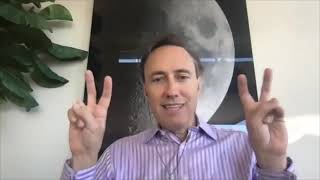
In this interview, veteran venture capitalist Steve Jurvetson reflects on his career and the lessons he has learned about building and running a venture fund that aims to have a lasting impact. He critiques the conventional focus on consumer internet and enterprise software, arguing that most of those companies will not survive long term, and emphasizes the importance of backing world‑changing ventures like Tesla, SpaceX, and emerging frontier sectors. Jurvetson explains how traditional partnership meetings can become burdensome, and describes how he and his co‑founder Mario have adopted a highly nimble decision‑making process that allows rapid term‑sheet issuance and avoids the Monday‑meeting bottleneck. He shares his experience as an angel investor, noting an estimated 80 % write‑off rate and the loneliness of solo investing compared to the collaborative environment of a venture firm. The conversation also covers the VC Lab program’s goal to launch 1,000 new venture firms, highlighting its success metrics (first‑close commitments of 10‑30 % of fund size within 4‑6 months). Jurvetson advises aspiring fund‑builders to think deeply about their long‑term purpose, to focus on meaningful, world‑improving companies rather than chasing hot trends, and to develop a unique strategic angle rooted in personal experience rather than trying to be smarter or work harder than incumbents. He warns against relying on perceived competitive advantages such as intelligence or work ethic, and instead recommends seeking underserved market opportunities, citing space‑industry investments (e.g., SpaceX, Planet Labs) and nascent sectors like psychedelic medicine as examples of high‑potential frontiers where early entrants can gain a foothold before the herd arrives.
Chapters
We'll let people come in.
While everyone's dialing in, let me just tell you what we're doing here. So Steve and I have known each other for quite some time, so it's going to be two friends chatting about venture capital and the various things that Steve is working on for the benefit of those interested in the field of venture capital, possibly interested in being a venture capitalist, but hopefully interested in starting a venture capital fund, right? So we run something called VC Lab, and our goal is to start 1,000 new venture capital funds by 2025. That's been going great. We started just under 100 in 2020, and it's looking like we'll do about 200 this year. We hope to double again next year to 400, so we're well on our way to meeting that goal. So we're already at 164 in here, so we can get started with the interview. That was fast.
Maybe they were waiting.
Yeah, no need to wait. So let me make a very quick introduction. Hi, Steve. Excited to have you. I consider you, and I'm not maybe the best judge of character, but one of the best venture capitalists out there. You've been awarded the Midas designation by Forbes for 5 times, right? 5 years. You've invested in some of the most epic companies. And overall, I think you have this beautiful mind for venture capital. And so I'm really, really honored to hear your thoughts on the field in particular. I couldn't imagine, anyone better. And, you know, I handpicked you. You said yes, so thank you.
Absolutely happy to be here.
So I'm going to dive right in with some questions. I got some questions from the internet, got some questions from you. So first, firstly, can you tell us something that nobody knows about why you got into venture capital?
Oh, that's an interesting question. Um, and for the audience, none of the questions were shared ahead of time, so I may pause. So I have to first pause. Whenever you say something that no one knows, I'm like, well, shit, somebody might know this. But let's just say obscure, and I'm not sure it's been written down anywhere. The first is I didn't know what a venture capitalist was growing up. I had never met one. I grew up in Dallas, Texas, high school years and such. And even though there was some entrepreneurial activity there, certainly I never met a VC. I never thought that was a career choice. By the way, just one quick aside, my mom discovered an old audio tape from my junior year of high school where a career counselor doing some de-testing on me concluded I should be a venture capitalist. And like literally, it's like in this tape she discovered, which is astounding because I'd probably forgotten that and didn't know what that was. OK, so the thing people might not know is that I did like, oh God, 60 interviews across 15 firms to get a job in venture capital while I was at business school. And I fully intended to go back to Bain Company, where I'd been a consultant for 3 and a half years. And so I had this safety net, if you will, of like, you've got a job. Oh, by the way, if you don't come back to that job, you all of a sudden have to pay your entire business school in one lump sum check because they paid for it. So it's like an economic hit on several levels to leave. So I was only exploring what I thought could be my dream job, focusing on technology, focusing on the frontiers of the unknown. I realized in myself I have a bit of ADD career-wise. I'm all over the place. I wouldn't want to do any one thing for a decade. I was starting to have that realization. I'm like, this is like— I couldn't script a better job description for me than, oh, the best and the brightest people in the world, like a Steve Jobs of the future, will come in and present their true ideas and discuss the market and everything about what they're trying to do with openness, right? Right? Big companies don't get that. Apple can't get that from startups. Microsoft can't get that from startups. Like, where else in the economy can you have this parade of ideas? It's incredible. So it took a lot of effort. I— what I found at the time was that nobody who had a career substantially different than my own cared to even have a first interview. That the only people that paid any attention to my— because I only threw in, you know, resumes over the transom. I had no connections in the industry, of course— were people that shared something in my background. Like, they themselves had been a consultant because like, there's this homophily bias, as I call it, you know, this tendency to hire people that look like yourself, went to the same school, had the same background. And I had to exploit that and find people that, like me, had very little operating experience, yet had deep technology vein of passion and training and what have you, but, you know, really hadn't done a real job in my life, because consulting is, you know, indirect at best. You know, those are the people I got attention from, like Tim Draper at what was called Draper Associates at the time. So that's where I ended up. And anyway, I'll stop there. But that was like how I got there. And oh, and maybe not as well known, the key to finding a job in managing these interviews when I knew nothing was actually a guy named Chris Alden, who was a co-founder of Red Herring magazine way back in the day in the '90s. And he had the interesting job of interviewing a VC every month for this magazine and actually finding out how they differ from one another. So despite the positioning, which all sounded the same, like actually under the covers, what makes you different? Therefore, he could give me a lot of perspective on the firms I was considering at the time and how they actually differ and what their culture is like. Oh my God, it was all over the map.
Wow. One thing you brought up was the Bain Company stuff. I was reading about that and all that preparing for today. There's not a lot of timelines. When did you make the leap?
Oh, just like when things happen. I did like a bachelor's, master's, and started a PhD in electrical engineering that took me through 1990. Did summer jobs at Apple and NeXT during that time and a whole bunch of work at Hewlett-Packard doing chip design. So that was all— so PhD and earlier. Then 3 and a half years at Bain was '90 to '93-ish.
Yeah.
And then business school was '93 to '95. And then started Draper Associates in 1995. And so it's been amazingly 25 years of venture capital since then.
So, okay, that's sort of, I was gonna say, that was my next question, right? 'Cause I was guessing that from reading things, just FYI, if you ever wanna update your Wikipedia, put some timetables in there. So, you know, you've been doing it for 25 years and you asked some questions about that. Let me just start like, why is it, is you still as passionate about the field today as you were 25 years ago? Is it still, I mean, 'cause you started a new firm, you know? That's right.
No, in fact, much more so over time, believe it or not, for two main reasons. One is the domain over which venture capital applies, the way we traditionally think of it, is so much broader today than when I started. Like in 1995, I mean, it was pigeonholed, as you can imagine. There's like semiconductor investors, which included computing and datacom, life sciences investors, and these crazy new breed of software-only investors. Like, I remember Winblad was the first that said, we're just going to do software. That was radical, very differentiating for them at the time. You could invest in restaurants, oil and gas, you name it, something else, you're just going to lose your money. Automotive would have been in that category, right, '90s and earlier. It's like, yeah, you can dabble in that, but good luck. That's a wasteland. So it's actually remarkably narrow compared to today, where— we'll get to this later, I'm sure— automotive, aerospace, agriculture, construction, all these industries are becoming software-centric. They're becoming Information Age businesses and ripe for disruption. Very exciting, right? The impact you can have, as you know, as an investor alongside me, with Tesla and SpaceX is profound, right? It's not only changing the world, it's changing other worlds. I mean, like, that's pretty amazing, right? The scope of entrepreneurial foment seems to have no bounds. So first point to your question, the scope and ability to have impact for the better seems much clearer, broader, and exciting than ever before. Second is, it's really exciting to be in a team of 2 people. So later, we can talk about venture capital itself, which I normally don't talk much about. But a team of 2 is really magical. 3 is pretty good. I can change the world. Oh, yeah. Oh, absolutely. Actually, I think in most cases, the greatest startups were a dynamic duo at their founding. Think Jobs and Wozniak. Even Ellison had Bob Miner, not as well known, but from the very beginning. Yang and Filo. Obviously, Larry Page and Sergey. They're the famous canonical examples of success. But under the covers and less visible is there's a lot of those. There's something about the mutual respect among two people who are very different cognitively, like introvert, extrovert, you know, marketing, engineering, whatever it might be. The fact that Jobs and Wozniak each believe strongly the other is amazing at what they do helps set the culture of the firm of Apple. And it's not just Steve Jobs clones. It's not just Wozniak clones. It actually could have quite a bit of diversity. When Jony Ive and a bunch of other people came in, they're really different people. Anyway, so that's an aside. Two-person team, back to venture capital. Magical 3-person team, almost as good when I first joined Draper Associates. It was Tim, John, and me. 7-person team stretching the limits of what is productive. Beyond 7, all bets are off. You're going to be less and less productive the more people are on your team in any creative endeavor, be that programming teams, be that managerial teams, be that new product development teams. The average programming team at Google is 5 people. So smaller is better. One is not great. One, you're an angel investor, and you have no one to bounce ideas off of. So I think I'd be a worse investor if I was on my own than with anybody else, almost. And then the smarter they are, the better that is. And we can get to that too. But that was the other reason why I'm loving it now— two-person partnership.
That's fascinating.
Let me—
so you mentioned in our dialogue, and before we get into your current fund, process learning. And I had been reading about it, and you brought it up. And so I love, before we go into the fund, to hear And you're sort of insinuating this in your background of the broadening of the fields and why you're still interested. What is process learning, and why are you passionate about it? Maybe how does it work in a 2-person fund?
That's a great question. I don't know how it works in a 2-person fund, but it may be similar as a larger group. What I mean by this euphemism is there are easy lessons one can focus on, which is what I might call a product lesson. Like, and it's kind of weird to think of a service firm like a venture capital firm as having products. But let me just draw this analogy to the venture industry, which would be decisions like, are we going to focus on energy and clean tech? Are we going to focus on China? Are we going to focus on early stage? Are we going to focus on, you name it, a certain type of entrepreneur? Those are all, in a weird way for a service firm, product decisions. What is the strategy, or what is the tactic, better said, what is the tactic du jour that I'm pursuing? And you could learn from that. And in fact, most venture firms, I think, only gather feedback on those axes. So like at DFJ, we would often measure how is our clean tech portfolio doing versus our IT portfolio? How is China doing versus the US? And we would assume those are the learnings we should be making as a firm. Oh man, we were early in China. We were, made a killing there and then lost money for like decades. You know, what's the lesson? Like, we think it has something to do with China versus not China, right? As opposed to how many people were on the team? Who was making decisions? What was their voting policy? Those are weird things to measure over time because they've changed a lot over time. To correlate with success is also— like, if you don't measure it, you can't manage it. How would you— you might miss, as we did for decades, literally decades, any correlation with things like our team size and our performance. But just as a quick aside, I believe that if you could get the data— and only a few groups, maybe Carnegie Associates, who I shared this idea with, and they kind of nodded. And smiled knowingly. And others who would know a lot of venture data to correlate team size with IRRs over long periods of time, basically returns, ignoring fund size. So everyone thinks bigger the fund, the worse the returns. Regression to the mean, of course, a billion-dollar fund can't perform as well as a $50 million fund. That's just a fact. And all the billion-dollar funds statistically have done really poorly. Once you get past a billion dollars, you're just riding off your past reputation. For as long as you can, but you're going to not make money for your investors like you used to. It's true for Kleiner Perkins, all the big firms. So, but the reasoning might be wrong. Like, we've always said, of course, how can you make a multiple on $1 billion? Regression to the mean. How many portfolio companies do we have? How many deals per partner? Will you migrate from being early stage to late stage if you keep your team size roughly— you know, doesn't scale with capital? I'd agree. You're going to have to do later stage deals because you have to write bigger checks. Those are all the reasons given. But I think there's an independent reason that you can statistically discern that, which is when teams are bigger, they just make worse decisions. And you need a lot of data to see that statistically because on the margin, it's going to be noisy. You'll have some hits, you won't. You have to look at a lot of data to realize that 9-person teams in a partnership are not a team. They'll have subgroups like the China team, the IT team, whatever. They'll subdivide into, in a sense, committees like boards of nonprofits do when they have 25 members. They obviously don't make any decision as a team of 25 in anything that we consider a team. So that's an example, a long-cycle learning. Coming back to your question, what is process learning? I think process learning is thinking about how you do things, not what you're doing. I think it can scale over decades because if you're learning on that domain, your tactics could change. Your focus could change. Like in my personal career, like from internet to nanotech to clean tech to synthetic biology to a whole bunch of stuff, right? Yeah. Food.
Food.
We'll get to that. But like, wow, how could I have a strategy strategy that transcends all that. What's the process strategy? It's a methodology that works across all that. And we can get into that. And by analogy, I'm reading— or finally finishing Walter Isaacson's biography on Steve Jobs. And he was somewhat similar. His greatest pride was Apple the organization. He spent an inordinate amount of time designing the physical layout of the buildings at Pixar and elsewhere to facilitate serendipitous communication between people. Like, he literally went to the mat on where the bathrooms are located so that people have to walk by each other to get to the restrooms at Pixar. And at Apple, you know, he's famous for kicking anyone out of the meeting if they're not contributing, making sure meetings have less than a certain number of people. He knew this intuitively. It's like, how can you get the sort of pirate flag entrepreneurial foment to actually come up with good ideas? You got to have a small group who communicates serendipitously with each other in hallways and around the office.
Oh, man, you opened up so many Pandora's box of good questions. But, well, let me jump with one that just is ringing in my mind as you were talking. I refer to what you were talking about with the fund size and team size as causation versus correlation. So the billion-dollar funds not performing as well as the smaller funds is really just the correlation, right? But if you just assume it's fund size, that you're making a causal interpretation. And I have this problem all the time because I see tons of correlation. And it's very often, if you're anywhere intelligent, very difficult to pinpoint exactly what the causation is. So you, but so one of the things when you brought up fund size, the first fund I thought of that might buck that trend a little bit is like Sequoia, for example, 'cause they have a fairly large team. They work on the unanimous consent model, which is challenging with a large team, right? And so, I mean, do you consider that like an outlier? So it's possible.
It could be. So I think, well, first off, as you were saying this, I wanna fully underscore correlation is not causation. And that is the point. I mean, my whole theory on team size is also a correlation. Even with that data, it wouldn't be provable. I believe it to be causal, but, It's a contributing factor. I think fund size and team size both are contributing. Sequoia might be an outlier. Sequoia also has some unique advantages that they haven't fumbled the way some other firms have, which is an incredible pedigree over a long period of time. So they have one of the best Rolodexes and one of the largest army of prior entrepreneurs who hopefully think highly of them that refer them deals. So deal flow and networking advantages, an LP base tripping over themselves to invest. Now, and I'm also not intimately familiar with how they do things internally. I have the sense they have like a CEO-like person who manages things. So it's so different from what I'm used to in a work organization. There may be a whole lot of stuff going on there that is different. They do have an open floor plan that they consciously shifted to versus offices. Again, serendipity. It could be reacting to something that was not going so well with people doing their own thing when you get that large. They also have boatload of funds all over the place— growth funds, China funds, you know. So, you know, the Sequoia empire is, um, perhaps subdivided into smaller teams, um, if you look a little more closely. But it could be an outlier. But most of all, your point about, um, correlation in the venture industry— I just want to make a point. I think venture capitalists in general, especially the ones that had any modicum of success, are wildly bad at this. They will generalize off one data point and create a lifetime career conclusion from it. So let's talk about Sequoia. Don Valentine replaced the founders of Cisco, made a killing, and is one of their biggest wins for a long time. And so he stuck for the rest of his career with a mantra, which I think other Sequoia partners probably winced at, that says, oh yeah, we replace 60% to 70% of all of our founders. Like, what venture firm trumpets the fact that the majority of time when they invest in you, you're getting fired? Like, that seems like a negative message. We have the opposite message, by the way. Like I just scratched my head. I'm like, wow, is it possible that he's formed this lifelong investment learning from a single data point? Which, oh, by the way, if you look anywhere else besides Cisco, founders running their companies tends to correlate with multi-billion-dollar success over decades, right? If you use that front filter, say, give me all the companies who've been worth over a billion— let's say over $10 billion because we have inflation— for over a decade. $10 billion for a decade. Is the founder still there running the firm? More often than not, They are.
Yeah, that's— yes, exactly. So let me—
okay, how do you—
back to sort of process learning, decades-long learning—
if you're—
so learning was a big theme of the things you wanted to talk about. How do you stop yourself from falling in the trap of making these assumptive causation decisions and keeping your mind open and allowing yourself to enter all these different industries and not form patterns per se?
That's a good question. And I don't think I've ever been asked that. So there's sort of a flood of ideas. Somebody just mention them and then we can decide which ones to double-click on. Having a partner, at least one, to call you on your bullshit, to challenge you on things. I do find at some level that when a contrarian argument's made to something I think I believe deeply, like Moore's Law is actually true and continuing, Peter Thiel doesn't believe that, incredibly profound discussion around that with him. Having a— throughout my time—
Oh, sorry. Can I— before you go off that, you kind of went on this, like, super fast, short tangent. So you argue that Peter Thiel believes that—
Moore's law hasn't been true for 30 years. It's just a crazy— he makes these crazy contrarian assertions that are obviously wrong, in my opinion, that are like something I deeply think about and care about. And he's the only person who will argue 180 degrees opposite. Like, for example, famously in a debate we had that's videoed, he was like, electric vehicles have no future. Why? Because batteries can't improve. Why? Because every element of the periodic table has already been discovered. I was flabbergasted. I'm like, are you seriously making the argument that because we haven't discovered new elements on the periodic table, we can't make a better battery? Like, all of system engineering, all of material science— my head exploded. I literally, on stage, was like, I said, I just can't even respond to this. It is so absurd. OK, so—
So his contrarian arguments are—
I love him. Like, I wish I could have more time debating him where he says ridiculous things, because it makes me think. Like, if you actually have to defend something you've never defended before— like, I just— I show Moore's Law in every presentation I ever give. It's like, if you actually have to defend it to someone who says, no, you're wrong, that's fascinating. OK, so throughout my career at DFJ, I had a junior partner in the making, either an associate to be promoted, who like my best investments in many cases should be credited largely to them, including Tesla and SpaceX, by the way, where somebody— maybe not Tesla, but SpaceX for sure, and a bunch of other great ones— where the debates I had internally to, and the sort of pushing the ball forward was in that repartee with someone else, not just me, you know, having some epiphany. So to your question, how do I avoid the trap of thinking I know it all, if you will, or that I have the answers? Part of it is Some humility, a recognition that a lot of it's luck. If you have a stance that you got lucky, but how can you tilt the odds in your favor going forward, I think you'll just make better decisions versus I know it all. I think the I know it all, I've learned what I need to learn is a death trap in the long run because you're just probably wrong. And things change. Even if you were right, you know, like how are you going to be adaptive and nimble if things change? And having a childlike mind. So I saw this in Tim Draper, and that's why I wanted to join Draper Associates more.
Tim Draper definitely has a childlike heart.
Absolutely. He takes it a step further, right? But I try to be like that. And this openness to new ideas, this playfulness, this childlike curiosity is deeply inspirational. I mean, if we could hold on to that as adults, we would be better inventors, entrepreneurs, and investors in those kinds of companies and new ideas. Because you usually need to think outside the box if you're changing the world. I often say if everyone you know thinks or if the majority of partners think a new investment is a good idea, probably isn't bold enough to really make a difference, right? You want ideally to find something where the majority of people think so— Okay!
Yeah, yeah.
Oh my God, okay.
You said a lot of things there. Double-click on anything like that. So many things and don't wanna lose track. Okay, so I'm gonna tie two things you just said in that long thing together in a question which is, a contrarian view and unanimous consent among partners, right? Now, obviously those two things are difficult to coexist because you can have a partner like, that's a terrible idea.
I'll give you an example.
I was fighting for this deal and my partner at the time, hardline noted, we were on a unanimous consent thing, but it didn't actually exactly work that way. Anyway, now the company's public. It's an electric vehicle company, not Tesla. And I did invest with some friends, and it's like, it's begone great.
[SPEAKING GERMAN] [Speaker:RAOUL PAL] Be careful. [Speaker:DAVID SHERMAN] I don't want to say anything, but it's done very, very well.
So Why I bring that up is like, how do you, like, you know, I don't wanna like, how do you reconcile that in a fund? And then I wanna ask a second question, which I'll give you the hint to, so if you wanna answer it. So we got a lot of people here are thinking of starting a fund and what you just said, like, it's very difficult to, like, I wanna find a partner that's different than me. I wanna respect their opinion. And yet come to make contrarian investment? It's like the puzzle that doesn't fit, right? Maybe you can help us sort that out.
Sure. Yeah, so the first one was, how do you reconcile contrarian investing with unanimous voting? And the second was personality and cognitive diversity on a team.
Hiring, yeah, yeah.
So first and foremost, assumption in the question that consensus on voting on the team is a good thing. I think it's a horrible idea. First off, and maybe most obviously, it won't scale. If you think your partnership's going to grow over time, do you want 7 people to be unanimous? Really? I mean, if you're starting out with 2, yeah, sure. 3, maybe. But think ahead. Like, think about a voting policy that, in fact, scales with whatever your organizational plans are over time. And secondly, I think there are— in my opinion, I think the question is the answer. They're opposite, right? In fact, at DFJ, Tim helped spearhead this. Again, Tim, like me, you know, a child like mine, where he— and we did implement— a passionate minority could outvote a blah, blasé negative majority. So in fact, a minority of partners on mainstream deals could get them done. I'll give you an example. Imagine you have a 5-person partnership. And you vote on deals. Everyone has to vote 1 through 5. You can't vote a 3. So it's either 1, I hate this thing more than anything, 2, eh, I don't like it, 4, I like it, 5, I love it. OK, so a couple of 5s and everyone else is a 2 gets the deal done. In fact, I forget what the threshold was, but I think it had to average slightly above a 3. So in other words, some 5s will outweigh 2s. If there are a bunch of 1s, like 3 people are like, over my dead body. And that's the way we semantically meant a 1 is like, I want to go to the mat to not do this deal, right? I think it'll hurt our firm's reputation or whatever, right? So you rarely use a 1. Ideally, you'd rarely use a 5, but if 2 people are 5, like, it almost always got done, even though 3 people didn't want to do the deal. I think that's a healthier voting policy for early-stage venture. Later-stage venture can't tolerate losses at the same rate, and their whole business model should be different. Who they hire, how they build teams, how they make decisions, how long they think— everything about later-stage investing should be different from early stage, including the people doing it.
I think everybody here is earlier stage, so we don't need to dive into that.
From here on, I will just assume early stage. So early stage, I think—
I agree with you though on later.
Yeah. Why seek— I mean, unless you're a tiny team where you want to have the respect of like, okay, you talked about it, but maybe have a norm that says, okay, even if you don't see it, but your other partner's passionate, you still let deals get done. At least some. That's going to be healthier. And here's why. Looking back, almost every great idea was regarded as a dumb investment by most venture capitalists. And let me pause.
Including this company I would use as the example.
There we go. Absolutely. By the way, that includes SpaceX and Tesla, no doubt Google. By the way, Google was so— did you know both Kleiner and Sequoia tried to get out of their Google position? They demanded the founders buy back them at cost long before the IPO. Sequoia also sold all their Apple shares before the IPO of Apple. So losing faith in your biggest winners is not only the case, you know, for the best companies we know. You know, the majority of venture capitalists laughed at everything you think successful. 25 VCs turned down Hotmail before we invested, right? We're the 26th firm they went to. And that was my first big win. Skype, laughed out of the room by most venture firms.
Every—
eBay. Like everyone was like, ah, that's dumb. Now here's what's important. As soon as they become successful, every one of those venture firms' memory changes about what they actually said and did. So I know that they all turned it down, that they laughed at it, they made fun of it. But then later, they're all like— even one of the worst investors Tesla ever had came out later saying, well, God— you know the one, the one who was like really anti-Elon at VantagePoint. Then they came out later saying, not all of our CEOs can be as good as a Jobs or an Elon, but they all need to get fired sometimes. It's like, what the hell are you saying? But on so many levels. But to actually even pretend like you are ever positive on this guy or this company, it was ridiculous. You changed your song after the fact, right?
Well, I mean, that's human nature. So I want to go to the second part of the question, which is, how do you— A lot of the people on the call are thinking of starting their firm or in process of starting their firm. They're looking at recruiting partners and you want to have a good working relationship because you're going to be with that person for many, many years, 10 years plus. But you're also talking about having this contrarian view. And I'm interested in practically speaking, how do you do that? Like, how do you recruit that? How do you test that? How do you make sure you can last 10 years if you're different, have different views, things like that?
That's a good point. So one is, you know, team formation, and the other is policies and protocols that help sustain what you're trying to achieve. So on the front end, as we were saying earlier, I think cognitive diversity is super important. So by the way, other forms of diversity, be it by gender, by race, by background, by socioeconomic status, pick any, correlate with cognitive diversity, people thinking differently. So I believe there's— one could make an argument in general in founding teams and in venture firms to have what other people might think of as the word diversity simply because you'll probably get more cognitive diversity in the process.
That's a beautiful statement.
Yeah. One of the reasons I was inherently more excited than I otherwise would be to co-found my new firm with a female co-partner, who's brilliant and the most talented investor I've ever worked with. So the way to do that, though, is not so easy because we have all these homophily biases that I mentioned. Again, just to remind people, it's like without even knowing it, you have implicit biases. You have things that are subconscious that you may never purge from your brain, all right? These are— whether it be a racial predisposition, whether it be wanting people that are like you and having a high metabolic rate or being skinny or having a similar body type. It's weird, right, to think about all the things people have as implicit biases. Yet we know we can overcome them, right? We have other urges that are untoward. You know, I want to steal something. I want to hurt somebody. And we can overcome these biases, but they're there. And so I think you have to stop and think, how can I overcome them? How can I, for example, not just recruit from my alma mater, not just go to the certain pool of candidates that's likely to be people just like me, to think for just a moment, that interview I just did, am I excited because they look like a clone of me, or are they different? And am I excited about it if we're at a different level? So it takes some work, by the way. The how do you find them? You know, there's also this notion to jumping ahead to the long term, like the 10-year, the 20-year, is, you know, no amount of interviews can replace actually working with someone. So two things from that. One is if you actually have someone you work with in a prior job, you know you're going to be more comfortable, all else being equal, if you think they're the right person. So that is often how these things happen. So Marianne and I worked together at DFJ and knew exactly— we both knew because we've been in the trenches, we've seen the ups, downs, and sideways. When we weren't recruiting each other to know, yeah, we want to work together, we want to keep working together. That made that a lot easier. It made also very rare why Tim Draper even considered hiring someone from nowhere that he had no prior interaction with. That was actually a rare event, and I, you know, lifetime appreciation for that, uh, because otherwise I'd never be a venture capitalist if everyone was so like, I must have worked with you before, because I hadn't worked with any venture capitalists before. Um, anyway, coming back to this long term, so, because there's an important point I want to still make So it'd be great if you worked with them before. Consciously overcome bias. And then here's the other one I think is super important. If you want someone to be contrarian, to be a leader, well, first, look for evidence that they've been leaders before. But also make sure they're not in like some diminutive or hierarchical position. You can't have a boss with someone reporting to you or obviously diminutive to you in some sense and you want them to like fully challenge you on ideas, right? Firms talk about this. Like, oh, yes, we always— and sometimes they have really argumentative cultures to compensate for this. Like, they have a hierarchy, and then they layer on like an investment banking, we're going to fight with each other around every idea because otherwise everyone is group thinking, right? Like, that's unhealthy on so many levels. It's like, Jesus, who wants to be in that organization? As opposed to even if someone is starting at a junior level, the expectation is they'll be a full equal partner at some point in their career. That's what's always been the case at DFJ when I hired associates. Almost all the partners currently at DFJ are people that started as associates, for example, like myself, and everyone except Tim, right, the earliest founder of DFJ. So, and one last thing. What was it? Oh, shit.
Long term?
Yeah, in the long term. There was something— this willingness to know that they'll be equal And then just, I think, just having a healthy repartee, which is wanting people to brainstorm each and every idea with, just indigenously, is a healthier way to do it. It's like, let's debate it. We don't have to be acrimonious. But we can both love something right out of the chute and be like, 4 thumbs up right from day 1. Or maybe mix things. And I do find sometimes, by the way, even at a scale of 2 or 3 people, that the ones that we hem and haw about for maybe a month sometimes are the best deals. It's weird. But like, for example, the one and only time I got voted down, this is kind of amazing. Over 23 years at TFJ, you know, starting as an associate, by the way, and up to partnership where I brought somebody to the partnership and actually got voted down. The one and only time that happened was SpaceX. Now, luckily I didn't take no for an answer, but it took another 2 weeks to add some weird-ass structure to our investment that gave the fearmongers, you know, and the fearful personality types, the ones who always worry about what could go wrong, comfort that on the downside, you know, like if the company sold, we'd at least make our money back. Like, okay, shit, that's really—
that was a pretty risky deal though. Let's, let's—
yeah, oh yeah, oh no doubt, no, no doubt. Like when we first invested, they had nothing but like, you know, we blow up rockets was, you know, the business model so far with the Falcon 1, as you remember. I mean, I don't think that's changed. Well, the occasional— you got to be blowing up a rocket every once in a while. To be pushing the envelope. Yeah.
Oh my God, you know, I wanna turn the, I mean, I can keep riffing on everything here because I think it's beautiful, but I wanna turn the conversation a little bit to the fund you currently have and what inspired you and how it's different. So why don't we just start with, can you tell us a little bit about Future Ventures and what, you know, If you were the Chris Anderson of the world today, what makes it different in a genuine way?
Oh, that's a great question. And by when you say Chris, do you mean Chris Anderson of TED, or Chris Anderson of Wired managing director, or—
No, sorry, the red herring guy.
Chris Alden. Chris Alden, yeah, yeah, yeah. Chris Alden, that's right.
I confuse all the Chrises.
That's right. So this is interesting. So just tactically, for those who don't know, we started a new fund 2 years ago, raised— and spent some time thinking about fund size because we had 2 partners, Marianne and myself, both interested in hard tech, deep tech, had focused their whole careers in that area, at least over the last 20 years. And the question is fund size. So we decided, we were all over the map in our heads, especially first-time fund, how much can we raise? But we also were somewhat of a special case given a prior track record and such that— that we decided to raise $200 million, a hard cap, like not a penny more. We decided to make it a 15-year fund, but not in a way that would be any friction to LPs. So we were 15 years in terms of timeframe of expectations. I don't expect we're going to liquidate at year 10. We're going to run for 15. But economically, we're no worse than the 10-year funds they're looking at. So the management fee is over 10 years, not 15. So they don't have to think about that as an agreed reason we're doing this. It's just long-run expectations of everyone is long-term investing. We also thought about our LPs. Initially, part of that driver was I had a non-compete where I couldn't, when we were forming, talk to any of the DFJ LPs, with the exception of like 5 that I personally were close friends of mine. And so they're individuals, not institutions. And so we're also wondering, like, well, what's it going to be like fundraising? Brand new fund. Can't talk to any of the LPs that you would naturally think that invested in us for 20 years. And so it turns out our LP base is even better. It's all— like, when I say all, 60— I ran the numbers— 2/3 of it is tech CEOs, venture capitalists, or equivalent tech investors like hedge fund investors. Maybe there's a third one, or something like that. I can't remember whether— or tech industry. Yeah, well, anyway, I think it's those two guys, VC investors and tech industry CEOs, who are like the best Rolodex you can imagine because the VCs are generally later-stage VCs who would love to look at our follow-on rounds of startups that we find. And like, for example, we did an SPV, meaning a special purpose vehicle, to invest in SpaceX, raised $100 million from that same LP base in 5 days total from like— it was our first time ever doing one of these to closed. And so that is kind of just like a testament to the dry powder they have to directly invest in follow-on rounds for companies, which is kind of interesting as an adjunct. They say fund size is X, but occasionally there'll be like a big, you know, special situation like SpaceX. Okay, so that's what we're doing. I think that kind of describes it. Now, the focus And the strategy is interesting. And we— that's what we told our LPs. Yeah, there's a whole bunch of areas we find exciting right now, or like looking back over the past 5 years, like cellular agriculture, meat production, energy broadly defined, autonomous vehicles broadly defined, space broadly defined, machine learning and AI, and especially at the edge, most of all, in terms of number of companies. And then unusual one-offs like psychedelic science and what is Neuralink? A boring company. That was just a boring company yesterday. It's like digging tunnels. We wouldn't have predicted— well, Italian-made while boring for years trying to get into that. Yeah, the first round. But, but had it showed up out of nowhere, we wouldn't have predicted it before it showed up. Like, oh yes, tunnel boring machines, you know, like there's an opportunity here. Um, so what we actually do is not say, here's the industry of focus, investors, do you like that industry? Invest in us if you do, because that's what we're doing. And that's what most firms do, especially the enterprise software and the consumer internet firms, which are just like way too many of them. They're like, they're just doing the same thing as everyone else, right? Our strategy is— can be stated as a process thing, like that earlier question. We invest in all the usual things: great entrepreneurs, big markets, change the world. Okay, yes, every VC probably would say something like that. But here's the unique factor: we try to invest in things that are unlike anything we've seen before, yet adjacent to a prior area of expertise. So the adjacency part is an addendum, is just like, we're obviously not bouncing around and saying, I'll do a restaurant or oil and gas, or, you know, something completely unrelated. It's adjacent. So like cellular agriculture, Memphis Meats was adjacent to the synthetic biology, like you're re-engineering cells to do something where the manufacturing methods— I invested in cell-free protein synthesis, a whole bunch of different companies that indirectly relate to the light bulb going off that says, here's a method that can scale to make steak, chicken, fish, you name it, without killing any animals, which I'd been looking for 5 years. I stated on a blog post, I want to invest in that market, But I have yet to see a company that can actually scale manufacturing to like gigatons of material, right? Like, you need a lot of meat to make a dent in the world and to save China and the world from what China will do if it eats as much meat as the US does per person. So that, interestingly, that strategy I can easily broadcast to everyone on this call and encourage people to follow that strategy, copy it, right? The core strategy of our firm. Because it's kind of inscrutable from the outside. No one else knows what we've seen and what's adjacent to what we've done. And every other firm that might want to follow a similar strategy is going to have a different background. And this, I think, is true.
And do different things.
And do different things, which is beautiful. It's kind of like Tesla putting out the master plan 10 years in advance and then doing exactly that. It's like, good luck, competitors. Like, this is what we're doing. And we did it. Right?
Well, you know, yeah, exactly. And he did do it. So let me ask you quickly about that that blog post thing that you wrote. So you brought, as you said, you broadcast to the world, I've been doing this type of thing, I think this is a big opportunity. You know, how did that, for example, did that help you get Memphis Meats or is this more just a thought process? Was it effective in deal flow acquisition or is it more of a thought process exercise, I guess is the question.
Great question. It's a bit of both, and I can't say for certain. I'm pretty sure Uma, the CEO of Memphis Meats, was eager to speak to us because of the writings I'd done. The writings I'd done, by the way, also triggered an interesting conversation with Moby, you know, the famous vegetarian or vegan, famous vegan. I mean, he's tattooing his whole body with messages about veganism. That really helped refine my thinking. It helped connect me to the Good Food Institute and a bunch of other groups that are focused on this area. And I have to imagine, because we met met with a bunch of them. Oh my gosh, all the big names. I think, I think almost all the big names that you might know of today that we just didn't see the opportunity, like the meat substitutes, came close but didn't do them. I mean, they're great companies, but when we saw them, the valuation expectation was much like Soylent or whatever, stuff like that. But I was thinking more like Just and, uh, Meat Hook, I know, and Beyond Meat and, uh, and Impossible. Taste-tested all their products, you know, when they were still private companies, and And just for me, the substitute market just analytically to me seemed like a subset of the potential to actually do meat, that it takes a ton of engineering and time to do each and every product. You know, ground beef is great, I love those products, but it doesn't help you make a piece of chicken. And good luck getting the taste right and the texture right and everything else. It's like you're going back to the drawing board and many hundreds of millions of dollars of R&D expense to make a completely credible plant-based protein. Now there's a whole ecosystem of startups going after everything, fish, you name it. So today is very different than a few years ago, when there were a handful of companies, and they're like, how do you get your footing? How do you launch when not everyone sees that this is going to be wildly successful, and it's like a leap of faith of sorts? So before any of these products launched is when we were making our first investment.
But basically, so you— so just because I'm sensitive of time, I'm sorry to cut you off. So you put these— but you had this adjacent market thesis. You started publishing, you started socializing, getting this amazing deal flow, and that really— and then you had to sift through it and form additional theses. I want to go back to the starting of the fund a little bit because again, that's probably super relevant to everyone here. You know, deal flow is too, don't get me wrong, but like you talked— it took you a long time to, to figure out the fund size and you batted that back and forth. Maybe if you could just tell us a little bit about how, how long it took you to sort of get the first deck out and anything you want to share about the formation process. And you listen, this is, you know, somewhat of a safe space. We all know it's not easy. You know, don't say anything you're not comfortable with, but the more you could tell us about that formation period, I think would be of great service to the listeners.
Absolutely. I'm gonna— I'm happy to be an open book on this, Frank, because there's, you know, no reason to to hold back. But I'll just caveat before I even start that this may not be generalizable. And you'll see why.
Well, you were kind of famous going, so—
Yes, somewhat, exactly. And the LP base, largely because I was restricted from talking to institutions, was people who knew me, knew me for decades. Like, the very first guy I interviewed with in the venture industry— we assume confidentiality for all LPs. And I can't remember if this person didn't care. But I'll just be careful and not mention anyone by name. But let's just say, the very first interview I had, in the venture industry. He remembers it. He kind of wishes he'd hired me. And, you know, he's amazingly successful in his own right, maybe one of the most successful VCs ever. And he's one of our biggest LPs. So like things like that, which I— back at DFJ, we wouldn't think, let's go talk to other VCs for money. Like, that's weird. At least as you're mature. When you're just starting, I'm sure Tim did. But in fact, I know he did. Some of his friends in the venture industry helped him get started. But later on, though, why would they do that? So, okay, so, but I digressed even before I started. So you asked how long did it take? Well, the formation phase of brainstorming between Marianne and I and Fundsize, when I say it took a while, it didn't— it wasn't as if we're stuck for weeks. It was more like there were a lot of conversations. We went back and forth. We were trying to trade off, A, our, you know, sticking to our knitting, not having so much capital as to, you know, not be able to do what we do. B, scaling, we're on multiple funds, you know, we don't want to rush to add a third person. And now I'm actually thinking maybe we'll never add a third person, interestingly, whereas I assumed we would, because that's all I knew prior. I'd only been in a partnership with 3 or more, and now I'm realizing 2 is even better, as an aside. But didn't know that at the start. At the start, we both thought, yeah, eventually we'll hire a partner track associate. Why not? That seems like the right size. So, so we set out— so that's why we had a hard cap. We told LPs, look, we're not going to raise more next, we promise you that. And we also said, we'll probably raise every fund the same size. We're not going to grow, because like, wouldn't it be hypocritical if we raised a $1 billion fund just because we can. That's just pure greed, because everything I've said and done in my career would lead to be like, hmm, that's weird. Why did you raise $1 billion? So we're not. We're never going to do that. So that also kind of has implications on the longevity of a firm. Like, 20 years from now, what does it look like? It's kind of hard. That may be—
Can I hold you on this point for a minute? So you— and this is something that I try and tell all fund managers. You have to be thinking sort of multiple funds down the road. So a lot of your early discussions, based on what you're saying, you were thinking about Fund 2, Fund 3, the hiring trajectory, all this stuff in these discussions. At the beginning.
Exactly.
Okay, that's great.
That's great advice, by the way. Yeah, and the more savvy LPs, by the way, because again, other venture firms are pretty darn savvy. They've seen a few things themselves. They would— the smart ones would ask around that topic. Well, the smart ones, the savvy ones, the experienced ones. I shouldn't say smart because they're all pretty smart. So the experienced ones would ask about that. So that was all important. Now, fundraising was kind of interesting. So Mariana had been working at Khosla Ventures. She had communicated all along that this is temporary, over the summer, and then she's going to leave because she's doing something else. So we were planning this activity to start a firm. And she needed to wrap that up. So she wrapped it up, I think it was like November 1st of the year. And within a week, actually I think it took about 2 weeks to, you know, get the domain name. I think I got the domain name by that point, to, you know, put a pitch deck together, figure out all the, finalize all the details, hire my executive assistant from DFJ, Nora, who's amazing. And, you know, almost like the fishbowl, like Jerry Maguire kind of moment. When she came over, I was delighted. Anyway, right, one person. I saw that Mariana was going to come over, but she had already left. She left DFJ, let me think, before we— long before we started the Venture Ventures. She just didn't want to be there anymore and went to—
this is a funny analogy.
Okay, so yeah, yeah, you like the visual. So, so we— but here's what's crazy. We got together in November, we had a deck November— it was right before Thanksgiving, so around November 15th we sent it out. We were oversubscribed by December through the holidays. Now that's not normal. What I got to tell everyone that's on this call, it is brutal to raise money for a first-time fund. There are all kinds of structural impediments for the institutional investors to look at you seriously. Uh, if you don't have a prior relationship with these LPs, it's super hard. So like, my heart goes out to first-time funds, and we can come back to that. But like, shit, you know, our pitch deck had like my DFJ track record which I calculated for the first time. Like, at no point at DFJ had I calculated my personal track record because that's a little uncouth and not the culture of our firm. We do everything as a team. But everything I'd done was completely different from what the other partners were doing. Like, no other partner there would have taken the board seat if I didn't. They just rubber-stamped almost everything I did except SpaceX, which was our biggest investment and highest valuation at the time of anything we had looked at. So that was hence the anomaly. But I basically did my own deals. They call them, you know, Jervie deals. So if you're talking about like a track record that's pretty isolatable, it was. And when I calculated the numbers, it blew my mind. Like, I couldn't fricking believe— and this will sound not very humble, but like, wow, that's better than like anything I know of. And so the pitch, yeah, became a little easier because of that. Now, you can't rely on that. So that's— so by the way, there's some data from Correlation Ventures that we shared where they looked at partners who've left venture funds. This might be interesting. And they did a statistical correlation. Which correlates more with their future success, their personal track record or the firm they are at? So for example, hypothetically, if someone left Sequoia and then joined another firm that's lesser known, let's say brand new, no brand, is it because they're Sequoia partner or is it because they're Joe or Mary, right? Turns out 6 times higher correlation is because of Joe or Mary. It doesn't matter what firm they're working for. So I love that data. Of course, we shared that because it supports our argument that you should invest in us, to be fair. So take that with a grain of salt, but fascinating. Yeah, look up like Correlation Ventures. I can give a link to you later.
So let's go back to what you said in Italian. So you were sort of ruminating over the summer, right? Came out of the summer, and by Thanksgiving had all the materials ready. So it was sort of roughly 3, 4 months, 5 months? What would you say?
Oh, the overall— well, we started in November. When I said we're oversubscribed, those were the soft circles. It took till January to actually do the close. So 3 months of fundraising, and then done and in business and oversubscribed, which is, again, not normal. Very fast. Even when things were going moderately well at DHA, it would take at least that long, if not longer. From what I see all around me with other firms, it takes longer. It takes a year.
Yeah, it takes much longer. Yeah. But you were ruminating on it for about 4 months, right, from the summer to Thanksgiving?
Well, it depends how you define ruminating. I was thinking about, what do I want to do next, from the day I left DFJ. And here were some interesting thoughts. First is, from self-awareness, I don't want to be an angel investor. Oh my God. Based on things we said before, that I definitely don't want to do. I don't think I'm a good operating manager. So I'm not going to jump ship and do something completely different because I'm not going to be good at that. This is what I'm good at. And most of all, it was— one day I woke up. This is actually kind of funny. I think it may have been only a month after I left DFJ. And I jumped out of bed and told my wife, oh my God, this is amazing. I'm never going to have to sit through an enterprise software pitch again in my life. And so what does this mean? So this is code for the sector I don't invest in, consumer internet and enterprise software especially, it just bores me to tears. Like what enterprise software company do you really care about? Let's say you're not an investor. Like, you know, Slack is pretty cool. If you're not an investor, are you really passionate about that? Like, fuck yeah, you know, 10 years ago, history books will be written about Slack. 20 years ago, Slack will exist. Probably not.
Yeah.
Right? Like, who the F cares about anything in the consumer internet space or anything in enterprise software? Like, and oh, by the way, consumer electronics is the worst. Like, none of those companies will be around 20 years from now. They will be acquired or out of business, 100% of them, 100% of them. So, well, no, 99.9%, to be fair. Apple is the great grand exception. But it almost died. Anywho, so that— but the point is, here's an interesting one. When you are a maverick or doing your own kind of investing, whatever it is, if you're like the one of a kind, kind at your firm, the one life sciences investor, the one person doing, you know, frontier technology or whatever, that means, especially if you have a partnership with like 3 or 4 partners, you're going to spend the majority of your time in the follow-on pitch meetings for like the next round of all those companies you don't care about. And you, and they're your portfolio. So you like absolutely try to be helpful, sit through them. And like, not to mention first meetings, by definition, if you're one, let's say one of 5 partners, 80% of the time it's those other deals. In the partnership meetings. Mondays become horrific. You dread your Mondays, right? We don't even have Monday partners meetings. We have partners meetings whenever Mario and I are together. Like, and we get several times a day, we can have a partners meeting, very nimble. You know, we often, by the way, will issue term sheets with a deadline, taking advantage of the Monday partners meetings of other firms. So, so when was like, you gotta, you gotta get back to us before the Monday partner meeting of anyone else. Like I've done that my whole career.
And now, right, now you're much more nimble. But when was that epiphany moment that you— well, was it like how many months before November?
Oh, it was long before. It was— well, first off, the reason it was early is I realized no matter what I do, I don't have to do that, right? And then like a related observation that I did like 4 or 5 angel investments is like, oh man, like it's so much more lonesome and uninteresting to maybe be an angel investor. Yes, you get to talk with entrepreneurs, but like, I just don't enjoy it as much. And I think— oh, by the way, I think data will show— I won't mention what these companies are. And luckily, there's enough of them that hopefully this won't malign them as a group. But I think it'll prove to be a much worse cohort than my venture investments where I've had someone else to debate and work with.
To debate, right.
My brief history of angel investing— let me just say more broadly, my entire lifetime of angel investing, because I did do one in '95 also. Anyway, I think it'll be like 80% write-offs. Yeah.
So, so, so it was a long gestation period that, that brought you to the many decisions that you made.
You know, we've got a few minutes left.
Actually, I was gonna talk about our program a little bit, but how about I do one sentence on that and then I wanna get some, some conclusionary thoughts about the process from you. So we do, we're, we're trying to help launch 1,000 venture firms. It's actually going pretty well. We're seeing people get to commitment letters for a first close in roughly 4 to 6 months, many of whom come in with an idea, right? At the early stage of the gestation process. So for us, that feels very successful. And the commitment letters are 10% or more of the fund size, not oversubscribed, but that's also usually first closes are somewhere between 10 and 30% in traditional funds. Fundraising. So if you're interested, please join and we'll have another webinar on this. So I wanna go back to you and your process. Was there anything, 'cause you had been recruited into a fund and now you started a fund. And again, a lot of the people here are thinking of starting funds. Is there any like advice that you would give to them right now, you know, to say, look, I did this and I think you should think about this. So one of the things you brought about, you spent a lot of time on fund size, you spent a lot of time thinking about it before.
And what are other—
and the partnership dynamic, I thought, wow, Steve, I'm going to— it's going to take me months to process what you said about the partnership dynamic.
So, but any other like advice that you can give in the last few minutes? [Speaker:STEVE_BROOKS] Yeah, here's something I haven't talked about that I think is super important, which is to give some long, deep thought. And again, in my case, I didn't have to do as much because I'd just come off of doing venture capital. Of what you want to do and what your strategy will be. Two things. So what you want to do, there's short-term and long-term. And I got to tell you, and this maybe will be obvious, that in the long run, companies that improve the world for the better in a meaningful way are so much more satisfying than the ones that just made the most money. Right. And so I would urge everyone to think long and hard, what do you care about? And it will correlate with success so much better than if you're a money profit-seeking, arbitrage-seeking opportunist. Like, what's hot? Bitcoin, do that. What's hot? Gambling online, let's do that. Let's do Juul and smoking. Let's do cannabis. Why? Because it's hot. God bless you. You'd probably be better off in banking. But it might work short-term. It won't work long-term. Because entrepreneurs will see through it. And they won't want to work with you if they're truly trying to change the world. So, I got to tell you, looking back at my life, I cannot remember, and I did a bunch of enterprise software companies, I'm having trouble remembering what they were. And at the time, even though one went public and was— shit, it went from $700,000 pre-money to $11 billion. Think about that as a financial gain. $700,000 pre-money, $11 billion public. I'm on the public board. I barely remember that company. Tesla and SpaceX, you'll never forget. History books will be written about these companies, right? That's easy to understand for all of you. But there's others. Be on them, of course. So I would encourage you to be— focus on meaning, focus on change that matters, and the money will follow. Second is strategy. And this relates to this, which is don't just follow other venture funds, right? You have some unique background. What is it you've done that equips you? And if you have a founding partner— hopefully you do— co-founding partner, that is— that allows you to do something you're passionate about and have some personal experience in, perhaps as your starting point? As a focus area. It can help in the near term to have something specific, like remember I talked about this process, things that are unlike anything I've seen before. But early on, when no one knows who you are, it is helpful to say, I'm really looking at this sector or that sector. That's not, you know, where the warmth of the herd is, right?
A blog post, right?
Exactly. So I think Bill Joy was famous for saying, you know, the people outside your company in aggregate are smarter than the people inside your company. That is always true. It may be distributed, but you should not assume you're smarter. So as you form a long-term strategy, don't say I'm going to out-execute or just be smarter. That is a doomed scenario over the long run. And there's so many people where like I ask them, what's your strategy? Like, well, I'm doing enterprise software, which will this subset, and I'm analyzing the CAC and the ratios, and I have a unique deal flow because of my background. Okay. But 10 years from now, is that really going to differentiate you? Right? Like what is going to be the point of differentiation? And I got to tell you, Even with Sequoia and all the firms that you may worship, and that I do too, that I think are amazing, they don't have the smartest people. They have good people. They have smart— there are a lot of smart people in the industry. There are more smart people outside the walls, again, of any firm. Second, they don't work harder. I can promise you that. The names you can name off and rattle off, they are not working harder. I got to tell you, they're at a point in their careers, the individual partners who've made a killing, where they're working happily, right? They're working, right? I love going to work every day. I do work hard, but I wouldn't say I'm working harder than a new entrant like yourself. Most people on this call are probably working harder than me. They're more stressed than me, and that's not necessarily healthy, but it's just reality. That can't be— it cannot be a basis of long-term strategic advantage. Please do not say that's why you win.
Smarter and harder, not your strategic advantage, right?
You want to do that anyway. You want to be smart. I mean, You'd like to be smart. You'd like to know what you're doing. Uh, you'd like to work hard. You'd like to have a good work ethic. Yeah, absolutely. But don't assume that gets you a point of competitive differentiation in this field. What will matter is looking for where opportunities are. Uh, you know, think about supply and demand. Like, it is pretty simple, but if the majority of investors are there, that's not a good place to aim as a new entrant. Maybe later in your career you go to the warmth of the herd and think of a way to subdivide it in the niche that isn't being served, or relying on your reputation when you have one. Your Rolodex when you have one. When you start, do something different. Go where they're not. Go where the puck isn't moving in the herd. And maybe a quick example you'll relish, of course, and know well is in 2015, SpaceX raised $1 billion from Google and Fidelity. Planet Labs— I was on the board of both. Planet raised $100 million from much great investors. In 2015, that amount of money raised exceeded all investments by the venture industry in space over all of history combined times 2. Subsequently, it has just gone up and up and up, multiple billions every single year, 500 different— I don't know if you knew this, Adil— venture investments in space. 500. Like, when we first got involved, there were maybe 5 at most, and nobody still knows what they're doing. I mean, it's like amongst the investors, like, we have— we have generalized.
3 funds are started dedicated to space just in VC Labs. So yeah, it's The world is changing a lot.
A lot of opportunities. 150 smallsat launchers.
And there was no puck there. Perfect example, because 2.5 times of the history of the, the all investing, there's no puck.
No market research, no, no market sizing you can rely on. Everything's changing. And you're right, you were there before it was overcrowded or not. Who knows if it's overcrowded before it was the investor in space. What you want to do, like if you pick a new sector, you really do want everyone else to eventually catch up, right? So if you're investing in even something as, as nichey as psychedelic medicines, you're hoping— and it may very well be that we're at a cusp where it was a niche and like a pariah and maybe a bit of a stigma because these drugs are illegal in America— uh, to invest in this over the last 5 years. Looking forward 5 years, it might be like boom times. That's great if you're actually an early-stage investor in that stuff, right?
Well, Steve, Holy crow, I, I've learned more in this hour than about venture nuances of venture capital, and I'm going to be processing a lot of our learnings. We're going to cut some of these videos up and share them out with people. Maybe we do it again and dive in deep on one of these subjects— partner dynamics, or because we covered so many things, deal sourcing, which was awesome. So But either way, thank you so much. This was truly lovely, and I learned, you know, I know it's good when I learned as much as I learned in the last hour.
Wow.
Thank you, sir.
Thank you. Thanks for having me.
Yeah, bye everybody. This is awesome. Thanks. Thank you, Steve.










