The Future of Leadership: A Conversation with General Stanley McChrystal (McChrystal Group)
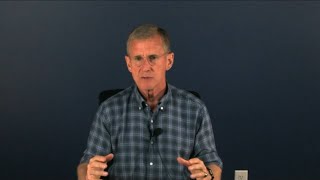
In a live Founder Institute webinar hosted by Ryan Migletti, General Stanley McChrystal delivered a keynote on the future of leadership, drawing on his military experience and the concepts from his book Team of Teams. He opened with a story of a 1978 commercial flight crash to illustrate how breakdowns in communication and empowerment can cause failure, then contrasted simple, complicated, complex, and chaotic environments, arguing that modern organizations operate in complex settings that require decentralized decision‑making, shared information, and a culture of empowerment. McChrystal emphasized the need for intentional trust‑building in remote and hybrid work, using his experience leading the distributed Joint Special Operations Command (JSOC). He discussed how leaders should foster a founder mindset—focus on purpose, build adaptable teams, expect failure, and learn from it. He highlighted cultural challenges, the danger of tribalism, and the importance of forced interaction to break down silos. Practical habits such as disciplined scheduling, tackling hard tasks first, regular one‑on‑one communication, and personal routines (exercise, reading) were shared as ways to sustain high performance. The conversation also covered corporate impact, aligning mission‑vision‑values, and the growing pressure for companies to act socially responsibly. Audience Q&A reinforced these themes, with advice on building trust, handling failure, and cultivating global collaboration. The session concluded with networking instructions for attendees.
Chapters
Hello everyone and welcome to the Founder Institute event on the future of leadership. My name is Ryan Migletti and I'm head of global operations for the Founder Institute. And so as some of you may know, Founder Institute is the world's largest pre-seed startup accelerator. Over the last 12 years, we've helped launch over 5,000 startups in our portfolio in over 200 cities with our mentor network of 20,000 mentors. and it's an honor to host today's incredible event featuring one of the world's greatest minds on the topic of leadership and organizational management, General Stan McChrystal. We had over 1,000 people register for this event, and we're excited to get started. So let me go over a brief agenda. So in a moment, I'll introduce another great leader, Florent Groberg, who is an Army Ranger and Medal of Honor recipient, will say a few words and help us welcome General McChrystal. Then General McChrystal will give a presentation on the future of leadership, followed by a fireside chat and Q&A session where we want to get your questions answered. And so at the end of the event, we always do something special at Founder Institute, which is to invite everyone here to do a networking event where you can meet with other veteran entrepreneurs, corporate leaders, mentors, investors, and partners. And so we usually do those on Airmeet. So towards the end of the event, we'll share a link in the chat that everyone can use to go over to Airmeet, where you can do one-on-one speed networking, or you can join different tables, and you can meet people from the ecosystem, which in this pandemic, we know it's very hard to kind of create those social networking interactions. So we want to do it as often as possible. So as a reminder, this is a live international event. So please say hello in the chat, uh, and let us know where you're from. And if at any point you have questions for me or Flo or General McChrystal, go ahead and put it in the chat and then our executive producer in the background will take the information and send it to us and we'll try to get to your questions during the Q&A part of the event. So before we dive into the topic today, I have a few brief announcements. The first is that tomorrow at 9:00 AM Pacific, I'm hosting the Founder Institute Silicon Valley Accelerator's graduation and pitch event. So if you're a startup founder or investor or a mentor, Come celebrate the launch of 26 new startups that came from one of our top programs in the world. Then in addition, Charles Cathlin, a veteran entrepreneur and CEO of TrueGenomics, will also be joining us at that event to give a keynote presentation on team and leadership. So Charles is an FI alumni and fellow Patriot Bootcamp alumni, and he's doing really great work in the field of genomics and PTSD diagnostics. So if you're interested, we're going to put the link in the chat here for the FI Silicon Valley event. And you can go ahead and register there. And then the second announcement is that I'm happy to share with the veteran community here that Patriot Bootcamp has a new partnership with Bonsai to allow veterans within their community to do one-on-one video meetings with experts to receive career and business advice. And so this is game-changing for this new hybrid world we're in. It's gonna unlock a lot of value because now veterans are able to kind of connect one-on-one with experts whether it's career or business advice. And so if you're interested in learning more, go to patriotbootcamp.org for more details, and we'll send a follow-up with more information as well. And finally, before I bring Flo on to introduce General McChrystal, I'd like to make one last announcement. Over the last 10 years, I've helped launch hundreds of companies, hundreds of startups, both in Silicon Valley and beyond. And in 2011, I co-founded VetTech, which is a startup accelerator for military veterans. And then in 2017 at Founder Institute, we launched something called the Veteran Founder Initiative. And the goal was to unite the veteran startup ecosystem to help create hundreds of veteran startups every year. And if you turn on the TV, you look around, it's clear that the world is broken. And I believe that the only way to solve some of the greatest problems facing humanity is to empower smart, uh, individuals who can go and build technologies that will positively impact the world. And I believe that this generation of veteran entrepreneurs will become that next greatest generation of world and business leaders. And now is the time to empower these veterans to build companies and technologies to serve that purpose. And so in honor of General McChrystal and the event today, and to help build this next generation of world and business leaders, I'm excited to announce the McChrystal Group Veteran Fellowship. And so as part of this fellowship, any veteran founder that is looking to build a global technology company can apply and enroll in the Founder Institute Silicon Valley program for free. And as the leader of that program, I will personally work with you to build a meaningful and impactful startup company for the rest of your company's life, from launch to fundraising to exit. And so we'll put the link in the chat here. It's fi.co/join/mccrystal. And anyone who is a veteran entrepreneur or military spouse, we have some really great military spouses within the Founder Institute network, can apply and join the program for free. So it is now my honor to introduce one of these leaders who is doing amazing work to empower the veteran community, Medal of Honor recipient Florent Groberg. Flo, how are you doing, brother?
I am doing so well. Let me make sure I got everything all set up here. I'm honored and really humbled by the opportunity to come and join you and, and Jerome McChrystal and everybody here. All over the world for this awesome session. So I promise you one thing, I'm only going to talk for a minute or two because I want to hear from John McChrystal over myself 100%, 10 times out of 10. But I— last week Ryan and I had a really, really good conversation and we talked about, you know, the opportunity that is presented in front of us when we transition out and based upon the foundation that was built for us in the military. And by that I mean the understanding and a notion and really the mindset of not being afraid to fail. And so people ask, well, what do you mean? Simple. When I was in the military, I failed over and over and over again. I went through many iterations of different types of training. I fell on my face. I got back up, and I learned some of the most important lessons of my life during those failures. That happened to me overseas as well in combat. And unfortunately, sometimes it is through those failures that you really need to go live that life cycle to understand what you're capable of doing. How you can grow, how you can go out there and accomplish the impossible. Many of you are here today, you're starting new businesses, you're entering new sectors, new industries, and it's at times scary, but you have the mindset based off your background. You have the mentality to go out there and tackle the tough obstacles, those tough subjects, because you've done it before. So today it's an opportunity for you to listen to one of our greatest leaders of all time. I look at certain people and in the military and I can tell you that General Austin, Lieutenant General Mingus, a very, very— it's like a father to me— and General McChrystal are those three individuals and leaders and generals that I've looked up to, that I wanted to emulate. And so I've read their books. I've spoken to them. I've read books that they were in for General Mingus. And I've looked at some of the lessons that they've given us for free to be better, to think bigger, and to go out there and accomplish things that others just don't seem that they will ever want to even try because it sounds too hard. So today it is my honor to introduce 4-star General Stan McChrystal, author of the New York Times bestselling book Team of Teams— awesome book— and the former commander of U.S. Special Forces in Afghanistan, the former commander of the nation's premier military counterterrorism force, Joint Special Operations Command, JSOC. General McChrystal, the floor is yours.
Flo, my friend, thanks as always. And for a lot of people who don't know it, if Flo wanted to, based on what he did in the military and being a Medal of Honor winner, he could go to lunch for the rest of his life. He wouldn't have to do anything. That's not what he's doing. He's out there making a difference. And Ryan, I couldn't agree more with what you're doing. This is the kind of thing that America needs because I'm talking to everybody now. The world is broken. And in many ways, our country's broken. And I could say that about my country, but in other countries as well. You're going to fix it. Your generation is going to fix it. It's not going to be easy. You're going to work hard and there are going to be ups and downs and lefts and rights. But the reality is, if not you, who? And so what I'm going to talk about is the future of leadership, But I'm gonna start by turning the lens backward a little bit because you really learn from things from the past. So I'm gonna take you back to December 28th, 1978. To me, that's not that far back, but it's a while ago. And I'll take you to something pretty standard, an airplane flight. And that airplane flight was gonna start in New York City and was gonna fly to Denver, Colorado. And then the second leg of the journey was going to go and end the flight at Portland, Oregon. And it was a very routine commercial aircraft. It was a fairly new airplane that had just been worked on, so maintenance was not really an issue, had a very experienced pilot and an experienced crew with him. And so as they began the second leg of the trip after stopping at Denver, they took off at 2:47 in the afternoon. Now, they had 181 passengers on board, and they had loaded up with 46,000 pounds of fuel. Now, that only has context if you know that that aircraft burned 13,000 pounds of fuel an hour. What that meant is they had plenty of fuel to go to Portland, and then have a reserve when they arrived. The weather was good. As they flew into the Portland airspace, they approached the runway, they start to go through the series of procedures to conduct a landing, the checklists and different things, and they hear a slight bump and they get a signal on the cockpit that says error landing gear. This is 5 o'clock in the afternoon, it's just starting to get a little bit dark, and they've heard that they've gotten this feedback that they might have a problem with the landing gear. They can't confirm that the landing gear are not down, but they start to go through a set of procedures to potentially mitigate that. They go through technical checklists, they call to maintenance people on the ground, they start discussing it with experts, they tell the crew in the back of the aircraft to tell the passengers that we're going to have a delay in landing and we might have a rough landing. And so they were starting to prepare things. They went through this process for about 48 minutes. And then when they thought they were ready to land and they called to the tower, they were told, ah, there's not a runway available right now. And that there was other traffic that was coming into the airfield. Now at this point, they also started to get a warning from the flight engineer. And at 18:05, the flight engineer who had been mentioning fuel for more than an hour was matched by, on the screen it came up and it said, error, low fuel. Now they were fuel critical. Suddenly it was important to try to get to it, get to the airfield and land as quickly as possible. They asked for priority, which they got. They turned from the holding pattern, started going toward the airfield, but they couldn't make it in time. At 6:15, 18:15, they got a warning, no fuel, and almost simultaneously one of the jet engines flamed out, ran out of fuel, and stopped flying. In a little while, the aircraft crashed, and sadly 10 souls were lost, 8 passengers and 2 crew members, to include the flight engineer who had made the warning about fuel. Now, this was still good weather, a perfectly mechanically flyable airplane, and a very experienced pilot. So you can imagine when you have a tragic crash with all those conditions not indicating a crash, there was a detailed investigation by the National Transportation Safety Board. And as they dug into all the issues, they got an interesting conclusion. And that conclusion said that in reality, this accident reflected something that was common in many aircraft, and that was a breakdown in cockpit management and teamwork. Essentially, as the problem arose in this flight, and they said was happening in other flights, the team inside the cockpit was not working as a team. They weren't communicating effectively. They weren't making decisions logically. And it's fair to say, how could that be? Think of a small startup company. Sometimes it's not much bigger than this. The cockpit was 15.8 feet long, 11.5 feet wide, had just 3 people in it, all experienced, all knew each other, and yet in that very small area, they were unable to pass information that needed to be passed and to make good decisions. And one of the problems was they felt that the flight engineer didn't feel empowered to be outspoken enough to get the pilot in charge, the most senior person, to stop and listen to me, take action on what I know you must consider. Has anybody here ever been frustrated when you dealt with someone, an employee somewhere that didn't appear to be empowered? Did you ever arrive late to a hotel and you get, and the person behind the desk doesn't have your reservation or says it's full even though you had a reservation, and they just look at you and they say, 'Well, it may not be good, but I can't fix it. I'm not empowered to make a decision.' How did you respond? You probably got frustrated. Hopefully you didn't get this frustrated, but it reflects the kind of things we sometimes feel when people aren't empowered to do things that seem logical and necessary. You know, we live in a pretty interesting world right now. The Kinnafan model, which came out some years ago, has 4 states of the world. They are simple, complicated, complex, and chaotic. Now simple is what your great-grandparents probably lived. They did the same thing year after year and they just did it better by experience. None of us on this call today have ever or will ever live in that world. Chaotic is the other end of the spectrum. That's a world where things are changing so fast you can't make any sense of it. I really can't explain that to you except if maybe you have teenage kids, you probably do know it. Instead, we're going to focus on these two, complicated and complex. It's important to understand them because sometimes people say, well, that's the same thing. No, it's not. In a complicated environment, think of the internal combustion engine. Most of us can't build one. We can't fix it either. But we do know that if we turn the key or press the button on an automobile, it does the same thing every time. We also know that if we studied it enough, we could develop the expertise to fix it because it is designed to be predictable. It's designed to do the same thing over and over again. Think of a complex environment. Think of the weather. Now you immediately go, Stan, wait a minute, we predict the weather every day. No, we don't. We predict the probability of the weather because there are too many variables moving too fast to actually know what the weather would be. We can only get in ranges of probability. The essential difference is in a complex environment, there are too many variables that move too fast for you to accurately predict what's going to happen. Now, the implications of these two are significant. For a complicated environment, you tend to create something that looked almost like what Alfred Sloan created for General Motors 100 years ago, a complicated system of a bureaucratic looking structure, clear lines of communication, set processes, very clear roles, and things that are done the same way over and over. And for a complicated environment, it works very well because you can predict what it is you have to do. In a complex environment where you can't predict actually what the challenge is going to be day to day, it's a moving target, what's the right structure? And the answer is it's hard to know that. It has got to be thought through. Now, I experienced this in my, the last third of my military career commanding a counterterrorist organization called Joint Special Operations Command. And what I learned was you have a traditional hierarchical structure that looks like General Motors or a government or a university. It looks familiar to you. It's predictable. It's stable. But when it actually executes, if you think of an organization like a military organization, the important things happen at the bottom. On the battlefield or even with a corporation, at the lower part of the organization, you have the youngest people, usually the least experienced, and they go back further all the way to the CEO or general in the rear. But the mission is accomplished up close to the problem, up close to the enemy, up close to the customers, up close to whatever it is you're doing. And so the key is to have that part of the organization as effective as they can be against these constantly changing problems. In the organizations that I was a part of, what we learned are some basics. The first is we had to create an expectation of action. We had to create in the organization the understanding that I was not going to tell them what to do. They had to be prepared to act on their own initiative, they would be empowered to do that. And it wasn't just something I gave them they could use if they chose, it was an expectation that they would. However, the onus on us in leadership of organization is to provide the information needed for people down closest to the problem to operate. And not just the information that they've got from seeing the problem up close, but all the contextual understanding in the organization push to them. That used to be impossible. With information technology today, it's possible. And the reality is what we have to do in our organizations is culturally unlock that requirement, our habit to bring things to the senior levels, to hold information or hold power, and instead push it down to the people who can actually deal with it. Now here's a reality. When people deal with problems, they don't always succeed. All of us have lived failures. Flo mentioned failures. I've got more failures than I can enumerate on here. The real question is what you do about failures. And I'm going to take it beyond what you do about your personal failures and talk about your organization. You've got a number of people working with you. Sometimes they're in your organization, sometimes they're partners, and they will stumble. They will make bad decisions, you name it, they will fail. How are you going to deal with that? Now, one way to deal with it is to be uncompromising and literally shun or punish failure. But what I would tell you is what you'll never get then is the improvement that comes with the experience of failure, the ability to learn from it, the ability to share those learnings, to develop a little bit of scar tissue. Small organizations, I started a startup 11 years ago, and I could tell you stories about the last 11 years. I was 55 when we started it. And we had all of the adventures, scary or not, of a startup. And we made a lot of mistakes and a lot of failures, but hopefully I think we learned from each of those and we're still around and doing well. Now, if you think about, something that's a team, the kind of team that hopefully most of us want to lead, sometimes you think about an orchestra. It's beautiful, everybody doing something with their expertise, doing it together, creating something extraordinary. And if you think about, could we possibly get a group of people like that to create something So collaborative. Of course, the reality is for many years, what we've done is we focused on the person who leads it, the conductor. But the reality was orchestras didn't used to have conductors. 200 years ago, they didn't. The members of an orchestra wouldn't tolerate a conductor. And then when they started to have a conductor and the first conductors used wooden batons, They were hated for that because it looked like a symbol of power that they were using to wield over the orchestra. In reality, they were important because larger music halls, you needed to do that to keep the music in time. But the conductor quickly became identified as where the music came from, the person who created it. If you look at record albums of symphony orchestras playing, You never see a picture of the orchestra. You always see a picture of the conductor, because we've started to confuse the fact that the conductor is the music. And the reality is the conductor is the one person that's actually not producing any music, no sound. It's all the people playing the instruments that matter. But there's a special relationship between the conductors and the members of an orchestra. One of the most famous conductors of all time, Leonard Bernstein, was an extraordinary character. He was a musical prodigy, but he also was an extraordinary conductor, and he led for years. And as he got in his older years, he was leading one of his last concerts, and it was outside of Boston in a place that he had led, that he had played many times, and was leading a symphony the Boston Pops that he had conducted many times before. And so he's old at this point. He's no longer capable of doing that big hand waves and the foot stomps. In fact, he can barely lift his arms above his waist. But as he's playing, as he's leading, suddenly he's seized with a coughing spell. He bends over at the waist and he can barely stand. He holds on the side of the podium to stay on his feet. He can't lead the orchestra. All he can do is try to get himself back up. The orchestra doesn't stop and wait because the conductor can't lead them. Instead, they play as they know the conductor has taught them and worked with them for many years. Almost as though they were willing him back up to his feet, the orchestra played on. Of course, the audience responded. They had seen the bond between leader and group at its most beautiful. Maybe the thing that was most extraordinary about this was not that the orchestra played when the conductor was leading, but that they continued to play when he couldn't. Empowerment is something that we leaders can help our organizations with, and it will make our organizations capable of doing things far beyond what they could otherwise do. Thank you very much, and I look forward to the conversation.
Joe Mercoso, that was awesome. Thank you so much for joining us today. We have a lot of interesting questions here in the chat, so I'm just going to kick it off with a few here, and this kind of relates to a question that Hunter has asked. You know, one of the most amazing things that has occurred as a result of the pandemic is this remote work revolution. And to a certain extent, it actually forced these corporations to trust and empower their employees who are now nodes that are distributed in all sorts of geographies around the world. So that's something that you talked about here, and it's something you talk about in Team of Teams. So As a result, I've personally seen that companies and leaders that implement this change correctly are really experiencing unprecedented levels of productivity. I mean, you know, I'm, for example, I'm working remotely and I've never been busier. And so I think what's happening is like the world is kind of getting faster and you're able to execute more. And the more that you empower, you know, the bottom line or the nodes, the people out in the field, the more productive you can be. And so do you have any advice for the corporate or startup leaders on the call today of like, how can they create more trust and transparency and empowerment for their remote workforce?
Yeah, Ryan, this is gonna be something we're all gonna learn as we go along. JSOC was forced to be distributed because we were across 27 countries, 76 bases. So many of our people were working alone and they were connected to the larger entity, but we had to be connected both informationally, but we had to be connected culturally and empathetically as well. So I would say the word I'd add for everyone is be intentional here. And what that means is think about why we work. Certainly we work for success or for money or something, but we also work because we want to be connected to other people we admire and we like. We want to be shoulder to shoulder when we create a product or when we go through something hard. So I think what leaders have got to do is understand that they have got in a hybrid way, try to get the best of both. They're going to have to try to create that sense that you're not alone. You're not just sitting at your kitchen table by yourself every day, pushing something down an assembly line. Instead, you're part of an entity. I personally think what we're going to have to do is get a hybrid where we come together in face-to-face, a certain percentage of the time to build those personal links, to start those jokes that carry you together for so long, to watch people that you want to emulate, see how they execute.
And then of course, the digital revolution, we'll call it, has empowered us to get people out and operate so much faster and so much more efficiently if we have the trust that is built there. And this is the key part. Building trust just on a virtual connection is harder. It's challenging. And so I say at the— really look very hard at how often you've got to get people face-to-face to do that. And then also when you do digital interaction, what we learned was there's a hierarchy of it. And at the very bottom is like send out an email to everybody or a memorandum, everybody comply. The next one is an interactive email, and then it goes up to chat, and then it goes to a phone call. And then everybody says, well, you know, phone calls are great, particularly, you know, big calls, we could put a bunch of people on there. But I tell people, you know, what up doing pushups, eating ice cream and cutting your toenails have in common? All things I've done on conference calls. Because, you know, I'm human, I multitask when people are drone and all. So the video part's very important because people respond. And so it's more accountability, it's more interaction. So learn to get as much value out of the digital tools you use, demand it of your team to get as much value as you can when you're doing that. And then when you are together physically, don't all just go to different corners of the office, You can be in your homes if you're going to do that. Interact enough so that you intentionally create that bond between people that I think is the difference in really great teams.
Yeah, that's great advice. You know, we've implemented sort of the video-on policy and it really is game-changing, right? I mean, when you go into a Zoom room and you just see a bunch of like blank boxes versus people's faces, I mean, it's a totally different experience. And so it's something that we've kind of talked about before and, you know, looking at this like hybrid world, when Founder Institute went from being live in-person sessions to virtual, we were a little bit concerned because the value is like that face-to-face. But, you know, after doing it for a year, we interviewed our leaders and the founders in the program. And it turns out that everyone actually greatly preferred the virtual format except for one thing, which was the social interaction that you were talking about now. And so, you know, to a certain extent, you were actually one of the first people when you were commanding JSOC to work with this like highly, highly distributed environment with like different professionals from various backgrounds. So do you have any other tactics that you would share with leaders on the call of like, how do you get to that point of like really like highly engaged and empowered individuals in that remote environment?
Yeah, Ryan, it's really key. First is whenever you can, I would either travel out and you couldn't get to all those, we had so many places, I couldn't get to them very often, but I'd go out to try to get a face-to-face that then would give you runway for months because, hey, I remember, you know, when I was with them, it gives you months digital. The other part is we came up to something we call digital leadership. And in a bigger organization like we had become, Digital leadership mattered. So we had about 7,500 people on our video teleconference every day, the big thing. And somebody would brief. And the first thing is, if you are going to be a young briefer, come up, you'd come up and you're maybe you're in the embassy in Yemen and you're going to brief. And you and I have never met. I'm a general, you're a very junior noncommissioned officer. And when you start to brief, I go, 'Good morning, Ryan.' And everybody goes, you immediately go, 'How does he know me?' Well, I got a cheat sheet because we took the time to make sure that I could do that so that everybody in the organization could see that. The second is I can't be camera off, I can't be multitasking, I can't be leaning over and talking to my bud, I can't be doing email. I gotta be focused on the camera and you to show respect and to show it matters. And then when you finish, I've got to ask a question. You know, it's funny, the first thing I do is I'd go, 'Ryan, great brief.' And if it was a great brief, that's good. If it was a lousy brief, I'd say, 'Ryan, great brief.' And then I'd make sure somebody else later told him, 'Hey, that wasn't that great.' But I don't need to criticize in front of 7,500 people. But then I ask a question to do two things. One, to show you it matters. And second, to let you exhibit some of your expertise. These are just things that we would do in person almost automatically. But when we're digital, sometimes we want to get kind of cut and dry, next, next, next. And I would tell you, you've got to try to create some of the humanity so that people, particularly for young team members, so that they don't feel out there alone, out unafraid and ignored out there.
Yeah, that's a good point because sometimes you can feel very overwhelmed in this like kind of hectic world that we're living in where you've got, you know, 100 emails and you've got to manage like various components there. And to a certain extent, I mean, that's like what startup founders face every single day. And so let's talk a little bit about founder mindset. And so, you know, I define a founder as someone who has a vision for a better future, but they also have the courage and perseverance to work hard until that vision is realized. So this could be applied both to the startup world, but also to leaders sort of within large corporations. They could be creating products or processes within that organization. And so Do you have any advice for leaders who are looking to cultivate sort of that founder mindset within their organization?
Yeah, I think we talk a lot about you have to understand the why you're doing it. And the answer, you know, can be I'm going to try to make the world a better place or I'm going to try to make a bunch of money. It was funny, when we first started McChrystal Group, I met with a guy up in Wall Street and, you know, we were in a bar and had a couple beers and he said, so what is your plan? I said, my plan is to create a really good team of people and then we'll sort out what that team ought to do. And we will opportunistically figure out what people will want us to do. And he just scoffed at me. He says, that's ridiculous. You know, you got to figure out the plan, boom, boom, boom, boom, boom. But that's exactly what we did. We created an organization of people who are close and were adaptable. And then we have continued to adapt. And I would argue that I would tell founders first and foremost, create a team you want to go to work with. Don't hang around people you don't like. Life is too short. And so create a team you want to be a part of and then be opportunistic. If you want to create a certain product, but you can't, figure out what you can do. If people won't buy the product you want or the market just isn't receptive, adjust until you get to where it is. Expect to fail and sort of celebrate about it, because those failures are going to be the jokes you tell later. 20 years from now at family dinners and things like that, you're going to be laughing about, 'I can't believe when we were almost X.' I mean, savor those moments. Don't seek them. You know, don't try to fail, but understand that that's okay. You're going to be far better for it. If you just have an absolute clear runway to success, I think what you're going to do is you're going to be a very wealthy, arrogant little idiot a few years down the line, and you won't be adding to the sum total of society.
So Ian asked kind of an interesting question here. So he says that trust and culture are challenges, and trust can be built over time, even if it's remote and it takes a little bit longer, it can still be built. But culture is harder to tackle. Could you describe any cultural barriers that you've experienced in implementing plans to kind of navigate around them?
Yeah, I think the first thing is you need to be thoughtful about your culture. Culture is what a society or a group of people or an organization does. You know, all of us who've served around the world have been in different cultures. There were things that the Afghans did that were different from the United States, but they did them for a reason. And they had, there was an absolute logical, rational path to what they did and why. And so the first thing is be thoughtful about what you want your culture to be. Sometimes we confuse superficial things with culture. We confuse beanbag chairs and, you know, that sort of thing with being a really good tech startup. No, you're a really good tech startup if you make really good technology. You know, and if what you do isn't really good, then I think you ought to back up and say, what can I do that's really good? So what I would say the first thing on culture ought to be, how do we produce something that is as good as we can possibly do and is competitive in the marketplace and is value-added to society? And the culture of the organization should be getting to that. What gets us there? When I was on the board of JetBlue Airlines, they had a saying that said, we want to be America's favorite airline. That was very powerful because what it told every member of the airline was, whatever you do, do it with that lens. Make every decision that will contribute to being America's favorite airline, which of course would then be successful. So make sure you understand that the culture is that which the organization does trying to be who the organization wants it to be. And keep an eye on it. Because cultures will drift. You'll have a very good culture when you're very small, then when it grows, you'll wonder why the new people don't— well, they weren't there. They weren't there in the hard years. They don't have that shared experience. So you've got to create ways to share that and adapt the culture as the circumstances change.
Do you have any suggestions on how you can kind of align mission, vision, values, and then collectively how that adds to the culture, or really like the spirit of the organization?
Yeah. You know, a lot of people use different ways of doing it, but typically if you say, what's the vision of the organization? That's kind of, what are we trying to be? Who are we trying to be? And the values, that's what you place your, that's where you spend your resources. What are the values that are very, very important to you? And again, some of those values, we typically say honesty or whatever. I think it's got to be focused on your client. Those people who you are trying to serve, customers, clients, if it's not focused there, and if it's also not focused on your team so that you create an environment that people want to be a part of it, it can be hard. It can be hard work hours. It can be all of that, but it's something that people want to be a part of. It's creating that thing. And you gotta, we do a thing called an alignment triangle that we build out and then we rigorously check it to make sure that everything we're doing contributes up to the next levels and the next levels, the next levels to accomplishing our vision. Because if it doesn't, stop it. And if you need to do something else, add it, but keep aligning yourself because often we go into bigger corporations and we find good people with good intentions working hard at cross purposes.
So, Really good question here in the chat from Cindy, who is one of my favorite FI alumni. She asks, do you have any tactics for riding the lows or the failures while trying to build through the highs? Failure is inevitable. So I mean, when you have failed, how do you pick yourself back up, and what tactics do you use?
Yeah, Cindy, that's a great question. There are two levels. First, I'll talk about the organization. Be honest with the organization. Be absolutely forthright. Because if you leave gaps in what you tell them, if things are bad and you only tell them what you think you need to tell them, they'll fill in the rest of the vacuum with the worst possible things. And in the minds, particularly in a distributed environment when people are at home, they will absolutely see the worst and they will be terrified. So tell people as much as you can clear. If things are bad, They're going to get a sense of that. Tell them that. Now that's part of it, the honesty. The other part though is letting people see to the next ridgeline and say, okay, it's bad, it's really ugly here. No, we're not quitting. Of course we're going to get there. I personally as the founder am absolutely committed. You know when I'm going to quit? Never. Ever. And anyone who's going to be with me is going to be along. And one, if you have that mindset, That's really powerful. But two, communicating that confidence and say, listen, it's going to go up and down, left and right. We are not quitting. Particularly your newest team members need that because they've never been through a crisis before. And the first crisis can seem daunting. For those people who've been through a number of them, you know, it's, you do know you'll survive. And that's important. The other part of it is yourself. And the crisis can take a lot of different ways. It can be, you know, revenue drop, or it can be losses of talent. It can be a number of things. It's good to have a safety net of people you can talk to, not your subordinates, because it's unfair to burden yourself with your subordinates. You put them in a funny position. It's some kind of friends or people you had where you can bare yourself and not go cry on their shoulder, but you can tell people, I'm scared, I'm worried, and you get some support. Also have some other things in your life, work out, read, have a, you know, a relationship with somebody or whatever. You got to have some things that will allow you to be a little balanced, particularly when things are ugly. Because I used to have this thing that said, and I like to work out a lot, if I had a good workout that day, even if everything else went to hell, you know, the day wasn't lost. I got a good workout in. And there were a lot of days like that.
Yeah, a ton of really good insights there. And it actually reminded me of something when I had a conversation with Adeo, who's the CEO of Founder Institute, you know, way back, like 7 years ago when I started FI, he said, Ryan, the number one reasons startup founders fail is because they give up. And it's so obvious and it's so clear, But I mean, the same principle applies like across the board to any organization and almost any endeavor. And so it's not when you run out of money, it's not because you didn't get to product market fit, it's just simply, you know, they stopped working on it. And so we've seen that time and time again, the number one key to success is just continuing to move and make progress. And sometimes you're gonna fall down and you're gonna, you know, scrape your knee, but if you can get back up and continue on your journey, you'll get to where you wanna go. Dale has a good question here as well. He says, "General McChrystal, I'm grateful for your thoughts and insights. Do you have any tactics to—" Oh, sorry. You know what? This is the exact question I just asked. This was from someone else. Hamad asked, "There's a lot of talk about change. Do you think companies are really serious about making change for a better future, both companies and for employees?" This kind of goes around like you're hearing a lot of impact, you're hearing all these things. Do you think it's real? What do you think about this impact movement?
Yeah, in terms of impact, I think there are a lot of companies that have determined that they've got to make a change and they've got to function in a way that isn't just focused on shareholders. You know, we went through a period when that was the definition of what corporations should do. They should do shareholders and every other thing else in society should be done by some other thing. Now we're to the point where we know that corporations of every size have a social responsibility. They need to speak their mind, they need to support good things, not be overly political, but be contributory to the greater good.
And I think that that has increased a lot. And I think shareholders are the ones who will push that. Customers and shareholders will demand that. They will start to judge companies that don't do that. Probably customers first and then eventually shareholders, but I think that will be the most powerful. And then, of course, the conscience of some leaders, but I think that pressure is going to be the thing that really helps us.
Yeah, that's a really good point, right, because like it's hard to get, you know, an international conglomerate to change, Right? It's this like, you know, monolith of an organization. And so something that we've done at Founder Institute is create what we call For Progress. And our producer can put a link in the chat here. But basically, the idea is that, you know, startup companies and founders are the ones that are going to change the world. There's no greater change agent than entrepreneurs. And if you're going to go through the process of launching a global tech company, like like you might as well start incorporating impact at the very beginning of what you do. You should be measuring your impact. You should have a vision for it. And so it's actually easier to almost integrate it at the very beginning of your journey and keep that, you know, at the forefront of everything you do as you grow and turn into that international corporation. And so one of the things that we're doing with this big For Progress movement is to make impact a gold standard for startups across the world, at least the ones that are launching through Founder Institute, and we launch 1,000 a year. So we're pushing on this on the front lines of entrepreneurship. And Joe McChrystal, I know that you're also pushing sort of on the corporate level as well. So that's really great to see and hear. You know, a question here. So since you wrote the book Team of Teams, you know, 6 years ago now, you know, the world's obviously changed a lot and there's so much confusion and chaos. Are there other core principles or things that may have changed, or is the truth of Team of Teams, is that still the same?
Yeah, interestingly enough, it's still the same because it mostly, because it's based on this complexity. And so it's just degrees of complexity. And so it's degrees. The problem is you mentioned change a little while ago. Many organizations can see the problem. They absolutely know what they got to do, but they can't bring themselves to change because it's a little frightening to let go of the side of the pool. And to operate the organization differently or to drift away from things that have been worked before. In the military case, to violate doctrine if the situation doesn't fit that. So what I would say is what we've got to do is create in our organizations and in our leaders this expectation that the problem is dynamic, this reality that you're not solving last week's problem because last week's problem moved on. And so as soon as you try to lock down a solution to something, you're going to be wrong very quickly after that. So it's this constant adaptability that matters. I do think there have been some things which have made our environment much more complex. The explosion of social media and its impact on how people think, its impact on their political thoughts, on their marketing thoughts, on everything. Is creating dynamics that I don't think many of us understood. And that's going to affect the environment in which every organization operates, startups, everything. And so how do we live in that environment without becoming part of the problem, without contributing? Interesting.
And, you know, a minute ago you mentioned that, you know, one of your daily habits is working out. Like, do you have other daily habits that you use to kind of create this founder mindset? Meditation, mindfulness, or do you have any tools or recommendations for leaders on the call today?
Yeah, Ryan, I got a lot of habits. The one thing I am is pretty disciplined. So, and I first, I schedule my calendar very detailed, every minute. You can look at my calendar, see when I take a shower. And I do that to force myself to do things. Like if I want to write a note to Ryan or a handwritten note to someone, I'll put it on my calendar to force force myself not to get to the end of the day and not do it. So the first thing is I use my calendar. Second is I try to do hard things first. I work out in the morning, then I try to take on the hard tasks while I've still got energy and focus and I can't be distracted. When it gets near the end of the day, everybody's personality is different. I need some time to read. So I sit and read and I, an hour and a half, usually something like that. You know, sometimes I'll have a beer in front of the fires, my wife and I'll just be sitting there. And it's my time to sort of decompress, but also to get myself thinking on things different. I'll read about, just finished reading about Magellan's circumnavigation of the world and all. And you say that's not relevant, but getting your mind back. And then finally is I have a very disciplined rhythm of talking to everyone in my company. And I really pushed this hard once we went remote. And so I had these scheduled calls to make sure that I don't forget, I'm on a regular basis, I'm having a two-way conversation with every member of our team. And I think that's important.
Yeah. I found like the one-on-one meetings and touchpoints are really critical. And actually the framework you applied, which is do the most important thing first or earliest in the day, It's been really helpful for me as well. I kind of break my day into kind of offense and defense. It's like, do the things that are gonna help you capture ground in the morning. And then, you know, you can get to the emails and everything else, you know, later on in the afternoon. So that's really great here. So in the last kind of 10 minutes here, and just a reminder to everyone, stick around because we're gonna do a networking event on Airmeet. We'll put that link in the chat in the next 5 minutes or so. Let me ask you, you know, one last question here. In Team of Teams, you mentioned that initially there was a lot of tribalism within JSOC where the SEALs didn't like working with Delta Force and vice versa, but you were able to overcome this. And, you know, when I look at the world and all the different leaders and programs that we run in the different countries, you know, I see the same exact phenomenon. There's a lot of tribes and a lot of conflict. And so for the future world leaders who are on this call today, and I'm sure there's many who are on here, How can we break down the barriers of ego and tribalism and unite together as a global team of teams?
Yeah, Ryan, this is one of the hardest things possible, particularly the tragedy of watching Gaza now. You know, tribalism is comfortable. When you're around people from your family or your tribe who are just like you with your background, it's just easy. You can let your hair down and it's great. It's harder when you're with people of different religions, gender, back, whatever. And so what we found in JSOC is we had to force interaction. Trust comes from interaction. And so we sent liaisons out, we cross-attached organizations, we literally like holding oppositions and magnets and opposition together. We did a number of things to force that interaction, made them all work in one big room. We changed processes to do it because people people will just automatically migrate back to their cubicle, their corner, their little part of the team because it's comfortable. And so you have to force it. So I think in the world, that's what's happened now. We've had a number of leaders who have sort of played to that comfort. Don't you want to hang around people like you? They agree with you, et cetera. And we've learned that they could do that on social media. And so they could use social media to get into the bosom of their tribe. We got to bust that open. We got to demand people interact. We got to get Americans traveling more. We got to get people from different zip codes working together. We've got to force that. We're going to have to do— I'm a great believer in national service. Young Americans do a year of civilian national service and force people to work with people they didn't. On a problem they never thought about because it helps build those connections.
I love it. Trust comes from interaction. I mean, that is huge. And I think to a certain extent, when you have people with egos and misconceptions of each other, you know, if they don't interact, they're going to continue that mental mindset. But when you bring them together, the true spirit of each other can rise to the top. So that was great. That was a big takeaway for me. So General McChrystal, Flo, thank you so much for joining us today. For everyone on the call now, I think it's time to shake off the 20th century model of living and working. I believe the 21st century can become our greatest century. So join me as we empower the leaders of tomorrow to build some of the best companies in the world. And let's work together to actually build a future that we're proud to pass on to our children. So I want to thank everyone from the audience today for joining us at the event. And we're now gonna move over to Airmeet for our networking portion. Our team will post the link in the chat. We'll leave this webinar open for a little bit so people can go to the link. And please go there to meet other veteran founders, corporate leaders, mentors, and investors. My name is Ryan Micheletti, and I wish you all the best. Joe McChrystal, thank you so much for joining us today.
Thank you, my friend.










