The Future of Transportation & Mobility, with Arcimoto CEO Mark Frohnmayer
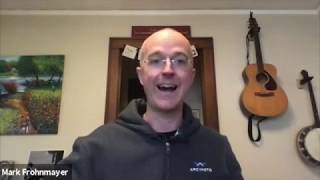
In this May 2020 webinar hosted by Founder Institute CEO Adeo Ressi, Arcimoto founder‑CEO Mark Frohnmayer discusses how the COVID‑19 pandemic has accelerated pre‑existing transportation trends and outlines Arcimoto’s three‑wheeled electric vehicle platform. He explains the company’s product lineup—the Fun Utility Vehicle (FUV), the Rapid Responder for emergency services, and the Deliverator for last‑mile delivery—and the shift from building two vehicles a day to a target of 100‑200 per week. The conversation covers broader industry shifts: rapid growth of food‑delivery and e‑commerce, heightened demand for electrification, the rise of remote work and its impact on commuting, urban redesign (pedestrian‑first streets), and the likely decline of ridesharing and mass‑transit usage. Frohnmayer shares his view on autonomous shared fleets, the economics of vehicle ownership versus shared use, and the importance of building a platform that can host future autonomy. He also addresses financing and regulatory issues, including the Department of Energy’s Advanced Technology Vehicle loan program, the experience of going public, supply‑chain resilience (especially batteries and Chinese lithium), and potential regulatory delays. The session ends with advice for entrepreneurs: stay nimble, leverage networks, and critically evaluate information during the pandemic.
Chapters
Hi there, everybody. Welcome. We're going to be talking about transportation today, and I have an amazing guest to do so. My name is Adeo Ressi. I am CEO of the Founder Institute. We help entrepreneurs launch new technology businesses in hundreds of cities around the world. We've virtualized our programs everywhere, and we're really excited to be doing talks like this with amazing entrepreneurs about their experiences to help you with your experiences as you build businesses of your dream. And again, so let me just quickly cover the topic for you. We're going to be looking at how COVID-19 has affected the transportation industry, looking at the long-term impacts, uh, how we travel, how we drive, we're going to transport goods and everything in between. And we're going to get insights from a dear friend of mine who I genuinely adore and am frankly happy to be chatting with. Mark, please introduce yourself as CEO of Arcimoto.
Adeo, thank you, and really pleased to be here this morning chatting about the future of transportation with you. So I am the founder and CEO of Arcimoto. Arcimoto is has been cranking on this particular problem since 2007. We have built a new ultra-efficient three-wheeled vehicle platform. It took us about 7 years to come up with the right idea. And then we spent the last 5 years going from our Generation 8 prototype design through, you know, the looks like, works like prototypes. We went public in order to build out the factory and finish the product. And finally went into production, actually 12 years to the day after we got started in September of last year. We have now built more than 100 production Arcimoto's. Our flagship product is called the Fun Utility Vehicle, the FUV. And we have just earlier this year, introduced two more products on the Arcimoto platform. One that's for emergency response, we call that the Rapid Responder. So it's to get paramedics and fire and law enforcement to sites of emergencies more quickly to administer support. And then the Deliverator, which is for last-mile delivery. And so all of these It's one platform that has the unique market characteristic that it is a small form motorcycle-ish size platform, can park 3 to a space, yet it can carry, you know, 2 big guys comfortably or 1 person and a lot of stuff. And we find that that need, that capability fits a whole bunch of different needs throughout the market space. So we— because of the pandemic, we have paused production and we're using this time, you know, one, to just sort of get caught up on everything that we've learned over the last 6 months. And then two, to really plan for the next major stage of scale of production. So going from where we were in March, which was building about 2 vehicles a day, to building on the order of 100 to 200 vehicles a week, building at that rate over the course of the next something like 18 months.
Wow, that's amazing. Congratulations on all your success. And you took a vehicle company public. So we're gonna cover a few things today. First of all, some trends that were happening in the transportation space before COVID then what the impact of COVID has been on transportation. And I'd love to have as many questions as possible from the audience as we go through these things. So let's jump in. So you were like at the intersection of awesome going into COVID. As you mentioned, you were a smaller form function, uh, the vehicle's electric. And it's configurable, so it has, you know, the delivery, the emergency response. And I want to just say, I have one. They're awesome. You know, I— it's one of my— it literally is like, you could go bike riding, you could do this. I'm like, I'm gonna drive the Arcimoto because it's more fun than— like, I literally just drive it because it's fun.
Um, so, and yeah, my mom is one of our, uh, very early customers as well, and she's, she's just sort of like if she's not glued to her TV, you know, watching the news crying, then she's like, okay, I just need to drive this thing around. She comes up with excuses for, you know, going on one more trip to get flowers out of the farm or whatever, just because she's just having a blast driving it around. So I think there is something—
It's open and it's got like this— so if you haven't done it, go to Arcimoto.com right now and it's right there. Check it out. It's got this cover, but it's also open and you can add doors, which means it's great for keeping the air clean.
Jeep meets a motorcycle, all electric, uh, and, and super, super configurable, right?
So you had those trends going for you going into the— before the pandemic, right? Pre-pandemic.
It was— we, over the last couple of years, we've seen the rise of food delivery apps for meals, grocery stores moving to delivery models, companies like Amazon shifting from second-day delivery to, you know, one-day delivery to same day, just in time. And so the trends were already moving in that direction. But what happened with the pandemic is that grocery store delivery became, you know, went from being a convenience to being really a lifesaver. And companies that are doing, where basically almost all of commerce is moving to online and delivery, just from a health and safety standpoint.
Right, and your vehicle is at that right there. It's like small, it's fast, it can go on the highway, it's safe. So let me just interpret what you're saying. There's some trends that were good before the pandemic that are even better now in the transportation world.
Yeah, I think it has really definitely accelerated the trends, the direction that things were already moving, which we think, you know, the reason for Arcimoto's existence is to help catalyze the shift to a sustainable transportation system.
Well, we can talk about gas. No, like, one day I'm like, they're gonna pay you to take it from the, Right.
I mean, you look at the maps with all the tankers, like, you know, waiting out at sea to distribute their, you know, the oil. It's a strange world that we live in. Yeah. But, you know, the reason—
That's a trend that was happening before, right? Which you're— that's been accelerated with the pandemic. There's simply no way we're going to have the same amount of fuel need that we had before the pandemic. And frankly, I don't want to go to a gas station I like my electric vehicles, right? I want to be able to plug in and go. And by the way, audience members, ask questions for Mark and I. But yeah, what are your thoughts about the electrification?
Well, by the way, it's unplug and go. You don't want to go while you're still plugged in. Just—
Did I say plug and go?
Unplug and go. But it is, it's just, I mean, electric is just, it's a better experience, right? The experience of driving electric, it's, It's got instant torque, it's quiet, you're not polluting. And I think one of the things you notice a lot in this current era that we're in is that you get to see what the sky is actually supposed to be like. We have in major metro areas all around the world, you're seeing some of the least pollution that we've had in people's lifetimes as a result of the pandemic. And so, you know, it's, for me, it's like I was driving around, I went for a hike yesterday with my mom, and it was just, I don't think I've ever smelled the air so clean, so clear as I did yesterday. And that, you know, that I think is gonna be a driver, certainly, of people's interest in EVs, and just a real promise of the potential of what's to come.
I can't imagine like Delhi or like New Delhi in India, or some of the photos, the before and after photos, all of China, frankly, has been a beautiful thing. I mean, before the country looked like it was always under a cloud, but that cloud was pollution. And now you take photos, in fact, how they measure the economic impact of China China a lot of times is the pictures of the cloud density.
Emissions, yeah.
Yeah. And it's just nuts. So I think that's— what other trends did you see before that you feel have been accelerated through the pandemic, either in transportation or with Arcimoto? And I see some good questions coming in.
And they're linked, right? So one of the other things that we're seeing is that people are If you think about what we're doing right now, we're having an incredibly high-fidelity conversation face-to-face, you know, hundreds of miles apart.
With a few hundred people watching all around the world.
Watching. There are— Hi everybody! What's up guys? This is an evolution of technology that has been going on for literally for decades, the telepresence and awareness, and it's been cooking and getting better and better and better and better. And yet there's been this resistance on a lot of it. So, you know, we have work from home and people telecommuting and so on. But there have been a lot of— there's been a lot of organizational resistance to that happening. You know, people saying, oh, you got to have the face-to-face lunch. You got to fly across the country for a 30-minute meeting. Now all that's completely out the window, and people are realizing that it's— the tools are already here. To have that fidelity of experience remotely.
Well, we need more tools too. I mean, they're okay, like, you know, 1 to 10, I would give Zoom like a good 8, but I've seen some like niche competitors come up that—
Well, and again, and this is going to continue to drive that, but I think that what you saw is you have these organizations saying no, you know, work from home doesn't work, we can't do it, we won't switch to it. And then in a week they did, right? Yeah, transformation in a week. And what we found internally is that, you know, we went for everyone who could work from home, we switched to that mode very quickly at the beginning of March. And we found that actually having a teleconference up where we're all seeing each other face to face, and then we've got a document that we're all working on together, is actually more effective than all of us sitting around a conference table looking at a projector. So, the, you know, as the tools continue to evolve and continue to get better, moving from sort of parity to even better than in person, then I think that we're gonna see those changes stick. And that has, obviously has implications for transportation, right? Because if, I think I was reading that something like 43% of people who've shifted to working from home want to stay that way, uh, even after, you know, the, the whole pandemic blows over, whenever that might be.
Can I comment on that quickly? So one of our policies that we've done at the Founder Institute that, um, uh, we're probably just gonna lay out, uh, forever is work from anywhere, which means like if you want to move to Nebraska and like what, you know, John who's hosting the webinar, he's in Colorado. We have 3 team members in Colorado. They like Colorado. And we're just gonna be like, hey guys, work from anywhere, right? And be happy.
Well, and that shift, I mean, we were talking about this before, is the type of community that you're gonna wanna hang out in is, and I think there's gonna be a real reticence even after this whole thing goes down. We're gonna be conditioned by months and months of avoidance of large social gatherings. That's gonna have an effect on where we desire to live and kind of the patterns of social interaction. So if I can—
So you live in Eugene though, which is important to understand. So you live in a, in America, Eugene is not only considered one of the more hippie liberal places in the country.
The last refuge of the VW bus and one of the lesser known automotive capitals of the world perhaps.
Yeah, and it's also, you know, right-sized for a post-pandemic world with about a quarter million people, lots of distance. Um, it's not really a, a New York City style place, right?
So if I can work from anywhere, I'm going to want to live somewhere where I can, you know, walk to the corner market or, or go out for a run or whatever. I, I think that's going to again drive huge changes in mobility, right?
And so you live in a place where you can do what you just said, you can walk to the corner market, but it's urban-like, right? It's not heavy-density urban. Um, and yeah, so when people start making these migrations, they might not need the SUV to drive to Costco to da da da da, you know. And then what do you think they're gonna need? I mean, obviously you're gonna say the Arcimoto, right?
Well, the reality of the Arcimoto platform is that it is actually— it's it's not designed at all around changing people's behavior patterns. We're not saying, hey, you should— I mean, although, look, bicycle is amazing. You should actually get out of your car and go ride a bike. It's good for you. It's good exercise and so on. But the Arcimoto product thesis is not based around you changing any of your patterns. It's based around—
well, but the patterns are going to change is what I'm saying. So I'm for sure people are going to move out of dense urban areas.
Yeah, but I guess from a daily trip standpoint, the Arcimoto already matches a huge proportion of the trips that people take in vehicles today. And if anything, it will, you know, the idea of getting into a vehicle with other people, again, you're getting into an enclosed environment. You're gonna do that with your family. You're gonna do that with your close friends who, you know, who you are confident have tested out of this particular problem. But it's gonna make people more reluctant to get into rideshare, into mass transit and so on. And so again—
Yeah, Uber, it's gonna be tough.
It will. And so that shift that we've seen of these enclosed shared mobility solutions, all of a sudden you go, well, that really is not, pandemic-proof.
Now, my, you know, we got some great questions coming in, so let me get to one of them that's related to this, right? Michael was asking, do you foresee micromobility transforming how cities do infrastructure and what those forces might look like? And you're just talking about, well, we're kind of gonna throw out shared cars that with a driver like Uber for the short term, and they're suffering. What about subways, other things, and how does micromobility Yeah, and great, great point.
If you look at cities from Milan to New York to Seattle are saying, we're gonna start closing down certain streets permanently so that people can have room to walk and exercise and take micromobility devices. So that's happening right now as a result of this pandemic. And we think, you know, we've—
I think it should, like Main Streets in the downtown being pedestrian would be amazing.
Totally. Well, and you, you think about the crazy thing is if you, if you examine any residential street in America, you, you think about it, that street is designed so that one person can pass one other person because you're surrounded by a giant car that takes up 100 square feet of space, right? Right.
The lane, the lane in front, I have a 7-lane highway in front of the office. 7 lanes. I'm like, what? Because it's 3 and 3 and then a turning lane.
Yeah. So you— well, and you just— we use up about one half of our urban landscape for asphalt. Half of it. So that we can have a completely congested— and that's, you know, 7 parking spaces per car, each car carrying 5 to 7 people. When you think about the capacity of our transportation system, we're just massively overcapacity and yet we're completely congested at the same time, or we were. Right now, I mean, you know, now we can, we're getting this moment, I think, what, you know, COVID, amongst all of the, you know, terrible tragedy that it's brought, and of course the potential economic cataclysm, is also providing an opportunity for people to really think about the patterns that we have been, have really inherited over a century or many centuries and say, what actually makes sense for a new normal for myself and for my community and for everybody else?
Yeah, let's shake hands on that. Really, one of the oldest, I mean, I love giving you a hug as one of my older and dear friends, but With that said, you know, some of the antiquated things that we would do, shaking hands, whatever else, were just— we, to your point, it's a wholesale rethinking of what can be, right? And you can actually just say what can be like, let's— I didn't— I've never thought about— you're right, university, pave it over with concrete versus asphalt or little parks, and then that creates the social distancing solution so some stores can reopen it. Because where are customers gonna stand, right? If you have to wait in line to go into a store and there's a little sidewalk and a huge road.
Well, and you know, another thought here too is that as some communities really get on top of this whole COVID thing in terms of proper, you know, ultimately, like, if to really solve this problem on a global level, if we all just stopped for 2 weeks, and let everyone who's got it, you know, run the infection runs its course, people who are need hospitalization go and go to the hospital. If we were all able to actually do that, then it would die down. And so, so then the question becomes, well, as some communities actually manage to get on top of it, how do you actually— what's, what's the sort of travel that people are going to want to do? I mean, we're going to want to get our local community in good shape so that we can go to the restaurant and go hang out in small social groups. The risk there is that people are going to come in and continually reinfect because different communities are at different levels. So what that means for transportation is ultimately is that we're going to want to, you know, not travel to places that are at different levels of infection than we're at. We're going to want to have some sort of quarantining people who come in or so that they're not bringing it in. And that's going to all affect how we think about transportation and travel and all the rest.
Greece is already looking Greece, for whatever reason, got spared. It could be some seasonal effects of the virus or cultural. And they're trying to create a travel safe zone with other well-managed countries and cities that it's like, oh, you can come to Greece because they— like Slovakia did a very good job as well. So there's one. I believe they're looking at South Korea as two. And then there's no like enforced quarantine or anything like that. They can just fly in and so there's gonna— that's a very— sorry to finish on that point. So what you're talking about is really like profoundly different, right?
Yeah. And for us, you know, what we, what we have been working to do, and this has been a number of members of, of our community, is to really ask the questions early on. We were asking We don't, we didn't start with a low enough infection level nationally to where test and contact trace, like is being done in South Korea, is gonna be effective. So what we've come to is that the idea that we need broad-scale, community-wide testing on a repeated basis.
Yeah.
As a baseline.
So it takes, it's like the Gattaca thing where you prick your finger to go into work. So right now, just so you know, because of the, It's never going to be faster than 2 to maybe 5 minutes, between 2 and 5 minutes on a test. So yeah, that's going to be interesting.
Yeah. Well, we're looking at— even if you get it same day is the target, spit in a bottle, same day results. And then a way—
Well, to be super safe, you want to have 2 to 5 minutes. Because then, like, you know that the person coming in the facility either has it or doesn't have it. Yeah, I want to bring— all right, all right, I want to get some questions for— we can go down because we're both going to have to reopen, and I'm going to encourage everyone to work from home, but maybe you can't. But let's go back to some questions. Minhas was asking, uh, do you think ride, the ridesharing industry will change forever? And if so, how, uh, how dramatically?
Well, you know, it's, it's going to be a— I mean, just thinking about it personally, you know, I'm thinking about when's the next time— like, I literally haven't set foot or, you know, put my body into a rideshare vehicle, a Lyft, an Uber, period. I mean, I was using those all the time for convenience. Oh, you know, I'm out downtown, it's late, I take a Lyft home. Haven't done it since February. I don't know when the next time I'm going to want to get into somebody else's vehicle, random, you know, using an app. I have no idea, right?
Well, what's even crazy is I've thought about being sick and like, how would I get to the hospital? Um, you know, would you take a ride, you know, It's pretty tough. You might, right? And like, 'cause the ambu— I'll tell you one other weird thing about this. I used to never hear ambulances and emergency vehicles. It's like 4 a day. And they're screaming by outside. So yeah, I mean, I don't see myself taking ridesharing anytime soon either.
But I do think that opens up the opportunity for, you know, where, and again, this is sort of like one of the things that we have been talking about for a while is that, you know, shared micromobility fleets, shared Arcimoto fleets where you're not getting into—
Just pick it up like a shared bike.
And hit a button on your phone, you're off and rolling. That suddenly makes a lot more sense, right? Or it, I mean, it already made sense, but now it's like, that actually could be a good de facto standard.
So, right, and especially because you have the open side, so it's not a closed vehicle, you're not worried about like the air festering in, right. That's actually a great idea. We have tons of questions coming in now, but is there any, we didn't really get to like, so you don't think you're gonna get in a ride, okay, great, neither am I. What's gonna happen to the industry?
Well, yeah, and I'm just, I'm like, it's hard to make really broad industry predictions based on certain anecdotes, but this is like, it's not just me. It's like, I don't, it's everyone I interact with and talk to is having these similar mind shifts going on. And I think that's gonna have, it's gonna have a dramatic effect on vacation travel, on business travel, on where people work, on where people, choose to recreate. And, you know, it's— to me, what I'm seeing is just a real shifting towards, uh, relocalization.
Okay, hold on, hold on. So let's stick with that, right? Because it's topical. So that implies that there's going to be a migration, right? Because you will want to live in places where those are easier or more preferable. Essentially.
Yeah, well, and things like the closing down of major streets to make them more pedestrian-friendly and the integration of more parks and living space. I mean, I think there are still gonna be real reasons why you want to live in walkable, reasonable density places. But it's gonna change the desire to go commute for an hour each way to get to your dense office job across LA, right? That that's gonna suddenly go like, why am I doing that? I've now got all the tools I need to work from home. Let me rethink about, you know, really making sure that my local area, my local community is in good shape.
And then, yeah, so that negatively affects the long-term prospects of ridesharing and vehicle ownership even. But it might be this clustering hub of Arcimoto's that you can walk a block and pick up to do your drive to a hike or whatever.
And I think that's just, you know, we've— it's for other reasons, you know, we did this— the Arcimoto was because of climate change, was the reason why I started the company, and it was to solve for daily transportation in the local area. And, but I think this is gonna be a massive accelerant sort of on a global level towards that model.
That's beautiful. Well, congratulations. All right, let's get to some questions. Castro, good luck with this question. I'll let you take this one. How is COVID gonna affect the commercial transportation industry and their employees?
Yeah, well, it, I mean, depends when you're talking about commercial transportation. When you think about air travel, for example.
Yeah, that might be one.
A long time to recover, or, you know, if it ever does recover to its former state, because again, air travel is driven by, you know, a huge part of that is business travel for meetings, for conferences. And we're starting to see a lot of that shift to— I mean, even on the conference level, Right, you can have conferences now done over Zoom where you could get 12 people in a discussion that would— you'd never be able to get their schedules to align to show up for an actual in-person conference. Yeah, that's so true about the, the all the busy tastemakers that you know. To get all of them into the same place at the same time is, is practically impossible. But now they're, they're able, you know, you're sitting Okay, I just had family dinner and now I get signed on to this conference in Eastern Asia, no problem. So that is going to change business travel dramatically. That's going to change vacation travel. And I was, again, you know, anecdotally talking to my mom, she's saying, I don't know why I would get on a plane again. I wanna do my vacation travel now. I wanna really think locally, I've gotta think about, Everywhere that I'm considering going, all of the transit stops in between, what are the infection levels in each community? It's just gonna— and then what happens if there's an outbreak in some city that was halfway between here and where I was going, right before my trip, right? So those sorts of things are going to factor into people's minds for a long time.
No one wants to get quarantined. Can you imagine those cruise ship stories? That's nuts, right?
Yeah, no, I mean, getting, if you think about being on a cruise ship where you're quarantined for a month with, you know, you've already read your 2 books that you brought on the boat. You got one of those interior cabins 'cause you're like, I'm gonna be on the pool deck anyway. And now you're stuck in a room for 40 days just waiting as everybody—
It's like prison.
It's, I mean, yeah, it's a horrible, horrible scenario. It's— and again, that's just one of those things that as we think about it and as we ponder it, it's— we have enough time with this particular pandemic. It takes people, you know, you do yoga for a week, it's great, you feel good, but then you shift back to your old patterns. If you do it for 2 months on a daily basis, it actually is enough time for it to really sink into a behavior change, and that's what we're going to see, I think, kind of across the board. This is happening for a long enough stretch that it's going to have substantial human behavior changes over the long term?
Well, none of, none of the industries have ever— modern industries— anyone has ever experienced a pandemic, right? We've experienced like SARS, which didn't really go anywhere, and like Ebola, which is like limited to very small outbreaks in Africa, one person in America. I mean, this is a whole other level of thing that we've, modern industries never dealt with. I wanna make one comment from the Southwest CEO that I thought was really beautiful. And what he said is like, we're down 90%, my guess is the industry's down 90%, and, but here's the thing, I'm a low-cost, high-quality provider, and there's competition. Someone's— do I think the airline industry is going to go away? No. Do I think a low-cost, high-quality provider will win in this period? Yes. So I'm pretty excited. And I was like, that's really kind of a beautiful way to think about it, because no matter what, there's going to be some vestiges of the airline industry. Totally.
Right?
It just might not be 10,000 people a day to JFK.
Right. And when you think about any sort of challenging economic time, it favors the low-cost, high-quality solutions that are provided.
Right. Well, that's Arcimoto basically, right?
I think it definitely— people are not thinking, what's the next big luxury product I can buy? They're thinking, How can I solve my daily problems as efficiently as possible, uh, and, and, and still have a, have a great time?
Well, and a telltale sign of that— I had an employee, multiple cars. Her husband, uh, got in an accident. He's fine, car is totaled, and they're not going to get another car right now.
What, where are they going to go, right? Like, why would I get a car right now? I'm at home.
If the expectation is that you're eventually going to go back to work Right now might be a good time to buy a car because the sales and everything is—
I mean, I think automotive is going to see it, obviously, just a glut of products. The used car market is getting flooded by all the rental car companies, so you're seeing a huge amount of used car inventory coming in from rentals that are not being used. And so that's— I think that's going to—
Yeah, why don't we talk about— you know a lot about that world. I'd love to hear— we've been talking about all this other stuff, so Like, maybe you could just tell us, like, what's happening right now that you're, like, interesting in the, uh, in the automotive market, and sort of what do you predict that might become? The flooding was a beautiful point of these rental car vehicles. That's going to create interesting stuff.
Yeah, and it's— you have the, the dynamics, you know, just all of these things happening at the same time. So people are not traveling, they're not commuting, they're not driving around, they're typically staying at home. So they're not thinking, you know, I've just got to get a new car right now. And at the same time, they're not renting cars. So you've got this flood of inventory coming in from rental cars looking to get rid of assets. You've got automakers, you know, cars stacking up on the lots and yet wanting to get back into production mode. So I find all of those trends very interesting. Then fuel tankers stacking up off the coasts.
Right. I mean, okay, that's a whole— I mean, right? You cut flights, huge sucker of fuel. That is probably like the mega gulp of fuel. Cars, also another big mega gulp of fuel. We're out of balance in a major way there. What are your— I mean, we're running out, thankfully, but what are your thoughts on that?
The reality is we were out of balance in a massive way as a global culture. We were— En, de. Train wreck. Just in slow motion with the climate. And what you would hear constantly is that, oh, people can't change, people can't, you know, they can't adjust to big-scale problems, it's impossible to solve. And then in a week, everybody radically changed their behavior patterns because they're like, oh, we're in trouble. And so I think that we should, one, put to rest the notion that humans are incapable of change. Humans can change very quickly. They can adapt new behavior patterns almost on the turn of a dime. And if the awareness of the problem is sufficiently pressing. And so I look at COVID in some ways as sort of a mini global warming, global climate change exercise. That is to say that if the awareness of the problem suddenly becomes on the level of the pandemic, if the awareness of the impacts to human health and safety in the world are really clear that we actually can change and we can change very fast. And so to me—
Technology also helps, but you know, right? I mean, it's not just a pandemic. Now we've learned we can change, but we've seen that type of speed of change with technology.
Yeah. Oh, totally.
Mobile phones in Africa, you know? Changed everything.
It's like, you know, the, the, yeah, the, the, the iPhone and how rapidly that shifted every, you know, the, the inter— each, each of these—
well, Nokia went out of business.
And we're, and we're living in this era now where all of those sort of convergent communication technologies have matured to this point where again, we can, you know, we can, we can maintain, uh, a lot of the, the the form or the substance of our previous plans. I can still meet with you, but we just do it in a very different way.
Well, yeah, let me get to some questions here. Yeah, I was talking back to sort of the technology side. 80%, when is that 80% of every vehicle on the road gonna be autonomous, right? And that's a, you know, I don't know what, do you have a sense of what that tipping point percentages. And that's a technology-driven massive change right there.
For sure. And I think the timing on that one has been perpetually difficult to predict, even from the major players. I mean, you've got Tesla has been making massive leaps forward with camera-based autonomy. You know, I think that Elon's projected roadmaps for that have been always sort of insanely aggressive, but they're actually knocking down those obstacles. You've got, at sort of every step along the way, I think it's gone a lot faster than the—
The Google LiDAR stuff is perfect. It's actually like perfect. Now, you know, LiDAR isn't the solution I would choose, but let's, Yeah, sorry, you were gonna say?
And again, you've got a lot of different people attacking it from a lot of different directions. Whether one is 6 months ahead of the other or a year ahead of the other, I think ultimately it's coming fast. I think for our piece of it—
But for 80%, it's gotta come, there's vehicle life issues and what you just said about the dumping of all these rideshare into the rental and rentals into the used car market, it's going to be interesting, right?
But 80%, it's not 80% of all the vehicles that are out. There are 300 million cars on the road in America, but you don't need, that's one for every man, woman, and child in the country. But you don't need And there's 95% of the time each one of them is just sitting there parked, rusting, depreciating. It's like the most expensive, uh, fastest depreciating asset that you never use, um, which is—
or you use rarely, right?
You usually really— so, so when in the autonomous world, you don't actually— you don't need the individual ownership model at that point, really just goes right out the window. And so then, then the question isn't when do 80% of the vehicles— are they autonomous? The question is When do you have 80% available autonomy on the road, which is a much smaller number of vehicles? Like we think, I mean, Eugene is a city of 250,000. If we had 20,000 autonomous vehicles that were in constant use as shared vehicles, that would pretty much cover all of personal transportation for the city.
And they would need to be electric. So that's, wow, that's an interesting thing. So that's 10%. So you go from 360 million vehicles to 36 million vehicles.
Right, something like that. It's a massive reduction.
So that's the shitty business though. What's the business model? Don't buy the— you gotta rent the vehicle, obviously.
It's a shared use revenue stream model. So again, and our, you know, we are— there are whatever dozens and dozens of companies working on the camera sensor software stack for autonomy. Our position is just that we're building the right base platform for the autonomous world. That is, that in that world, the vision that the autonomous car should be a 7-passenger SUV—
Well, now it's not, right? Sorry to interrupt.
Yeah, no. So we're building The piece that we see for us is to build really the underlying platform on the road that is perfectly sized for delivery, perfectly sized for personal transport, and that we wanna make that sort of a universal foundation that lots of different other technologies can bolt onto.
So there's a lot of questions here. Maybe if you have questions, please pop them in. Do you wanna do some tough ones?
Sure, sure. All right.
About going public from Walden, he's asking, do you think it was the right call or do you regret it?
Well, yeah, it's certainly been a learning experience being a public company and being a public CEO and sort of the whims of the market. I think ultimately for me, you know, Arcimoto has always been constituted in the public interest. And so having the ability for members of the general public to take part in our growth story, I think, is an important piece of the equation. And it was ultimately our public offering that moved us from a mom-and-pop prototype shop into a production factory. It has been a learning process to know the ropes of of public reporting, of making sure that I am cautionary about my optimism, right? That is, that I couch everything that I say in terms of, here is our plan, but here are the things that might slow us down. And, you know, we didn't have a global pandemic in our risk factors before, we certainly do now, things of that nature. But I think ultimately, And we'll see.
You consider this force majeure, though?
I think that there were a lot of filings that would need adjustment after this. And I think we're seeing that for sure.
Yeah, probably. But I mean, this sort of feels like force majeure for everyone that's an act of God. And it sort of matters how you define what the pandemic is for insurance, right? Let's go back. So generally yes, 'cause there's a bunch more questions I wanna get to.
I would just say that, you know, was it a mistake to go public? No, I don't think so. Have we learned a lot along the way about what it means to be a public company and how to set the right expectations in the market? For sure. But I think ultimately a vehicle company, you know, the sort of the regulatory overhead and burden, You have so much regulatory overhead anyway. Being a public company is only a small piece of our obligation to the public in terms of being a vehicle company. So it's just, it's sort of like, you know, table stakes.
Well, that's because the vehicle companies of the past were real douchebags, basically. No, no, apologize for my language, but they were mostly run by men and man, they built really bad products. Like the, What is that, the Ford, what's the one that they always joke about?
The Yugo, maybe?
Pinto. You crashed in the back, it blew up, and they knew it.
Yeah, the whole so-called bean counter mentality towards human life and safety and all the rest where it's, you know, we, to me there is, and particularly with a venture that is built in the public interest, You gotta do the right thing.
So another question on the business side was about loans from the Department of Energy. Is this a route you would recommend for entrepreneurs in your space, especially US entrepreneurs, obviously?
Well, yeah, so we talked about this a bit in our last earnings call. That's, you know, as we have always looked at the Department of Energy's Advanced Technology Vehicle Program as our ideal source of scaling. Capital. We've been in touch with them for years, and it's really been a question of when are we ready to lay out the full equation. Now that we've got 6 months of production under our belt, we understand the full process, we understand what it's gonna take to get up to scale. We believe now is that time. I think—
So it's for later stage entrepreneurs, basically.
It's really, this is the same, fund that Tesla used to begin the scaling process of the Model S, to the tune of half a billion dollars. Fisker and Ford, I mean, a bunch of different companies have used these funds, but it's primarily for that commercialization to scale gap. And, you know, I think the challenge in sort of pre-pandemic times is that the that the federal government has a reputation for not being super quick. I think what this has done sort of across the board is really impel a lot of motion at every level of government to address a rapidly changing economy and a rapidly changing disease picture. And so we think that, you know, we think that now is the right time for a lot of reasons for us to be looking in that direction for our next step. And so that's— we've been— we sort of— we started in on that in earnest in early March, and we're working through the final stages right now of putting our application together at the same time that we're sort of aggressively networking with the department and with with our legislature.
How long do these things normally take?
I mean, the whole— it varies. The whole application process can be a year, or, you know, my understanding is that back in the day it was a 20-minute PowerPoint slide deck and off to the races. I think we don't have a clear picture of timing on it, but we're definitely encouraging— What do you think?
Is the government gonna be faster or slower, especially related, 'cause for those of you who don't know, the amount of regulation in transportation is insane. And it does change pretty frequently, right? And so do you think it's gonna be faster now or because of the pandemic slower?
My hope would be that it would be faster. Again, but—
It's just because they feel like innovation's gonna be needed. My guess is they're getting hit hard by people who are asking for changes?
Well, I think it's mostly just that there is a real effort to get stimulus dollars out into the economy. I mean, you look at how fast the deployment of—
Well, I'm not even talking about stimulus now. I'm also talking about just the regulatory bodies and things like that.
Oh yeah, well, this isn't so much a regulatory issue as really just an application, loan application.
No, yeah, now I'm segueing to another topic, which would be I hear you on the loan about a year, but let's say for general transportation regulations, that's the name of the game in America and in many places.
I don't think this is, you know, for things like new product introduction, I don't see this in any way impacting the speed of getting through certification for being on the road, for example.
Could it be slower though?
Those are, well, it's a, it, It would only be slower in terms of, you know, just as an example, we have a vehicle that's in sort of testing limbo in California just because a lab is shut down due to COVID. So that could certainly slow down an individual company's approach. But like, the vehicle that we're building is a manufacturer self-certified.
Yeah, but my guess is there's a network effect of slowdown for some period of time. Time, which will affect like new product releases because they can't get through testing. I mean, they've already delayed the Cybertruck, la la la, you know.
As companies shift around priorities, I mean, you saw this with Ford and Rivian, where the Lincoln project got canceled. They still have the long-term collaboration plan, but it's changing the near-term product roadmap. I think For us, that's a little different just because we're, you know, we've got—
Yeah, you're small.
Yeah, yeah. We're already certified for road use and we're all about right now figuring out how do we scale up faster to meet the need.
So we got a bunch— Romaine was asking a couple questions, one about shared vehicles and one about batteries. Which do you prefer?
Batteries first. We've talked a lot about shared vehicles.
Yeah. Okay. So knowing the current situation and the trends with increasing battery use in production, what do you think about potential dependency we might be creating towards Chinese lithium and other crucial materials?
Uh, well, what we're seeing in the battery space is actually that, that the, you know, you, the, uh, The largest production of batteries currently is domestic. It's Tesla with the Gigafactory. Our battery supplier that is currently manufacturing cells in China, they are breaking ground right now on a factory in Europe, and they are doing site selection for a factory domestically. And so I think we're gonna see a lot more geographic resilience And particularly, I think, as an impact of COVID is that there is, as supply chains started to break down initially in China, and then domestically, that localization push for, and we're seeing it everything from battery cells to chips, is gonna actually really increase the resiliency of the global supply chain.
You just hit on a very interesting thing, the supply chain, and you know, that's a big transportation piece. You obviously deal with it because you gotta get crap from here to there, including your car to a customer. What do you think is— I was surprised at how quickly most of it adapted. What's your view from the ground.
Well, and I think we're in actually a pretty good position. If we were cranking out, you know, 5,000 vehicles a month and all of a sudden had major supply chain disruptions, that would be a much bigger headache to untangle. But we're at a point now where we're really just, you know, at the very beginning of that scale ramp. And so we have a lot of adaptability as we look forward to the next steps. And I think we're building in some of that sort of resiliency into our planning process. But, you know, again, I think when it comes to the rapidity with which we are adapting sort of systemically or as a culture, I think our information technologies are allowing us to adapt much more quickly to changes like this than they would have even 10 years ago.
Yeah.
And, and I think that's going to be— obviously for physical, uh, hard goods, that's, that's, that can be tricky. But, um, you know, when you can ship over the plans, uh, to, to a new factory, get things up and running, and then there, there's just this real urgency around getting moving. That all to me says, and I think here we've got this just teachable moment for the world and for the industry as a whole to really rethink a lot of that huge push to globalization.
Well, that brings up sort of a question about the regulatory and the supply chain. Let's say your vision kind of comes true and you have a light bulb coming from China and you're like, I'm going to get that light bulb from America, right? Manifested supply chain adaptation. You know, in automotive, that switching a light bulb on a car is not like, oh, let's just screw it out, screw it in. You got to engineer it in. You got to then get that approved, test it. It's like kind of crazy. Yeah, that's why I'm asking, like, you know, maybe the supply chain disruption and the regulatory all have to adapt, right, to be faster.
I think that what we're also seeing is that we had, you know, in part because of the trade wars that have been going on over the last couple of years, is that it's not so much in a lot of cases changing suppliers, it's that suppliers were already spinning up domestic manufacture plans and localized manufacture plans in order to get around tariffs.
So yeah, that's been brutal.
Yeah, same supplier, different plant, uh, in, in a lot of cases. And I think that's— again, this is only going to accelerate that trend that was already in motion.
So this Chinese company would build a plant in America essentially that had—
in the case of, yeah, like our, our critical battery supplier, that's already happening. Hmm.
All right, we're, we're coming in in the last few minutes, and this was lovely. Uh, and speaking of coming in, my daughter's coming in right now. What is the— do you have any, uh, final advice or thoughts for everyone that you can share?
Final advice? Uh, one foot in front of the other. Entrepreneurship, uh, if we're getting back to the beginning, it's, it's really, um, I Just, you can get lost thinking about 6 months from now or a year from now, but just making sure that the basic blocking and tackling is happening day in, day out is a critical piece of it for anyone who's building a venture in the Founder Institute world. We're living in a time of rapid upheaval and change that favors small, nimble players willing to think about, you know, obviously big visions, but then put them into action with due rapidity. And, you know, you've got a network here with the Founder Institute community. And so, you know, use it.
Thank you, man. You know what I would also add as a final thought for everyone, which I'd love to hear your thoughts on, is We've been conditioned a lot of times, and many people on this call are leaders, to sort of read something or hear something and take it for fact. And what I would encourage everyone to do is do your own work on this pandemic and form your own thesis and the pattern of behavior that you think is safe and right. For you, your family, your loved ones, your employees, your future employees, et cetera, right? Don't just ingest what's handed to you. Put a lot of processing power against it and build your own future. And I don't know if you want to add anything to that, Mark, but—
Well, yeah, we're living in an era where there's a lot of disinformation out there. There's, you know, Bad news, incorrect news can travel just as fast as the right stuff. But I think that, yeah, so there is that pause, ingest, digest before you regurgitate is also a good idea.
Yeah, it's a beautiful time. Well, thank you so much for joining us, everyone. Marc Bromeyer, CEO of Arcimoto, an amazing three-wheel vehicle that I have, uh, not far from me and is just super fun to drive. Thank you, sir.
Adeo, thanks for having me on, man. Really appreciate it. Great to see you.
Stay well.










