The Future of Women's HealthTech with Dr. Casey Means
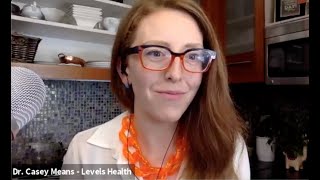
In this Founder Institute webinar, host Rachel Shepherd interviews Dr. Casey (Kasey) Means, co‑founder of Levels Health and functional‑medicine physician. Dr. Means explains Levels’ 28‑day metabolic awareness program that pairs FDA‑approved continuous glucose monitors (CGMs) with a software platform that translates real‑time glucose data into actionable nutrition and lifestyle insights. She describes how glucose and insulin dysregulation underlie a wide range of women’s health issues—including infertility, menopausal hot flashes, Alzheimer’s disease, weight gain, skin conditions, and chronic inflammation—and argues that stabilizing glucose can improve these outcomes. The conversation moves to the founder’s personal journey from head‑and‑neck surgery to functional medicine and digital health, highlighting the preventable nature of metabolic disease and the motivation to keep people out of the operating room. Dr. Means offers extensive advice for health‑tech entrepreneurs: the importance of clinician co‑founders, ways non‑physicians can connect with doctors (social media, HARO, networking events, paid physician newsletters), the value of biofeedback‑driven personalization, and opportunities in logistics, prescription‑access platforms, and perimenopause care. She also discusses scaling clinical expertise into products, the current US‑only regulatory landscape, beta‑testing results (≈800 users, 28 k waitlist), and future global expansion plans. Finally, she shares personal habits of a “healthy founder”—stable blood sugar, omega‑3s, fiber, sleep, HRV monitoring, and boundary‑setting—and encourages founders to share their vision publicly and focus on a single, well‑defined problem.
Chapters
Hello everyone, welcome. Thank you for joining us today. You're here for the Future of Women's Health Tech webinar, and I have with me here Dr. Kasey Means, who's the co-founder of Levels Health. Hi Kasey, how are you?
I'm great, Rachel. Thank you so much for having me, and hi everyone who's watching remotely.
Yes, everyone's joining us in the chat right now, so we'd love to hear where you're from. And see where everyone's calling in from today. I'm calling in from the Bay Area. And my name is Rachel Shepherd. I'm the Director of Global Marketing at Founder Institute and the co-creator of the Female Founder Initiative. The Founder Institute is the world's largest pre-seed startup accelerator, and we've helped launch over 4,000 companies around the world across 185 cities and 6 continents. If you're interested in learning more about Founder Institute, you can go to fi.co/enrolling, and we're enrolling across 6 continents right now, which is awesome. But enough about us and about me. I'm here today with Dr. Casey Means. As I said, she's the co-founder of Levels Health and a functional medicine physician. Her focus is on maximizing human potential through optimized metabolic health, disease prevention and reversal, and functional medicine. Um, we've already started having a great conversation. Uh, Casey's been featured in Forbes, Entrepreneur Magazine, Business Insider, NutritionFacts.org, The Hill, Well+Good, Endocrine Today, Endocrine Web, and Metabolism. She's one of the top 10 female leaders to watch in 2020 on 150sec.com, 15 women healthcare leaders you should know from The Sociable, and 20 female tech leaders under 50 2020 from StartupBeat. Kasey, thank you so much for your time. Is there anything else I left out you'd like to share with the audience today?
No, that is perfect. Thank you so much. Yeah, I'm, I'm so excited about to be here and talk about women's health, digital health, and, and Levels.
Wonderful. So Kasey has given her time to be here to talk about women's health, the future of women's health tech. We're going to talk about the company as well. And also just kind of discuss digital health, what's happening and how can you get involved. If you're a founder who's joining us today and you have a digital health company or you're interested in maybe starting a digital health company, we can talk a little bit about her founder journey as well. And, but please put your questions in the chat or in the Q&A. We'd love, we're here for you. So we want to have a great conversation about digital health, but we also want to answer your questions. So First and foremost, Kasey, can you tell us a little bit more about Levels and what exactly Levels is trying to solve as a company?
Absolutely. So Levels is the first metabolic fitness company. So we empower individuals with their personal data to improve their metabolic health rapidly. So we do this by pairing a wearable sensor called a continuous glucose monitor that checks glucose every 15 minutes, 24 hours a day, and sends it to your smartphone. And we convert that real-time continuous data stream into actionable insights through our software. So what this does is it allows people to have just really deep granularity into this core metabolic substrate, glucose, and learn how to make the dietary and lifestyle choices that keep glucose in a stable and healthy range, which is ultimately foundational for metabolic health. Um, so really what it does is it, it takes the guesswork out of sort of the questions that we're always asking, like, what, what is healthy for me? Like, what should I eat for lunch? What is the best choice? And We often are going off sort of advice that we've read on the internet or we've read in a book or our friends are doing or what's trending on Instagram. And we have really not had any objective information up until this point about what, you know, one-to-one relationship that closes the loop between a food or a choice that you're making and how it's actually affecting your metabolic health in real time. But with this continuous glucose monitor, we now have the ability, and this is an FDA-approved device, We now have the ability to really close that loop and see in real time how food and lifestyle decisions are affecting our glucose levels and ultimately our, our metabolic health. So what our company does is we set people up on what's called a metabolic awareness journey. And this is a 28-day program where you get a telemedicine consultation with a physician. This is a prescription-only device, the CGMs, continuous glucose monitors. If the physician approves the customer for a continuous glucose monitor and feels that it's safe, We will then ship those CGMs to the individual. Each CGM lasts on the arm for 14 days. So we ship 2 to make up the 28-day journey. And then they get access to the software that takes this continuous data stream and makes it really, really actionable. So that you can really understand how food's affecting you and what foods are best for your body.
That is awesome. And in a world where we have more data available, like this is the perfect sort of solution towards Finding out how your body reacts to food and really addressing this sort of, you know, not one size fits all, as you said before, when we were chatting before the call started, right? Dietary prescriptions aren't one for everyone. So this helps us be more informed as an individual.
Exactly. Yeah. A lot of research suggests that people are just wildly confused about nutrition advice. And right now there's a lot of really loud voices in the nutrition space. You know, it's like based on where you look, you're like, you should definitely be keto, you should definitely be carnivore, you should definitely be vegan, you should definitely be paleo, you know, eat plants, no plants are going to kill you. And it's just like, it can be so confusing. And this can make it very, very hard to know what's right for you. And then there's also a lot of recent research that suggests that two people respond very, very differently to the same food. We are totally biochemically individual entities, each person based on their their genetics and, you know, their underlying health. And so, you know, what's right for you might not be right for me. And to be able to actually cut through a lot of the marketing noise and the loud voices in nutrition and actually have an objective data stream that's telling you exactly kind of what works for you, rise above a lot of that noise, it's very, very empowering and actually makes, I think, choices a lot more efficient. I know for me, You know, I spent a lot of time doing trial and error in my life with nutrition. And, you know, to be able to just kind of rule things in and out and learn how to properly pair foods to make them have like the best metabolic impact, how to time foods for that reason, you know, what exercise and sleep and stress management practices all impact glucose positively. Having that granularity just actually takes a lot of the guesswork out and I think takes some of the cognitive load out from just thinking about, you know, what choices do I make today?
That's a great way to put it too, that cognitive load. I think, you know, so many people— I know that's a big trend here in Silicon Valley and the Bay Area is like, how can I make fewer decisions in order to be more efficient and really be able to use data to make those decisions as quickly as possible? So wonderful. And we have people joining us from all over. We have another Rachel. Hi, Rachel from DC. We also have some people joining us from Australia. Thank Thank you so much for joining us from all across the world. Really quickly, somebody asked, "Is this tech only available in the US?" They wanted to know about Levels specifically.
Oh, great question. Yeah, so currently our program is only available in the US. In the United States, continuous glucose monitors are prescription-only devices, so you have to get them through a doctor. In many other countries, actually, these devices are over-the-counter, so it's possible to get them at the pharmacy. So yeah, but the actual Level software right now, which is what takes the glucose data stream and turns it into actual insights, is only available right now for US residents, but global expansion is very much on our radar.
Wonderful, wonderful. Awesome. And we have some people from Nepal and Chile joining us today. Thanks so much, everyone, for joining. Fantastic. So let's chat a little bit about— because this is a women's health tech related conversation today. How does Levels play a role in women's health tech specifically?
That's such a great question. And one of the things that really was so motivating to me towards starting this company— so many, many problems in women's health are fundamentally rooted in blood sugar dysregulation. And I think that that's something that's not widely known. And currently, a lot of our solutions to these problems are essentially symptom management, but don't necessarily get to the root cause. A poll just popped up there.
Yeah, we got a poll from the audience, by the way. Sorry, we didn't mean to surprise everyone with it, but as Casey's telling us more about levels and about blood sugar dysregulation and how that plays a role, we'd love to sort of poll the audience. What do you think, you know, how do you think blood sugar dysregulation contributes to body functions and how things are able to be regulated or dysregulated for us. And so— sorry, Casey, go ahead, continue.
Yeah, no, what— so I think— so there's very much a link to a lot of women's health issues and I think just sort of backing up more broadly, I would just give a sort of an overview of metabolic dysfunction in general. So right now, it's estimated that 88% of Americans and, you know, and globally, it's also a big problem but 88% of Americans display evidence of metabolic dysfunction. Yet we don't typically— only 12% of Americans basically have what we would consider optimal metabolic health. The way they judged it in this particular study, which was out of UNC, was looking at markers of cholesterol, waist circumference, and glucose levels, all of which are involved in metabolism. Yet we, in our traditional American healthcare system, we don't tend to think about anything that's metabolic health related until we've been diagnosed with a serious medical condition like diabetes or obesity. Like the average person walking around who doesn't have diabetes or obesity is not usually like, you know, inspired to think about their blood glucose levels on a day-to-day basis. And yet these conditions are largely preventable. And so it makes sense that getting on top of these things, keeping glucose, um, and by proxy insulin levels low and stable throughout your lifetime is the best thing that you can possibly do to ward off these diseases. What's, what's crazy is that, you know, while diabetes and obesity are sort of the most overt symptoms or conditions associated with blood sugar dysregulation, there are actually so many other conditions that are linked to it as well. Um, when blood sugar is chronically elevated, when blood sugar spikes after meals, it causes the body to release insulin. Insulin is a hormone released by the pancreas that tells cells to take up that glucose out of the bloodstream. And when this happens over and over and over again, when you're spiking glucose, multiple, multiple times throughout your day and throughout your lifetime, which we're doing a lot in America because we eat a ton of sugar and we eat a lot of processed grains, which act like sugar. All that insulin release actually makes the body numb to insulin. And so what ends up happening is you end up with high— you have to push out more insulin to get the same amount of glucose into the cells because you're insulin resistant. And over time, that high glucose and that high insulin can affect every cell in the body in problematic ways. Every cell in the body has insulin receptors. And so if your cells are resistant to it, It basically means that you're not processing energy well in the body, and that can look like really anything based on what cell type we're talking about. So there is really strong research supporting that blood sugar dysregulation and insulin resistance actually contributes to not only diabetes and obesity, but also stroke, heart attacks, Alzheimer's dementia, fatty liver disease where the liver accumulates fat, chronic kidney disease, chronic fatigue, chronic pain conditions like fibromyalgia, it can contribute to infertility, erectile dysfunction, depression, anxiety, gout. The list goes on and on. And those are all very strong links that high insulin contributes to these conditions and that people with blood sugar control have a better chance of not getting these or doing well with these conditions. And so, so it's quite, it's, it's, it's really kind of a huge thing that we're dealing with. And yet we still tend to think of all those diseases as very different entities, like isolated silos, when in fact, on a physiologic level, they're very connected by metabolic dysfunction, insulin resistance, and high blood sugar. So circling back to women's health, there's a lot of areas where women disproportionately struggle with conditions related to metabolic health and blood sugar dysregulation. And I think some of the key ones that we don't think about often are, um, I would sort of highlight infertility, which is hugely linked to metabolic dysfunction, um, menopausal symptoms like hot flashes, Alzheimer's disease, which impacts women about twice as much as it impacts men, weight and obesity, as well as skin conditions. So things like acne and wrinkles and some of the more beauty-focused things. All of these have a relationship. And yeah, certainly happy to dive into any of those, you know, fertility or menopause or weight even more, but the mechanisms are very, very interesting. And so by getting glucose under control, there's very likely going to be multifarious positive effects for women.
Right, and like Giovanna in the comments is like, wow, and it's so true. There is so many different, you know, types of things that play into, you know, sort of blood sugar dysregulation, and per our poll, quite a few of our— 83% of our audience got it right. It is all of the above was the answer. Which is, you know, a lot of people are spot on. So that's awesome. But yeah, the blood sugar dysregulation contributes to a lot of different metabolic processes in a negative way. Absolutely. So onto the next question, Kasey, as a physician, do you see additional opportunities for people to create new solutions in women's health tech, especially for the founders or potential founders out there with us today? Definitely.
I think there are so many exciting avenues and you are seeing so much innovation coming down the pipeline with women's health tech, and there's still huge opportunities, I think, to be had. The thing that's so amazing about women's bodies is that they are so dynamic, and they're dynamic not only based on monthly cycles and hormones fluctuating intensely throughout a single month, but they actually— they also change massively throughout the lifetime. We go through multiple phases of different sort of hormonal periods in our life, menopause, premenopause, perimenopause, our normal reproductive years, puberty, et cetera. And so it's a very dynamic state. So women's health lends extremely well to biofeedback and to informing choices based on a current biologic state rather than blanketed one-size-fits-all recommendations. It's very possible that for one woman, a particular high-intensity interval training workout at one point in their cycle is not the right exercise for them. And it might be at a different time in the cycle or that they should be eating specific foods at one time in their cycle and not in another type. We know that estrogen and progesterone have significant impacts on metabolic health and on how we process glucose and insulin. And so what might not cause a glucose spike in the first half of the month might in the second. So women's health is really, really nicely fits with digital tools that help with personalization of choices. And biofeedback, I think, there is just a really exciting area. And I would say the tech that I'm most excited about are any tools that help women tap into their bodies, take ownership over their health, and give people more granularity about what's going on in their bodies. And ultimately, tools that improve innate body awareness, like help us really embody ourselves. Like, we live in a very complex, very fast-paced, very busy world where we've got a lot of digital stuff going on, we've got a lot of processed foods which sort of make it difficult for our bodies to register things like hunger cues and society. So any tools that can help us actually tap into our innate somatic awareness is what I'm really excited about. And I think Some of the ones that kind of fit with that would be like Kindara, Natural Cycles, Modern Fertility. There's a really great company called The Cusp that's doing holistic perimenopause care through a telemedicine platform. And then I would say the second thing I'm really excited about in women's health tech is companies that help streamline a woman's life and help kind of with the complex logistics that are unique to being a woman. So This would be products like Willow or Cleo or Carrot Fertility that Tammy Sun started that helps with fertility benefits. And even something like Bumble Biz, where women are making the first move on business relationships. So things that help people with biofeedback and with holistic sort of understanding of their body, and then companies that really streamline the complex logistics that are somewhat unique to being a woman. Are kind of two areas that I think are very interesting. And there's huge opportunity because we're still— we solve a lot of problems and we still have a lot of chronic health issues. And so there's clearly still more work to be done. And then I would say there's a third category, which is like these companies that are making it more efficient to get prescription medications for women's health. So that would be like NuRx, or sometimes called NurRx, or Hims— I'm sorry, Hers. Rory, things like that. And I think those are great because there is just absolute absurd red tape in the United States towards getting like prescriptions for birth control and things like that. And it's just very difficult. And so these just like totally streamline that process. I would put those like lower on my tier of things that I'm sort of in love with because fundamentally I'm most interested in how we empower people to make holistic choices for optimal health as opposed to facilitate access to medication, but I still think fundamentally these companies are helping women, you know, they're disrupting a system that is ultimately full of red tape, bureaucracy, and inefficiency. And so, yeah, so I think, but in those first two categories, I think there's so much exciting stuff with biofeedback, personalization, body awareness, that, and, you know, control that is, you know, going to be very exciting.
That's awesome. Thank you for sharing all that with us. And you mentioned Kindara, which is a Founder Institute grad as well. So I just want to put that out there so everyone knows. Yeah, there's a lot of opportunity. And, you know, even on the first time we, you and I spoke, we talked about, you know, just like endometriosis and menopause and sort of things that a lot of women experience that just don't have clear solutions yet. They're working on them. And I love the idea of bringing biofeedback into the conversation and seeing what that can do for us. Right. Sounds amazing. So the next question I have is, as a physician, I know it's important to you that those with scientific backgrounds who have the ability to start companies consider this option and its scalable effects on global health. Can you elaborate a little bit on that stance?
Definitely. Yeah. So I, I started my career as a surgeon. I was a head and neck surgeon for 5 years before really jumping ship and moving into the digital health and the metabolic health optimization world. And I'm really at a place where I think it is absolutely imperative that physicians and clinicians and researchers work at least in some capacity in an entrepreneurial or consulting role supporting industry. And to me, it fundamentally comes down to a question of scaling. So a doctor has an incredible knowledge base, hopefully, and very specialized training and have gone through tons of very expensive, often schooling that is, often their training is partially paid for by taxpayers, and like their residency training. And yet we still spend the majority of our time talking one-on-one with patients or working one-on-one with patients in procedures and spending then a lot of our time recording intense documentation for those one-on-one encounters. And these activities are fundamentally unscalable. Like, you'd have someone with hugely specialized training working one-on-one, which is great, but like, is there a way to leverage that more through products or services or offerings that can scale that? So I think that essentially my litmus test is if a doc— if there is something that a doctor is saying over and over again, or doing over and over again by hand, it should probably be developed into a program or a product or a device that does it for them in a more efficient and effective way. And maybe the product can even do it better because it can add additional data and whatnot and take some of the cognitive burden off doctors as well. So I think it— that what that takes, though, is clinicians really taking stock of how they're spending their time and what they're doing and what the pain points of their workflow is and what is working in patient care and what isn't. And really, it takes stepping back. And examining things more holistically, and then saying, where could partnering with a software engineer or a product development person or a hardware manufacturer, where could that help actually streamline this and make it so that it's not an ultimately one-to-one unscalable solution? So I think that's where there's huge opportunity for physicians. And I actually think it's kind of imperative We're facing huge, huge challenges right now in healthcare. People globally are— the majority of adult Americans have a chronic disease, and that's unnecessary. And so we're facing mountainous challenges. We have, you know, in the US, $3.4 trillion in healthcare costs per year. And yet, and I believe that 80% of those costs go towards treating chronic conditions, most of which are contributed to by dietary and lifestyle choices. The opportunities for scaling solutions that help people make better choices throughout their entire lifetime, really tapping into behavioral psychology and behavioral research and thinking about how does a person get inspired, change, grow, and create sustainable improvements in their lives. This is where, you know, we can actually contribute that medical knowledge and our patient care insights to build products that could be extremely effective. But unfortunately, one-to-one medicine, the way that we are practicing it, is not turning the tide in the chronic disease epidemic. And I think fundamentally, that's because it doesn't actually address behavior change and choices in a personalized way. So that's where I think there's really exciting opportunity.
Awesome. And Bonnie from the audience has a follow-up question, which I think is really related. So you were a head and neck surgeon before, and you now have a metabolic tech company, you know, how did you come up with this idea and get started developing this product as a founder?
Yeah, yeah. So thank you for the question, Bonnie. So yeah, so my journey to starting Levels and wanting to attack the metabolic health crisis sort of full force started, of all things, in a career as a head and neck surgeon. And in that career, I was seeing how much poor glucose control and other metabolic problems like diabetes and obesity had just a profound relationship with the disease I was treating as well as surgical outcomes. So high blood sugar and poor lifestyle, so like not getting enough sleep, not exercising enough, having poor stress management and obesity, all of these directly cause inflammation in the body. They upregulate, they are registered as the body as a threat. And they tell the immune system to be on alert. And so fundamentally, those all are related, but what was interesting to me was that also a lot of these diseases of the head and neck that I was treating were fundamentally inflammatory in nature. So doing a lot with sinusitis, which is inflammation of the sinuses, thyroiditis, which is inflammation of the thyroid, ear infections, which is inflammation of the middle ear tissue that causes pus buildup, vocal cord granulomas, which are inflammatory masses of the vocal cords. It's so much inflammation. And some of that, some of these diseases like obesity, diabetes, and sinusitis, they actually all have the same cytokines, inflammatory cytokines upregulated like TNF-alpha, interleukin-6. It's like some of the same core stuff. And yet in practice, like the Venn diagrams of treatment are, there's no overlap. Like we treat these things completely separately. And so it became kind of very interesting to me. Like, I know that blood sugar and metabolic disease promote inflammation. And, you know, how can I potentially, like, keep people out of the operating room? And if people have to go to the operating room, make their surgical outcomes better if we really attack this head-on, this more like metabolic dysfunction. So that became very interesting to me. And the surgical outcomes thing is pretty fascinating. Like, people with high blood sugar are much more likely to have wound breakdown of their surgical scars, more likely to get a postoperative infection. And actually having excess body weight makes surgery technically much more difficult. Like having a lot of extra tissue in the neck when you're trying to deal with these very sensitive nerves and structures, it makes surgery more difficult. So, you know, I just became obsessed with like, how do I keep people out of the operating room? And if they're going to the operating room, how do we make them do better? And what's really neat about, I guess, neat about metabolic dysfunction, I wouldn't say there's anything neat about it, but that it is largely preventable. It is, and it is very, you can have massive impact on reversing these disease states even when they're in full minute, full force. So Virta Health, a company in United States run by Sarah Hallberg, has shown amazing research showing that people with full-fledged diabetes who go on a low-carb ketogenic diet can actually get back to non-diabetic levels and they can really reverse their condition. So these are not fates. And so I'm interested in this area. It became so compelling to me because it's hopeful. Like if we can get people to know how to do the things that reverse these diseases, how many operations could we save? How many post-op complications could we save? So that really moved me, yeah, away from the operating room and really fully focused on this problem. I felt there were enough people out there busting holes in sinuses to suck pus out and there's not enough people thinking about scalable solutions for reversing what is underlying so much of our chronic disease. So that led me to ultimately pursuing functional medicine, which is a branch of medicine that really focuses on the root causes of disease more than sort of symptom management or chronic management of disease. And thinking about scalable solutions. And that led me right to digital health. And with the advent of the continuous glucose monitor, this like fabulous little wearable device that right now is only being used in diabetes, the thought was, hey, what if we took this data stream, made it accessible to anyone who wants to optimize their diet and their lifestyle and potentially get people to never have to develop these conditions. And one thing that excited me so much was, you know, I think people have a lot of— I saw this in my patients a lot, which is they have a lot of fear about coming to the doctor. When you go to the doctor, you could get some bombs dropped on you in terms of, you know, what the doctor tells you. And it can be very, very scary. But with a CGM, there's basically no way you're going to walk into the doctor's office and get a bomb dropped on you about metabolic health. You've been tracking your glucose every single day. You know exactly what caused it to go up and down. You know what your levels are. So that once a year glucose test that you get at the doctor's office is not really any new information. You already know, you already have your data. Um, and so it really puts power back in the hands of individuals. And, you know, some of these diseases that are metabolically associated are incredibly scary. Things like Alzheimer's dementia, you know, huge percentage of Alzheimer's dementia could probably be reduced or eliminated by having really, you know, tight glucose control throughout life. It's definitely one of the lifestyle contributors that's a big impactor of Alzheimer's. And now Alzheimer's is starting to become called type 3 diabetes. So imagine if you just had this tool that finally could tell you like, oh yeah, your glucose is stable today, your levels are healthy, and you have that sort of every day. You, you know that you're managing a risk factor for some really scary diseases and you don't have to wait until your yearly physical to have someone tell you that.
Thanks for sharing that. That's an amazing sort of insight into your founder journey and, you know, what motivated you really at the core to, to get started on Levels. Daniela wants to know, was Levels developed only as a nutrition control tool, or can it be used with people who already have diabetes as well?
Yeah, so right now Levels is only, um, the software itself is only being used for people without type 1 and type 2 diabetes. And we are marketing towards— so our early customer base is these sort of health-seeking bio-optimizers who, who want to control nutrition and improve their nutrition. But in terms of the long game, we want this software to be available to everyone who wants it. That requires different regulatory journey, and so it's in our long-term plan, and our clinical research strategy is moving us in that direction. But for now, the product is only available for people people who do not have a diagnosed metabolic condition, but that will not be forever.
Right. The expansion plans are still on the horizon for sure. Yes. Both countries and as well as opportunities for treatment and tracking. Farad wanted to know, is Levels only for women?
No, Levels is for all gender, you know, for men and women, all genders. It's for anyone, any adults. Over at the team.
Awesome. And we have one more question specifically about the product as well. And where did you do your beta testing and first launch for Levels? And also, is there a place where people can sign up for a beta test in the future?
Yeah, so we are in our beta testing right now. So our company has been around for about a year and we've been running a closed beta program for about 6 months. So we have essentially just been hand-selecting people. We've had about 800 customers go through our program to just totally refine the product and have had about 400 versions of our app go out in the past 6 months and just get constant feedback on that. And then we're planning for a full launch later this year. So for people who are interested, you can sign up for the waitlist, which is at www.levelshealth.com. And right now there are 28,000 people on the waitlist. But when we get towards our launch, we will be really excited to get people in the program and get them, get them going on this metabolic awareness journey.
Fantastic. We've got some follow-up questions too, specifically related to starting new companies in the biotech space or in the health tech space or digital health. So Anthony said, what would you recommend for an entrepreneur who isn't a medical doctor who aims to bring innovation to doctors from a biotech, a lab, or a high-tech partner? Can only a doctor sell or promote medical innovation to other doctors?
That's a great question. So I can speak from my personal experience, which is that I started this company with 5 founders. So it's 5 of us, and my other 4 founders, David Flinner, Andrew Connor, Sam Korkos, and Josh Clemente, are all non-physicians. They all come from tech, very technical backgrounds. And so, so I think it is very possible to start a health tech company without necessarily a medical background, but I think it is very valuable to team up with someone in the medical space early on, and you really want to choose someone who philosophically and fundamentally is aligned with what you're doing. I think if you're very motivated to start a health tech company, you probably have a very unique perspective on what you're trying to do and build, and sometimes just sort of like finding that person is challenging. And the nice thing was that We came together so serendipitously through like, you know, actually it was through my brother who had met some of these founders at a networking event, overheard them sort of talking about this and was like, this is exactly what my sister is talking about all the time. And we actually came to, I flew down to California and we, well, we had a phone call. It was just sort of just, you know, fireworks going off in terms of intellectual compatibility. And then flew down to California, met with them and decided to team up with them. And so, Yeah, so really reaching out to your network and really putting your vision, I think, out there. And I think sort of people will— I would also say like maybe writing about it and what you're interested in. I think it's really interesting how when you kind of put stuff out there about what your perspective is and what problems you think need to be solved, I think it often really— I don't want to use the word manifests, but helps attract people who are interested in similar things that you are. So So I think it's totally doable from a non-medical background, but certainly teaming up with a clinician can really help give you some of the clinician and the patient perspective on whatever you're building.
Fantastic. And then Marquea said, like, along those same lines, as a founder, what avenues do you recommend for connecting with doctors for patient care insights? I'm developing a tech menopausal solution for hot flashes and have been struggling to connect with doctors in this space. So connecting with a clinician makes a ton of sense in this case. And how— are there any places people can look, or is it mostly probably just serendipitous?
Oh, it's a great question. I'd circle back to kind of one of the things I said earlier about putting your vision out there. I think that is the first step. No one would have connected me with companies or consulting opportunities if I had not been very, very vocal about my perspective and what I was interested in and what I thought the future of healthcare looked like. Once you put that stake in the ground, which is a big first step, it's much easier for people to connect you or recommend you. So I think there is amazing, you know, there's so many opportunities now for getting your ideas out there. There's obviously social platforms, there's Twitter, there's Instagram, there's LinkedIn. And then there's also just so many forums that you can publish on like Medium. There's a really wonderful service called HARO, which is Help a Reporter, H-A-R-O. And basically reporters who are looking for, you know, sound bites or someone to talk about certain topics for an article they're writing, they'll basically put those out there. And so if you have some expertise, in, you know, the software or the product space, you might track some of those. And if there's an opportunity for you to give a quote about digital health or about health tech, like, you can, you can be featured in some really high-tier outlets. And so the first step, I think, is putting your vision out there. If you're kind of quietly keeping your ideas to yourself, it's much harder to network and connect. I would also say, you know, Trying to get on podcasts and connecting to the, you know, to podcast hosts that are talking about things that you're maybe an expert in or that you have some background in, getting your voice out that way. So there's— so one is just kind of putting, yeah, putting your name out there. And then I think networking, you know, I'd say networking events are actually— can be very, very helpful. I live in Portland, Oregon, and I— there's a— there's an Oregon Bioscience Incubator that I found on Meetup. This is like a year and a half ago that that was basically helping Portland industry connect with doctors. And, you know, I just thought the topic of the talk sounded so interesting and I went and I ended up meeting lots of people, but two people who have actually been very related to what I'm doing now and who have definitely expanded my network and created opportunities for me and has been just really integral in my life since then. And so, so that's an opportunity. And then there's also, I would just, the last thing I would mention is that there are forums and newsletters that you can contribute to. You can pay money to basically advertise a need that you have that go out to lots of doctors. So there's, I think it's like, I can post, I'll find it and we can send it out afterwards, but I think it's docs.com or something like that. You can pay, you know, I think it's like hundreds or if not thousands of dollars to essentially put out an ad for what you need for your company, and it only goes to physicians and clinicians. And I've kind of had that newsletter going in the background for years, and there are some incredible, very specific opportunities that come up. And that, Heather, I think there are many thousands of physicians on there. There's also a lot of Facebook groups as well that are similar, like posting boards, and very, very active. And I think now, especially with remote work and COVID and how things are happening, many people are leaving the traditional, you know, in-person medical practice. So it's like a prime time to, to get connected with doctors who are looking for different avenues. Um, so yeah, networking events, writing, HARO, social, you know, and, you know, newsletters, paid advertisements, lots of different things there.
Yeah, those are great, great suggestions. And I totally agree that with thought leadership too, that can pay dividends even when you go to actually launch your company, right? So not just looking for a co-founder or getting things off the ground, but if you've already positioned yourself as a thought leader in this space, I mean, that presents a lot of other opportunities and gives you that credibility down the road. So Totally recommend that. And the only other thing I would say too is maybe universities, you know, through my, through my, one of my alumni networks, I've worked with a lot of researchers and PhDs who've gotten, who have specialty research and background and are potentially interested in starting companies, but not necessarily if they, if they have to lead it, right? They're interested in the science behind it and the research behind it. And so pairing up with someone might be a great option.
That is so, that's so true as well. Like the academic approach for sure. And then I think one I just didn't mention is like reading, reading what's out there, finding who is like maybe this unicorn that fits what you're doing, and then just cold outreach or trying to, you know, do outreach through your network. But if there's a blogger or someone who's a physician who's writing about stuff that you're interested in, or someone on social media, like, you know, reach, reach out. Um, so yeah, so something that can be helpful for that is like Google Alerts and other ways of basically searching for key terms that are related to what you're doing and then, you know, making sure that you're keeping up to date on that, whatever that field is.
It's a great point. And then Heather also has a related question, too. She said, do you have advice on how to get doctors on board with doing things differently? I'm a behavioral scientist and technologist and often find it difficult to get doctors to try out evidence-based but new ways of doing things?
Yeah, that would be the exact, you know, example of like what we're doing at Levels with CGM. You know, it's, um, this is using an FDA-approved device for an off-label indication for a prevention indication as opposed to a treatment indication. And because of that, you end up getting a lot of doctors who don't necessarily, you know, initially see the vision, you know, things in healthcare are often very slow to adopt, even if it seems like a really good idea. Like, we are a very, very A-type bunch who kind of likes to really go with the flow, and it can take a really long time for things to become normalized. And so I think the front end of your question was like, how do you get doctors to be more forward-thinking or about this? But I honestly, you know, I think I think communication and educating about your vision is foundationally very important. Like when we talk to doctors and endocrinologists about levels, there are some who just are obsessed with this idea. This is exactly what they've wanted. And there's others who like have to hear the vision and sort of the full picture to really get it. So talking about, you know, just making sure that you're shaping this, whatever your pitch or your idea is in a way that that can really be received by doctors and understanding that they're from what they're coming from, which is that we have to practice like really evidence-based, like very structured medicine because of the litigious nature of healthcare and just because of the way the culture is. And so, yeah, really coming to mind with that, coming to the table with that empathetic mindset and just explaining with passion, like your vision and why you think their expertise could align with that. So that's one, but Also, you're not going to change everyone's mind. And so I think really seeking out forward-thinking people who are thinking differently is probably your best, your best bet. And yeah, I think the beautiful thing about our time now is that people are so vocal on social media now. Like, I mean, if I look through who I follow on Twitter, and, you know, even Instagram, where now the medical community and the research community are so active, there are There are PhD researchers who have 200,000 followers like David Sinclair. David Sinclair wrote Lifespan. He's a Harvard PhD. 20 years ago, these people would not have had— there was no social. Now they're like celebrities, essentially. He's totally forward-thinking about health. Same with Peter Attia, Rhonda Patrick. She's a PhD. She's got 500,000 Instagram followers. She's totally forward-thinking about health. Sarah Hallberg, head of Virta. These people are loud voices thinking differently. So go to these platforms and find who's talking about what you're talking about in a different way. And I would say source from there. Like, we've never had access before to understanding people who are thinking differently about healthcare than now. And so that access is amazing. So, you know, I would, you know, figure out a really good way to sell your vision in a way that's can be heard in an empathetic way, understanding the limitations and the culture of medicine and really presenting in a way that will really work for physicians. And then to like, you know, utilize these tools available now to seek out people who are thinking differently. There are so many amazing voices out there who are doing that. So you might not be able to nab like a Rhonda Patrick or a Peter Attia or Jason Fung or someone like that, but there's lots of other people on there sharing their opinions.
Absolutely. And to your point, it may just be the right time, right? Like, if we're seeing healthcare change at a rapid rate and due to a variety of different stressors on it, perhaps, and on the individuals in health tech as well. And so will we see more people take a more, you know, digital medicine approach in the future? And maybe now's the time to start reaching out. So that's wonderful. I— switching gears a little bit more towards your founder journey. Because we have a lot of founders on the call and this is something we talk about a lot, what does being a healthy founder mean to you?
Oh, it's such a good question. So many different avenues I could go with that, I think. But I think fundamentally, I think about things all through the lens of cellular biology. So being a healthy founder links back to that. So to me, I would say being a healthy founder means making myself biochemically resilient to face the challenges of starting a company. So I know that I want to lead with deep creativity and energy and calm, but to actually be this way, it means I have to create conditions in my body that allow for creativity, energy, and calm. These are not innate static characteristics. These are very dynamic based on the choices that I make. So to me, that means getting proper nutrients for brain function. So like making sure I'm getting omega-3 fatty acids, making sure my microbiome is supported with fiber so that those bacteria can make the neurotransmitters that help— that let me think. It means keeping my blood sugar super stable, which means that my mood and energy will be more stable and isn't fluctuating. It means getting consistent quality sleep so that my memory is sharp. One night of sleep deprivation can drastically decrease, you know, fact recall. It means spending time doing mind-body practices that keep my nervous system and my sympathetic and parasympathetic nervous system balance regulated and flexible so I can be a good leader who doesn't snap and who isn't, you know, rigid. And, you know, I think fundamentally it comes down to like humans are basically like complex houseplants. Like when a plant doesn't get their water and their nutrients and their sunshine and their fresh air, like they will wither and die and not produce fruit. So I know that I'm not good to anyone if I'm strung out or unkind or stressed. So I know that I have to do all those things, keep my blood sugar stable, get good nutrition, get good sleep, you know, do as much mind-body stuff as I can, which is sometimes hard to fit in. But I wear our heart rate variability tracker that helps me from Leaf Therapeutics that helps me get my stress, you know, managed. And if I don't do those things, I'm not going to be creatively generative. I'm not going to be emotionally, you know, stable, and I'm not gonna be as much fun to work with. So being a healthy founder means, yeah, just creating those conditions in my body day after day that help me be the leader I want to be. And yeah, so it's, it's sort of investing in myself in those things, those evidence-based behaviors, to, to be able to thrive.
Awesome. And that's great advice, particularly now, right, as we're all sort of at least in the last few months or so as the world has shut down and potentially even reopened depending on where you are in the world in a variety of different, you know, states, we've had to change how we live, right, to varying degrees. And so I think stress has been a theme of this year for most people. And so finding ways to continue to lead and also manage that, I think what you said is, could be really helpful for some founders. So what is your— oh, did you want to add anything?
No, no, that's perfect.
Awesome. So what has been your greatest challenge so far in your founder journey?
Interesting. Well, you know, I came straight out of being a surgeon, and so a lot of the things that I learned in that insane, high-adrenaline, up-all-night, you know, field, like really like shaped me to be able to like face this journey in a, in a, with a totally different mindset. Like I, you know, as a surgeon, I didn't have the option of really controlling my lifestyle and my body broke down and struggled. And so, so I came to this journey with like, I'm not going to make those mistakes again. Um, and, but I would say, I would say the greatest challenge so far has been saying no. I think saying no is hard for a lot of us and there are just so many plentiful opportunities and connections that can be made in this, you know, digital, very connected world. And I think without saying no in an effective way, life can railroad you. And, you know, it can very quickly lead you to being burnt out and sort of an ineffective shell of yourself. And I've been there. And so I'm not amazing at saying no. And this has been a challenge and ultimately one that comes down to being very strategic with prioritization and realizing that when you are saying no to certain opportunities, you're actually driving your company forward. You're opening yourself up to be able to focus and give the energy to the strategic tasks that are most important right now for your company to grow at whatever stage you're in. So I think we have this total misperception that it can feel weak to say no, but I actually think it's the most powerful thing that you can do to keep your fo— your company focused and directed at the right time. Um, and so that's just definitely still working through that. And I mean, it's a— it's constant journey, like people call it boundary setting or whatnot, but really I think it's just knowing that this is a world of abundance and not of scarcity and, you know, setting expectations clearly, you know, and communicating effectively when you're saying no or prioritizing, you know, that's it, you know, people usually are not upset or have problems with that. People just like, I think, really good communication and expectation setting.
So yes, that's so true. And that constant course correcting as well, right? Like you were saying, it's not, it's not a, it's not a linear path, like keeping things focused. But I will say that that's one of the biggest pieces of advice we tell founders as well, is it's not just cognitive focus, but focus in your company and your strategy, right? If you're doing, you're creating one solution for one type of customer, you will build a better product than, than one solution that really has 8 different parts in it that is for 8 different people, right? So that focus can be super important. Okay, we've got some in our final few minutes, and if you have any more questions, please put them in the chat. We're going to kind of get through some metabolic questions we have for you, which I know is something you'll be able to shine some great light on for us. So Anonymous wanted to know, why is glucose the best marker to track metabolism?
Oh, that's such a great question. So, so a couple things. One, there are two main energetic substrates in the body, glucose and fat. So we can oxidize glucose or fat to make cellular energy. So we convert these substrates into things our cells can actually use for energy. And so if you're monitoring glucose, you know, you've got great insight into that. And then if you're monitoring ketones, you can get some insight into fat oxidation because ketones are the result of fat oxidation. Right now, the only continuous type of biofeedback we can get, like on an app, like a regular level that's just automatically happening in the background, is glucose. And I think glucose is actually more important to track than ketones, although tracking them together can be very, very enlightening. And the reason for that is because glucose is intimately tied to how fat is used. So as glucose rises, it causes you to release insulin, like I mentioned earlier. And when insulin is around, it's essentially— and insulin again is the hormone that lets your cells take glucose up into the cells to be processed and made into cellular energy. So insulin is a signal to the body, oh, there's a bunch of glucose energy around. So we probably don't need fat for energy. So glucose actually puts a molecular brake on fat burn, which is why when insulin states are high, it's incredibly difficult to lose weight because you actually can't burn fat or oxidize fat. So glucose can tell us by just tracking glucose, you can have a sense of what your insulin levels are kind of by proxy, which can also tell you a bit about whether you're likely in a fat oxidation state or not. Or not. It can also tell you about just glucose in general and glucose in its own right. You know, knowing that it's up or down has huge implications for daily life. When glucose is high, it can cause inflammation, oxidative stress. It can stick to things in the body, a process called glycation, which causes lots of problems. So it gives you all that insight plus a little bit of fat insight, whereas ketones don't as much. We don't have a way of tracking them continuously in the blood. You only can do like point measurements right now at home, and it's not going to tell you as much about what's happening with glucose. So, so I think right now it is definitely the best metabolic biomarker that we have. Um, but I think coming down the line, we're going to see some really exciting stuff happening with multi-analyte tracking sensors, um, that look at a number of different metabolic markers and can even provide an extra layer of granularity.
Very cool. That sounds awesome. And then Kevin wants to know, what about boycotting processed foods? Are they a fuel for cancer? Very poignant question.
Yeah, so I mean, I'm all for boycotting processed foods, but processed is, you know, a complex word because, you know, even blending something is technically processed. But certainly eating foods in their most unrefined state, I think, is most optimal for health. So the beauty about having like a metabolic tracking tool like glucose is that you can actually see the direct results of what processed food is doing to you in real time. You know, so you remember back in the day when like SnackWell cookies were considered a health food, you know, because they were low fat even though they were like filled with refined vegetable oils and sugar. But we were very on the low fat train at that time. And so they were considered healthy. Well, now I think if people ate SnackWell's cookies, they would find that their glucose would— many people, their glucose would go through the roof. So all of a sudden you now just have this ability to say this processed food is actually mis-marketed. It's not healthy. But I think another thing that's important to remember is that every person is going to respond to carbohydrates differently. There's been so much interesting research over the past 5 or 6 years showing that this traditional concept of like a glycemic index, which is like Oh, if you eat this piece of white bread, it's going to have this impact on your blood sugar. That's actually probably not accurate. It's actually more likely that each person is going to process those carbohydrates differently and that they're going to have a different glucose response. And the research that has looked into this has shown that actually a person's microbiome concentration, composition, um, so microbiome content, composition, body type, um, how much exercise and sleep they've gotten, these things are actually predictors of how much a particular carbohydrate source is going to affect glucose levels. So there's lots of biochemical individuality between how two people are going to respond to the same food. So it's hard to make blanket statements like these are all bad or these are all good. There's certainly principles we can use, like refined sugar is bad. Like, I can say that pretty confidently. Um, but, um, I mean, the human body needs zero refined sugar to survive, and it, it, you know, we were never meant to eat ultra-refined sugar, but But more broadly, I'd say you kind of got to test it to know if it is and how much it is impacting you. And I think I'm a bit biofeedback-focused, but, you know, it's also important to just listen to your body and also listen to what your body is telling you after you eat foods to see how they impact you.
Fantastic. And then we've got our last question of the afternoon, which is from Anna. She said, when you don't have good insurance in the US, "you go from doctor to doctor without receiving care for metabolic problems. They may give you other medication that could worsen things. What do you recommend for a person in this situation?" Man, first of all, I feel your pain.
I would say, broadly speaking, I think healthcare is starting to move in the direction where it is going to be better for people. I think this really comes down to what I was talking about with like, we think of diseases as isolated silos, all separate, but when we actually think of things more in this perspective of how they're linked from the root cause perspective, if we thought about diseases that way, we would definitely be helping people on their metabolic function because we would realize it's one of the highest value interventions to help all these different things. So I would say one thing you can do is look for a functional medicine physician or, you know, a more holistic physician, someone who's going to be thinking more broadly about how all your symptoms are connected. You can go to Institute for Functional Medicine dot— or I'm sorry, ifm.org. That's the Institute for Functional Medicine and they have a provider directory and a lot of those providers are trained in this root cause approach and they— many of them do take insurance. Many don't because the visits are usually so much longer but given how expensive copays and deductibles are these days, it may actually make sense to work with someone, you know, out of pocket when you're looking at huge deductibles for seeing your regular doctor and your insurance plan. So, but I would check out ifm.org, look at the provider directory and just kind of Google around for more like holistic type of practitioners who may have a metabolic health focus. They're definitely, they're definitely out there. And then, yeah, you know, one thing we're trying to do with Levels is to give people direct access to their data. So not, certainly not skip the whole doctor part of things. I'm a doctor, obviously I believe in what doctors do, but to serve as this adjunct so that with things like metabolic health that's rooted in day-to-day choices, you'll actually have a lot more power. Don't have to rely on the doctor to say all the time, this is right, this is wrong, this is good for you, this is not good for you. So yeah, functional medicine and wearables and trackers that can help you stay on track.
Awesome. Well, Casey, do you have any final closing tips for founders on the call today?
I would say two things. One, I remember it's easy to think that when you're starting a company and there's all this competition, that this is like sort of, a world of scarcity and, you know, you've got to be super protective of your ideas and this and that. But I would say that's— it's important to be strategic, but certainly, you know, sharing your vision, tapping into your network, sharing your passion is really important. I've just seen so much manifest and come, come back at me when I've, you know, reached out to my network, helped my network, um, put my ideas and vision out there. That doing that has brought 10 times in return. So feel empowered and strong to put your ideas out there, even if it's like just a Medium post or an Instagram post or something. Like, that's the first step in making things happen. So just, you know, remember it's a world of abundance and that your networks are there. People love helping other people. They really do. And giving people opportunities and making it easy for people to help you is awesome. So, you know, to make it easy for people to help you, it means making sure they understand what you're about, what you care about, what you're interested in, and making that clear. They should not have to guess or discern it. It should be very clear. What your message is, and then to, yeah, putting it out there publicly. The second thing I would say is eat fiber, eat 50 to 75 grams a day. It will feed your microbiome. Your microbiome make your neurotransmitters. They will help you have energy and feel creative and feel happy. And so yeah, eat fiber.
Fantastic advice.
Tap into community.
Great. Awesome. Well, thank you so much, Casey, for your time. Time and for sharing all of these wonderful insights with all the founders on the call today. If you'd like to learn more about Levels, you can go to levelshealth.com. If you'd like to learn more about Founder Institute, you can go to fi.co. And we hope everyone has a great evening. Stay safe, stay healthy, have a great one. Bye-bye, everyone.










