Tim Chang Fireside Interview with Adeo Ressi - 18th Founder Showcase (December 2020)
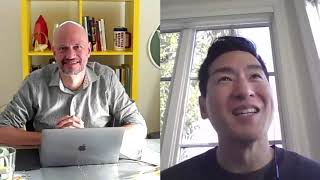
Tim Chang, a Mayfield venture capitalist, discusses how COVID-19 reshaped business and life. He highlights the "Zoom economy" creating new opportunities, notes that portfolio companies like Tonal thrived while others collapsed, and argues investors should evaluate whether businesses benefit society, not just profits.
Chapters
Awesome. Yeah, so we're going to be taking your questions in the chat and try and bring them on stage for Tim. Tim is one of the preeminent venture capitalists in Silicon Valley, uh, worked in gaming, moved into venture capital, now is one of the top partners at Mayfield, one of the transformative firms here in Silicon Valley, does investments all around and has been focusing on conscious capital among other things. Tim, do you want to add anything to your introduction before we get started?
Uh, only that I've known you since I started in this industry. I'll always remember that first breakfast we had at Buck's together. Um, and it's, it's been a pleasure and an honor to kind of grow up in the Valley with you. I think we've been on parallel journeys and just, I thank you and this whole community for the work you're doing.
Thank you. I, I, so I'm, I want to, you know, I've seen you a couple of times through this craziness and it has been always good. And so I want to ask, and And I ask not just because I care how you're doing, but I think it's important for everyone who meets someone virtually, et cetera, to know how the other person's doing. How are you doing?
Thank you for asking. As of this morning, it's a mix of emotions. I bet everyone's felt this way, but my God, what a year, right? It's the strangest time dilation because in some ways it feels like this eternal episode of Black Mirror that won't end. And yet it's the end of the year. So it's this strange blur and an eternity. And for everyone on here, I bet so much has happened. I'm hoping you haven't lost a close friend like Adeo and I have recently. But processing everything from death of friends unexpectedly to the notion that kids might have to repeat a grade because it's unclear if they're learning things in Zoom school. There's just so much change and turmoil to process. And yet, a lot of goodness and inspiration that comes out of it too.
So it sounds like you, like everyone else, are going through a very kind of up and down moment simultaneously. You know, and the reason I ask too is not only because I care, but I, you know, I think mental health and wellbeing is so important right now and it doesn't really get talked about very much in these type of events. And yet it's the, Sure. I mean, you deal with a lot of founders. Any sort of quick tips and advice that you can give to someone cooped up in a pandemic, you know, working with a lot of founders about staying sane in these times?
Just a couple things is try to have your close counsel of 3 or 4 friends that you can lean on, whether they're just the folks that you break down to or can even cry with. It's sort of— we all need that. And Before COVID many of us were running around trying to act like we're crushing it all the time. We had this game face that everything's great and I'm scaling. And this is the perfect time for more authenticity and vulnerability. That's what gets you through these rough times. You know, being home alone on Zoom pretending you're crushing it all the time, that's just too much for anyone to bear.
It almost sounds funny, like being home alone on Zoom. Yeah, I'm crushing it, man. Sitting in my seat all day talking to the camera. I mean, it's almost, it sounds ridiculous. So, so as you said, we're going into 2021 and, you know, I don't want to say good. 2020 has been a good year for me in many ways, good year for the business, but bad year in many ways. What are some of the things you're looking forward to in the future?
In 2021 specifically?
Man, only a month away, Adao.
Uh, you know, the biggest thing is going to be obviously better treatments and vaccines, you know, against COVID so we can maybe restore some things of pre-COVID life back together and start to have those pre-COVID things again, like gatherings of more than 8 people, right? But what I'm excited about is now that we've had this lesson, I wonder if we could do those things more mindfully and more intentionally. Because I got to say, you know, even like at Raj's birthday, when you can only pick maybe 10 friends for a birthday, you put a lot of thought into it. And if you can't gather or go out that often, you're much more mindful about it, right? As opposed to 1,000 things happening all the time. I'm going to go here. I'm going to go there. It really forces you to evaluate what's important to you. And there's a slowness that that brought about, which I really like. And I kind of want to keep in my life. People are saying, oh, this is great. There's no more FOMO.
Oh, did we just lose you at the seminal moment of awesomeness?
Oh, there you are.
Yeah.
So, you know, the sector specifically with this mindfulness is a permanent reinvention of the way we work. Of the way we play, reinvention of how we use our cities. Maybe we ungentrify them now. We reinvent the way we do gatherings and events. We certainly have to reinvent retail, commercial real estate, and services there. And even, oh, the restaurant industry is getting completely reinvented. Cloud kitchens, cloud front end, sometimes with better business models. So I am interested in how this creates new opportunities for people to live, work, and play, and maybe have new forms of living, you know. Instead of standard jobs.
Yeah. So I remember I went to your 50th Mayfield party. Was that right? When was that?
Just last year, believe it or not. Yeah.
Yeah. It was like right at the— right before the pandemic hit. And, you know, people still travel a lot back then and now. I mean, you didn't bring up travel, but that seems like, you know, a multi-trillion-dollar industry ripe for disruption as well. What are your thoughts about— because you talk about running around with your game face on. People ran around the world.
Oh yeah, that's right. And, um, something I noticed is like, man, we probably wasted so many hours and so many natural resources just flying around all the time for meetings that probably didn't need to happen. And, um, you know, I was thinking about it, I was like, I don't think I would miss the inside of a conference hall ever again. Like, I just don't need it. And, and similarly with a lot of flights, um, it's been wonderful to be able to even do this with you and maybe reach more people than the standard thing where we would have booked out Moscone Center or something like that, right? So, um, travel is ripe for reinvention. Some interesting clues: the road trip is the new vacation. If you try to buy an RV now, they are sold out for months. Camping grounds are booked. There's a return to nature. So I think maybe instead of the classic, you know, go to the big fancy hotel, the 5-star place, there might be a return to other destinations— nature, road trips, camping trips with family, you know, things that are more in wilderness. I know a lot of our community has done that. It's something I'm excited about as well. So we reinvent what travel, what vacations are.
Well, and reinvent living, right? Because if you in the past, you might not mind, you know, seeing everyone. I mean, you're right. Like you could go out to a bar that you go to, run into your friends, see them, did it, did it always run and run. The slowing down is happening in how we live as well. Right. What are you— yeah, I mean, maybe just, just looking at 2021, knowing that you're an investor and we'll get into Conscious Capital in a moment. And what are some of the things that, like, from an investment perspective are exciting you?
For sure. It's this entire, you know, I had written this article about the Zoom economy, whatever you want to call it, but everybody that provided in-person services have to invent now how you'd like to do that virtually, which is kind of crazy. Like, you could never imagine, you know, Slow dance lessons that you used to do in person, now virtually. I'm taking classes from Arthur Murray over Zoom on how to learn the tango, which you never thought you could do. But necessity has been a wonderful mother of a lot of invention. And so it creates opportunities for everyone to— I've heard another term, join the hustle economy, which is whatever your special sauce, your personality, that gift you can provide to others, you can find a way to do it over Zoom. I'm hearing of comedians now for hire to MC birthday parties. I've heard chaplains on hire to facilitate digital funerals. All sorts of things now that maybe create more doors for weird, wacky forms of work that you didn't know of before. So that's a good one. That's reinvention of work. Um, the other one, this is a personal one, you know, I moved to San Francisco 20 years ago because I loved art, I loved artists and cultures, but it was because of people like me moving to San Francisco, they had to leave. And so with people leaving the big cities and going to nature, Because if you can work from anywhere, why work in a big city if all those services aren't there? Why not go out in nature and, and, or be on a farm where we can do things like this and still get your stuff done? I'm hoping cities reinvent, open back up, and ungentrify. Maybe those artists can come back. Maybe, uh, BIPOC folks can, can find new sorts of, uh, collaborative co-ops where they can do urban farming and permaculture, you know. So I'm, I'm kind of excited that we get to reinvent how cities are laid out, who lives in them, the way we use them, right? So that's like I said, wholesale transformation of real estate, commercial real estate, housing. Um, Adele, you and I talked about this, a lot of our tribe, we want to live together. So this notion of a compound with eco micro homes in the common house, that's a very legit thing now. It's a bona fide new form of like co-living real estate models that are, that are booming now. And they're out in nature, you know, they're not in city centers.
And maybe they're not, you don't live there 24/7. Maybe you go for weekends or long weeks, vacations, et cetera. So they can truly be communal. Let me, let me dive into that one more second. And guys, don't forget to ask questions in the chat. A lot of your peers, you know, the infamous Elon Musk migration to Texas or Keith Rabois to Florida, or, you know, a lot of these, a lot of the entrepreneurs, a lot of the investors are fleeing, so to speak, Silicon Valley and California. And I have some views. I'd love to hear what your views are on it. I mean, is it real? Is it PR? What's your view on what will happen?
I'm in a pretty couple— well, you and I are in some of these same Telegram groups, and there's some heated debates there. There's accusations of folks saying California is socialist and we're doing all these sorts of things. And I think of it as an unbundling. And what I mean by that is it's sort of like this ecosystem that keeps you in a place. What is it that kept us in the Bay Area? It was each other, friends, right? It was also the schools. It was also the fancy restaurants and the on-demand services, the places we could go to. But if you start to pull those away because of COVID you can't go out. There go the bars and the nightclubs and the restaurants. And then, you know, if you can do Zoom school from anywhere, oh, I don't have to be in that one hoity-toity suburb anymore. Then people start to ask other assumptions of like, well, then why am I paying this property tax rate? Why am I paying the state tax rate? If my friends are leaving, why am I sticking around? So it's almost like that unbundling of all these things that now people are questioning first principles assumptions of, wow, which state do I even live in? Because if I can work from anywhere, why am I not going to go for the lowest tax or cheapest real estate or whatever it is? So it's happening. I've had friends, the top destinations have been, no surprise, no state tax or low state tax. So that's been Seattle, that's been Miami, that's been Las Vegas and Reno, and it's been Austin.
And now parts of Tahoe, by the way, in Klein Village.
Right. And then, yeah, but now corporates are doing it too. I think corporates are viewing it as like, wow, if we're kind of working from anywhere anyway, let's just recall our headquarters in another state for tax purposes.
Well, and then like, you know, my friend Elon moved to Austin and now Jason Kalkanis is looking at moving on. Like now there's a whole like Texas this rant because they didn't really get slowed down by COVID yet. Have you traveled at all outside of the Bay Area during this time?
Hardly ever at all, maybe only once, and, um, I, I didn't miss it that much.
I—
what I'm worried about, what I'm curious about, is if Elon and others, if they feel isolated in places they live in, you know, will they eventually come back or will they just meet up elsewhere, you know? Because it really is the friends circle that has kept us together here, right?
Yeah, exactly. And it's been hard to see friends even here, as you and I both know. All right. I want to go to a couple other topics because lots of stuff coming in. One question from the audience on the 2021, and then I've got some other questions now coming in. Thank you guys. Just about from Alan. Tim, how do you think the customer service is going to be transformed as we find new ways to interact with brands? And one example you asked about is call centers.
Yeah, for sure. I think there could be, you know, new forms of these because if we go to more AI and chat automation, I've seen a lot of that. We've seen many, many chatbots for customer service, especially in the front end for the triage. And then the format often shifts to messaging. Messaging feels more personal. But what I like about messaging is the whole history of your chat context is in there. So the discussion from before can stay in there persistent. Nothing is more maddening than when you have to speak to 3 different customer service reps and they didn't talked to each other before, they don't have the same record, and it's like you're repeating the same discussion from the start. But persistent chat threads, they get the advantage of multiple people looking at it and machines that can learn from it. So they're great for upfront, but then I think, you know, with Zoom and video calls being more prevalent now, this notion of on-demand video help for things, tech support, etc., gets to be more prevalent. And then one last hint, a lot of our companies have shifted their marketing to conversational marketing via messaging. And for high-frequency purchase and renewal rates, the engagement and conversion rates are really high.
Yeah, I mean, we've seen a lot of our startups that were doing chatbots for X, chatbots for Y, move into chatbots for customer support with AI, and they've been doing really well because a lot of the companies can't afford to keep as many people on staff. So if they can supplement some of their And in many cases, their support requests are going up, right? Because people are like, I need to cancel or change or whatever. So interesting times. Let's switch to 2020 and lessons learned from the pandemic. I've got a bunch of questions there, but we actually have some great questions from the audience. Katrin, Katrin, I hope I'm pronouncing your name right, is asking, how are the companies that you invested in doing and what's your advice to them to survive in this period of time. And Tim, you know, we've seen like some companies die, but an equal amount thrive. So we have death and thrive. We don't have a lot in the middle, but how are your companies doing?
It's the same. I feel like half the portfolio got absolutely smashed, you know, and half exploded in good ways. And it wasn't who we thought. COVID made some companies and broke others. Um, I'll give an example, being totally frank. You know, one of my best companies, Tonal Fitness— you might have seen them, they're kind of like a Peloton of strength training. You know, before COVID I was worried if they were going to even make it. I was like, it's over-engineered. And now they're like the next Peloton because all the gyms shut down. We never could have predicted that, right? And so that's an example where COVID made the business. Um, and then anybody who was in e-commerce, it's as if, you know, their market got accelerated by 5 to 10 years. So they Okay.
He froze for a sec for me, hopefully. Uh-oh. We're going to— hopefully he'll come back. Yeah. So I have found the same thing as Tim, that our portfolio, you had some companies where COVID just hit them dramatically and they really struggled. And then you had other companies that— oh, there you are back. So I was just filling in the gaps about backing. And you mentioned comedy earlier, so I was just going to tell a funny story. There's a, so to speak, da-da-da. We had a grad that was doing real-world events, ticketing for real-world events. COVID hit, real-world events went away. They pivoted to do online comedy shows and they're doing six-figure shows. They're selling six figures of tickets to a single online show of a comedian. Right. Which is just— okay. So sorry, you were mid-sentence when you cut off about the one company doing well and then you were about to give some examples on the other side, or—
That was a company that was, you know, a unicorn and doing hundreds of millions of dollars and then watching it all evaporate when every studio shut down. Right. So that's an example where you go from everything to zero all of a sudden because of something like COVID. So it's been wildly unpredictable. That's very hard to tell who was going to thrive and who wasn't. But the ones that really, really did well, we asked our companies to really treat this as kind of this black swan moment. And every company cut their burn by 50%. They assumed there'd be no funding for 2 years. And the irony, they all did way better. Many of them instantly flipped to profitability. And then it kind of begged the question, like, man, what were we doing up till now? So they cut a lot of fat. They cut their lease. They did a lot of things. And like, you know what? Being cash flow breakeven is kind of awesome. It feels much less pressure than growing at any cost. And now I can sustain forever. I think many companies want—
Well, ClassPass, definitely. You're cutting in and out a little bit, but we have some other questions here. Maybe what we'll do— so the ClassPass one is a great example. I didn't hear that super clearly. Did you say that you want to make sure that all the companies have 2 years of cash on hand? Now, that probably was a little while ago. So was that 2021 and 2022, or are you Are you thinking through sort of mid-2022?
I think it was sort of March of 2020, we told everyone, assume COVID is gonna last a couple of years and that the market will be really bad. It turns out the market is still really hot and you can raise funding, but the point was the discipline and the thing that all the companies did ended up being better for them anyway, and they wanna keep that discipline going forward.
Agree 100%. All right, you're a little choppy for me. So let's see, let's try one more question and see if that comes through well. Otherwise we can jump in. But I mean, already I've learned so much in the ClassPass example versus the Peloton example of the strength training is awesome. So Chris was asking, what do you think of a company like Zoom being able to overtake a company like Webex without much of a visible difference to the average consumer? I think that's an interesting question 'cause you're seeing sort of newer brands beating older brands, but there's not— the product differentiation isn't that great.
Uh, yep. Um, so this is funny. Internet is now our new lifeline, and when it cuts out, we can't do these things, right? So that's, that's really critical. I missed that first half of the question. Was it a question about new brands or—
yeah, well, it's how— what do you think about a company like Zoom beating Webex even though the the product is very similar or the same.
You know, this is— did you notice that every 5 years it's like new cohorts of users don't have loyalty to what came before? And so it's as if you get a new shot on goal. That's certainly true in social media, and it's happened in games and even enterprise products. A lot of it, I think, is just you have a better tech stack because those older companies like WebEx, they're built on legacy infrastructures, right? And so folks like Zoom figured out, wow, it's a faster onboarding or it's a better tech stack that scales better. So there's always a way to unseat the king of the hill every 5 to 7 years because there's a chance to redo the tech stack, make it slicker, make it simpler, better UX. That's how white guys like Shopify and Stripe pop up and unseat the prior kings.
So guys, for the people out there, in case you don't know, internet in Silicon Valley kind of sucks. So it's not his microphone, it's likely the internet. And it's not— and generally it's not that great, but it's even worse now that everyone's at home and not at their like Googleplex office or whatever. So the bandwidth consumption has shifted. So Tim, final question for you because we do have some choppy internet issues. Uh, could you give us just like one, uh, brief overview of Conscious Capital and your work there? Because that's really the thing that I I wanted to get to more than anything else. I think that Tim's pioneering vision here is beautiful. And so maybe if you speak a little slower so the choppiness you can get through, but I'd love everyone to hear about it. And if for whatever reason, we're going to send some links out about Conscious Capital as well. So everyone here can learn a bit about what Tim's passion is, but please share with us about conscious capital.
Yeah, um, you've heard of terms like impact capital before, but that usually gets associated with nonprofits and philanthropy and people. The basic gist is that you can do well by doing good. Companies like Impossible and Beyond Burger. And if COVID taught us anything, guys, we don't have time to work on stupid shit anymore. We, we can't just build solutions for 1%ers. We We got planetary and societal problems that we have to solve in the next 10 to 20 years. And so we have a much clearer why are we building the things we build. Even for me as an investor, I have a lot of blame because I never asked other than, can this be a unicorn, a more basic question, is this even good for the world and society? So that's a key question I ask when investing in anything now. And the answer isn't always yes. Do we need another TikTok? Do we need another gambling company? Probably not. Yes, they'll be profitable, but does it help society? Does it help us draw down carbon? Does it fix social justice inequality? There's so much to work on. And so my ask of all of you is have that deep why of what you're building beyond just scaling, beyond just profits, beyond just a big exit, and really think about why are you building this and for who? Does it help with healing? Does it help people connect with themselves, each other, and the planet? Does it make people better? You know, that's, that's what we got to work on. Capitalism can be such a powerful tool for that if we have that intention.
You know something, Tim, thank you so much. And ironically, that came out perfectly. So, you know, it was a little grumbly before and then And then you just lay out a beautiful vision of the future and it comes out clear as day. Thank you so much, Tim.
That was beautiful. Thank you. Thank you. And thank all of you. Thank you so much, Tim.
I'm looking at moms screaming out from the audience.
Thank you so much, Tim. Thank you so much, Adeo. That was inspiring. And I think we learned a lot about some of these trends that I certainly hadn't thought of. Going in, going into next year on just how all of our decisions are going to be more intentional, right? Especially when it comes to the things that we devote our time to, leaving the home and all that kind of stuff. And I certainly learned a lot. Great. Thank you.
All right, guys.










