Venture Capitalist Jed Katz on Series-A Funding in a Post-COVID World
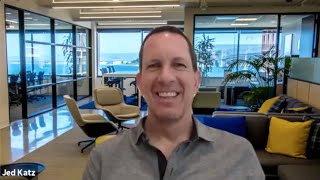
Jed Katz of Javelin Ventures explains how COVID-19 changed Series-A funding: VCs now demand longer runways (24 months instead of 12-18), lower valuations, and proof of customer traction. Sector winners include healthcare and remote-work tools; losers are ad-tech and retail.
Chapters
Hi there, everybody. My name is Adeo. I'm CEO of the Founder Institute. I'm very excited to be talking about Series A funding today with a good friend of mine, Jed Katz of Javelin Ventures. Uh, if you don't know what the Founder Institute is, we're a program to help you launch a technology business and hopefully get to the point where you raise a Series A. We operate in around 200 cities and we've virtualized all of our programs worldwide. So you can attend, uh, online and eventually we'll be moving back to in-person, hopefully later this year as the pandemic that is sweeping the world, uh, subsides. In fact, Jed and I were just talking about that before we got started. Um, today we're going to be talking about the venture capital market in this post-pandemic world. And the changes that have resulted as, uh, the, the SARS-CoV and resulting COVID-19 disease spread throughout the world. Um, we're going to discuss particularly how the Series A market has changed, and the first topic are what are VCs focused on right now, and then the second part will be focused on what entrepreneurs are interested in. And before I make the intro for Jed to come on screen and say a few words. If you have questions, don't be shy. Pop them in the chat area and my team members will compile the best ones. We'll try to get to as many of your questions as possible because I'm sure a lot of you are concerned about funding right now. All right, Jed, welcome. Why don't you introduce Javelin? You've been a top-rated venture capitalist on The Funded for many years and then you started Javelin. Tell us a little bit about you and Javelin.
Sure. It's great to see you. Glad you're healthy, by the way, Adele. Looking good.
Thank you, you too.
So yeah, Javelin was founded about 11 years ago. We're now on our fourth fund. We do seed and Series A investing, so we'll invest as little as $1 million, as much as $5 million. I'd say our biggest check ever was $10 million. We're all former entrepreneurs, so we spent half our careers building startups from scratch to either IPO or pretty substantial M&A. We tend to focus on companies that we want to build. If we weren't investing, we'd be building, and things that we want to think about at 10 o'clock at night, things that can have explosive growth, are scalable, have a great team, have really hard-to-copy technology. We have a whole series of criteria of which sector is probably toward the bottom bottom of that list, actually. Current fund of Javelin is $125 million, and that's Fund 4. Fairly soon we'll be starting Fund 5.
Congrats on that, and I'm really— hats off to your success. You have some of your portfolio and companies include things that are doing quite well right now, like MasterClass. Do you want to throw any other I know them, but maybe better to hear them from you.
Oh no, we have, we have some great companies. Masterclass, you mentioned, is thriving during this COVID time, thank God. We have Thumbtack, we have SmartAsset, excuse me. We have some new ones coming out that are gonna be super cool. Mythical Games, we're an investor in Niantic, which built Pokémon Go and has a bunch more coming out. It's a pretty wide range of companies. We've made about 70 investments in total over the years, and we probably do about 5 or 6 a year.
So what are VCs focused on right now, you know, besides worrying about the health and well-being of your family and friends? What are some of the big things keeping you up at 10 PM?
Well, I think, you know, everyone's trying to get their head around what's happening right now, right? Beyond just working from home, you have this massive unemployment that's just going up. And what is the effect of that? We're spending a lot of time on our portfolio companies, obviously, making sure that there's proper cash preservation going on, they're focusing on the right things. You know, they're gonna survive, frankly. And then the ones that are well-positioned for this are, pressing whatever accelerators they can. We're still looking at deals. We're still getting pitched almost as frequently as we were prior to this. And we'll get into the, you know, how our standards are a little bit different. Our criteria is a little bit different right now as we react to this. But a big theme of our discussion today is gonna be, we have pretty good theses on what's happening now and how to spend our time and how to evaluate it. But we don't know, right? It's, it's changing pretty rapidly and it's a pretty scary situation. Uh, there's, you know, there's, there's ways this can end up bouncing back fairly quickly and there's ways that this can be just devastating for several years. Wow.
Yeah, no, I, and we were just talking about how scientists that we know are more afraid of the disease than many of the laymen like ourselves. So Yeah. Well, so let's go on to— you mentioned you're helping a lot of portfolio companies, and I'm sure everyone here is interested in the other side, but there are also— maybe there's some tidbits. What are you seeing, some strategies that you're dealing with portfolio companies that are working, some strategies that are not working, that might be helpful for those listening?
I'll tell you that one of the pleasant surprises is the ones that are working actually have lots of access to cash, right? The ones that are not only handling this time period well, but are actually able to speed it up and even take more advantage of it. These are, you know, I'm talking about media companies and healthcare related, obviously, and gaming companies, you know, things that work well when people are at home. There's plenty of capital. And we had one go out recently that actually got 5 term sheets. Which is pretty rare. And so that's—
In good times.
That's, yeah, in good times, that's rare. So that's pretty fortunate. On the flip side though, the ones that are really affected by shelter at home or the economy just slowing down so much, look, for them, it's layoffs, it's furloughs, it's lower salaries, it's preservation of cash in any way possible. It's postponing that move to a bigger office. It's cutting back on things. It's acknowledging that it's going to take a long time to be able to raise money anywhere near the terms that you would want to. And how can you last that long and still make progress with the company and have enough proof points so that funding is possible before you run out of cash?
Okay, well, so interesting. So if you're doing well, it's sort of like a windfall. If you're struggling, it's like, oh my God, preserve cash. Let's talk about the deals you're looking at and the process that's going right now. So, maybe we could start with a simple mechanical question like, how is pitching on Zoom? I mean, are people getting good at it? Is there any good pitches on Zoom?
People are getting really good at it. They've had, you know, 2 months of practice now. The interpersonal thing is still super important. They are getting deals done, but it's hard. It's hard to get a deal when you've never actually met that person in person, right? But with that said, people are getting good at Zoom. They're good at, you know, presenting the right way and trying to form a bond with the people they're pitching to and sharing their materials right without any, you know, technology problems. And it's pretty smooth, to be honest. I mean, I'm getting used to it. And we just closed an investment just last week, which we haven't publicized yet, but we will in about a week. And, you know, it is possible.
Now, I do think you have to do it all done on Zoom, or did it start, you know, in person?
In fairness, we did meet him, the founder, once. Two of our partners did, one didn't get a chance to, just prior to shelter at home. And the rest of the diligence and the process and meeting the rest of the team and all that had to be done on Zoom. It's not a San Francisco-based company also. But people have to get good at, you know, keeping you involved in the conversation, right? Keeping you on the edge of your seat, so to speak, and really following what they're saying and presenting and not getting distracted. It's super easy on Zooms and phone calls to get distracted on a few different things and not have 100% of your attention with the person in front of you. And it's the responsibility of the person pitching to keep their attention somehow.
Are you seeing the pitches be shorter? Because yeah, I mean, I got kids and, oh, you know. Yeah. I haven't had like the kid run on screen yet, but pretty close.
Yeah, you will. We've had a few of those. We had somebody pitch us the other day who had their 5-year-old next to them the whole pitch. Which was interesting. Cute kids.
So are you seeing like these pitches last about 20 minutes or so, or are they longer?
So the pitches are still between 45 minutes and an hour and a half. That hasn't changed. You know, I think it's just a new dynamic, but look, it could be like this for the next year, right? If people go back to work and there are flare-ups and everyone shelters at home again, I mean, you just have to get used to this new paradigm and make it work because that's what we have.
Yeah, in fact, I would say that even if you were back at work and there wasn't a flare-up, you might not want someone flying in to meet you for a meeting, right? You know, getting on an airplane doesn't seem like a safe thing in the best of times.
And we actually do a lot of our investing in other places other than the Bay Area. So yeah, it's probably gonna be a while before I'm on an airplane.
So Sabrina was asking, have requirements changed for the Series A in your mind, the metrics, standards, et cetera? Et cetera?
Yes. It's harder. It's definitely gonna be harder. And there's some new requirements. As an example, the cash has to last longer, right? We have to assume that the next round is going to be harder. You're gonna have to hit more milestones. You're gonna have to separate yourself more to that Series B investor whose standards have gone up also. And we don't know what the next year's going to hold, right? So it could be pretty chaotic and we're going to need an extra year of cushion beyond that to make sure that you can achieve some great milestones and still have time to raise money. That's the biggest one.
So I always— you always have told me, and this is one of the best things I've ever heard a VC say, that the, uh, the way you evaluate a deal is their ability to raise the next round. Right? You may love the company, you may love the business, but if they can't raise the next round, you're— it's not great.
It's a fundamental part of our criteria. They have to be a good fundraiser. It's also the same thing as being a good recruiter, right? It's— you have to be able to get great partners to come into your business, whether that's a financial partner, an employee, a business development partner, whatever it is. You have to be very attractive to those groups in a lot of ways. So the other thing I was going to say, by the way, just for a second back to your other question, is we also assume that pricing is going to go down. Like, whatever you were going to charge for your product, whether it's consumer or B2B, is probably going to be lower. And renewals are probably going to be lower. And that's okay for the time being, but we have to assume the market is going to make everything go down a bit.
Are you thinking like 30%? What's your—
I don't know if I can just place a number on it because every business is different, but I would think in terms of the unemployment level and just how the overall economy is going to be lower. And even if people still value your product the same way, they'll use it as an excuse to tell you they'll only pay X when they actually would pay Y.
Yeah, we kind of recommend a 30% coronavirus discount request and offer because we're assuming that some of the lockdown mess will be about a third of the year.
Yeah. So, um, do you mean in terms of, uh, the product, they're whatever they're selling their product for? Do you mean in terms of valuations of their company?
Well, I get— I would probably both, but I was referring to the product. Now that you bring up the valuation, probably what you mean Maybe you could talk— so before I go to the valuation though, let me just get what you said before. Are you thinking that before you gave 12 to 18 months of cash, now you want a minimum of 2 years? Did I hear that correctly?
Again, company dependent, but yeah, I think an extra 6 months there is probably the minimum. And I think that impacts how much they're raising now, it impacts what their cost structure is now and how fast they're going to recruit people. We just— there's going to have to be more cushion there.
Right, to be safe. So let's go on to that valuation component that you referenced. So have you been seeing— I mean, so I know some of your portfolio companies well, especially a couple that are doing, you know, good and bad, but the good ones seem to have valuations be higher. What are you seeing on the valuation front?
Hey, how that works. Yeah. So look, on the seed stage, you're not gonna see a giant movement because I mean, look—
There was nothing there anyway.
Right? I mean, you're not gonna give away 60% of your company at the seed stage. So, you know, and Series A, you're gonna see a little bit of movement down. We certainly have across the market. It's still pretty early. So I only have a little bit of data on this, but, you know, definitely the valuations will be lower. I think you're really gonna start to see it on Series B, and perhaps even beyond that, some of the growth rounds. You know, they're the ones that are like kind of a rocket ship separate from the ones that are just kind of growing nicely. So I don't think the rocket ship ones are gonna be impacted in a negative way here. They're gonna be doing great. But I think the basic Series A, the basic Series B are definitely gonna come down. So founders have to get used to either doing more with less money or giving up a little bit more dilution.
What are you— so let's talk, because I know again some of your portfolio companies. What are you seeing in the Series B world? You know, you mentioned the rocket ships. I heard someone tell me that they were offered cash and they're like, you're gonna do better than a 1x and that makes me happy.
Yeah. So there's a series of companies where flat is the new up. There's a lot of our companies that even if they're not raising a round right now, they might bring in another, you know, couple, a million or a couple million, it's kind of as an insurance policy, even in a note that converts later into whatever the next round is, just to have another, you know, 6 months or something to get through the chaos of this time period before they have to raise money. So that's certainly a strategy people are doing. You know, I think people are generally trying to postpone fundraising so that they don't have to do it right now. They can do it when things settle a little bit and start, you know, at least getting back to a little bit of normalcy.
Yeah. Can I ask you on that? Would like— okay, so you have a portfolio company, they may be thinking about raising money now. Would you counsel them to postpone? And here's the problem. We got the summer coming up. Do you think people can raise in the summer or is this postponed to the fall?
Oh yes, I think people can raise during the summer. With that said though, yes, we are telling them to— if they're not like just set up like it's just such a clear success story right now, then we're telling them to do everything they can to wait, you know, postpone, lower costs, bring in a little bit of money if you can as a note, and do it later, right? I think the—
Later being the fall?
You know, we don't know the answer yet, right? Because I think the next couple months are gonna be very telling when people start to go back to work and what kind of flare-ups happening and does it make things worse or does it slowly get better? So we just don't know yet, but it's not now, right? Unless you are just a clear winner And there's tons of investment money for people that are clear winners right now, because everyone's looking for a place to park their money. But the 99% that aren't clear winners, it would be a really tough time to fundraise right now.
Oh, don't be mean. Is it really 99%?
Well, it's not 99%, but hyperbole.
So let's talk about what are the winners and losers. Maybe, I don't know, whichever one you want to start with. Clearly, you go, but I know some of your— like Carbon Health seems to be doing really well.
Carbon Health is in a great position. I mean, they're helping clinics with absolute next-gen technology to run their entire clinic, and they're taking over a lot of them. They're also very well positioned to do all the COVID testing, even in mobile units. Which is a fantastic service. So they're doing great. They just recently announced a big round. By the way, one other clarification, right?
Sorry, they got a bridge, if that's right.
Oh no, no.
Oh, I didn't see. Oh, well, there you go. I spoke to Aaron the other day, so there you go. Healthcare in the right segment of healthcare is great.
So Though, so yeah, media, healthcare, gaming, those things are doing well. I think if you're in ad tech, you're gonna have a hard time right now. There's just, everyone's cut their ad dollars dramatically. If you're in retail, I mean, retail is like, it's unbelievable. There's a different bankruptcy every day in terms of the bigger retailers. And J.Crew a couple days ago, what was it, Neiman Marcus today.
Wow. I didn't see that.
Wow. And so the smaller ones are having an even harder time. I do want to— I don't want to be all negative, though. I think for seed companies, you're still going to probably be able to raise your first, you know, X hundreds of thousands of dollars to a million or two, because there still are people that realize— in fact, there's a lot of investors that realize some of the best companies in the world are founded during times like this. I mean, you're talking about Uber and WhatsApp and Pinterest and there's so many of them that were formed during a time period like this. And when you're raising a small amount of money, it's more about finding believers in what you're building and in you guys as a team, as opposed to proof points that you've already figured everything out and your sales are skyrocketing. You're still kind of selling a promise, a longer-term promise. And longer term, we will get through this. There will be a vaccine, we're all gonna be good, and business will go back and it's gonna be exciting. So, you know, for the earliest stage companies, don't be discouraged, just be better. Just be better at being the one that is exciting to the people that you're presenting to.
So we got a ton of questions. I wanna burn through some of these and then jump over to the other topic, which is the entrepreneur side. Hussein was asking about what are the different factors investors will consider with SaaS businesses, and related, Anthony was asking about how much ARR are you interested in in a SaaS company.
So SaaS is tricky, right? Because most companies are being told to cut their budgets and only buy essential things. So I think with SaaS, you really have to be able to prove very clearly this is a cost saver for them. Or a big revenue boost for them somehow. If it's just cool or it's gonna make them run more efficiently but in a really difficult to explain ROI, that's gonna be tough to sell right now. I think that prices will probably come down, but the best thing you can do is just get your customers going, get in the door any way you can, right? Get pilots going even if it's at a lower price. And when this thing starts to come back, the economy, you know, you can then raise your price and expand within the organization. So just make progress. Renewals will be the thing we'll be the most scared of, right? Because if people don't get addicted to whatever your product is, it's gonna be cut when it comes time for renewal, right? So you gotta, in the time you have, in the, you know, getting your foot in the door, somehow get them addicted to using it. We don't look for a specific ARR. A lot of funds do. For us, it's more about signal, it's not about volume. It's really, you know, is there a sales process that can be repeated and is efficient? Do people use the product? Do they get addicted to it? Do they tell their friends about it? You know, are there signs that explosive growth is possible?
So many good questions. Martin was asking, have any of your portfolio companies been better prepared for black swan events versus the rest? How so? What did it do?
There's been ones that are luckier. There's the ones that recently raised around, you know, in the last 6 months and have, or maybe even last year, but have plenty of cash in the bank are much better suited. The ones that always kind of ran their business with extra balance sheet protection and didn't just plan on spending until they spent it all before they raised the next round. The ones that were really conservative on their cash are in a much better position. The ones that were decisive and realized, okay, we're going to be hit here, we're going to be conservative about our projections and how hard we're going to be hit, we're going to have to make some layoffs or some furloughs or drop some salaries. And instead of doing that 3 months from now, we're going to do it right now and preserve cash. And then if we are too conservative, then we'll start hiring back and start building up again. But it's better to be wrong on this side of keeping more cash in the bank. Those guys are in better shape.
Yeah, so on that note, even at the Founder Institute, I was like, we're gonna get hit hard, we're gonna be hit, we're gonna be battered 'cause we had early, so we assumed maybe like a 75% hit hit.
Yeah.
And we, at one point, we had, uh, we're past this point, thank God, but we were at 90%. And I'm like, God, yeah, that's worse than I thought.
I mean, it's so hard to project though. And we had one company that we projected down 60% and it wasn't even close to that. And now they're up.
We're up too. Yeah, ish, you know, it depends on the day, but in the whole, we're up.
Yeah, it's very tough to predict. I mean, we haven't really gone through this. I mean, this isn't, you know, this hasn't happened in 100 years. 103. Yeah, we're all learning on a weekly basis here and just trying to do our best to have the right insurance policies basically and prepare for, you know, for things to be bad and things are better and then start ramping up again.
There's so many questions about like specific industries. Before we get to specific industry, I'll talk about a stage. We talked a lot about, you know, the SaaS businesses and getting their stickiness. Are there any sort of pre-Series A advice? James is asking about what a company pre-Series A could do right now to get ready for a Series A in the fall or—
So for the Series A investors, it's going to be about, you know, it's kind of half like we wanna be super enthused about your long-term vision here. Because the time horizons have gotten longer. What used to be like a 5, 6, 7-year investment is now like a 7, 8, 9, 10-year investment. That's what's happened over the last couple of years, even pre-COVID. So we want to be really excited about the long-term vision. But for us, we're going to be thinking about, can you make enough progress with the cash you're going to get in this round so that the next round is definitely going to happen? Right? It's just all the signs are going to be there that this is scalable, you're a great manager of people, you know, your customers love the product, whatever it is, all the signal will be there and the Series B people will love it. That's what we're gonna be looking for. You know, it might be that you don't have all of that yet. And we'll tell you, these are the 3 things you need to do over the next few months and then come back to us, in which case you might want to just raise a few $100,000 more and just kind of You know, do it as a note and keep building, keep getting to those proof points, keep being one of the ones that the Series A investors want to bet on because it's not gonna be something that just doesn't— isn't able to raise more money. They get to a place where the business is showing real legs and they can raise more money and then grow the thing.
So ideally, you— they're kind of— you're catching them on a growth trajectory in the A and you say, this is gonna continue with our money and then they'll be in a strong position to get a B.
I'd say it's a little earlier than that, right? Because what you described is, I think, closer to Series B, right? So we're not— you don't need to be on a huge growth trajectory when you come in, but there does need to be strong signal, right? The signal has to be strong. And if you don't have a strong signal yet in a variety of ways, then you're not ready for Series A.
This is great because— all right, so we got a lot of questions about specific industries, and maybe you can give some indications of those signals. Um, So Greg was asking about thoughts on hardware startups in this COVID era.
Yeah. Look, hardware is really hard. Most Series A investors don't invest in hardware. They just don't. And our single biggest mistake of all time, of course, was not investing in a hardware company.
Which is killing it right now.
Which is— which apparently everyone by law has to buy one of these now.
Do you want to say what it is?
Yeah. I mean, it's Peloton, right? Peloton is crushing it. Founded by a close friend of mine and he's just, he's just, I was fortunate enough to be an angel investor in it, but our firm turned it down. And it was, it was, you know, in hindsight, obviously the worst decision we've ever made. So hardware, you know, keep reminding people of that, but you have to prove that your hardware—
The community aspect of it is amazing. And like you're at home and you can work out with other people, right?
Yeah. Yeah. But, you know, to make the bet in the very beginning of, you know, a lot of people buying a $2,000 bike and what are inventory costs gonna be and, you know, what complications, manufacturing complications and shipping complications, you know, it's a hard bet to make in the beginning. So as a hardware startup, try and lower those risks as much as possible. Try and somehow make, you know, the inventory risk not all be yours. Try to make it a little more capital efficient any way you can. Show that, again, explosive growth in this one thing as possible. But the biggest thing with hardware is show that it can't be easily copied. With Peloton, it's the whole package. It's the bike, it's the media, the classes, it's the community. That whole thing is really, really hard to copy. If it was a new whatever device of some type, there's gonna be 100 of them pretty quickly. Right? So why is that piece of hardware hard to copy is probably our number one question.
So on that front, I mean, what are your thoughts about the supply chain too? I mean, it's been massively disrupted and may never come back the way it was.
You're going to have to have really good answers on who your suppliers are and why you're not going to get disrupted, right? Why not only is that group okay, but all the places that they get their supplies from to make your product are okay. Right, the whole chain.
All right, so there's a bunch of these. I'll go through them quick, quicker. So food tech is another one. What are your thoughts there? I mean— It's a little crowded.
I think it's great. I mean, I think that the cloud kitchen type businesses are great. I think, obviously everyone's doing delivery and takeout, any way you can make that more efficient is great, but it is crowded. So, again, it's gonna come to, is it really unique and hard to duplicate?
And then Suresh is asking about PropTech. I mean, yeah, are we good? What do we, you know, is that a good market? What do you think?
Yeah. So I, you know, people define PropTech different ways. If you're talking about real estate in general, I'm more bullish than most, right? I actually think that You know, it's one of the biggest industries there is. Trades are still going to happen. So far, pricing has not really been impacted greatly. Supply has gone down, but it'll start to come back. And, you know, unemployment is going to affect it. There's no doubt. But look, you can't, you can't impact real estate any more than what happened in 2008.
Right?
Because that would, that, that was, that was because of real estate that that happened. And I don't think it's going to be like that. I think it's actually going to be at a fairly stable place. So we would look at prop tech companies, but again, has to be something that hasn't been done and is really unique and also has to be capital efficient. A lot of the real estate ones tend to be very expensive. We're not doing iBuying and stuff like that.
Okay, last industry question to segue into more of the entrepreneurial side, which is a bunch of questions came in on entertainment and the content industries, and you brought that up in the opening. So if you have any thoughts on those industries, love to hear them.
Yeah, look, really unique content that is well produced and you have a good distribution plan is valuable. I mean, that's, that's what MasterClass has done extremely well. You know, they've done it in a way that's almost impossible to copy at this point. Because they built this community of A+ celebrities, the best masters of their trade in the world that film Hollywood-level classes on the subject. And it's just really hard to copy. But different types of content that are unique and would find a huge audience for, that's definitely something that a lot of investors would be interested in right now.
So I want to now transition over to the second part and collect questions about, you know, really turning to the entrepreneurial side. And, you know, we covered some of it before, but, you know, there's a ton of questions that have come in from the audience. And you said it's a bit harder but not impossible to raise funding right now. Uh, if you— there are companies that need to do it, and maybe if you could give some, you know, they just need to, right? And if there's any advice you could give to start this part of the discussion off with those that need to raise funding right now, I'd love to hear your thoughts.
Um, you go— so in no particular order, you, you got to go after the, the people that you feel are really connected to what you're building and feel passionate about it. If, if you see signs that this is just kind of interesting and they're kind of looking at it, move on. You can waste— you can end up wasting so much time with investors that are just not going to get to yes. And even though they might be showing signs that they'll get to like 80 or 90% of yes, it's not yes until it's 100% of yes. So, so focus on ones that just really get what you're doing. Keep reevaluating how much you're raising, right? Different investors are comfortable with different amounts. Not that investors should dictate how you're building the business, but because it's gonna be harder to get a term sheet than ever, you might wanna come up with different versions of how you run the business based on what's possible in terms of fundraising. And don't be afraid to try and raise smaller notes to just keep you going and keep progressing. Because honestly, the fundraising environment for seed and Series A could be massively different 3 months from now than it is right now. Right? So even another quarter could make a big difference.
Uh, so, so yeah, can we talk about that? So a lot of people say that right now survival is the name of the game. Like just live to fight another day and you're winning. Right. And I mean, I have some views on it. What are your views on The things—
well, I mean, look, if you run out of cash, you die, right? I mean, that's it. So, yes, but I'll tell you that the thing that gets us to perk up the most are ones that figure out a way to sell right now, to sell their product. Forget everything else for a second. But if you can get out there and start getting customers and have some of those customers potentially get a big discount for paying upfront, but it provides you some cash to make it another month, And, you know, you can just show that there is a thirst for whatever you're building. That's what gets us interested. And it also helps survival. You know, seed stage, early Series A stage is a little different thing because you have such a small amount of cash and such a small team at that point that anything that can get you to hit some milestones so that fundraising is easier and you don't run out of cash, get that done. You know, and then, and then when you do raise funding, don't blow it. Act like that has to last you a lot longer than you previously thought. So be really careful about how fast you ramp up and what people's salaries are and what you're spending on the office and just all that stuff to try to just get to that place where scalability and repeatability and all that stuff is— there's some evidence of it so that you're likely to get more funding, whether it's in the form of a bridge or that next financing.
Let's talk about selling in the era of COVID and revenue financing. There's a bunch of questions. Ron was asking about it. Do you adapt your idea to like a post-COVID world? Like, you know, What are your thoughts? Or how, or maybe even other, how much do you adapt your idea to a post-COVID world?
This is a tricky one because again, the earliest stage investors are gonna be in this for a long time. They're gonna be in this for many years, not just a couple of years. So we do not think it's always gonna be like this. It's gonna be sheltered at home forever. We're never gonna fly again and no one's ever gonna shake hands again. That's not where we are. There will be some changes that last a while. And I do think you wanna be sensitive to, you know, just the world has changed a little bit, but I also think you should be building, forget how you pitch it to investors, I think you should be building your business to last, right? To get through this time period and to make sense in a world that exists 4, 5, 6 years from now. That's what we're gonna be thinking about. I don't know, I wish, I don't have a crystal ball, I wish I did. But I'm not sure what elements of this time period are gonna last 5 years. There's gonna be some, but eventually the world will get back to normal, there will be a vaccine, et cetera. Maybe there'll be a lot less business travel and people get really used to Zoom. That'll certainly last a couple years. Will that still be the case 5 years from now? That'll be interesting to see, um, you know, staff budgets, right?
Let's talk about that specifically. I mean, Zoom is okay. I mean, it's the best of okay, right? But you could have purpose-built stuff for different kinds of meetings, like a pitch meeting or whatever, that would be better.
Yep.
Um, and, and, and to your point, that may actually lead to changing behavior if we had better tools.
So there's a whole bunch of businesses being started that are kind of add-ons to the video conferencing companies, whether it's, you know, better sound, better presentation ability, you know, better community stuff, whatever it is, there'll be add-ons. And some of the companies will just copy them and make them features. Others will make it a platform where, you know, anyone can build something to be used on there. This— we've seen this cycle before.
What do you see as some of the positives coming out of this for entrepreneurs? Like, cheaper hiring, you know, more labor?
The cost of labor will go down without question. People will get more used to remote workers and it'll work better, right? There'll be better tools for remote workers, and that's great, especially living in San Francisco. I can tell you it was getting way out of control. In terms of what people were making and how quickly they would switch companies. And just, you know, that got bad. I think valuations will come down to earth a little bit, which is important. It just sets off a better cadence and, you know, I just think it makes the whole ecosystem work better. That was getting a little out of control. I think people won't spend so much, right? They'll conserve cash more and they'll realize the value of of being conservative in their projections. And I think that's gonna serve them well when different things come up over the years.
So I wanna, so I'm gonna go to some of the questions from the group and weave them in as well. Johannes was asking, do you have specific perspective on European startups? He is from Germany. Do you, better, worse off? Are you interested in them?
So we have done a few in Europe. It's going to be much harder now for many funds in the US. It will be impossible for the next couple of years.
Why do you say that?
I think that it's going to be much harder for people to want to fly to Europe for a while and Asia in particular. I think it's just, they're just going to be nervous about it, right? The flight, the Ubers, the hotels, the unknown, getting stuck there if you get sick, et cetera. And that's gonna make the whole process harder. So I'd get really good at Zoom presentations. The great companies are gonna find people to fund them. So if it's truly something special, we would still fund it without ever having met you in person, as long as we had a lot of, you know, a very close Zoom relationship, but it's gonna be harder. And so you might wanna focus on the seed and A stage more on local investors, And then as you get to either a later A or a Series B, then you can start going to the US where you have the proof points in place. So it's more about them taking a bet on you and kind of the promise and more on what you've actually done and the signal.
So you're implying in that answer, and I don't disagree, that you really do want to spend time with these founders in their office or them coming to you, and you don't see that happening in the foreseeable future?
At our stage, seed and A, it is a big bet on the founder, right? It is a huge bet on the person, and we're going to be a partner of theirs for a decade. So we have to know that relationship is going to be really strong, and we really like the person and trust the person, etc. It's going to be hard for ones that are 10,000 miles away. It's going to be really hard.
Yeah, I hear you. And, you know, Ian was asking, you know, If you just brought up that you see remote being okay, you have been a remote investor, would you fund remote teams?
Oh, we have. Oh yeah, we have no problem funding remote teams. I think there needs to be a plan for when the company starts getting really big, 'cause I think remote is fine as you're starting to build product, but at some point, units of the team have to be in the same geo and be able to get together and have camaraderie and, you know, hallway discussions and things like that. We do have a company that's almost fully remote. The founder's based in North Carolina, and so far it's working really well. But, you know, it's less than 20 people, and when it gets to 200 people, it might be different, right? They might have to kind of consolidate engineering a little more and consolidate sales and marketing a little more.
Martin's got a great question. And by the way, everyone, if you've got questions, pop them in the chat. We're trying to get to them all. We've got a few minutes left. You were bringing up that more and more people are going to remote— work remotely in the Bay Area. We're seeing layoffs in the Bay Area, and you can't live here without a job for very long. So what do you see happening to the area, to the Valley, as a result of these changes?
Well, I think the Valley is still gonna be the Valley, right? I mean, I think there's just so much of an ecosystem here. Nothing even comes close, right? So there's gonna be tons of startups, there's still tons of financing, there's lots of big companies where you want, you know, where you're selling all your products to and you want all your partnerships with, and that's not gonna change, right? So it's still gonna be crazy. Salaries, even though they've come down and there have been layoffs, they're still obscenely high compared to the rest of the world. So I don't see that changing. I think if anything, this is gonna be really healthy for the Valley because they'll be able to hire people, not just from here, but also remotely throughout the world and get more used to working that way. And that's gonna be super healthy for all the companies. There just weren't enough engineers in the Valley to begin with for all the companies that wanna hire them, right? So I think this is gonna make ultimately the whole thing more healthy.
Well, hopefully it cuts these commutes. I was— I drove the 101. I needed to get a new computer for my kid at Best Buy pickup and at 5:00 PM. And I was like, what's this going to be like? There are people going 90.
Yeah, right. Yeah, that's hard to imagine.
Can you guys envision? That would never happen.
Yeah, yeah, yeah.
OK, so many questions here. James, that may be the last call for questions. You got everyone excited. James is asking, is there a better chance for Silicon Valley VCs to invest in companies elsewhere now, especially in the US?
Much. Yeah. Well, except for, you know, like when you say except for the US.
No, in the US.
Yeah. Oh, in the US. Yeah. Much. Yeah, I think, you know, look, you have just as good a chance as people in the Bay Area, because we're not going to be able to spend a bunch of time with either of you. So I think it's the same type of pitch. I think in general, most VCs, the further you are away from where they are, the bar gets a little higher and higher. We haven't been thinking that way in the last couple of years because we're just finding some amazing companies being started in LA, New York, North Carolina. You know, I just did one in Austin, Texas, and there's great companies there. So I think this is going to increase your odds, except for that people are holding, you know, funds are just tighter with their cash now. But I think in terms of being remote, your odds are gonna go up.
Pratap was asking, how are you managing due diligence in this period? Have you been doing due diligence in this period?
Yes, we've been doing due diligence. Look, you do everything you normally do, right? You make all the calls, you learn about all the founders, you learn about all the, what the customers are saying, You call all the people that weren't on their reference list that you come up with that came across them and, you know, are going to tell you the real story. You look at the contracts, you make sure there's nothing really bad that's happening or any lawsuits. You stress test the model. But I think our biggest thing is we just do a lot of brainstorming with you, to be honest, and see if you're bullshitting or not. Right? And how are you taking feedback? And how are you in a back and forth for a while, just kind of thinking of ideas? That tells us almost as much as anything.
Yeah. So that brings a question that I have, and there's a bunch of other questions as well, but like, how are you and your team doing? I mean, it's not the easiest to run a business. On Zoom?
It's tricky. We— so we have 3 partners. Luckily we're, you know, relatively small. So, um, uh, one of our partners actually lives in LA, so, so, uh, we had a chance to get used to the remote thing prior to all this. Um, so, uh, that's been working fine. We do, um, like bi-weekly happy hours with our, with our whole firm, um, uh, with all the other people just to make sure everyone is still you know, has camaraderie with each other and share stories.
And every 2 weeks or twice a week?
No, we do it every 2 weeks. We, um, we also, you know, we still have our Monday partners meeting with it, which everybody calls in for. We have a Thursday get-together just to check in on a whole bunch of high-priority things. We haven't really seen any major friction. It seems to be working totally fine.
Yeah, but I mean, a lot is us too, but there is I would say we were, we were 25% remote, but there's something lost. All right, let's get the questions from the audience here. Steve was asking, what percent of your deals are done with new entrepreneurs? New meaning unknown to you, no prior relationship.
75%, maybe 80%.
So the, the 20 to 25, you've known them, you trust them. The rest are Okay.
Yep.
And James was asking, um, why did you say that the 200— you didn't actually say this, but I saw I'm reading. Why did you say the 200-person, uh, sales department could not work 100% remote?
Right. Um, it could. I've done that before in one of the companies that I, that I ran. We had salespeople throughout the country, but even then we brought them back fairly often. I think it was 4 times a year to just share best practices and get together and have camaraderie and, you know, just keep getting better. And I think if you feel alone out there, if you're literally just remote and you never see anyone else from the company other than on Zoom, you're not going to feel like you're a real part of that company. It's different than when you get everybody together. So it's more about just keeping everybody in that culture and sharing best practices. Sales is probably easier to be remote than it is with engineering and development.
Yeah, it's definitely strange because like we used to do, we are at least a quarter remote and we would have 4 gatherings a year, 3 or 4.
Yeah.
And one would have been now, you know, so it's going to be interesting to see where we go.
Yeah.
So yeah, and any other— what do you do if you can't get the people together that are on these remote teams? Or what do you—
I mean, look, for the moment you can't. You have to, you have to, you know, do a lot of this stuff. But I will say equally important to continuing camaraderie and the cultural stuff is making sure the productivity is there, right? It's super easy when you're, when you're working remote to just not work nearly as hard, right? If you don't, if you're not seeing your teammates all the time. And so you gotta build in tools, not necessarily to be looking over their shoulder 100% of the time, but at least to know that the productivity is the same as if they were in your office. And, you know, they still care a ton and they're still, you know, giving everything they have to it. I think if you don't have that, you're gonna end up with a certain percentage of your group that is, half as productive as they should be.
Yeah, I was— I wanted to ask you this question, and I was gonna ask it to you privately, but here we are. Uh, are you— are you feeling busier now? Less? I'm way busier than I've been in a long time, personally.
I feel like this is the type of job that I could work every waking hour, or, or, or what I decide to work. So I feel equally busy There's a lot going on right now. So I'll tell you though, because I'm not having the hour and a half commute every day, just going to and from the city, I have that time back and that's a lot of time, right? So I'm filling that time with some work and some exercise and some, you know, time educating my kids and all that stuff. And I feel pretty balanced at the moment, actually.
Yeah, I feel like I'm working, you know, I think it's the kid education thing. Speaking of which, my God, Oh my God, horrible resources on the internet for homeschooling.
It's terrible. And it's so inconsistent between teachers and, you know, and none of us are professional teachers, right? So we're all trying to get the most, do the best by our kids, but they're also our kids. So the relationship's different, right? You're not their teacher. It's tricky. Oh boy.
I've become their teacher though. Holy crow. And it's been, I would say it's one of the best experiences of all this, but it's also been one of the, oh my God, like, you know, try to find worksheets for your children online. Good luck with that.
So what's gonna happen is that this generation of kids are either gonna be like the world's most driven, you know, entrepreneurial, amazing kids, or they're gonna be complete slackers that just like got lost.
Yeah, you know, and maybe it will, it will bifurcate.
Yeah, yeah, it probably will actually.
Yeah, it's been, it's been one of the talk about things that need a lot of help. And I, I actually now feel bad for the teachers because I'm trying to find resources and I'm like, my God, like it's, it makes the '80s internet look good, right?
Yeah. Okay.
Yeah, sorry, you're gonna say that?
It's hard, especially for the teachers that have their own kids. That are different ages and they're trying to educate and also educate all kinds of other kids. Really tough.
Yeah. So a few more questions here. Saren was asking a future of investment. Do you think the investment trend will be focusing on a scope of a business or do you, uh, do you see it basically dividing between different industries? How do you see the future of investment coming?
This is the great part about this job. You cannot sit here. Anyone that tells you they can is lying. Whether you cannot sit here in like the vacuum of, you know, your office or your home office or whatever, and think that, you know, the answers to the most amazing things that are being created and you know what sector is going to be hot a year from now. You don't. We're constantly surprised by entrepreneurs that blow our minds on something they've been working on that we would have never thought of in a sector we may never have looked at. But they have been working for the last couple years on building something that can be absolutely explosive. And those are the things we're looking for. That's why sector's at the lower part of our criteria. And so no, COVID could either be a thing or not be a thing a year from now. Maybe there's a vaccine that comes out pretty quickly and everyone takes it and we're good. Then it's totally back to normal. Or maybe 3 years from now, there's COVID 2 that mutated and it's even worse. I don't know. I'm not going to make investment decisions based purely on COVID. We're looking into the long term here. Who can revolutionize an industry? Who can do something so different and so clever and so hard to duplicate? And it's going to be so fun to build. Those are the things we're looking for. No, I cannot tell you what sectors are going to be awesome and what aren't.
Well, I will say, you know, I've been spending a lot of time in the education industry and I think there's a lot of room for improvement.
There are, but it's a tough industry. I mean, there's a lot of need for great products. There's not a lot of great exit opportunities in education. So you really got to be able to completely break out.
Yeah. I mean, but a lot of people may think twice about sending their kids back to a school system in the fall, especially if there's there's not a vaccine.
Yeah, but that's a one-year phenomenon, right? The year after that, they'll be like, okay, I can't handle this anymore. I gotta get this kid out of my hair and get them, you know, some around other kids, right? The social aspect's super important too. So, you know.
I like socializing with my children. All right, let me, let's go on to, there's a bunch of questions about Javelin in the last few minutes here. You brought up your deal size. You brought up your pretty location independent. Do you wanna discuss any other sort of your process or criteria that you haven't mentioned yet?
Processes, we tend to act more like founders than we do your typical VCs. Our process is really streamlined. You're probably gonna meet with one of the partners and our senior associate as the first meeting. We're gonna caucus if we're interested. We're gonna set up a meeting with everybody. And we're gonna have a bunch of homework, you know, pretty easy things to get us between now and then. And then everyone's going to take a hard look and then decide pretty quickly, is it something we want to pursue or not? If it's not, it's going to be super quick no, or a come back when you have X, Y, and Z, when you hit those milestones. If it's yes, then we want to do as quick a process as we can while feeling comfortable with the diligence, because we want you back focusing on the business and not raising money. So the whole process can be from from the day we get the first email from somebody we trust introducing you to us, like Adeo for instance, you know, to closing, to be under 2 months. You know, sometimes we've done it as fast as a month, which is pretty fast.
You've done a lot of deals that I've sent you that are good. So yeah, fingers crossed. Yeah, and that's, you know, let me just say for everyone out there, I literally think Jed Javelin is among the top 3 firms in the world, period.
That's an incredible statement. Thank you for making it.
Well, and it's true, you know, that's why you— I generally, at least that's what I believe, and that's why you get some of the best deals that I see. And you don't do all them, which is understandable and you shouldn't. But no, I think you're amazing. So let's— we got a couple minutes left and I'd love to hear— we got a pretty great turnout. Thanks for everyone being here. What a lovely— and thank you, Jed. Any advice for the many entrepreneurs and some aspiring venture capitalists that are on the webinar today that either could be timeless, timely?
Yeah, look, every piece of advice that I've given today is kind of the same way you should be running your own business, right? If you're not seeing strong signal and you're not convinced you're gonna find strong signal, then move on to the next business, right? Because it's gonna be really hard to raise and recruit and all that. If you are seeing strong signal, then dig in and get people excited about it. And we're gonna feel that excitement, right? The signal will speak for itself, but we'll see it on your face and we'll have great conversations about it. You know, and then just prepare for the fact that this is gonna be a tough period for the next couple of years. The world is gonna be a tough place for the next couple of years. That's the reality. So let's all get, you know, deal with it and act accordingly and make decisions that way. And the funding will still happen. There will still be lots of great companies funded during this next few years.
I agree with that. I wanna just harp on the signal before we wrap for one second, because, you know, let me, so I see a lot of companies that have, —like a smolder and you're like, oh, it could be fire, but you know, how is this like you don't know it until you know it? Or how can you tell that you're on the mat? I call it the magic when everything's flowing and you're growing.
I call it the juice. Okay. Well, we all have a word for it. Same concept. Usually as an entrepreneur, you know it, right? You shouldn't buy your own bullshit so much that like a little bit of signal, you think it's a lot, right? You usually know it when people are like, the sales just got a lot easier and like people are telling their friends about it and everything is great. But I'll tell you something, the second you start doing fundraising meetings and you get grilled by professional investors, you'll have a really good idea of if you generally have good answers or you generally walk out of there like like shell-shocked, right? When you walk out of your first couple investor meetings, you'll have a pretty good feel for if you have something or not. Like if we tell you the market size is entirely too small and here's all the data, you're gonna get why we're thinking that, right? If you see us like perking up and getting super excited and wanting to introduce you to our buddy who can help your company and, you know, all this action is happening, you're gonna have a great feel.
Yeah, I agree with you. So there's a lot of external signaling on the juice. Well, listen, Jed, Thank you so much for your time today. I hope everyone here learned a lot of stuff. This was lovely. Thank you, Jed.
It's great to do this, Hideo. Anytime. Thanks, guys.
Thanks, everyone.










