Waterloo Spring 2019 Founder Institute Launch Event
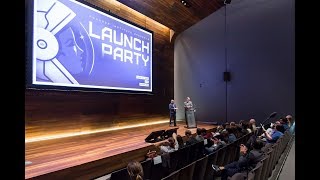
The Founder Institute's Spring 2019 cohort in Waterloo wrapped with ten startups pitching their solutions, from ZenCaters corporate catering to SolverGen's cancer therapy platform. Co-directors Jordan Jokis, Madhisha Kure, Sunil Sharma and Marcus Gahan highlighted the mentor-driven, volunteer-run accelerator and its connections to Google, Shopify, and the broader regional tech ecosystem.
Chapters
We the 6. We the North. We are the world champions. We're the fastest growing tech ecosystem in North America, home to Calypso, But many don't know the secret. It's found a short train ride west. A bright shining light where we invent the future. Some call it Silicon Valley North. Others Quantum Valley. Or the Creative Capital of Canada. We call it Waterloo. Home to True North Festival. A magnet attracting people who are writing the future of technology. A storyline where we use tech for good. Welcome to the future. The Founder Institute is the world's largest pre-seed accelerator with hundreds of locations globally and Canadian locations in Vancouver, Montreal, and along the Innovation Corridor connecting Toronto with Waterloo. Hundreds applied to the Waterloo Spring 2019 program. 32 companies were accepted. 10 survived the 4-month cohort. Hundreds of local tech founders volunteered and contributed their time to mentor these future founders, helping turn ideas into incorporated tech companies. We met every week at different tech ecosystem hubs like Google, Shopify, and Vidyard. A program made possible with support from global sponsors like law firm Gowling WLG and accounting firm BDO. Innovation Hub, CommuniTech, and coworking space Workhouse. We have a big vision at Founder Institute that entrepreneurship can truly change the world. We surround you with an ecosystem of mentors, founders who've already scaled companies globally, so we can rip that idea out of your basement, turn it into an incorporated company, and scale it globally, and really make an impact.
So one of the unique pieces about Founder Institute is we want to keep it real. Starting a company is not easy. You're going to be pulling very long hours. So just imagine you're working 40 hours a week in a full-time world, and you've got to on top of that do 25 to 30 more hours of work with the Founder Institute. It'll give you a real flavor as to how much work you need to put in. Now, it's not going to get easy, but you just get used to it.
You know, I think coming out of it, it really makes me appreciate what it takes to build a business. Not just the work that goes into building the actual business, but speaking to real people, knowing your industry, knowing your market. Really, really humbles you, showing you what it takes to actually make something that can have that impact.
Let's hear it for you guys for coming here tonight. So I'm Jordan Jokis, co-director of Founder Institute Waterloo.
This is Madhisha Kure, one of the other co-directors.
Sunil Sharma, the co-director in Toronto.
So we'd like to thank you. We really believe that to be the best in the tech world, we need to be the best of the tech world at coming together. And this really can't happen without people like you coming to events like this, supporting new companies like this. So big round of applause for coming here today. We'd like to acknowledge that we are on the traditional territory of the Neutral, Anishinaabe, Haudenosaunee, and Neutral peoples. And we'd like to thank the Center for International Governance and Innovation for hosting us this evening. Founder Institute is the world's largest pre-seed accelerator. So who's heard of Founder Institute before? Nice. Okay, if you haven't, well, hopefully we'll change that after tonight and moving forward. Pre-seed. So everyone that you're going to see tonight, the 10 startups that are lined up here, they are all pre-seed companies. So basically that means that they came into this program, many of them, simply with an idea. Some of them pivoted halfway through. I mean, there was a real journey over 4 months, them coming to basically where they are today. So I mean, these are— there needs to be some understanding to know that. I mean, some of these people literally pivoted their ideas halfway through the process. And so it's going to be a huge celebration as we watch them throughout tonight. But they've been practicing for the past 14 weeks and kind of after tonight, I mean, we're kind of releasing them into the world. Some of them will enter other accelerators like Communitech Accelerator Center, Velocity, Laurier Launchpad, Grand Innovations, C4E, Conestoga College, maybe Techstars, maybe Y Combinator. They'll go into the ecosystem, they'll fundraise, and I mean, we'll be there to support them along the way. We started really, as you heard, with hundreds of applications, really from all over the world. I mean, we had— we then accepted 32 companies that came, and some of those founders came as far away as Hungary. Hungary, yeah. Some came from Dubai, and tonight are the final remaining 10 companies.
And we have one from Detroit driving in every week, one of the graduates.
Yeah, so we host these in Waterloo, different locations every time, but yeah, comes all the way from Detroit, so fantastic. Some people from Toronto as well. And really, we see Waterloo is the western anchor for Canada's innovation corridor, and you're going to start hearing a lot more of that. And it's really Waterloo, Toronto, Hamilton— this is the supercluster, this is the future. And you'll hear some of that being spoken to in the pitches tonight. Founder Institute, I mean, really can't be possible because it's volunteer-run without all the people that help make this happen. So everything from, in terms of the venue partners that we have, so Google, Workhouse, EDC at Catalyst 137, Vidyard, Shopify, Communitac, Lazaridis Hall, Wilfrid Laurier University, Terminal, Birch, Gowling, WLG, Focus 21, CG Tonight. I mean, this really, we can't operate without that, and we wanted to structure the program in a way that it got a lot of the startups into the ecosystem so they learned what it's like to be part of the ecosystem. And, and, um, if we can go to the next slide, I mean, it should be mentioned that We really cannot exist without our sponsors. So the— unless I got— oh, there we go. So first of all, a big round of applause for our sponsors. Gowling, W-O-G, has been fantastic. BDO has been fantastic. Everyone's been fantastic. CommuniTech, Workhouse, Google Developers, Lexington Park. Terminal, Rebels of Design. I mean, truly, we can't operate this program without the help of these sponsors. And as a shameless plug, if anyone's interested in sponsoring for the program, please talk to us afterwards, maybe. And so without further ado, I don't think we want to hear too much about us. I think I'll hand it over to Medusa just to kind of give a welcome, and then we'll have Sunil give a final remark before we get into the pitches.
OK, so we started this 3 years ago bootstrapping, collecting. I remember the first time we ran this, my mom was sick and this guy drove all the way from Toronto to come here and then ran the first few sessions. We ran 50 founders through it. We got 6 out of it. It's a tough program to get through, with a great network that's globally accessible to investors, mentors, and other founders like themselves. We have some great stories that we're going to make some announcements in the next few weeks from one of our previous founders. And before I go any further, I'm gonna let Sunil to talk about how the Toronto program and this 401 corridor between Waterloo and Toronto is gonna collaborate with Founder Institute to build some companies in the future.
Okay, so, so yeah, as mentioned, so my name is Sunil Sharma. I run the Techstars accelerator in Toronto, and I've been running Founder Institute for over 4 years. This 13 cohorts graduated in Toronto.
We've had—
this is our third cohort in Waterloo. Admittedly, I haven't been as involved with this class, partly because it completely overlapped with Techstars. So we— as I was running Techstars, there was FI happening in Waterloo, and then also a big conference that we brought to Canada called Collision. Really, really kind of— I think that's important because that, that is one of the largest and most prestigious tech events on the planet, they chose to come to this region to exist. We just had the event, 26,000 or so people attended. It'll be happening again next June. I think there'll be more than 40,000 people, possibly 50,000 next year in June for Collision, and they'll come from over 120 different countries to be here, to sort of understand what's going on in the region, to experience Canada, Canadian tech, and in many cases to be inspired by our presence and to relocate and expand their own operations and choose Canada over markets like in the US or in Europe. But Founder Institute to me is like a labor of love. I've been volunteering along with Jordan and Medusha doing this. We have no budget, we have no staff, we have no office space, but we've been creating more startups than any program in Canada. These 10 companies that are gonna graduate tonight, cumulatively, we will now have about 160 companies that have started in and resulted from coming through Founder Institute in Toronto or Waterloo. And in many, many cases, these are extremely viable companies. Many of them go on into programs like Techstars or other angel investment groups or VC funding, and they really are on track to great success. And that's because this program is unique. So the 10 founders who are going to be presenting to you right now, I want I want you all to understand that this is not a participation program. This is not a program where you attend, listen to some lectures, come back next week, and, you know, get through 13 weeks and graduate. This is a grueling, intensive, curriculum-based program. The assignments are serious, and weakness is rewarded with extra work. Results that aren't optimal are resulted in extra assignments or a recommendation to take some time out, stay with your existing job, and come back next time, or in many cases, simply removal from the program. We have the ability to do that because we're not funded by any government entities. We are a Silicon Valley-based grind of an accelerator. So I just want to preface that because I don't think that's fully understood by many people. So I want to give hats off to these 10. I'm going to be listening to many of these pitches for the first time live, watched many of them online. But I want to just turn it back to Medusha and to Jordan and welcome the 10 companies.
Without further ado, ladies and gentlemen, boys and girls, put your hands together for the Founder Institute Waterloo pitches!
Let it out, don't get caught up in yourself.
What if your employers could give you great meals every day? Well, they can with ZenCaters, the stress-free catering option. We're on a mission to transform the lunch catering marketplace by matching businesses and caterers with a one-stop ordering and delivery app. My name is Suzanne Bond, and I have over 25 years' experience in food marketing and brand management. My biggest launches to date are All-Dressed Potato Chips and the McFlurry.
¡Ah!
I'm leveraging my knowledge and my experience to launch ZenCaters. The catering market is growing at 50% compared to overall food service. 90% of restaurants say that catering is important to their business. The problem: the customer finds it to be a stressful situation. The customer has needs for a variety because their employees often have complex dietary preferences and they have a desire for a single ordering platform. The caterers are experiencing rising costs, local competition, the need for new customers, and the need for a catering strategy. 70% of caterers report flat catering sales due to a lack of investment in technology. Welcome to ZenCaters, the stress-free catering solution. There's a need for ch— changing tastes for the new consumption era. We offer a fully responsive food ordering website. We offer a personalized experience for on-demand catering. It's a sharing economy. In fact, I find it amazing that 70% of millennials take photos of their food and post the content before they even eat it. Lastly, we provide nutritional information unlike most of our competitors. Our key customers are sales executives, trainers, administrative assistants or executives, and office managers. They place an average order size of $300. ZenCaters collects 20% commission on orders placed. The process is seamless and stress-free. Customers place the order on our responsive website. The order is placed real-time to the restaurant or caterer. There's an easy payment checkout, and the order is placed real-time and has real-time delivery tracking. We also offer the ZenPlate Awards: gold, silver, and bronze to the best caterers in each city, who can proudly display the awards in their restaurants, and we're the only platform to do this. Our go-to-market strategy is to use a network of food photographers to help onboard restaurants and caterers in each city. They take pictures of the food items, and they get to eat delicious food as well. It's estimated that better photography produces a 40% increase in earnings. The total global market is valued at $600 billion. 60 billion of that is represented in North America. 600 million is the total serviceable obtainable market. In Canada, ZenCaters competes in the business market, the lunch business marketplace. The key competitors are Platters and Foody. Platters is available in 3 cities: Kitchener, Montreal, and Toronto. Foodii is available in Toronto. ZenCaters will launch in KW, Cambridge, and Guelph. ZenCaters offers better customer service and variety. We do this by offering satisfaction guarantee, real-time delivery tracking, nutritional information, ratings and reviews including our ZenPlate Awards, 24/7 customer support, fairable margins, and a loyalty program. We are currently in the beta stage, and companies that have expressed interest include Ctrl+V, Desire2Learn, and the City of Cambridge. We anticipate launching in September and have an aggressive growth strategy to expand across Ontario by December. We anticipate sales of $1 million in 2019, growing each year to $50 million in 2023. The Zen team is comprised of David Wolfman, he's a chef, a culinary teacher, and a professor, host of Cooking with the Wolfman. Ilya Peskov, he's founder and CEO of Focus 21. And Matt Turnaway, he's a marketing advisor. My name's Suzanne. I'm excited to be launching ZenCaters, and I look forward to orders from your employers. If you're interested in investing, please speak to me after the presentations. Thank you for your time.
Thank you.
A glance at this picture, and you'll probably all say beautiful. Not just her looks, but also her hair. But for millions of ethnic and multiethnic women across North America, not only is this seen as unprofessional in a number of workplaces, but they have largely gone overlooked by the largest brand in the $500 billion hair and beauty care industry. Hi, I'm Illuz, co-founder and co-CEO of Zilliz, and we are on a mission to build our engaged social platform to empower curlies, that is women with naturally curly hair, as well as curl product entrepreneurs, bringing them together on a community that also offers social shopping. Now, what is the problem our community is trying to solve? For the most part, curlies cannot find the right product or regimen for their hair on one end, and on the other end, the marketplace is mostly fragmented with the largest player in this space of a top line of $300 million, and most of the players in this space being artisan and boutique brands. And so our platform will bring these two together. The, our curl community is going to be a mobile-first platform that is both app and website, offering curated hair recommendations as well as social shopping. Using machine learning, we offer curated hair insights, personalized hair recommendations, regiments sourced from the community, as well as all of this is going to be driven by the user activities and the user profile on the platform. Now, how do we monetize our community? We monetize the community principally off of transactions. There's a $0.10 listing fee per product, and in addition to that, we take 5% of proceeds. There's also an optional subscription at $4.99 and $9.99 that we offer. The opportunity is massive. The overall hair and beauty care space is $500 billion in, in market size. Just African American hair spend in the US alone amounts to $9 billion annually. Of this amount, $6 billion is spent on hair care products. Of this obtainable market, $1 billion is spent on natural hair care products, and this is growing at a 30% clip. Right now, the competition in this space is limited to principally retailers as well as sites offering insights, but none of this information is curated and personalized to her specific hair care concerns or her specific hair type. Now, where are we today? As of the launch tonight, we— our MVP is a couple weeks out. We have bootstrapped our startup costs to the tune of $30,000 to date, two-thirds of that principally to the development of the MVP. We expect to begin user testing in a couple weeks and to launch in a couple months. We anticipate to hit 10,000 users by the end of this year, and that is principally gonna be driven by social media ad spend as well as engagement with the community through curl events. Currently, in terms of pre-launch traction, we have over 200 subscribers on our site as well as over 4,000 followers on our Instagram page. Additionally, we have started to develop a relationship with brands out there. The 5th largest brand in the space, Design Essentials has already agreed to be on the platform, and we're currently engaged with the largest brand in the space, Shea Moisture, at the minimum where a CEO has agreed to mentor us and advise us through this process. We're seeking $500,000 in funding principally for commercialization of our product and fully developing our product offering beyond the MVP. In terms of our financial outlook, we anticipate a runway of 18 months to break even, at which time we— and that's as of go launch in a couple of months— and we anticipate that we would hit half a mil top line by that point. This is your team as of now. As I stated, we are bringing on board our advisors and we'd We would love for you to join us in this movement and this cause, that you can both make money at it, but also empower curlies in their journey towards self-identity and embracing their naturally curly hair to be and feel beautiful. Thank you.
When I worked in home healthcare stores, I noticed that people often bought medical equipment that they used once, and then it ended up in their storage. I knew that was a sustainability problem, and then one day I read on the internet that there was shortage of medical equipment after Hurricane Irma in Florida. So I thought, how is that possible when so many people have this equipment sitting around in their homes? So I built Medimate, where people could buy, sell, rent medical equipment from each other. Within 4 months, we gained over 400 members in the US, and we started noticing that most of the people on the website were searching for rentals in Florida, More than half of our growth was also happening in Florida. And then a surprise thing happened on our website. We had one of the vendors by Disney World list their offerings on the website. So we knew we had hit up a market and we found out that it's mainly people who are traveling for leisure or to visit families are the ones looking for rentals. So we tried to look into what the problem was. When you try to look for rent, to rent a wheelchair in Miami, this is what you get. You get 2 stores, or you get a couple of stores that are the top players in the market, so they're increasing their inventory daily. And then you get some stores that are really like on the outskirts of Miami, but there are hundreds of stores in Miami that are not showing up right now. So what Medimate is doing right now is we're connecting medical equipment suppliers with buyers. So we looked into who's trying to solve this problem. There's Rent It Today. It's a call center service where you can call in and they connect you with the supplier, but you cannot place an order online. There's also Scooteround. They are in 1,500 locations in the US and also all the airports. They have online ordering, but it's only their supply. So we want to see what we could do there. So we signed up a few suppliers in Miami. You notice this one is actually in Miami, and you can place an order online.
The key dif—
advantage that we have over the, our competition right there is that when you go on Medimate, it asks you if it can pick up your location and gives you the closest store. The other two competition do not have that feature built in. The other thing to note here is that we're also gonna have the largest supply because we have stores as well as the general public who is listing their inventory on the website. So here we are, now we're connecting equipment suppliers. There's about 15,000 registered Medicare-approved vendors in the US. For every one of those, there's 5 other smaller stores like pharmacies that have idle equipment just sitting around. So we're connecting them with tourists that just wanna roam free and be able to rent wherever they are. We also have children's products as well, but I won't get into that right now. So this buy-sell-rent medical equipment market in the US is about— is worth about $225 billion, and the global market's like $1.85 trillion. So we're currently earning 15% from each transaction. So we're forecasting here just one of our categories, which is the mobility category, and this is what our human resources kind of allows us to do at the moment. But if this revenue forecast could be multiplied by 10, if we can expand into all the other categories that are on the screen as well. So the team that we have right now, I don't have their names up here because some of them have full-time jobs and their employers could be in the room. It's true. But this is our team that's helping us explore Florida. And also we're launching in Canada with the same team. And then we're also looking for a developer, always, who's not, right? And then we have Ken Jewett, who's a founder, who's helping me go through this building the business process. So because of our limited team, we're only in two markets. I call it the AB markets. Because we're testing the two markets. So in Florida, we have the rental market, and then in Canada, we are introducing the rental market as well as caregiver services, which I'll get to in a second. And so because of our limited human resources, we're looking to expand our team so that we can build a proper Apple and Android app as well as scale to many new markets. That were on the map. And then we had another surprise on the website. Who doesn't like surprises? This time we had a scooter cover vendor who wants to sell this just like they would sell on Amazon. So we also learned that, you know, there are a lot of innovative products in accessibility. If you go to the Microsoft IoT conference, they have so many products that are all addressing senior care. So we're trying to become the innovative hub for anything that's medical equipment related. And we're planning to do a PR campaign with the top 10 most useful innovative products, such as the iMaverick here, Toronto founded. And so we're going to launch a massive campaign and try to become the marketplace for accessibility products. And then we're also introducing caregiver services. I think I mentioned that. Then we can also get into the installation and repair services. And then just like, you know, people want equipment very quickly. So instead of having to wait to ship it from the store, we could also get into warehousing so people can have it same day or within a day or two. And then we can also get into insurance and finance. So why are we doing this now? So Frost Sullivan predicts that healthcare is going through a major transformation and obviously it's going to be on a sharp rise. So one of the— their top prediction was that Uber-like services are going to gain prominence in the industry and MediMate is just the central hub where we are going to be facilitating the connection between the buyers and the sellers. If you are wanting to be a champion for accessibility and are passionate about marketplaces, let's talk. MediMate.app, freedom and recovery everywhere. Thank you.
Yeah, just this one.
"Blumi Rewards." "Earn rewards for authentic movement." My daughter got so excited when she found an app that rewards for walking. I also got so happy that we can walk every morning without fights. We download the app, we start collecting rewards, and for more than a year we have tried several apps, collected hundreds of rewards, but never we've been able to redeem these rewards. So obviously we're not anymore so keen to walk and do some activities that is not scheduled in a certain place and time and—
class.
So why is it difficult for people to do activity or to work? At the core of it is human evolution. Tech-native generations, their spending and living habits are different. And of course, on top of it, motivation, commitment, and so many other reasons. So for that reason, I have created a mobile app and platform that offers immediate and intrinsic rewards from health and wellness providers to create extrinsic motivation and to provide access to health and wellness offers, choices at a better price. All we need is to move. Why Loomi? Unlike other apps in the market, They reward on loyalty cards. They have draw-based rewards which give very minimum chances to win. Or they track only steps that are taken outside using GPS or at gym. And of course, it takes ages to accumulate any valuable rewards. Our secret sauce: we focus on rewards from healthy providers to keep you committed and boost your day, offer you little things to keep you up, like fresh meals, café, spa, sports, anything that keeps you moving. And we do convert every step into rewards. So whether it's inside the home, outside, any, any step is good enough to improve our health and, and well-being. Wellness. So also we are uniting health, fitness, and loyalty providers to offer a variety of rewards that help our users stay committed and sustain their goals. One of our, one of our users had downloaded the app and right away, within very short period, she was able to claim rewards from our platform for a nutrition counseling selling package, which helps her also commit and sustain her goals. We have launched the app in Saudi Arabia in November. We had 1,100 users downloading and collecting rewards. And we have more than 100 of them had already redeemed some of the rewards within a very short period from our platform. Our partners in good actions, we have online stores. We have gym, we have spa, we have fresh meals, and we have also some of the cafes are joining to offer some free rewards for users who meet their goals. Market trends: €91 billion are the industry of digital coupons, and it's also growing in a very fast pace. The users of digital coupon and fitness app are 1 billion plus 1 billion, and 41% of adults are tracking their health and wellness activities in several ways, some of them even doing it manually. Lumio Rewards is well positioned in the market in terms of a variety of rewards and ability to redeem this reward very quick on the platform. And of course, also we, we reward they can collect rewards very fast. We reward for every step, for every movement, for any type of activity we are doing. Our business model, we have two tiers and we have two categories as well. For our consumers, they have a free membership where they can have access to some promotions and rewards. And for $8 a month, they can have exclusive offers and promotions on the platform. And our business also, they have some membership fees. Timeline, we launched in 2017 in Dubai. We have been overwhelmed with the number of users downloading the app. By 2018, we have 50,000 in revenue from nutrition counseling and 30 practitioners active on the platform. Recognizing the need of our users to stay committed to their health. We launched the Authentic Movement in end of 2018, and we are on a mission to bring the Authentic Movement for new generations. And by 2020, we will have more than 5,000 active users collecting rewards on the platform. Our go-to-market strategy is social media advertising and campaign partners with cafes and health wellness providers and channel partners with organizations that support sports and walking and activity. Our team, me and my sisters, are software engineers and we are the designers of this app. We don't only share the DNA, we do share the passion for health, life, a healthy lifestyle, and we do like to have access to better choices for our new generations and our kids. Our advisors are coming from different backgrounds and experience, and they are located in Canada and Dubai. And if you know any partner that is interested in bringing the motivation to users to stay active, please talk to me. Thank you.
Good job.
So I got all my—
Perfect.
Good evening, everyone. My name is Marcus Gahan. CEO and founder of the Industrial Innovation Network, or the INN. For the past 10 years, I've worked primarily in manufacturing through sales of different products, technologies. I've been into thousands of plants, different shops, manufacturing companies that are throughout Southern Ontario, and the majority of them share a story very similar to this company. This is Alexander and Peter Atkinson. They own a manufacturing company that does about $15 million a year in Kitchener. It's been in automotive for about 30 years now, and they've built themselves out to a company with about 30 machines, either manual manufacturing or automated machinery. But on a yearly, monthly, even weekly and daily basis, because of fluctuations in their current market, because of limits on their ability to do business development, as well as just simply fluctuations in their supply chains, they frequently have machines and people that are down, and they do not have the right product or capability or platform to be able to advertise this out so that they can fill these gaps, so that they can keep their business consistent. What the Inn is building is a platform that will do just that, not only allowing companies to put up this excess capacity of machinery for rent so that other companies can give them business so that they can reach out further, but also give them services to secure the business that they already have. Now this is the share economy. We've seen this in multiple ways. We've seen Netflix first do this with movie production, where they went to front and back lots not being used within the production industry and turned them into more profitable production equipment. We saw Uber do this with personal transportation. And now this is what we would like to do for manufacturing, and this is what we are building. This is what we have already begun to build momentum on. The biggest thing that these manufacturers will get, especially in the SME space with this platform, is access. Access to capabilities and machinery that they do not have, as well as access to more sales, improved ROI on their personnel as well as their equipment, and greater control of not only how they manage their current business, and their current business growth, but how they can even strategically expand into new markets. Primarily how we do this is through matchmaking, where companies give their— put in their different machinery, their capabilities, so that we know what they are capable of doing. So then when they put out a new job, when they put out their excess capacity, that we can connect them with other companies with services in the background such as IP protection, so they can send their drawings, send contract securely, secure payments, and confirm certification so they know exactly who they're building with or for and know that they're in full compliance. Now the international manufacturing market is listed at about $9.8 trillion, with $3 trillion of this being in North America and $700 billion being in Canada. But this is not how we're looking at the market. You've all heard about the corridor coming in with all— with billions of dollars in funding right now with throughout North America, well, Ontario to start building a supercluster manufacturing. There are more than 6,000 manufacturers in just this corridor that we know that these services will provide help for and that can benefit. So in terms of our go-to-market strategy, we're focusing on this corridor with all of this investment, with this business movement initially so that we can build our critical mass of capability and clientele hotel and then expand this out globally as we know that this is an issue worldwide. Currently, we have gone through our research phases, our client interviews. We've had more than 400 interviews with clients. We have been in the development stage for more than a month now and are also engaging in sales talks with many companies. We're planning a soft launch so that we have a viable platform that can function on its own by the end of the summer, and a hard launch of a platform that will be capable of taking on full flow of business by the end of the year. Now, with different size manufacturers comes different needs. With manufacturers below 10 million, we have a SaaS model so that they can engage with the platform in an automated way. With mid-sized manufacturers, as each deal takes more work in terms of IP and the contracts and certifications need to be verified, we're going on a per transaction basis, with enterprise being a mix. With different arms, with different subsidiaries, with different companies that they own. We're keeping it flexible for how they need us to put cross. Now, since we've been able to source much of the development as well as having been in sales to have the network, we've been able to keep costs down to the point where with our initial projections and with investment, we'll be able to be profitable by the end of this year while growing, doubling, and tripling our teams as need be with the current growth that we're looking at. Just within Southern Ontario, let alone globally, we will be seeing these profit margins within the next 3 years. We've been partnering, partnering with incubation centers, manufacturers, engineering firms, government, government programs such as enGEN, such as ONE, OCE, all companies that will bring innovation together to help us connect the corridor, connect these manufacturers together in the best way possible. Now our core team that we will be building the rest off of is very diverse. Bob Hamilton being the one building our IP protection and security, myself coming in from the sales piece, Dan Esser, Chris Omachinsky coming in on the mentor side out of manufacturing, and then we have an in-house PhD coder who has a PhD in military software engineering. This is an opportunity that is at its peak right now. With the amount of investment coming into the corridor, with the state of manufacturing, with the growth that we're seeing, we know that we are at a hot— we are at a flashpoint that is about to come forward with manufacturing. So we're asking that you come forward with investment or with partnership to help us get this platform to its full fruition and bring the solution to the world. Thank you.
Good evening, everyone. I hope everyone's having a good Wednesday, and I mean that. I want to know how good your Wednesday has been so far. I'm going to start with a quick exercise. And don't worry, I'm not going to make everyone stand up. I want you to close your eyes and ask yourself if all the little events that have led up to you sitting in this chair today have made today a good day, a regular Wednesday, or a not-so-good day. Now repeat your answer to yourself. Perfect. Those who have had a good day will say "ah." Those who have had a regular Wednesday will say "ee." And those who have had a not-so-good day will say with "oo." Ready? "I eat." Oh, so everyone's had a good day. All right, one more time. Okay, someone has to have a bad day, come on. "Oo." "Ah." All right, enough monkeying around. Currently there are over 450 million people with insufficient access to oral hygiene supplies unable to brush their teeth at night. I want you to imagine brushing your pearly whites with a mixture of brick dust, charcoal ash, and crushed eggshells. While these ingredients may remove plaque, the extremely abrasive nature leads to severe tooth degradation and gum disease. Allow me how to explain how Sparkle Care will become the lead provider of humanitarian oral hygiene supplies in 3 years' time. Sound fair enough? Currently, there are over 11 million individuals right here in Canada unable to access oral hygiene and dental care because their employer simply doesn't offer the benefits. Why are we sitting on our hands as this silent epidemic blocks millions of people's access to oral care, stopping the leading prevention method against things like cardiovascular disease, kidney failure, and even dementia from bacteria traveling through the jawbone? Put yourself in the shoes of a retired individual looking to take care of their smile and their benefits have expired. Paying out of pocket is not an option, so they go online to check for personal insurance plans for dental care, and they are outraged at the sky-high premiums for relatively limited coverage. Dentists are also becoming frustrated with the increasing number of denied claims, leading to ever-growing accounts receivable. So why not cut out the conglomerate middleman? Has anyone here heard of a store called Costco? Why is it that sometimes the best part of your weekend is finding a parking spot close to the entrance? It's not the samples, and while the croissants are good, that's not the reason the cash-out line stretches on forever. It's because they feel that they're a part of something. They're not just a customer, they're a platinum Costco member. SparkleCare is a software solution that allows dentists to create, customize, and implement in-house membership plans for patients without dental, dental insurance, bringing easier access to preventative dental care and expanding their loyal patient base. Office managers complete the 15-minute, zero-cost setup process to create their various price plans and the services they will include. We've created an elegant dashboard that allows dental office owners to monitor subscription rates, market their membership plan, and track monthly recurring revenue from patients that aren't even in the office. Plans are pre-recommended during the setup process with options for children, adult, and the ability to offer business packages, granting small to medium-sized businesses the opportunity to offer preventative dental care to their employees without the sky-high price tag. Membership plans are the solution. By breaking the high barrier of entry to preventative dental care, dental offices are able to expand their loyal patient base, and allow people who haven't seen a dentist in years to regularly visit their dental office. The software has a zero-cost setup process to make implementing the solution as seamless as possible. Once a patient mentions their new membership plan to someone, they speak with their dentist about it, who then implements the solution. Sparkle Care generates revenue by collecting a small portion of each patient's monthly subscription fee, approximately $3 to $5 per patient depending on the size of the plan.
The plan.
Any major services collected out of the routine care are collected completely by the dentist. So how are we going to become the leading provider of humanitarian oral hygiene supplies? By providing mass-producible foaming toothpaste powder and bamboo brushes when a referral is made. We've seen a much higher conversion rate in our referral pipeline when patients are able to choose where to send help to, rather than offering a mon— a small small monetary incentive, patients feel much more obliged when they are creating an impact. Let's make smiles bright again with SparkleCare. Thank you.
Español.
Once upon a time, there was a couple that fell madly in love. They knew that one day they'd be living out their fantasy, their fairy tale. They'd be married and on top of the world. Now first, Mr. Right has to find the perfect engagement ring, so he starts his online— he starts his online research project and finds that there's an extremely difficult learning curve to overcome. So he ends up asking the question to his friends and family, "Where am I going to get this engagement ring?" That referral ends up landing him in my parents' ma and pa custom jewelry shop, where something kind of magic happens. You see, traditionally, the engagement ring buying process is somewhat of a vending machine. You pick a diamond, you pick a setting, and really anyone can do that. My parents take it a step further, and they ask you, your meaningful, sentimental, romantic ideas about how you're going to make the engagement ring for your intended very special. And you know the rest. They live happily ever after. This is what inspired me to create the first app of its kind. It connects you with independent jewelers to collaborate, design, and make the engagement ring of your dreams. Now, this takes their reach from a tiny little dot on the map to a truly global reach. And as you can imagine, on the platform, the visuals are absolutely stunning. Picking a diamond on our platform is actually better than looking at it under the microscope. And then, of course, you're going to 3D build and try on your ideas and see that all the guesswork is completely eliminated. You'll see exactly what it looks like. It was easy for our first customer, Chris, all the way in Minnesota, to choose the Engager platform to make his engagement ring super special for his very unique girl, Mariah. And luckily for us, Mariah had a Pinterest page full of engagement rings that she had already liked, and we used those as inspiration. The result was spectacular. Mariah was blown away. She loved the ring so much. And as actually she told us, as her friends were scrolling through Facebook and Instagram, they knew that that was Mariah's ring. It was so perfect for Mariah that they knew it was hers. Since then, we've created 50 additional rings and $250K in additional revenue. And the source of those sales is predominantly referrals. Because our customers absolutely adore their product and their rings, they tell their friends and family about it, which leads to warm leads coming into our store and of course online to our platform. That's why we're creating a referral engine that will make us the most referred jeweler in North America. Leading this initiative is an absolutely powerhouse team. Cody from Uber, a very good friend of mine, is going to implement the secret sauce that made Uber the giant that it is today and the best practices that made Uber's referral engine work. Julie is lending her brain as one of the pioneers of advocate marketing whom I worked with at a marketing startup an advocate marketing startup. And of course, Ilya, my amazing CTO, he's bringing on board amazing cutting-edge talent and implementing cutting-edge technology to make this a very competitive platform. And now I know what you're thinking, isn't engagement rings a somewhat small niche market? Well, in North America alone, on an annual basis, there's $11 billion spent on engagement rings on 3 million units. And furthermore, the centuries-old jewelry industry is just now seeing technological advancements that are helping the retail experience in jewelry. And they're seeing— sorry, the earliest The earliest online platforms are actually seeing massive, massive purchases and acquisitions of $508 million and $328 million respectively. So now the arms race is between the online customization companies like Engager, one of which has been backed by Andreessen Horowitz, the same investment firm that backed Uber, Airbnb, and many, many other unicorns. So you can see that there's— this is definitely the time to invest in a company like Engager. The way Engager makes money is by charging a commission fee per engagement ring sold, and we also charge the jewelers on the platform a small SaaS fee. And so if you're as enthusiastic about creating romantic engagement rings as I am, please speak to me afterwards in my funding round. I would be so pleased to speak with you. Thank you.
Probably, eh? ¡Hola!
Hi everyone, I'm Justin Mills, co-founder at SkyDeploy, and we are on a mission to change the future of land use and development from above. Growing up on a farm, I've always had a level of appreciation for the efficient use of land. But nowadays, doesn't it just seem like our cities are stretching out wider and longer Personally, I've seen acres of arable farmland get gobbled up by new residential and commercial developments. All the while, our city interiors are often full of brownfield areas and run-down, decrepit buildings. With the rise of urbanization, it's anticipated that 80% of North Americans will be living in cities by the year 2025. It's therefore vital that we start planning now for a smarter future. The problem is that we're trying to solve a lot of our land use and development problems from a ground level on an infrequent basis. We aren't looking at things on a consistent basis from above. Now, operating as a drone service provider over the Over the 2018 season, SkyDeploy generated over $100,000 in revenue. However, over the last 6 months, we've undergone a bit of a pivot, and through conducting aerial studies across Canada with one of our larger customers looking at areas of unused space, we uncovered something pretty striking. 65% of their parking spaces across Canada were not being used. Wasting billions of dollars in potential leaseable square footage. And what we found was that there was no real platform that existed that was focused on these particular developers' initiatives for intensification. So using computer vision and car detection, we combined drone and satellite imagery to auto-populate our customer dashboards. And we created what is now known as SkyDash, a national data platform that provides development teams with key benchmark metrics to assess development potential across their property portfolio. So users log in with their email address, select their market of interest, and are quickly able to see all of their properties all at once, Or they're able to look at a more granular view and see parcel-specific metrics related to individual stores on their properties. And customers can view and can view customized heat maps as well as utilization zones like this one, which allow for easy identification of areas of high use of low use. Now, SmartCenters, using our utilization zones, were quickly able to identify areas of low use on their properties and use this information to move forward in the redevelopment of 200,000 square feet of commercial parking space into mixed-use leasable space long-term, and in the short-term, turned unused spaces into online Penguin pickup zones like this one in shown in Scarborough. Now, here are just some of the national retailers aboard SkyDash found within it today. Now, as exciting as this is, we believe we're just getting started. This isn't a problem that's just exclusive to smart centers. Developers across a wide range of real estate assets are looking for data-driven ways to maximize their current portfolio properties. And as such, we chose these as our first go-to-market vertical, particularly retail REITs, which have a large proportion of their properties covered in parking lots. So here we're looking at some of our customers on the far right and others within our pipeline who we're currently collecting portfolio datasets for, and setting up demos with them to onboard them onto Skydash in the months to come. Now, Skydash is a SaaS-based model with annual licensing pricing based on market size and the square footage in question, with the average site coming in at around $1,500 per year. And we're super excited to currently have 4 development managers onboard. Now keeping the bigger picture in mind, global smart cities and urban planning sector is estimated at over a trillion dollars, so there are huge opportunities in this space outside of just parking lots and retail REITs. Within there, the smart infrastructure and transportation segment represents $500 billion, and aerial imagery and analytics continues to grow at a rate of 7% year over year. So here's a look at the all-star team behind this, led by our CEO Ted Strazimieri, who's a fixed-wing private pilot. Myself, like Ted, ran a painting franchise going through university and have expertise in data visualization and analytics. Emmanuel actually led a computer vision project involving license plate detection before joining us at SkyDeploy. And Liz Sutherland, she's our GIS specialist. Her expertise ranges from Esri and ArcGIS and the like. Now we're currently seeking $500,000 to continue to build out and grow our team and expand our reach into the United States. So we'd love to connect with you afterwards and hope you'll join us at SkyDeploy on our mission to shape the future of land use and development from above. Thank you very much.
Good evening, everyone. My name is Jane, and I'm a molecular biologist with over 15 years experience in the life science industry. I've had the opportunity to work both in academia and biotech and spend most of my career actually doing cancer research and developing cancer diagnostics. Because cancer is an important issue worldwide. Over 20 million people are affected by this disease as we speak. And right now we're treating cancer patients largely with a one-size-fits-all approach that doesn't account for the individual uniqueness. Sauvagen wants to bring personalized medicine to cancer patients, allowing them to be treated with medicine that's tailored based on their biology. This is going to improve treatment success, reduce unnecessary treatments, and improve overall care. And we have an opportunity to do that right now. Thanks to technology innovation, we now have access to a large amount of information or data about our genome. That's the blueprint of our DNA, the raw material that can help us to generate insights and design personalized medicine. But it is difficult to mine insights from genome data. Most biomedical research scientists would tell you this. They simply just don't have the resources or know how to do it. And currently available solutions to mine the insights are mostly siloed and on a platform that's not fit to be used in a clinical setting. Take a look at the map of the current solution. Sovrogen is changing the current paradigm of how genome data insights are discovered, developed, and translated. We are a software platform that prevents— provides an end-to-end solution from discovery to translation on a single platform. This is going to expedite the development personalize medicine and help solutions to reach patients sooner. FlowerGen allows biomedical research scientists to take genome data, correlate with clinical information using machine learning technology to determine what are the best drugs that work for that patient and what his or her genetic fingerprints look like. This information then can be used to help clinicians to design the best treatment strategy for the next patient. based on his or her genetic fingerprints, whether that is standard therapy or standard therapy with a combination of drugs. Tailored treatment, better care. Our solution compared to the currently available solution is much easier to use, we're more powerful analytically, we're faster, we're more accessible. Our users will only need access to a browser and the internet to access our technology. And last but not least, We are a platform with clinical application design in mind. Insights generated on our platform is ready to be implemented into a clinical setting. Our platform is designed to be compliant with regulations such as HIPAA and PPEDA. With a streamlined workflow, it could be as simple as logging in, uploading that data from the patient, and run through the analysis pipeline that's designed. It will show us all the unique biological features of that patient, that can tell us what are the best treatments for him or her. Personalized medicine is a $65 billion industry that's growing at about 10.64% annually. And right now we're spending over $1 billion on genome data analysis related to cancer research and application. Almost half of that comes from North America. As a business, we will have two revenue streams. For research and development use cases, Biomedical research scientists who are doing clinical and translational research will use our platform to mine insights. We'll be charging them a monthly subscription fee to use our platform. And once that insight is developed and validated and ready to be implemented and used in a clinical setting, we'll then be charging the hospitals on a per-sample or patient basis. Within 3 months, we have gained a large number of supporters from biomedical community. Clinicians, and scientists, and we secured collaboration from a number of champion scientists. For example, Dr. Melanie Spears from the University of Toronto and Dr. Roger Lehal from Celestia Biotech are going to work with us and develop a product based on actual use cases that they see at work. And this is going to help us to develop that credibility that is essential to gain full traction and succeed in this particular industry. And we're also able to secure seed funding to help us move forward to the next phase of our MAP development. SolverGen is in a unique position, being a hybrid platform that crosses its use from research to the clinical space. And we're backed by a team of experts that come from science, business, and technology. And right now we're looking for additional resources and funding to help us execute that full vision of our platform. So if you're interested in knowing more about what we do, and who we are and would like to help us on our mission to improve cancer patient care, please come and speak with me. Thank you.
So having previously founded and run the largest Canadian education company in Zhejiang, China, I got to personally ask thousands of ESL students about what problems they were having learning English. And despite what is available to them, the resounding conclusion was a lack of access to native English speakers, specifically the ability to practice oral language skills with somebody. Which is why the 35,000 people you see pictured here will pay $200 US an hour for one-on-one with a private tutor. But this is a problem that affects over 600 million other students in China alone, all vying to practice with less than 400,000 native English speakers physically in China. Meanwhile, in North America, there are tens of millions of native English-speaking students desperately seeking work and experience. As student loan debt rises by $1 million Canadian every day, contributing to an almost $30 billion current deficit. Goji is an educational platform and learning service provider connecting students in North America to students in China, letting North Americans completely cover the cost of an undergraduate degree in less than 10 hours per week, while enabling Chinese students to access ESL education at a fraction of the current cost. Students simply scroll through a curated list of tutors. They can browse their bios, their ratings by other students, and they can message them when they want to set up a session. After the session's complete, they can pay with a tethered payment method such as Alipay, WeChat, or a credit card. Tutors simply create a free account, configure their availabilities, and tether a bank account for direct deposit. Once a student has reached out to them for a session, they are sent a and optional teaching material from Goji. Goji generates revenue by taking 10% of every transaction. Now, the current rate for just a speaking partner is $20 US per hour, but if you have additional credentials or more teaching experience, you can apply to become a featured tutor, which will let you set your own rate. Now, we have designed our model like this specifically to address the potential of leakage inherent in some marketplaces. Our structure of incentives are such that both parties have virtually no reason to go around the platform once connected. For a tutor to want to do so, they'd be trying to get more money out of the student for the same session, which pulls on the incentives of the student. And similarly, the inverse is true. Additionally, for tutors, they have the added security of knowing that they will be paid, unlike if they were to use Skype, for example. And that is assuming that students are able to figure out cross-border payments on their own. In fact, it is cheaper for them to use Goji than it is for them to transfer money overseas. Our margin hinges on volume, as both the size of the market and frequency of transactions is just so massive. 10% is small enough that both parties have virtually no wiggle room to increase their respective efficiencies, but it is large enough that we can generate over $5 million in weekly revenue, US, with just 1% of our obtainable market using the platform for a mere 1 hour per week. Of course, our targets are a lot higher than that. So right now, there are 2 billion ESL students worldwide. And if you just think about it, that's 1 in every 4 people on the planet paying to learn English as a second language. Over 30% of those students are in China. And in 2018, with over 800 million smartphone users in China alone, over half already access some form of English from their phone on a weekly to monthly basis. That is why this space has been growing so rapidly at over 20% annually for the past several years, and as of right now is worth $63 billion US. Now this is a very fragmented marketplace. Some players focus on simply matching, many are non-synchronous such as uploaded tutorials, flashcards, that sort of thing. But what few have tried to do is consolidate the whole experience into one tutoring pipeline. Now, this is due in part to the technical complexity involved in coordinating seamless cross-border payments, time zones, and live video between Asia and North America. But we have already done this, having had sessions where a student was able to find a tutor, reach out to them, schedule a session independently, and after the session have the funds show up in the tutor's account within minutes. Now we have an unfair advantage, frankly, over Western competitors trying to do the same thing, having already been granted a full license to operate as an educational technology company in China. As of 2017, the Chinese government does not issue this to foreign entities anymore. For Chinese competitors, their tutor pools are mainly limited to expats who are already in China. With the possible exception of the very deep-pocketed VIP kid who raised a whopping $500 million de-round last year. But to put our competitive advantage over them into perspective, prior to seed funding, we already have 45,000 tutors, roughly the same number as they do, without having spent hundreds of millions of dollars trying to acquire them. This early growth was so compelling that we've already been featured in TechCrunch China, Slash Shanghai, and the Nikkei Asian Review, just to name a few. Our team has 4 bilingual co-founders with 2 full-stack engineers, myself being one of them, and a combined 30 years of experience in the ESL industry in China. Right now we are raising $500,000 from a strategic angel to allow us to further commercialize our MVP and build out a tech team enabling us to consistently launch and rapidly iterate as we work towards product-market fit. If you would like to talk more about this ESL rocket ship, I would love to speak with you afterwards. My name is Lucas, and thank you for your time and consideration.
So that concludes this evening's formal agenda. We'd like to then have Right after this final announcements, have people into the lobby for more drinks. There's some more hors d'oeuvres. We're going to open up the doors so you can go into the outside. Just as a housekeeping announcement, please don't take the drinks outside. It's only licensed inside. So you're allowed to relax outside, enjoy the beautiful vista, but you can't actually take drinks out there. Some other things. I mean, a big round of applause for all the startups tonight. That was amazing. Again, thanks for all the sponsors. They're listed in your programs. A few quick announcements too. So if you're interested in joining Founder Institute, if you know anyone that wants to actually enroll in the program, Toronto applications are open right now if you go to fi.co. Waterloo applications will be open next month. Again, feel free to enjoy networking. This is the after party. We're gonna keep on doing an after-party, so there's another after-party at Birch after this because they've been working so hard, they need to celebrate a lot tonight. So if you're seeing them tomorrow at True North and they're looking a little groggy, that's the reason why. And without further ado, I'd like to hand it over to our class president for the cohort, Marcus.
Thank you. Can you hear me?
Okay, perfect.
No, thank you, Jordan, for the introduction. I won't keep you long. I know there's an open bar outside. I just, I want to say thank you. Like, first of all, the Founder Institute, it's been the most rewarding program that I've gotten to be a part of in terms of my pursuit of wanting to get into business, to have a startup, to to put my name on the wall of all of this ecosystem and all the companies that are coming forward. And I think after all of the support that we've gotten from the sponsors, from the different companies in the area that housed us, and especially from Founder Institute, and most importantly from the founders I'm graduating with today, I think the biggest thing I can say is I'm humbled by all of it. Like seeing everyone here that's grown with me through Good times, the bad times, seeing people that we were helping maybe not make it but still be pushing their ideas, and now to be here at the end of it all, through all of the advice and the lashings from Medusa whenever we went past 5 minutes in our presentations. It's been amazing. And to have all of you out here supporting us as well today, to celebrate this with us, to talk to us, to hear about our companies, our ideas, I can't tell you how much I appreciate it. So thank you all, and please come enjoy the rest of the night with us outside.










