What Do Investors Look For in a Startup Founder with Kalsoom Lakhani
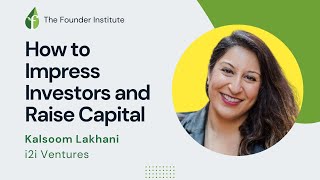
In this YouTube interview, Kalsoom Lakhani, co‑founder and General Partner of iDai Ventures, shares her perspective on early‑stage investing in Pakistan and emerging markets. She outlines the traits she values in founders—hustle, humility, curiosity, and a strong founder‑market fit— and explains how her nine‑year background supporting entrepreneurs informs her gut‑check for founder quality. Lakhani discusses pre‑seed and seed evaluation criteria, including market strategy, early traction, and the importance of a compelling vision, using a financial‑wellness platform as a case study. She offers practical advice on valuation (SAFE caps, market‑size grounding), equity dilution (typically <10‑15% at pre‑seed), pitch structure (storytelling, problem‑first, competition), and the role of data rooms. The conversation covers solo‑founder risk, the need for a strong C‑suite, when technical co‑founders are essential, and the limited relevance of IP in early‑stage Pakistani startups. Lakhani also delves into co‑founder dynamics, founder agreements, and the value of a co‑founder coach. She provides market‑specific insights on fundraising in Pakistan, the current funding drought, and the challenges for US investors entering emerging markets, including jurisdiction choices (Delaware, Singapore, UAE) and exit timelines (5‑7 years, fund life 8‑10 years). Finally, she touches on sector trends (B2B vs B2C, energy, biotech) and strategies for meeting investors and structuring cross‑continent deals.
Chapters
We have invested in solo founders. It is definitely hard. And I would say that that becomes like a key risk when we are investing just because of that, like solo founder risk, right? If that founder tomorrow decided that they no longer wanted to do this, like we don't really have another option, right? And so, but what I will say is that the solo founder in our portfolio of, I'm just trying to think if we've invested in any other solo founder. No, in our portfolio of 15 companies, only one of our companies is a solo founder. He is amazing. And that is the reason we took the bet. But also he was really good at building a C-suite around him. So I think that's also really important that if you are a solo founder, at least show that you can build like a really good top layer around you. Hi everyone. Yeah, it's so great to see such a diverse audience here. Thanks for having me, guys. So I'm Kulsum. I have my current hat that I wear is that I'm the co-founder and general partner of iDai Ventures. We are an early-stage venture capital fund focused on Pakistan and the region. We opened our doors in 2019. Prior to that, I was the founder of Invest2Innovate, which is the sister company to our fund. It was basically chapter one of my own entrepreneurial journey. It's a company organization that I founded In 2011, we were one of the first players in the Pakistani startup ecosystem, which is where I'm from originally. So really launched before the Pakistan startup space was even really in existence. Launched the country's first startup accelerator program back in 2012, and have now— that organization has now since scaled that work beyond our flagship accelerator. We've worked with other incubators and accelerators throughout the region. Trained entrepreneurs throughout Pakistan as well as in the Middle East, and then started to do research on what was happening in the market and really starting to tell more of a data-driven story about what was happening in the startup space. We started doing that back in 2014. And so all that to say was that I was doing this work with Invest to Innovate as more of an ecosystem builder, really a founder helping other founders in a really meta way. Really inspired by players like Techstars, Founders Institute, all of that. And then that really formed the thesis for our fund. I was, I don't have a typical investor background. I don't have an MBA. My partner, Misbah, does. I actually have a master's in conflict resolution, which funnily enough comes to use much more often than I think some people use an MBA. And so I had a lot of, I guess, imposter syndrome of becoming an investor, though I was on the front lines of working with founders and working with entrepreneurs in one of the hardest places to build a business. And so had a really interesting vantage point that kind of gave us that lens and that thesis of why we decided to launch our fund. And so a lot of people just kept saying to us, you know, you're working with so many founders, you're connecting them with investors, why don't you invest? And that's really realizing and also seeing how many bad investors there were in the market in Pakistan at that time. That really formed the thesis around Idai Ventures and the fund. So I was a solo founder with Invest to Innovate, have a co-founder and a partner in my partner Misbah. She has also a pretty nonlinear background to how she got to building a VC fund, but maybe more linear than me, has more of that traditional finance, was one of Acumen Fund's second employees. When they launched in Pakistan, worked at a global fintech. And so her and I came together to spin off and launch Ida Ventures in 2019, and we've been investing since then for the last 5 years. We've invested in 15 companies. We have 15 active companies in our portfolio right now, sector agnostic. We invest pre-seed, seed stage, really kind of dig in and help our companies after we invest. But that's Just a bit of an intro to me and happy to dive into whatever.
Awesome. Yeah, I think that's a great place to start. So when we talk about kind of founder archetypes, if you're talking about a hustler, visionary, a strategist, how important is that to you when you're looking into investing in a company and what traits do you look for in a founder?
Yeah, and that's a good question. So we invest at pre-seed and seed. And so really where, I mean, there's not much to evaluate at that point. You're looking at the business model and the opportunity, but because 'Cause I'd been on the side of supporting founders for about 9 or 10 years before I launched our fund, I became really good at sifting out. And I know probably, Megan, you do this all the time, right? Where you interview and talk to so many founders that you automatically have a really good gut check on, and it's not even gut anymore, it's just experience of who, what makes a good founder, or at least in your mind, 'cause it's subjective. And that is something that is very, very important to us. I would say that if we don't vibe with the, with the founder first, that's probably not going to get— even if we like the business model and the business itself, we probably won't invest in the company. Actually, we will not invest in the company. And one thing that we've done, one thing that I'll say about all of our founders and the things that they have in common, I think the through line is that they're all hustlers in some way. We can definitely see that sense of operating from a place of urgency, a bias towards execution, but also a sense of humility, knowing what they don't know. A really deep sense of curiosity, of like constantly in a growth mindset of really pushing things. And so that's, we've actually evaluated our, our founders from an assessment, a behavioral assessment, and they all weirdly were kind of very similar personalities. And so, you know, there's probably some like bias that existed where we're, where we're mirroring, looking for people that we, we really like as well. But I thought it was, I think it's really interesting when we look at all of our founders to see just how similar they all are. But for, for, for sure, found But we definitely look at founders first, and then obviously the business model has to really support what we're looking to invest in because we're investing in VC. It's a very specific asset class.
So we have a pretty broad question that I think might be a good one to dive into. Just to get to a pre-seed round, what do VCs look for? Obviously, you're looking for a hustler personality and somebody who you vibe with, but in terms of metrics or business type, What would you say to that?
I mean, typically, I think with pre-seed, if you're a pre-seed company, it's quite early on. You might have raised some initial family and friends money, you might have bootstrapped it a little bit. But what I would say is that at least there should be some sense of like, like a sense of like what your strategy is going to be in terms of tackling the market. Some people have at least a pilot in place, some initial traction. But I think what's really important is being able to paint the vision and the ambition of what you're trying to build. Right? So I think when you're speaking to an investor that early on in your journey, they're really investing in you. So number one, if we're placing a bet on you, we're trying to bet on the winning horse, right? Are you the person that can really execute in this business? What, you know, what evidence do we have of that? Do you have a background? As an example, we invested— one of our companies in our portfolio is a financial wellness platform. We invested in their pre-seed when they literally were basically just an idea on paper. But the reason we invested was because they had some initial traction, but beyond that, the two founders together were extremely strong. So Omer, one of the co-founders, had had significant experience building and working in fintech across emerging markets. So really understood fintech and, and really emerging markets generally. And then with Ali, his co-founder, Ali had built a business before this in Pakistan. So really understood Pakistan, which I think is very, very important. And so the two of them together, I think really brought those two things that you, that you needed in terms of complementing one another. And then the second thing was that the, the business of what they were looking to build, which their initial hook with our product was earned wage access. So even if you don't see a lot of traction in the business itself, if I can look at a comparable somewhere else, so I can say that, you know, what Ubbi is building is really similar to what was done by this model in Indonesia or this model in Mexico. And if I'm able to see, what that trajectory looks like and the founder is able to capture my imagination with their own vision of what they're looking to build, that's kind of how you make a bet that early on. And so, you know, we invested at their pre-seed and now they're raising their Series B. They're in 4 different markets right now. They've gone way beyond just, you know, earned wage access and are building, you know, they have payments, they are doing payroll processing, invoice factoring, and SME financing. And so, you know, this His vision, what I always tell people when they look at Abbie and our portfolio, I was like, the vision of Amer, we saw that back then, and now it's seeing it all come to fruition. But we really bought into and took a bet on that vision that he was painting to us really early on.
So that kind of dovetails well into another question that we've got, and this is maybe from the other side of the table, but if you are incredibly early stage, so if you're pre-revenue and only have a few thousand users to prove concept, how do you value your company?
Yeah, I think valuations this early is super hard. So you can do— I mean, honestly, this is why a lot of founders decide to do SAFEs this early on in their journey. And then if you're kind of trying to figure out what that cap looks like on your SAFE— so obviously SAFE is a simple agreement for future equity, so you're not giving away equity this early on in your company. And what often I don't recommend is that because the power dynamic is so skewed not in your favor as a founder that early on, right? So if you are trying to raise on a SAFE and you are trying to figure out what that cap looks like, that should at least be grounded in what the market size is. You can use that as like a metric for yourself. You can do it based off of comps in other markets and say like, you know, this is the trajectory that this company was able to raise at this stage. But market size is like a really great way to actually do like, you know, discounted cash flow doesn't really work at this stage because you don't really have cash flow to look at. But I think it is really good to maybe think about it, looking at it from a market sizing perspective and to kind of build based off of your strategy from that of what that cap could look like. But I would definitely not potentially raise a price round at a pre-seed stage.
Yeah, I think that's a valid point and that's something we're seeing a lot as well. So going back to kind of knowing the market, we have somebody who says, I'm based in the US and I've built an AI-driven legal assistant for lawyers in Pakistan. In order to scale, should I look for investors in Pakistan or VCs in the US who might also be interested? What do you think about looking for VCs who know the market and the product?
I think the challenge with Pakistan right now is that companies— or this is the current environment in Pakistan, right? So for people that don't know, Pakistani startups had like— were part of the huge amount of influx of funding that we saw everywhere in the world, but especially in emerging markets because that wasn't happening before. Pakistan went from raising $65 million in funding in 2020 to $350 million in 2021, $355 million in 2022, and then back down to like $70-ish million last year, right? Right now we're seeing a major drought continue, and that's, you know, as a result of also the macroeconomic climate. What we're really seeing is that a lot of companies raising for Pakistan it's really hard to raise from international investors. Given that you're AI, that might do some appetite, but what I would probably recommend is that, you know, first of all, building an AI assistant for, for just Pakistani lawyers might be very niche, right? Because, um, and actually maybe thinking a little bit broader than that, I think actually saying like, can I build this for, um, for lawyers in, you know, emerging markets or maybe lawyers in X places, because I think AI assistants, especially when you think about agents and maybe more complex spaces, AI makes a really good case for that right, right now. And there is a lot of funding flowing in that space, but specifically within that market, it is difficult to raise from international investors. So to the other part of your question, yeah, going to Pakistani investors is probably the more ideal situation. However, I would say that there's only really 7 or 8 Pakistan-focused funds and probably only 3 or 4 that are really deploying right now. And so, and also for all of us, and I don't want to speak for all of us, but they all are my colleagues. What I would say is that a lot of us are looking at really big markets, right? So if we're investing from a VC angle, we want to look at like, really big market sizes, really big market opportunities. So maybe thinking a little bit broader wouldn't hurt either. So that's just my perspective. Someone might have a different perspective, but that would be my advice.
So I was recently reading an article on Medium from Harlem Capital, and they were saying that one of the main problems that they've been seeing is founders not trying to really solve the number one issue, right? Or a big enough problem or the right problem for their customers. And so they're now increasingly focusing on like B2B and B2B2C software that really are, are having that, that are focused on that number one problem in order to get the multiples. Is that something that you're seeing? How are you gauging the opportunity? Like how do you gauge the opportunity in a problem? Is, are there tools that you use given that you are so early and those metrics are, you know, not necessarily there for a seed round?
Yeah, it's not even just early. We exist in a market like Pakistan where data is so difficult to come by, right, locally. So being able to quantify the market, it's hard in itself. So it is something that oftentimes you're looking at, you know, you know, you're looking at like comparables that exist in other places. You're looking at trends in terms of consumer trends. What I would say is that our last few deals that we've done were, you know, we're just closing a new deal right now that is building in Pakistan for the world. And that was our last two deals, that both of them are in the B2B space. And so I would say that those, that space is actually quite interesting. And especially with shrinking consumer spending, B2C is hard. B2C is hard anyway. And I think consumer tech is like really, really hard. And I think you're seeing just a lot of shrinking for funding that comes from that. That being said, some of our B2C companies in our portfolio. We're investors in DealCart, which is group buying within grocery for kind of lower socioeconomic backgrounds, really kick-ass founders. One of my favorite companies because it's so fun from a B2C angle to see what they're doing and how they're building. We're invested in a B2C fintech. So, but that being said, like I would say the majority of our portfolio is B2B.
Okay. And in terms of just founders focusing on niche industries or consumers, or is that something you've been seeing as well? Or do you feel like the number of founders willing to tackle or trying to tackle bigger things has expanded?
I've always been attracted to people trying to address big things just because I think with venture capital, it's such a, I often think that, and maybe you have a similar or different perspective, but I don't think VC is the right fit for every company, right? So sometimes for really niche companies, venture capital wants that type of hockey stick style growth. We don't just want like a 5x return, right? That's not something that will do well in our portfolio. And that being said, like, just because you're not raising VC funding does not mean that you are not a great company. It actually probably is better for you not to raise VC funding because we've seen how much VC funding can break things as well. And we've seen so many companies fold and fail because they've taken money that required and had expectations to grow at a really big pace. So as a result of that, looking at large markets, not super niche, to me is something that fits the asset class a little bit better and is more appropriate in my mind where it's more of a fit. And it doesn't— for me, I would never want venture capital to— I would never want to invest in a company and see them break because of the investors that invested in them. I'd want to see them be able to grow at the speed that they're supposed to grow at. So that often translates to not being super niche, but really looking at larger opportunities.
Yeah, no, I think at MI, we definitely have seen a lot of that. We work with all types of companies, but I think there are quite a few companies that are going to be very successful. They're going to have hundreds of millions in revenue, but they're never going to be that fast-paced, startup that a VC might be looking for. And that's fine.
Yeah. And they actually might be more successful than the VC-backed companies because I think that's why this asset class is so high risk is because you're taking a lot of bets and some of them can go to complete zero. Right. So I mean, that's a bigger commentary on venture capital, but I think that some of those companies that are going to make tons of revenue are probably in some ways arguably, and have more sustainability built into their business. In some cases, those are great companies too. So I just think that figuring out for yourself as a founder what kind of investors are a good fit for you and for your journey and your trajectory is also a very important part of your fundraising journey.
So I know you mentioned price rounds earlier, but we do have somebody just asking how much should a founder expect to give in terms of percentage during a pre-seed round?
Pre-seed, I personally wouldn't give up more, more than 10%. It just depends what you're doing and how, you know, how much the round is. That's the thing. And there's so many dynamics, so I can just throw that number out there, but there's so many dynamics and factors that you have to take into account. Yeah, I probably wouldn't be giving up more than 10 to 15% at that round.
Okay.
And oftentimes it's a lot less.
How, what would you do to win an investor on a first pitch? What's the most critical pitch components in your opinion?
Critical pitch components. I think like being able to frame, first of all, like I always think so when I've done pitch training for founders, I always talk about it from a storytelling angle. So you're basically telling investors a story, right? And you know your business better than them, but What I always tell them is like, what I always tell founders, I'm like, you don't, don't tell me something before I care about it. Right? So if you're building a story and you've already told me the end before you've actually really built up the beginning and told me, gotten to a climax, you've told me something before I care about it. And I'm probably gonna forget that information. So as an example, I always tell people, I'm like, don't tell me the solution right off the bat. Tell me the problem. Tell me the opportunity. Tell me the market size. Build the story. When you get to kind of that climax of the story, that's when the solution comes in. That's when you kind of frame what the competition really looks like. You can talk about your team then, you can talk about your competitive advantage. And so really think about it from the lens of like, how am I building a story that can capture your attention? Because investors are super fickle creatures. There's a lot of herd mentality that exists. You want to capture their attention and you want to And oftentimes they've seen a million pitches. The second thing that I would say is that don't assume that they haven't seen something similar to this before, right? So my biggest pet peeve is whenever I ask you who's your competition and you tell me you don't have any competition, I'm like, that's BS. There is probably competition that exists. This is probably, this is not, unless maybe this is like a very, maybe you've created something from an IP perspective that is very, very novel and new. But for the most part, there's something else that exists that's out there. So I not only wanna know who that competition is, but why you're better than the competition. What is the urgency of why you need to exist? I think that is a really important question for you to answer in that pitch. And I think like, you know, in terms of being able to frame all of it, like you should try to be as succinct as possible. So don't try to go spend too much time talking about, so even in a story, right? If you spend too much time talking about like the initial exposition of everything, you're gonna lose your audience. Don't like spend too much time, try to get to the solution as quickly as you can while still building the story. So there's a lot of art in this, but I really love the TED Talk by Andrew Stanton, who's one of the Pixar founders. He does a great TED Talk, which is called, I think it's called The Art of Storytelling, and it's great. It's actually, I use that from a pitch perspective in terms of when I design a pitch training. Because his whole premise there is like, make me care. And so then I use that TED Talk as a jumping point for how founders should build pitches.
That's interesting. I'm gonna check that out. We do have a, in the same vein of pitching, we have someone asking, how important is it to have detailed financial projections when presenting to an investor?
Definitely in, I think what's important in your pitch deck, and definitely always put your pitch deck on DocSend or somewhere where you can track because you're putting out information. So you wanna definitely be able to track who's looking. Put in your actual deck, your initial deck, don't put more than just your high-level financials. First of all, when you have, and you're starting to get into deeper conversations, then you can give that investor access to a data room. The data room can have a lot more information. If you're early in your journey and projections are really projections, A good investor is not gonna expect you to have like 5-year projections because it's really grounded in just hypotheses that you haven't tested yet, right? But I do think that like if you're a seed stage company, we wanna know how you're thinking, at least projections gives us a sense of your ambition, your vision, how you're seeing everything play out. So I would put that information honestly in the data room as they're digging in. They can get into things like, your financial projections deeper into the analysis. They can get more deeper into your marketing materials, thinking through like more information on the team, like all of that, put it in the data room, your initial pitch, keep it like relatively high level. So it keeps, it creates a sense of interest. And then if they want more information, you can give that to them.
And if a founder doesn't know much about VCs or about kind of the financials of a business, that's not necessarily their background. Is that a red flag for an investor, or is that something that you think can be learned and investors feel okay? Okay.
Yeah, totally. It's all about relationships at this stage, right? So if you don't know a lot about VC, that is okay. Try to go in a little bit eyes wide open, though. So don't try to be naive when you get there because, you know, investors can probably smell it on you. So try to do a little bit of what I, what I always recommend founders do is go if you're looking and speaking to a couple of VCs. Go, don't just speak to them, go speak to their portfolio, right? Who's in their portfolio? Who are the founders that are in there? Oftentimes people will have a conversation with you if you're out of hopefully a privileged place where you get to weigh out investors and be able to decide who gets to be part of your round. Those founders will tell you how good those investors actually are on their cap table. And you don't, you know, when you're thinking about this, like, come at it from a place of abundance, not scarcity. Don't think that if you say no to an investor, you don't feel like they're the right fit for you. That that's going to be the end and you won't have other investors lining up to write you checks. Come at it from a place of saying, like, this is going to be getting into a marriage with someone, right? Because it really is, especially when an investor comes in early into your company. So do your homework, look at their portfolio, the kinds of investors, kinds of companies that they invest in. And if you get to a certain stage, speak to those founders and really get a sense, like a reference check on the investors. And I think That's important because a lot of founders, you know, a lot of investors will do reference checks on founders and a lot of founders don't do the other direction. And I really think you should, because some investors will all say that they're founder-friendly. They all say that they love to help after they write the check. Very few actually do. So you want to be able to check that with the founders that they've invested in.
We have a juicy question, which is, what are the main types of co-founder conflicts that you've seen or experienced?
I've actually— this is where my conflict resolution background has come in. I think, you know, what's interesting, so a lot of founders don't often realize that they should set up, they should have a founder agreement in place before they start their business together. So oftentimes, if you're not nailing down from a legal standpoint, what does the business look like? Who gets what? If there was to be a conflict, who gets to stay? Who gets to go? Like, create the framework there. Feels very weird to do that when you're trying to set up— it should feel— it's a prenup, right? Because there, there are a lot of reasons that businesses fail, and sometimes co-founder dynamics just come to play. Like, it's— I've seen it happen in our own portfolio where, you know, they— two good people that just had very different visions for where the business was going, and it just created, you know, a really toxic environment. And from a workspace perspective, it ended up unfortunately being where one founder did have to go. But, you know, if you have a founder agreement in place, at least from a legal standpoint, it doesn't rock the boat for everyone else. You just have basically something that's a little bit clean. So I definitely think that's really important. I definitely think it's really important to— I mean, my partner and I have a partner on the fund. We've had a co-founder coach and I love our co-founder coach. And I actually learned that from NPR has a really great podcast called called How I Built This. The SoulCycle founders, which SoulCycle is a great spin company depending on your preference for spinning, but the co-founders of SoulCycle talked about this in their episode of How I Built This, that they actually got a co-founder coach and it was the best thing for their relationship. And I would say the same for my partner, Miss Benay. She and I get along so well. We respect each other so much, but we are very different people, which makes us better investors together. But also it means that We come at things from different angles, right? Which is, again, that discourse is what makes us, I think, good at investing, but it can create conflict. And I think being able to have a coach that helps you guys come to a deeper understanding of one another, it is almost like I keep talking about, like we're talking about like a prenup in terms of the founder's agreement, but also like a co-founder coach is like a marriage therapist. You are getting into bed with this person that you're building a business with. And so it is like a marriage. My partner and I joke that sometimes we talk to each other more than we speak to our respective significant others. And so given that, you should do as much work on your co-founder marriage as much as you would do on your regular marriage, hopefully. Right. So I definitely think that that's a really important thing. And it's something that since we've done it, I recommend it to other people all the time. I think it's such a great, it's such a great thing to do for your relationship.
Just out of curiosity, how long did you guys know each other before you started a company together?
Before we started our fund together, we've known each other at that Point for 11 years. She was on my advisory board with Invest to Innovate. So we've known each other for a really long time and we really love one another like as human beings. And so that, and we still have conflict as every co-founder does, right? And never in a way that was ever in a bad way that, you know, we really needed a co-founder coach. But I always say to people, I'm like, we've known each other for so long, we love each other. We are actually friends outside of this. And I believe that we need that just as much as I believe that a lot of couples who go to marriage counseling sometimes are really great couples that just believe in that extra overcommunication.
So, yeah, I mean, quick tangent, they talk about how psychological safety can be really critical to successful teams, right? And that's building, having a longstanding relationship, having complementary skill sets, but also being willing to fail in front of that other person and admit when you totally Knowing that you can be vulnerable, obviously going to some sort of culture code is going to factor into that, or somebody who's going to admit it.
Totally. And I think, yeah, and Mispah and I are, because I also, and I don't want to gender it too much, but being both women, right, we tend to have come from a place of vulnerability. We can more easily come to a place of vulnerability than sometimes I've seen our male co-founders in our portfolio can, right? And so we can easily over-communicate when one of us is feeling a certain way, but having a coach can actually act as a great facilitator for people that can't.
So we are getting requests for your coach's information. So if you want to provide us with that, we can share it. Do you always invite founders?
My coach unfortunately is over— he's oversubscribed, but I'm happy to recommend other coaches for sure. We're so lucky that we work with him, that he He took us on even though his assistant was like, or his manager was like, or whatever, his agent was like, don't take on any more people.
No, I mean, I think we've seen in the 15 years of FI, we've seen co-founder feuds be one of the main reasons that companies fail. And really, we talk about it like a marriage, but really people don't necessarily think, oh, this is a person I'm going to work with for 15 years. And when you start working at a company, you don't think, oh, this is my coworker for 15 years. But really, when you're a co-founder, that is the reality. You should plan on a 10 to 15-year relationship if you're thinking about a long-term exit. Do you always invest in single, or have you ever invested in single founders, or do you always look for co-founders?
We have invested in solo founders. It is definitely hard, and I would say that that becomes like a key risk when we are investing just because of that. Like solo founder risk, right? If that founder tomorrow decided that they no longer wanted to do this, like we don't really have another option, right? And so, but what I will say is that the solo founder in our portfolio of, I'm just trying to think if we've invested in any other solo founder. No, in our portfolio of 15 companies, only one of our companies is a solo founder. He is amazing. And that is the reason we took the bet. But also he was really good at building a C-suite around him. So I think that's also really important that if you are a solo founder, at least show that you can build like a really good top layer around you, even if you don't, you know, have a co-founder. And I actually don't— I recommend that people don't just have a co-founder for the sake of having a co-founder, to everything that we just said, right? Because it is a really deep relationship that you're building. And so if you are a solo founder, just build that layer. And that helps to mitigate some of the risks that investors flag when they're doing diligence on you.
And is this solo founder, is he the technical founder? Is he a technical founder or is he—
No, but it's a logistics company. So he actually has the background that's needed for it, but he had a great CTO, a great COO. So all the things that he didn't have, but because his background was mostly on the business side and has had a background in logistics, like he was a great founder for this.
Um, we do have a question. Do you need a technical co-founder in order to raise money or a tech startup, for a tech startup, or is that something you can hire later? Would you invest in a company that did not have a technical co-founder?
We've invested in companies that had— yes, we have invested in companies. Most of our companies are what I would say are tech, um, not tech first, but tech enabled. And so not having a technical co-founder wasn't an end-all be-all. That being said, they did need to show that they were able to ideally bring it in-house or have at least like that CTO that was brought on at least by the seed round. Or if even if they were outsourcing it, they have a plan for how you brought it, how you brought it in internal. For a tech first company, you should have a technical co-founder. We just, we invested in a SaaS integrations company that was Pakistan for the world, so global, and he himself is a tech guy. So I think that's great. But actually what was interesting is that he is a techie. We actually really liked that he had a really good, like his chief co-founder was also like even deeper on tech than he was, but then also You know, one thing now that as we invest, we're like, you need a really strong go-to-market person, right? Because that's also a really important thing that you need for a tech person. So with a tech founder, so I think it's a balance for sure.
And then we talked about IP a little bit and having heard ideas over again, how important is IP in swaying investors to engage in your startup?
If you have IP, like in terms of like you've been, you've gotten a patent, like there's something really unique in what you've done, and then it's like really showing that by virtue of like being able to like, you know, point to something great. And obviously that, that creates a moat for you. In Pakistan, the IP regime is very like underwhelming and very underdeveloped. And so at least the the enforcement of it is very, is very lacking. So I would say that like that is, it's a bit trickier. So IP is not something that I typically assess, and especially early on in a company, but I've definitely seen much more deep tech technical companies here in the US where IP, like IP is, plays a big role in what they're building. So I think that definitely plays a role. And if you can show that that's how you create your moat, which is really that competitive advantage and prevents other people from being able to compete with you. That sometimes comes from IP, and I think that's a great thing.
Yeah, I think IP protection globally is definitely an issue to think about. It's obviously going to be a challenge for any US investor thinking about investing internationally. Any other challenges come to mind on that one? What are— for my key US investors? Who are investing internationally?
Oh, for US investors investing internationally issues, I would say, I mean, there's so many. Number one, if you're investing in a market that you do not know. So I would say this, like we had a huge gold rush of investors coming in in 2021 and 2022. If you invest and you've never been to the market and you don't have a co-investor, at least that understands the space and understands Pakistan, these are really hard places to build, right? And some things that come up are like, you know, the government changes and like all of a sudden, you know, some policy that was in place is no longer there. Like you need investors on the cap table that can help the founders navigate things from a local perspective and understand the local perspective. So I think what I started to see was that investors were just writing checks. They saw a founder that was in YC and they were like, Great, here's like a $100 million company or valued at like crazy amount versus actually understanding the nuances of, you know, you can't just build a valuation off of a population size. It's actually based off of an addressable market. It's based off of what real, like more detailed nuance than is there. The other thing is that a lot of investors, the US investors looking internationally, it's like, how are you going to get your money out? The dynamics of like investing in those markets is often there's a lot of structural challenges sometimes, right? So can those founders set up holding companies abroad? If there was an exit, would there be an issue of you getting your money out of that country and out of that market? If a company is in a highly regulated space like fintech, as you as an international investor, would you have to be registered by the central or state bank? All of those things come into play if you're an international investor looking at emerging markets, and, and there's so much complexity in those spaces that I think it really helps to have a local or an investor that understands the market at least investing alongside you.
So you mentioned that, you know, there's a gold rush in Pakistan. We have a question regarding other emerging markets in the world who are attractive to VC investments. Can you think of any other countries that are currently experiencing that or where you think The emerging— yeah, really hot right now.
Um, I think a lot of the liquidity that we saw in 2021 and 2022 when interest rates were a lot lower really is what led to that gold rush, right, in, in terms of emerging markets and especially untapped emerging markets, which is why we saw things happen in Pakistan for the first time that hadn't happened before. We saw like Tiger Global, Kleiner Perkins, Sequoia, right, checks in Pakistan when they never done before. That has all slowed down, stopped. And so what I would say is that a lot of those investors generally are not really bullish on most emerging markets. The emerging markets that I think are attracting attention still are Latin America right now, especially from a US perspective. A lot of US investors are definitely looking at LATAM. I think, you know, and then within LATAM, it's, you know, obviously every country is having some of their, you know, Argentina is having massive inflation issues. And so not probably Argentina as much as they're looking at like a Brazil, a Mexico, maybe some other markets. Um, people are looking at Africa still. Um, and middle— the Middle East is having like, again, massive gold rush just because there is so much money in the GCC countries. So Saudi Arabia, UAE, there's a lot of like sovereign wealth as well. And that money is flowing into, um, companies that are, are are building in that region. So a lot of international investors or US investors are also looking to be part of that as well. I think India never really had a slowdown, to be honest. I mean, everyone's having a slowdown, but India also did a really good job of building their own indigenous ecosystem. So even as things slowed down, they still had their own funds investing in that market. So I still think that there's a lot of activity there. I think Southeast Asia is super exciting and really interesting. Yeah, I mean, my whole thesis is that I believe that innovation is everywhere. So I'm already biased towards the rest of world and where I think opportunity is, but I think US investors tend to follow each other. And so LATAM is probably because of proximity is where we're seeing a lot more attention.
And for investors who are investing in foreign companies, Do you think there's an advantage to being a Delaware LLC, or do you think there are—
Yeah, yeah, yes, I think so. I think for US investors, a Delaware LLC is just easy. Like, it's something that people understand. You can invest. I think it's like just a lot more onerous and painful to invest, but Singapore is another holding jurisdiction. That's quite popular with emerging market companies, the UAE, a few others. But I would just say that, you know, I think Y Combinator has their company set up in Delaware. I know like funds like Hustle prefer companies that are set up in Delaware or in the US. So I definitely think that there is like at least a tilt towards the US.
And then we've got a question. How long do you usually hold on to an investment before looking for an exit? So how long are you guys planning on holding on to your investments?
Because we invest so early, probably like we invest pre-seed, seed. I would probably say that we'd be looking at things at that Series B, Series C level, at least from a secondary standpoint. At that point, there might be an opportunity to have an exit, especially if Accel's quite quite challenging when it comes to exits. And so I would probably see it from that lens of like a later-stage deal.
So if there's like an oversubscribed round or yeah, if you could get on the—
Exactly. Yeah.
So I guess, what do we think? 5, 8 years? What between it?
Yeah, I mean, I think a fund life is 8 to 10 years for the purpose of those exits. I would say that on a very optimistic standpoint, if you were waiting for that B, yeah, 5 to 6, 5 to 7 years.
Okay. We've got somebody asking, what trends are you seeing in the energy sector specifically with renewable energy and AI integration? What do you think are the biggest challenges and opportunities within the energy space? Do you know the energy space well?
I mean, I've invested in an electric vehicle company. I definitely see that there's a lot of— in emerging markets right now, EV and two-wheelers tends to be the biggest trend. I'm really interested in kind of thinking about carbon offset. There's a lot of platforms that are being built around that. The energy space, you know, I think renewable is not really a VC play, at least in the markets that I look at. So, but I think that when it comes to AI and AI and obviously the ramifications of AI and data that's building is that there's going to be a huge environmental ramification of like all these centers and data centers that are existing, right? So I'd be curious to see like things that are from that angle that could be coming up there. But yeah, I've only had one energy deal in my, in my own portfolio because of the Venn diagram of Pakistan energy, like environment and adventure, it's like right now it's like EV two-wheelers.
Yeah. And so I do just want to remind everyone, it is about 10 minutes left, so get in your questions. And then I think there's a light networking afterwards. So if you have questions, please send them in now so we can get them. It would be nice to hear An opinion on investment in the pharma or biotech space.
Yeah, deep tech. Um, I don't personally have a thesis on that just because I'm not a specialized investor. What I would say is that there are investors that are specialized in that space, and because it is quite a specialized space, I would probably look at investors that are like in that space, understand that space, have connections that can help you navigate, especially some of the regulatory things around that. So I know especially in the US there are investors that are very specifically biotech investors, and I think, you know, some of them are based in Boston where there's a huge concentration of biotech. Obviously there's like, I think investors like Lux are like that. So there are investors that are specialized, and I would probably say that that's, that's where I would look if I was looking to raise investment from people.
And we've got a question. How do you meet investors if outside of networking?
How do you meet investors? I would reach out to people on, I mean, LinkedIn cold messages are hard. See if you can get warm intros to people, right? So if there is someone that, you know, you've, but honestly, sometimes cold intros work. One of our companies, CreditBook, when they raised in their first round, that our Tomorrow Ventures invested in that first round, and it was a cold message. So I would, I would definitely try to find a warm angle into trying to get to that investor or trying to get to that fund. Try to see if you can go, yeah, networking events are great. Pitch events are great just for that reason. It kind of gives you that visibility. Build your own, like, be a thought leader in this, in the space that you're building in is great. It's a great way to get attention from people. One tactic that I have on LinkedIn right now is I'll post most of my LinkedIn posts and people go to my LinkedIn is mostly about our portfolio companies. And I, you know, as a result of like posting, some of our companies have gotten angel investors and some people have been like, oh wow, I really want to learn more about this company. And so it helps to like really think about for yourself and what you're building, be a thought leader in that and use your LinkedIn for it. Because people may reach out to you as a result.
And then we've got one last question about kind of transcontinental investing. So if you are looking for investors from two separate continents, how would you structure that deal? Do you create a holding company in either or both continents or whichever countries related, or does that make it harder on investors? Is it much harder to raise from two regions?
No, I think investors, investors will figure it out, right? Like, I mean, if you— and if I wouldn't set up two separate companies, um, hopefully they don't push you to do that. But ideally, a lot of investors are quite used to investing in different geographies. I've invested in holding companies in Singapore, UAE, the US, Pakistan, um, Cayman. So you're— we're used to those jurisdictions. And so that's— it's not your job to have to worry about Unless they're forcing you to, like if you're in a program that makes you do it. But ideally, don't set up multiple, multiple companies if you don't have to.
I feel like I recently heard that like 1 in 2,000 cold messages gets an investment. That's, yeah, that stat has stuck in my mind.
Yeah. And I, this is a great question too that's in there. What made it stand out?
What made their message stand out? I'm curious.
You know what I think is interesting? So Hasib, one of the co-founders of Creditbug, is one of the most charismatic founders. He gets you so excited about what they're building. And I think he was really good at, he wasn't just reaching out. So what I hate, by the way, when people reach out to me from a cold message standpoint, it is very clear that they have not done their research on what I invest in. So I'll get a cold message and someone's building a company in India and I'm like, I'm not investing in that geography. So obviously if you've done your research, Or someone will be like, I'm doing this. And I'm like, obviously I've invested in a direct competitor to you. So just do your homework, look at the portfolio. So I think what Hasib might've done was that he was really specific. Like he was like, hey, I saw that you invested in this company, in this geography. This is what we're building. This is the vision of what we're doing. And I think it really did stand out because I think of, you know, when he told the story, it really captured to what I was saying earlier, it really captured the imagination of the investors that it wasn't just BTV, they were Tiger Global's first check into Pakistan. And so they were able to really get people excited about what they've been building for some time. Awesome.
So I think we'll just wrap up. I guess I would say we're talking median pre-seed and seed is essentially the exact same as it was in May 2023 with a slight tick up in post-money valuations. What do you expect for the rest of 2024? And do you have an outlook for 2025?
I can't comment on the US since I don't invest here, but in emerging markets, I think we're definitely seeing a very down time right now when it comes to funding. I think right now this is when, you know, it's kind of the, the companies that are going to make it are the ones that are going to make it now because they're able to build sustainable businesses. That are not capital intensive that will attract capital, but everything exists in a cycle. So every time people get really bummed out about what's happening right now, I'm like, this is all as you, and you've probably seen this many times, Megan, you've been at FII for 8 years. So it's like everything exists in this circular cycle of it will come back. And ideally when money, if you build a good business with good fundamentals that is exciting and attractive with a huge amount of opportunity, that should be able to attract money regardless of the situation that we're in. So I do think it'll come back in 2025. We'll probably see more of it coming back, but 2024 is going to still be a pretty hard year, I think, especially with the elections coming up here in the US. So even if you're not in the US, it's going to impact everyone in the world. What's happening in Israel and Gaza right now, what's happening in Russia, Ukraine, all of that just impacts like everything. So, you know, I think this year is just going to be hard and we'll see what will happen next year. I think hopefully it'll be on the up.
Yeah, I'm optimistic that this year will end a little higher than last year and will— I think AI has been a great equalizer and I think that kind of opens up a lot in the next for emerging markets outside of, you know, yeah. So I think it's an exciting time. Totally. Yeah, I don't know. I guess we'll have to see where it takes us. But I really appreciate you taking the time to speak with us, Kelsom. Thank you so much for all of your insights. Again, we can open up the networking rooms and people can get to know each other, do some chatting. So thank you everyone for joining. We really appreciate all of your questions and have a wonderful night or morning wherever you are.
Thank you so much. Thanks so much for having me.










