How to Launch a Win-Loss Program w/ Ryan Sorley | POWER HALF HOUR
Ryan Sorley walks through launching a win-loss program in seven steps, starting with identifying your program type and narrowing objectives. He covers who to interview, how to recruit them, interview best practices, getting sales on board, and measuring impact with a readiness assessment.
Chapters
Foreign.
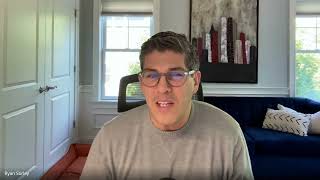
Everyone, and welcome to another power half hour here. Happy Friday. Happy Friday. It is beautiful out in North Vancouver today. I'm Adam. I'm on the content community team here at Clue. We are going to be chatting about how to establish a win loss program, how to how to build it successfully and give you tactics in order to do so in 30 minutes or less. Let's get into this. So one of the questions we have heard is where does win loss sit in your org? Our friend Carrie from Molecule asked this question to us before the event itself. Where does it sit? Does it sit in product? Does it sit in marketing? We actually just did a Win Loss Trends report asking this very question along with a million other questions too. And some of the results that we saw was actually product marketing. Product marketing is where it sits most heavily followed by sales, marketing, sales and others. And on that note, let's bring in the win loss expert himself to maybe answer this question and then take over the steering wheel. It's our co founder at Clue, our VP of Win Loss here at Clue, Amazon best seller with his book Blind Spots, how to build a Win Loss program. Did I get that right? As the subtitle. I should know this since I've looked at this book this 172 times. It's none other than Ryan Sorley. Ryan, thank you so much for joining me today.
Hey, everybody, thanks for joining us. Adam, thanks for introducing me. Super happy to be here to talk about winloss, a topic that I'm super passionate about. Yeah. To this slide. It's really interesting because we work with a lot of folks who are on the product marketing side, competitive intelligence. We don't work quite as often with sales leaders owning programs. They're typically the kind of the stakeholder part of the stakeholder group that finds value in the data that's being collected elsewhere. But really interesting to see the split and customer success in there. 4% oftentimes. That's because they're really interested in CHURN programs and obviously they own churn. So yeah. Cool, cool data, Adam.
Yeah, there's plenty more of that in that Win Loss Trends report too. Ryan, thank you for. Thank you for the plugs. Okay, so what we're going to cover, I'll hand this over to you, but for folks in attendance, we've sourced a ton of questions which has really guided what Ryan's going to get into today because we're here to answer what you want to learn about with winloss and Ryan over to you.
Yeah, let's do this. The first question is just how do we get going? We want to get into some questions that were asked about like the interview process, how to select the right companies to interview. What's the best practice for actually conducting an interview? We get into sales and a relationship with sales, how to partner with them. They can be super helpful and supportive with win loss programs or they can be the blocker of win loss programs. So we want to make sure to get that dialed in that relationship right. And then how do we create meaningful insights if we have time at the end? Like what do we do with all the data that we're collecting? How do we get it to drive positive change within the organization? So moving along to the first area of how to get started, we have a lot of data on this area. Great questions came in here. I know Adam, you were going to read through these, but maybe I'll just kind of show them up on, on the, on the slide here. As I, as I kind of set this, this area up. So we a few years ago took a lot of our knowledge of win loss and put together a presentation model called the insight model. And I'm going to talk about that in a few minutes but, and I'm going to touch on the first couple of steps within that model. But we're going to give you access to the entire model to go through it end to end. So how to get started, how to manage an effective program and then ultimately how to get as much value as you can out of the program. So let's jump into that. When we look at win loss programs, there are like seven key steps that we've identified that are important to get right. The first one is we, we need to look at the program. What kind of a program is it? Is it a churn program which is a type of win loss program? Is it a top of the funnel program where you're trying to figure out why people are not like continuing on in your sales process. So trying to nail that down is really important up front. We want to get into next, like what are the objectives for the program? What are the questions that we're looking to learn? Then we want to follow that with how are we looking at the opportunities, all of our opportunities, which one should we focus on? We can't interview or survey everybody. Which ones are most important? Then we get into like the questions that we're going to be asking those people. We're getting into the way that we recruit. How are we getting those people to, to agree to participate and actually show up and then what is the best practice from an interview perspective. And then ultimately that that holy grail of the program, how do we take all of that data, turn it into those insights? So we'll give you this model and today we'll touch on the first two areas which is I and N. So when we're looking at identifying program type, we really need to be certain about how we're classifying ourselves and how we're classifying our win loss program. Are we a company that, you know, closes 10 deals a year that are huge $20 million deals? That's a very different win loss program than a company that closes 10,000 deals that are transactional in nature. So like who are we? What what are we we want to get into? Like what are we looking to learn and, and along the buyer's journey. Is this something that as I mentioned is more of a top of funnel effort or do we really want to dig deep into those situations where we lost to a key competitor? We went all the way through the process and they, they down selected us, unfortunately. What about our offering? Do we have like a best of breed point solution with super narrowly focused a defined set of competitors or are we more of a platform organization? Do we have a ton of products that are kind of stitched together to create this platform approach? And then from a sales perspective, do we have anal sales partners that sell most of the what we offer or do we have a direct salesforce? Is it an enterprise level team? Is it an SMB team? So all of these factors play into the type of win loss program that you're going to want to build for your your own organization. So that's the I, let's move along into the N which is narrowing down objectives. This is really, really important for anybody who's actively involved in a win loss program. Starting a win loss program, it's critical to be able to answer the question like who are my internal customers of this data? Am I just doing it for myself to answer a question that I have? Or have I connected my program to the head of marketing or head of sales or head of product or customer success or the CEO? What are their data needs as it relates to this program? More and more we're seeing win loss program owners being asked by the CEO to prepare information slides data for board meetings on a quarterly basis. Is that your use case or are you more kind of sales focused where you're looking to enable the sales organization and give them really interesting intel to help them differentiate in the marketplace? So you need to figure out who those People are that you're looking to serve, then you want to interview those folks, the functional leaders, to find out a couple of things. The first one is what are they hoping to learn through the program? What are the blind spots that they have? What questions would they ask if they were conducting the interviews themselves? And then the third one, there's four here, but the third one for me is what are the actions that you're looking to take with the data that I'm going to collect for you? Right. So if you're able to figure that out as it aligns with those stakeholder groups, you're starting off like in the best possible spot. Because what you've done is taken your program and you've expanded it out to other groups and they're really depending on you to be able to answer those questions, serve their data needs. So it becomes an organizational program at that point. And then once you've done that, you want to take all of that data that you collected and you want to be able to aggregate it and analyze it and identify like, well, what based on all of the data interviews that I've conducted internally, like, what are the top themes that I'm hearing? What are. What's most important? And by doing that, you're able to then use that insight to build your approach to your program. Like, who should I be interviewing that aligns with these objectives? What questions should I be asking that align to these objectives? So it's all about, like, getting all of these other people on board with you so that you can really design your program to add maximum value.
I like that you've made this now the in model. You're just becoming more efficient here. It's just another model within a model at this point. Ryan, I know you love your models.
Models within models within models.
This is an interesting question, actually, that came up as well because I've heard this so many times, Ryan. Even we. We ran a session together maybe even like four years ago. It was making me feel old now. And it was the constant question, is this win loss? Like, how do we run it? But specifically for people that are solo PMMs, teams of one. We saw in the data, hey, product marketing owns win loss a lot of the times. We also know product marketing own a boatload of stuff. So I would love to kind of get your take here. And Claudia shared this shout out, Claudia, I hope you're doing well. Of how do you start to eat the elephant when you're a solo pmm? And this is one of the many things you have to do one bite.
At a time, Adam.
One hole. I set you off.
You set me up for that one. Yeah. So this is a really good question. It's a, it's a broad question. I could talk about this for hours. I think the, the advice that I have for somebody who's running a solo program is think about like, your, you know, how you're being measured, your, your, your okrs, whatever they, whatever you're focused on for that particular period of time and how that program will serve you, like, what data you need to do your job as well as the data that you're collecting for your stakeholders. By doing that, you're able to kind of like narrow your focus a bit and you don't have to like, bother sales by asking to interview or collect data from everybody. You've got a very, very focused approach. And the other piece here is not to do it, not to feel like you have to go out on your own. To run this program. You should build a committee internally, and that committee should be made up primarily of functionality representatives. Doesn't have to be the functional leader, but maybe on the sales side it's, it's sales operations. Maybe on the marketing side it's demand gen. Maybe on the customer success side, it's a field manager who's responsible for customer success. But by getting all of these other people involved to like, sit there and listen to the work that, the, the data that you're collecting and review it and then figure out how to action it, like, that's, that's the best way to go. So I, I, I could, like I said, answer this question in a million different ways, but my, my advice is not to do it alone, right? And to leverage relationships, to kind of build a tribe within the organization that backs you, that, that helps helps get the program, evangelize the program internally because that, that will unlock doors for you. There's a lot of other stuff that, that you can do around enabling, like the sales team in particular. So when new sales teams come through, new hires happen. It's really important at that point if you're a product marketer who's involved in enablement, to let them know about the program, to make sure that they're expecting somebody to reach out to them when they win or lose a deal that will help you out tremendously and give them some sample data that you'd collected, some interview summaries to whet their appetite for what they can expect when they win or lose a deal. So I think we should have a side conversation about this one. Because it's so meaty. But that's. Those are some tips. And read my book. This is not a book promotion. But all the answers that you have are within that book.
Was that illustration from the book as well? I feel like it was, wasn't it?
That was. Yeah, yeah, yeah. This one is also really like, interesting question because most people you ask would say, well, it's win rate, right? We, our win loss program will affect our win rate. I think I struggle with that answer because there's so many things that affect an organization's win rate. Like the weather, like the economy, like maybe a new sales enablement or sales training methodology, like a new product release, a competitor falling on their face. You know, there's all kinds of stuff that happens out there. So saying the win loss program helped you improve your win rate by 20% I think is just kind of bull in my opinion. So what I tend to recommend here is that you look at all of the different things that your program is going to feed into based on that exercise you went through talking to functional leaders. And within those areas, you try to figure out how you can measure the impact in a particular area. So one story, this is from many years ago, but we had a product marketing client at a cybersecurity company and he was struggling because he was hearing over and over that the organization, the pricing model was confusing. There were a lot of people who because of the confusing pricing model went with their competitor who had a super simple pricing model and he needed some support. So he leveraged our program to prove the point that they were losing business because of this. And that led to him getting budget to hiring a pricing manager to ultimately increase their, their win rate against some of these key competitors. So the, the, the lesson there is he had a specific objective. He, he went and collected data to support that objective. He got what he needed to be able to ultimately impact the organization. So when you're looking at your program, you have to kind of, there's a lot of different ways that you can measure, measure impact, but it's very personal to your, to your, your goals for the program and also what your organizational objectives are at that particular moment in time. So at Clue, like we have top three organizational objectives every year. We have metrics that tie into those objectives that we're all held accountable to deliver on. Like figuring out what those are if you're not in the know. And connecting your program to, to being able to serve those areas is critical way to prove the value of the program. The next area is around the interview process. And Adam, do you want to cover this question?
Sure. We get a lot of rounded questions too and it's cool because we have a ton of awesome research directors that we've gotten to speak to. And yourself, Ryan, a former win loss interviewer. Now, now, now just book bookseller, author. But focus on who do you prioritize to interview for Win loss?
Yeah, so prioritization has a lot to do with your, your, once again, your objectives. And when you're collecting data to answer questions, you have to be able to collect a certain amount of sample size in a specific segment of your business to be able to answer answer key questions. So like for us, if we were to go out and conduct win loss interviews, we might focus on our enterprise level accounts in North America against a top competitor to be able to answer the question why are we losing to a top competitor in this particular area? And by getting 10 interviews, that gives us enough sample to be able to start to identify trends within that particular segment. So as it relates to who to interview, we typically are looking for that level of segmentation. And then within the account it's usually like the champion, not the ultimate decision maker or the economic buyer, but the person who was leading the charge on the evaluation process. Looking at all the different vendors, the pricing of all the different vendors, the internal kind of cog in the wheel that's talking to all of the stakeholders and collecting data. That person is typically the most informed and can go deeper with you than, than anybody, anybody else.
So do you have a recommendation? I remember talking to Alexis, like one of the win loss folks on our team around how like typically do you want to find people that have gone really far in the sales process? Is it, does that matter to like as much or is that kind of dependent as well on what your objectives are?
I guess, yeah. So that kind of goes back to the like defining the I in the insight model, defining what type of program you're looking to run. But you know, a best practice for us is to interview those late stage losses, people who can answer questions about the entire buyer's journey as it relates to their experience with you. And competitors. With top of the funnel interviews, you're interviewing them for a different reason. You want to know like what, what led them to, to stop evaluating you ultimately? Like, was it product market fit? Was it a sales experience that rubbed you the wrong way? Did a friend tell you not to work with that particular vendor? So that's a shorter, tends to be a shorter interview process because it's, it's focused on a couple of key questions. Okay. So there were some questions in there about like, how to actually conduct the interview. And we have a whole model. Adam, you can crack a joke here too, if you want to, but yet another model we call the depth model on our interview process. And just at a high level, a lot of it has to do with the work that we do prior to the interview to research the person that we're interviewing. We tend to send them a pre interview survey, which gives us a lot of intel into their buying process. So that when we're actually interviewing them, we're not just kind of starting from scratch, fishing around for. For golden nuggets. We have a general idea of where the nuggets might be. We do want to create a very safe environment for the interviewee. We want to make sure they understand that we're. We don't, for us anyway, we don't work for. We work on behalf of the vendor organization, but we're like this impartial third party. We're like Switzerland. And if you're a product marketer running a program, you could position yourself as neutral as well. Yeah, we also want to. Empathy is a big one here. And I'm not going to go into all of the letters because we don't have time. But the more empathetic you can be to the interviewee, the more they'll open up. So if they say, geez, you know, we had a demo and like they didn't show up on time and blah blah, blah, and like they start complaining a bit about you or something in their life, you know, just taking a moment and saying, oh man, that has happened to me a million times. And it's so frustrating, like trying to connect with them. Not just be like, question, answer, question, answer, question answer, but be a human and have it like an open, organic, warm, safe discussion with them so we can share the depth model with you. We've got a lot of content on how to build an interview guide, how to conduct an interview, all that good stuff. So we're gonna move on.
Lost customers on the phone. This is again, this is the million dollar question. This is the most popular question on any win loss session.
Is it, Adam?
Always. So like, why, like, how do I do this? How do I get people to take the call? How do I get to do the interview?
Well, I mean, it's harder, right? Depending on the industry that you're in, like, cybersecurity tends to be harder than like marketing automation. Just by the nature of the person that you're trying to interview the silver bullet here, and I do believe there is one, is to get your salespeople to mention, hey, it's part of our selling process here whether you choose us or not. We'd love feedback on your experience with us and you know, would you be open to sharing a little bit of feedback with us after you've made your decision? And that could be like in two months, in four months, in six months. But at some point bringing this up and getting them to say yeah sure, that's no problem, I'm happy to participate. And then sending them a quick follow up email that you can then use later to go back to them with to say hey, thanks again for agreeing to share feedback. We, you know, we thrive on hearing from our buyers what we could be doing better, what we are doing well. And I'll circle back with you at the right time to set that up. So by doing that you're programming the interviewee to expect that you're going to be reaching out to them as opposed to pulling a list out of your CRM, starting to reach out to people. Some of them have made a decision not to work with you six months, months ago. They could care less about you at this point. They're not going to say yes to you. So it's all about that pre work.
That you do for mind tickle on the blame game issue with sellers, especially when you come to like establishing this win loss program. What do you have any examples of this, stories of this, of how you actually can prevent this from being finger pointing?
You can't argue with, with the buyer's perspective on how they felt through a buying process. And sure the salesperson might, might disagree like hey, that's not what happened. But at the end of the day like that doesn't, that doesn't matter as much. It matters about how the buyer saw the situation and what the learning opportunity is to, to improve the next time. I think the other piece here which is kind of related is that you don't want sellers to start to like push back on the program because they feel like things like loss reports are making them look bad or they disagree with the buyer's perspective. So what we do quite often is we redact those reports and we share them back with our clients so that they can share them internally without the seller having this kind of negative adverse reaction to it. So it's important for the organization to see all of the stories and make a decision on what they're going to act on. We can't cut things out because the seller doesn't agree.
This is an interesting one too. You could go anywhere here. What's that? What's the biggest difficulty, the most difficult thing the go to market team has to face is their win loss program. I think. Where's this in there? I'm gonna go with like standing up there. Win loss program. What's like the most. The biggest obstacle?
I think I'm gonna, I'm not gonna answer it that way, Adam. I'm gonna answer up. Yeah, you. I see it, but I think.
How do you see it?
I think that the, the most difficult thing is to face the truth. Right. I think we, we've all. You know, I'm a recovering salesperson, sales leader, so I know what it means to be driving towards the end of corporate quarter goals and not really care about anything other than those deals I'm looking to close. So I, I think it's, it's having the openness to pause for a moment, take a look at the survey, the, the, the, the landscape and, and the data that's coming in and say, hey, like I might have an opportunity here to, to actually make, make a change. I think with some sales teams and sales, they think they know everything. This is probably a big shock to everybody on the phone, but these folks think they know everything and they're just going to push back and reject the data. Those are tough teams to serve. And what I recommend there is actually serving them with win interviews first, giving them a lot of really great reinforcement about the awesome stuff that they're doing, and then start to feather in some of those lost stories. All right, so I think we're out of time. There's a couple closing points that we want to make here. One of them, some of you may have been part of compete week last year when we introduced our win loss program readiness assessment. And this is another framework that helps organizations understand like, hey, how do I run a successful win loss program? And then how am I doing today as it relates to what a best practice program might look like? So it's a survey. And the cool part is we've just created an online tool with this assessment. So as of next week, mid next week, you'll be able to click a link, take the survey. It's this beautiful page, and then based on the survey, you'll see where you stack up as far as maturity is concerned. And then immediately you'll start to get advice on how to improve in each area and then have alignment to resources that will be available to you through the tool as well so survey results, maturity advice and then resources all packaged up into this one landing page which I'm, I'm super excited about as well.
Like in closing too, I know we have as we mentioned at the hop Win Loss Trends Report is out. It's another good resource for folks to just have like a benchmark of like what are others doing out there? Again, solo pmms teams of one. What does good look like? What are other teams like focus on what their win loss programs. It's a great opportunity to just kind of get a pulse check of what else is out there and to your other point to Blind Spots. Not only does ride look at how well he posed in this.
Look at this.
So photogenic. Not only is blind spots out 99 cents on Kindle now, also hardcover and the regular cover. I don't know what you'd call that paperback paperback that is out now. You can check it out on Amazon. But also those workshops, we've got a workshop April 10th and April 15th is going to be around that readiness assessment too. So a lot of the things Ryan just kind of touched on there you'll be able to do with your peers and with Ryan to start to kind of create action with how you'll establish a one month program. Ryan, any closing words? I mean again, shout out to you Amazon bestseller. This got launched what two days ago now. How does it feel?
Feels good. Yeah. I mean the closing words are that if, if you are just getting going in winloss or you're, you're, you run programs before. There's a 99 cent version of this book on Kindle until the end of the week. So you know buy it like start to, to dig into it and it will give you all the answers that I didn't give you on this call and more about the staging of running a win loss program, how to sell it internally, how to get buy in, how to interview people, how to structure questions. It's goodness. In my humble opinion I'm biased but I think it's going to help a lot of people so jump in.
I agree, I agree with you Ryan, but I'm also biased. So go check it out and let us know honestly what you thought about it. Thank you so much for joining Ryan. And there's a ton of win loss resources. Don't be a stranger to Ryan, myself any other clue person in the community. We've got a ton of educational resources to help you get up and running with win losses. So thank you everyone. Thank you Ryan and have a great Friday.