How A Series C Company Achieves High Performance Remotely | Interview with RevenueCat Cofounders
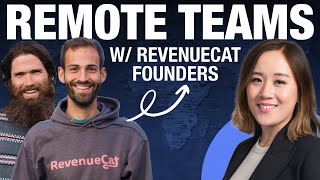
In this interview, Sabrina talks with RevenueCat co‑founders Jacob and Miguel about how the company has built a high‑performing, remote‑first organization that has reached Series C. They discuss the origins of the company, the dynamics of their co‑founder relationship, and the intentional design of a culture that works across multiple time zones. Key themes include their hiring philosophy focused on talent density, the "winning team" onboarding document that sets transparent expectations, and the difficult but necessary practice of firing and handling people problems with gallows humor. They describe concrete rituals—profile pictures, off‑sites, promotion criteria—and how they maintain high standards while being honest about the harsh realities of growth. The conversation shifts to personal advice, with Jacob sharing a humorous "get a dog" mantra for coping with the loneliness of leadership, and both founders reflecting on their pride in the company’s longevity, resilient culture, and strong customer focus. The interview closes with a candid wrap‑up, emphasizing transparency as a tool for attracting the right talent and sharing their public profiles for further connection.
Chapters
I struggle what to counsel folks that don't have a co-founder lined up because like if you're struggling, it's probably— there's probably not the right one.
Before the first day, Jacob was like, oh, we should sit down and write down the company values. I remember that day perfectly. And I was like, oh, that's bullshit, right? Like, we like, what are the company values? Like, we want everybody to be a great employee and that's it, right? But then after reflecting more on it, it's like, no, not really. Like, good to write them down, to have a framework for people to behave when we're not looking and to really highlight the behaviors that we want. Right?
Like, I talk to founders who are like, you know, just coming out of the zero to one phase and they're like, oh, we're never going to hire and we're never going to hire salespeople and we're never going to hire non-technical people. We're never going to do this and we're going to do that. And it's like, sure, that's a great— that's great. I would love that too. I would love like my company just to be the hacker treehouse my whole life. Like, that would be so cool. But like, I'm not here to build the hacker treehouse. I'm here to build a company that like achieves a mission. And often that requires like a broader set of skills, requires like different people, and they're going to have different perspectives.
Like that attitude, that trust, that, that feeling of do we have psychological safety? Are we on the same page? Are we like, this communication even working? Are we values aligned? Seems to trump most things. If, If that's not there, it seems like the qualifications doesn't really matter.
Do you want to get into management at RevenueCat? Just resist as hard as possible because it just makes my life more— There's something to that though.
Today we're talking to Jacob and Miguel, who are the founders of RevenueCat. RevenueCat helps app developers manage in-app purchases and subscriptions easily. It provides tools for tracking purchases, understanding customer behavior, and boosting revenue. This way, developers can focus on improving their apps instead of handling payment systems. I, I'm very excited because I've worked with both of you. Jacob, we've worked together maybe a year or two ago for a few months, and Meghann and I are working together right now. And you two run RevenueCat. And you'll have to give a better intro, but I want to, you know, shout you out first because I think you all have a great culture on being a fully remote team. It sounds like you all are shipping things really, really fast all the time. High quality products.
We try, we try.
Um, I want to say congratulations because I know I saw online that the Series C was just announced and I know you all are backed by some of the best investors out there. And I think truly from what I observed, you two have a lot of trust and good, good rapport with each other. You've created something really, really special. And what I want to talk about a little bit later is like, what is the culture like and how did you shape the team in a fully remote way? But I'll just pause there because I want to see if there's anything you want to say about the company that you want others to know that I haven't said yet.
I guess the only thing that you haven't said is that we are in many multiple time zones, which makes things a little bit more difficult. It's just, it's not just remote, it's like we have people in Europe, everywhere in the US, in Australia, in Taiwan, in Latin America. So that makes it a little bit extra more difficult.
Yeah. And then, and, uh, while, while we laughed a little bit when you said great culture and shipping things really fast, because it never feels like that on the inside. It always feels like we're just like barely keeping up appearances. Uh, uh, and I, I think it usually on average the end result is some version of what you said. But it doesn't feel like a given on any day, I'll tell you that. It feels like it's just a constant struggle to keep us in that spot.
Yeah. And I think that's truth that a lot of CEOs will agree that, oh, all of a sudden we're having these external accolades and some things are working out, but on the inside it can still feel really chaotic.
It's the chaos is the process, right? Yes.
Um, I don't think I've asked you guys this, but when did you first meet and what was that moment like when you decided we are gonna do something together, we're gonna get into business together? Maybe Jacob, you can go first.
Oh man, this is— we do— we can make this a really good meet cute, Miguel. Uh, uh, my first— my very, very first impressions of Miguel were kind of like the quiet kid at the company I worked at, which is funny because like Miguel's like Wait, you're like 2 months younger than me or something like this, but like you were the, you were the quote unquote intern, which I would later learn is like a hack of the immigration system more or less at this company called MindSnacks. And that was, I had joined as an engineer and Miguel was working on some system, some content system that ended up not really becoming the star of the show. And it was kind of, I don't know, Miguel, I'd be interested in your perception of that period, but like, we kind of didn't work together that much for maybe the first year or two. We were just kind of in the same office.
Yeah.
It wasn't until the company went through a shakeup that we kind of got forced together.
Yeah, I don't think we worked that much closely until we started the new project from the beginning. But I actually met you earlier. Like I—
Oh, that's right. We met up at a random meetup.
Before that, yeah, I mean, I mean, at that, my, the company used to work because I joined like a month or so before Jacob did. And there was a meetup that the company was organizing and I, it was my first week in the, in the US and I was the intern essentially and nobody wanted to talk with me and Jacob was the only one that talked with me. So that was, that was good.
I guess you could say I'm a really bad or really good networker depending on who you ask.
So you guys have met before and have had like some experience working with each other, but what made you decide to go into like a serious relationship, the co-foundership together? And maybe we'll have Miguel go first this time if you're ready.
Well, I think there's some context there, Miguel, in our personal life too, because like we weren't just colleagues. Like we were friends, right?
Yeah, yeah, yeah, right, which, which helps a lot. Uh, but no, I think, but I think before, uh, becoming friends, we started working most more closely together. We started building this new app Elevate from scratch, which was a really good— and that was one of the reasons why I stayed, right? Like, I— a lot of people left when the company was being shaken up, and I decided to stay because the people that stayed were solid and people that I really enjoyed working with. Um, then I got to work more closely with Diego, but I think that created, uh, at least on my end, but I think it's mutual, high trust and respect, uh, which is something that is super important. And then we started getting closer in as a friendship in the cook wagon.
We used to go down in the cook wagon down to Santa Cruz Every weekend we would go on surf trips on Sundays for like 12 hours. It was an epic period.
Then he came to visit Spain too. And yeah, when it was time to start the company, I mean, I say it clearly, I tell people now when they ask me if I would start another company, it's like, well, there was many things that aligned in order for this to work. And one of the things was the co-founder, right? Like, I don't think there's many people that would have trusted him that much. Because I know, I know, even we— if we talk, if we disagree a lot of times, right? And we especially— we know, we— but, but we especially disagree when we don't know the outcome, right? When it's something that we know what's going to happen, we kind of have similar values, right? But when it's something that is a gamble or a bet, that's when we disagree the most. But to me, it's easier because at the end of the day, I know that I trust him and he trusts me and he's not gonna try to screw me, right? We're just doing whatever each of us think is better for the company. And I don't think— and that's something that is very easy to take for granted, but it's what is preventing big co-founder conflicts, I think.
Yeah, it's almost like, it's almost like this project is a, is a project inside of our greater relationship, right? As opposed to a lot of co-founders who are like shotgun weddings, right? Where the, the co-founder relationship is the biggest realm of their relationship. And so I think that has, you know, like, I know your family, you know, and your sibling, like, you know, some of my siblings, like, some of my family. And that was all before, like, our spouses know each other. Like, like, we had all of this substrate laid down before we started the company, which, like, looking back was like a big gamble because I could probably, you know, could have lost that relationship. And it certainly has changed forever that we don't go on surf trips anymore. Well, We do what we can, but like, uh, um, and so I think that's, that's a huge component of it. Like now that you say it, Miguel, but like, um, and when I'm talking to people who are like in the co-founder dating game or like they're trying, I, it's one of these things because it's like having a great co-founder is such a freaking cheat code, right? It's like the cheapest 50% of your equity you'll ever give away. Um, but on the flip side, You know, there's the only thing worse than no co-founder is a bad co-founder. And like, I struggle what to counsel folks that don't have a co-founder lined up. Cause like, if you're struggling, it's probably, there's probably not the right one. Right? Like it, like for us, like I, so I left Elevate, um, I don't know what it was, end of 2016. Um, and I didn't really have like a start a company plan in place. Um, and you know, I kind of wandered the desert for a few months and, and, and played with some ideas. And then later that year, Miguel, you were about getting married. That was the year you were getting married. So, um, I was about to go to Spain anyway. And I think it was like 2 weeks before your wedding. I had started cracking on this idea that we had talked a lot about. That was another thing. Like we had started talking a lot about this idea of Revenue Cat. We had worked on this problem together. And I hadn't really thought it was going to be my life's work, um, until I had crossed off every other better idea, more exciting idea I had. Um, and then once it kind of came down to like, that was the idea, I think, and I spent a few weeks like penciling it out, you know, kind of being like, does the math work? Could this business exist? Whatever. Um, and then I was like, well, there's only one person that I would build this with. And so like, I went and just presented my case to Miguel. I think I kind of half tricked you into it a little bit. I didn't come over saying like, I'm going to propose to you as a co-founder, but I just said like, come help me hack on this idea.
No, yeah.
And then you were hooked.
No, well, that's also how I thought about it too, right? At the beginning, like I was in the middle of immigration processes and things like that. So I couldn't think of like, oh, this is going to— I wasn't thinking about like, I mean, when it became serious, obviously, right? But at the beginning, It was mostly like, yeah, I love working with Jacob. This problem needs to be solved. I've suffered this problem. Let's build something. And yeah, that's how we started working on— for me, it was every night and the weekends, essentially. That's when I stopped surfing.
I mean, I think it's important for everyone to hear about, really, Jacob, what you said, the co-founder relationship is a project within the grand relationship, the grand friendship. And Miguel, you said just having that deep trust, like, I know he's not going to screw me over. Like, I just really trust him. And this is like chapters and chapters of your friendship evolving. You were already a guest to his wedding. And then, you know, there was like this project. And I want to like contextualize it a little bit. So 2016, now it's been like, what, 8 years since that initial idea. And that now you're at how many employees globally?
Coming up on 80, I think. Okay.
70-something, 80.
And then the problem is what RevenueCat does is—
Oh, what we actually solve? Yeah. We help developers make more money with the power of computers. Uh, specifically, specifically we make software that enables developers to build and run mobile subscription businesses. It'd be like our shortest pitch. Um, and you know, it's a, it's a multi sort of faceted weird product that doesn't have, you know, a ton of other comparables, but, um, But, you know, we make, we help developers add subscriptions to their app really fast. And then, um, we give them infrastructure for building and scaling, scaling their businesses, growing their revenue, managing their, having an understanding of how they're doing. Um, and it's, and, and, and now like exporting that data, it ends up being a, it's a big backend frontend. It's, it's actually, you know, in terms of interesting, I joked that it was like not an interesting project. Like it's on kind of a boring problem. But on the upside of that is once you hit scale on something that's scaling, like the problems become interesting, like computer problems and people problems and marketing problems and all of that stuff. I've had no shortage of interesting problems to solve.
But not only the scale, which is already a big problem per se, but also like the core business or the core concept is boring. But then all the things that we're building on top of it, those are real tools that developers use because the other thing is just like the infrastructure, right? But once we build other things on top of it, like paywalls, price experiments, all the other things that actually help developers make more money, then it's when it becomes a lot more physical, I would say.
Yeah, you can see it. Yeah, but that's only been in the last year or year and a half, which it took us like 5 years of just building plumbing essentially and dealing with scale. Like, deal— well, you know, once you have product market fit and something that's growing, you know, like it's a lot of it time you're just trying to keep up. But we finally in the last couple, maybe 18 months, 2 years have gotten ahead of it and actually been able to build on top of it.
But our product now is a company. Yeah.
Well, since you've gotten to scale, like what did each of you think was the biggest underrated problem? Maybe you didn't think it would be a problem just like on the overall company operations.
I mean, it's just people. Like, that's most of our problems, right? And it's not even like individual people being a problem, but like just people in groups trying to achieve a thing together is very— from a systems dynamics perspective, there's just so many vectors and numbers and things that like to try to break it down. It's, it's, it's like literally impossible to like, I don't know, literally, but it's, it's, it's something a computer can't break down into like linear operations, right? It is a very complex machine. And it's full of emotions and it's full of like, I don't know, you have a bunch of these meat computers like plugged into the real computers and like you got to make them work together, right? And there's, and there's things like ego and there's things like, you know, personalities and all of that stuff. And you're trying to layer this on top of a, of a, of a physical machine, of a computer, right? Of a computer process, right? Of a, of a, or computer or business process, right? Is some, some inanimate object, right? But the— in some ways, the— in some ways, the people problems sort of rhyme at every scale. So like, you know, you see the same sort of problem with a slightly larger number of people, a slightly bigger scale, you know, where it's either people not getting along, you have an underperformer, you have a person not excited about their work, disengaged, engaged, like, you know, whatever, or like sometimes skill mismatch, like you've got somebody strong And somebody weak or the, and a lot of times that's just like, you know, whatever, like moving things around. I think one of the challenges with this work on the people and company building side is how just discrete the work is in the sense that like you're dealing with like integer people, right? It's not like computers where you can kind of scale it up and scale it down or like whatever. It's like with people, you know, adding or removing an individual person is a huge operation., right? And even shifting organizations around is a huge operation. And a lot of those operations are one-way doors, right? You can't like A/B test that inside of an org. Like you have to like, you know, ideally you would love to be able just to like move quickly and move things around. But yeah, these are people, right? And these are their livelihoods and like all of this stuff. And I think that's the, it's just a very, I don't know, it's a very constrained and interesting problem. And also I don't think one Miguel and I are necessarily like born to solve.
I think an extra complexity to our setup is the remote thing and the multiple time zones thing. So like we tend to see a big difference. That's why we do the offsites once a year, right? There's a big difference when you see somebody in person for the first time and you meet them in the real world. Because sometimes like you might be arguing on Slack or somewhere with somebody that you've never seen in person, right? And the connection that you have is never the same. I mean, depends on the people. There's some people that like have been on the internet for many years and they know how the deal is, but not everybody's like that, right? So yeah, that's, that's another thing that I really underestimated how it was going to turn out because it's interesting to see that there might have been in the past some people that maybe collided a little bit more and then they see each other in person and then they get along great and it never happens again, right?
It's like giving context to that, that message that Hey, do this, do that, that there's my feedback. And this person, like going back to what you two are saying about each other, we know your siblings, your spouses and your life where you're coming from and that helps people give each other the benefit of the doubt. And I think like, I think Miguel, you told me this, it's like even down to like how you guys onboard people, it's very clearly like upload a real picture of yourself on Slack and like do this, do this and do that.
I think you, That's a, that's a trap. That's a trap we put in.
I don't know if we should talk about this one, but like, we've disclosed it many times already.
So, but like, um, I mean, we give people like a really clear checklist, like sign, like get, well, here's your first week. And like, here's like, and there's some tasks on there that are more open-ended, like solve the big problem you're hired to solve if you're a high-level person or whatever. But like one of the checklist items is just like set up your profile pictures because it matters. Like it helps with Slack and stuff like that. And like, there's always a joke if somebody doesn't set their Slack profile up within like the first week, it's like 50-50 chance it's probably not going to work. It's, it's, I mean, I would actually love to run the regression on it because it's probably pretty close. Yeah. And then I think it's because it discloses an underlying like lack of attention to detail or commitment or whatever. But, but, but yeah, we, we do as much as we can in the remote environment to bring people's people-ness out, right? Like, you know, we grew up, I think this is something that's somewhat unique. You see a big opinion sort of gulf between generations here. I would say Gen Z or sorry, millennial founders and younger and like maybe Gen X and older in that like millennial and younger, like we all had the internet at like our preteen years, right? Like I got the internet when I was maybe 10 or 11 and I spent a lot of time on it and a lot of us spent a lot of time on it. We built communities on the internet. We have, many of us have like internet-only friends either through gaming or through some other online forums or whatever it was. To me, building a remote-first company feels very similar to World of Warcraft guilds or like whatever other stuff. And I've learned that you can really build real human communities in that environment. Of course, it's different and challenged in lots of ways, but like there's also incredible flexibility there, incredible scale advantages. Like, you know, like for us, it's just so, I mean, in some ways so cheap for us to like hire somebody. Like we could, like, we just ship 'em a laptop. I don't have to worry about the CapEx of a big office. I don't have to worry about all all of that stuff, right? Um, I also don't have to battle the, um, just the issues of, of, you know, constraining myself to a talent pool in a duo, right? Like, um, I can just kind of recruit the best person I can, like, you know, almost wherever they are, which is really, really liberating. Um, but yeah, I mean, I think, I think, I think it's, uh, yeah, it's been, it's been You know, I always say remote work sucks, but that's okay, right? Like, it's fine. Like, of course I would love if we could all teleport to the same place, like every day and work from a big room. That would be kind of cool.
But we wouldn't have been able to build this team.
That's the thing. It's like, yeah, people always go like, wouldn't it be better if your team were co-located? I'm like, that's, that's great. But the premise is invalid because like, I could not build this team co-located, right? Like, that this team can, can only exist as an internet team, as a remote-first team. But anyway, yeah, all sites are very interesting. Going back to the initial— I don't know what the initial question was, but when you meet, when you meet somebody, it definitely does add a dimension that you can't fully grasp online. That's 100% true.
Let's, let's talk more about like what it feels like, what the feel is. Culture is— I mean, it's such a big word nowadays, but it really is how our people are behaving. What is like our collective personality? What are some of our rules? So maybe Miguel, like what, like what, what would you describe the people feel is inside of like our RevenueCat and how did you think, how did you think you guys created that?
It's very interesting because when we hired the first, the first two employees that we hired were friends of ours.
Also friends from those surf trips.
Yeah. The only, the only two crazy people left.
The whole surf bus we hired.
The only two crazy engineers that would be like, okay, let's go with two crazy people, take a salary cut and see where their venture goes. But yeah, before the first day, Jacob was like, oh, we should sit down and write down the company values. I remember that day perfectly and I was like, oh, that's bullshit, right? Like, what are the company values? Like, we want everybody to be a great employee and that's it, right? But then after a reflective morning, it's like, no, not really. After working with YECO for a long time, I know what our values are, what are the things that we consider important. So it's good to write them down, to have a framework for people to behave when we're not looking, and then to really, uh, highlight the behaviors that we want, right? So that was like the initial step, the— and then I think when—
I don't think, I don't think for, to add to that, Miguel, I don't think most co-founders could get away with that because we had such a long working relationship. Like we were drawing from at that point 5+ years of working together. And that's a, I think for most people, if you wrote down your company values at, for employee number 3, it would be bullshit. But for us, it actually drew from a lot of truth. Right.
No, for sure. But then it was the same thing when we hired the the first person, the third engineer, one of the questions he asked me was like, okay, how would you define the culture? And it's like, well, like, you've worked with me, you've worked with Jacob, it's what we— it's that plus whatever you're bringing in, right? Especially at the beginning, the first 5, 10 employees, those are the ones that help define it a lot and are critical. And then I guess it's just like a matter of like protecting it well and making sure that the culture evolves but evolves in the right way. Right. And yeah, being super transparent about what are the things that you are willing to come— not willing to compromise about the things that you're willing to improve or change, and what are the things that it's like, no, this is who we are and we're doing these things and this is what we believe and this is how— what it has gotten us here. I mean, very protective about those particular things, right?
There's, there's certain behaviors and characteristics of like early, early startup employees, like the people that just have super high risk appetites and very, um, that that kind of take your culture doc or whatever and interpret it through that super early employee lens. Um, but then as you scale, like, you just— the talent pool gets bigger and you get less— I won't say risk-averse, but like people who wouldn't necessarily go be the first 10, but they would happily be the first, you know, the first 20 or the first 40 or the first 100, right? Um, and they're different. There are differences, I think, in those folks, like, you know, base, like, risk profiles and all kinds of other things. Um, and that changes the culture, that changes the interpretation of the cultural values and like sort of changes people's, I don't know, willingness to put up with, you know, company process stuff or like, um, whatever. And I think it's worth defending some of the stuff, especially if you had a successful escape from zero to one, like obviously something was good there, right? Like something of those first 10 people, something in the co-founders, something was good there. And you shouldn't just like, once you get to zero to one, dismiss it and be like, oh, okay, that's it. Now we bring in the big company culture, like whatever. Right. And I think that's, and I think that's, that's the damage that happens to a lot of companies. I think it kind of almost happened to us in some areas. Um, but I also think, you know, uh, the swing the complete other way. I think if you go like 100% pirate culture, if you like totally like disregard some of just the like basic company-ish stuff, like that little bit of transition that your company and you need to make, you're gonna end up. Like you're gonna end up— like, I talk to founders who are like, you know, just coming out of the zero-to-one phase and they're like, oh, we're never gonna hire and we're never gonna hire salespeople and we're never gonna hire non-technical people. We're never gonna do this and we're never gonna do that. And it's like, sure, that's a great— that's great. I would love that too. I would love like my company just to be the Hacker Treehouse my whole life. Like, that would be so cool. Um, but like, I'm not here to build the Hacker Treehouse. I'm here to build a company that like achieves a mission, and often that requires like a broader set of skills, requires like different people, and they're gonna have different perspectives on things. And, and, and, and at that point, the values, like Miguel was saying, like, like maintaining them, right? You're, you're, you're giving these folks like, here's the cultural document, and then ideally that's only the beginning. You need to be reinforcing that like progressively, like through the day and through like all your cultural touchstones. So like, On our company call, I'm always, we're always like trying to like find the things that Miguel and I think align well with the values. And weren't explicitly asked for, right? Like people like sort of like novel applications of the cultural document. And then, and highlighting that, making sure like all of our performance management stuff, like when people are getting promoted, like they're getting promoted because they align to that document in some way, or at least like referencing that document. To give people some, some stuff. But yeah, it does. It doesn't, it doesn't. I think, I think cultures tend to get worse if you don't. They're like gardens, right? Like you just have to tend them. You have to tend them. You have to pull the weeds once in a while. You have to like care. Um, they're going to change. They're going to evolve. Um, and, and, you know, you just have to be intentional, but also like open to change too, right?
But you need to be extremely intentional. That's what I see a lot of people failing because if you are like, oh, I'm gonna adapt this thing that is what the big company or whatever company that is trendy is doing, yeah, if your system is broken, yeah, maybe try it, try that out. But like just doing something because whatever company does it, that's never gonna work for you because you don't even know if it's really working for that company. That's their marketing or that's how they're promoting externally, right? And as we said, every company internally is a It's a shit show potentially. So yeah, I think intentionality is super, super important here. Like, yeah, you're making changes, you want something to happen, but like why? And evaluate if what you're doing right now is actually getting closer to what you want versus we're doing it because everybody else is doing it.
And we'll go in periods where we're focusing on like a weak point of the culture, like, and then maybe not so explicitly, but Miguel and I will be like, okay, like where are we strong right now on our 4 values? You know, maybe it's shipping, maybe it's balance, maybe it's whatever. Um, and then like we try to, we don't tell the team explicitly like we need to live this value better. Right. Cause then everybody just like, sometimes we do, sometimes we do.
Yeah. Yeah.
But like, if you do that though, then people just will start to like try to make it seem like, you know, intentionally or unintentionally, like they'll just try to like copy that behavior. Like what do you want to do is like figure out if there's systemic things that make living that value difficult and like try to remove those barriers and try to encourage the right behaviors and like promote the people who like are living those values and better. But like, yeah, at the end of the day, I think that's probably one of the most important things. Like either if it's the CEO that's not the founder or the co-founders, there's gotta be like some cultural like carrier in the core of the company at the leadership level. If you wanna maintain like a coherent culture, I feel like.
Yeah, that's, that's another thing we changed. To, while we were doing the interview process, there was a point in which we stopped having the founder interview and we realized that at some point, like, yeah, we wanted to do it again because it doesn't take that much time at that point. And it's also a great opportunity for the candidate to meet us and ask real questions, right? And I think that was a mistake that we shouldn't have stopped doing.
And that's a great example of, hey, like some advice you might get out there from investors or founders are like, stop doing interviews, stop being involved in this. This, but it may not feel right for you. And what I'm hearing and what I've always known about the two of you is like these values came from like yourself. It's very authentic. You didn't just like find some startup's values and say, we're going to be like this. It's like, we are like this. And then, okay, people we like and like things that are working, it's like this. And then we improve more. So it's like almost a very like scientific way of developing it based on reality. And then I think like when, what I hear about the scale is being very first principled, it's like very simple but hard to do. And being able to sniff through the noises in the advice that you're hearing from other people and just saying, hey, like this is what we want to do. This is what works out for us. And we're going to continue to do that. And what you say about like having the cultural touchpoints. I think I want everyone to pay attention to how there are a lot of different touchpoints. One of the touchpoints is between the two of you of what's working, what's not working, where are we strong, where are we weak right now? And then it may be like an all-hands thing and maybe an email thing and maybe like, maybe like the annual retreat thing. But what are all the levers we can pull to get people to like set them up for success to be able to behave that way? And it's not so different to like, I think about Singapore where we were like as a country, they created a lot more walking paths and shaded paths and like for, they want their people to be healthier. So they just created those things, right?
Make it easy to do the right thing.
Exactly. Exactly. So that's what I hear from you guys. And also I think like what's important as you scale is not like, not just you two will uphold the value, but you're finding more and more people. To be leaders and like, so to scale the way that you behave, to scale those ideas. So what is your unique way of finding those leaders?
Hmm. Forcing them to do it.
The one who's most resistant. That's like, that's your hack. You wanna get into management at RevenueCat, just resist as hard as possible. 'Cause it just makes you more.
There's something to that though. We're joking about it, but there's some people that just want to— because I think that people that just want to be the leaders for the wrong reasons, because they want to be the ultimate decision makers or the one with the influence.
Not only are they bad managers, Miguel, those are like the most psychotic and toxic ones. That's like, I don't know, maybe that's TMI for a podcast, but I really think that that's just like— I mean, I know because I think I was that guy and maybe I built this thing. For that reason in some, some regards. Luckily, like a company will just, you know, kind of squeeze that out of you over time. Uh, like I, I think there was a period where I would've, I would've been like, I just wanted to be the boss. Like that was like a goal of mine in life. And then now, like after a few years of this, you're like, I would give anything to not be the boss anymore, you know, for a day. Right? Like now I have a mission, which is a very different way of leading, right? Uh, than to, than I just wanna be a boss or whatever. Um, but, but yeah, we've had some success with this, like with finding, finding folks that are reluctant. And then we didn't invent this. There's a great, like Steve Jobs quote about this talking about like the best managers are like the really competent ICs. Um, but, but yeah, I don't know, Miguel, you've had, you've had some, you've had some, some trials and successes here.
I would say engineering is a very interesting area, especially how the bigger companies have been dealing with this problem, which also has created other problems. But they identified very early on that there are people that are like gifted and really great, talented engineers that they don't want to get into people management, or they're even not good at people. And there should be a way for them to keep growing in their companies without like getting into management. That's how the dual career progression was invented, which makes sense. And Given that we serve developers and we help developers make more money, there's an argument for us to be the same way and be like, hey, you can grow. But then the problem is that it's a lot more difficult to find managers or a lot more difficult to find managers that are technical enough and understand the product enough so that they can become a lever instead of a bottleneck or a blocker for the team. And what we've been doing is start slow with like some tech lead positions or something like that that is a little bit more well-defined, which is like, okay, you're gonna be in charge of dealing with the project, with the delivery, with the organization of the project, but not necessarily with the people management, and see how it goes and then how you like it. And then after that, there's an opportunity potentially to become a manager because what some people realize is like, and hiring is a team effort, but if we hire really well, the people management is not that much.
Super deleveraged. Like if you start hiring poorly, like, oh, like if you have bad, if you have like people team issues and then like you compound those by continuing to not hire great, like, um, I think it's why the talent density thing is like, you know, just hiring as best as you possibly can on the talent and not sacrificing. It's like only a little bit true that like on the first order, somebody who's like a, you know, if you could grade people from 1 to 100%, you can't, but like say somebody who's a 70% versus an 80% of the market, like top of talent or whatever, like maybe doesn't matter for the single task at hand. But when you compound like a bunch of folks that are like maybe not the best you can do, there's a second order effect which happens, which is what Miguel was alluding to, is that like team becomes dysfunctional, then they start to turn in on each other, then it becomes like just this big mess. And like you need like somebody who's like, a manager manager to like manage them, right? And like it were, and like that's kind of, I think how most of the industry is structured, at least on the IC, like frontline manager world. Um, but if you go the other way, which is kind of like the, the tack we've tried to take in the last couple of years, it's just like, just as close to the best possible, most talented, innately talented people we can possibly find and like concentrate them together. Then the management problems kind of, you can kind of put like a novice manager in there as long as they're like Miguel said, are a lever, like understand the product, liked well enough, are like, you know, well-liked enough and willing to do like the minimum, like kind of management work. And that's, I mean, it's, we don't have too many years of trials here, but it seems to have worked.
That's how it is right now. It's 50-50 external and internal managers. And I think it's been a really good mix because the internal managers know the product really well, have been able to help the new ones, but also the new ones that we had. And also it's defining what engineering managers means here, right? And for us, it's not like a coach necessarily, right? Like, it's part of the job, but it's like delivery and, and people, right? And if you focus too much on one or the other, then you're not gonna work here. In fact, I would say that shipping is probably more important in our company than people per se.
But, but again, it like solves— if you're shipping, shipping, you will need to solve most people problems to ship, and shipping solves a lot of people problems, right? Like, there's like, uh, some, some benefits there. And I think Miguel, you talked a lot about the, like the engineering management problem, which I think is a special sort of subgroup of this problem. But, but like there's also the, like, how do we find, I think especially executives, which is like Miguel's and I's, like probably Miguel's my other big, you know, responsibility is to bring in like true leaders, which does mean something different than like a line manager or whatever. Not that those diminish those folks' contributions, but like they'll have like a little chunk of the company and like you want them to be culture carriers as well. But like when you hire in a leader for like maybe it's a net new function. So that's a good example of where it's really hard to like just hire somebody out of the company for a function that you're just building because you don't have any ICs there. Like in the early days, maybe you could just like take a gamble on somebody who kind of knows, but the likelihood that they're going to become a VP or like, you know, be able to really go the distance is really low. Um, and so at some point you're going to need to bring in outside people. And I think we've had middling success here too, where like sometimes the fit's really good. Sometimes if it's not so good and like, I think I would hope that we're getting closer to better on how we operate here, but I think like, again, it's like leaning into— it almost goes back to that co-founder selection like criteria, right? That's— it's almost more like that than it is, you know, maybe just making a hire.
I think we're getting much better too about like setting expectations and clarifying, and even in the interview process too, right? Being more, more strict to find The fit, because that's the other thing. It's not that like most of the people that we end up interviewing at those levels are great people that did great things at great companies, right? But it's like, are they the real best fit that we can find for our stage or for the problems we have?
That's, that's— There's a real tendency to like hire somebody on credentials at that scale. And like, I think that's a huge mistake. Like, I think, I think, I think you're embarrassed to like interview somebody hard who's like, quote unquote, fancy. And it's like, listen, like if they're If they're going to give you guff for like asking hard questions, then like you don't want to work with them. They're too egotistical. If they can't answer the questions, you definitely don't want to work with them, right? If they can't impress you, you definitely don't want to work with them. And I've always found the folks that are at that level and like answer the questions well and like don't push and like give no guff, like they can usually walk the walk, right? And so, yeah, I think this is one still where, you know, we very low number of trials. Like we've only hired a handful of like, like leaders, like executives at the company. But I think over time I'm, I'm leaning more and more to thinking about, I'm not just hiring a tool for a specific job, which you are like, usually it's like you got sales or you got marketing or you got whatever, but you're also like hiring somebody who's going to be., you know, for Miguel and me, like a core part of our day-to-day experience. They're gonna be our first line of defense. Um, and, and if we want to keep scaling, like these folks need to have leverage even beyond, you know, they're gonna be setting, uh, just a lot about the company. They're gonna be choosing who they're bringing in and, and all of this stuff. So, so feeling, feeling very strongly about that person, um, I think, I think is important. And that, I think for us it's meant that we have very few executives because like we It's just, it's like hard to find the right ones. We also don't look that hard, which maybe is part of it.
We're very picky or maybe, yeah.
We just don't like hiring.
That's for sure. But yeah, they have such a cultural impact in the cultural impact too, right? Because they will bring a lot of people, those people will hire other people, right? So, and that can happen really fast. That can happen really fast because these people are professional hires too.
So. Yeah. I want to get some, like, dig into two of the things that you talked about. Basically, we talked about how, like, you have been really focused on the ICs that are doing a great job and making it easy for them to become managers, and that's how they rise through the ranks. But then sometimes that's not quite enough because the company is growing so quickly and there are demands for to bring out outside managers, especially at a higher level. So with the people who are rising up, how do you convince them if they're resistant and how do you teach them even the basic stuff? So that's one group of the question. The other group of the question is like, how do you feel for the trust when you're interviewing for the execs? And maybe one of you can take one. Maybe Miguel, you can take the one with the, how do you convince people to get there?
Well, I think it really depends on the person, right? You really need to understand what motivates the person.
I was gonna say money helps, but not in all cases.
No, I don't think money helps in all cases, right? Some cases. I mean, with some examples recently where like, yeah, we had somebody that joined kind of early and really was like, yeah, this, this, my current role is not even what I wanted to do at the company, but I love this company and I think I'm doing a good job and I I will do whatever is needed for me to contribute to the success of the company. And I was like, well, I think the company can be in a better position if you were doing this. And let's try to find a way that we can coach you to get there. And you don't— you're not going to get fired if you don't do an excellent job because this is something that the company is asking for you, right?
So don't— if you're going to ask somebody to go out on a ledge, like, make sure you give them a rope. You'd be like, yeah, if this fails, like, We've got your back. This is not like, you know. Exactly.
So you need to, you need to lay down that and then provide a lot of feedback and see how it feels. And I don't know, it takes a while though. Like most people, because especially coming from a technical, technical, uh, background, you get the dopamine right away when you ship something, build something, compiles, you're— it works. When you're managing people, it takes a long time. Even hiring, right? You might be super upset because you've been trying to hire somebody and you've been for a month and you cannot find a good candidate. And then all of a sudden, 5 candidates come randomly, right? And that happens. That's normal. So I think that's part of the teaching too, is being there and showing people like, hey, these are normal feelings. And you get used to them and then you'll—
I think like, I think just being an old— if you're not actually old, having an old soul you know what I mean? Like just having somebody who's like wise beyond their years maybe sometimes is helpful. But just for the patience of it, right? Just to know it's like it takes a long time. Slowly.
Yeah. Yeah.
Okay.
And then Jacob, I think a lot of the things that Miguel has said and you have said like applies to how do we narrow in on that trusting? That's really the biggest thing. Can I hire this person? Will they be my first line of defense? Can, will they do what they say they're gonna do? When does that click for you when it has worked out?
So actually, I think this is one of those— it's really hard to interview for this. Be like, can I trust you? And everybody's like, yes, great. Let's next question. But, but I think what we've found is like it shows itself in all of the like side interactions in an interview process, right? Yeah. It's how the person responds to you. It's how they treat your assistant. It's how they, it's how they order at a restaurant. It's how they like comport themselves. It's like, what did they talk about in the small talk, right? Um, and like, you got to be careful because there's a lot of those things aren't— none of those things necessarily are disqualifying, but like a lot of times they can tell you a lot about a person's values, personal values, and, and character. Um, and you know, you want to hire the helpers, right? You want to hire the humble helper people. Um, who, you know, I don't know, that's a—
not to, not to call out something. That's your— what your— what works best for you.
Yeah. I mean, it's something Miguel mentioned at the beginning, which is like, you know, I talked to the intern, I guess. It's just something I didn't even— but that's something you always tell about me, Miguel. It's like, I— it's something I approach people I don't like. I don't, you know, I don't work a room very well.
Like, I just talk to people. That's not super common in Silicon Valley, right? When people see what you do and then it's like, oh, I'm not interested.
They automatically sort you into like a helpful or not helpful to my career bucket. And so like, if I, I'm always just like on the lookout for people who are very too career, cuz this is the thing, it's like to get to those levels, like you, you have to be, you will receive prestige if you get to those levels, you've achieved prestige. And there's two ways to achieve prestige. One is by maximizing prestige, which is like bad, I think, for society in general. Um, and then there's maximum, you get, you receive prestige by maximizing value and then prestige follows, right? And so you're constantly just trying to like sort out like, Is this person a prestige maximizer or value maximizer? And if they're value maximizer, that's who you want to hire. And so, yeah, it's those little, those little subtle cues. And then like, I don't know, so much of that, that checkbox because like Miguel said, like so many of these folks, the executive level can check a lot of the boxes like they'll pass an interview. Nobody's going to be perfect. Everybody's going to have strengths and weaknesses. You know, ideally everybody's really high intelligence, right? Like and all of that. But like, like, you know, and this is, this is, I think it's tricky to fit it into an interview, but there is just like a gut feeling there. There's like a, you know, a bit of an emotional decision there, which is like, okay, having spent time with this person, is this, if this interview process became every day, you know, like, am I gonna feel, do I feel I can trust this person? And like, I'll say like I've had, you know, mixed results on VPs that like were more and less honest and not like, and not like, not like, like Enron level of like hiding information, but just like volunteering only the good stuff, right? And then it leaving me to hunt down the bad stuff, you know, and getting the executives that could feel safe and whatever and honest enough that they'll just, we can just have the conversation. And it's not like I'm constantly like digging and all of that stuff has been just a huge gulf. Between those two different profiles of leader.
But regardless, for these levels, hiring is always very difficult, but for these levels, it's a lot, it's an order of magnitude or two orders of magnitude more difficult than hiring a level manager or an IC because like even these people are super networked, so they're always gonna get like really good references, right? Like even for ICs, we've gone to people when doing references, like, I wouldn't work with this person again, which sounds crazy, but that happens. Happens sometimes. With an executive, it's very unlikely unless you like really, really, really look deep to find somebody that, that would give a reference that bad. But yeah, there's, there's other things that you need to try to take into account. And, and, and also, well, that's why the processes are way longer too.
Yeah, 6 months, right, to hire an exec.
So yeah, having the time to get to know them. I mean, there are 2 big learnings that I'm getting from what both of you shared on the senior-level hires. One is like that attitude, that trust, that, that feeling of, do we have psychological safety? Are we on the same page? Are we like, this communication even working? Are we values aligned? Seems to trump most things. If, if that's not there, it seems like, like the qualifications doesn't really matter. The, the second thing that I'm, I'm learning is creating those opportunities to have some of those side interactions. Have them interact with your assistant. Go out and like, I don't know, get a meal. I've actually heard another CEO, like, part of the interview process is that they'll cook a meal together.
So that's— oh yeah, actually have them in your house, right?
Yeah, yeah, exactly. And that's, that's a whole nother situation to see how people interact and whatnot.
Do they help? Do they help with the dishes? Exactly.
But you know, but like you said, Jacob, none of those things are disqualifiers, just information. To see if this person is going to fit into the feeling that we've created, the behaviors that we created, that we've worked so hard to have all these touch points for. Another thing that I hear people like CEOs ask me all the time is, okay, this team is most, most of the times is the engineering product team. The team as a whole missing deadlines all the time. People are pointing fingers, blaming each other, and it's like we're just not innovating fast enough. And this may be a problem you've dealt with before, but if you were to break it down into like, here are the chapters this team should move through to ideally fix it, what would you say?
Oh, I have some, I have some answers. This is Miguel's answer though.
Let me go, let me go first and then you go. There's, I mean, obviously there's, there's, there's a lot of things there. There's a lot of things. It's very difficult to debug a team without like knowing what's going on. There might be different It might be performance issues or other things related, but assuming everybody's good, like one of our values is always be shipping, right? And that was deliberate. We wanted to tell everybody that every day counts and that we have very ambitious goals, but in order to hit them, we need like every day counts. We need to be shipping and making the product better every single day. And at the beginning, that's how it looked like, right? Like a customer will, right, through Intercom and be like, oh, I would like to have this chart, or I would like to have this integration. And we're like, okay, you'll have it by the end of the day, pretty much. Then it was great. At some point, you end up not tackling the bigger, the biggest projects, right, because you're always thinking of like such a short period of time. Then we switch, hire more people. We've been through so many iterations, but one thing that we're doing right now that it works, I've always been a little bit allergic as an engineer to deadlines because I always try to work as fast as I can anyway. So to me, it feels like a deadline is meaningless. Now we do use deadlines, but for a different purpose. We do them to make sure that we don't increase the scope. So essentially we say, okay, this is gonna be the deadline, we're gonna ship it this day, uh, something, right? And now it's a matter of us deciding like, okay, what is not that important? So That reinforced the MVP mentality of making sure that we're going to ship something, we're going to put it in front of customers potentially, or like at least we're going to know what's the minimum thing that we can put in front of customers. And then, then we'll learn more, right? Because sometimes we are just guessing. And that has worked really well because the problem in the past is like, especially when you have very smart people and very ambitious people, is that now they're thinking really big and they're like, oh, if we had 2 extra weeks we would do this and this and this extra and we would do this and then it never ends, right? So that's something for us. This is that little hack that we've been doing recently that has been working really well. And then it's kind of a sprint really at the end of the day, but it's a sprint that has a real output and something that you're like committing to the rest of the company and showing in company calls.
There's always the next sprint. That's the thing with sprints I never liked. It's like, okay, great, 2 weeks Sprint and then what? Right? Another sprint. It's like I have infinite number of sprints, right? Like having a date, having a date helps. And then giving the team like total control over what ships and whatnot has seemed to help. I was going to say, Miguel, you said you made a big assumption at the beginning. It's like assuming everybody is good, like assuming the talent density is really high. I feel like with these cases, like probably 50% of the time it's probably a talent density issue and you need to like really ask yourself like, Who on this team is either performing or could be performing with just like a little bit of help? And then who on this team like probably is below our bar? And then you need to work through that stuff. I think it's really easy, especially in times of plenty for a company to like not be super— when I mean times of plenty is like you're growing well and like you're funded and like all of this stuff. There's not a terrific amount of pressure and you like the people, right? Which you hire them probably because you like them. It's really easy to hire, to let go of somebody who's like, not, not likable and not performing, right? The, the middle one is like almost impossible, but like, um, I think I would always start there. And I think often though, for private CEOs, it depends on who your technical partner is. Like, you know, I have a great technical partner in that I know Miguel's eye for this stuff is pretty good. And like, we can trust, I can trust his judgment and like, and, and I can help, but like largely I, I trust he's got the, he's got the ball. Um, But like, I think that, I think that, that, you know, even the, if you have low talent density, I don't think there's any tricks that can get you out of it.
Right.
It's kind of goes back to the, yeah, if you, if you, if you have a team that ships and a team that delivers, the people problems kind of evaporate. And it's the same with like, with anything. It's like if a team's not productive, they're, they have all this, there's going to be folks with energy and that energy, if it's not being put into something that, that's being valued by the organization, they're either going to like falsely inflate what they're doing to like make you think it's valuable, which is like a thing you have to like root out. It's kind of a separate problem. But then, but then also it's just they, they, they, they turn on each other, right? And they turn on blaming and like, and they start to fear for their jobs and blah, blah, blah, blah, blah. And so like, and, and like, it's a, it's just a, it's a thing. I mean, we've seen it in periods and I'm sure we'll see it again. And, and, you know, our, our tools—
Only takes one, only takes one person.
Money.
It's not that—
yeah, a lot of people— yeah, to, to cause kind of a fail. You might have like a team of, of, of pretty goods and greater, right? And then you put in one person that's got the wrong attitude and it can like totally collapse the productivity of that team. Um, and yeah, you have several tools here, right? Like one is the manager is a really important piece there. Two is like you could like maybe the teams need to be split up or like you need to change mandates or whatever. But like performance management is probably the biggest lever there is like really ask yourself, is, is there a performance management issue? Have we been not really like treating these folks with a similar bar? Um, and I found, I found that that has been one of the hardest things to propagate beyond the co-founder set is like the ability and incentive structures to make really tough decisions on the management side. Like when you need to performance manage somebody out, because like, to be honest, you can build all these systems, you can have rubrics, but there's so much subjectivity in the rubric, right? And like, I think you also need to, unless you're a very experienced manager who's managed many terminations, like there's a ton of emotional biases that go into letting you see and not see the reality. And so that's, that, that's, I think, I think we've maybe come through the woods on this, but I think that was a really hard thing for Miguel and I to, to communicate, to transmit to that next level. Level of management, which is like when and how to like initiate like a performance management process.
And again, even, even the most, even the most junior managers are able to detect when somebody's toxic or is doing something illegal or is doing something that is clearly not okay. But when it's that middle ground of like, okay, yeah, like, we're sure that there's a lot of people out there that are better than this person., but this person is nice and took a long time to recruit and stuff. That is when it's become more—
even in the, even in the obvious cases, like sometimes you'll, you'll have a manager who's just like telling you all the problems with, you know, a certain situation and you'll be like, well, have you thought of like kind of the most obvious thing here, which is like, maybe it's just not the right role for this person, you know? Um, but like, I don't know. I don't know if that stuff will ever get easier and like to a certain degree it should always be difficult, right? 'Cause it's a big, it's a big, it's a big tool to wield. Um, but, uh, but I think like, yeah, I think, I think so many, so many performance and failure to perform are all downstream of like the people that you've got in the seats and like what you told them to do. Right. And like, um, I think, and it's almost why like systems, like even OKRs and like whatever, I all think are kind of like window dressing on top of like a talent, like a talent dense team can use those tools. But none of those tools are going to make a non-talent-dense team perform, right? Yes.
Is kind of my belief these days. Now you said you're, you think you're almost out of the woods about how to teach your managers when to kind of terminate the B players, the middle ground, the ones that are not terrible, but you may like them. That's, or maybe even the outright terrible ones.
How did you come out of the woods? I mean, I, yeah, I mean, I, I, one I think was just setting the bar. Like we'd never set the bar. Like we, we, we laid out this thing about 2 years ago now called our talent vision or like building. I think it's when you and I were working together, Sabrina, and this, this helped. I mean, I won't say it solved it, right? But like it certainly helped. And basically Miguel and I had to get up and say like, this is what we want. Like we want like high talent density and like here's all the reasons why. And like here's kind of, we didn't say it in literally those words because I think talent density is It's pretty nebulous and it's, it's hard, but like we, we just say we, we're, we're a team playing to win. We call it a winning team. And like to win teams that try to win things, like really focus on having the best players that they possibly can get in all the seats. Right. And that's gonna just mean these 3 things. And one is like hiring really selectively. Um, another one is like training and pushing people aggressively to like hit goals. And then third, it's like being very, um, being very, uh, intentional and, and not being afraid to use performance management and, and, and like terminations, like when it's necessary, like when you have to remove somebody from the team, right? It's adding, training, and removing. There's three operations to this process, right? And like, I don't know, maybe it sounds very cold how I'm saying that. I think we— I think in the— in this, in this world, we like— we— because it involves people and because it's like it's, it's very emotionally charged thing. Like, there's, there's come in a lot of euphemisms and a lot of like indirection around this discussion. Um, but I think for Miguel and I, prior to that, whenever there was like, we saw a situation that wasn't gonna work, we didn't believe was, was worth saving or whatever, like, him and I were pretty much always the like initiator of that process, right? If it wasn't us directly, it was us through the manager, and we were close enough to everybody that we could make it happen. Um, but then there was a period where The company stretched beyond our ability to do that. And we hadn't dictated this. We hadn't like put this as part of our cultural documentation. Um, and I think that's where things got really weird. Cause like we, we had cases where, you know, the best, we weren't the best hires that weren't the best fit for the people at the time. We kind of had to tell people like, hey, this is okay. Like, like perf managing people out of the company is okay. And then, and then that's kind of all a lot of them needed, um, to get it done.
But, but, but yeah. Yeah, sometimes, I mean, it's always, it's always been the first time for somebody to fire somebody. And it's very, it's terrible. It's worse for the person that gets fired for sure, but it's terrible. But then, like when some people, when people get to see that the team is actually performing better without the other team member, and potentially not even slower, but much faster, that's when it it's easier for people to grasp.
It just takes, it just takes at-bats. Like you just have to see it. Like we were really bad and scared of it at the beginning and like you, and you kind of always should be, but, but, um, yeah. And that's what going back to like, how do you train up manage, like new managers? That's a big part of it is like, how do you get them through if they have to have a term? Like how's that first term go? You have to support them a ton. You probably to some degree have to make the call for them a little bit and like tell them like, yes, I think this is probably what you should do. You want to lead them through the process, but like you kind of have to hold their hand through it the first time. But then I think if anybody's got the ability to do that job, then they'll learn a lot in that first one.
It's also super useful because it also reinforces the interview process, right? Because you're never going to be perfect.
Once you have to deal with it on the other side. Maybe I was, maybe my interview process was not as hard as it should I know people always think we're like, so I don't know, sometimes we get, we get, we get, I get comments and stuff that we're very macabre or like sort of like pessimistic. And, you know, I'm always talking about like, I had a, I had an interview process with a candidate as an exec candidate and, uh, kind of late stage. I think we had signed or it was like very, I think we had signed already and it was just kind of like, uh, we got dinner. He invited me over to his house for dinner and I was like, and I told him, I was like, I don't know if I wanna meet your kids. Right? Like, and he was like, that's like the, the darkest thing somebody's ever said to me. And I'm like, if you were in my position, like, you wouldn't think that's dark. Like, you would just understand, like, this is just, you know, this could be, I just, you know, like, this may not work out and like, I might have to make, and maybe, you know, this person was much more, uh, had, had been through the industry longer and, you know, maybe just it's more normal for them that it, it is for me. But, uh, but yeah, I mean, just being on the other side of this a lot, you, you kind of, you kind of have to develop a bit of a gallows humor.
About it because it's just, it's part of the, it's part of the job, you know? And it's hard, right? Because like, I think it's really hard being like, being in a leadership position, being in co-founder positions because you're having to figure out like your own emotions with firing people. And like both of you said, it's not a fun experience. It's terrible. Both of you, I think it's very clear you understand the gravity of the situation. Yet at the same time, you have to hold the seat of like, I need to do the best for my customers and my other employees and the best ways that we can make sure that our company like survives and continues to do well is if we have a really good team. And that starts with teaching them a different behavior. I think early on in the company, you teach the behavior of zero to one and then to scale to like do all of these amazing things. But at some point when that people problem becomes big, it's about how do we maintain What does good quality look like? And when that doesn't happen, what do we do? And can we enable our managers to do more and more and more of that? So that I think is a really, really hard balance to do because it'll always not feel great personally, but you see the benefits. So I imagine it's like a bittersweet thing to be able to hold.
To say we're good at it. Yeah. It's a weird thing to like take a victory lap on, right? But like, you know, it's a reality. And that's what I was saying. I think a lot of people will use euphemisms and dodge around it and whatever. And, you know, I don't— we do this in onboarding. Like when somebody starts on their first day, like I tell 'em like, hey, we give 'em the winning team document, which mentions this stuff before they start. And then like on their first day, I walk 'em through it and I say like, hey, like this is what it means to me and Miguel and like, like, this is, this is, you know, how I— this is why I think this is a great place to work that people want to work, is because we like maintain a really high bar. And so like, you know, ideally you've had a chance to opt out already and we didn't get this far. But like, I really want, you know— and I got pushback, we got pushback from, from some folks on putting this out there because it was like, oh, you know, and it's like, I can— like, what's worse, like giving something, telling people something that they— that scares them or gives them anxiety that's true or hiding it from them and then having them live in a world where that's a reality and then them not having the information, right?
I think, Jacob, this is a great example of being intentional, right? It's like it's part of our culture, right? And it's like we have a reason to say why we want to do this. And the reason is because we want to be transparent and we want to be upfront. And yeah, maybe it's not what is exciting to some people, or maybe potentially a majority of people in the industry. Right? But for us, we think it's important. So we'd rather be upfront with it rather than get you— be like, oh, we're sorry, everything was wonderful, everything was a dream in this company. But no, this actually can happen and some people get fired.
This is another example of doesn't matter what other companies are doing. This is what your values are. This is the type of people that you are and this is what works for you. And I know that we're nearing the end of their time, so I want to just do some like quick fun questions.
Okay, great. We need a palate cleanser after that one.
Uh, no, that's—
I think that's a great one. It's important to be honest, right? About like the most important thing of any business is its people.
And it's—
yeah, if we don't talk about it, like how else do we know what are other examples to follow, right? Um, so the first question is just like the What's the best piece of advice that you've ever gotten? Doesn't have to be about work, about anything that comes to mind right now.
I mean, I have a funny one, but maybe, maybe, maybe you do a YC one, Miguel.
That'd be better. A YC one.
Talk to customers every day, essentially. Yeah.
Don't do customers every day.
Talk to customers every day.
Talk to customers every day. Yes.
You'll talk if they want. This one, I don't know if this one quite is the superlative as the best piece of advice, but it is one I tell Miguel. Quite a lot, and I think it makes us laugh and helps us through the day a little bit. But he's like, if you want, if you want a friend, get a dog. Because like in this business, like it's just, and we mean this in like, you know, sometimes it's a personal context, sometimes it's a work context, sometimes it's whatever. But I think sitting in the seat as a co-founder, as a founder of a company, if you're going to go the long haul, like you're going to make some friends and you're going to have some warmth, but there's going to be a lot of times when you're gonna make people mad, you're gonna make people sad, you're gonna have to, you're gonna be, have to disappointing, disappointing people is going to be the majority of your work. And like, you know, if you are the kind of person that needs to be liked by everybody you're interacting with, like you're not gonna be successful in this, I don't think. And so, but that's what dogs are for. Get a dog. Dog will love you no matter what. There's no performance management. It's just all, you know, whatever. Uh, and so, but yeah, I don't know if that's the best advice. It's my grandfather who tells me that, who was, he was also an entrepreneur.
Entrepreneur, uh, and, and, and has founded a company. It's very true. It's very true. It's very true. Like, even— yeah, it's, it's a lonely journey for sure.
Uh, even with a co-founder, right?
Like, yeah, yeah. Well, last one: what is the proudest thing for you right now? Um, when—
like, as it relates to the company, that's easy. What is it? The team and the customers, for sure, for me. Maybe, maybe I'll leave the investors outside, but yeah, pretty good investors too.
Everything. Proud of everything.
Jacob, what about you? Yeah, I mean, I guess mine's kind of the same. I think it's the fact that we're 7-ish years in and like, I still think we're kind of, we're not in the decline era yet of RevenueCat. Like I still think we're on the up and up. We've had, we've had some, some better years than, and some worse years and we've had some good moments and some bad moments. But we've definitely been in a worse place culturally before. We've been in a worse place economically before. We've definitely— we're at a high point still in a lot of ways. And the fact that I can say that is great, right? Because yeah, I mean, I think it's very unusual for a company to survive this long period and then to be in the position that we're in. And so, you know, it's a lot of luck, certainly, and it's a lot of like timing and we picked a good idea and all of that. But like, I definitely think there's a certain degree of our doggedness that got us here. So, I will take a little bit of a victory lap once in a while on just being proud to be alive from a corporate perspective.
Yeah.
Still alive, still thriving, still seeing better days. All of the people, customers, investors, employees, everybody to be part of this journey to make it possible. Very, very hard for all things to align. Yeah. Um, anything else that you want to say that I haven't asked you?
I think we dumped it all out, Miguel. I think all of our secrets are known.
Yeah. Okay. Everything is out there now. It's very easy to build your revenue garden now.
Uh, so much for our good hiring pipeline.
Well, I think it is actually going to attract the right type of people to hear like exactly how it is, and that's what you want anyways. So we'll leave the information for both of your social, LinkedIn and Twitter in the show notes if people want to find you. I know Miguel, you have writing, so like we'll put your website on there as well.
Jacob, should we just— Twitter.com/Jiting. That's my, that's my blogging. Miguel has a much better attention attention span than I do, so he can actually do long-form writing.
I used to. Yeah. Miguel writes these like year-end reflections, my CTO. They're really good. They're really good writing. So we'll put all of that linked so people can easily find them. And yeah, thank you both so much for your time. You two have really great chemistry.
You're just like able to riff off of each other. Yeah. Abbott and Costello of computers, me and Miguel.
Thank you so much. Well, thank you, Sabrina, for having us.
More from Sabrina
Boost Investor Communication: Expert Insights with Executive Coach Sabrina Wang