Gumroad / Flexile Q2 2023 Board Meeting
In this remote board/retreat meeting recorded from a rooftop in Rome, Sahil Lavingia presents Gumroad’s Q2 2023 performance and a sweeping product roadmap, followed by an extensive deep‑dive into Flexile – the internal tooling platform that automates payments, invoicing, talent sourcing, cap‑table management and crypto dividend payouts. The session covers financial results (GMV $42 M, gross profit $3.8 M, net income $2.5 M), major product launches (dark mode, GST for Singapore, checkout redesign, upsells, membership discount limits, collaborator splits, content editor, bundles, abandoned‑cart emails, Gumroad Discover), and upcoming features (pages, file grouping, Flexile quick‑invoicing, Stripe integration, QuickBooks sync, talent marketplace, FlexOps job board, Reg A+ fundraising, crypto dividend infrastructure). Sahil discusses the dividend policy (60 % of net income distributed annually, crypto payouts for investors in Brazil/Saudi Arabia), the strategic choice to stay private while offering public‑company‑like liquidity, and the long‑term vision for Gumroad as a creator‑focused marketplace. The meeting includes live Q&A from creators and investors about Flexile investment opportunities, the future of Gumroad Discover, collaborator split protections, and the possibility of future fundraising rounds.
Chapters
We are filming from Rome, Italy. A good chunk of the Gumroad team is here. Woo! Let's get this started before we get kicked off this rooftop. But yes, we're here for a retreat. We're hanging out for a few days, getting to know each other. You probably all know that we're a fully remote distributed team. Most of us have never actually met in person. But it's been going well so far. For folks who don't know, we work on a thing called Com. It's a service to help creators sell digital content on the internet. This is our Q2 2023 board meeting. So Q2 2022, we did $49 million in GMV and about, we lost about $400,000. This year we did a little bit less in GMV, $42 million. We did about gross profit of $3.8 million and net income of $2.5 million. So pretty good increase. GMV was down about 13%. Revenue due to our pricing increase this year is up 99%. Gross profit up about $300,000. And so that's good. What did we ship? As a creator, you probably care more about this. Besides the fact that Gumroad's gonna exist for a long time now that we're profitable, unlike all our competitors, which are all gonna go outta business. So you should switch to using Gumroad. We got a lot done. We wanna help creators make more money. We wanna help people discover new customers, and we wanna faster answer support tickets. If you're blocked on something, we wanna be able to answer your ticket as soon as possible. We also shipped a bunch of other stuff. GST for Singapore, dark mode. You can now archive products. You can shout out Maya and Jack. Oh wow. This is dark mode right here. I'm dark mode. And we didn't ship everything we planned to, which is totally fine. I think it's always good to just learn what we did not get done. Mostly I think it's a good signal of like maybe things we learn are not actually that important. In this case, I think search as part of library is a good example of that. We got all excited, like everybody did, about ChatGPT and integrating ChatGPT into Gumroad and Turned out that was not that useful of a way to spend our time. That's okay. So now the checkout page, which we've, we've been investing a lot of resources into. Some people are, we're like, why are you doing this? Hopefully this makes it much more obvious why the real estate that checkout offers is so important. More payout methods and all these other things are great, but we can actually like recommend products. And this drives an insane amount of volume. I think it's like $9,000 a day of extra volume. Like GMV for creators has gone up about 2.5% just from this. Feature alone. We've also added upsells. Upsells, man. Upsells designer? Who designed upsells? Tara.
Woo!
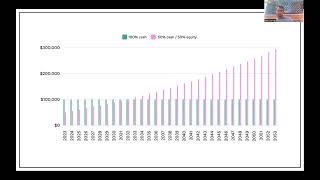
That's awesome. We should do this every time. Yeah. So this is what that looks like. You can now upsell products in a bunch of different ways. You can replace products. You can add new products to your cart, et cetera. So this is also done really well. Highly recommend you add these features to your— we've already enabled upsells for you because it's— or not upsells, sorry, more like this. Because it makes you more money with no extra effort. So if you want to turn it off, you can do that. Just go to your Gumroad checkout settings. Dark mode looks like this. We also shipped— this is like one of the most highly requested features ever for Gumroad. For if you use memberships, you can now limit a discount to the first month. So for the last 11 years of Gumroad's existence, if you had a discount code, it applied for the life of the product. Now it works. You can limit it to the first billing period, which I think is, is pretty huge. And has actually driven quite a bit of GMB already. Creators will be able to collaborate on a product and split their commission or unequally split it if they decide to do that. Helen's working on that. Where's Helen? Woo! And design, Caro. Woo! Pages and file groupings. Oh, abandoned cart emails. Jack's working on that. I think I might have to build some of this myself. We're going to try to ship this soon. Pages and file groupings and content editor. So we shipped the content editor, which I think is way better than the file upload. It's like the file— you can now have files within a rich text. Experience, which is really awesome, works on mobile. We're going to add pages to that. So you'll be able to have pages on the left. Soon you'll have file grouping. So all the functionality you might have lost, maybe moving from that old dynamic list of files, the file downloads, like download all and stuff like that, will soon make their way to, to the new content editor. And then bundles and bundle discounts, I think will be really huge. A lot of the work we've done on checkout and upsells will enable this feature where you'll be able to take a bunch of products you've already sold on Gumroad, combine them and offer a discount. For them. So that's going to be pretty awesome. So just a clip of what these things will look like. Adding a new collaborator, you get an invite like this, similar to affiliates. We're extending a lot of that functionality to make this possible. This is discounts. You'll be able to add bundles, sorry, add products to a bundle and remove them, edit them. We'll use the new checkout, some of the new checkout interface to do this. This is what it'll look like when you're trying to buy a bundle. And that's Gumroad. Time to talk about Flexile. This is now more modern and we shipped a bunch of stuff too. Flexile is a service that we built to help us run the way that we run the company. As I mentioned, we're all, we're all 100% async remote, no full-time employees, all freelancers. So Flexile is something we've built to help automate this. And we have a lot of, there's other stuff we want to unlock that, that we'll talk about what we think we can do once we get the basics down. So we, now we, you can connect a Stripe account. Previously you had to sign up for Wise and get a Wise API key. So now you can just go through, connect a bank account. That's really awesome. If you use QuickBooks, there's now an integration that Raul worked on. Raul worked on that. Cool. Quick invoicing. So now we used to have this pretty complex time tracking interface, which I think we might keep if some customers want that. But I think for Gumroad, it's not really necessary. You don't need that level of like nuance. If you wanna keep it on your own side as a freelancer, that's totally awesome and fine. You just wanna say, hey, I did. This many hours of work for Gumroad, you know, in May, you should be able to do that too. And hopefully if we can get the interface right, in theory, you can quick invoice much faster. So you could choose your cadence in theory, and then things would just batch and pay, which I think would be really cool. So if you wanted a quick invoice every single day, you could in theory, but could be pretty cool. So this is what quick invoicing looks like. If you've used Flexile before, please go back. It looks a lot better in my opinion. It's cleaner and slicker. So what's next up for Flexile? Updates we're adding. So now that we've simplified the— I think one of the key insights is that one reason we had the time tracking sort of combination is that we needed a way to keep track what the work was and then also like billing for the work. It makes sense to combine them and that's what most folks do, but I actually think it would make a lot more sense for the way we work to completely separate them so people can bill for work and then they can send updates on what they're working on a weekly basis. I think that will be much cleaner, especially because The way you work might be weekly, but then the way the company does their books is monthly, right? So all of a sudden you have a week that's split into two accounting periods and it gets all annoying. And this is why you have to pay accountants like lots of money for stuff like this. We're also building a talent marketplace. The hardest part I think about running a business like this is finding amazing people. It's not easy to find all these amazing people. This is all of them that we found so far about, or about half. There's a few people are missing. But it's hard to find what I like to call hardworking ethical geniuses. I really believe that you need it. The only way that this model works is that everyone you hire has to be a genius for what, obviously not everything, but the job, they have to be ethical. Otherwise you can't really work remote anyway. And they have to be hardworking mostly because like there's no, I'm not, you have to be self-motivated. Maybe it's a better way of framing that. And it's hard, frankly, to find those people. And so I think we need to help. Help do that. Crypto payments is coming. Who knew? We found a use case for crypto. I want to enable this way so that Flexer is— I want to actually survey everybody at some point. You should be able to pick a mix of cash and equity. This is what Flexile updates is going to look somewhat like. We're subsuming a lot of maybe what we use Slack and Notion for into this sort of more standard sort of Flexile product. Town Marketplace, I want to talk about. So the first part of this is going to be moving the Gumroad jobs onto FlexOps. So FlexOps is going to be the place that you'll be able to— we're going to move all the Gumroad jobs postings to, and that's going to be awesome because I think then we're going to be able to do more than you would be able to do with a standard jobs page. A standard jobs page is just, this is what you'll do, please apply. We could do stuff like we could show you in real time how many people work at Gumroad. That's one of the top questions people ask. We can show you how many hours on average people work at Gumroad. We can show you what the average tenure is, which is right now I think it's like 2.34 years. Which is quite high. Most people might not think it's that high. It's actually way— in theory, it should be a lot higher than that. It's just like the vast majority of people joined in 2021, which is 2 years ago. So that number grows like every day. And who's the last person to leave? Mackenzie? Do we have anyone else? That was 2021. No one wants to leave. I think it's— there are— I think there's 2 interesting points. One is remote is the number— I think the number 1 people change— reason people change jobs is to move cities. And if you don't, if you don't, if that isn't, you can keep the job, then that changes that equation quite a bit for people. The other is you don't have to go from 40 hours a week to zero when you, you can have a kid and say, hey, I wanna, can I do 5 hours a week or something like that? And I think that sort of flexibility is pretty cool and I think should be more popular and I think is necessary if we want more diversity, I guess is the word, but more types of people in different parts of their life in, in our industry. Getting people to move to San Francisco is not, not every, not everyone's cup of tea. Crypto payments. Why are we doing crypto? How do we find a use case for crypto? The reason is that we need to pay our investors dividends. And there are a couple countries, in this case Brazil and Saudi Arabia, in which our current payment stack doesn't work. And so we have 40, 40 investors in those places. And so you'll get an email from us soon. You'll give us an ETH wallet address and then we will, we will give you some ETH. And that's how we're going to pay out dividends. It's going to be very manual at first, and then we'll write, probably write a smart contract to do some fancy stuff. I actually think dividends and crypto are made for each other. So how'd the dividend go? Yes. So last, last month, July 1st, we issued a dividend. You might've seen this tweet from Austin about it. I've invested in a lot of tech companies and this is the first time this has ever happened. Your investment in Gumroad has generated dividends. Not a lot, frankly, it's a trial. So he invested $1,000 on March 15th, 2021 and made $10. $0.03. So 1%. But as someone point— as he pointed out to somebody on Twitter, he still owns 100% of the equity. So it's not like he had to sell any equity for that $10. So hopefully it's, it's like free money minus taxes. So here's the update on the dividend. We have 7,378 investors. This meant that there was like no product or service that could scalably do it for us, which is why we built it, built the feature into Flexcel itself. Um, itself, 96.5% of the dividend has been issued to 60% of those investors. So we have 2,000 people who haven't signed up for a dividend yet, which is totally fine. If it's a small amount, you don't want to worry about it, just wait until January. You'll get another email from us. There should be more money waiting for you, and then you can do that. We're happy to keep your money if you don't want to, but if you want your money, you should go to flexile.com, just log— go to the login, uh, page and just forgot my password. You'll get a new invite and you'll be able to get your money. If you did do that and you still haven't received your money, the most likely reason Is because either is actually the most likely reason is probably because we set a minimum dividend payout of $10. So if you're above that, you'll get the amount. If you're below that, then you won't. And so you just go into your settings, change that to whatever you want, $100 or sorry, $0 if you want. Also, if you want to sign up for Flexa, you were stopping because you didn't want the money, but you still wanted to sign up for Flexa. You can also go sign up for Flexa and set the amount to $1,000 so you don't really get the money. So that's why we built the feature. So go to Flexcel, please sign up. Let's get that number as high as possible. And then I guess why dividends? I'm writing a longer post about this, which I will share soon. It's a complicated thing that I have to wrap my own head around too, but we're a profitable company and what do profitable companies do? They keep doing what they're doing, but what, what else are you going to do with the money? Right? You just let us in the bank account? No, I think we used to back in the high interest rate environments of the '80s. The vast majority of companies actually issue dividends back to their investors. Most public companies do, most profitable companies do. But if you're a private company, especially in the last 20 years because of 0% interest rates, wasn't super popular. And so hopefully this new environment we're entering, this stuff will become more, more popular. Companies have already pivoted, quote unquote, to focusing more on cash flow, operating profit, et cetera, than growth, especially when you can't grow in a recession. That, that's a forcing function too. And inevitably the next step is these companies will have to issue dividends. And the vast majority of profitable companies are not public. So think when you're a public company, you have some infrastructure to be able to do this. You can— NASDAQ can help you out with this. If you're not public, what do you do? You have to DIY PO. Just to recap some of the, the finance aspect of the investment, if people are curious. So you invested at a $100 million valuation, March 2021. Gumroad now does about $10 million in net income a year. So that's about a 10% rate of return on that investment. Took 2 years to get there. But that's not bad. And yeah, I think we figured out a way to eventually make Gumroad a great investment. It's still early days. And now we have Flexile, which is our moonshot bet. And then the plan is to issue 60% of our net income annually as dividends. So about 6% cash-on-cash return for those investors. With dividends, I think you actually hopefully will be able to make a case that this equity is sort of dollar for dollar, dollar for dollar closer to cash. And you should be able to choose if you disagree with me, which by the way, I would assume 80% of people will disagree with me, and that's totally fine. I'm a— I've started this company, I'm going to be more bought into it emotionally. And so this is going to be a super cool feature where you're able to pick, let's say you want 80% in cash, 20% in equity, or vice versa, or what we currently do, which is this 50/50, or currently we call it 100% equity bonus. And this is a visual of what that might look like. And the reason that you would say, no, I don't want to do this, I want to take the cash, is the first 9 years, you're not like, it's going to look like to take the cash for 9 years. That's a long period of time. Opportunity costs, other things you could do, but over a long period of time, I want to keep working on government for the next 35 years would be nice. And so, yeah, where's that, where's the vast majority of the equity value going to accrue to if everyone takes cash? Just me. And this is why every library in the US was built by Carnegie, not Carnegie's employees, right? He owned all the equity in the company. Flexile, I think, is essential. In order to allow people to own equity and dividend-producing companies, because that's the only way that you can choose not to work is if you own an asset that literally generates you passive income. Anyone in the chat have some questions? Hey Abdullah, how's it going? Can you hear me? If you can, let me know what your question is. Hey, can you hear me? Yes, I can. What's up? We can all hear you. How's it going? Yeah, I'm good, man. Yeah, I just wanted to ask, will there be any opportunities in the future to invest in Flexile? And other products, businesses that you create? Yeah, so I think the plan currently is to keep them all under Gumroad. There's two approaches to this. One would be to keep Gumroad as a company and then all the things that Gumroad does, right? This would be like the Google, Facebook model, right? And then there's more of like the Elon Musk, like Tesla model, which is like everything like splits into separate companies, which I'm not sure. There's a lot of economic theory on the size of the firm and like interesting things around efficiency. But mostly I think it's a question of I wanna make sure Flexile has product market fit. And the best way to guarantee that is to have it under a profitable company that can work on it until it has that. Like Flexile will work because like it has infinite runway, right? Just like Gumroad worked because Gumroad also had infinite runway. But the downside is that you're, you end up having to value Flexile as this aggregated bet and maybe Gumroad is like too expensive, but may— so you're not interested in that, but you might be interested in Flexile. So I'm not sure. We'll see. The plan is to do another fundraise in 2024 around March, and we'll see how things go and decide what the best option is. But there will be at least an option to invest in it in some capacity. And you already are, by the way, if you're an investor in Gumroad, Gumroad owns 100% of Flexile. So you're good on that front. That's by the way, another reason I think one company's nicer is you don't have to think, oh damn, Sahil's starting another company. Like gotta invest in that.
I'm not sure.
I don't know.
It might be annoying. And I thought a little bit like, what if Flexile was its own thing? Gumroad, but I just, I don't know. I really do want to just work on Gumroad. And so it would be nice to just have a single token that sort of was associated with all the stuff that I might do. Hopefully that answers your question. Thank you. Yeah. Crowdfund happen through Flexile or the Republic or? Yeah, we are thinking that if Flexile is doing dividends, part of doing dividends is going to be to do cap table management. Which we're building for government ourselves. Uh, so we're going to ditch Cornet and use Flexile for cap table management. And if we're doing cap table management and dividends, it might make sense for us to actually take care of our own crowdfunders as well. And we're legally allowed to do this. Reg A+ is— you're allowed to raise your own money this way. The audit requirements are higher, but yeah, that's the path that we're likely going to go down. So Flexile will be a place where you can, in theory, you know, like, for your company, raise money, manage your cap table. Issuing equity, all of the above over time. How's it going, Spencer?
Hey, Gumroad team.
I'm doing great.
How are you guys?
Is it going to be a Reg CF raise and it's going to be, is it going to be limited at that $1,000 on the upside? Yeah. So it's going to be Reg A+, which is very similar to Reg CF. Reg A+ actually came first and then Reg CF was like a lower audit requirements to raise less money. So with Reg A+, you're allowed to raise up to $75 million. Instead of $5 million, we probably won't raise $75 million. But in theory, like, then like that's a possibility. And then we probably still will have a fixed check size. I think $10,000 will probably be the limit. If, I don't know, if a bunch of people like DM me after hearing this and are like, please let me invest more, maybe it should be $20,000 or $25,000. I don't know. We'll be calling this next round our Series D for dividend. Maybe it's the last one. I think crypto is such a good fit for dividends. It's just, you can't, it's like the best fit. It's, that's what crypto's for. But that's the one thing you can't use it for. 'Cause the second you issue dividends, what is it? It's now a security, which no one in crypto wants. Why are we able to use crypto? Because we are, it is a security. We're not pretending it's not, right? That's the difference. Everyone in crypto has to pretend they're not doing a security, whereas we're just, no, we literally did Reg CF, audited. We're doing everything fully IRS compliant. And if it works with Saudi Arabia and Brazil, like why not allow people in any country if they prefer getting paid in ETH over getting paid to their bank account? We still verify your identity and do all the other things. Good, good questions because it keeps me accountable. Stephen Price. How's it going, Steve? How are you?
Just in terms of what the— what your vision is for the next 5 or 10 years, are you pretty much committed to continue to build Gumroad, or if someone comes in with a good enough proposition, would it be something of consideration, or are you just committed to building and continuing to build?
Never say never, right? I do, but I don't know. I really think this stuff's too exciting. No, I honestly, I think Gumroad has a huge bright future ahead of it. And on 12 years in, it just, it feels really like day one. I have more energy than ever. And I would say one other thing is I can also do the thing that I mentioned earlier, go down to 5 hours a week if I need to. Like I've built the company in a way that I can work from anywhere on my own schedule, which means I can have kids and still run the business. And do all these things. Like why? I don't, I want to eat my cake and also have it too. I'm working really hard to make that happen. Just like I want to be a public company and I want to be a private company. Why not? Software makes all things possible. Joe, do you want to ask live? If you're cool with that.
Hi Sahil, how are you? Can you hear me? Lovely. I appreciate you rolling out all these updates with your team. It's good to just see Gumroad growing. So congrats on that and well done for the progress so far. Thank you. I'm a creator, so I make a lot of augmented reality filters for different platforms like TikTok, Snapchat, and Instagram. So I think there was one time a few of us were listed on one of your blogs, which was quite cool. My question is, is Gumroad— at the moment, if you log into gumroad.com, it's a whole list of how to sign in. Just wondering if you've ever thought about having Gumroad as like an Amazon or a Google where creators can just find, like gumroad.com is just a landing page for, with products that creators have built instead of explaining what Gumroad is and how to sign in. Just your thoughts on that.
Totally. Yeah, I think so. I think we've been making a lot of improvements to Gumroad Discover, which is currently hosted at discover.gumroad.com or gumroad.com/discover. The goal is to make gum— Discover so good that we can make gumroad.com/discover and make the current gumroad.com, gumroad.com/about, right? So like the about, we don't even have an about page. I've always thought about pages are weird. You just go to the homepage. So yeah, I think that would be the goal is to, to end up, you know, somewhere closer to an Etsy, right? Where people will actually go to Gumroad as a destination site. And similar to the Etsy thing, we need to build demand. That's, I think, one way you can really help creators succeed. So yeah, definitely that's like the long-term plans and we're, we discover volume's gone up quite a bit. It's at about almost like 9%, I think, of total GMV without doing that. So I think at about, I don't know, 20%, we'll probably make the switch, something like that. Or maybe sooner and maybe A/B test it or something. But yeah, definitely I think we should, I think that is good for Gumroad and it's actually a lesson that inspired partly the talent marketplace, I think for Flexile, which I think we If you want to lean into that kind of the discovery aspect of the platform sooner rather than later, I think that will help a lot in a lot of different ways.
Brilliant. Thank you. I just wanted to ask in terms of you brought up FlexOut, do you mind just explaining what FlexOut is again? Is it a platform for freelancers to onboard clients or is it a bit different? I might be confused.
Yeah, we will allow that soon, probably. So you'll have this nice growth dynamic where a company will invite their freelancers and the freelancer could maybe invite another company they've done work for and build this graph out that way. But it's primarily for founders, right? So if you're a founder of like a remote company like Gumroad, you would sign up for Flexile and then be able to onboard your contractors, right? Onboard and pay and then soon updates and, and over time be the place that you can stay in sync with your whole team really easily in a single place, pay them and do everything. So that's what we'll, we'll evolve into. And it's live by the way. Anyone go to flexile.com. We have this awesome new website and yeah, sign up.
Brilliant. And just one last thing if you don't mind. Unfortunately, I don't think I'll be able to make the meetup tomorrow, but will there be more creator meetups meetups, do you reckon, within the— maybe this year or just London?
Yeah. Oh, London. Yeah, definitely London will happen for sure. Um, yeah, my wife was getting her green card for the last 2 years, so I haven't left the country in a while. So now that's gonna be a thing. If you live in like a major— a cool city to visit, we'll probably show up at some point.
Brilliant. I appreciate all your—
will happen for sure.
Brilliant. Thanks so much.
Could you explain a little bit about what's happening with our initial investment in Gumroad? So I think I explained that, but just quickly again, for— go to— you, you got a 1% return from a product called Flexile, which is a product that we built. Go to flexile.com, reset your password, and you'll get an email with further instructions to sign up. Um, so the goal is to, to every year issue a 60% net income dividend. So at this rate, let's say you invested $1,000, you would get $60 a year. Back. And then in, in March or so of next year, we'll do it. We'll do a round. And yeah, Andy, can you hint at the next product? Yes, it starts with an H. So FGH, it's AI. There's an AI element. So it's a one-word H length. .ai. I'll even actually, No, that's all you get. Hopefully next board meeting we'll talk about it. We already use it actually at Gumroad. So we're only going to build products, I think, that solve our own problems. That's our competitive advantage. Flexile came out of that. And H.AI also came out of that. And some creators have noticed, I will say that. It's improved the Gumroad experience. You mentioned before about going public in the future. We're public. The goal is to effectively allow people to invest in the company if they want and get updates and dividends, which is what Flexile enables. The goal is to be public without going public. Yeah. I have a few friends who run public companies. Pinterest, where I used to work, Ben was CEO of Pinterest while it was a public company for a while. And yeah, not, not something to— you don't dream about it. He's no longer the CEO. So you want to get as close as possible to being publicly traded without being publicly traded. So all the things you could get by the NASDAQ, by NYSE, which would be things like liquidity, press. Potentially it makes it easier to hire because people want like a more liquid thing. Yeah, you can— when did they want to be able to go public? Didn't Facebook have to go public? Yes. Yeah, so one, we raised this crowdfunding round via a SAFE. One reason we haven't converted the SAFE yet is because it would trigger a similar clause. That clause has gone up in number. Okay, so yeah, Facebook was I think 300, so once they hit 300 people on the cap table, it starts like a year clock where you have to become a public company. So they were forced to go public. Yeah, Facebook. And then they increased the limit. I think they knew, but I think it's never— it was like that 300 was so arbitrarily high because like, how would you have 300? That rule was probably set before the internet. And then like, actually what happened with Facebook's case is it wasn't Facebook doing it. What happened was employees sold to other people. Oh, and that I think forced them to go public or something like that. So now actually every— most artists will have restrictions. On, on secondaries for similar reasons. Um, again, oh, another thing by the way is that rule. What if doing Reg A+ is enough? In theory, if you're doing the audit for Reg A+, it's effectively the equivalent of an audit to be a public company. Yeah. So maybe it's, we actually can do convert and do some of these things by just, Reg A+ is quite literally like they, it's called a mini IPO. They made it so that companies could go public without being public. That's why they built the ruling. This is over, over a long period of time, almost definitely we will, Flexcel will be able to support all these sorts of things. All right. Oh yeah. What protections are you built? Oh, let me ask, let's see if you want to talk, ask your question, Michael, if you want to ask your question, feel free to do it live. Hello, Sahil. Can you hear me? Yes. How's it going?
I'm doing well.
Thank you.
Yeah, I'm more on the creator side than the sort of investment side. And I've been really interested in the collaborator. Feature, which I know that your customers are interested in because of your Twitter poll. But you're talking about these, some of these investment things where I want to give somebody a percentage for helping me build something. And I think with collaborators, you're maybe thinking like there's co-authors on a book or there's two people teaching a course or something like that. And it seems pretty cut and dry. But what I'm interested in doing is I create products, digital products that are software, but I can't write the code. So I have maybe a developer that I want to collaborate with and I want to have them build a product up front and then get paid off of the, the profits from the Gumroad product. Or I want to use one of my affiliates who has a massive audience and say, hey, we're gonna co-brand this product and you push it to your audience as if it is your own product. So the relationships that I'm looking at are a little bit different than two people did equal work on a book or something. And so I'm wondering what these protections are, or if there are any at this point with how you're gonna build this collaborator feature to keep one person from, say, hosting the product on their Gumroad account and then suddenly lowering the percentage that was agreed on, lowering the split or removing the collaborator. Is there, are there any sort of protections built in to prevent that sort of thing?
We thought a little bit about it. Do you have thoughts?
Yeah, we thought a little bit about it. We have not really landed on precisely how we are going to handle that question, but we have thought a little bit about it. In terms of, I think what the collapse feature is going to enable is more like the second thing that you discussed of having a depot-branded thing. We could also use the teams feature to facilitate both being able to manage a product. We haven't planned to do that yet. That might be part of Wiki2, but we, yeah, we're still like working out what that'll look like and what rules there'll be about when you can or can't change like a, the cut for the sort of secondary person on that product.
Okay. Yeah. I see an email notification saying, do you consent to this change depending on the person's level that you set when you form the agreement? But that sort of thing is gonna be very important, I think, for this feature to be used more creatively than just two people writing a book together.
Yeah. Yeah. I think I, I wanna start simple, right? Because you always wanna, ideally the product doesn't like the sort of social dynamics take care of some of this stuff or the just general incentives of the system. Like affiliates we've had for a long time and it's, it works actually quite well. There's not a lot of people who are at affiliate at 70% and then change it to 10%. And there's, I'm sure there's some non-zero amount of that happening, but I think this will be a little bit probably more because it's just like a longer-term thing and you have to be, might be a bigger part of your, your kind of total GMV. It's just like this, and it might be your whole GMV, or you might just use Gumroad for this feature. So yeah, I think we'll, we'll, you know, react to things happening and things like maybe not being able to change the percentage or yeah, having this sort of dual opt-in, right? Where both sides have to confirm that I think makes sense to me, but you also might not want that, right? You might also want to want a scenario in which you don't want that. I think if you, To your point around if you want a more complex relationship with a, a freelancer, you wanna give them equity in your business, maybe Flexile is the right option for you. Maybe that ends up being, I don't know. We'll, but yeah, I, I do think these are good questions to ask cuz I think we'll need to answer them for this feature to work super well. Okay. Thank you. Awesome. And someone asked about the Rome meetup tomorrow. So we're doing a meetup tomorrow on this rooftop. We're just gonna hang out and chat and you're gonna meet some awesome Gumroad team members and some other Gumroad creators who are in The sort of Italian, maybe a couple folks. I think we have a couple people maybe coming from, someone said they're coming from the UK, which is surprising to me, but it would be awesome. So it will be here if you wanna come. Awesome. Thanks everybody. If you show up to the board meeting next time, you get staff picked. We're gonna, I'm gonna, oh, is that the— send an email. We might also un— very quickly unstaff pick you. But we will staff pick you. See everybody.










