Gumroad Open Board Meeting #2 - January 2020
This content was created by Sahil Lavingia. This content was uploaded by Sahil Lavingia. This is a YouTube video titled "Gumroad Open Board Meeting #2 - January 2020" (created 2020-01-15). It is an open board meeting / company presentation led by Sahil Lavingia with at least one interjecting participant (labeled SPEAKER B). Sahil reviews Gumroad’s 2019 performance (roughly $70M processed, ~$5M revenue), discusses growth acceleration (~40% year-over-year), and explains product and business drivers (discovery, ratings, creator profiles, posts, openness/publishing of numbers). He outlines roadmap items and feature launches (ratings, Discover, posts, memberships, checkout and onboarding redesign, library/consumption improvements, analytics, one-click upsells) and a longer-term focus on education and helping creators monetize sustainably. The talk includes brief audience/colleague interaction and Q&A style interjections.
Chapters
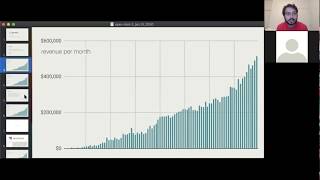
Welcome, welcome to the second open board meeting, which means it will be much better than the first one. Last time went pretty well. We had 100 people that joined live and over 3,000 people watch it on YouTube afterwards. So it was cool and I'm excited to kind of share a lot of how we run Gumroad. I think it's educational for people that wanna run businesses, but it's also really useful for creators to think about how to build their own creative businesses in a long-term sustainable way. So if you have questions, just type them in the chat. We'll be doing these every single quarter for as long as they make sense, which is hopefully basically forever. We're starting now as we're a small company and, you know, it would be cool to be able to do these things long-term as well. So that's, yeah, definitely the goal. Cool. So the agenda, the agenda. Sort of has like 5 parts to it. And as I mentioned, we kind of use this structure at Gumroad. We have this what/why approach where we kind of define what we're doing and then why we're doing it, or what happened and why it happened. The way to think about this is one is sort of behavioral, sort of objective. Anyone can kind of observe roughly like how we did, for example. And then there's like the sort of more subjective nature of, of intention, intuition, the actual why behind certain things, like why certain things happened. Anyone can look at the numbers and say, okay, these things are going up and to the right, but why exactly is that? And that's important if you sort of want to make changes to your behavior and implement those things going forward. That's what we're gonna do today. And then sort of overall, there's gonna be a what, why to the board meeting that we'll talk about at the end, which is like the board meeting is the what, and then why are we doing this board meeting? As well. So how did we do? Not too bad. This was our 2019. It was our strongest, most consistent year ever. We very rarely have months or years, I guess, that are like this sort of consistently growing, which is, which is pretty cool. And there's one significant difference if anybody notices. And one of the things I learned when I moved to LA and I was painting a lot was this idea that some of the best painters are just really, really good at observing things. They look at a scene and they're able to notice interesting details and relationships really, really fast. It was really less about painting and more about observation. And that's a similar kind of thing. The what is what you're seeing, and then the why is why is this thing interesting to you? Similar kind of idea. And so if you look at that chart, you might just see something that goes up to the right. But I think the observation here I would notice is something like this, where you're noticing there is some structure to this chart. It's not this sort of like, you know, thing that's just kind of moving a little bit up into the right every month and goes down and up and up and then, you know, kind of has this like this trend. There are indications of sort of like broader patterns. So the first one would be that roughly the first half of the year is almost always pretty stable, and then the second half of the year is typically up and to the right. And so our growth has this kind of step function to it, and that's pretty normal in e-commerce especially, where typically the third and fourth quarters are the strongest. November and December are the strongest months of the year typically as well. And then you'll see this with Airbnb and Uber and everything like that. And then typically January, I guess, New Year's resolutions and all, people want to cut their their spending after the crazy holidays and travel and everything like that, just typically January through March are really, really slow. 2019 was basically the first year that broke that pattern. And we'll talk about why, but really quickly, these are the numbers if you want to look at them in a numbers format. Both are useful, I think. I don't really believe anyone's specifically a visual learner or a numbers-based person or whatever. They're both useful. So these are the sort of the rough numbers we process around $70 million for creators, which meant we did around $5 million in revenue. And the exciting thing about this chart or this slide is that our growth rate is growing, right? And so if there's like the volume, there's the derivative of the volume, which is sort of like velocity or the rate of growth. And then there's the acceleration, which is how fast the growth is growing, which is second derivative of volume. And so that went up from 25% to 40%. And that is roughly linear. And so that's pretty exciting because it means that you might start to see, if these trends hold, you might start to see like a climbing curve, like a rocket ship or a hockey stick, as we like to say. Though that's not the goal. So this is another way to look at that same chart is you might sort of say they're actually sort of like, it's not this thing that's just like always been up into the right. This whole time, there are sort of like two eras in certain industries. That's how they talk about it. There's a sort of like pre-microchip and post-microchip or transistor, I guess. And so it's good to look for these signs, and they're often lagging indicators. It's not like we did something and immediately that was the reason. There might be a variety of reasons. Malcolm Gladwell talks about this in Tipping Point. But I would say that a couple of things happened. One is we made a shift to discovery. We decided to prioritize people buying products from creators that they might not have had sort of long relationships with before. And we were really skeptical about this in the beginning. We really avoided that. We were really focused on, you know, we want to make it easy for creators to sell directly to their audiences. We're probably not going to help people that are sort of just like selling generic things to generic people and sort of using different ways to do that. But what we've seen is actually like a lot of A lot of the sales have started happening, creators that sort of build brands really quickly or are selling through affiliates or through discovery, or just very, very, or just like, you know, someone's share of someone else's products. Like, hey, I saw you were starting to learn painting, you might want to check out these digital brushes. And so building features to support that, I think, drove a lot of this. And then the other significant shift is just how open we are as a company. So these board meetings, publishing the numbers on Twitter, we started publishing the numbers on April 2018, which is this month right here. So nothing really happened and then, you know, so you could argue it's either a delayed shift from that or I wrote this Medium post that went pretty viral in February, which is this month right here. But the answer is probably always a little bit more murky than some story that I'd like to construct. So anyways, what did we ship? Why did those numbers go the way they went? As I mentioned, we started really thinking about, well, what does it look like if Gumroad is for creators who are discovering new audience members all the time, not only selling to people that have known them for several years. So the first thing we shipped on that front was ratings. So you can buy a product as you could and then rate it, you know, super simple feature, but really drives a lot of social credibility. And almost the rating, well, you'll typically find in almost all of these services, Yelp, Amazon, Netflix, is that everything is rated 4.5 stars. But the really important function of this feature is the number of ratings because it signals that people are actually buying this product. And if you look at social proof as a mechanism, ratings are actually not as interesting as, "Oh, this Kickstarter has reached 80% funding in 4 days," or whatever, right? Typically, it's not a ratings-based system. You wanna buy the product that is used by the most people and is roughly not terrible. And that's sort of like what the ratings typically help you do is like you just don't want to feel like you're going to lose, lose your, lose your money or buy a thing that you're going to regret buying later on. Ratings funneled really well into discovery. So this has been going really well for us and also sort of contributes, I think, a little bit to that up and to the right acceleration. This is our discovery volume processed every month. This is exciting on two fronts. One is that we're seeing an increase in our revenue and our process volume from it, which is great. And there's sort of an added incentive for creators to try Gumroad out because they might see a lift. And then there's our 10% take that we take. So typically, because we're sort of a commerce company, our take rate is really small and ends up being around 7% of total process volume. With this, and that includes payments and processing and risk and hosting and everything, right? So it ends up being that our gross profit gets pretty slim pretty fast, even though we might be processing millions and millions of dollars a month. This is great because we get to charge 10% of top-line volume, and it's basically 100% gross margin because we've already absorbed the cost of the transaction and the risk and hosting and everything like that. And then creators don't really mind paying it because they're used to paying, you know, 30% plus. Some marketplaces take 70%. And so, you know, 10% we think is super low, super reasonable. And these are all typically for the creator also 100% gross margin sales. They've already made the product, it's already there, it might have been around for a long time. And so an extra 90% of every sale for them doing nothing is pretty nice. After that, we shipped enhancements to the creator profile. So we took sort of like the layout that we sort of spent a lot of time iterating on in, with Discover, and then applied it to creator profiles. We have this like nice consistency, and that allowed us to sort of make room for this thing called posts. We launched posts in the second half of the year. This is also sort of like fundamentally a different direction for Gumroad because we're sort of allowing people to do things that are like not directly related to selling products. And again, if you're talking about Discovery, if you're talking about creators discovering new people, posts are a great way to do that. Typically, if you look at any creator that's independent, successful, full-time, however you want to measure it, they've typically built up an audience over years, typically through tweets, blog posts, videos, things like that. And so we're definitely going to be making a really large push, push towards that. And it's going really well. One of the really hard things about e-commerce is that it's hard to inflect your growth. People wanna do a thing, they wanna sell a product, people are gonna buy that product. It's hard to growth hack your way into some insane growth numbers, but because posts are free, you can create them all the time, we're seeing a pretty good uptake in how many people are using those things. And so you can see already in January, so the reason it dips is 'cause we're only 13 or 14 days into, or it's not 15 days into January, we've actually seen more posts created than products. Which is kind of crazy, you know, as designers and engineers, we spent so much time on like the product creation flow and the editing flows and already more people are creating posts and that's pretty exciting. In terms of percentages, roughly I think 40% of creators that use Gumroad have created profile posts. So it's very quickly becoming like an essential part of using Gumroad. You know, in January we shipped the feature, I think maybe October or or something like that, maybe a little bit before, maybe a little bit later. So pretty fast. And so that's pretty cool. It's pretty cool to see. And that's always been one of the really rewarding things about working on something like Gumroad is that there is just this insane engagement, right? If we're helping people make a living or just earn a little bit of money off of their work, they build a pretty sort of invested relationship with us pretty quickly. And that's awesome. We will ship features, or we won't even ship, we'll hide features just to test them internally before we release them to everybody else and we'll get support emails about them saying, "Hey, this doesn't work great and there's a bug." People are really always looking for ways to take full advantage of Gumroad and that's really satisfying. After painting, I'd like to make another metaphor. I love these, as you might know if you follow me on Twitter, but dominoes. And chaos theory and the butterfly effect or whatever, all these different ways of thinking about this pretty similar idea of compounding interest and compounding power and compounding energy. And this is a GIF you can go— or a video you can go find online if you just search like sort of like larger dominoes toppling or whatever. But it's pretty cool to see this tiny, tiny, tiny domino topple this massive one. And people have done this experiment like massive, massive scale as well. And it just shows the power, I think, of starting with a really small thing and iterating on it, allowing the power and momentum behind that first little feature to drive the next feature and the next feature. And each one of these things gets bigger and bigger and bigger over time. And so, we shipped ratings, that allowed us to ship Discover, this allowed us to inform a lot of our ideas around layout and design and filtering and sorting and social proof, and we built that into the profile pages. We're able to take a lot of those learnings and apply them here and to posts. And we're gonna do that. We're gonna take posts and apply it to our next thing. But really quick before that, the other way to look at sort of dominoes is something like this. And so if you kind of extrapolate out our next few years based off our existing growth, looks pretty nice. Hopefully next year we'll hit over $100 million processed. And roughly, if this is just projecting out our growth, based on the 2019 growth rate. The growth rate was 40%, which is much higher than 2018. So it might be even higher, it might be lower, it's hard to say. For now, I just kind of defaulted to using it. And this is our revenue over time, similar kind of formula, just projecting it out. This is cool, you know, we can build a, you know, $10 million a year business, which is sizable with a tiny team, you know, less than 10 people. And it should scale. Like, I don't think there's anything that says like we need to have hundreds of employees to do hundreds of millions of dollars in revenue and help creators make billions and billions of dollars in new income every single year. This is taking that same 40% growth rate, which means roughly doubling every 2 years and extrapolating that out. I was just curious. I looked up how old Mailchimp was and they're, I think, 18 years old. So we have 8 years to go, so I sort of like went out 8 or 9 years or something like that to see, okay, if we're alive as long as Mailchimp has been alive and we continue to grow at the same rate, which is unlikely, what does that look like? And those numbers get pretty big, you know, and if you look at what our 2019 was, which, you know, looked pretty nice in the beginning of this presentation, it's down here and these look almost flat. And that's just what happens. You look at these kind of tiny dominoes and there might have been tiny, tiny, tiny ones in the very beginning. These things take a lot of time. This is similar to creators that we talk to. It often looks like I could draw two arrows here, I could draw that same arrow down here, and then I could draw one like this. But these things take a lot of time, and if you zoom in, you'll see a rough graph always that looks like this, where you're trying out a bunch of different things and things work and you learn things and you get more intuitive and things like that. It's always a combination. Typically, to talk about the domino thing, there's two ways to look at everything that we build. One is, sort of like from the far future, looking back, looking backwards, I guess. And then there's like from today looking forward, right? So there's always the bugs, the small iterations, the small improvements. Like for example, we're adding Hindi as like one of the options for subtitles that you can upload to your video products. It's like a very micro incremental feature. And then there's like the super long-term stuff. Like we wanna change the way creators make money or get healthcare or any of these things. And it's always a combination, right? It's always like, we don't really have a process for this. And as I mentioned, it really is about that domino thing. It becomes obvious as you start working on something what you should be building because we talk to creators, they tell us, "Hey, we want ratings because, you know, or I create my own website to have my product just have ratings in the corner or testimonials." We start to learn and build intuition around what we should be building. And that's really important if you want to build a business. Ultimately, you're making hundreds of decisions every week, every month. And that cycle, if you're always doing research and having meetings and memos and meeting with creators and doing user research and stuff, like, it's just gonna take forever. You just don't have the time to do that, especially as a small team that's trying to stay profitable and stay lean and mean. The best way to do that is to just build for yourself, right? If you are your own user, and I try to use Gumroad and I'm finding ways to do that more and more, You very quickly will figure out, oh, this is what I should be building because I tried to do something and I hit a wall and I couldn't do that thing I wanted to do. And so I often use the metaphor of curling where that person, we spent the first year or two, whatever, hitting, throwing that puck out. And now it's really just about polishing the floor and make it go slightly more in the direction that we want it to go in. We're doing a big refresh on all the editing features that we went through, product editing, we're gonna do The whole checkout experience is gonna change as well. This is a preview of what that looks like. And as we build memberships out, which is kind of going back to that domino thing, it's the next evolution of posts. Posts are gonna allow us to really sort of combine our payment features and our post feature and create memberships. And so this is what we're currently working on. I know we promised to ship this last year, and technically it's already live, but we have a lot to add to make it really, really good before we officially launch it. Every time we build a really big thing like this, we always try to take a lot of our learnings and apply them to other parts of the product. We realized that our checkout experience is really great for digital downloads, doesn't really scale super well to other use cases like memberships, and so we're holistically redesigning the whole thing. But in general, I'm not a fan of massive V2, V3 launches. I'm always— bias towards like iterating and iterating and making small things better and better and better and better. A great example of this is with our onboarding, our onboarding flows. And so once we launch memberships and that goes really well, we're going to be focused on onboarding. So you'll see, this is kind of our existing add product form, which isn't bad, but we're going to make it a lot cleaner. And similar kind of our learning around memberships, you know, we really want to prioritize that, make it feel like a first-class product citizen. Where you sign up to Gumroad and it makes sense that it's built for memberships, it should feel like that. And so we're just trying to find different ways to highlight this. And one sort of design thing we noticed is that often people on the browser, there's this sort of like F pattern in how people read, right? So they read like this, they don't typically get to the end and they kind of scroll to something that's interesting again. They read right to left, left to right, and they go down, right to left, left to right, etc. And so some people will even email us and say, hey, like I tried creating products a few times and I never see the membership option even though it's right here. And so this makes it sort of part of the visual flow of, of, of, of creating a product. And hopefully people will, will see that. Memberships is basically a way to charge on a recurring basis for either access to a newsletter, exclusive content, access to Slack group, or any of these things. So if you're familiar with Patreon, it's similar, similar to that. Once we do onboarding, we're going to spend a quarter focusing on supporting our largest supporters and So we always try to do this where every time we work on the front end of the product, like the first things that creators get into, like creating products and onboarding and things like that, we always try to also spend an equivalent amount of time on the other side and say, "Okay, once you've made hundreds of thousands of dollars or millions of dollars, we want to make sure that Gumroad continues to support you over time." And we currently don't use Photoshop for this. We do all of this work in Sketch, but once we convert to Figma, We'll be publishing all of our design files open source as well to continue the trend. So some of the things that we'll build for creators this year, we're gonna overhaul the way that we think about pixel tracking and analytics to make sure that creators that want to use those things, if they're retargeting using Instagram ads or Facebook or Google ads or anything like that, they can do that really, really well. One-click upsells. Part of the memberships is overhauling the way that we think about content, which is gonna make it a lot easier to have sections in your product, and that's gonna make it a lot easier to say, "Hey, this section can be sort of like an incremental fee," and it's gonna make that process really easy and hopefully feel really, really native. That will allow us to do stuff like abandoned cart emails, which a lot of people want. Memberships, again, will allow us to really rethink how we think about funnels and landing pages, affiliates, and a lot more, right? So even as I try to get as deep as I can, The vast majority of what we ship are like tiny, tiny, tiny improvements. I was talking to Kevin, CEO of Instagram, or former CEO of Instagram, a long time ago at dinner, and I asked him like, "What mattered for you? Like what actually moved the needle for Instagram?" Not in the early days, just any time. And he said almost nothing except just making the thing faster, simpler, and making the app crash less, making it work, you know, on on sort of like lower-res devices, et cetera, et cetera. It's typically people want to do a certain thing, we want to make it really easy for them to do that thing. And there's a lot of kind of really tiny incremental improvements in order for that to happen. And if you follow us on Twitter, we always tweet those things. So you can just like look for tweets from the Gumroad account with new, the new emoji. And that's sort of our way of saying like, this is a sort of a new feature or a new change. And so if you just search for that on Twitter, you know, from Gumroad new, you'll be able to see like basically, I don't know, dozens if not hundreds of little shipments we made last year to kind of make the site incrementally better in all of these different ways. You know, for example, like going from this to this is just, you know, gonna be better. It's hard to measure, we're not gonna really know, but we know that people are creating products faster and faster. And so that's good, and that will be a good thing. And worst case, they just have slightly less stress, slightly less questions about like, "Hey, how do I do this thing?" The more that our product can have a conversation with the user at the right point, the better for them, the faster they'll be able to do what they want, the less support tickets that we have to handle, which is always nice, just the better it is for everybody. The more that they can mess around and be like, "Oh wow, I didn't realize it was going to be so easy to do this," the better. Yeah, but yeah, it's still early, you know, we'll sort of learn and see how people end up using it. And definitely when memberships goes live, which is hopefully in March, that's the new goal. We'll almost definitely miss it. I kind of think in half-life, so if we thought November was when we were gonna ship it and it ended up being March, just 4-month delay, that means likely there's gonna be another 2-month delay, then another 1-month delay, then another 2-week delay, then another week delay. So my guess is It will probably be a bit longer than March, but that's the goal.
Take your time.
Yeah, there's no rush. And that's the nice thing about not burning through venture capital dollars and seeing your coffin at the end of the road. Like, we'll get there. And the nice thing is it's going to be really awesome. We could have shipped it already, but we really want to make it amazing. We feel like we have kind of like one shot to make it really, really, really awesome. And we're still shipping incrementally, but when we officially launch it, it's going to be a really, really, really polished, polished, polished.
Yeah, that's awesome. I kind of struggle with that, that thought too. Like, should you— you're really excited about a new feature and it's looking usable, but maybe not perfect, but do you want to just put it out there and see what people think, or hold it in and wait to the very last second.
Totally. And I always go back and forth, honestly. Sometimes I'll wait to polish, really polish something and ship it and launch it. Sometimes we'll ship it way before it's super polished. I think it's also important to do that, because then you'll start to build your intuition of what is the right level of polish. But I think most people probably bias towards shipping it too late. Because they probably care a lot more about their product than their, like, we'll, we'll be surprised with like, we'll kind of hide a feature, like a new theme or something. Like we have a dark mode theme right now that we're working on and it's technically live and the speed at which people discover these features is kind of crazy. So yeah, that's the other thing, right? It's like, as you grow, you want to, and you have more users and, you know, they might be less early adopter type people. You might want to polish things more, whereas in the early days, like, people don't care. They're used to this. So, so yeah. And to answer Baba's question about what comes first, product or membership, I mean, it depends. And that's one of the really— that is one of the big questions that we actually want to address in this redesign. So you'll notice there's this kind of new prompt right at the bottom here, and this is a work in progress, so I don't know if it'll look exactly like this. Actually, definitely won't look exactly exactly like this when we ship it, we're going to give more priority to this bottom bit. But we want to make sure that people start the way they feel comfortable. And ultimately, you're probably going to do all of these things anyways. And if you want to be a full-time independent creator, you probably need to. But the most important thing is making sure people start and they pick an option that, that, um, gets some momentum, some momentum going. So after we do that, so roughly every Each one of these is typically, we think, around a quarter's worth of work. These will kind of be a quarter, hopefully, and then this will be a quarter, this will be a quarter, and then this last one will be a quarter. So that's roughly what we're timing. So once we spent, you know, second half of this year, basically, well, overall our library, if you're familiar with our library, it's really a glorified receipt. It's always been about payments and sort of we've been making a big transition in terms of instead of making the focus about, buying products and viewing, downloading them, and viewing the receipt, and asking for a refund, and all these sorts of things. We're going to spin it around, maybe literally in the UI, and make it around consuming. And so if you bought, let's say, a video course from Vaughn around making a sci-fi corridor in Blender, you probably don't care that much about the receipt. You probably want to watch the video. So we're going to make the default all around that. We're going to add resume functionality so you can consume it on different apps, and it's going to sync your place in line, which would be cool. Inline listening, sharing to different apps, things like that. We want to basically make people feel comfortable spending more time in Gumroad, where if you're bored one night, instead of going on Netflix and watching The Witcher, you might say, "Hey, I should probably watch that video I purchased a while ago." And if we can make that experience really, really smooth and easy, just as great as Netflix is for watching videos, we hope that people will be more productive. And that will feed into discovery. If you're spending more time with Gumroad, that's more time that we can say, "Hey, by the way, did you know he has a new product out?" And hopefully generate more sales for creators as well, which is always sort of our ultimate goal. And if we get all of these things done, our next moonshot, so our sort of moonshot for last year was memberships, and that's not gonna ship last year. So it's probably likely to happen again, but I wanted to talk about sort of like the more grand vision of where we wanna go. And that's really getting serious about education. What we've seen with Gumroad is that there's this story that sometimes people say like, oh, I'm an independent musician, I'm an independent artist, I'm an independent podcaster, etc., etc., etc. But the way they typically become independent is by being an educator, being a teacher, actually teaching people how to do certain things. And this is pretty similar with every service in the creative industry. You can look at Patreon or Skillshare or a lot of these different services, you're often seeing creators teach their skill, and then that gives them the flexibility and freedom to spend more time doing the art that they really want to do. And I think that's an important thing to acknowledge, is that if we really want to— if our goal is to maximize the amount of value that's being created, and the way we do that is to maximize creators' earnings, it really means being honest about how creators make money. And if that's the way they do it, if they make money by educating people on how to paint, and so they can go out and paint, or do the same thing with writing or any of these other skills. We have people that, you know, yoga and meditation and Ultimate Frisbee and all sorts of stuff, music and every— basically dance and theater, like everything, stand-up comedy. We want to make that really a really core part of Gumroad. And so that happens in steps. We're already really good, I think, at digital downloads, we've been doing that for 8 years, so hopefully that's true. So we're sort of done there, especially if we get to the library stuff, we should be really good on that front. And then sort of like going from product, there's like kind of a spectrum from product to service, and over time we'll get better at all of the things that are a little bit less producty and a little bit more servicey. So we'll start doing courses and make Gumroad a really great experience for selling courses, which are sort of digital products that have sort of like this extended consumption period, maybe some of that consumption That feedback loop lives within Gumroad. That next step of that will be classes, which will be sort of like an async model. It might have some livestream elements to it, might have assignments and homework and more collaboration. And then sort of more peer service, which is like critique and professional feedback, where I might wanna ask a creator for, hey, could you like critique this painting that I did? And, you know, one-off. And then mentorships would be kind of like an ongoing relationship. In that form. And so we're pretty excited about this. We don't really know what this looks like, but that's sort of like the long-term plan. If we can execute on all this other stuff, my guess is that we'll be spending 2021 really sort of deep in Gumroad for education. This is our mission. It's always been our mission. We've sort of changed the way that we've said this, but sort of simply, we believe everybody can do this. Everyone can be an independent full-time creator. I believe I'm sort of an independent full-time creator in a sense. It's not always sexy. It doesn't always sound amazing. And there's certain things that you have to learn and do because you have to pay your taxes. Everyone has to do that. It's not the most amazing thing in the world. And so I think acknowledging that and saying, look, there are pieces of being a creator that are less sexy. I think that's going to put us ahead of the game, especially with a lot of our competition. If you raise a lot of VC money, you have to Typically always be selling this grand story. And if we're like, look, we can be honest, this is what we do, it's fine. We don't have to pretend that it's some, I don't know, amazing thing that we're doing in service to the world. We're just helping this group of people find different ways to make a little bit more money so that they can have a little bit more time to do what they want. Well, we'll be pretty happy about that. And that's part of why we're doing the board meeting. We want to show people that, A lot of this stuff might not be sexy at all. It might be like, what, this is like the most boring thing, most boring way I've spent 41 minutes of my life. I love it, I think it's great. I love doing this. This is like one of the most fun things, but it's important, you know, if you want to build a business like we're trying to, it's important to analyze these things and figure out like where is our growth coming from. And for example, if you're a creator and you might get frustrated, like I'm 4 years into this thing and and like, it doesn't look like I'm nearly any of the way where I need to be. But if you look at the first 2, I mean, 2011 doesn't even make it on this list, even though we launched in April 2011. So first 4 years of the company's life is like down here, right? Like a million dollars process. This is, by the way, this is December. So this is December up here, we processed, you know, $7.6 million or something like that. And so it's just important if you're selling anything on the internet, These things take a lot of time. It's going to take years. It's going to take years to build an audience, to sell products, to figure out the right way to do that, to figure out what people want. Over time, they're going to be able to tell you what they want because you're going to have people that are like— I get emails every single day that are like, "Hey, please build this," or "This thing is broken." I almost don't need to do anything creative anymore. I can just respond to creators. The board meeting is like my quarterly chance to really step back and really think about a little bit more longer term. And creators should be doing this, right? Do this for yourself. Download your Gumroad sales and you should be able to come up with something similar. You might wanna think about what your growth looks like long term and what your goals are long term. If you wanna be independent, how much money is that gonna take? How do you wanna make that money? How many products are you gonna have to sell at what price point? Really reverse engineer what you're gonna need to do to do that. If you were raising money, you can think about it like an investment. We live in a capitalistic world, and if you can use capitalism as a tool to make your art stronger, I think you should find ways to do that. The last thing I wanted to say was Gumroad is a business, but it's also basically the product of a creator. And just like we can talk about our marketing strategy and say, the way we're gonna grow is basically by just doing what we're doing, staying tiny, build a really great product for this group of people that we really care about and really understand. We spent 8+ years understanding this group of people. We understand them better than almost anybody else. And we're gonna do it for a long time. We're not gonna go away. But you can flip this and you could say, if you're a creator, you're probably gonna do the same thing, right? Like, you're probably gonna stay focused on your core audience. Your audience is always gonna be better at selling you to everybody else that they know than you are, because you're gonna always come at them like a salesperson. It's always better to be like, hey, check out my friend, he does this awesome thing. Yeah, right. We're gonna remain profitable. I assume everybody wants to do that as well and not file for bankruptcy. And, and, you know, so like there's a lot of similarities, and I think that's why— that's one of the big reasons I'm really excited about hopefully this concept of open board meetings spreading is, is hopefully it gets people to think a little bit more about like, oh, I wonder if I could do this for myself. You know, Jay-Z said I'm not a businessman, I'm a business man. That's my best Jay-Z impression here. But it is true, right? It's like that. I mean, Jay-Z is probably the most successful musician or up there, and it's not because he's the best musician.
He's just because he had board meetings.
It's because he had board meetings. If you have any questions, you know where to find me. If you don't, @shl on Twitter, you can DM me, and my email is sahil@gumroad.com. And you can email me there as well. And yeah, thanks for tuning in. Hopefully it was educational.










