Gumroad Open Board Meeting #3 - April 2020
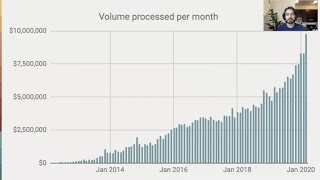
In the third public Gumroad board meeting (April 17, 2020), founder Sahil Lavingia presented a quarterly update covering rapid growth driven by the COVID‑19 pandemic, financial performance, product initiatives, and company culture, followed by a 45‑minute live Q&A. He highlighted that monthly processed volume jumped from $7.5 M to $9.7 M, with year‑over‑year growth accelerating from 15 % (2017) to nearly 70 % (2020). The company is profitable (≈$78 k net profit for the month) with a lean, fully remote, part‑time team of ~15‑16 people operating asynchronously with no regular meetings. Product work focused on “spring cleaning”: redesigning onboarding, consolidating navigation, and launching a new “versions” system that underpins both multi‑tier products and the upcoming memberships feature, slated for a July launch. Lavingia discussed the strategic decision to prioritize organic creator acquisition (zero marketing spend), the impact of COVID‑19 on creator categories (self‑help, learning, mental‑health content thriving), and the long‑term vision toward courses and education. The Q&A covered team size, remote hiring, profit philosophy, content policy, potential acquisitions, and the rationale for not spending on paid acquisition. Throughout, Lavingia emphasized transparency, iterative development, and the importance of a simple, creator‑first product experience.
Chapters
So welcome everybody to the third public Gumroad board meeting. If you're familiar with this, awesome. If you're not, we— every quarter I run through the metrics, the product, some of the stuff that we've shipped, what we're working on next, maybe some of the learnings that we've had along the way. This one will be a little unique because of coronavirus, so we have a couple sort of like, couple learnings from that, and the metrics definitely have sort of felt the impact of that. For Gumroad specifically, in a positive way. The last board meeting was an annual one. Every January we do kind of like a larger board meeting that's more of like a yearly recap, and it's sort of a yearly look forward as well. So this one is going to be a little bit shorter. I'm going to try to keep this to 15 minutes just for my spiel, and then we can do 45 minutes of Q&A. I think that's sort of the the really exciting stuff anyways. So with that, this was where we ended last year. In 20— end of 2019 was pretty solid, solid year for us. We ended processing around $7.5 million a month, and this is the last 3 months, quarter, quarter 1 of 2020 added on top of that. So pretty, pretty good trend, and definitely March was sort of like a big step up, I think, in part at least due to coronavirus. So these are the numbers. I've shared these numbers on Twitter, but just for context, you know, we ended at 7.5 million and we're up 8.3 in the first two months, then 9.7 million processed in March and April. April looks pretty solid too. So just the other, the other number that's, that's sort of interesting from this is the year-over-year growth. And so we've seen a big uptick in our growth metric. Our growth is growing. So from 15% in 2017 to 25% to 40% to almost 70% in, in 2020. And so this is pretty exciting. It means that, yeah, Gumroad is reaching more and more people at a faster and faster rate, and it's actually accelerating 9 years into the company, who would have thought it would have taken this long? Not me. So let's get into what we— why that happened and what we shipped and what we plan on shipping. And we're going to really focus just this board meeting. If you're really curious about the sort of the whole year, watch the last one where I get really into it on product. This is going to be a little bit lighter, but really 4 goals: spring cleaning, Quarter 1 normally is the slowest quarter of the year for us, so it's a good time for us to go back and clean things up. This is the first full year we're going to have a full team working on the product again, and so it's a good time, I think, to both technical debt, product debt, just go through and clean things up. A lot of this stuff hasn't been updated for a really long time, and especially as we get into launching memberships, which is going to be the largest launch for us that I can recall really ever. I think the more that we can simplify and consolidate and work on the onboarding and all these sorts of things, the better off we're going to be, you know, when we're at that point. I get one of these every board meeting, a kind of stretched analogy, and so this time, I'm going to— use curling. Curling sort of has two parts to it. There's like the throwing of the puck, I'm sure there's a sort of a proper name for that, and then there's like the lowering of the friction of the ice, the people sort of like, I know some Canadians probably really annoyed at me right now for this, but we're sort of in the second phase of that, right? So the way I think about it is like there's step one, which is sort of pre-product market fit, and then there's like step two, which is post-product market fit, getting the boulder up a hill and then watching it roll down and sort of like tweaking it along the way., but it's out of your hands. It's like a beast that you have to feed, or whatever metaphor you prefer to use. And so a lot of what we've tried to do is that second part of the process, which is just how simple, how fast can we make the experience of using Gumroad? There's a market need, creators need it, they wanna do something, let's make it just super, super simple and easy and obvious so they can do it and get on with their life. So for example, we took this form that we thought was good, this is a big step up of what we used to have with all these different steps, forks in the road and all these, you'd have to upload files and do all these things as part of this process and simplified it to a single form, really clean, really simple, works great on mobile. We took the nav, this is a change that most folks probably would not worry about, you'd probably be working on building new features or something like that, but we really wanted to just go through the whole product and give it a new paint, a new, what is it, new coat of paint? New coat of paint. And so, something as simple as this, and this stuff really works, we got a lot of really positive feedback and I think people notice. That we really care about the product, we really wanna improve it and make it just really great to use. And basically any point from a creator getting started all the way to making their first sale, including the nav, let's make that as polished as possible. And this has paid off, even before coronavirus, we've seen a really large uptick in creators adding products. We went from around 250 creators a day adding products up to, 500, so sort of a doubling in the last year, and then from 500 a day to 1,500 people a day. A lot of that due to coronavirus, but you can see, you know, in the chart that we were seeing that kind of growth kick in much, much, much, much before that happened. And I'm so grateful, honestly, for making some of these changes because, you know, we can handle this new growth and there's a lot less confusion and things in the product, and the Gumroad that they're familiar with is the Gumroad of 2020. They don't know how bad Gumroad used to be, so that's pretty cool too. And so that's spring cleaning. Next up is memberships. This is the slide from the last board meeting. We're still trying to work through and evolve our thinking on it and learn and research and send it to creators, got a bunch of feedback. And one of the epiphanies we had is, and this is sort of a philosophy of Gumroad overall, is like, how can we incrementalize what we're doing? We decided, let's go back, let's overhaul our versions feature for all products, forget about memberships, let's make it really easy to have multiple versions of a product, you can price them at different rates, you can attach different files to them, let's ship this, let's make it really great for the creator and for the consumer as part of the checkout UX, and this has been a phenomenal launch for us, really surprising how many people use this, and so we're doubling down on it. But this makes it easier because when we— the key insight to this is we might be able to get away with one product layout for memberships and products. That's pretty cool, because we were thinking, like, in that previous slide, we're gonna have products on Gumroad and memberships on Gumroad, but I think if we can really make this new UX really popular and the best way to buy a product, a single-tier, multiple-tier product, and memberships, we could have this consistent experience for all products on Government. So that's a pretty cool— we're still hopeful, we're not sold yet on this, but I think we have more data than we had previously that this might be the way forward. Taking versions and applying it to memberships has also been much smoother now that we have versions. We can basically sort of just make the version options tiers, and now boom, we have tiers, we can move pricing. Into that section, and now creators that come on board, create a membership, they'll be able to very soon, actually already, but the pricing hasn't been done, but a lot of this has already shipped, but they'll be able to just understand what they're trying to do. And typically, customers, they have a relationship with a tier specifically, right? They subscribe to a tier, not a membership. And so, changes like this, and also a lot of the tech debt that we were able to get rid of, moving to React makes changes like this a lot. A lot easier. And there's a lot more to do. We talked about the edit page. We need to make it possible for customers to switch their tiers after they purchase, and then we also need to make it possible for creators to put that sort of membership on their profile so that it feels like a first-class citizen. So those are sort of like the two focuses for the first half of the year. We're making really good headway, and we still think we can launch memberships officially in July, so we'll see how that goes. And to talk a little bit more about what we're seeing growth-wise, this is April added onto the chart, so it seems to be even stronger. Growth-wise, it seems to continue to accelerate. This is sort of, I think, almost entirely due to COVID, but it will be our first month since, I think, 2014 or something, in which we'll see a doubling year over year. So that's pretty exciting. It's cool that, obviously, Gumroad, is a sort of a 9-year-old company. It took a long time to get here, and I also just can't really, I don't wanna take credit for it. I mentioned I wrote this post, you can check it out, but in there I say it doesn't matter how awesome your product is, how fast you ship, the market you're in is sort of like the single largest determinant of your growth. And I still believe that, and it means that I can't really take credit for a lot of what's happening right now. Just like a lot of the businesses that are suffering right now, just a combination of luck and unluckiness leading to that. This is just another insight into the profound nature of COVID-19. As you can see, it takes a long time to add creators to Gumroad. It's a big deal when someone is making a sale every single day. And so, it took us 8 years to get to 5,000 daily active creators making sales. And it took us a month to go from 5,000 to almost 7,000. And just a note for founders and owners of companies and people trying to do this, it takes a long time. And I think Gumroad certainly has a larger presence now on the internet than it used to, and so I think maybe some people may not really realize how long 9 years is. We started the company April 2011. It was a weekend project for me. We raised money. From VCs in 2012. We weren't able to raise any more money in 2015. We did a round of layoffs, went from 20 people to 5 people, then 5 to 1 right over here. We basically flatlined for almost a year or two. We grew 15%, as I mentioned, in 2017. I felt I had nothing to lose, so I opened up the financials, thought it would be a good way to sort of contribute back to the community. I wrote the post, but really, this thing maybe has been going all along. There is this maybe, potentially, actually quite simple chart that's been building over time. And so it takes time. 6, 7 years in, we had $16.5 million on our cap table, which basically meant we'd have to sell the company for $16.5 million to make a dollar, for me to make a dollar. Most people would not want to do that 7 years into building a company that sort of is strongly tied to their identity, but 9 years in, you can read the post, I go sort of more into depth on that, but it takes a long time. And we'll see what these numbers look like. It might totally flatline and just hit a ceiling, or it might continue. The cool thing is we're profitable, we're small, we're nimble, We're remote, we're asynchronous, so we haven't had to react super strongly to the coronavirus, and we'll be around for our creators, sort of regardless of what happens. If you're curious on more stuff, if you don't know, you can follow me on Twitter, follow my Gumroad newsletter. And I wanted to compress that so we can get to the fun part, which is questions and answers. So let's do that. Who has questions? And I'm happy to go super into literally all the internal stuff that I use to get the numbers, talk about the business, any decisions that we're sort of thinking about making, PR, product, marketing, content, any of these sorts of things. So let me stop sharing so I can talk to y'all. So yeah, if you're a creator or anybody else, just feel free to raise your hand and let's have a conversation. Or you can, if you're shy, you can talk into the chat. That's also very acceptable. John asks, how big is your team? Full-time, part-time contractors? So we're a fully part-time company. We have around 15, 16 maybe now, people that work on the product between as little as 10, as much as 40, maybe, hours a week. I probably average around 20, 30 hours a week though, especially with the recent growth and coronavirus and stuff like that. That's a lot larger. The process of onboarding creators, Jake asks, how has that changed over time? It really hasn't. And honestly, we don't spend any money on customer acquisition, $0. And so it's just creators telling creators, Our goal is to just make Gumroad better, simpler, faster, easier. We'll add new countries and stuff probably later this year, but really Gumroad's the same as it was on day one, which was you create an account, email, password, add a product, name, description, price, files, get a link, share it out, make money, et cetera, et cetera, et cetera. And so that's the goal, is as we ship all of these sorts of things like memberships and more, when we get into education courses and classes and other things, and who knows what next year and the year after, that should never get harder. That's sort of our north star. John Saddington asks, "What is your monthly burn?" We don't have, we're profitable, so negative. Last month we made $78,000 in net profit, net income to the operating company of Gumroad, which we will, which is probably too much, honestly. So we'll probably do some cool stuff with that, either grow the team, do some marketing stuff, give it away, who knows. Are there any categories growing faster than others during COVID Emily or ML asks. Yeah, so self-help, anything honestly, anything that people can learn from, people are going, those people are purchasing in higher volume. Learning to paint, learning to code, learning to design, learning filmmaking, like courses, ebooks, videos, all that stuff is doing really well. We're seeing a depression, probably. We haven't seen a depression, honestly, in any category, but I've heard macro, there has been depressions in like art sales, print sales, obviously conventions and comics and things like that have been canceled. But in general, more people are at home, more people are spending time on the internet, so if you can sell products you're gonna see an uptick, especially if you can teach people a skill. So maybe if you're an artist, a painter, you might want to think about doing tutorials or classes and less so about selling art itself right now. I did— we did buy back some investors, so we raised a total of $10 million and we have $2 million on our cap table, so around $8 million of that has has been wiped out, either investors writing off the company. In 2017, Kleiner wrote off their investment, and/or buying investors back. Though I think we're kind of done with that. That $2 million is probably what it's gonna look like until a significant financing event. Either we sell or we liquidate or we IPO or we raise more money. Actually, Been exploring the idea of potentially doing a crowdfunding sort of campaign for Gumroad, getting people to give us their $1,200 stimulus checks or something like that. Would be kind of cool and sort of help people build equity, which I think is really important in this market right now, which is why the stock market is, for some reason, doing well. Phil asks, are team members remote? Everyone is remote. We've been remote since 2016. At some point we might have an office again, but yeah, we don't intend to ever have an office. We also don't have meetings. It's all async. It's why I can live a relatively flexible life in terms of location, schedule, et cetera. And I like it, so I don't foresee that changing. I don't know if it will scale, but I also don't think we need to be 100 people. Mark asks about running multiple multi-vendor marketplaces on Gumroad. No, we don't plan to support that. We did actually, we had a prototype of it a long time ago called the Platform API, and it was just painful. Hai, probably not their real name, asks about "How did you find your part-time remote team?" Just like how you find everybody else, just having job posts and tweeting about it and doing Zoom calls and interviews. And I sort of interview every single person that works at Gumroad. And so that process hasn't really changed. It's just instead of having them come into an office in 2015 and meeting a bunch of the team, it just happens over Zoom and I do all of it. And we hire incredibly slowly. So the team is 15, 16 people. We'll probably add 3 or 4 people this summer and then probably do a pause again. So, we hire slowly. It's honestly incredibly time-consuming, so I try not to do it too much. Someone asks if I've considered making Gumroad specific to a genre of creators. No, not really. I think Gumroad, we have this creator, vertical agnostic brand, and I like it that way. Our software is useful for all creators and we don't need to verticalize. And I think that would actually detriment the product if we couldn't apply all the learnings to every other creator. That's always been sort of a core assumption that I made when I started working on Gumroad. How do I view profits as a whole? I view profits as oxygen. It's like one of those things, I stole that quote, that's not my original quote, Basically, if you have a lot of it, it doesn't matter if you have a little, you just need enough. And so as long as we have enough to kind of do the things we wanna do, that's great. I'm not really in a position right now to like need money. I pay myself a base salary, it's fine. Certainly now, like there's not really lots of things to spend money on. So I'm, yeah, it's a question I will probably revisit when I'm, you know, in 10 years or something like that. "What's the thought process behind not spending to acquire customers?" Simon asks. It's just, one, it didn't work really. We're growing faster organically than I think we could, so I think it's just being honest with, I don't think it would work necessarily. And then two, it's just a thing. It's just a thing to do. It requires people and complexity and process and documentation. And I really am focused on reducing the cost of all of that operational burden. And so, you know, we have 15, 16 people, they work on shipping a product or doing customer support, risk review, account review, etc. Everyone is working on a pretty sort of core, fundamentally important part of Gumroad, and just spending to acquire customers is just not fundamentally important to running the business. John asked, "What was the reaction from your VCs about doing open board meetings?" I would love if they joined, to be honest, but they're busy, they have their own stuff going on. I don't know if they even have an opinion on it. Do I see a trend in increase? This is a good question, Mohit. Do you see a trend in an increase in sales for mental health products? 100%. Yeah, that's a great one. Like, learn to blank. I would say mental health broadly, so a lot of physical fitness, a lot of cooking, a lot of meditation, a lot of yoga. And then also just pure therapy products and other things, like sort of like pseudoscience things as well. But totally, yeah, there's definitely been an increase as well. Mark says that he would like to invest early. It's kind of funny given that we're a 9-year-old company, but that I take it in a good way. Early is right. It is early right now. Savas asks, Savas, sorry about mispronouncing your name if I did, or I definitely did since I said it twice, but have you seen any drawbacks providing this information? Honestly, yeah. Like I was not, like as I mentioned, like I started sharing the numbers when Gumroad was flat. Sort of on purpose, because I was sort of like, this is what it is. Now that we're growing really fast, like, yeah, there's a very good chance that I stop being as open, because it paints a target on my back. So, we'll see. I'm still hopeful, and I really enjoy it. It's really fun for me. But maybe at some point, I might have to close it off, or only make it for top creators, or something. I really enjoy the feedback, and it forces me, I don't have a board anymore, It forces me to have a conversation and defend a lot of the decisions that we're making as a company. But yeah, competitors obviously listen to these things, watch these things, but so far nothing significant enough. But also, I wouldn't know, right? Who knows? They're probably not going to make me aware. Grant says, "How does no meetings work when it comes to product design?" How does it work? I mean, it just works the same way. You'd be surprised at how much you can do async. I will say something, we do have one-on-one meetings. I would say we don't have team meetings. We don't do standups or any of that stuff. The only meeting I have, regular meeting, is I do a sync with our part-time designer. But most of those go async, honestly, nowadays. He might be busy, I might be busy. It's just, you would do a bunch of design work, you document it, you send it over with some thoughts, I look at it, I give feedback back. You'd be surprised at how little you actually need. John also asks, no standing meetings? Correct, no standing meetings, all ad hoc. They're really not necessary. For us. I'll write more deeply about it, but if you search Twitter for asynchronous Sahil @SHL, you'll find a thread I write about why and how. But it's all Slack, Notion, you know, it works great because guess what? All the stuff that I write to the company, because I talk via writing, I can share with creators, it's already there, it's ready to go. I can even share some of it once I get to the bottom of these questions there. Shrey also asks, no meetings. Yes, no meetings, seriously, no meetings. You don't need 'em. Major cost to run the business, there's two costs, there's OpEx and variable costs. In terms of variable costs, just payment processing and hosting, and then on the OpEx side, just people. It's really like, there's like 4 major, 3 major costs in our balance sheet, that's about it. Again, we don't do any marketing or anything like that. So a lot of these costs we don't have. Yeah, Gumroad 100% asks about education. We're going to go straight into courses after memberships, and educational institutions shouldn't be worried. Vaughn says, "What percentage of the work the team is doing is catching up with user requests and bugs and coming up with and implementing new features?" Ah, that's a good question. I don't know the specific answer to that. I'm actually working on an internal tool in my head. I haven't started working on it itself. I probably won't until next year, but I really wanna be able to figure that out. I would say it's probably 50/50 in terms of user requests and just bugs, fixing bugs, and actually implementing new features. We try to ship one small new feature every couple weeks and one major feature once a quarter. And then everything else is just bugs and small tweaks here and there. There's a lot. Gumroad is a very wide surface area product. Josh asked, "What's your salary structure like?" We pay everybody hourly between $100-200 an hour if they're an engineer. And I pay myself a flat $150,000 a year, and that's it. And basically, as we grow, we have profits. So last month we had $78,000, which means I can probably hire, add maybe 4, 5, 6, 7 people to the team. It's actually kind of nice because I know, I roughly can sort of like know how many people we can bring on. When you raise VC, it's like, do we have 10, 5? You know, you can certainly pay for all of those. Folks. So it's kind of nice. John asked, what can creators do for me and the team? Honestly, really just telling more people about Gumroad, using Gumroad. Those are— that's sort of the number one thing. Giving us feedback. Be nice when you do that, please. We get a lot of not nice feedback too. Policing Is a whole conversation for a whole different day. I think it's, as you mentioned, it is a slippery slope. Obviously, we don't allow things that are illegal and we don't allow Nazis to be on Gumroad. But yeah, pseudoscience, things like that, it gets pretty tricky pretty fast. You allow fortune telling, for example. I don't think fortune telling has negative ramifications necessarily, but they probably do to some degree, right? You could make a case for it. We try to not play in that game right now, but eventually as we grow, we will have to get into that. Thanks for folks putting links in the chat, by the way, super, super useful. How are you creating focus in your life? Anuja asks, both for Gumroad and me. Gumroad, it's really refining those words, like spring cleaning, memberships, education. Superpower creators. It's like really just, I write a lot of words. And so it helps me, again, async culture, it's like the less words, the more focus. And so for example, my personal life, I have 3 goals for the year. One is Gumroad, one is this science fiction novella that I'm working on, and one is another book project that hopefully I can talk about later. And so just sticking to those things and making sure that whenever I do anything else, I know that I'm not doing those 3 things. Ninan asks about what other startup founders can do to bring down PayPal and Stripe fees. Honestly, just get more volume is what will do that. That's really the only way to do it. They have a lot of leverage if you're built on them, so that's really the only— Phil asks, ooh, this is gonna be hard to read, but, "When I joined a few years ago, Gumroad seemed 'dead.' Slow support, no updates, no community." then suddenly you started being very active on social media, improving the product and connecting more with creators. Is this also correlated to your business improving? What made you suddenly snap and go in this direction? Was this decision based on attracting new customers? Nope, not at all. Honestly, I had written it off and so I was like, eff it, I'm just going to share and be public again. And like, I'm going to embrace the fact that I didn't succeed in building a billion-dollar company. I wrote that post and, uh, I just felt free again to do that eventually after going through a couple years of a quarter-life crisis. And that led to all the other stuff. David King asks, DK asks, how do you draw the line on content policy? Dude, so hard, super hard. Honestly, luckily we haven't had to make some hard decisions yet, but I don't know. I don't know where it goes from here. Honestly, I take a pretty like, like the unique thing with Gumroad is that we help people make a living right now, right? Which especially now is so important for certain folks. So it's not just the question of like, do you agree with somebody being able to do something or not? It's like, does this person deserve to participate? Like this Gumroad, for a lot of people is now their primary income. And since COVID like maybe 100% of their income. And so, for me personally, to be like, you don't deserve to make an income right now is such a hard thing for me to be able to do. And I understand that's powerful. I don't even want the power, to be honest. Like, I wish I didn't have to make those decisions. And so I would always bias, unless there's really like clearly physical harm, something really bad in the world happening because of their products or their sales, like then I would, I would take action, but otherwise no. And of course, if it's illegal, people report illegal content, that's great. If it's illegal, like, go to law enforcement, take them down. We're happy to respond to any of those inquiries. We have relationships with government federal agencies and do often do that. Sahil Lavingia, nice to meet myself. You had mentioned you used to have coffee and lunch with users. Do you still do a ton of Zoom calls like that? Not honestly, not so much as we used, as I used to. I just love meeting people in person and Zoom is not enough for me. But also I think more importantly, like I had so many of that and I feel like we did Gumroad dinners in 12 different US cities and 2 Canadian, 1 Canadian city, Vancouver, 'cause I live in Portland. By the way, if anyone lives in Portland, let's hang out next year, I guess. Uh, but, uh, I just have a really good sense of like what we need to do. And I think it's dangerous. I was talking to someone earlier today about the shiny object syndrome where you're constantly like changing and reacting. And like our roadmap after coronavirus hit, exactly the same. And like, I'm very open to changing it, but like in, you know, in quarter 4 of this year, because otherwise it's just too easy to kind of like keep shifting and keep pivoting. And honestly, like being profitable is like a blessing because I can do that. I can take my time and really make mindful decisions. So I will probably go in waves where I will have a really good idea of how I want to sort of grow Gumroad and build things. And we have a very clear narrative of starting with onboarding and helping creators and product creation and the edit page, the consumer, and then the library and content consumption experience. It's a very clear narrative for me. And so once we get close to the end of that narrative, then I can start sort of like going out into the world, having tons of conversations with creators, really figuring out what we should be doing next. And I have some ideas, and you know, that's starting to happen already, but I try not to— I'm focused on, on the present. Zachary asks, when you think about growth and the use of cash, have you ever considered a small acquisition in lieu of hiring for customer acquisition? Um, yeah, actually, um, I had a couple conversations, I guess I'm normally pretty open, but normally if I'm having a business conversation with somebody else's company, then I respect their privacy. But I've had a couple conversations with people in our space, and so far nothing has come of it. But I think it's interesting. Most of the time, it's not about hiring people, it's mostly just about folding the product in. Honestly, like payments for creators is not, always the sexiest thing in the world. Operate— like, doing it logistically is not— can be quite painful, as someone mentioned, like the content moderation and other things, fraud, card testing, risk. And so there's a lot of people that have built nice businesses that just didn't break out maybe, and we might be able to pull them in, give them a nice lump sum cash payment, and then just automate all the stuff that they currently do. So we've had a couple of conversations about that, and we might have some more but nothing so far has panned out. Some of the disappointments, John asks, and setbacks of Q1 2020. Nothing. Yeah, I mean, obviously the macro, like, say, the economy, but I feel like I spent 2016 to 2019 really like getting in a good place. For myself, and so I feel good, and I feel like I have a good pulse, and I don't need— Gumroad could die tomorrow, and I would be totally fine with that. I don't intend for that to happen, but I feel like I'm in a good spot. Moat asks, "What is that one thing you would share about building an audience?" You should check out all the accounts Gumroad retweets and I retweet. Matthew Kobach, for example, he came to our New York dinner. He's awesome. I'll give him a shout out later today because he's really great follow on social media. Just share what you know and don't— like, honestly, most people are afraid to. That's fine. I was afraid to too. I still am. There's lots of stuff I don't share. I assume that's the case for most people. But just, you have to get comfortable. And the only way to get comfortable— you don't even have to get comfortable. You just have to be okay enough to do it. Just like, this is, by the way, like not easy. Like my heart races and I like have to go to the bathroom like 5 times in the hour before this thing. But it's the third one, I'm getting better, it's more fluid. And so I just think it's an important thing to do. And you just have to say, this is important to me, it's gonna require me to put myself out there, share my learnings, learn in public. And I think people appreciate that. John asks, I love the iterative development cycle. Do you all have pie-in-the-sky goals? So to address the no meetings thing, it's really critical, and I'll write— I'm writing about this at some point, but it's really critical that you go iterative and you try to break things up as atomic as possible. Because meetings are great when you're like, when you have this big thing and you're all moving, you're all in the same room. For example, like if there's a terrorist attack, you all need to make really quick decisions and all these sorts of things. And you get into a war room and a situation room, and you make these decisions really fast. And you have all the stakeholders, et cetera, et cetera. We don't do that. Every pie-in-the-sky goal, like launching memberships, that's a massive thing. We just broke down into a tree. We broke that down into creator, consumer. What do all the things creators need? What are all the things consumers need? Okay, they need tier management. Well, what does tier management need? It's gonna need these things. At some point, I'll tweet about an infographic that I think will help make that clear. But yeah, every pie-in-the-sky goal can be broken up into several atomic shipments. And then, you can just give each person an atomic shipment. They don't have to have meetings. They can just go and do, and really well-defined. They can write tests for it. It's all separated nicely, et cetera, et cetera. And yes, you have to have a really great autonomous team to do that. We can do that, we can afford to do that, and we do. So it works, it works really, really well for us. Phil asks, what is your current marketing strategy? Honestly, BSing on Twitter seems to work super effectively for us right now. Um, but it's really all the stuff we do, I don't, I don't really credit it. Like maybe 5-10% of our volume is due to me and the Gumroad account messing around on Twitter and Instagram and Facebook. But really, it's just building a great product. I picked a product very intentionally in the early days. I wanted a product that people, one, could make money by using, and then two, we'd grow by them using us. Because they join Gumroad, they sell, they upload their products, they share with their audience, boom, all of a sudden their audience knows about Gumroad. And so In the beginning, that's hard, right? Because you're so reliant on your user base, you can't hack it, growth hack it, quote unquote. But in a world like this, 9 years later, and coronavirus is causing damage all over the place, it's the best thing for us, because it means that our, and we have now, we have 5,000, 6,000, 7,000 creators that are constantly spreading the good word of Gumroad. Yeah, we'll stick with that. I'm open to ideas if anyone has ideas. Just make sure that it's about helping creators. Sometimes it's pretty clear people email me and they wanna help Gumroad or me or themselves, and it's, no, it's like, tell me how you plan to help creators. That's the MO. Awesome, that's all the questions in the chat. So thanks everyone for tuning in. Hopefully that was really productive. I'll upload this on YouTube, uh, and, uh, yeah, we'll see, we'll see you, uh, in 3 months. Take care everybody, have a good, have a good week, stay safe. Bye.










