Gumroad Q1 2021 Open Board Meeting
In this live, dual‑platform board meeting, Gumroad founder Sahil Lavingia and new head of product Daniel walk the audience through the company’s origin, 2020 financial performance, product releases, and the 2021 roadmap, before unveiling a new fundraising round. Lavingia recounts how Gumroad was built in 2011 as a simple link‑and‑payment tool, then highlights the dramatic growth from 15% YoY in 2017 to 87% in 2020, with $9.2 M revenue, $2.7 M gross profit and $1.06 M net income—all achieved with a fully remote, contractor‑heavy team and zero paid acquisition. The 2020 product work included launching Gumroad Memberships, a brand refresh, and mobile apps. The 2021 roadmap is split into “expansions” (memberships, paid newsletters, structured courses) and “optimizations” (Apple Pay, upsells, email targeting, affiliate tools, automatic discounts). Lavingia also outlines a renewed community focus: Gumroad University, Creator School, Clubhouse presence, and tighter onboarding that ties product and community together. The fundraising announcement reveals a $1 M seed from Jason Fried and Naval Ravikant at a $100 M pre‑money valuation and a $5 M Regulation‑Crowdfunding round on Republic, with a $100 minimum, $1 k max per investor, CrowdSAFE terms, preferred‑stock issuance, a one‑year lock‑up, and global eligibility. The remainder of the session is a Q&A covering churn philosophy, paid acquisition, contractor model, investor eligibility, liquidity, and other technical details of the raise.
Chapters
So just unmute yourself if you want to give that a shot, and let's see if it works. Hey, I can hear you. I'm still—
I'm still—
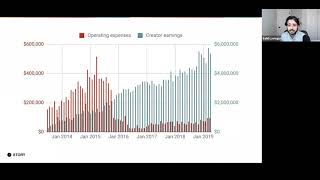
I can still a little bit hear myself. Weird. No worries. Let me get set up. Uh, if people are tuning in live on Clubhouse, if you want the video stream, which will be kind of useful, but hopefully, you know, I'm gonna try to contextualize everything with my voice, um, so you can also jump in, uh, You know, should be fine. So I'm getting everything set up. I'll start in just a couple minutes. Watch everyone trickle into the rooms. How are you doing, Daniel? How's your day? Awesome. Yeah, it should be a fun experiment. Luckily, I have had some Zoom training recently with my course, so I have a little bit of practice doing this kind of thing. Awesome. So I am almost ready to go. People should see a big Gumroad logo and hear my voice. I'm going to open up the Q&A and the chat on Zoom. So if people want to ask questions or chat, use Zoom for that. I think that will help. And we'll get started in 1 minute. Um, if people want to jump in on, on Zoom chat, just mention where you are, uh, where you're from, where you're tuning in from. I'm curious where, where the audience currently is. Germany, Bangladesh, Vancouver, Asheville, Bay Area, Park City. All right, I tried. It's moving really fast. Uh, yeah, that's pretty funny. Cool. For some reason my Q&A is not showing up on Zoom. Let me see why that is. Oh, here it is. Awesome. Cool. Um, I mean, I think we can start. I think it would be a good, a good time to, uh, to get going. Uh, so welcome, welcome everybody, uh, to I think it's the 4th or 5th open board meeting that we've done. It's the first one though that we've done live on 2 different platforms, Zoom and Clubhouse. And let me make sure I'm recording too. I wanna make sure that I am recording. Awesome, perfect, perfect. Yeah, it's the first one that we were sort of simulcasting. It's also the first one which we're talking about fundraising. So there's sort of dual purpose to this. To this meeting. We have a lot to cover. I want to get through as much of this as possible so we can get to Q&A, because I think that's sort of the most fun for me, and I think a lot of people will have questions. Joining me is Daniel. Feel free to say hi, Daniel. How's it going? Sure, it should be. Yeah, I mean, it's— yeah, just mute your laptop and then it should be— your audio will be streaming into Clubhouse and Zoom at the same time. Oh, they, they're, they're saying no sound on Zoom. Oh no, oh no. All right, how do I, uh, can you raise your hand possibly? Let me see if I can If I can let you promote to panelist. Awesome. This is an experiment, everybody. This is a— we're all learning on the fly. Awesome. So Daniel, you're our new head of product. I'll wait until your part, and then you can kind of introduce yourself and talk through the product stuff. But to get started and to set the tone, This is a board meeting first, so we're gonna treat this like a board meeting, which means I will briefly share the Gumroad story for those who are not familiar, and then I'll get into the board meeting stuff, which is really sort of the way that I structure them is to talk about the numbers, the KPIs, what we shipped, you know, that we felt would move those in the right direction, what we plan on doing next, and that's about it. That's what a board meeting basically is, with a bunch of interaction in between, and then we'll spend time at the end talking about the fundraise and the Q&A, and I will remind people later, but this is confidential, so please, obviously we're broadcasting this to a large audience live, but please don't broadcast this for a few reasons. So let's start, let's start at the beginning. I started Gumroad in 2011. I designed this pencil icon one Friday night. I had a few thousand followers on Twitter and Dribbble, and I wanted to sell it to them. And I had this audience, I had this thing that I thought they might want. I thought it would have been quite easy with the internet, these days to sell it, and it wasn't. It turns out if I wanted to do that, I would've had to build a whole website or find a marketplace or set up a Shopify storefront and pay $29.99 or whatever. And remember, this is 2011, right? So this is sort of pre-Stripe launch. So that was Friday night. That weekend I built Gumroad. I built this really simple tool. People always ask about the name. The domain was available. My mom actually came up with it. Um, but it was just a couple days of work, super, super basic prototype, allowed you to create an account, create links. Um, and it was basically Bitly plus a credit card form, right? You, you say this is a short link, this is the long link. Uh, the only difference was like there's a credit card form so you can collect payments. And that was kind of like the V1. Uh, and you can find the source code if you're curious, just Google Gumroad V1. I've put it up on, on GitHub in all of its, uh, beautiful mess. Gumroad's a little bit different today. We've shipped a lot in the last 10 years almost, but it remains, you know, the goal is not too different, which is we wanna be the easiest way for creators to get started selling stuff on the internet. And for a customer to pay for those, we wanna make that really easy, really easy too. And I do think the design has improved quite a bit, even though you can see some sort of similarities still, mostly because other designers are designing Gumroad instead of, instead of me. There's a lot more to Gumroad. People can kind of go discover it on their own. We'll talk in a little bit about sort of changes we plan to make to the profile. So I wanna kind of bring it up now. You know, this is a profile. So you start with selling a single product, you add multiple products, et cetera, et cetera, et cetera. So that's sort of Gumroad in a nutshell. If you wanna learn more, you can always go to gumroad.com. This is our yearly GMV in the last— since we basically, since we started, we— I left out 2011 because it looks the same as 2012. But yeah, we've, you know, we've done well. 2020 was kind of an exceptional year for everybody, you know, with COVID and we definitely grew sort of like more because of that. But we've been growing and our actual growth rate has been growing since since around 2017, we grew 15% in 2017, 25% in 2018, 40% in 2019, and then 87% in 2020. So we'll see how 2021 does for us. And to just define what yearly GMV stands for, it's gross merchandise volume, which is basically the throughput of the platform, right? All of the collective creators, how much they're selling on a yearly basis and we charge a percentage of that, our take rate as a marketplace. So Gumroad Discover is another thing that we have that we've been iterating on. 2020 saw a big bump in that and we're really excited to kind of double down on this. So this is, Gumroad Discover has grown 131% year over year, accounts for roughly 5% of total volume. So I think we can do quite well there and we take a 10% take on anything that we refer to our creators. So it's sort of better for our bottom line as well. So we're kind of incentivized to keep working on that. But the journey, you know, even though it looks nice and pretty and up and to the right, it was not that clean. We've had our own share of ups and downs. And in 2015, which you can go back and see it on the graph here, like, not, you know, we had a, you know, very early, but really this is sort of Gumroad went through sort of a very transformational shift that doesn't really appear on the chart. Which is mostly shrinking the team down from 20 to 5. We failed to raise our Series B, dropped our operating expenses from almost $400,000, actually over $400,000 a couple months, down to $50,000 or so, and got to profitable, and our creator earnings kind of kept going. So this has kind of changed the way that we work at Gumroad, and this is kind of important if you're considering investing in Gumroad, like to understand the way that we work. When I rebuilt Gumroad after that, very, very differently, it was very much focused on freedom at all costs, not growth at all costs. And so we don't have meetings, we don't have deadlines, we don't even have really full-time employees. Everyone works as little or as much within bounds as they want. And my focus is on hiring people like me, hiring our creators, people like Daniel, and hiring entrepreneurs, people who want to be CEOs themselves one day, and almost turn Gumroad into this feeder. Feeder school. To summarize the numbers before we get into the product shipments, in 2020, we did $9.2 million in revenue. That was up 87% year over year. Gross profits, so minus COGS, minus basically payments processing, hosting fees, and fraud, we did around $2.7 million last year. That's up 107%, 105%. And then our net income, which is sort of profit, it's kind of what most people refer to as profit, we did $1.06 million, which was up 268% year over year. And all of this happened with that team that you were, the very organic, remote-only, since 2016 team. And we spent $0 on paid acquisition, just growing kind of organically through word of mouth and me tweeting pithy things on the internet occasionally. So that's the story and the metrics. If you have questions, feel free to add them to the Zoom Q&A. I'll jump in on them as we go. Okay, there's one question, which is, "Can you walk us through the difference between gross profit and net income?" Totally. So the difference is basically fixed costs, right? So you have revenue, then you have all the costs of making that revenue, which will be Stripe, PayPal, AWS, et cetera, et cetera. These things kind of scale roughly linearly with revenue. And then you have all the other fixed costs, which don't scale linearly, but there are still costs, right? So an office, for example, people, food, things like that are, and so net income is that difference. It's gross profit minus all the operational expenses of the business. So 2020, let's talk a little bit about what we got done in 2020. We cleaned up a bunch of stuff. We launched memberships, Gumroad memberships, which is our Patreon competitor. We launched a new brand and we launched new mobile apps. So the first thing we did was just clean everything up. When we put memberships on the roadmap, this is a very fundamental difference with how Gumroad has been since the beginning. We redesigned everything from scratch. So we made Gumroad a lot less about adding products and more about what are you creating? Sure, you can do the classic start selling a digital product today, but you can also do other things like create a membership. We also took a chance to refresh our brand and figure out what we really wanted to communicate. And the thing that we wanted to communicate is the future. I really just believe in this future of creators being able to make money doing what they love. And that's aspirational for a lot of people. So we thought it'd be fun to visualize what that may look like. And we have this great comic strip called Gumroadians. People can find it on our Instagram or our Twitter. So we thought it'd be fun to merge those two things and really integrate what does a future in which people can be astronauts and paint planets look like? 'Cause that's why we're here. We also launched memberships. This is the biggest thing that we launched. It's why we did all of these other things. This was our big tentpole feature of 2020. We have one big thing a year which allows creators to build recurring revenue businesses on top, on top of Gumroad. We also launched mobile apps. So we have an iOS app, Android apps for creators now, as well as consumers. So we've made them a lot better and we're super excited to double down on this. Our goal here is pretty simple, which is we wanna be the best place to consume the content that you buy, right? We wanna be the best. If you're buying videos, courses, subscribing to a podcast, et cetera. We want to be sort of as good as any of the platforms that are built specifically for each of those use cases. So what's next? I'll hand it off to you, Daniel, to speak about the product.
Yeah, absolutely. So we think of the Gumroad roadmap as two distinct categories. First, there is expansions, and I think these are the things that we do to help Gumroad expand to new segments of the creator economy. So for example, last year we shipped memberships, as Sahil just mentioned. The big thing this year that we're working on is structured courses, but we're also going to continue to improve memberships and paid newsletters to help attract new ways for how creators make money on doing what they what they create. The other category is optimizations, and these are the things that we do to help existing Gumroad creators make more money doing what they're already doing. For example, supporting Apple Pay, supporting upsells, better email targeting, supporting automatic discounts based on the buyer's country, new affiliate tools, and things like this. So those are sort of the general categories of sort of how we sort of split our roadmap. Things that are going to help Gumroad grow significantly and things that are going to help creators just earn a bit more doing what they're already doing. And maybe if Gumroad was a traditionally venture capital funded company, that would probably be focusing 100% on expansions. But since Gumroad is independent, we can afford to split our focus roughly 50/50 between these two. We definitely don't want to ignore the needs of creators who are making a living on Gumroad, like to just pursue new growth.
Yeah, and our priority is always to focus on our existing creators. We're always going to listen to them first, you know, before we listen to anybody else. And yeah, I just wanted to kind of clarify that point because I think it's really important. We're not just trying to grow as fast as possible, and I wrote an essay about this people can go check out. And in there I say, it doesn't matter how amazing your product is or how fast you ship features, the market you're in will determine most of your growth. And we'll talk a little bit more when we get to the fundraise part. But our primary goal is to serve our existing creators, make the product better and better for them. And then the growth that comes out of that is going to be kind of a nice side effect. And someone in Zoom asks, would paid acquisition ever be considered? Totally, everything's on the table, right? We haven't done it since. I'm sure at some point we will, but you know, I never want it to be the primary way that we grow. Word of mouth is just way better. It's just way better. Daniel, I'll let you take it from here.
Yeah, so here's an overview of the main things we're doing in the expansions category, right? So there's 3 main pillars. First, memberships. I think what Patreon offers, like to continue to do better there. Paid newsletters. Think what Substack offers and structured courses, right? Think what something like Teachable offers. And we're not necessarily pursuing perfect feature parity with all these specialized competitors, but we mostly want to make Gumroad the simplest way to do all these things in one place. Right?
So— Yeah. And in the interest of transparency, we've literally put the names of our competitors here. But don't tell them we're coming. Well, we'd like to surprise them ideally.
So here's a mockup showing, for example, what we're doing to support structured courses. So for example, here you can see like files organized in folders, video consumption progress, there will be file descriptions for each video, and also a great mobile experience to go with it. So this will allow sort of creators to do courses in a much more structured way than they can do today traditionally in Gumroad. And here's, here's a look about how the creator profiles look like today. We're planning to revamp the creator profile page because today is basically just a grid of the products offered by the creator. But for example, this is what we're thinking about. This year we're going to allow creators to customize their profile pages to showcase the entire portfolio, right, showing their products, their posts, their memberships, the social links, all in one page. So sort of this is, this is an example. And I think if we go next, so you can see, for example, how it will look like where the creator can sort of expand and customize the page with blocks similar to how you would do in WordPress. And here's an example of how, for example, the look and feel can be customized. Which hopefully we can still keep it very simple and easy to use. And here's like a final example of how it would look like after it's been customized.
I'm super pumped for this. I'm excited for a time where, you know, people can treat their profiles on Gumroad like their homes on the internet. And the more that we empower creators to be able to customize them within bounds, we wanna make sure that it's always the simplest and easiest, right? That's kind of our north star on product. I'm super, super excited about this.
Yeah, and finally, a quick look about the optimizations category. So this is the second category we mentioned earlier. So these are a few of the main things we plan to do this year. I briefly mentioned some of them in the beginning, and there's lots more things actually, and with lots more details on our public roadmap page at roadmap.gumroad.com. And on that page, I also keep a changelog of everything that gets shipped pretty much almost in real time. So I invite you to check it out if you want to stay up to date. That's all from me. I'm happy to take sort of roadmap questions at the end in the Q&A section, but I think I can hand it back to you, Sahil.
Awesome, awesome. Yeah, and yeah, please everyone feel free, hold us accountable, you know, check out the roadmap, let us know what you think. Someone in the Zoom asks, how do you decide what to work on? Literally You tell us, uh, and then we, you know, we, we build the stuff. We're pretty good at building stuff, but, you know, you need to, you need to be telling us what you, what you want, uh, and we're happy to oblige. Um, the other thing I'd like to talk about beyond our product is this kind of new investment, new, uh, focus for us, which is around community. Um, and one, one core focus for 2021 for us is to make our community just as awesome as the product. You know, we spent 10 years working on the product, so there's a little bit more work to do And community is a little bit of a buzzword these days, so let's define it in what we mean at Gumroad. We have these challenges, we have these courses, we have this online forum, we have this creator school, we have a lot of different things that this refers to. The first piece is education. The first piece is, you know, yes, we can build a product that allows creators to make money on the internet, and that's awesome, but there's a lot of stuff there, right? Pricing and building an audience and deciding on the curriculum and like your first product. And like, there's a lot of stuff that you have to figure out. We're basically helping these people become business owners, which is not a trivial thing. And so we started with these challenges to kind of structure that learning, structure the sort of the curriculum that you might need to get, you know, to get to where you wanna go as a creator. We started out with this thing called Gumroad University, which we launched in December, which is a collection of our educational resources. You can find that at gumroad.com/university. Uh, but we want to do a lot, a lot, a lot more. Uh, for example, Clubhouse. We've really invested in Clubhouse. This screenshot's a little out of date. We have, I think, 3,000 followers. So please follow the Gumroad Club on Clubhouse. We're doing a bunch of awesome stuff there. We just launched this thing called the Creator School, uh, that is basically 1 hour every day, 9 AM PST. We'll interview a creator about a very specific topic, but I really just want to educate as many creators as possible. And I think that's sort of a core driver of Gumroad growth is just creators figuring this stuff out and feeling like they have the resources and also the motivation and potentially the peer group as well. So we're gonna invest a lot more in sort of cohorts as well. Where this comes together is onboarding. I think community, everyone's gonna find their different way there, the product exists. I think the sort of where the things come together, I believe is around onboarding. So it's sort of just a mental model that I like to use Um, is that we have two distinct parts of Gumroad. We have the product gumroad.com, and then we have the community, which lives in all of these disparate places. And the onboarding is kind of like the glue, right? Where the onboarding can say, hey, you're adding your second product, like, do you want to sign up for this course? Or do you, you know, there's three, these three upcoming events about product creation that you should check out, etc., etc. So I'm, I'm really excited that Gumroad will not just be known as like a cool, simple, easy product, but one of the best places to come to if you want to become a to learn how you can become a full-time creator, or not even a full-time creator, just do what you're doing a little bit, a little bit better. And this is how Gumroad grows. Like Gumroad grows because every single cohort of creators gets stronger and stronger over time. I think both on a basis of the creators getting better at what they do, but also just in the market and the awareness and all of these other macro shifts that are happening. So we're excited to kind of see this this chart continue. And when you see that kind of pseudo-exponential growth in the Gumroad charts, it's because of this. It's because these cohorts are getting stronger and stronger each time, and they're stacking on top of each other. Typically it turns out once you start making money on the internet, you don't go back. So it's kind of a cool little rabbit hole that we'd like to bring to people. So let's talk about the fundraise. A lot of the stuff we want to do requires requires people, as a reminder, this is confidential, so please don't share this broadly. I'll send this recording to people who RSVP'd via the Zoom link, but we'll only be sharing it publicly on March 15th in compliance with SEC regulations. So first announcement is we've raised money. Surprise. We will be raising more, but we have raised a million bucks. From two stellar individuals, both founders of companies and creators of products and content that I really, really respect. So Jason Fried and Naval Ravikant have invested in Gumroad at $100 million, $100 million pre-money valuation, and we are raising $5 million more from creators and the general public at the same terms. So you're going to co-invest effectively next to Jason Fried and Naval, which I'm really excited about. About that. Why? Why are we doing this? I kind of talked previously that growth isn't driven by features, but by the market, right? And fundraising doesn't necessarily change the market, but it certainly changes how many features you can develop. And I just wanted to bring up another line from that same essay that said, "I was accountable to our creators, our employees, and our investors in that order." And ultimately I picked serving creators. I shrunk the company from 20 to 5 to get to profitable. I told my investors, "Sorry, I don't know what the hell's happening here, but we got to get it profitable first, then we can decide what we're going to do." It was the best decision I ever made. It was the right decision to put our creators first. But I don't want to have to pick. And so I'm really interested in how can I align these incentives more cleanly, bringing on people like Daniel within the company, opening up a lot of what we're doing that generally stays internal, allowing, you know, and then it's sort of finally allowing our creators to become employees. All of a sudden, our creators are employees, our investors, like all of those, the lines kind of start to blur. And I'm really just, I'm just really, really excited about that. It's not perfect, you know, but the Venn diagrams are starting to overlap a little bit more. And I'm, you know, and frankly, I just, I would love to just be, continue to be part of this booming creator economy. I started Gumroad in 2011. The word creator wasn't super popular. So it would be fun to really pitch in on what we believe the right direction is. So that's some brief thoughts on that. If you want to learn more and signal your preemptive interest, you can go to raise.gumroad.com. There's a form there. There's a little bit more information. There's a form. That you can indicate, you can fill out to indicate your interest. That form will be live for a while. So don't feel like you have to rush. There's a lot of stuff that we wanna do with that money, right? The most important part about raising money is like, where are you gonna spend the money? There's ton, there's so much that we wanna do. There's the stuff that we already talked about, but there's so much we wanna do in terms of online education, allowing creators. I think the creator economy and the online education space are like headed in a collision course, which I'm super excited about 'cause I think it's gonna be awesome. Open sourcing Gumroad, this whole decentralization topic has been really fascinating to me. So we've started talking internally about what that may look like. Native product creation is interesting. Like we, you know, Gumroad started out by uploading files and sharing links and those concepts are kind of slowly trickling away and we're replacing them with these sort of like Notion pages and these like more rich sort of like pure online, you know, And so I'm excited about what that may look like for Gumroad. Onboarding, just strengthening the onboarding experiences I've already talked about. And then going global, supporting more payment methods, payout methods, getting better at customization. There's a lot, a lot of stuff that we wanna do. And so far since 2016, we've basically grown with our profits. So we've grown the team to around 25 people. I don't intend to sort of raise money and go back on the VC rocket ship. That's not, We're not doing that. We're taking a very, very different approach. But I do think with, you know, 5 to 10 more people in the company, we can kind of grow a little bit more aggressively than we were originally planning to, would be, I think would be great. And creators would love it, right? Like worst case scenario, the product that you use gets better faster. So I think that's pretty great. So let's do some Q&A. There's 44 questions on Zoom. So let's see how that goes. And I'll just start, I'll start from the top and we'll do this until noon. I think that should be a good time or until it gets boring and then we can maybe do a few more on Clubhouse exclusively to kind of democratize things a little bit more. But Anshu asks, instead of full-time employees, do you have Contractors. I also stopped sharing my screen. Yeah, basically everybody's effectively a contractor. Contractors can work as little or as much as they want. And that's kind of, yeah, that's basically how it works at Gumroad. And churn is an interesting question. A lot of people ask about churn. How do you deal with churn? It's like, well, first of all, employees, full-time employees churn too, and it's all at will. We live in modern times. No one is forced to work. So that's sort of, you know, it doesn't seem to be as important as you may think or as different. But then the other thing is churn is awesome. Churn is great. Like I want, literally like Gumroad exists to create full-time creators, right? So there's nothing, like it would be hypocritical of me, I feel like, to say, hey, you know, you can't do that. Like, no, the goal is, and the way I think about it is like we need to minimize the cost of churn so we can be more okay with it.. Like if the cost of churn is zero, then we should allow as many people to come in and out and whatever as possible, which I think is kind of how I think about it. Daniel, you're on the other side of this. Any thoughts from your perspective?
No, no, I completely agree. No other thoughts. It's great. It's great to be a creator and sort of helping in Gumroad as well. But yeah, it's working really well for me. No, no other thoughts.
Awesome, cool. Yeah, I mean, so, so people ask— there's a lot of sort of technical questions about the fundraise. Just a reminder, go to raise.gumroad.com. You'll, you'll have— there's a few more details in there, but I'll answer a bunch of these as well here. Um, we will be using, uh, Republic to do, to do this fundraise, republic.co. So if you want, you can kind of create an account there early. Um, the minimum investment amount This may change, so don't hold me to it, but it's likely the minimum will be $100, $100.00. A friend of mine asked me, "How much can I invest in Gumroad?" I said $100, and he said, "I'm sorry, I don't have $100,000," which is just like, so like, that's how startup world is. So I really just wanna clarify, 100 meaning $100.00. That's gonna be the minimum. You do not need to be accredited. This is open to everybody. You don't have to be based in the US. You don't have to be worth a certain amount of money. I don't know what the other qualifications are often to invest in private companies. This is going to be a regulation crowdfunding round, which means it's available to everybody. And actually, we're going to limit the maximum check size. We're going to have a cap of the maximum check size initially to start, so we can get as many people invested and part owners of Gumroad as as possible. Um, Abdel Karim asks, how many shares for this $5 million? So the way to think about it is, uh, you're, you're, you're bought. You should think about it really as a percentage ownership. That's the way that I would, I would really think about it. Um, there's, there's a couple ways. Let me give you two, right? So, so first off, percentage ownership. Let's say you bought— you shouldn't— like, the amount of shares doesn't really matter. What matters is what percentage of the company you own. So let's say hypothetically you own 1% of Gumroad. So you, you know, $1 million at $100 million valuation, you own 1% of Gumroad, right? So you own 1% of whatever the exit liquidity price happens to be in the future. So if Gumroad eventually sells for, let's say $200 million, so double that, you would own 1% of $200 million, $2 million, right? Your $1 million would become $2 million. So that's the simple sort of thing. Around allocation. The other thing is you really just care about entry price, exit price. So if you get in at this price, it's $100 million pre-money valuation, you can kind of just— The math you should do is like, where do I think Gumroad may be worth 1 year from now, 5 years from now, 10 years from now? Then that's kind of how you want to decide if you want to invest or not, and how much maybe you want to invest. So yeah, just to reiterate, the minimum is $100 $100 million. How did I come up with $100 million? I like it. It's nice and round. It's simple. It's easy. I think it's fair. That's the other thing. I think I tried to pick a price that was fair, conservative, because I really believe in crowdfunding. I don't want to get on my pedestal because I'm sure I will do that in the coming weeks over on March 15th and onwards. I just really believe that more people should be able to invest in early-stage technology startups. I do this personally. I run a company. I believe business ownership is the path to wealth. Earning an income, these are things that Gumroad can help with and we do help creators with, but a lot of what you've seen in 2020, 2021, a lot of people have seen where does a lot of this kind of stuff come from? It's by owning equity in companies, private companies generally, because they take so long sometimes to get public. And so I want to just put my company where my mouth is and really show people. And so the cheaper Gumroad is today, hopefully the more attractive it looks and the more buzz we generate about, wow, this is actually a real opportunity for a lot of people who don't necessarily get this kind of opportunity normally. I don't think anyone, the general public has ever been able to invest, co-invest with Naval or Jason Fried. They're both top-tier people who could get into basically any company they wanted to. But the thing is, you need founders to do this, right? The founders need to opt in. So my goal here is to kind of show people a playbook that they can maybe copy, and hopefully if Gumroad grows, then maybe there will be more demand from the founders to do it. Hanan asks, "Are you already listed on Republic?" No, we cannot be. And March 15th is when we can officially fundraise. That's when the cap is going up from $1.07 million to $5 million, which is literally like, we're literally going to do it the second We're going to file the second it's allowed and we're going to do it like as soon as we can. So yeah, that's March 15th. And you know, if you go to raise.gumroad.com, fill out the form, like I'll send you details on all of this stuff. So you won't get left out. Like I really want to make sure, you know, everyone has the opportunity as much as I can. Frankly, I can't sell, like there's probably more interest. I can't, I don't want to sell a huge chunk of the company, right? I want to, Also be careful around dilution. So I'm doing, I think $5 million, which is the new cap, I thought was a good proxy. So yeah, that's how I think about. Sam Doddwall says, "10X revenue is very conservative considering what is going on in the market." I can't really comment on that, but I just wanted to point that out to people listening. That is often a way that companies get valued, and that's one way to approach it is some multiple of revenues, forward-looking, trailing, et cetera. This is how public companies are often valued. So right now, 10x revenue, which is roughly what we're pricing the round at, that is, Sam says, "Very conservative considering what is going on in the public markets." So I'll let you fill in the gaps there, but, uh, I do think I priced it reasonably. Um, uh, Kav asks, so you don't need to be an accredited investor to invest? And I know this question's been asked before, but like, I literally, like, I'm very happy to explain this a million times over, uh, because, uh, it's so new. It's— and so people, we need to, you know, I mentioned educating creators. Like, we need to educate people about this. Um, Yes, you can invest if you're— You do not have to be an accredited investor. You just need to have $100 that you want to invest. And don't, by the way, don't invest any more than you can afford to lose. So don't feel like you should put all your eggs in this basket or anything like that. But yeah, it is available to everybody. Eduardo asks, "How long should we expect to be invested in Gumroad before we can get some liquidity?" So I would consider this— Public markets are expensive, but you're paying for the liquidity. You're paying for the idea that you can get in and out whenever you want, which in my view, it's not that appealing because you don't really want to do that. That stresses me out. But private companies are different, where they're illiquid generally. You cannot buy and sell. In this specific case with Regulation Crowdfunding, this round that we're doing, you have to hold the stock. This is actually new. Some private companies, Normally you might hold for 5, 10 years. You become an early employee of a company, that company might take 10 years to go public, et cetera. Regulation crowdfunding, this is new where you can actually sell the stock. You have a 1-year lockup period. So March 15th, 2021, let's say you invest $100. March 15th, 2022, you'll be able to sell that stock if you want to. Most people don't. Generally, you invest in private companies because you want to hold it for a long time and compounding is really important. It can take a long time. So I wouldn't necessarily recommend doing that. But likely March 15th, 2022, we should— one, we should do another, we'll probably do another Reg CF or something like that based on where the stock price is at, but we should also allow— and there might even be a new product that exists between now and then that allows for this Gumroad to effectively be liquid, where you can have Gumroad stock. You can have a lot of the value and benefits of being a public company, which is the liquidity, the M&A, the buzzworthiness of it, all these sorts of things without actually having to go public. So I'm really excited about that. And that's something that I will start thinking about more once the fundraise is complete. So hopefully that answered your question, Eduardo. Rubens asks about not US investors. Again, totally fine, 100% totally fine. Your domicile might have their own restrictions on this, so you should kind of investigate, but generally I've talked to people in a lot of countries at this point, and most people can do it. There are normally caps on it, so you probably can't do a million bucks or something like that. There are a lot of rules around that, foreign investments, et cetera, but generally $100 and yeah, you can do it. So EU, India, wherever you happen to be, you will— You will be able to invest. Certainly, I won't be the one saying you can't. Republic won't be the one saying you can't. The SEC won't be the one saying you can't. So yeah, that's that on that. Someone asked, "Can I invest on behalf of someone as a gift?" That's a really great question. I don't have an answer to that question. Presumably, yes, but that would have to be a Republic feature, I think. I'm not, so I would go to Republic and see if that's a feature that they support. So yeah, so that's that on that. And yeah, a lot of folks are asking why Republic. I just think it's the best product. I think it's the best designed. I like design. I've used Republic as an end user, as a retail investor. And I really thought it was a great experience. So that's why I went with Republic. To be clear, WeFunder, StartEngine, all the other ones, I'm not making any, I don't know, judgment on, right? Do your research. If you're a founder looking to invest, do your research and pick the one that you want to do. Amanda asks, what's the timeframe with investing on, When will it start? When will it end? So we're going to— it's going to start— again, I'll follow up with details. This may change. So the best way to get notified is to fill out that form, raise.gumroad.com. But the goal is around noon EST, 9:00 AM PST on March 15th to open it up, to have a maximum check size of, let's say, $1,000 to allow at least 5,000 investors to invest before we increase the check size limit to fill out the rest of the round, probably 24 hours later. We'll see. I mean, it really depends. You know, it could fill up in 5 minutes. It could fill up in never. So, you know, this is kind of the fun of it. But I would recommend if you— you know, the early bird gets the worm, right? So I would recommend if this is something you're really interested in doing, like, again, I'll send out an email, but like, I would probably preemptively create a Republic account and have have, uh, you know, have that slot, you know, blocked out on your calendar for, you know, it should take 5 minutes, right? So it shouldn't take a long, a lot amount of time, a lot of time. Um, but it, there, there, there, there may be a potential where it just goes a lot faster than I'm expecting. And then, uh, you know, uh, you, you may not be able to get in. Uh, and I should mention, like, I, you know, like, yeah, anyway, anyway, I've talked enough about that. Sean Foreman asks, will all of the stock sold be new issued or will current owners be selling some stock? Great question. All of the stock sold will be newly issued. So the company, for those who are less familiar with some of these terms, the company will be issuing new stock and selling that stock. To investors, similarly to any private round or an IPO, or like, I mean, there's hybrids, but often you're issuing new stock. So no current owner. We have around, I don't know, 10 or 11 people who currently own stock in the company, me, former employees, former investors basically, and I guess Jason and Naval now. To my knowledge, nobody is planning on selling. Believe me, I would love to sell. Like I would love to offer more than $5 million. One way to do that would be to encourage people to sell, but so far I have— no one has, uh, has been excited to do it. Uh, so I'll let you know if that, if that changes. Um, so let's see, what's the, the, the max amount per investment? Um, on Republic, if you're a non-accredited, there are some Reg CF rules. But we will likely start it out at a maximum check size of $1,000. Republic does charge fees. Jeffrey Wang asks, "Does Republic charge fees?" But we bear the cost of that, I believe. So the cost of capital acquisition, that's on Gumroad. So it doesn't really affect you, doesn't matter. Someone asks about crypto. "Is there any plan to support crypto anytime soon?" We're always exploring it. And I would love for it to happen. I think it's a transition that feels relatively inevitable. Does it happen next year, this year, 10 years from now? I'm not sure. My goal is to be prepared so that if and when it makes sense for us to do, we'll be able to move very, very, very quickly. But currently we don't have plans. Tejaswin asks, "Are there any pros of having private accredited investors that you are knowingly passing on for us to be able to invest? If yes, what are they?" Yeah. I mean, there are a lot of reasons to— The default is to raise money privately from accredited investors. So I think a really great question is, why are we not doing that? And what are the pros that we're leaving on the table? What are the reasons that maybe startups pick that, that we don't pick? There are a lot. I mean, one is pricing. These assets are very hard to price, startups, and so sometimes you need sophisticated investors to price it. The way that I decided to solve that was to get it priced by two people that people may be familiar with, Naval and Jason. So that was kind of my strategy. Kind of similar SPACs that chip off, it's kind of a similar strategy of how do you solve that lemon problem? Well, one, you get someone with real skin in the game who's well-known, has distribution to invest and then allow others to invest the same terms. So I'm really excited about that. I hope that becomes a trend. But yeah, I mean, what I say is, look, all of the advice and help that I would be with startups who raise money from private investors, one, I've already done. I raised a seed round round from Max Levchin, Chris Sacca first round, SV Angel, and a bunch of other great people. People can Google it. And then our Series A was Kleiner, which at the time was a top-tier firm. So I have that, and I'm a VC, I angel invest, et cetera, et cetera. So I know all of the— I kind of have this unfair advantage because I've been in Silicon Valley, I've done the thing. So I feel like there's less to gain from raising from the same group of people. But other startups, you know, I'm not, again, like I'm not saying this is the path everyone should take. And it certainly won't be for a long time. But yeah, that's kind of for us, like the advice, the credibility, those sorts of things, you know, that you would get typically from investing in top tier, you know, from getting, raising money from top tier people in the industry, et cetera. You know, that's why people can, can do it. Mike asks, can you make the minimum $2,500? No, I can't. I mean, I can. Yeah, I can do that, but no, I don't want to. Like, the whole point of this exercise is to allow as many people to invest and own equity in early-stage private tech companies. And so no, my goal is to optimize for as many creator owners as possible, and the general public as well can participate in that. But no, my goal is not to, to to allow people to invest more per person. And frankly, if I didn't have a maximum check size, just my own personal network would fill out the round way too quickly. So it's just not— Maybe when Gumroad is worth, if I should say, in the future, we can raise more money because as a percentage of the company, but for now, we're just not, it just doesn't make sense, unfortunately. I would love to appease everybody for what it's worth, but Currently, Gumroad stock is a scarce resource. How will Gumroad use the money? Hiring people primarily. There are other things I want to do. It will be fun. We haven't updated the logo in 10 years. So there's a lot of stuff that I think one-off things that would be fun to do. $5 million, by the way, is a ton of money. For a profitable company with 25 people, $10 million in revenue, that $5 million is going to last us a long time. So even if we grow the team by 5 to 10 people, start burning $100K a month, which would be a big jump for us, do the math on $100K, $5 million, it's going to take you 50 months, 4 years, right? So a long time. I think I did the math there. So just people, we'll use it as a war chest. I don't plan to spend all of it immediately, I can't, but we'll mostly hire folks and ship a better product faster. Along with some of these one-off things that we may invest in. David asks, "Do you see Gumroad eventually doing an IPO?" That would be cool. I used to end all my board meetings back in the day when we were on the VC-backed rocket ship train, I would always end with IPO. The last slide was like, The end, IPO, but as a kind of a joke, but it would be cool. I think there's some downsides to an IPO because being public is not necessarily fun. There's a lot of rules and regulations you have to follow. If you know me, I don't know, you might think that they're a little bit at odds with each other. So I think there will have to be some changes. What I'm excited about is bringing some of the value that you get from being a public company, like the liquidity, the stock price, that sort of stuff to the private markets. I think that Reg CF and some of these new rules will allow for that. I will be spending a good chunk of my rest of this year exploring that and helping Republic and other people, anyone who wants to talk, how do we make this happen? Because I think it's in the best interest of retail investors, it's in the best interest for founders because more demand, the stock price is going to go up, et cetera. So I'm really, really, really excited about about that. Vishal asks, is this common stock? It is not common stock. So to define that for people, common stock is generally issued to founders and employees of the company. It's the least preferred stock, right? It's the common boring stock, which means that you have no rights. Like everyone else overrules you. So for example, let's say you raised $50 million and you sell the company for $50 million, even though employees might own 20% of the company, The preferred owners, the preferred shareholders, which are basically everybody else, like the investors, get paid out first. So that's what this is. I own common stock in Gumroad. I don't own any preferred stock, only common stock, which means I will basically get paid out last, which I'm very fine with. Don't worry, I'm not complaining. New investors get preferred stock. So technically it's a SAFE, which people can go look up. It's called a CrowdSAFE, S-A-F-E, CrowdSAFE. Stands for Simple Agreement for Future Equity. But you will have preferred stock, which means you'll get paid. You will be investing like a— basically the same way that YC invests in a company or Sequoia invests in a company. They use these devices, these instruments called SAFEs. This is a modification of that SAFE. It's called a CrowdSAFE to allow more people to do it, unaccredited to do it, et cetera, et cetera. But it's the same instrument and it has the same rights roughly. Um, as, as well, um, Harin asks, uh, I filled out the Google form. What next? Um, I will send you an email. I'll follow up one with a recording and all that kind of stuff and some clarifications, but you know, just don't worry. You won't miss it. I, you will see it. Uh, I will, I will be using that list to email people any updates, uh, that happen. And it's useful for me to know just like roughly what the demand is so I can communicate to people, hey, this is what it looks like. So, you know, you should be, you know, maybe waking up at this time or whatever, then, you know, so I will try to do that. Anatoly asks, why did you choose Naval and Jason as investors and why did they choose Gumroad? Great question. Naval was a seed investor in Gumroad, so he initially invested in the company in 2011. And so he chose twice now, so I'm very— or 3 times actually, 'cause I think he took some of his prorata in the A, so very grateful. You'd have to ask them. I'd love to host a Clubhouse conversation with Naval and Jason. We can find out if they're not the same person secretly on Clubhouse. So we'll see if I can put that together. So you have to ask them why they chose Gumroad specifically. But why did I choose them? I can answer that. There's some of the smartest people that I know. What I do on a daily basis is I run a company, I put out a lot of online content, and I invest. So those are my three things, creator, funder, and founder are sort of my three identities. It's kind of a tripod. And Naval and Jason, I think, align really cleanly with that as well. I wanted people who are just farther along in their journey so I can learn the most from. And by the way, like it's mostly a formality, like Jason and Naval, they're very helpful to me. I don't think this necessarily is gonna get me on the phone with them more often or whatever. And by the way, like all of my conversations with them are gonna be on Clubhouse anyway. So like, it's not like I get some secret stuff, but I do think in terms of representing what, who I am, what Gumroad is and what the opportunity kind of looks like, I think they're really good candidates for kind of showcasing this kind of future. The other thing I would add is I specifically wanted to choose two people who people wouldn't normally expect to be in the same room, because I wanted to show folks that this new way is kind of a new way. It's not VC-funded, unicorn chasing, like maybe raising money from— By the way, nothing wrong with that, right? I want to be clear. Raising money from Excel or Sequoia, that kind of messaging, right? And what Gumroad did in 2011, 2012. And then there's the sort of self-funded bootstrapping, sort of Jason Fried DHH camp. And I think this is in the middle. It's kind of in the middle where you're raising money, you're definitely going to grow faster and hire more people, but you're not committed to this growth at all costs model. So I wanted to pick two people that, they are outsiders of their own camps, right? So Naval's not cleanly within that camp. Jason's not cleanly within that camp, but I think having those two people who people often assume as representing those binaries, I think will just be really good and start, hopefully start a conversation, which maybe is a weird way to choose who you raise money from, but that is how I did it. And hopefully this answered the question. Someone asked, I was waiting for the first SPAC question. Are you planning to take this public via SPAC? Not my choice. If you have a SPAC looking for a— I don't know what you call it, a target? Yeah, feel free to email me. But no, currently no plans. I think Gumroad is a little bit too early and too small for a SPAC. I don't know if I want the accountability of being a public company yet. I can do as much of it as I want, but being forced to do it, not so sure that's a good idea right now. Returns, someone asked about dividends. Someone else asks about how do the investors on Republic get returns? There's two ways that generally investors get returns. One is dividends, which is you own stock and that stock entitles you to profit sharing effectively. We're not doing that. Frankly, I feel like that's fallen out of favor recently anyway. This was a very common Coke, Apple, et cetera. Apple most famously was like, "We're never doing that again," kind of thing. I just believe that I can spend your money better than you can, so let me do that. And so no plan, don't invest if you expect dividends every year or something like that. Go find a super old paper company or something. This is more of an opportunity where you're investing in Gumroad at a certain price because you believe that it has potential and you're investing in that potential upside, unrealized potential over the next few years. So you will typically see a return because Gumroad goes from $100 million valuation to more than that, or potentially less than that. Don't forget that stocks don't always go up, contrary to popular belief. So yeah, that's generally how you'll see the returns is at some point in the future Gumroad will be worth more and you will choose or not choose sometimes with it. With an IPO, for example, everyone gets liquid eventually, but you'll be able to choose to participate in future liquidity if you want to. And that's, by the way, that's just to contextualize in the way that I would make money, because that's also probably important to how you might decide is that's how I would make money, where I would sell at some point in the future. I've yet to do this. I've never sold a single share. At some point in the future, If I decide like, oh, I want to buy a Tesla or something, then I might do the same thing. I might figure what is the fair market value of the stock. It's a little different because I have common stock, so it's actually worth less than preferred generally. At least it should be because it has less rights. And so I might sell it in a similar way. Nick asks, what are the best resources for startup founders to learn how to "Raise a Reg CF round." This is so new that it, I mean, Google a bunch of stuff. There's some stuff out there. Republic, WeFunder, all the platforms they have, they all have their own resources. I won't pick a winner there, but I'll have my own eventually. I'm super excited to go through this process, learn a bunch of stuff, and then teach people. So I'm going to publish everything, all the playbooks, all the forms, all the stuff that I do, because I want more founders to do this. Selfishly, I want to invest. So it's not like I can get into anything I want to. So the more, yeah, the more that I, the easier I make it, it's sort of very, very selfish behavior on my part. All right. Well, how exactly, what percentage is of this $100 million is being raised? So $5 million. So roughly we're selling or we're issuing really, 5% of the company will be owned by these new investors. Yeah. Let's do a product question. Fee asks, "Do you think aiming to take on 3 varied spaces, Patreon, Substack, Teachable, will dilute the team focus?" No, I mean, I don't think so. We'll grow the teams, we'll have multiple teams. So every team should have a focus. I think focus requires one thing, right? Just sort of definitionally. But yeah, I think we can do it. And honestly, Gumroad is pretty close feature parity-wise. This stuff isn't insanely complicated, hard stuff to build. Thanks to Stripe and a bunch of different people, they made it a lot easier for us. So no, I think it's doable. And to the point of we want to be the easiest, way for creators to sell their creations online. Creation is very broad. That might be a newsletter, that might be a membership, that might be a digital product, might be a course. And so I think it is important for us to support all the different kinds. And Daniel, I don't know if you have any thoughts on this, but you had a really interesting insight, I think, when I was kind of pushing maybe like we should deprecate with this one thing, with physical product sales. So I'd be curious if you could talk a little bit about that.
No, no, I agree. I think technically we can, you know, creators can already do all these things, that we already support memberships, we already We already support paid newsletters, we already support courses. We're practically just making them better and sort of listening to creators and hearing what missing features and gaps there are and just making sure that sort of we get closer to feature parity to what they want. And we already work in a way where engineers and the development team sort of tends to focus like this, there's sub-teams or sometimes just individuals focusing on one thing. So I think whether eventually if we grow a bit more, this will become like a team instead of an individual, but I think we can sort of scale this further without necessarily diluting. I don't really see it as a dilution myself. I think it all ties together very nicely. Me, myself, as a creator, I started with digital products. I expanded into sort of membership and the paid newsletter, right? So I think sort of the needs of creators tend to be very, very similar between those three categories.
Awesome. So we're at an hour, so I'm gonna end this in a second, the Zoom I say, and then I'm gonna do a little, a few more questions on Clubhouse so people can raise their hands in the Clubhouse room to sort of allow those folks to ask any questions they may have. But I just wanted to end with one, thank you for tuning in. I'm super pumped about this. Hopefully everybody else is too. But someone asked, when does a SAFE convert? It's basically like, this is a SAFE, which is, it's an agreement for future equity. So basically the SAFE will convert if we ever raise a priced round. So if we decide to raise a price round, which is not an agreement for future, but let's say an actual price round, let's say, let's say hypothetical example, let's say Jeff Bezos is like, we want to give you, I want to put a million bucks or let's say $10 million at a billion-dollar valuation, totally hypothetical, then your SAFE, your stock would convert at a $100 million cap. So it would have been as if you invested at a $100 million valuation. So effectively, You'd get a 10x, quote unquote, 10x bump, minus the slight bit of dilution of him putting in his new money. So yeah, so it is a SAFE. Technically, it's not the exact same SAFE as Jason and Naval because theirs isn't a crowd SAFE, but it's effectively financially the same, same terms, same cap, same of all of that stuff. So it doesn't really, you know, I would love to do exactly the same, but like, you know, Jason of all using Republic, I didn't want to, I was like, oh, it's fine. Let's bring you in earlier. Can't do that for everybody, but yeah. Anyway, just to remind folks again, if you want to register your interest, go to raise.gumroad.com. Thanks so much for tuning in. And you know, I'm on the internet. So if you have further questions, feel free to bug me between now and March 15th at probably 9:00 AM PST. Thanks everybody and take care.










