Q1 2024 Gumroad / Flexile / Helper Public Board Meeting
In this public board meeting, Sahil Lavingia walks the audience through his personal background, Gumroad’s 2023 performance, recent product launches, and the strategic vision for the new Flexile platform and Helper AI support tool. He begins by introducing himself and recounting his early career at Pinterest and the founding of Gumroad in 2011, noting the company’s $20 M revenue and $8.9 M net income in 2023, its fully freelance workforce, and a new compensation model that lets freelancers allocate up to 80 % of their hourly rate into equity. He announces a one‑day fee‑free promotion on Gumroad’s anniversary. The product update covers shipped features such as Bundles, improved receipts, PPP pricing, a flexible content editor, a forthcoming marketplace, and plans for in‑app purchases and discovery. A demo of the new Collabs feature shows how creators can co‑author products and split revenue. The bulk of the meeting shifts to Flexile, a suite of tools for managing roles, cap tables, equity‑cash conversion, talent marketplace, hiring, dividend distribution, and succession planning. Sahil explains the “roles” system, the cap‑table viewer, the ability to convert cash compensation into equity options, and the vision of Flexile as “secession as a service” that could replace traditional IPO processes. He also outlines future integrations such as team and investor updates, real‑time financial dashboards, and a talent marketplace. The meeting concludes with a demo of Helper.ai, an AI‑augmented support platform that auto‑generates replies using account data, knowledge‑base articles, and past tickets, along with features like pinned replies and auto‑categorization. Throughout, the tone is conversational and enthusiastic, with occasional reflective or strategic seriousness when discussing succession planning and equity distribution.
Chapters
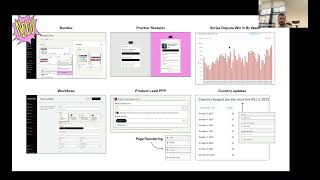
I was watching some YouTube videos trying to get, trying to up, trying to upgrade my game. And I realized that they normally introduce themselves at the beginning of their videos because enough people watch them, have no idea, no context on who they are. Also, someone emailed me saying that they were trying to learn how to pronounce my name and I don't say my name in any YouTube videos I do, which is the first place I guess people check. So my name is Sahil Lavingia. I was born on Long Island, New York. Over there, about 2 hours drive in 1992. You can do the math on that. I started Gumroad in 2011. And then before Gumroad, I was employee number 2 at Pinterest, but I did not hit my cliff. I built, designed and built Pinterest for iPhone, but I ended up getting laid off 9 months in, didn't hit my 1-year cliff, didn't vest any equity. And that will come up later in terms of why I am building this thing called Flexile and why I think it's so awesome. So what is Gumroad? If you're unfamiliar with Gumroad, Gumroad used to look like this in 2011. Gumroad started out as a weekend project. I built it just to sell my own digital assets I would make. And I had a little Twitter audience, now called X at the time, and I wanted to sell stuff to them. And there was no way for me to do this in 2011. You would have to build like an entire website and put a PayPal button on your website and email people manually. And that was like the state of the art. And so I built this thing called Gumroad, built on top of Stripe, pitched it like a Bitly plus credit cards. Bitly was a URL shortener, but before you get to the link, you have to pay $5, right? And so that was like the initial version of it. I really pride myself on like the simplicity and design, and I think we haven't improved on this at all since then. And you'll see helper and often what things look like before real designers work on this. And then we have a new product. So we have, we, I guess. The second bullet point, Gumroad is doing quite well. So in 2023, we did about $20 million in revenue. About $8.9 million of that was net income. And the entire company is freelancers. We have 25 or so freelancers. Everyone bills hourly, gets to choose what percent of that hour that they want in equity. And we're building a whole new product to manage all of this kind of stuff called Flexile, which I'll talk about. Later, but first we'll talk about Gumroad. Some sort of company level updates first. Everyone got a rate increase, so this is nice. This is the old rates and then the new rates. So this is really nice. The way this is possible is because we used to do something called like a bonus where we would give everyone an option bonus at the end of the year. So if you billed, let's say $100,000, you just got a bonus at the end of the year. There was no opt-in. You couldn't lean in or out of it. Everyone's like just signed up for the same level of risk. And now we have this model where you get the upfront hourly rate as a total compensation, and then you get to choose how much of that between 0 and 80%, what percent of that you want in equity. And we'll talk more about why that I think is so awesome. But yeah, that's a nice change that we hope will mean that the quality and quantity of the team goes up and the products improve. Another Gumroad announcement, as I mentioned, Gumroad started in 2011, April 4th, 2011. And we're going to renew this tradition we used to do. A lot of people, probably the most common complaint, and it's funny, I just moved to New York City and Gumroad and New York City have the same most common complaint, which is it's too expensive, which I think is the best complaint ever because it means that it's worth it. And the only annoying part is that it's expensive. And so anyway, this is our answer to people who are complaining about our 10% flat pricing. You just launch your product on April 4th. Or do a sale on April 4th and you won't pay any Gumroad fees on that date. It'll be 0% instead of 10%. And yeah, it's a nice way to answer that in a tongue-in-cheek fashion and renew this tradition. And hopefully we can, now that Gumroad is like nicely profitable, hopefully we can make this a thing that we do every single year going forward. We also shipped a lot of stuff. If you tune into another board meeting of ours, we used to do numbers first and shipments later and the Generally, the reason I used to do that is because I think numbers are easier to, or harder to lie about. And so if you have a really bad quarter, you can run away from it by talking about all the awesome stuff that you thought about or learned about, even though your business didn't do very well. But I felt like that was more of a, like an, sort of like a marketing update. And the purpose of what I'm trying to do here is to show people how a business is actually run via a board meeting. And represent that. And the product shipments are by far the most important stuff that we do is just improving the product quality. That's why people use Gumroad and all the other products we plan to build. We'll still talk about the numbers, but we'll talk about the numbers at the end after, after all the shipments. We also have 3 products now that all feed into a single company. So I think it makes more sense to talk about the products first and then the overall company at the end numerically. But yeah, we got a lot done. We shipped bundles in Q4. Bundles is now live. It's done about $300,000 in volume. It's been out, actually we shipped until Jan 1, Connor, something like about that. Receipts are now a lot prettier. You can see the before and the after. They're getting even nicer. Soon you're going to have recommendations within them. So you'll have the more like this that has been performing so well that will let, you know, soon live in the email receipts. If you buy multiple products at the same time, you currently get like 7 receipts. Soon that will be one single receipt. We've been working on improving the Stripe dispute win percentage by making it possible for creators to submit more evidence that they deserve to win the chargeback. We redesigned workflows. I know we promised abandoned cart. Unfortunately, we didn't ship that this quarter, but we did the most important work before ahead of that, which is to redesign and refactor all of our new workflow code. And design. So creating and editing a workflow now is a lot better than it was last year. And it gives us the space and the real estate to do a lot more awesome stuff, including abandoned cart emails and better segmentation. And we'll show some of that off soon. The content editor that we shipped that I'll talk more about, we added page reordering to it. So that's a lot nicer. PPP, which is a purchase level power parity. Purchasing power parity, which people love, which allows you to have a different price based on the region of the buyer. If they're in a place that's maybe has less purchasing power, the price of the product goes down, but you might have a product you don't want to include as part of that. Let's say a consulting call or something like this. We now allow you to turn that off and exclude products. So that's been very successful, over $1 million of PPP volume. And then we now allow you to change your country. Before, If you wanted to change your country, you just create a new Gumroad account and now you can actually say, hey, I want to update my country and we allow you to change it. And honestly, it's like surprising, like 50 people a day because you get customer support emails, right? And a lot of what we decide to build is driven through people emailing customer support. And in this case, it was just an insane amount. It was like maybe 1 or 2 a week or something like that that were emailing us to change their countries. But then when we launched this feature, 50 people a day, which I think shows that like 90 to 95% of people who have problems or some issue with your service, like just churn or just don't, just deal with the pain or whatever. You don't see a lot of this. I thought this was like a nice way to just show there's a lot of stuff happening you don't really see. And if someone, if you just say, oh, we're just going to respond to customers. Yeah. Let me just show you guys some of what we do. Then we'll show what, or what we plan on doing next. Yeah. So we shipped the content editor. And the really cool thing about the content editor is that it can be technically anywhere. And so while we're starting with the content editor, and I think doing it on the products makes the most sense, soon that's going to exist as like a place, as a sort of editor on your profile, on posts, post pages. So you're going to be able to use it to do a lot more customization. Your Gumroad profile, we hope, can be just as good as a place to host all of your content, not just the products that you want to sell. And this is preview of a lot of the stuff that we're working on. This is a good example of it. Where, for example, if you wanted— one of the things you can't easily do on Gumroad is have an about page. Every creator has to have a personal website with an about page, which is just a bunch of texts, like a static page. And soon, by using some of the stuff we've built with the content editor, allowing people to add pages and then customize the text and the content, just like you have on the product, you can add images and videos and all this sort of stuff. We hope that Gumroad can just become more of an all, all-in-one, an all-in-one solution. There's, if I could spend like hours and hours just showing people all the stuff, but I thought it'd be fun to just instead give people an overview of what we're actually designing in Figma and Notion and get a sense of that. So yeah, gumroad.com, this is the thing I'm most excited about on the Gumroad side of things for this year. gumroad.com will be a marketplace. So just like you go to Amazon or Etsy and you can actually see the content there right away, you'll have a similar experience when you go to Gumroad. So it's going to look a lot more like this. You're going to have a lot more of this kind of browsing capability, featured sections, featured articles, and we're going to make this really awesome. And Discover volume generally has outperformed our expectations over about 12 to 15% of volume now is through our recommendations. And so, yeah, we're excited to, we feel just like the content editor, we feel like it has enough traction. We're no longer scared to make this kind of crazy jump. It actually doesn't feel that crazy anymore. But in the beginning, if you said 2, 3 years ago, hey, Gumroad, this tool that allows you to sell stuff directly to your audience is going to become a marketplace. I think it would, was a little bit harder to see the path forward. And we had to ship a lot of features in order to make this happen. Things like ratings, reviews, wishlists, all of these things will be part of this. And you can see some of that in this design, which will be pretty awesome. And all that data. Will feed into better recommendations and, and hopefully generate more GMV for creators, which is the, the major goal that we have. The other thing we'd love to do, this is still very early, but we'd love to offer a similar experience on the apps. The future, more and more people are spending their time on their phone, and I want to make sure that Gumroad transitions generationally and is still relevant. I think a big part of that will be making it easier to buy and sell products and just generally use Gumroad and build a relationship with Gumroad from the beginning on your phone. And so this is something like what that may look like, where you will be as a creator, you'll be able to turn on discovery within your, for specific products that you want to be discovered via the app. And then the apps, the library apps that thousands of people download every single day. So the traffic is pretty significant. We'll be able to discover products recommended for them. Preview them, buy them, and then using Apple Pay, so using in-app purchases, buy the product, and then upon completion of the product, they can consume the product and all of this stuff you're probably already familiar with. But this sort of piece, yeah, is, was like the bottleneck for a long time. And I can get into the technical complexity of why this is so challenging. But up until very recently, Apple had many constraints on selling stuff through the the App Store, digital content through the App Store, including for example, the fact that you could only sell things for $0.99 or $1.99 or $2.99 or $3.99 or $4.99 or $5.99. So if you wanted to sell this book, for example, is $13.50, there was no actual way to do that using in-app purchase. But I actually took this, or actually I didn't take the screenshot. I took, I did take the screenshot, but Nate took a similar screenshot, it seems. 'Cause I was like, hey, they're using in-app purchase, but it's $13.50. And that's new only in the last year or so. The other big bottleneck is how expensive it is, right? So Apple costs 30%. So 30% of every sale is going to go to Apple. On top of that, 10% is going to go to us. So that's like a 40% fee. That's why it's going to be opt-in. But what we've learned from our pricing change and from asking and talking to creators about this feature specifically, if we can generate people more money, they're happy to part ways with some percent of that, as long as it's reasonable. And sometimes even if it's not really reasonable. And so, yeah, I think the confidence of the sort of lack of churn post pricing change that's now been a year, over a year now, gives us the confidence to say, hey, if we really think we can drive value, obviously it's optional. You don't have to turn this on. But if we think this is going to make you more money and not just make you more money, but also give you a new email address, give you a new customer relationship for life, could be pretty, pretty awesome. And speaking of emails, we're also going to add, and this has been asked for since forever. I think ConvertKit started because Nathan wasn't happy with what Gumroad offered him as a Gumroad creator. So hopefully you won't have to do that anymore. You won't have to use Gumroad and then plug it into using Zapier, like a ConvertKit or something like that. You can just have all of that awesome segmentation functionality right in line and do stuff like, hey, if someone bought a product. They bought this product, but they did have not yet bought these other products. You might want to send them an upsell email. And this UI can be pretty intense, very similar to Notion if you're familiar with that. And we're also going to have probably this sort of generate with AI button. And let me see if I have an example of this. Yes. So you could do something like this. Customers in the last 365 days. Let me fix this. Boom. And we should be able to using the data. It's not too hard to figure out. What you're trying to do here, which is someone who's a customer, bought a product in the last 365 days, who has not bought the most recently created product. And you can of course edit that after the fact, but I think it should be making it a lot easier. And hopefully people can just feel comfortable that they can use Gumroad. Hopefully with the website builder stuff, they can spin up a website, they can sell products, they can market anything they wish, they can email their customers and all of that for 10% of any sales that happen. So yeah, that is everything in Figma that I wanted to show off. And then lastly, I wanted to show off just a quick preview of what my life looks like. This is what I do every day. I wake up and I just stare at this and I just say, can I improve this? And then I go into these things and I just comment on trying to make the scope even better. And each thing follows this sort of what, why. You can read all this stuff. This is how we work. I'm hoping there's nothing too secretive in here. I'll stop right before the engineering plan. But yeah, this is a good, good example of like how we actually work and you can see some of the conversations we've had back and forth and how we split stuff up into two different tickets to make the shipments go smaller, all sorts of cool stuff. But we have a lot. This is all the stuff we want to do in 2024. Gumroad Day on April 4th is going to be awesome. We're going to make it a lot easier for you to market your newly created bundles and automate some of this stuff that's going to go live soon. Actually, maybe I'll show you this little look. Load fast enough. This a lot. See, maybe it won't load fast enough. Yeah, it's gonna be awesome. We're finding more and more ways to take all the content that literally over the last 13 years people have taken their time adding to Gumroad, sells a lot, $13, $14 million of GMV a month. And if we can find ways to help you send more emails out to your existing creators, you already, or customers, you already have all their emails, you already have the content you wanna sell to them. Gumroad really should make it easier to take advantage of all of that stuff. As I mentioned, recommended products on the receipt, all sorts of good stuff coming. Wishlists, written reviews, you may have noticed is live. Discovery. So yeah, lots of awesome stuff. And if you, by the way, disagree with any of this or you say, hey, no, I want Gumroad to work on something else that's even more important, feel free to go to our note and you can look at what the, what people are asking for, which is a big signal in what we decide to, what we use to decide what to work on. And, and I don't know why a font tester is the number one incredible somehow. And so recent too. I'll read this and see if it's worth prioritizing. Awesome. I think that after this, we got to do a demo. Are you guys ready for a Collabs demo? Awesome. Let's do it. Let me, let me go back to, let me transition nicely to it first. Collaborations coming up. Demo.
Yeah. Okay, great. Hi everyone, I'm Helen and this is Connor, and we are going to be collaborating on some sweet products for you. So Collabs has been something that people have been asking for a long time. It's finally shipped, but not yet rolled out to people. That'll probably be next week sometime, is my guess. But we will show you how to use it so you can hit the ground running. So the first step is the same as selling anything on Gumroad. You create a product. So here, as you can see, I've created a couple of products that Connor and I are going to be collaborating on. We are kicking off a life coaching service. Godspeed to all those who wanna sign up for that one. And a demo outline to having a great demo. So I've created my products. Now I'll go to this new tab, collaborators here. And as you can see, I have none yet, but let me add Connor. So the first thing you need is the email address for another Gumroad creator. There's Connor's, don't spam him. And then here I can select all of my existing products to add him as a collaborator. The only ones that are not eligible are ones that either already have a collaborator or have affiliates. If you're using our affiliate programs, you can see this one is not eligible, but all these others are. Let me just do my two collabs. If I wanted to, I could. Assign the same cut, just 50% across the board, but let's say that I'm doing 75% of the work on this membership. So I wanna give Connor 25% of the cut there. Let me make this a little wider. And then the other setting you can see here is this show as co-creator tab and oops, the, let me get this out of the way so I can show you what that looks like. What that setting is used for is to determine whether or not we're going to show both of your names on the product page. It's on by default, but if for some reason you want to turn it off, you're welcome to for a specific product or for all your products. So that is all there is to setting up a collaborator. So let me add Connor. As you can see, it's now here. It shows a little bit of information about what, how we're collaborating. And then if I want to edit, I can go back in here and I could add him to another membership that I have, or I could change this setting, a few different things I can change there. So let me cancel out of that. Before we kick it over to Connor to see what things look like from his side, let me go show you where you can see all the information about your collab products. So we now have this new tab under the products page. And if I click on that, I can see not only the two products that I just added to collaborate with Connor, but also this other one that someone added me to. So I'm collaborating on these 3 products. I can see my revenue, my customers, and if I wanted to, I could go edit those products, even the ones that I didn't specifically create. So that is all on this end. Why don't I kick it over to Connor and he can show you what things look like on his end, the email he got upon being added as a collaborator. And then while he's doing that, I'm going to buy the product and we will see how that shows up on his page of Elasticsearches.
Stop sharing.
So let me, okay, I'm going to, I'm going to turn off my video.
All right, I'm going to go ahead and share my screen. And here we are in my email inbox and you'll see that I got an email from Helen and she added me as a collaborator on the two products she was showing you. And you can see here shows the price of the product and my cut of the sale. In this case, it's $5, 50% of $10 and zero. 25% of zero. So I'm going to go ahead and go over to my Gumroad account up here. And I'm on the same page that Helen was showing you, and I can see both the membership and the product that she created. And as a collaborator, I'm able to go into the product edit page and I can change the product just like Helen could. So we can collaborate it on together, collaborate on it together, excuse me, change the product's content.
Yeah.
And that's pretty much it. So if Helen, it looks like Helen is just buying the product now. I'm going to head back to my email. And once this purchase goes through, I should also get an email that— there it is. We have a new subscriber for our life coaching membership and it's $15 a month. And you can see it shows me my cut here, which was 25%. And that's how collabs work.
So—
Is there a limit to the number?
Really? Yeah. The only limitation, you can only have one collaborator on a product. And if a product already has affiliates or collaborators, you can't add another collaborator to the product. And that's the only limitation as of now. So that's how it works. It should be really awesome. We're excited to see what everyone does with it.
Very cool. So that's— we promised A, B, and C, and we got B and C, collabs and bundles, and abandoned carts is almost here. So we did decently well. I have another nice alliteration for the next board meeting that I'll— if anyone can guess it, by the way, based on what I'll share it. You can also include that in your job application.
Awesome.
Let's talk about Flexile. Very excited about, I think to start, I will show people what the admin interface looks like for roles, or do you want to do that? Do you want to do that whole thing? Or do you want to just do the— and then you'll apply? Okay. Yeah, let's do that. Then that way people can, can identify me as the, as that person. Awesome.
Cool.
Oh yeah, for now. Yeah, for now it's fine. Cool. Yeah, we shipped something called roles recently. Before, if you wanted to add someone to Flexcel, you would just add them. You'd type in their email address and you'd say they're a software engineer, but software engineer is what we in the industry call a magic string. There's nothing unique about software engineer. For example, if you typoed it, they still added, they're just now a software engineer, which is annoying because let's say you want to say how many software engineers work at Gumroad, the person that has a typo in it, or if you have a senior software engineer that's different from a software engineer, like all of a sudden you don't have any sort of way of like really looking at that data. And so we added this feature called roles where you can now create roles. Roles allow you to have these sort of defined roles at the company. So for example, let's say I wanna have a board member. The next time I'm gonna pay you $5,000— no, that's too much. $500 an hour, 0% capitalized, and say attend board meetings and say we're hiring. Create the role. The role is now created. You can see here, 0 applications. You can see what applications look like if you want. But let's test this out with an application. So let me share my— or let me stop sharing. You can share your screen, Maya, and then— Okay.
This is already all live. So we've been making these changes over the past, like, months again. So I'm literally just gonna go to jobs.gumroad.com, which is what we've been migrating to from Notion because we used to have all of our application process on Notion and it was fine, but this is just a little nicer and more professional. You can see up here, like, this is all the job openings we have about Gumroad, some perks we have. We can work from anywhere, we can choose our own hours, and we can earn equity, all of which is pretty cool. And software engineer, product designer, I don't know. I don't know how to do either of those things, but I think I'd make a pretty good board member. So let's see what I have to do after 10 board meetings and give Sahil feedback so he can do better. I have a lot of things. Okay. About Gumroad, 100% remote and async. Sounds pretty cool. We focus on shipping instead of meeting. Lots of cool info here. Team by the numbers, 35 part-time freelancers, probably needs to be updated, but average 20 hours a week, average tenure, and only 1% voluntary contract rate, fishing rate. Okay, so first thing I can do is say how many hours per week I would work. I want to make a lot of money, so I'm just going to work 35, but I'm going to take a lot of vacations. I'm just going to work like 22 weeks a year, and I do want some equity. I do want to swap some cash for equity because equity in Gumroad sounds like a very valuable thing to have. So I'm just gonna go ahead and do 30% of my compensation in equity. And you can see like, like overview of like, you would get this much in cash immediately. This is like the cash bonus you would receive at the end of the year. So this is like the total cash you would get a year. Stock options, which you could then exercise. And yeah, so like a lot of like overview to give you an initial idea of how much you would make at Gumroad. And then I would like to apply. So let me enter my name, Amaya, and email address. I'm currently in the US, but normally I'm in Austria. And let's see. Hi Sahil, I think you're really cool. I would love to work for you. I have a lot of feedback to give.
Oh yeah.
Please give money.
Thanks.
Love. Okay. And then I submit the application and go back to you. You should have received my application.
We have 2 candidates. Of course, Manu has probably applied. What do you think? We should click on this one. Is it worth the risk? Let's do it. Let's see. Let's just go for it. Oh, just Biv. You could have done something. You could have promoted your small business, but instead He did not. Let's see if anyone else applied. Not yet. But, but yeah, you see it, it comes through. Let's say I want to hire Maya. Yay! You hit hire and then this autofills just like what we had before. And you could just go to this manually, but all of the details are autofilled with the information that they already selected, their hours per week, their role, their hourly rate, et cetera. You could always change this at the end of the day, but prefills that. You can sign the contract and then you can send them an invite. In this case, it'll fail probably because their email's already taken. They're already a member of the company. But if I wanted to, I could just say board member, if you wanted to have a separate account for them, and then they could, this requires a re-signing it, and then I could send them an invite and they would get it. And yeah, not too crazy, not too different from maybe other applicant tracking systems that people are maybe familiar with. But one of the really cool things I think is that it's end-to-end. And so for example, you could do things like the equity calculation on the jobs page, which I think is novel. I don't think I've ever seen. That as part of applying to a job before. You could show things like real time, how many people work at the company. That's like the number one question I answer when I talk to folks is like, how many people work at Gumroad? What does the team makeup look like? How long have people been there? How many hours do people work? All of that is just data. And so all of those numbers should be, should update in, in, in real time and be verified, quote unquote, by Flexile, right? All of this, and this is all information I think should be the neat, the norm. Even just the fact that you know how much money you're gonna make. Often people don't know that. You apply to a job not knowing like how much the job pays like that. That's like just, that's the default. It's less than ideal in my opinion. And so yeah, really excited about this and all these features work with every other feature, just like Gumroad. Like the more compounding you get to do, the more excited I get. So yeah, that's roles. We also shipped cap table, a cap table solution. This is something we need for our own use case, and we already have two people outside of the company who are now using Flexile for cap table management. Is even an extreme word. It's just like cap table viewing, but it's going to be important because when we do our next dividend, it'll allow us to calculate and show how much everyone will make without having to do that outside of the platform. And now we're going to do another demo. And does this video load is the question with this internet? Oh, it is. Nice. So similar to the application, you'll, you can scribble your, how much equity you want, default to 0%. And you can see like the implication that has on your total compensation. And over time, we want to find ways to incentivize this such that the more people, obviously the best way to do that is just to have a really valuable business. Because the more people that trade cash for equity, the more net income the company has, the more that equity is worth, and it starts this nice virtuous cycle. And so, yeah, you can see the cash upfront you get, the cash bonus you get that is equivalent, if you notice, equivalent to the exercise price of the options. And so it gets a little complicated, unfortunately, but I think this is like a big opportunity. The more that we can educate people about this, the more comfortable people will feel taking equity. And the nice thing is you can start at 0%. Cash, cash is cash. And then as you feel more comfortable, you start working at a company, you see how you're driving value to the company. You understand the business model. You maybe tune into some public board meetings. You feel comfortable increasing that percent. And as you do, you actually get more, slightly more compensation because the cash bonus goes up, right? If you take 0% in equity, you get no cash bonus equivalent to the exercise price. But if you're taking a bunch of your comp in options, you're also getting the exercise price of the options, which is right now about 37% of the price of the options. So for every dollar you give up, you are effectively getting $0.37 back at the end of the year, and then about $0.10 a year in value accrued to the stock via the net income of the company. So yeah, Shaung, do you want to do a demo of what that looks like?
Yes, sure. Share my screen?
Share my screen? Yeah. Yeah. I lost it already.
Okay, so this is the page you all saw right now in the demo. So I'll just set this to 10. So I'll get 10% of my compensation as equity or options, and I'll try to create a new invoice. Let's say, let's just say work for 10 hours. So your total amount is 2,000, and you'll get 1,800 because 200 will be in the form of equity. Let's say you have some expenses, $100. So that just gets added because that should be all cash. And this is pretty much it. We don't think that anyone does this currently and we built it for us, but I think we'll get a lot more users soon. That's pretty much it. But just to give you some more idea about it, after this invoice gets paid, along with the cash, you will get the options as well. So that's about it.
Thank you. Pretty excited about this. Yeah. As Sharang mentioned, I don't know anyone who has handled it that way. Certainly if someone has, we would've saved money on legal fees, but yeah, pretty excited about it. I think this idea of having a conversion between cash and equity, and it's equity because they'll, they're not options. The whole point is to be give people the exercise price of the option so they can choose to optionally exercise and get equity. And the reason we think this is so key is because we're trying to align everyone, get everyone equity in the business so that we can all try to increase the cash flow of the company, make creators more money, and eventually all end up in a better financial position because of it. And we have a lot more to go. There's so much more we want to do. We want to, with now we have roles, We're soon gonna have a talent marketplace. So you'll be able to say, hey, I wanna hire 4 software engineers. You should be able to list yourself if you've, if you're doing work on Flexile for a company like Gumroad, let's say 20 hours a week and you want to find a new client for another 10 hours a week. You should be able to list your profile directly on the Flexile marketplace. It should say these are the things you worked on for Flexile, for Gumroad. You might even have some, at some point, like testimonials from the CEO of the company. We're gonna have team updates. Currently, this is another thing. We recently deleted jobs.gumroad.com from Notion and now just use Flexile for it. We still use Slack for team updates. Eventually, we will move to Flexile for that too. That will work nicely with the talent market because you're gonna be able to see some of the work, proof of work that people have done in order to get the job because by far the hardest thing about building Flexile and building Gumroad and building a remote company is just hiring just finding really high-quality people. And so I think Flexcel, the more Flexcel does in that, the better. Once we have team updates, that's going to transition really nicely into investor updates. So if you're issuing dividends through the platform, you should also be able to give investors updates on the company. This is another thing I currently use Notion for. And so we're going to embed that. You're going to have real-time financials as part of that. So we're going to pull that from QBO, from QuickBooks Online. So you'll be able to see in, in March, Gummer did this much in revenue, this much in net income, et cetera, et cetera, et cetera. So yeah, lots of stuff, lots of stuff to go. And I will do another quick peruse and show people what that looks like. You guys can see Flexile Notion. Yeah. Awesome. Yeah. So you can see all the stuff that we are planning to work on this year. Lots of stuff. We plan to do our annual dividend. It'll be about $5.32 million. So if people have already received a dividend, This is 5.3 times the last one. So if you got 10, you're going to get $53.20. This will all be visible on Flexile soon. And then really the kind of way that I've tried, this is the question that I think about the most, which is how, like, what is Flexile? What does it become? And it's, I think of it like, what's a good analogy for this? It's like walking through fog where I'm confident that Flexile exists., but I can only see like a very blurry vision of it. And the only way to get clarity on it is to just move forward and walk closer to it and then realize, oh, it's actually not there. It's actually over there. And then keep doing that until you end up with this lovely holy grail that we call product market fit. And currently the best framing I have is secession as a service. And Harvard has this nice article that talks about this, but like one of the most complicated, tricky expensive, painful things that exist in corporate life is transitions, transitions between the people running the business and the people who will run the business. If you go public, if I had a meeting with Goldman Sachs about taking Gumroad public in 2019, I think, and they said the number one thing you have to figure out is your succession planning. Like when you go public, that's the number one thing that the public markets will care about because when you're private, People don't really think about, oh, what happens if Sahil gets hit by a bus? But when you're a public company, guess what? Like every public company has a succession plan. If Zuck gets hit by a bus, there's a plan for what happens next. And that actually is what drives so much value to the company because it's not, I think very few people would be concerned that Gumroad has no value, but people may have a concern that like it may be badly run or that 2 years in the future I sell it to somebody who fucks it up or whatever. It's all about succession planning. And in my opinion, the best people to run the business are the people who already operate the business or already shipping features, improving the quality of the code base and the feature set, talking to customers, doing support. The only people may be better than that are the customers of the product themselves. And so if we can figure out a way to gradually build a system that allows the current table of the company, which is 57% me, to over time give that equity to the right people who are not VCs, who are not even public retail investors, but who are the community around the product. To me, that would lead to the best possible outcome. So I think this is like an absolutely huge sort of opportunity. And the sort of simple approach is to figure out how much is the company valued? How much are you paying your current team? And can you give them a way to effectively How much of that cash actually want in equity in the business, which is just a slice of the future cash company. And that's simple, but deeply complicated. No one I know in the world like offers this. I think Netflix kind of does, like public companies offer this. If you're not a public company, you don't get access to all of this tooling. You can't do dividends easily. You can't do any of this kind of stuff easily. There's a reason the entire financial market exist, right? Which is to provide all of this stuff. But if we can actually provide some of the stuff as SaaS and for any company CEO can just sign up and set this stuff up themselves, get cap table management. Why not? Like, why do they need to go public? Why do they need to work with these large players if they can do it all themselves, if they can DIYPO instead of IPO? So yeah, this is the sort of how we're thinking about Flexile. Obviously there's, there's just getting to product market fit on the product itself, which is just helping people onboard their contractors and their vendors and pay them. And we're going to, we think we do already do that well and the product is growing and all the tax stuff related to that. But if we can really pull off the equity and dividends piece and tie those two things together, I think there's something like pretty awesome about this. And this is something we were talking about last night as a team is just how do you like, what happens when you have the same software, the same database knows who's applying to the company and who's getting dividends in the company all the way from like the beginning and the end. And I don't know, like the answer is we don't know exactly what that's going to unlock, but I think you could do some pretty cool stuff in the future. So yeah, things like, for example, like hiring a board member, how would you hire a board member? It's not really done because you like, you'd say, oh, we only need them like 4 weeks a year. And then it's, there's no, like recruiting software allows you to say, we only need someone 4 weeks a year because it's all built for full-time employees. So there's a lot of stuff I think we're gonna be able to do and figure out. And then all of this will be in the talent market. So as we get density and critical mass, we want Flexile.com to be the place that people come to find work like this and companies that work like this and people who wanna work like this, just like Gumroad.com is going to become a marketplace this year. So yeah, we have a lot coming on the Flexile side and I wish we had, we were done. But unfortunately we have one more thing to talk about, which is helper.ai. So Helper is another product we've been working on, which I designed and built the very first prototype of. And the idea was simple, which was, hey, we're getting a lot of support. We get hundreds of tickets, 200 tickets, let's say a day, 150 to 200 tickets a day, and very dynamic tickets, but some of them are relatively repeatable. Right? Someone says, hey, I can't log into my account. And then you check their admin dashboard and you realize the account was suspended. Right? And that's a relatively deterministic flow that you should be able to do ahead of time. And what if there was a way to draft replies using this? And so that's what I built this like little prototype. People have seen all these like chat with PDF things online, very similar to that, except trained on our help docs instead of a book or a PDF. And this is now what it looks like. So we took that ugly prototype, as I mentioned, I like designing ugly things. And now it looks a lot better. And it'd be fun to, for, to have some of the team do a demo. It might be a little chaotic. We have 3 people doing this. As I said, hey, if you want to come to New York, do a demo, you can. And people like New York City. Let's see how it goes, but I'm very excited about this. And then we have 3 letters in the alphabet.
All right.
Cool.
So I'll share my screen. This one, right? I guess so.
Cool.
All right.
So can you see this? Yeah. Cool. All right.
So this is what Helper currently looks like. A few other people have been working on this too aside from us who are here, like Wilden, Jack, Jason, Jono, Harshith, a lot of other people. But this is what you first see when you open the site. There's an inbox of customer support tickets with some simple sorting, filtering mechanisms. There are a few categories here, which you'll see a bit more of later. You're also immediately presented with the first ticket. You can see some basic information like the email address, the subject. You can see who's currently viewing the conversation. So let me move this over. You can see there are a few other people who are also looking at this ticket currently, like Helen and Connor are on here. And you can see the previous conversations from this person. So this person has submitted a few other support tickets in the past. And so you can open some of those and If you want to see all of them at the same time, you can do that and look at all of them in context. You can see we have a nice text editor that works as you expect. You can add links and images. You can edit the CC or BCC of the message, and there are a few different actions you can take on a given ticket. You can close it and mark it as spam. And the thing that makes Helper special and different from any other support tool with a text editor and whatnot is the way that we use AI to augment and automate previously manual process that the support team had to do. And so I'm going to pass it over to Arshad, who's going to show some of the ways that we've integrated AI to help reduce response times and get to our goal of 15-minute, sub-15-minute response times.
Thank you, Sahil.
Hi everyone, I'm Arshad. I'll show you how Helper generates the perfect response for the query with the help of artificial intelligence. Let's take the first conversation, for example. In this conversation, John asks— he did not— John says he did not receive his dividend. And also he wanted to know where we can update the equity payout settings. So when helper receives a query like this, helper checks for information in 3 different places. The first place would be the account notes. So account notes is what we are seeing in the yellow background here. This is fetched from the connected application, in this case FlexApp. So this information is fetched from Flexcel. So it got information that account's minimum dividend is 50 and the last issued dividend is 40. So that's probably why John did not receive that dividend. So that's one information that helper uses. Another one is that we can add help articles in helper. So there are, we can add categories. And so we have added FAQ category as of now. Inside FAQ category, there are multiple questions and This particular question is relevant to the query John asked. So helper will find that, find this document automatically based on the query and will use this information to draft the response. And also helper will check for the relevant and related past replies when generating response. So we can see the generated response for this particular query being, I'll read it out. Hi John, I see that your account's minimum dividend is set to $2.50, but your last issued dividend is $1.40. This means that the dividend has been issued because it didn't reach the minimum amount set in your account. If you want to receive dividends of less than $1.50, you can adjust your minimum dividend amount to $0 or any amount less than $50. And there's one more question John asked in the same query. The question was also, where can I update the equity payout settings? The helper will respond to that query as well in a separate paragraph. To update your equity payout settings, please log into Flexile and navigate the settings page. There you'll find the payout method section where you can adjust your settings. Please remember that the minimum dividend amount needs to be set to the amount after withheld taxes, which can be up to 30% based on your country. So this particular sentence, it drafted from the information which was mentioned here in this docs. So we have this line in the doc. So the AI system in Helper use this information to draft that particular sentence. Then let me know if you need any further assistance. And also it'll sign off based on who's logged in. So currently I'm logged in and it'll add my name to it. And this whole response is completely automatically generated. We haven't written anything. It's completely automated and automatically generated. And if you want to edit something, we also have the option to edit. We can add our own text if you want, please keep in touch or something like that.
Okay.
And if you press send, the response will be emailed to John and it'll, and the conversation will automatically move to closed conversation. If we go to closed conversations, we can see the response we just sent. Yep. So that's how Helper generates automatic replies for the support queries. Now I'll pass the stage to Andy to show other cool features of Helper.
Hi, another feature we have is pinned replies. So I'm going to pin this reply. And if you go to your settings, you'll be able to actually see your pinned replies. And these will just make it easier when you're responding to feature tickets, if there was like a perfect reply to a question, it can just send those replies over and over again that way that there's consistency and it's just like sending great replies. And you can also manually add pinned replies by just typing in a specific question. So if you want to pull one from the inbox and we said that this one was great, we could literally just take what they said here or what Helper generated. As well as the question and put it in here, put the subject, the body, and the reply, and then it'll be able to use that in the future. And another thing we have are categories, which—
oopsie.
You can see that these categories are auto-created. And so, like, in our 2FA category, it's just questions about two-factor, or like your password is in that one too, dividend, invoicing, and payout. And those will just make it easier when you're going through tickets if you want to answer a bunch of the same tickets at one time. But you can also manually add categories as well.
Awesome. Sorry about that.
Yeah.
The, the goal is to take that sort of relatively contrived demo and scale it, right? So as people have more complicated queries or multi-level chaining, you should be able to do more things. For example, this, this thing that I prototyped, it has like a history of the credential of the conversation. And so as we improve things, we'll get better and better about being able to respond to more complicated queries, take actions upon the queries as part of not just replying, but actually being able to do things here at the bottom where let's say you wanna automatically refund a purchase or, or something like that. My example of doing this was to generate the code you would need to run to fix the purchase issue, but that's a terrible idea because you don't wanna hit a run code on something like that. So, you know, it's going to take more time to nail the right, the right level of automation, but I think we'll get there and we're building it just like Flexile. We're building this for ourselves. We're trying to save ourselves as much time as possible. And we think the value will be there for a lot of other people who also want to save time and money. And it is cool. Even like, for example, you, all you have to do is create a new category and say non-English and say This category is for non-English tickets and you're done. Automatically, HelpFlight helper will look at every single new ticket that comes in and put it in that category if it's non-English, which is pretty cool. If you said that 2 or 3 years ago, you could do it, but it would not have been trivial. It would've been a little bit more work. And over time, imagine if you could do things like have more and more specific sort of saved replies and things like that. And the example I wanted to show is, let's see if I can show this. I want to show, this might actually reveal something too private. Let me see if I can show. Yeah, I'll just show. Yeah. So you can imagine like traditionally the way it was done in all, if even like, for example, if you were looking at this email segmentation on Gumroad that we're building, people are used to this sort of conditional, very sort of structured, look, right? Where you say email contains gmail.com or email body contains password, right? And that's something simple. But imagine if someone emails you and says, hey, this support query is not about my password. And then they have a support query. Obviously it contains the word password, so it's going to put it in the password box, even though an AI would clearly know it's not actually about a password. It should be when the subject is itself about Right? So it's slightly different. And this is what helpers should enable, which is you should have these freeform workflows that you can create similar to pin replies almost, right? Where a pin reply is just an example of, like, really good, high-quality responses in order to train the sort of the drafts of the AI going forward. But this is similar, except you can also take actions upon that. Right? So instead of just drafting the reply, you could say, hey, when, for example, when the subject email contains the word site is down, just close the conversation, right? Or like when, if the email is about someone from the EU kind of being annoying about some bullshit tax crap, and you, the amazing thing is legitimate or legitimate, that's a different workflow. The nice thing is hopefully we make it so easy to create these workflows that in theory you could have 500 workflows that run on every single, you email that comes in. And ideally when you wake up, you have the most fun creative support to do, not the site is down, the site is down, the site is down, or like Chinese. Like I just get Chinese sent to me all the time. And it, it really should be like, if this email just says gibberish, close the ticket. And that should just be an automatic workflow that runs. And that, but that's how humans are. Like we don't say, if email contains, if content.quality equals less, no, less than 50 or what, like that's a robotic way of looking at it. But if you could literally type like how a human thinks, I think you could actually do some really cool stuff. For example, I think my way of looking at trying to determine, right, come up with code to solve a query, refund a purchase is probably not the right approach. Actually, you probably want something more like this, which is if the creator is really pissed off, CC Sahil Lavingia. And that should be like the conditional is, is this person angry? And AI, I think, is very good at these sort of like fuzzy things that I think Helper will be really good at. And I see it every— I'm sure I'll see it with this next Flexile dividend, right? Which is people just email me and all I have to do is reply and say, thanks so much for the email, CCing Sharon. And that's, I'm done. But if I email, like if I respond on Sunday at 6 in the morning, they're like, oh my God, I got a response. It was super fast from the CEO of the company. And my problem's gonna get solved soon. The only way you can really improve that is like, if I was less lazy and I was able to look up the context of their Flexile account, see that their man— the demo we showed is just pulling all of that information in line to getting the email right away, looking and then saying, oh, if we know the an— if we know it's because their minimum is set to 40 and the dividend was 10, that's a relative. And that, by the way, 80% of the tickets we get for Flexile right now. And so if we can just start building this up, it could be pretty, pretty awesome. So what else did I want to say? Anything else? Oh, the last thing I'll say about like, why are we building Flexile and Helper? I think Flexile people get. Helper, partly it's an ego around, can we build an awesome product for every letter of the alphabet, which would be fun. But I really think this set of products effectively allows us to solve any problem and scale it dramatically. Because if you think about it, like building Gumroad, and this is how I came up with these two products. I would just look at the, at Gumroad and say, how can this become like a perpetual energy machine? Can this just like scale infinitely? And the answer is no, because you have to hire people, do customer support, you have to do fraud and risk. There are certain things you have to do in order to run a business on the internet. And there, we'll never, we're never getting rid of any of this because we're always gonna want to innovate and build new stuff. And that's always gonna require creativity in humans. But they should be working on like the most fun stuff, not like the stuff we were doing 5 years ago. And I think Flexile gives us the opportunity to build like a really good back office almost internally that gets us really efficient. And then Helper lets us build a really great front office and lets us build a really amazing customer experience. And when I look at an amazing company and I want to buy it, I'm like, oh man, I would love to run Kickstarter. The scariest part of running Kickstarter is the customer support burden, right? That's like the huge cost to running that business. And if we had an approach that we felt worked and we could scale it, I think it would make, it would make the appeal of potentially buying other companies and getting to that full Alphabet a little bit sooner, a little bit more attainable. Yeah. So anyway, numbers finally, I know we avoided talking about the numbers for a long time, but we'll go through that really quickly. This is our gross merchandise volume per year. 2023 was down a little bit over 2022. This is pretty common in the creator economy. And then on top of that, we doubled our pricing. So it makes sense that we saw some churn. Obviously doubling pricing does quite a little bit to your revenue. So revenue went up from about $11.2 million, I think in 2022 to about $21 million, 2023. Of that, $8.9 million of that was net income to the company. And we plan to do a 60% net income dividend every year. And so this means about $5.32 million gets dividended to the cap table. Just to give a little bit more detail into the GMV versus revenue, because I think this is actually like a, I would like to pitch that this was, is a, is good data that shows that the pricing change was like the right decision to make, which is if you think about before the 10% flat, you had this tiered structure and generally you had pricing that rewarded selling highly expensive things, right? Because if you have a tiered structure where the fee goes really low, you could sell a product on Gumroad for $6,000 and you'd get 2.9% plus $30, which is like the same as Stripe, right? So you could use Gumroad, you could use Stripe, but if you're selling a $6,000 product on Gumroad today, you're giving us $600, right? Versus if you're using Stripe, you'd give them 2.9% plus $30, $300, $290.30, whatever the Top of that is, so you can see that where while our GMV has slightly gone down a little bit, it's roughly steady since mid last year. You can see that our revenue is actually going up a little bit. So this is slightly down, this is slightly up. And I think that's this sort of normalization that's happening because as our sort of 10% flat means that people are actually using Gumroad for what it's meant to be used for, which is products in an average range, right? Between $1 and $100. I think the average purchase on Gumroad is about $18. And I think maybe this time last year it was about $36. And so this is why, while GMV has gone down slightly sharper than revenue actually hasn't, is because of that sort of 30 cents that we get. Like our, the number of transactions has not gone down as much as GMV. And so that 30 cents adds up and allows for our revenue to actually be doing pretty great. And then Jan 2024, I think was like our third best month ever. Flexile numbers I might even be more excited about, even though they're very small. Some people think there's a missing letter. Unfortunately not. There's just $350. There's no K, but good signs. We got our first customer, I believe, in August or something like that. And the last 3 or 4 months have started to see real traction. We have about a dozen companies now using Flexile. And so we're starting to see real usage. And this is the GMV. So that was the revenue. This is the GMV of Flexile. Actually, no, this should be $20,000, not $2,000. I changed this, Jack, you changed this again on me. Anyway, this was supposed to be $20,000, but you can see Gumroad. This is Gumroad's real marketplace GMV from the beginning, off by a factor of 10. And you can, this is Flexile. So Flexile is getting more traction sooner than Gumroad. And you could see when we raised our $7 million Series A from Kleiner Perkins, which mostly the point here is to show people how early startups are when they raise these massive mega rounds. Like we were only doing like about $18,000 in GMV, about $22,000 in revenue at the time we raised a $6-7 million Series A. And that's because VCs are not driven by the business fundamentals, they're driven by FOMO mitigation in the future. Anyway, I think this is a good sign. Not that Flexile is worth raising a Series A for necessarily, but that it's working, that it seems to be working and that obviously we have a long ways to go, but we are in a place where we're getting lots of feedback and we're shipping a lot. The features are getting used and it's such an awesome feature. It's such an awesome feeling. Like when we, like, for example, Connor shipped written reviews and we already have 2,500 written reviews. Like we haven't even really marketed that feature and similar things will happen with Flexile. We'll ship roles, we'll get used. People will say, hey, you're removing like the new lines and the thing that needs to get fixed and we'll make all these things a lot better. Awesome. One more thing to talk about and then I'll let everyone run. The Series D. So someone asked, is this about investing? Are you raising money in the future? Can I invest in Gumroad? Yes, that's the plan. The plan is to do our own version of a DIY PO, as I mentioned, a Series, our Series D. We're working on it. This is what it looks like in Notion right now. This is, uh, this is, uh, what I work on. I also did a really terrible design if anyone wants to see that. But yeah, we're going to do, we're planning to do our dividend first and then we'll raise our Series D. Our, the Series D, as I alluded to before, I think Flexile has this awesome potential to become this end-to-end solution to run your entire business on. And if it does dividends, if it does hiring, they should also do crowdfunding. Why not? So Flexile is going to have crowdfunding built into it. And we're going to, we're going to use this as a way to add our own sort of take on how the right way to raise money. And the way we're going to do it is by doing this thing that I have never seen before, which is to do a pre and a post money valuation, which means the company is worth a certain valuation before anyone invests. So Gumroad, based on the business and what we price it at, we believe it's worth $150 million. And we can, if anyone has questions, I can like do more analysis on why that may be. It's actually worth more than that, but let's say it's worth $150 million. Any money that we raise adds to that value, right? Let's say you have a house worth $1 million and you put $1 million of cash into the house is now worth $2 million, right? Because you get all of the stuff inside of the house with the house. So for example, Gumroad has $16 million in our bank account. So actually Gumroad is worth should be worth more than $150 million. It should be worth $100 million plus, $150 million plus the $16 million you would, because the acquirer just gets all that money. Anyway, that sets the pre-money. The pre-money is $150 million. The post-money is pre-plus how much money you raise. And then the difference, the novel insight that we're adding to this is that we're setting the post-money. The post-money takes precedent. So normally, let's say you, let's say you value the company at $150 million, but you end up raising 150 million, right? You end up selling half of the company. And so you have this problem that you have to know how much money you're raising in order to set the valuation of the company, because how do you set the share price? The share price isn't a moving target. It shouldn't be a moving target. Everyone should agree on this thing. And so the way we figured out how to do that is to say there's a pre, everyone's used to the pre, but if we end up raising more than we expected, if we end up raising more than $50 million, let's say we raise $75 million, which is the maximum amount you're allowed to legally raise under Regulation A, the post-money has precedence. So effectively the price goes up just like a traditional round up to $50 million raised. The post-money is $200 million, but then from $50 to $75, the post stays at $200 million and effectively means that the pre-money goes down. And so effectively creates an incentive. I'm super incentivized. Everyone who's an existing shareholder is incentivized to help us raise $50 million. But actually after that point, there's no incentive for us to raise any more money because you're just lowering the pre-money valuation. And, but then the incentive becomes for the people who are investing in this new round to do that because it effectively lowers the share price that the new investors are getting, right? Because you're effectively raising, investing more at the same valuation. So you end up owning more of the company. So anyway, we're still experimenting with it. Exactly what this will look like and how it will work. And Kooly is very excited about charging me money to help me figure this out. But I'm very excited about this. I think initially we expected the UI to look more like Kickstarter with equity built into it or something like that, like a progress bar. But a progress bar doesn't really make sense for when you're raising money. It's not about getting to 100%. It's about you're already at 100%. We don't need to raise any more money. We're profitable. But if we raise more money, we can hire more people. We can pay them more money. We can, get more people working on Gumroad and Helper and Flexile and get to more net income and cash flow and buy more companies and conquer the entire alphabet someday. So anyway, that's, I think, everything I have. If you are looking for a job, I'm pretty sure that's just the font doing that. It should be jobs.gumroad.com. It's just a weird font, but you can go to jobs.gumroad.com. We want your brains. And so if you're interested, we're hiring software engineers. Product designers. We will hire a board member, but not really currently right now. We'll pick from the cap table eventually. That will be a Flexile feature too, to manage your board and stuff like that. There's a lot of fun. I'm gonna have a lot. If Flexile really works, I'm gonna have so much fun just building random shit into it. It's gonna be great. So please use it so we can do that. But yeah, check it out and all the hints of how you should apply for the company are contained in this video. So have fun. And now I will stop sharing my screen. I'll do some Q&A and we'll do it for another, I don't know, we'll do it probably until 2:00 PM. By the way, people don't have to stick around, but let's see what people have. First, I'll go through the Q&A and then I'll do, I'll go through the questions in the live chat. Can we invest more if we're in the original crowdfunding round? Which entity on the cap table on Flexile is the reg CF investors? So that cap table image was just an example. Because we don't want to yet reveal who's actually on the cap table. Although I plan to have some level of that to the, to, to people. But Flexile is completely owned by Gumroad. So when you invest in Gumroad Inc., Flexile is the equivalent of a wholly owned subsidiary. We used to, we thought initially we would spin them out as separate companies, but I think the, it's better to keep them all in, in one for now. Can you add crypto as a payment option? No, not currently. But if you can go to NOL and upvote the crap out of that one, maybe one day. How do you generate all these backlog items? They come from creator feedback and team feedback and me feedback. It's all just using the product or talking to people who use the product and building. And honestly, people are like, how would you do this? I'm like, I have no idea. I don't have that problem. Like, how would you make buses better? I'm like, I don't know. Add more wheels or something. I don't ask me about. My life. Is the equity supposed to just be common stock? Are you just planning to simplify the legal backend? No, it's unfortunately, I think we will need to handle lots of different variations of stock if we want users, because it's a dream to have, it's like having no technical debt. It's a dream that no one successful achieves. The only people with no technical debt are failures, right? Because then you can spend all your time fixing all your technical debt. You have no customers. That's a joke I stole from somebody else. We will be probably hiring for customer support, but not right now, I think. But yeah, probably, especially if you're in Japan, because I think it would be nice to have someone like all the way in New Zealand or something to try to get our response times down to 15 minutes. Are we hiring product managers? Of course we hire product managers. They just need to know how to design or code. They're managing the product just like a PM would. No, no, I don't think so. Product managers are the people managers, but they don't want to say that. But yeah, we don't need those. So that's why I say if you want to manage the product, it's a joke. It's sarcastic. It's a little sarcastic. It's a New Yorker thing. Sorry. Yeah. You're the, yeah. Engineer manager. No, it doesn't really. The product. Yeah. The engineer is the product manager because that's who manages the product. But people, but yeah, that's a good tweet. What are characteristics you guys look for? You missed spelled that question. That's something I look for is good English speaking. Unfortunately, we just communicate using the English language. So if I spoke Chinese, I'd ask everyone to speak Chinese. Who's prioritizing work at Gumroad? I, this is what I like to do or what I think I'm good at. I think that, that speaking of the brain, like the brains at Gumroad, like the most valuable thing that, like the reason I still have a job is that like I've just seen us ship everything and seen the feedback. So I think I have a good way of trying to stack rank, like what features are going to generate the most amount of value. So that's mostly me, but of course, at the end of the day, I just do what creators want over the long term. What, when would it be possible to register as talent on Flexile? Soon we'll have a way for talent to explore. Right now you have to be onboarded through a company. One day you'll be able to apply to the marketplace directly. So yeah, at some point, but I think for a while, the value is making sure the quality is really high. And the best way we can do that is to vet everyone. Through working at Gumroad. Small team. Do, do, do. Great. Lots of product prioritization questions, which is interesting. By the way, I have a whole— next dividend payment. Honestly, it would be awesome to do it during the next board meeting, which would be a stretch, but the next one is probably 3 months from now-ish. So May 15th, but we'll see. We have to, we want to build exercising of options. That's a pretty key piece of this sort of flow. Before that so we can make sure that the contractors who actually worked on the product in 2023 can choose to exercise their options, get stock in the company, and then see the dividend they're going to get and get the dividend. That, that all needs to happen before the next dividend. So that's like the constraining factor. How many people are we looking to onboard? So we're about 25 people right now. Maybe we'll grow to 30, 36 by the end of the year would be extreme. Honestly, like I wouldn't mind being 36. It's more a question of can we have 36 people such that working at Gumroad and Flexile and Helper is better and faster and more awesome? And that's very hard. Most companies like slow down drastically as they add more people and it's just worth it, but it's not worth it for us. We're already firing on as many cylinders as we want. Adding like one person every quarter is honestly pretty reasonable, like 4 people a year. And that's all the questions in the chat, people seem to like it. The big, the biggest question, which is a super valid question, which is why is Gumroad looking for investors if y'all are making a ton of money already? And the answer is we're not really looking for investors. Like, you're here. I'm not in your board meeting looking for investors. You're in mine. So the truth is people want to own a chunk of the company. And this is why I think a DIY PO is like a good approach because Google and Facebook, like these companies don't go public because they need more money. Like they're often printing money. It's just that they want the world to own their business, right? Like the dream of Flexile is so that any business could run like Facebook runs. Like why is FAANG companies are FAANG? Because they hire the best, they give them equity in the upside and they go, I don't know, opinions happen here, but they hire pretty good. Certainly some of the best people I've ever worked with work at FAANG companies. And the, the reason they work at those companies is 'cause they get equity upside and they get equity upside because there's equity and there's public and there's liquidity and there's RSUs and there's a market and all this stuff exists. But that took 300 or 400 years, right? In 1792, I believe over there, the New York Stock Exchange was created. A bunch of brokers got together and said, hey, we want to collude on a fixed broker fee and created the concept of this sort of decentralized marketplace. Brokerage, right? And then since 1792, this existed where companies that wanted to sell their shares needed brokers, needed all of these intermediaries. This is like the entire financial industry. But if I run my business and I can talk directly to you on Zoom and you can invest in my business and then I can give you dividends, why do I need any of that infrastructure? Why do I need the NASDAQ, the New York Stock Exchange, Fidelity, T. Rowe, Like $2 to $3 trillion venture capital, public, private equity, all of this stuff, like private equity only exists because the public cannot invest in private, but they can. It's called Regulation A+. So yeah, anyway, I think there's going to be, there's going to be some awesome stuff here, but it's not necessarily about raising more money in order to like sell your share, make a 10x return in 5 years or something like that. It's because you want to own a chunk of the business for the rest of your life. I want to own a chunk of the S&P 500 for the rest of my life, which is a good thing to do. I made too much fun of Europeans. Fair. I can make fun of— thank you. As a represent— as a local representative. Local— awesome. I think that's every question. I think we did a good job. And lots of people want jobs, which is totally reasonable. And that's why we're building the talent marketplace. The truth is, like, we don't need hundreds of people, but hundreds of people want these kinds of jobs and deserve them, I think. And that's our job now is to make Flexile such a compelling product and the talent on the marketplace so compelling that founders of companies want to list their companies on it such that there are enough roles for all of the people. So Gumroad has, let's say, 25, not even, right? Really 5 people could work at the company on top of the existing company. And we got in the last month, probably 3,000 or 4,000 emails from software engineers, product designers, and we haven't even advertised like a customer support position. So the demand is clearly there from like the talent side. It's just building the marketplace and then hiring some of them and then convincing, convincing founders to use it. And the biggest thing I hear from founders besides obviously like we need the functionality itself is performance management. How do I know that the remote team is performing is actually, which is quite simple. It's just, are they shipping, right? You can just look at what they're shipping, look at how much it costs, and then just do some ROI calculations, which is why team updates, I think, is going to be an important feature. And all of these sorts of things will work really nicely together. The CrowdSafe also converts. So the CrowdSafe unfortunately will not convert yet. And the reason is that Republic, the people we use to do the crowdfunding, don't have a way of consolidating everyone onto a single cap table yet. A line item on the cap table yet. But eventually they will and we'll convert, convert it, but that will take some more time. Yeah, this is a good question Jacob asks. What's the benefit of raising more cash when you could be using the cash generated by the business instead of paying it out? The question is using the cash, right? I'm very open to ideas on how to use— we did $8.9 million in net income last year. Should we have done less? I just, I did give everyone a raise. So that's one way of lowering it. We're going to buy a building in New York City potentially and use it as an office, which will lower it a little bit. But at the end of the day, it's just a lot of money. And I do think like we're in this part of the sort of economic cycle where like the people who have built really great businesses that are just printing money should just dividend it back to their investors. Zuck doesn't need any more money. He has an infinite amount of money. Google did $69 billion in free cash flow last year. $69 billion. Why? Because they literally run a fucking website that the entire world uses like 50,000 times a day and they sell a shitload of ads, right? And like, I think it would be great if Google and Facebook actually just announced they're doing their first dividend in March 4th, I think it is something like that. So, you know, they're our ideal customer, honestly, if we can get Facebook, Meta to delist and use Flexile to manage their cap table and dividends, like that's the dream. That's the North Star 10, 12 years from now if Flexcel really works like that, those will be the kinds of customers. Because if you think about one way to, one, one sort of way to come up with business ideas is to like think of a business that's really shitty and makes a lot of money. Because in theory, you could just make a better version of the product, charge the same even, right? And I cannot imagine how many, you cannot imagine how many CEOs have I talked to that pay $1 million a year for a service that they fucking hate. And that's every single public company CEO, literally all of them. None of them want to be public. None of them enjoy it. All of them pay hundreds of thousands, millions of dollars a year for the privilege of being a public company. So clearly there's a huge sort of thing. And if we can figure out this sort of succession planning as a service approach, I think it could be really compelling, but obviously we have a lot of work to do. And $350 in MRR may not give you a lot of confidence in our ability to accomplish that, but luckily we're profitable, so we don't need your, we don't need your, your confidence. So with that, see you next quarter. Bye everybody.










