Rolling Funds with Cindy Bi, Iyinoluwa Aboyeji, and Jason Jacobs
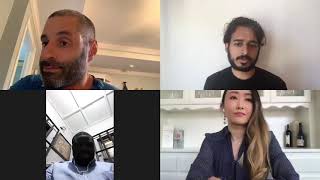
In this 90‑minute webinar hosted by Sahil Lavingia, four early‑stage investors discuss the mechanics, benefits, and challenges of AngelList rolling funds (506(c) structures). The session begins with personal introductions that reveal each panelist’s background – Sahil (Gumroad founder, $7M rolling fund), Cindy Bi (former super‑angel, founder of CapitalX), Iyinoluwa "E" Aboyeji (co‑founder of Andela and Flutterwave, now running an Africa‑focused rolling fund), and Jason Jacobs (ex‑Runkeeper founder turned climate‑tech investor). The conversation covers: why rolling funds are attractive (low‑cost, flexible capital deployment, quarterly commitments), how to design fund size and check size, strategies for sourcing LPs (micro‑LPs, diaspora investors, personal networks, inbound referrals, and institutional partners), deal‑flow generation (founder networks, customer referrals, investor referrals, content platforms like newsletters, podcasts, Slack communities), and operational considerations (reporting cadence, fee structures, managing lumpiness, maintaining mission focus). Panelists share practical advice for aspiring angels – start with small personal checks, leverage personal networks, be data‑driven, treat investing as a skill learned on the ground, and align fund thesis with personal passion (e.g., climate, African tech). The discussion also highlights regional nuances: Africa’s limited seed capital, the need for flexible LP terms, and the role of rolling funds in democratizing access for diaspora investors. The webinar ends with a Q&A on LP acquisition, founder outreach, and future community‑building ideas.
Chapters
For many years.
I haven't seen you since you tracked us down right after our pitch at YC Demo Day.
Yeah, I chased you down to make sure you keep my money, and I'm glad you did. Of course. Thank you so much.
I'm glad you gave it to us as well. Super excited.
Awesome. That's a good story. Well, let's get started. This is the second Rolling Funds webinar that we're doing. To just teach really anyone who's interested— LPs, founders, people who want to have their own funds someday, people who really dislike rolling funds for whatever reason. Yeah, just like have a conversation, ask and answer questions. I thought we would start with intros. People in the chat, I think it would be cool to sort of hear where you're from and who you are and what you do and what you're interested in learning about, and I'll kind of moderate a little bit, but let's start with Intros. I'll go first. I'm the founder and CEO of Gumroad, and I also have a rolling fund now, which is around almost $7 million a year, looking to invest in basically anything super early stage. First check is like my dream moment. And then I tweet a lot @sahill, which people are probably familiar with at this point, for better or worse. And I don't run an account called VC Brags. Uh, yeah, who wants to go next? Jason, you can go next.
Uh, great. Well, hey everyone, thanks for making the time, and Sahil, thanks for putting this together. I am a longtime entrepreneur. Most recently, I was the founder and CEO of a fitness app company called Runkeeper for almost a decade, and that was a bumpy ride but ended up with a happy ending. We were acquired by ASICS, the Japanese sneaker company, and ran digital there for a while and saw through the integration, left, took some time off. And the last couple of years I've been laser-focused on climate change and how I can help. And I've been kind of learning in public about that. I tweet a lot as well, like Sahil Lavingia @jjacobs22. And yeah, I have a podcast and a newsletter and almost 1,000-person Slack community that's all people that are tackling climate change from different angles and I've been writing a bunch of small angel checks as a way to learn in climate. And as the platform has expanded and my deal flow has expanded and I'm starting to get my bearings and also know more people in climate, I wanted to put more capital to work. And when this rolling fund structure came along, for a bunch of reasons we can talk about, it made a lot more sense to me or for me than a traditional fund.
That's it.
Cindy, you can go next.
All right.
So everyone, nice to see you all here. My name is Cindy Bi, CindyBSV on Twitter. I have been a longtime super angel in the past 10 years, and recently I founded CapitalX. Basically, it's a solo capitalist with all the best traits that you can expect from super angel. But instead of a $25,000 or $50,000 smaller check, now I write from $100,000 to a quarter million for the initial check. So I'm very I was very excited that the timing was so great. I could use, you know, AngelList rolling fund structure. And also before I started, Sahil Lavingia really gave me a lot of inspiration from, you know, I wanted to learn from him, right? So, but the best way to learn is to invest. So I invest in his fund, saw his fund page and saw how he shared. He got into very competitive, successful companies. So I wrote a Medium post and then from there, yeah, in about 3 weeks ago, I launched my own fund. The market has been amazing. When I say market, I mean the micro LPs from more than 10 countries. I didn't talk to you or them, and they just sent me email, tell me about their background, and then maybe in 2 weeks, I raised more than $2 million. Not per quarter. Per quarter, that's more than half a million, one quarter. So before CapitalX, I was actually operator at a remote-only company. It's enterprise software. You have people all over the world. And investing was my part-time gig. So that's why I also encourage a lot of you guys to do investing part-time, like, you know, Sahil Lavingia, or, you know, or maybe even do this full-time. But it works, right? Within 10 years, I built a portfolio of more than 100 startups, invested in like $7 million initial capital. Now that's worth about $50 million or more. Even if you look, I looked at my 2016 and '17 annual vintages, the return on paper is 6 times and more. So definitely rolling fund on an annual basis can work really well for small LPs, because, you know, when the check size is small, you want the initial ownership, you want the initial multiple returns. So that's that. And before then, I was a software consultant traveling 80% of the time at Accenture. And also in the meantime, I founded my own hardware startup or company. I sold it to my co-founder who's still running it today in Atlanta. And then before that, I was at a small software company dealing with the oil and gas companies, very traditional clients. And before then, I was a student at Georgia Tech. I came to America for PhD study, but then I fell in love with data and software. And I didn't see myself become a professor or researcher, so I dropped out of a PhD program, got my master's, and, and I started from there. And it's very obvious, you know, I'm Asian woman, and I was born and raised in China. But I'm loving Silicon Valley, the tech world, and everything that the inclusive community has to offer. So yeah, that's my story.
Awesome. And E, what's your story?
Well, my story is a story of growing up in Africa. I grew up in Nigeria, Lagos, Nigeria. Moved around Nigeria quite a bit. And then I went to Canada to the University of Waterloo, saw how startups were built up close, and returned home to try and build some amazing startups. I got lucky twice. I missed quite a bit of failure. Helped build two of Africa's fastest growing companies, Andela, which is a $650 million company that connects talents, engineering talents in Africa to global technology companies. And Flutterwave, which is a $200 million plus company that helps large corporates like Uber and TransferWise, as well as small businesses in Africa to be able to send and receive payments from customers around the globe. My story is a bit more "organic." I didn't, you know, in Africa, you kind of have to do things slow and small. So I've been angel investing over the last 5 years. I've invested in 25 companies. With my own money, putting $1.4 million into these companies. I've been really lucky. Now these companies are kind of collectively worth $14.2 million with a combined value of about $1.2 billion. We've returned about— we've grown the fund about 10 times and returned about 3 times the capital to our LPs, which quite frankly include just me one of my co-founders at Andela and a PE firm that was partnering with us. And basically we got into this whole rolling fund thing because it made the most sense for us. One of the things we worried a lot about as we evolved as a venture fund was that one, you know, we have a very deep thesis and we can talk more about that as the conversation goes. And we really don't have a cap to the kind of capital that we're looking to deploy into companies. But at the same time, we have a big constraint, which is we don't want to raise from people who are disconnected from the market. We wanted to engage players that are directly connected to the outcomes in Africa that we're trying to fund and improve. So, you know, we— we chose the rolling fund model because it made it easier for local Africans and Africans in diaspora who we target with our funds to be able to contribute. And we thought, you know, I thought it was gonna be more fun for me to keep generating return for them than for me to generate returns for some big DFI or some foreign LPs somewhere. Not that we don't want those LPs, but I just thought, you know, for me, I want Africans to make money from the successes that we generate first, and then whatever is left can go over to foreign LPs. And since we launched our rolling fund, it's been pretty remarkable. I think our first fund raised about $300K, and we have quite a number of people in that fund. We also have been doing syndicates on AngelList for quite a while. So we actually run a deal platform members-based co-investment platform where we share deal flow with about 85 investors. They pay $1,000 a year for access to our platform and we give them very detailed takes on companies that we think fit our thesis, which is that while Africa has incredible challenges, we think it's possible for innovators to build businesses that can turn these incredible challenges into global business opportunities. So that's about it. That's it for me.
Awesome. So you mentioned your fund. I mean, it's by all measures like an incredibly successful fund to already have returned in 5 years 3x the capital and, you know, to be up as much as you are. Like, did you purposefully not sort of have a bunch of LPs, or is it just that it's so opaque that you just don't know where they are? Or like, how did you think about that? And then how has the transition to kind of— now you have 85 people in your network. Like, how has that transition been? And has anything about the 506 rolling funds changed any of that for you?
That's a great question. I think for us it was a combination of the two. So I don't think it was really that we didn't know where to go. Like we had a lot of guidance, but when we talked to a lot of limited partners in the US or elsewhere, we oscillated between folks who had subpar terms or insisted that we bring on people who we didn't think were a right fit for the kind of operator-led team that we were trying to build. They would ask us to bring on investment professionals and against investment professionals, but the way that African investment professionals think about assets like tech is very different from the way that we think about it. So we didn't want to just bring on those professionals because we had to fulfill a mandate, or they would tell us, you know, we have to have "We have to have some kind of hurdle rates," or there were just a lot of non-standard terms when we went to the DFIs and the people who typically fund this stuff in Africa. The other end of the spectrum was the foreign guys who would offer standard terms and maybe even be helpful just didn't want anything to do with Africa. They just thought it was too risky, there was no upside. So we were kind of caught between a rock and a hard place. And also, I think we have a mission and a model which requires us to work very closely with diaspora. I think the way we look at it, right, Africa diaspora is the perfect source of capital for the kind of businesses that we want to fund. Because, you know, African— I just give you some numbers. There are about 47 million African diaspora in the United States. 17 million of them are Nigerian. They're actually one of the highest earning demographics in the US and they send back home about $25 billion every year. So if a fraction of that could go to investing in high potential startups that could solve some of our biggest challenges in Africa, I think that would be progress. So that's how we generally thought about it. In terms of how things have changed, I think for us, we've just really had to get really good. At talking to people about— well, pitching as much as our entrepreneurs are pitching, right? So we get really good at helping companies tell their stories, identifying great companies, and being able to communicate their value to a wider audience and help people see what the magic really is, especially because a lot of these companies are early stage, so they're easy to dismiss. But being able to identify what's magical about a company and what could make a company succeed if they focus on it has been kind of the big learning. And then learning how to report at scale. So getting really good with reporting numbers at scale, getting really good cadence around communicating about our company's progress, getting really good at the PR. Those are the things that have been priority for us because, you know, for the last 5 years, we've kind of been under the rock. For good reason, right? And then all of a sudden, you have to come and put up this really polished public sell-side type advisory setup. And so that has been the real learning, like how do you do that?
Jason, you, I think, tweeted like a month ago that you were just thinking maybe about doing a fund and now you have a fund and it seems to be doing quite well. Certainly, it's only going to do as well as you want it to do because you've set a cap that you're almost definitely going to get— you're going to get close to if you haven't already hit it. Officially. Yeah, like, how do you think about rolling funds? And, you know, there was another thing I saw that, you know, that said something like, you know, the people who currently have them are, you know, would have been able to raise traditional funds anyways. Like, what— why is this sort of new and interesting? Like, how do you— how do you think about that personally? You know, and then also, yeah, like, how do you think it sort of grows over time?
Yeah, well, I mean, I knew I wanted to focus on climate change a couple years ago, but I really didn't know anything else. And I've been an entrepreneur and in functional roles in startups my whole career, so I have no professional investing experience. And if you had asked me when I got into focusing on climate change what would come out the other side, I would have said that it's hard to imagine anything other than starting another company. But what I found with climate is that it's such a systems problem that I just felt like I could have a way bigger impact working across companies and even across, you know, industries and government and, you know, really much broader. And initially, the angel investing was just another tool for learning where I want to get reps and write little checks. And as my platform and community and podcast and newsletter and all that stuff grew, then I kept getting more deal flow and more access, and higher caliber deals were coming across my desk. And some of that was also just that the climate tech market was, you know, starting to heat up, and there was just more activity. And so increasingly, it felt like cutting into bone to be limited by my own personal liquidity. So I started thinking about raising a proper fund. But with a proper fund, one issue I had was that it felt like switching careers, where the stuff I was doing with the platform felt really high impact, and I didn't want to give it up. And like become a VC. And another piece I had an issue with was that I've been learning in public, and I'm an open book, as anyone knows that follows me on Twitter or the newsletter or whatever. I have been sharing a lot of, you know, not just, uh, um, articles and things like that, but like my learning and my doubts and the things I'm trying to figure out. And, and with the SEC, you can't do any of that stuff when you're pulling a fund together. So if I'm trying to learn a new craft, and as a first-time fund manager, it's taking a high percentage of my time, that percentage of my time would be locked down from my public persona, which just felt really inauthentic and crappy. So I, yeah, when the pandemic hit, I thought about raising a proper fund, a small first fund, sole GP, and when the pandemic happened, it was almost a relief because I had these concerns about that path. So I put that on hold and focused on the platform and, you know, switched to a dues model and got events and programming really cranking. But I kept writing angel checks and actually, Sahil, when you reached out to be an LP in your fund, that I said, oh, what's Sahil doing? And then like a minute later, I saw you tweet about it and I was like, how can you do that? Like, aren't you gonna, you know, get in trouble with the SEC and be, you know, and have to deal with all this crap that everybody warns you about? And you said, no, it's this rolling fund, it's a 506, so it's not a party to that. And as I started looking more into it, it just, it kind of undid some of the knots that I was finding with the traditional fund in that you can start small and you can iterate on it like a product, in that it's 506, so you can talk about it, which is a big one for me. And I don't know on the last one about like switching careers or not, if it's a psychological thing or a structural thing, but it just feels more integrated into everything else I'm doing, whereas with the— if I had raised a proper venture fund, it just would have felt more disjointed to me. But again, I don't know if that's a structural thing or a psychological one.
Yeah, Cindy, I mean, you've been doing a ton of angel investing already. How has the transition been for you? You're also incredibly open about everything. And of course, rolling funds, I think, will probably start by attracting those people because you need those people to kind of spread the gospel of rolling funds first, right? So Cindy, yeah, how has that experience been for you? Like where, you know, one question I see often is like, well, where do you get your LPs from in the first place? Like, you know, obviously Twitter and your personal network, but like, how did you, how do you think, like, why do people pick you as a fund manager over, I don't know, emailing some traditional fund, you know, that's been around saying, hey, you know, do you want $250K? So how, yeah, how have you found your LPs? How have you kind of tackled that strategically for yourself?
So actually, since about a year ago, I was already thinking of raising a traditional fund. At the time, I was thinking of partnering with two other people, right? And with experience, with previous fund management experience and portfolio construction, all that. At that time, I was like, oh, let's raise maybe $75 million, these three GPs. And, but I need to also transition out of my previous fund. So since then, I started writing more personal checks. Within a year, I wrote, I invested about $400,000 of my personal money into 10 startups and 6 other VC funds, traditional and rolling. So to answer your question first, where do I find the LPs? So at first, I reached out into my network because there were investors who knew about me and about my track record. Since a year ago, they offered to invest in my fund, but at the time, the fund was evergreen, there was no outside LP. So I couldn't really take their money. And then a couple months ago, I was ready, I transitioned out of my previous fund and I was free. I knew I would do this full-time and it made more sense to do it solo because I always enjoy making independent decisions, right? So I didn't wanna deal with the conflicts or office politics or partner dynamics, that was new to me. So actually, very surprisingly, on August 6th, I launched the fund in public for fundraising. And, you know, people from all over the world reached out to me. Just like how I operated a company before, I had a good feeling I can attract inbound fast commits. And I was, you know, very surprised, happily surprised that it happened that way. So I tweeted my Medium post. And on that Medium post, I wrote about my track record and the type of companies, the breakout winners in my portfolio, and also linked how I won deals. So the potential LPs knew how I worked with the founders since the beginning. I didn't emphasize on how I worked with the founders, but then, you know, I have founders from my past portfolio, they would put their personal money to invest in my fund, right? And also in private, they told me they would really go to bat for me. For me because of the initial high conviction when I invested. So long story short, a lot of these LPs, I didn't know them. And I tell you a wonderful story. So one LP, he doesn't want to be named. He's in Europe and he followed me on Twitter. And then once I launched it for public fundraising, he reached out to me. He introduced another super angel whose name is Michael Liu. This super angel is wonderful too, right? He invests in Zapier, seed round. I was, you know, in Zapier seed round, Robinhood seed round, and later like Didi, SpaceX, and also RaceSkill, another like a potential unicorn, if not unicorn yet, from seed round. So a stranger, a stranger on Twitter, well, or Twitter friend introduced another super angel. And then I talked to Michael Liu, and then these two super angels introduced like 10 LPs in total. They all invested. In my fund. So I would say it's, it's like based on design, right? By design, I wrote a Medium post, I tweeted about it, I attract the people I didn't know based on my track record, based on what the founders say about me. You know, everything is open in public on Twitter. I link it, I do screenshot, right? So that helps me build a high trust. And then some of them from cold network. right? Then they would introduce, they would dip into their warm network to introduce to me. And wonderfully, you know, I borrow the credibility, I borrow their reputation because they did the due diligence, right? They talked to me, they asked many tough questions. Michael actually asked Sunil at Android Ace, you know, he really grilled him on the fund mechanics, right? Management fee, carry, lifecycle, you know, is it really quarterly or, you know, or the GPs can actually make investments when, you know, they are convinced. So they don't have the pressure to deploy capital per quarter or raise capital per quarter, right? All those details Michael asked, and, you know, he did due diligence. I bought his credibility, his reputation, and then in his warm network, I raised a lot of money. For my personal warm network, I would say for one person I reached out, there are actually three real LPs from inbound. I didn't know that. So it's 1, my network, 3, cold network who really invested. So it's really, really amazing. I'm super, super like, I feel super grateful, right? But I also need to mention that's because since a year ago, I started working in public on Twitter. And a lot of investors ask me, hey, where did Cindy come from? I'm like, well, I was investing for almost a decade. I just didn't make a noise or, you know, try to make a name because I didn't need that. But as a GP, as a general partner of your own fund, they need it. They need the brand, right? Not just the— they need the reputation with the founders. They also need reputation with potential LPs. So right now, the way I see rolling fund is this. I start humble. I start small with a lot of smaller checks. I see these wonderful micro LPs as, let's say, SMEs. If we talk about enterprise sales cycle, right? They are like SMEs. They are fast commits, so I can start deploying very quickly. But also in the meantime, I'm talking to family offices. I'm talking to institutions to build the relationship, because that's how they work, right? I respect how they work. When they invest the first check, they wanna think about, let's say, 5 years down the road, 10 years down the road. I respect that. So I let them, take their time. So we build a relationship today. Even if they don't invest for this quarter, you know, we are always open, right? As long as we have room for them, they can write a check. Or in the future, if I really grow bigger to, I don't know, $25 million a year, I don't know, I don't cap myself. But for now, I cap myself at $6 million a year for this first year. So I can lay a strong foundation for many, you know, fund details. I really welcome, you know, bigger checks. Institutional family offices, even family funds to invest in me. Because like you, Sahil, and I think AngelList, Rooting Fund is very— of course, they empowered us, right? But also, I think Naval, you know, Naval is my LP as well. Naval, you know, Sunil and Avalok, they are also fortunate because the first cohort of Rooting Founders, like, you know, us here, they really show up skin in the game, right? They've been doing it without personal money. They have a track record. They have the strong potential. And they either reinvest our management fees or we charge, you know, we do a very, like, I think it's a community of ruling founders with the help of software and the AngelList team trying to raise this entire brand of ruling founders to attract more people. The way I see, of course, they deal with the kickbacks. Hey, there's too much capital. There are too many investors, but there are always more founders, right? And a lot of investors realize that more capital, more access to founders is a good thing. If we use analogy, it's like dating, right? And dating is exclusive. So there are always new people at the right age. But for us, we are not exclusive with the founders, right? We are one of the wonderful investors we wanna have, and we open many doors for them. And the fund of funds institution open many doors for us. We can really introduce a very new blood to build for the future. Yeah, so that's my understanding.
Yeah. Yeah, I really like what you said about it feels like you're selling to SMBs because I really like that analogy of, you know, if you're raising a $75 million fund with 3, it reminds me of enterprise software, right? Like it reminds me of these long sales cycles and you have to basically raise all this money because You can't really, you can't sell Microsoft on like, you know, $5, right? That's not that interesting. You have to invest all of this stuff, build this thing, you know, that has Andre, you know, like it's thousands and thousands of dollars before it's even worth it for them to even talk to you, right? And that reminds me of like a traditional fund when you're raising a ton of money and now you can have basically a self-serve, bottoms-up approach where you can start really small and, you know, start selling and start getting results. And start with, you know, yeah, start showing people that you know what you're doing, right? Because you don't have to wait 3 years, like the traditional fund cycle or the traditional maybe sales cycle, depending on the customer, to show this thing is working to new customers. You can say, hey, you know, I did these 3, like I just did an investment that's already raising a, you know, a seed round and is like, hey, do you have Parata? Do you want to do Parata? And I'm like, oh, cool. Like it's been a month. I'm starting, you know, and that's the power I think of moving incredibly quickly, especially in this time. Jason, you mentioned you had a note about success, measuring success in this context of a rolling fund. People have kind of asked you about this. So I'm curious for— and I think for a lot of folks in the audience, there's 340 people right now, that's crazy, tuning in live. And like, how do you think about success? Is that different traditional fund, rolling fund? Yeah. And like, yeah, how are you making sure that, you know, a quarter in, like, you're doing what you said you were gonna do?— you know, you said you have a $5 million cap to kind of make sure that you, you have a fund strategy in place, etc. When do you decide, like, I'm gonna go to the next level, right? I'm gonna raise the equivalent of this fund.
Yeah, well, my, my fund so technically kicks off October 1st, and I'm, I'm like 3 weeks into talking about it and a month into discovering the structure, and I'm at, I think I'm at like 80 or 85% of cap, and it's a self-imposed cap. And the reason for the cap is that, you know, I had a check size that I— I was writing $10K or $25K angel checks, basically. I did 15 of them in the last year and a half as a learning tool for Climate. And what I uncovered was that, you know, I could— it was a fast cadence, but I could keep up with the cadence given my perch. And that the nice thing about those small checks is that you can squeak them in and it doesn't doesn't really matter if there's allocation or not. A lot of times you can— it's a check small enough that if you're strategic and the founder and the other incoming institutional investors want you involved, they'll make room without really mucking up the round. So I'm gonna write $100K or $250K checks out of the gate with that same logic that maybe one day I graduate to leading rounds and things like that, but initially I'm everybody's friend. They'll want to make room because I'm very focused only on climate tech investing. The access part and the picking part, that stuff is— I feel well-versed in historically how to be a professional fund manager and a steward of other people's capital and how does it work in traditional VC and what are the differences with the rolling structure and how should I approach it with my rolling structure? That's all new. So I'm in the process of figuring all that stuff out. But one of the things I've tried to do to hack that, a couple of things. One is build a peer group like of you guys. And that's, I mean, why I'm blowing up your Twitter DMs all the time with questions. But another way is I have 12, so far, I think it's 12 GPs of traditional venture firms as personal LPs. And that's essentially to get access from an advisory standpoint to teach me the craft. And the pitch to them, I mean, part of it is finding people that care about climate. Part of that is that this, a lot of these funds are trying to figure out how to, market-based funds are trying to figure out how to think about climate tech. And so as personal GPs, they're gonna get a lot of learning, especially with the high rep strategy. That I have. And I've been tweeting about where it could go, like, you know, you could add other— because my platform and community and Perch, like, that scales from early-stage capital to growth-stage capital to project finance to a bunch of different things upon success. But that's over many years. None of that's possible unless my entry point, I deliver and earn the right to go anywhere else, let alone everywhere else. So for as far as the eye can see, I'm just investing this kind of pre-seed and seed and maybe occasional A, these little checks. And one downside of the rolling fund structure is that you can have lumpiness in between, like from one fund to the next. And one way I am counteracting that is really like being disciplined about choosing LPs that have the deeper pockets to be around for the long haul,. But also making sure that we're calibrated where there's a misconception out there that if they were going to invest $100K or $250K or whatever the number is into a traditional fund, "Oh, you have a 4-quarter commit. I'll give you that same amount for your fund." And what I say is actually it works a little different than the traditional fund. It's a 10-year fund, but that amount that you're committing gets called over 2 to 3 years or more. So that money is invested over several years. In a rolling fund, a 4-quarter commit, that's only a year. And so, you know, you should think about longer timeframes. And there's a 4-quarter out if you don't like what you see, you can bail. But, you know, if you're coming in knowing that no matter how good things are going and how much confidence you have in me as a fund manager, that you don't have the budget to carry on it, this probably isn't the right fit for you. And several times so far, people have come in with a budget in mind for year 1, and I've convinced them to put in less. Per quarter in year 1, but budget to stick around for longer. So that's one way I'm counteracting that. The other way is by keeping the fund size small so that if I deliver, there'll always be well more demand than there is supply. Because I don't want the lumpiness, because then it screws with your discipline and your portfolio construction. I didn't even know those terms a month ago, but, but there you go.
It turns out I've learned that the hard stuff that takes years and years and years to learn are the stuff that it's hard to read a book and learn, right? Like, how do you decide? That's like these soft things that are amorphous, and that just, you know, you got to do it. You got to, you know, you don't have to necessarily build a company, but you have to, you know, be in the— on the ground floor at some level and see this stuff play out over time to really build it up. The technical stuff, the syntax, right? You can, you can learn that stuff pretty quickly.
It's not that hard.
Fund construction, fund size, like you can read a blog post and now you know, like pick a check size and here, you know, like, so yeah, I'm curious, like how is your strategy different to that? Is Africa and the places that you invest in differently where you kind of maybe need to lead around because there's not as much sort of capital activity, there's not as much supply, like you have to sort of, you know, sort of be, just do more, right? Like push the boulder up the hill.
I think usually, yeah, it's somewhat different. So I'll first of all start with like, it really is a function of stage rather than leading around or not leading around. So a lot of the very ambitious companies that are solving really, really hard problems are not exciting to like US VC because they don't necessarily have context about the problem. They may get exciting to US VC like after they've cleared some kind of traction hurdle, but at the earlier stages where people actually need money to actually get stuff done, considering that in Africa, like, you're unlikely to have people who have like savings or like have worked a job where they have like a lot of money saved up. Like most people are just like not very personally rich, you know, so they can't like self-fund, but they want to solve big problems and Africa's problems are very big. So we found a lot of benefit in like helping those founders get started. And a lot of what the Rolling Fund that we're raising goes into is like supporting founders with really ambitious ideas. One of the deals I'm really proud about is a company called Tamboa Health. They're a company that focuses on building— basically using sound imaging and machine learning, they're building an alternative to the X-ray. And that's really important because like in Africa, like an X-ray can build like 5 hospitals, right? Like it's so expensive to like get, to get an X-ray machine or like a, if you don't want to use an X-ray machine, like MRI and stuff like that, those things are really expensive, out of reach for the average person. And the only other device you have is a stethoscope, which is very subject to human error because someone's using their ear. Now, if you use like, like this device, they're called Tambua Health, use this device, this device combined with machine learning, and 100,000 records of other people like it basically help you to do the same level of diagnostics with the same level of accuracy as an X-ray machine without spending nearly as much, right? Technology like that, they have 14 patents, they're doing extremely well. They just went and got out of YC. People don't want to fund stuff like that super early. Like a lot of the seed stage funding is more or less going to go to like Actually, there's no seed stage funding. Actually, when we did an analysis, our team, what we realized very sadly is like what's going on is every year more funding has come into Africa, but the lower proportion of the funding has gone into seed, right? So it's like a very bloated funnel. And people are more interested in funding companies at scale like Flutterwave, like Andela, like Jumia, but people forget that those companies have to start from somewhere. And having found those companies, I know how difficult it is for you, for a founder with an ambitious idea to get started. So that's like more or less my focus. So I usually go in lone ranger on those deals, like full conviction. We'll put a small bet and a lot of time. So $50,000 and a lot of time and see whether it makes sense. And then if it makes sense, we have a syndicate that will then display those deals too. And then in terms of like, our fund construction. I guess I'm slightly different because we don't have like established LP base just yet. You see, the challenge in Africa is that the institutions that should be establishing these LP bases, they either don't understand technology as an asset class, so your banks, your pension funds, or they're like statutorily barred from making those investments. But that's something that we're changing with legislation. So ultimately, you're really depending on individual Africans making that decision by themselves. And so, like the way— the reason why I like rolling funds is actually the reason why some people on the call are like, I want to make sure people are kind of have money for a long time. Like I'm literally like, you know, just like any average person. I mean, you know, Sahil Lavingia, like if someone came up to you and said, I want you to commit $100,000 to me over the next 10 years, You're going to look at that person and be like, "I don't even know if I'm going to have $10,000 next month. Calm down." You know what I mean? So just the same thing with average Africans. They can't make those commitments over a long period of time. It depends on whether they get that bonus at work or not. It depends on whether that extra medical bill comes in or not. It depends on— there's so many things it depends on. So the flexibility that the rolling fund allows is actually the strength that we rely on because we can tell people it's completely fine if you invest this week, this quarter, and don't invest next quarter because that's all good for us. And it's about making that asset class accessible to the average person and less about accumulating capital to invest. And yes, that might make our thing more lumpy, but I think the way we're thinking about how we're building Future Africa, or we call it the Fund for Africa's Future, is basically that we want to— we essentially want to democratize investing, right? We always want to democratize like startup investing and we understand that people need guidance to be able to do it. That's more our focus and less about whether we are good management and whether we have like some special sauce, which we do, but however, we're more interested in bringing our LPs in as co-investors rather than have them just look at us as managers and allocators of their capital. Does that make sense? Totally.
I mean, I think the rolling fund is just flexible, right? If you really wanted to, you could make it look more like a traditional fund. You could say there's a minimum commit of 8 quarters or 12 quarters. You can always resemble a traditional fund. Yeah, yeah. But the flexibility to write checks to get started, it's so much cheaper to get started. Someone said, how much does it cost? It costs A traditional fund has a management fee of around 2% above the minimum. AngelList charges 1.5% for 10 years. So basically 21.5% would be the equivalent. So it's— obviously you have to do— you do have to get to a sort of a size for that to make sense. They have a $20,000 a quarter minimum for the first— that's way for the first 2 quarters. But yeah, you want to get to a place where that, you know, isn't a huge part of your fund. But frankly, like most early stage funds charge 2.5% a year because of this. So it's not something that rolling funds have. I think in almost every case, a rolling fund will be cheaper because frankly, it's probably a loss leader for AngelList right now, right? Like they're trying to make this thing— it's early, they're rewarding early adopters. And so I think the sooner you get started, frankly, probably the cheaper it will be. And speaking of getting started, like, If people on this call want to know, you know, how do I start my journey as an investor? Let's say 5 years from now or 10 years from now, I want to— I might think about, you know, becoming an investor. Or I talked to a lot of, actually, a lot of associates and principals who are like, I just want to do a little bit of this because I'm not learning. I'm frankly not learning that much right now at my— at the firm. And this sort of partner track looks less appealing every day as there are other options potentially, right? And so, yeah, like, what are all of your sort of recommendations for people who want to start, you know, angel investing? How would you think about it? And how did you yourselves do that? I can start. So I started in 2011. I basically had $45,000, and I said, I'm just going to give this to 5 companies, $5K, and then, you know, 4 $10K checks. And actually, like, so many people, like, I was told so many times not to do that. I remember this magic number of 30, and you have to do 30 angel investments, like, sort of super, super early angel investments if you want to make a return, because the failure rate is so high and you need to hit like one unicorn, etc. And so I like stopped. I like spent that money and I was like, okay, like, I'm gonna do that, I'm not gonna do any more, I'm just gonna put in like Vanguard or something. And that was like, honestly, a stupid— I think the worst advice I ever heard. Like, I wish I did stuff. I found so many amazing companies. And I think, frankly, it wasn't a lie, but I think it was wrong. Because the truth is, if you are an operator, if you are on the ground floor, you're not just spraying and praying. I think your odds might be a little bit higher. So, you know, I would personally say I wish I continued to do that and invest in your friends, by the way, like one of the biggest signals. And I also want everyone to answer this next, which is what do you look for? This question, because I know founders will want to know the answer to that as well. Like when you invest in your friend, like one of the big reasons startups fail is people. Like they don't have the right people, they just, for whatever reason, they're not as high conviction on their own idea, they get distracted, they run out of energy, et cetera, et cetera, et cetera. They're potentially just like low integrity people, who knows? There's so many reasons that like, that these things don't work. And so if you're investing in your friends and your coworkers potentially, and all these things, like your odds of success are so much higher. Just because you're getting rid of all of those reasons startups fail, right? So then it really becomes like a market risk problem or like a product risk problem or like a regulatory risk problem or, or, or something like that. The people kind of issue goes away and your odds— like out of the 6 angel investments I did, 3 of them have done incredibly well. Um, and so yeah, I just wish I did way more of those because I think I would have had a much stronger— luckily it was strong enough to get started, But that's kind of my advice. Anything anyone else would add to that in terms of getting started? We all have a little bit of a track record, certainly helps. I think it helps getting money from LPs, but it also helps just making us feel confident that we can do this because writing a $100K check is a little scary the first time you do it, and especially when it's not your own money, right? So yeah, I don't know if anyone else— I'd love to learn all of your thoughts on.
I can relate. You know, I wish I started earlier with my personal money. So I had a big exit in 2016 with Cruise. I definitely had the dry powder to do it personally. But, you know, the previous fund didn't need me. But I would say you have to make your independent decision, either your money or your fund's money. But you want to fight for the right so you can make an independent decision to invest or not. Because a lot of times we can collect all kinds of data. You know, we can do all kinds of notes and discuss with the partner or your fellow investors. But ultimately, you have to do the deal yourself. It's your own decision. And before the decision, after decision, and then you work with the founders, more data you collect. So that psychology, you cannot read it from books. I think investing is not academic. You have to be on the ground doing the real work, including making decisions. So, so, so, so that's my, my biggest learning. And of course, it's scary, right? Although I don't feel scary for the— the scare from transition of a personal $25,000 check to now a capital X, $100,000, because when it's my personal money, it's one person's money, $25,000. Right now, $100,000 is more than 50 LPs' money. So that's already diversified and each LP is already taking less risk. So I don't see that as a big jump. But if in the future, if I write a $500,000 check, that's the initial check, then probably that will take me— take some psychological switch. Yeah. But so far, I think it's very organic, a very smooth transition from super angel to a fund manager. And I have big ambitions. So definitely I want to write half a million initial checks in the future. But as Jason mentioned, you know, I also want to graduate, right, to that process. So yeah, start early, start young, start small, but you have to do it. I have to. It's not academic. Yeah, do the job, do the work. Yeah, so that's from me.
Hey guys, well, oh, does Jacob want to go next? I wanted to go next, but if Jacob wants to go next, I'll go last.
No, feel free. Have at it. Take your time. Okay.
So, okay. So I started investing out of frustration, right? Like, I'm not your typical angel investor. I didn't just have a bunch of money lying around, but I got really lucky with Andela, and we grew super fast. And like, I was like one out of all my friends who actually had money, and I saw all their— like, they were amazing founders, but they just didn't have the capital. To do what they needed to do. So when Jeremy gave us an opportunity to sell some of our Andela stock early, I took it because I had some challenges to resolve. But I put aside— myself and Nadia, one of my co-founders, put aside a bunch of our money to invest in founders and funds that we liked. So that was how we actually got started. We just started writing 10K checks, 5K checks, 25K checks, 30K checks, just putting it and because Andela basically took care of our entire lives. We didn't spend our salary much. We just kept our salaries and heavily invested in tech, right? And that helped us, right? That actually helped us grow a lot of our returns. We were smart enough to invest in the companies that we're working for at the time as well as professional investors. So that also gave us additional leverage and we came in super early and we got really sweetheart deals. So that helped us a lot. So I really just started investing because that was the only thing I knew. I didn't know anything else. But over time, I kind of realized a bunch of things that made me exceptionally good at startup investing that other people in other asset classes, I would have a lot of trouble, right? So for example, like it was easier for me to understand what trouble founders had and to help them, right? Because I had both the background of having been funded, so I knew the investors and what they were looking for. But I also understood the struggles of an entrepreneur and I knew kind of what they were going through and how to kind of help them better position because I had done it before. And we would literally provide hands-on help to each founder, provide them introductions. We have several companies in our portfolio that we invested in before they went to YC out of 25 companies, which is a pretty amazing hit rate because we had not just the networks at YC, but we knew what YC was looking for. And we also understood what kind of problem spaces would make sense. So basically we started doing investing because we just love investing in startups. That said, over time we've obviously had to professionalize. So now we have like a very clear criteria for investing in startups and a clear offering, quote unquote, for what we give to startups. So in terms of our criteria for investing in startups, we use something we call a TD3 framework. So TDDD, right? So the first T stands for talent. We're exceptionally interested in the talent that is found in the company. We found that that's the biggest determinant, like how much do they actually know about the business they're going into? How passionate are they about transforming that industry? What's their why for doing it? What kind of persistence level do they generally have in terms of that business? And what kind of experience do they have in the industry? Is there a founder market fit, as a popular blog post says, right? Then we care about data, right? Like we expect the founder to come to us with quite a bit of data, but most times we don't actually invest in startups, in startup ideas. We actually invest quite a bit in— the reality is that what we do is that we invest quite a bit in also understanding the market space and what kind of solutions would actually work. And many times the companies we founded— we funded are companies that if we had more time, we would have founded ourselves because we could see the problem so clearly. And then we just said, okay, hey, we know the network, we know how to get ahead in this business, your data rhymes with our data, you see things the same way we do, why don't we back you so you can go push this opportunity and make the world a better place? So that's like really where the data thing comes in. We really want to understand from you how it works, and then also we want to validate that market and make sure there's a real demand. Then the next thing is design, right? There's like no-friction ways of doing things, there's low-friction ways of doing things, and then there's high-friction ways of doing things, right? And especially in emerging markets, like one of the highest friction things you can do is to tell a poor person to give you money, right? And so a lot of founders that are new to the game might not really understand how to build business models that help you optimize networks, especially networks of people that are not very rich by helping them make money and then taking some of their money. And then there are different other like very arcane business models that are African in their way and different ways of getting things done in Africa that you just have to be very attuned to. For example, like in terms of selling to enterprise, enterprise really likes bottom line and that you might actually start with like a higher than normal revenue share and then over time kind of whittle your partner's power down by partnering with their competitors. There's like all these really like tiny screwy things that you can do. You can leverage other people's assets to get started and then over time like build, raise enough funding to get your own assets by virtue of your traction, right? There's all these things. So we try with our design of products to like maintain the local environment, and we're extremely cost-conscious when we're designing these products, right? And that really helps our companies because then they know what kind of products will not work in the market and what kind of products work in the market and the direction of innovation that product must take, right? Then the last thing is distribution. So we probably have the best network of like both high-profile individuals and celebrities as well as large corporates that can adopt your products. And like we dish out those introductions, right? Like candy. Of course, for companies that we know are serious and are doing what they do. And that makes us incredibly valuable for most companies and why most companies kind of come to us because like with distribution, we're evaluating how quickly this product can be distributed, what the value chain is, but we're also adding value by trying to ensure that we can bring value to the table as well. And so lots of founders like us because of that. Now in terms of our offerings, we're very clear. Like we don't pretend to do miracles for your startup, right? We can't build your business for you. So we just have 3 clear offerings. The first one is capital, obviously, but it's not just capital from the point of view of us putting money in your company. It's also us making it easy for other people to put money in your company. So whether it's taking you to The Collective where we have our co-investor base, or whether it's taking you to institutional where we are scouts, because we're scouts for about 8 institutionals now, unofficially and officially. So we have institutionals that rely on us for deal flow. So we like talk to them. And then, and then we offer coaching. And really with coaching, it's really one-on-one deep work with the founder, like helping them refine their business. From everything from— we have like local recruiters in-house, we have designers in-house, We have an engineering team in-house. We have legal and compliance in-house. We have like a world-class financial modeling guy who's our finance partner in-house. And like our team is just designed to help you, right? Whatever it is that you need done in the coaching elements. And then there's community. So in Africa, there's obviously a big regulatory component to all these things. And there's a big partnership component and relationship component. And we try and fill that void for founders who may not quite understand how to go about it. So this really like helps the founder by building like a community of supporters around the founder and getting people to really like what the founder is doing. So basically we've gone from like unstructured, like we just really want to help founders, to like super structured in terms of like clear process for like evaluating companies and like helping companies. And then the final thing is like one thing I always tell my team and like we try and inculcate is like We try— we never say no. Our typical answer is like, not yet, right? So it's like, we try our best not to be like, no, this company can never work, right? Like, it's usually like, hey, like, based on our experience, if you tweak this and tweak that and tweak that, and you went out and put it in the market, like, come back and have a chat with us. And sometimes we even help companies without funding them at all, right? We spend time with companies without funding them at all. We give them access to our network without funding them at all. So it's like we really try hard not to just say no. Of course, there are like a couple ideas we have to say no to, either because they like clash with our values or they just don't make sense, you know what I mean? But like most— the most popular answer we want to be giving folks is like, not yet, you're not yet ready, why don't you do XYZ and come back to us? And a lot of companies have actually done really, really well.
Jason, yeah, what do you, what do you look for?
Um, well, I think where you started with this was, was around, uh, advice for people that want to get going, uh, that ultimately want to become investors, right? Um, and yeah, I guess I'll take it in a little, a little different direction where, um, uh, I didn't set out to be an investor. I set out to, to figure out how I could have the maximum impact on addressing climate change. And, and I had, you know, I was talking to people, and then I had a newsletter, and then I had a podcast, and then I had a Slack community. But, you know, those weren't with the intent of raising a fund. Those were just kind of organically— that was how my journey evolved, so that collectively we could have a bigger impact on the problem. But then some of my VC friends started telling me, like, you know, if you— it's actually harder for a seed fund to have to build what you've built than it is for you to tack some capital on top of that, right? And the reason I bring that up is that, you know, it's easy to look at like, have a point of view and, you know, you need to be differentiated capital and it's like buzzwords and checkboxes, right? But actually, it's like, I had this maniacal focus. And for a certain group of people, I, you know, I was arguably more strategic than anybody else. But that group of people might be a small subset versus everybody else, but I would much rather be there than like, okay to everybody. And without capital, there's a lot you can do. You know, you can build an audience, you can learn and surround yourself with, with experts, you can build a community and a community of people helping each other. In a certain area that you care about. You can help companies that are startups that you're passionate about, and you might take advisory roles if you find you're helping them a lot, you know, without capital. You can make introductions for them and help them raise money and bring them to funds if you don't have your own capital. And if you just put enough goodness around what you're doing, then the only missing link is capital, and that becomes more and more clear as the other things get more mature. At a certain point, people are just going to start— like, first, they'll start suggesting like, hey, like, you should think about getting some capital. And then someone might just come along and say like, hey, like, here's a pool of capital, right? So yeah, I get— but like, I wouldn't— I would have never— I don't think I would have been nearly as effective if I had set out to say, I want to be an investor, and then started doing these things to try to become an investor. It's like I had a point of view, And then from that, investor was just another tool to fulfill the kind of impact I wanted to have for my point of view, which, I mean, people are wired differently, but that just felt much more natural to me. In fact, before I started in climate change, I tried to start a company where I didn't do that. I had a new, an emerging media format, and I wanted to build a tech-enabled content portfolio where it was like a solution in search of problems to apply it. And I just couldn't work that way. So it's just being self-aware and knowing how you work and then setting yourself up in a way that, that, you know, that plays to your strengths and to your passions.
Can I add to Jason's point a little bit? Yeah. So let me talk about the being different, right? So I try to listen to the market. And market— my market could be the founders I work with. I didn't know how much they loved working with me until, you know, last year, they, you know, all of, most of, many of them told me, I started with a high conviction. So how can I have a high conviction? I collect lots of data, right? I'm actually data-driven. If you're super, super early, I cannot track, let's say, your website, your web traffic, your product, your customers, probably, you know, they are not instantly, right? But, you know, I will start the dialogue. But once you go to a point that you are— I see enough early momentum, like, oh, you launch it on public, like Product Hunt, you launch it on Hacker News, and then I can do competitor analysis, and then I look into founder's background, and then I come up with a few key questions to have a talk. Usually on the call, or even before we have a phone call, I can already make a decision. Otherwise, I don't engage. Be the founder to talk to, right? So I think all of you realize how high connection really helps in the early days. Even our LPs, right? Even our early team members. So that's one differentiator, data-driven, high connection. Another differentiator is this. When founders work with the team, you wanna be the leader. You have to show your best side. But we all know how hard it is to build a company, to grow the team, to sell to more customers, to build more product features. So my approach is this, because I'm not a leading investor, right? Not yet. And I've experienced a lot in my personal life, in my professional life, and I've seen so much in more than 100 popular companies. So I encourage founders to treat me like, you know, a new friend. So in front of me, you don't need to say everything is super awesome. You can be honest with me, show your vulnerability, and at least I can listen, right? And then we discuss, and then, you know, I have this high energy, maybe it's by nature, right? And then I, you know, I work with you, cheer you up, and then you feel, hey, actually, you may come up with new solutions, or you know it's actually pretty common to have those problems, and there is a path forward. And sometimes you just need to talk, right? And then you can talk to me. So I see my role as not just a cheerleader, more like an executive coach or friend. You can show your vulnerability, and then you have more energy to go back to be the leader. You need to be in front of everybody else. So yeah, so I just want to add to that point, because when you talk about differentiator, of course, when my market is also LPs, right? And I have so many LPs, they are founders themselves, either venture-backed or self-funded, profitable, or they are like young professionals. They work at startups, they have liquidity, and they have lots experience to, you know, any insight to share of what works well or doesn't work in their current companies or the previous companies, or in the future, they may want to join another startup. You know, they are welcome to pick from, you know, my portfolio. Right. And also, they are GPs of other funds. They treat my fund as a deal flow because I do early, they do A or B. Right. So I'd love to, you know, add muscle with their money for them to up their game, to have more gains. And also there are senior executives, you know, who can also be an advisor, or they look to invest more directly in my portfolio. So, yeah, so a lot of these are actually very different. Another thing is this, I think, I believe I showed I was ahead of the curve on two things, remote only, right? I worked remote only for more than 10 years, and even for investing, not just operating. The other thing is I invest in other countries. You know, I am in Silicon Valley, but I invest in other countries. You know, founders from South Korea, from Africa, from Germany, France, Eastern Europe. So a lot of the founders and LPs see me as a liaison, you know, residing on the West Coast and investing all over the world. Either they wanna sell to more customers, raise from other investors here. So they really see this strength of Liao Zhang. Although, I don't pretend that I understand China market, although I was born there, but for manufacturing, in the future, I still have connections for that because I had a hardware company building experience. So yeah, so I forgot what questions Sahil asked, but listening to Yi and Jason, I thought I need to add what was different about me. Yeah. I have a comment about Yi. So I think what you said, you are very mission-driven, right? Jason, very mission-driven. I'm a journalist. Sahil is probably, you have your focus and you are also journalist. My comment to Yi is this, I'm not aware of any big fund that have a local arm in Africa. So you can be the future capitalist, right? With your success in the next few years, maybe more foundations and more big funds are encouraged to have a local arm there. And maybe your path will be, you know, Africa's path will be other emerging markets' paths, like China, right? 30, 40 years ago, it was tourism. Suki. And then 10 years ago, everybody wanted to go there, like India today, right? So many big funds have a local arm.
We want it. We want the LPs for the big funds to give us the money. We don't need them here. They can stay in the US. Don't worry, we're not pulling the line for them to come and harvest. We're building our own big, big firm here. Don't worry.
Okay, okay. Okay, all right. Yeah, all right. That's cool.
I'm curious how—
a few people have asked like, you know, where do you find founders? Where do you expect your deal flow, quote unquote, to come from for all three of you? And I know we're going a little over, so anyone is going to leave, but I will try to stay around and answer any remaining questions people have.
Awesome, Sahil. I think for me, I've been very blessed in the sense that, you know, because of my profile as a founder and also because of the success I've had, people naturally kind of send us deal flow. We're like lodging with deal flow. But obviously, like everybody else, I have like a filter for deal flow. So I have 3 kind of primary filters I look at. The first filter is through the companies that I've built before and employees, early founders, early employees from those. I like to back those because I know their work ethic. I've worked with them before. I know their level of excellence and cultural fit. So I like to back those guys. Second of all, from our customers, right? So sometimes I— we always ask our customers and our ecosystem partners every quarter, we ask them what tools are you finding most useful, and then we have conversations with those guys. And just like try to understand what problem they're solving, how they're solving the problem, and really kind of understand stuff. So that really helps us. And because of the brand name and value add, we're able to get into almost any deal. And then the third one is we get referred to by other investors. So a lot of the investors, like Cindy was saying, they might see a deal come over to them in the US and they just don't have the comfort of investing without a local partner., and then they send us those deals. And then we take a look at those deals and say whether or not we wanna invest or what we think is interesting about the deal. And that way we've kind of gotten to meet most of the ecosystem's deals.
Jason, I think you have like a unique sort of differentiator, like related to deal flow. So could you talk a little bit about, yeah, how you think about that?
Yeah. Well, first, as I mentioned, I was talking to a ton of people that were working on addressing the problem from different angles. And then that started with a newsletter and then a podcast where I've gone out and had a bunch of the scaling CEOs and policymakers and government officials and IPCC scientists and heads of the NGOs and teen activists and things like that on the show. And then, you know, when you spend an hour with someone having an intimate discussion in that way, just like now, I mean, I feel like you guys, I know better now. And, and, and if, you know, we, if and when we ever see each other in person, if people do those things again, we'll, we'll have a bond. Well, the same thing with a podcast. And, and then when my inbox was filling up, people listening to the podcast, I set up a Slack community. Now there's almost 1,000 people in there. But You know, as the podcast grew, innovation had some slots, but not very many, because climate change is so broad that— and increasingly, there were tons of early-stage founders that wanted to come on the show and get visibility. And there was a hunger from market-based capital and big strategics and aspiring founders and aspiring startup employees that all wanted to better understand what was happening in climate tech. So I set up a dedicated series separate from the pod that is a shorter-form video where the founder comes on with slides and walks through a corporate overview and I ask them questions and we record it on Zoom like this. It's almost like an evergreen demo day. And given all those things, like the VCs that come on the show and the growing portfolio of angel investments and then my relationships with those founders and relationships with all the other guests, and then this 1,000-person Slack community that's curated with people that are serious about addressing the problem with an emphasis on innovation, but not exclusively. I just see just a lot of stuff comes across my desk, and I just, you know, I'm a generalist within climate, but increasingly, you know, if I love the team and I get the story and I can see how if it works it can have a big impact and be both financially and from a mission standpoint. And there's either people involved that, you know, with bigger teams for technical diligence, for example, so like blue-chip institutional funds that I know and trust, or if there's domain experts that have come on the show that I asked to, you know, have lunch with the founder and tell me what they think or things like that. It's just getting easier and easier to get a few kind of calibration points and sanity check. And because I'm not leading these rounds, I am lighter on technical diligence than I would be if I was leading these rounds, which means that I'm relying on a Prelude, a Breakthrough Energy Ventures, a Lower Carbon, or a USV, a Sequoia, an Andreessen Horowitz, et cetera, to draft behind the bigger teams and budgets they have to put more work into it. So gut is a lot of it, especially such high rep, but But it's, I think the, yeah, just the pond from which to choose from, it's crazy and it's just getting crazier as I go. But that's not unique to my little perch. Like, these tools are free. Slack, Substack, a podcast is pretty light on expenses. Like, you could apply that playbook to any number of things. So if you had a vertical you were particularly passionate about, it's a really great way to break into a new industry.
Okay, I can go next and then Sahil can do the closer. Yeah, so my deal flow, you know, from inbound to outbound, right? Inbound is like a lot of other GPs. My past portfolio, the founders, they would recommend me, they would send me deal flow. And other GPs, like all of you can be my deal flow, right? Because you know Cindy is trustworthy, work hard, I'm great money, great person. And also I'm deal hunter as well. I let serendipity play in my favor, right? Sometimes, you know, I saw something somewhere on Twitter, on Product Hunt, or Reddit, or, you know, just randomly read something and I dig into it. And then I found a company I like, I will directly approach the founder. Or, you know, sometimes somebody asked me a question, hey, about the company and I like it. And then I say, okay, let me invest. So I— this is my mentality and philosophy. It's likes attract likes, right? So I know I'm working on something I'm so passionate about. I have full dedication and I have the reputation with the founders and the co-investors. So I would attract more founders and investors who love working with me and In the meantime, I just let the random connection work in my favor and go approach them directly. Yeah, so that's how I work.
Well, thanks all of you for joining me. Hopefully folks learned a lot. We're all pretty accessible on the internet. I will send an email out. I'll also put the recording up and I'll get links from all four of us to, you know, for folks who are interested in learning more. And hopefully, maybe we'll check in in like a couple quarters and see how, where we're at.
And at some point, Sahil, the three of us will interview you, and only you do the talking.
No, I think this is more like a fireside chat. I think maybe next time we can involve the audience more. Because I see so many questions. I see there are like hundreds of questions, right? Maybe next time, I don't know how we do that on Zoom. Maybe there are some other startups investing. We can do more like, you know, virtual conference.
Yeah, if you have a startup that solves this problem. And yeah, thanks everyone for joining. There were a couple of questions around how do we do deal flow, how do we find LPs. And this video is one example of trying to do that while also trying to be helpful to everybody.
And they can always write about it so people can read about it.
You can write about it. I'm sure there'll be recaps, etc.
Awesome.
Thank you.
Take care, everybody. Okay.
Thanks, everyone.
Thank you, everyone.
Bye.
Bye.
Bye.










