Talking COVID-19 with Luca Dellanna, Italian author and researcher on emergent human behavior.
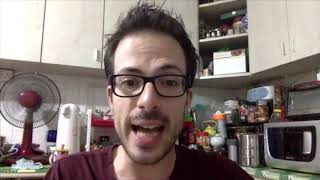
In this March 2020 YouTube interview, Sahil Lavingia talks with Italian author and researcher Luca Dellanna about the unfolding COVID‑19 crisis. Dellanna explains his background in emergent systems and risk‑management courses, and recounts how he first noticed the virus in January, followed its spread to Singapore in February, and then observed the rapid escalation in Italy from early February to late February. He compares COVID‑19 to the 2003 SARS outbreak, highlighting cultural differences (mask‑wearing, hand‑shaking) that affect transmission. Dellanna stresses the importance of early, decisive lockdowns, noting the lag between infection and case reporting, and argues that each day of delayed action costs the same but yields exponentially higher benefits if taken early. He discusses communication strategies, including transparent worst‑case/best‑case scenarios, the use of visible signals (masks, closed bus doors), and the need for decentralized “circuit‑breaker” alarms alongside centralized WHO coordination. Dellanna critiques static interpretations of mortality rates, warns against unnecessary activities (pharma reps, priests visiting the sick), and proposes practical mitigations such as mask rationing and limiting non‑essential medical visits. Throughout, he reflects on human difficulty grasping exponential growth, using lily‑pond and rice‑grain metaphors, and draws parallels to the rapid rise of Bitcoin and startup success‑rate thinking. The conversation ends with thoughts on changing public behavior in Western countries, the role of tail‑risk awareness, and the challenges of combating complacency.
Chapters
each other. So you're a Gumroad creator, and running Gumroad has been great for me in this time because I have so many perspectives. I follow all these folks on Twitter that live all over the place selling all sorts of different products, and when something like coronavirus starts happening, it's pretty nice to be able to leave that sort of San Francisco tech bubble that I'm normally in, you know? Yes. And so when I saw, I think you had a tweet storm like a week ago, or March 11th or something like that. Oh no, March 3rd, about what was happening in Italy. This was still basically before, I feel like before anyone really took it that seriously, even though that's only a couple weeks ago, you know. So yeah, I'd love if you could sort of introduce yourself and like start with that thread and like what kind of, what, when you first, like your kind of timeline, I guess, like before that, before, I assume you were already at a level where you're like, this is worth a tweet storm. You know, you're probably not going to put yourself out there as like a paranoid conspiracy theorist or something unless you're like, you have pretty good inkling that this is going to help. So yeah, I just love to kind of like, yeah, sort of like we can start, we can start there.
Yeah. So what I do as a job basically is I'm writing books that then I publish on Gumroad and they are all on emergent systems. Which means like you take some components and then you see like how their interactions evolve. And this very often has nonlinear impacts. And for example, pandemics, they're one of these things. For people that don't have much an idea, that's basically like the same kind of arguments that the Nacimta Lab touches. And One of the things that I'm also doing, I'm also, I also have courses in university in Italy about risk management. And so I'm very like aware of all these like tail risks that we have in our life, which are those things that we might not see, but they could actually impact us very strongly. And so one of the things I was considering was epidemics. And it's since months that I have this alert that when the WHO sends a report, I get it on my phone. And usually most of them I skip them or I just read the headline, but I began hearing about this coronavirus already like at the beginning of January when there were the first reports coming in from from China. I don't remember exactly when. At that moment, I didn't look very far. I was actually skipping them because I thought it's something like new kind of influenza. But you know, you hear this a lot every year, so I wasn't really paying too much attention. Then I think it was around the 20th of February, we began having the first case in Singapore, where I'm currently staying for these few months, and then I really began paying attention. And the thing I noticed was that the numbers in China were growing quite far, and then immediately— and then at the time it was the 23rd of January, and China already locked down Wuhan. And that's kind of scary if you think about it, because they locked Wuhan with 600 cases. And after that, they had 61,000 more, and it's considered a success. So this— the moment you lock down, you still have some momentum in the growth of the epidemic. It might go 100 times from when the moment you lock down, and that's considered a success. And they really locked it down, like, almost like Like not how Italy is locking down, that's a really lockdown. And that's kind of scary and makes you understand like how important it is to act very early. Here in Singapore, thankfully they already closed out the borders with China very soon. Then we began having the first cases. So one of the first things I did was like to try to assess what I could do. I ordered some masks online. Thankfully we had a few masks still from SARS times here in the house. Then the government began reacting, thankfully. They kind of— people, it took maybe one week for people to begin changing their behavior. We got Me and my girlfriend got hit also professionally. We're both like organizing courses and workshops, and a lot of them got canceled. Some we had to cancel them ourselves for security purposes. Then our meetings— then you would see that normal people were kind of scared, but not too much. They will still go out very much.
So what time was this happening? This is like late February or so?
This is, uh, this is around the Saint Valentine's, so 10th, 14th of February.
Gotcha. And could you also— you talked about SARS briefly, you already had masks.
That's—
could you talk a little bit about like sort of the, yeah, the history of SARS, um, and Singapore specifically? I think it was— I was living in Singapore actually at the time when SARS happened too, for people that might not know.
Yeah, I was, I was in Italy at the time, so, uh, I do not know too much, but I know that Schools have been closed for a few weeks. There have been a few deaths. It scared the population in a way, meaning that people kept masks at home still now. The hospitals, new hospitals got built with negative pressure chambers, which are especially good in this case of epidemics. So also around Asia, which was kind of the epicenter for the SARS, People, they kept some habits, they kept the use of face masks. In Asia, they are not really shaking hands very much. So this should be very much a warning for Europeans and Americans, because some of us might have the impression that infrastructure is better. That's not necessarily true, and especially cultural infrastructure is worse. Yeah, from the point of view.
Yeah, I mean, I remember living in Singapore at the time, and it was— SARS, for at least for the first few weeks, felt like what, uh, you know, maybe swine flu or bird flu, like that kind of level of scare, especially because people were dying. And luckily it did not, it did not become a huge issue. But yeah, I think it instills that kind of, just kind of like, you know, since Trump won in 2016 and Brexit, everyone's a little bit more sort of aware of tail risks, you might call them, or just sort of like, you know, discounts polling a little bit, or just like how uncertain things actually are. I guess maybe more appreciative of randomness even, and, you know, in a lot of the same vein of Nassim Taleb, And I think going through SARS like that, I think just kind of attunes you to like, if this happens again, your reaction time is, you know, 10 times faster because all of those things that you went through, you can kind of in a month or two with SARS, you can kind of compress into like a 3-day, like, okay, this is hitting the same things in my nervous system. Like I need to react to this. Yes.
Yeah. Yeah, that's an advantage, and that should be even more scarier for Europeans and Americans that do not have this experience. Then to give you— still to continue with the timeline— around the 6th of February, I already realized that there is a lag problem, which means that the number of cases we see today are indicative of the situation 10 days ago because of the time it takes for the virus to incubate. And at that moment, I already called my parents back in Italy and I told them already to buy masks and to stock up food and to begin washing their hands more and do some of those things. They didn't because at that time the situation was very far away. Then on the 23rd of February, situation in Singapore got under control. China began having this slowdown, but that was the explosion in Italy the 23rd of February, because the 21st of February, people, they began testing finally on people that didn't come from China, and they discovered this huge epicenter outside of Milan. And the thing which is scary is that We got extremely lucky because patient number 1, his friend came back from China, and so that made him qualify for testing. But then we discovered that the friend who came from China had nothing to do with it. So if we didn't test that, we would have been like one week later. One week later, we already had, I think, about 1,000 cases or something. So it means that we would have begun acting much, much later. And this should be a warning for also for other countries, like do not wait for testing, because what we're seeing in Italy is that now in Italy we have the lockdown. It has an immense social cost, but if we had the lockdown 2 weeks ago, the social cost would have been the same, but the benefits much higher. Mm-hmm. The thing is that almost all the measures, they scale linearly over time. So every day that you take them, they have the same cost. But the benefits, they're incredibly higher if you take them earlier. And that's one more point to, to act early. Okay, so 23rd of February, first scary headlines on the newspaper. They quarantine 11 cities. So you can imagine how fast it came. 22nd of February, I go to bed, we had 3 cases in Italy. I wake up, the cases began something around 20, and 11 cities are in quarantine. Wow. So for some people, their life completely changed. Those people are still in quarantine.
Wow.
I call back my parents again. This time my parents, they go to the supermarket, they stock up food, then they go to the pharmacy. They want to buy face masks, but they're already gone because people read the headline, they already go. So my parents, they go to the hardware store where you can buy drilling guns and they find the masks there. The day after, thankfully they did it that day because on the day after, 24th of February, they were already, they ran to the grocery stores in Italy.
Wow.
Well, that's, that's how fast it was.
So in 3 days roughly it went from—
I think 2 days.
3 cases, 2 days, from 3 or so cases tested to quarantines run on the grocery stores. Like, just like, that's insane. I mean, that's like a long weekend. Yes, that's great.
Yes, and no one saw it coming. 2 or 3 days before that, the Italian Minister of Health said, we are doing everything needed according to all epidemiological valuations, which is crazy, especially like—
Yeah, I saw that he said, yeah, there's basically— we're doing what we can, we're doing what— we're following the process. And then 2 days later, it was like, yes, no, no, this is gonna be a lot worse.
Um, yeah, and then the thing is that we later discovered that Yes, sorry, there was a bit of lag. We later discovered that already on Christmas in Italy, there has been 15 kilometers from the epicenter, there was an epidemic of pneumonia, which now sounds incredibly suspicious. So that's an idea that already one of the best measures that countries can do is to look for these statistical abnormalities and then test and look at if anywhere else in the world there is a new pathogen, then immediately test for that pathogen. I think that's something that after this epidemic will become a standard operating procedure.
Yeah. Gotcha. So like kind of like Google Flu Trends or something. You— do you remember that website? I guess they shut it down. It was a little controversial perhaps, but it kind of like that idea where if you, if you through user reporting or any— maybe even Google could do it through searches or something like that. You figure out there's something happening here that is suspicious. There's a virus or a novel virus or something like that that we don't have herd immunity to or something. And we should really test this thing out, figure it out, figure out what's happening.
Yeah. And then I want to link on this. There is this concept of circuit breakers Francisco Amadeo proposed it on Twitter, I love it. It's the idea that you should have everywhere in the world, you should have some circuit breakers, which are alternative procedures that you use in case of emergencies or in case of statistical abnormalities. Because let's take for example, the role of WHO. The idea of having a centralized organization that pools resources and organizes responses, It's great. But the problem is that you cannot have a centralized organization that also works as alarm bells. The alarm bell has to be decentralized and it has to be local. And then you can have a centralized organization that acts upon the alarm bell or not. But so that's one thing that probably we can integrate better later on. Then continuing the timeline, Italians still don't take it seriously for the next 2 weeks. The other countries in Europe also. And then in 2 weeks we jump, we quickly jump to about 4,000 cases. Now I don't remember the numbers exactly, but the thing is that we began to saturate the hospitals in Lombardy and especially in the city of Bergamo. And you begin hearing the first reports of Doctors that begin asking the hard questions like, what do we do when we don't have hospital beds anymore? And at this point, the epidemics keep going, new— all the regions, they began to be touched, and then finally the government realizes that something hard has to be done. They already began acting, closing the schools, but it wasn't enough. They reopened them, and so they decide to go with transportation lockdown, which means you still do what you do during your life, but you cannot move out of your city. That's a good thing. It should have been done much earlier. The problem is that they announced it before they did it, which left a lot of time for people to move out. And for example, there's been this case in Sassari in Sardinia. It's a relatively small town. They have 23 ICU beds only. And a huge boat with thousands of people coming from the infected areas docked there one day after the lockdown. And all those people, they've been left out without any kind of check. And then, of course, the day after on the newspaper, you read that someone went to the hospital He was infected and now the full hospital was closed for disinfection, and that's completely preventable. At that moment, finally, for the full month, for the full 3 weeks, I've been posting on Facebook in Italian. I never post on Facebook. For the first time I did it to reach Italians because they're much more active on Facebook than on Twitter. And for 2 weeks I've been insulted every day. Because they were calling me panic monger or whatnot. And then finally, that day was the first day in which people began liking my posts. And you could see that there was a kind of mentality in which people would understand that there is a problem, but they were still acting like every day. My friend took— began taking pictures from the balcony of his house, and you could see that people were still walking, they were still going out for a walk. My friend was working as a cashier at the supermarket, told me that people would still go to the supermarket for nothing, to buy like a single sandwich. So the idea was not like, I go to the supermarket to buy everything I need for 5 days so that then I can stay home, no. Of course there were some people that began understanding, but that's not representative of the population. So then 2 days later, they decide to go with a real lockdown. They close— so that's still not a Hubei lockdown, but they close all the stores. And now to go out of the house, you need to print a piece of paper and write the reason why you're going out. And it has to be a good reason, like I'm going to the grocery store, I'm going to the hospital, this kind of things. And then finally Italians got it. Now from what I understand, they're staying home. They're queuing to the supermarket because now the supermarket only allows limited number of people inside. They're queuing in a straight line with 1 meter between each other, which for Italians is really impressive. Yeah, like me, when I was living in Frankfurt, I would notice which one is my gate to get the plane in Milan because it's the only one in which The line is not straight. So it's really impressive. And I have to say that the government acted really well ever since, the Italian government. It really got like decisive action, very good communication. They fully acknowledged the risk. They are fully putting the numbers in front. They are saying to the people, this is the best scenario if everyone acts, everyone stays home. This is the worst-case scenario. And it's up to Italians to choose what they're going to have. So that's excellent communication in the last—
What does that look like? So let's say, what does the best case scenario when they started sharing that and the worst case scenario, like how divergent are those two paths?
So the worst case scenario according to today to the governor of Venezia area— so I'm translating all the roles to the closest American one that I know of. He said that the worst scenario is that by the end of April we have 2 million infected people in Venezia area.
How many people live in that, that area?
I have no idea, but I would say around 5 to 6 million maybe.
So this is like kind of in line with what Angela Merkel has said, Angela Merkel, and 40 to 70% of the population.
But that's assuming like that no lockdown was put in place. And then with full lockdown, they're saying that we should see like a flattening in 1 to 2 weeks, which would mirror like what we've seen in China and in Korea. The thing that they didn't really say, but it's kind of obvious, is that from where we are now to the flattening, there is still like an increment of 10x. 6 to 10 times better. So it would mean like still a lot, especially because the big problem is that the number of infected people is not equally spread on the country because then it equally loads hospitals. The problem is that it's clustered. So you get a hospital which is kind of relatively free and you get another hospital where they really don't know what to do.
Yeah, there's no way, there's no way to fix that.
You can't. Exactly. So you need to be very careful when you hear about average numbers. Another thing that I really don't like is when people are saying 98% of people live, survive the virus, which I don't know if it's true or not, the percentage, but even if we assume that it's true, there are two things to consider. The first one is how many of those people they get lung problems, which might go out after 3 weeks, after 3 months, or they might stay for much longer. And the second problem is, okay, but you still will still spend a terrible 3 weeks of your life in the hospital, and you will infect other people. So it means that the absolute 2% will grow much higher. And then another problem is that you're contributing to the overload of the hospitals. So one thing that people on Twitter, they're asking me like, what can I do? Even if you don't know anything else, stay home as much as possible because you're making it easier for everyone else. Even if you're young, even if you're not at risk. Then I have to say that for this, Twitter was really helpful. I got a few people that privately contacted me, like, and they were like, I want to help, what can I do? I want to donate to the Italian hospitals. So I was like sending them like some campaigns that, that's been amazing, the level of support from Twitter. But yeah, now thankfully people are understanding it in Italy. So I'm much more positive today than I was 3 days ago. For Italy, but I'm really more, much more negative for Spain and for France and for the other countries. It seems that Central Europe understood it and they're getting some measures, but Western Europe, so Spain, UK, France, Belgium, they're still like either completely with their head in the sand Or they're like, okay, let's do what Italy was doing 2 weeks ago, completely ignoring the fact that it didn't work out for Italy at all. And right now their situation is much worse than the situation that it was in Italy 2 weeks ago. So I don't understand the friends that are bothering us. A lot of them, they come to spend their holiday here and I would expect that they would understand it, like that they would feel touched personally much more. Some of them do, of course, I don't want to generalize, but a lot of them, they don't. And it's terrible. Now they will have the elections next week, next Sunday, which is a great opportunity for spreading the virus. Then another thing is, in Italy we had a lot of learnings. I've tried to share them like on Twitter and some of them are really not intuitive. For example, pharmaceutical informators, I don't know the technical name in English, those people that go to doctors to sell them medicines or to tell them like how medicine works. We had this case in southern Italy in which one of them tested positive and 60 doctors now are in quarantine because had close contact with him, and now 70,000 people are affected because their doctor is in quarantine and cannot help them. So for example, one thing that I would expect everyone in all over the world would be to stop those people from working because their service is completely not necessary. I mean, they take orders, but they can take orders by phone. Presenting new drugs is completely unnecessary right now. So that's a learning that I think should be shared and other people are not doing. Another thing that I really don't like, personally, that's my opinion, but it's similar, is priests. I think that priests have a function. This function should not be suspended, but it should be done in a way that does not contribute to spreading. And the Pope that said priests should visit the sick, I think it's really not a good idea. There are other ways in which their function can be done without spreading. A thing that they've done in Italy, it's very small, but for example, they realized that bus drivers, they come in contact with a lot of people. So right now they close the front door of buses and people can only get down from the back door. It's really not much, but it's one of those things that you can implement it if you want it, you can implement it in one second.
Yeah.
And it still makes a difference. And especially it makes a difference because it makes people understand that something serious is going on. That's why one of the things that I said at the beginning, like I think it was around the the 25th or 27th of January, so very early, I was urging people that had a mask to wear it. I was wrong because I was assuming that we had a limitless supply of masks. Then I realized that actually we should ration the masks and use them like only when it's necessary. But my point for saying that was If I'm wearing the mask, I make it easier for everyone else to understand that something serious is going on. And that's why I really like that some presidents in some countries, when they were having like those press conferences, they were wearing the mask. Like, I don't care if they had the virus or not, if they would transmit it or not, but this— it sends a visible, costly signal. The president that refuses to shake hands, it's another visible costly signal. And those are things that we need, especially in those countries that are still— they still didn't understand what's going on.
Yeah, I mean, I think one really fascinating thing about this is it seems like based on the numbers and the countries, the respective countries, it's so much of the spread is a cultural is really just the cultural, you know, traditions and things like that, like handshaking and just so like the social distancing that we do on a day-to-day basis, you know, whether we take cars to work or public transport, all these different things. And so, so much— it's fascinating because I think so much of the top-down is useful because it teaches people how to act bottoms-up, right? If the NBA is suspended, every NBA fan is like, what the heck is going on? This is super weird. And you're just going to start, you know, even I was at the grocery store stocking up like last weekend, like 3 or 4 days ago. And it's just a noticeable shift in everyone walking around each other and all of these sorts of things, that kind of 6 feet recommendation. It feels ominous, right? It feels scary. But I think everyone just acting like there's a zombie apocalypse outside or something is gonna tremendously slow down the spread of a virus like this. Whereas a week ago or two weeks ago, I was at the gym, probably shouldn't have been at the gym, but it was packed. I mean, there's no context, there's no awareness. You know, even the— I gave my key, my little swipe card to the attendant to get into the gym, and she took it with her hand, swiped it, on the device and then gave it back to me. And I was just like, in my head, I was like, that makes— why would you not just put the device there and then I could do it myself? Uh, probably for security or something like that, to check, you know, check the ID or something of the person. But, you know, as you mentioned with the bus driver, like these kind of really small signals, I think, have dramatic, dramatic sort of like benefits that are— that compound, right? Because then I go home and I'm more aware and I might act act differently and wash my hands more often, etc. And it's, it's, uh, yeah. And the truth is, we're not— no, no other country really in the world is going to be able to do what happened in Wuhan, right? Like, that level of quarantine, that level of sort of top-down, you know, this is not— especially in America, that's not going to happen here, right? Like, you— we basically have to get Americans like myself to just take it seriously. It's hard. I think you're seeing this, you saw this in Italy, you're seeing this now in France and Spain and America as well. It's hard because I think, as you mentioned, when you first started tweeting or putting on Facebook, you sound crazy. You just sound like a nutcase a little bit, especially if in general, those sorts of people that are interested in the tail risks and Nassim Taleb and deadlifting. And like, it kind of has like an archetype, uh, you know, like mostly men, uh, mostly white or brown dudes, mostly like VCs. And, you know, like, it doesn't have a good stigma right now, I think. Or I guess all stigmas are bad, but it doesn't. And so I think it, you know, Bitcoin kind of people, um, and, and because that's, that's who I first saw, and I was like, I, you know, they were right about a lot of these things, so I'm gonna, I'm gonna pay attention. But also, there's a degree of skepticism that I have. And also, I never, even though I started paying attention to this probably around January, I didn't want to tell anyone. And when I told people, I didn't really want to say, oh, I was on Reddit and I saw this crazy thing happening in China, because people would be like, that's conspiracy, or that's your China wants you to be scared so that your economy goes into a recession or whatever political kind of strategy that they might suggest. And it's funny because I feel like every single week, I try to up my paranoia a little bit, like how public I am about it. And then like 3 or 4 days in, I'm like, I way undercounted how bad it was actually going to be, even in my own head. So I was kind of— and I feel like we're all doing that. And so today, I told a bunch of high school friends of mine in a WhatsApp group, Like, I think there's gonna, you know, this is gonna be a huge recession, like a mass— I think there's a— I don't think we really know what happens when like the whole world doesn't like participate in the economy for 3 months. Like, I just don't know. I think it could be really bad, and everyone's like, there's no way it's gonna be that bad, you know? But I don't know, we don't— we like, where we're at today, I don't think anyone predicted really a month or 2 ago. To even the people that predicted that it was gonna be bad, I think the degree of it, like saying we're gonna cancel the NBA, cancel every sporting event, cancel— I assume like the US election, every debate's gonna get canceled. They still plan to hold the one on Sunday, which I doubt is— I cannot imagine they're gonna hold that on Sunday. But they currently, as of today, which is Friday, 2 days before, they say they will. So yeah, I guess what are your thoughts on that? Like how do you change that behavior of like getting people to really understand I guess the black swan, right? Like to take seriously the idea that you can't even— a risk so large you can't even comprehend it. Kind of oxymoronic.
Yeah, I think two things on these. So the first one, like on how to get them on that to act, I think one framing that I found very useful is like, I'm not going to the grocery store to stock up for myself. I'm going to the grocery store to stock up so that later I have food to give to my grandma. Like, or like, I'm wearing the mask not because like I fear the virus, I'm cool and I don't fear it, but also, but I care about my grandma and she's 86 years old and if I catch the virus then it's a very big risk for her. So this kind of like, I'm doing it for, like, I don't care if you're caring about it, but do it for your for the ones you care about, I think it's quite useful. And then the second thing is how to get them to understand these exponentials. I really don't think that— I still didn't find a good metaphor for it or something that works every way. The best one I found so far is like, is the ones, you have like a lily pond and it's full of lilies and the lilies like, so at the beginning there is only one lily and then every day each lily becomes two lilies, so it doubles. At the 50th day, it's full, the pond is full. When was the day in which it was full at half, when it was half full? And the answer is 49 days. The 49th day. That's kind of like the one that I saw that it works a bit more with people, but still it doesn't work fully. And the thing is because— the thing is because our mind intuitively, it cannot make exponentials. We need to engage analytical thinking. And the way our mind works is that we only engage analytical thinking if we think that doing that will have a positive expected emotional outcome. And so the problem is that people that are scared of the consequences of imagining this thing, they will necessarily be unable to engage their thinking.
Yeah, and kind of like, what's the point? What's the point of exploring the idea that the world's gonna end? Right, like there is no purpose. There's no sort of short-term immediate reward mechanism for benefiting off of something like that, unless maybe you could short the market or something like that and buy a Ferrari or something.
Yeah, exactly. So it's really like, but still even that, the big problem is that we're really not used to this. And the second big problem is that events like these, they're very infrequent. And we publicize too much the small, inconsequential wins. Like, the thing is that this is something that begins at school. And since school, like, we have this thing that you are graded based on the number of answers you get right, not on whether you get right the important ones. And that's something that only works in some fields and not in others. And usually doesn't work in the real world. I can give you another example. In statistics class, they are teaching this thing about flipping a coin. If you flip a coin 10 times and it comes heads 10 times in a row, what is the probability that it comes heads the 11th time? And your statistics teacher will tell you it's 50% because they're independent. And this is true in the textbooks, but it's not true in the real world, because in the real world, if you show me a coin that flips 10 times the same way, I will think that it's rigged. I will think that it's a fake coin, or I will think that you are a swindler, and this is the kind of thinking that happens in the real world. In the real world, things are correlated, so if there is an epidemic in China, it's gonna come somewhere else unless it stops immediately. The thing I don't like when we talk, for example, about mortality rate is that it's completely the wrong thinking. Even if today the mortality rate is, say, 2%, then it makes you think like, okay, I'm playing like Russian roulette, 2% probabilities, but it's wrong because the thing is that the absolute— even if it were a fixed number, the absolute number of people which will die depend on our behavior. Because if we stay home, less people get infected and less people die. And then the number is not fixed because 98% is what happens with this level of healthcare. But if we protect the healthiest people, the mortality will go down because the healthiest people are the most vulnerable. And if we don't protect anyone and we keep on living like everyone else, then we saturate the hospitals and then mortality goes up because you, you cannot get cured. And it also goes out for other things. For example, today I don't know what's the mortality rate for a heart stroke, but I can tell you that in Bergamo, Italy, where the healthcare is saturated, today is much higher than it was 2 weeks ago. So I don't like this static thinking. Yeah, yeah, is that all the numbers we have today are representative of the past And we can change the future with our behavior, and that's the message that politicians should—
Yeah, I mean, I think this, this was super visible when in the 2016 US presidential election, right? Because everyone said over and over again, no one has blank, right? No one without military, like, government experience has won the election. No one has done this. No one, you know, has had no endorsements and won. There are all of these— no one has run, you know, a huge company while running for election that he plans to still have ownership of afterwards and still won, and all of these sorts of things. There's all these data points that say Hillary would win the election, like 99.9%, like there's just no possible way. But all those, as you mentioned, all those things are indicative of the past, right? And the world is only accelerating in terms of change, right? And so I think the past actually matters probably less than it ever has in terms of sort of applying statistical probabilities to our sort of current day system. Because, you know, the way that we communicate information, the way that we travel, the way that we can even override experts' opinions on certain things, it's very, very different than it was 5, 10 years ago, right? I'd say the other— I noticed this with startups often, because startups, we like to say there's a 10% success rate, like 10% of VC-backed companies sort of get successful. And so I'll meet with sort of new founders sometimes and they'll say, you know, like, yeah, you know, the odds of me being successful on this like is around 10%. So I need to— they kind of take that 10% and they almost kind of reverse engineer it into an idea that feels like it has a 10% success rate. But the chance of your startup succeeding is not 10%. That's just the statistical— what has happened in the past. And based on that 10%, right, like people use that 10% to inform their decisions. They might purposefully fail more companies, you know, like there's math happening there to kind of continue to make that consistent. But actually, like, your odds have nothing to do with 10%. Like, the problem you're solving, the market you're going after, like, no one knows what— I can't tell you what percentage odds you have. But to kind of say, oh, it's 10%, and if I do this, it's 15%, if I do the other thing, it's 10%, you know, 8% based on statistical odds, I think it's especially in markets where there's so few, the sample size is so limited anyways that you're basing that number off, like you trying to solve this problem, you're the only one trying to do that, right? Like, so it's not, it's either going to be 100% or 0%. It's not going to be 10%. And so I think people, it's, people have a really hard time comprehending that, I think. Of that kind of like, it's easy to think like, oh, I have a 10% shot, but that's unlikely, unlikely to be true. And almost like outsources the agency. It's like you're kind of saying, oh, it is what it is, right? Whatever I, whatever I, whatever. Like, for example, the 2% mortality rate, it might sort of imply that like no matter kind of what we do, we're gonna hit, get hit, we're gonna have hundreds of thousands of cases, 2% are gonna die. And it's like, no, that's not But I do agree with you that I think when you hear that number over and over and over again, it becomes static. It becomes like this is what it is. This is just, you know, yeah. Yeah. And it would be what it is if we did nothing, maybe, right? If we said, as humanity, we want to know what the actual mortality rate is, so let's just do absolutely nothing to react and see. Right, like kind of like Heisenberg uncertainty principle, right? Like, let's not observe. Let's just let this happen. But of course, that would be sort of immoral, right? No, not the right thing to do. One last thing I'd like to talk about is I think the lily pond metaphor is really great. I think the same idea with like, have you ever heard the rice one where you put a—
Yeah, exactly.
Okay. One rice, two rice, three rice, like 4 rice, 8 rice, you know, how many rice, you know, whatever you call that, pieces of rice you have in the 30 days, right? And it's like trillions or something. It's just like some insane number. But the one that I heard when I was building Gumroad was, if you're growing, if you're doubling every 3 months, which was our goal, was to roughly grow 20% in the early days, every, every, every, every, uh, month. So every quarter we would double, and every year we would sort of roughly grow by 10x order of magnitude. And I remember someone telling me, like, if you're doing this basically every 3 months, the majority of your users have no idea, like, what you were even doing 3 months ago. They didn't even know what Gumroad was. So every time you ship a product feature, within 3 months more people are going to think about Gumroad as having always had this feature than never having it or having built it even, right? And I think about that quite a bit when I, you know, we went through a pretty, you know, we started the company in 2011, now it's 2020 and we did around the layoffs in 2015. So roughly almost halfway. And so two-thirds of the volume happened after the layoffs. So, but in my head, the Gumroad, my story is we went through this whole journey Sometimes when I talk to creators, they started using Gumroad in 2016, 2017. They have no idea about all of these other things. I think it helps me comprehend it because it's just a personal example. But I think it seems like humans don't really have the brain, the almost physical brain capacity We're missing something in order to really comprehend exponential growth. We just can't think in numbers that big. It's really, really hard. I mean, the closest I remember feeling to this was when Bitcoin started rising in 2017, I think, January or so, or maybe '18, I forget exactly, but when it went from $100 or something to $20,000 or something. The every single day felt insane for like a month in a row or two, whatever it was. Every single day. And that's what happens.
Like, if you—
if the US economy went from $1 trillion to $2 trillion to $4 trillion every single day, our brains would explode. Like, we wouldn't even know. And every single day, what we'd say is, that was it, that was it, that's impossible, that's never going to happen again. And I remember the Bitcoin thing felt like that. It was like, this is it. Like, Bitcoin's $2,000, it's never going to grow. Bitcoin's $4,000, it's never going to grow. Like, this is it. Like, it's, you know, Bitcoin is $8,000. And eventually it did hit that ceiling, $19,000, $20,000, whatever it was. But every single time it was like, this is— there's no way this is going to get better. Um, sell now or whatever, right? Um, and it's— that's the closest I felt to what's happening with coronavirus. Where every single day, especially in the US, 'cause we're just, we're kind of where Italy was 10 days ago, right? So we're starting to get to that kind of, we're really on the cusp, it feels like, of being like, oh, this is a big deal elsewhere. But you know, it's not, it's gonna be a problem, but it's kind of like a really bad flu. I still hear that a couple times. Whereas I think by Monday, now with Tom Hanks and the NBA and all these kind of personal anecdotes that make it feel really close to home, Like, it's only a matter of time, in my opinion, until, you know, a major politician gets sick and perhaps passes away. Then, you know, I think that idea of like every single day it's so bad, but, but this is as bad as it's going to get because today is so much worse than yesterday. There's no way we could— there's no way this continues, right? You can't make a dollar and then make $2, make $4. That doesn't make sense to people. And what I kind of just have to tell myself constantly and tell my wife— she gets kind of annoyed sometimes by me being like, "Dude, this is such a big deal." She's like, "I know." But I'm like, it's just helpful for me to vocalize that like every day I feel like I set expectations and then like my expectations get destroyed. And so we don't— people are trying to predict the bottom of the economy and all these sorts of things. But again, like they're all based on what's happened in the past. Like this is how it compares to 2008 to 2000. 1987. But the truth is we have no clue. Like no one— I mean, 3 months ago this thing didn't even— wasn't on anybody's radar, right? Exactly. The biggest news was Kobe Bryant had passed away. And that was massive. No one had ever seen a celebrity death become that big. Like if you look at the Google Trends for that, it's just insane how large it was. Twitter, I think, saw an order like 8x more volume on that trend than any other trend ever, you know. But it's like, instead of thinking of it like an abnormality, it could be like, this is just the new normal, this is just what's happening. So anyways, I really appreciate you doing this. I'll put this on YouTube. Hopefully it's educational. And I'll also mention, mention your handle. What is your handle? Just in this video so people know on Twitter to go follow you. 'Cause I think you're one of the best people to follow, especially if you're not following people outside of the sort of like North American bubble.
Thank you. It's De Lanna Luca, so it's spelled D-E-L-L-A-N-N-A-L-U-C-A.










