Writing a Penguin-published book from start to finish
Sahil Lavingia traces his book from a Medium essay to Penguin Random House publication, including how editor Mary Sun found his work and agent Lisa at Writers House shaped the proposal. He taught chapters as a public course, gathering thousands of comments for revisions, and fought for a hand-drawn cover that matched his minimalist philosophy.
Chapters
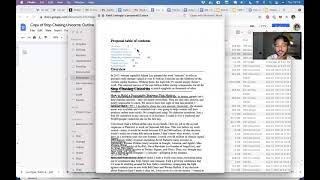
Awesome. So yeah, welcome everybody to this session where I'm going to walk through the book, basically this book that I wrote from February of 2019 up until it comes out October 26th, 2021. So around 18— no, 18 months? No, 2 and a half years. 30 months of work, that seems— yeah, 30 months of work to write a 52,000-word book. And it's a lot, it's a lot of work. And I had trouble figuring this kind of process out myself. There's not a ton of information out there. Most of it is very kind of marketing heavy, kind of meant to promote the book more than teach people how to write a book themselves. Um, and so I thought it'd be fun to kind of do this live and, and see how it goes. Um, so I'm going to share my screen. Which everyone should see now. And let me just make sure that I have the Q&A and the chat open. Feel free to use it. Feel free to chime in with questions or comments or what have you. This is pretty unstructured, though I do have kind of like a roadmap to make sure I kind of COVID cover kind of all the boxes. So let's get started. And Julia, feel free to interrupt if you have— I'll intro you soon, but feel free to interrupt if I kind of miss something really important, which I sometimes do. Anyway, so yeah, let's get started. All the way to the left, the kind of story begins with this tweet that I had, I guess now 10 years ago. You know, just had an idea for my first billion-dollar company and tomorrow I start building it. I'm referring to Gumroad with this tweet. I had the idea for Gumroad Friday night, spent a weekend building it, and then launched it Monday morning. And I wrote about this story 8 years later. It was not as simple as building a billion-dollar company, it turns out. And so I wrote this piece that resonated pretty, pretty deeply with, with quite a lot of people. It doesn't show how many people replied, but there's quite a lot of replies. It kind of keeps going forever. Uh, I think it's like 600, 700 or something like that. Um, and you could see the, you know, whatever, um, a lot of, uh, a lot of, uh, awareness. Um, and I think it was like the most clapped article in the month or what have you. It was also, by the way, the same day, this is the same day that, uh, it was not even the number one article. It was, it was number one for the month. It was not number one for the day. Because this was the same day that Jeff Bezos published his first and only, I believe, Medium article, which was, uh, thank you, Mr. Pecker, or whatever, when someone was trying to frame him or, you know, kind of leak his, uh, his, uh, texts or whatever, um, which I guess never happened. But, uh, anyways, it was an interesting day. Um, number 2 for the day, but number 1 for the month. And the book really started with Mary. Uh, so Mary Sun, who's an editor at Penguin, She read the article, I guess the article came out February 7th. And so she emailed me February 11th saying, hey, I like this thing that you wrote. You kind of mentioned, and I kind of teased in the post itself, I kind of teased this to people where if you, this loads. I mentioned that I write, you can kind of tell that I write given that I wrote this article, but I kind of wanted to foreshadow to people that I was writing. Oh, don't tell me I can't even read this. Oh, fuck that. That's annoying. Fuck you, Medium. You told me you wouldn't do that anymore. Anyway, let's— yeah, here you go. If I had the willpower, work on a side project, a fantasy novel. And she wrote this great email, which even references that. Like, I know you might still be working on that fantasy novel. I am still— actually gave up on that. I wrote another science fiction novel that also was was not good. Turns out writing nonfiction is a lot easier than writing fiction. But anyway, had a call with her and that's sort of the next step. You kind of get an editor to be interested. That's sort of a big kind of thing that you need. It's kind of like your first check if you're raising money, it's kind of your anchor LP if you're raising a fund. And so once I had that, the next step is to get an agent. There's sort of 3, in every kind of book, there's at least 3 sort of parties. There's the publisher, then there's the author, and then in kind of in the middle almost, there's an agent. So basically the agent is kind of like your hybrid lawyer/friend/I don't know what else. Julie, if you have anything to add to that, but in the music business, you have agents and managers and things like that. So they kind of represent you. It's their job to kind of represent you And actually, all flow of funds kind of go from Penguin to the agent, Lisa at Writers House in my case. And then I kind of get paid, they kind of pay me. So it's kind of nice as an author, sort of in terms of the complexity, because you don't have to think about a lot of stuff. You kind of just get a check. There are a lot of downsides to it, obviously. But that is kind of the way that it goes. And then, you know, so Mary introduced me to— to Lisa and I met up with Lisa and she helped me kind of come up with, basically refine the idea. At that point, it's kind of like, I have an idea for a book. You can kind of tell it's going to be related to sort of how do you build a business. It's probably not going to be like a book on how do you raise venture capital, et cetera. And so Lisa helped me really pare down what that idea should actually look like. And I started sort of putting together this proposal. And so the proposal was kind of the next step. I had no real idea what I was doing, because I'd never actually seen a proposal, I believe. So I basically just was like guessing, but I kind of wrote, you know, kind of wrote just about myself and why I might be an interesting person and kind of what, you know, what questions I may want to answer, really just kind of like spitballing with people.. And then kind of title ideas. So you can see all the title ideas that I had. Alberta, if you have a question, just ask in the, in the chat or in the Q&A. Actually in the, in the Q&A would be better cuz I can see all those really easily. The chat might scroll, but I had all these ideas. I don't think we actually went with any of them. Yeah, not that I know of. I think my favorite was probably Leaving Startup Land, which was kind of the one that I was thinking about going, going with. It's kind of like the Leaving Neverland. A riff on that. But honestly, kind of sucked. Like this, this, this whole kind of thing kind of sucked. Like it was very— there are a couple of problems with it. It's like very vague, very abstract. It was kind of very anti as well. Like that, that kind of turned me off over time. But, but anyway, yeah, I kind of got stuck here. I wasn't really able to make any, any progress. And then kind of coincidentally, I was at this conference. And I was kind of probably 50/50 or a little bit less, I think I said in the, in the last email about whether I wanted to write a book at all. And I tweeted, hey, I might write a book. What do people want to learn? And I kind of got stuck at this proposal phase, which I think is really kind of like the hardest part about writing a book for me so far. And yeah, coincidentally, I was at this conference. I spoke at MicroConf in Vegas, basically kind of a talk version of that essay. And this guy, Josh Kaufman, was there who wrote a book called The 24-Hour MBA, I believe. And someone we had kind of mutuals in common, and he kind of— I told him, hey, I might be kind of— I'm thinking through writing this book. I don't really know like what to do. Like, I know what a book looks like, you know, like I don't know exactly how to get there. And you can kind of see, I put together a proposal, talked to a few agents about it, revised it. I'm still on— please, Uh, and oh yeah, so Josh Kaufman was like, you gotta work with David Moldover. David is amazing. He wrote the proposal, I believe, for Atomic Habits. Um, and so like, you should, you should work with him and he'll kind of help you really think through kind of tactically, like, you know, putting together this proposal. So I started talking to, to David and we put together, let's see if I can find it. I have a lot of tabs, but we put together A proposal, which is not any of these, which probably means it is going to be, let's see. Okay. Yeah. So this is the one that we sent to Lisa. Let me open it in Word. And she gave us a bunch of great feedback on it, including the point that it was not very good.
At this point, at this point, how much time has passed between the Medium article and this proposal?
This is probably 6 months is my guess. So February 2019 was the article, and then I had conversations with— I met Lisa in person, I believe, in late July, early August when I was in New York. And then I think we signed the book deal December 31st or December 2019. So somewhere in between. Um, but closer to the, closer to the end. And so we changed the title, Leaving Neverland or Leaving Startup Land was like my title out of like 30 or 40. Uh, and then we kind of had a couple calls and he, he took my kind of outline and really, uh, improved it a lot. Uh, like pretty essential, I think, to the, to the process. Um, and he came up with this title, Stop Chasing Unicorns, which I thought was 10,000 times better than any of the other ideas I had. We ended up not going with it, which I'll get into. But basically, let me walk through the proposal and you'll see Lisa's comments in line. She had a bunch of really great thoughts. But this is what a proposal is, I think, for a book, at least in my case. But you effectively have an overview summary. This is like your startup memo, your pitch deck, et cetera. You do— this is like Product is the first overview. Market is the second overview, sort of, you know, competitive analysis. This is kind of, I guess, pretty expected in the industry. So it was kind of a template. But, you know, we kind of went through the different comp titles. You know, this is like Uber for cars or—
Will you just sort of read off the competitive titles?
Yeah, totally. Yeah. So the first one, It Doesn't Have to Be Crazy at Work by Jason Fried and David Heinemar Hansson. We also talk about one, you know, why we're similar, but also to why we're different, right? Because if the book already exists, like why, why write another one? The Hard Thing About Hard Things, amazing book by Ben Horowitz. Side Hustle by Chris Guilbeault. Bad Blood by John Carreyrou, great book also. And then, yeah, you know, my kind of about section, pretty simple. And then the, and the marketing plan, which is, you know, honestly kind of basic. Like everyone has like roughly the same thing, which is I have a bunch of followers and I have email newsletter subscribers and I can go on some podcasts or something like that and I can speak at some conferences. It's basically the same thing. I don't think anyone actually knows how to write a successful book, which is, you know, besides just being like a famous person or something like that, it's sort of pretty stochastic and difficult. So anyway, that was kind of the proposal, which I think was kind of the the, uh, one of the, one of the really large steps that, and so the proposal led to the book deal. Let me show you the contract, uh, for the book deal. Um, and Vinay says, uh, I had a chance to read your first chapter and you say all businesses should be profitable from day one. I don't say all businesses, to be clear. I say minimalist, uh, businesses. Um, but yes, I think according to kind of the framework in the book, being profitable from day one is pretty important. So this is the proposal. You can kind of see that it's between me and Portfolio, which is an imprint of Penguin, which is kind of a subsidiary of Penguin Random House, which I believe also bought Crown. So who knows what their name is. But you can kind of see that the sort of agreement is being handled by Writers House, which is where Lisa Lisa comes from— and Lisa, by the way, is like a phenomenal agent. She reps a bunch of names you can Google, but I think Atomic Habits actually might be Lisa and Jason Fried and DHH back in the day as well. And maybe Seth Godin, I don't know. But anyway, like does a lot of this kind of stuff. So that was great. And then this is the book deal. So, you know, pretty simple. Like basically I have to write a book. It has to be approximately 60,000 words. It ended up being 52,000 words. So you're kind of not held to this. Perfectly. Obviously you end up writing a terrible book. And then the book deal itself. So it's $115,000, which maybe seems like a lot of money or not, who knows, but this is over, as I mentioned, 2.5 years. And actually the last payment in theory is actually 12 months after the initial publication. So this would be 2022, October 2022. So it's like 3 years. So this is like $40,000 a year, right? Which isn't— I guess there's a bonus if I sell a ton of books or something like that. I honestly haven't even done the math, so I don't even know how many books I have to sell to make that happen. But yeah, this is kind of— it's a decent amount, I think, for a first book. Obviously I have a large audience and I don't really need the money. But yeah, if you kind of think about it through 3 years of work, it's not really possible to make a living, which is kind of insane that you have this industry in which like 99.9% of the creators in the industry, the writers, can't even make a living doing it. It's kind of crazy. But anyway, that's how it works. I got $40,000 immediately, which I effectively spent. I honestly have almost spent all of this because it turns out writing a book is expensive, like getting help with the proposal and Julie, who who helped edit it. I guess the ghostwriting would be the official term for it, I guess, in the industry, but she's not really a ghostwriter. One, she's not a ghost, 'cause I'm saying her name, but it was very, very collaborative. And especially on the kind of like the sort of, I would say last third of the book, having her help flesh out the examples and just help with everything was pretty amazing. But yeah, not free. And all the illustrations as well in the book kind of come out, the website, like everything kind of is paid for by the author, right? So this is, My goal actually was to say, basically, I'm going to redeploy all of this. If I make any money, it will be because I sell a lot of books, not because of the advance itself. So anyway, that's kind of how I thought about it. And then yeah, the book, I basically had a year. So I think I signed this something like December 31st, 2019, or something crazily close to the end of the decade or what have you. And I had a year. I had a year to write, to sort of the book. And this is technically, I believe, the first draft. So I think the second, sort of the final draft was owed. It ended up shifting a little bit, but like end of February 2021. So I had kind of 2 or 3 months after the first draft, feedback kind of got in, but that's worrying to me because I spend sort of like, I do tons and tons of drafts for everything that I write. So by the time I think I sent this over, it was probably the third draft and we still had to do like a ton of work and we did the whole course and all this stuff. But that's it. I mean, I'm happy to send this to anyone who who wants to see it, just DM me on Twitter. But that's sort of the bulk of, I think, what's interesting about the offer. Oh, and then, of course, it's effectively, if anyone wants to buy the book, it's kind of Penguin's. I'm writing the book. I have copyright on the words. But in terms of selling the book in this way, Penguin is kind of responsible for that as the publisher. So that's that. Julie, anything to add about— before I get into more drafts, because I have a lot of drafts.
I think that most people get into the proposal without knowing what they're doing, so you're not alone in that. It's a best guess.
Yeah, it's kind of funny, and you know, like, the good news in my case is that like Penguin wanted me to write a book, right? That's where most aspiring authors get stuck. It's kind of the same thing I tell startup founders who are trying to raise money. They're like, "Oh, I'm trying to raise money." And I'm like, "Has— who's offered to give you money?" Like, don't raise money until someone has offered to give you money, which is not that hard in this environment. Like if you go build stuff and you write about it in public, like you will get people asking to give you money. Like I go on Twitter all the time and just ask people if I can invest in their startups, like almost daily, you know? And it's hard because it takes work and getting to this point where I wrote an article that a million people ended up reading wasn't easy. It took 8 years, but it is kind of essential because ultimately a lot of people want to write books and only so many books can get published. So that's kind of what I would recommend for folks. So yeah, so anyway, we took that proposal. It was kind of thumbs upped. And turned it into an outline. And basically the outline was me like just vomiting words. You know, I came up with this, I don't know, hook thesis segue concept or something. I've never, you know, it's kind of scary because I've written essays before, right? Like maximum 3,000 words. A book is like 52,000 words. Every single chapter has to kind of work with everything else. It's kind of a one single piece. So I knew I could kind of write a single chapter., but I didn't really know how this was gonna scale. And that was one of the things Julie, I think, really helped me think through. So anyway, I just kind of wrote, you know, went through this thing where like, you know, the first chapter was like unicorns suck. The second chapter was like, there's this better way that's kind of in the middle of like the Tim Ferriss model and the VC model, which we ended up calling The Minimalist Entrepreneur. Um, but you'll notice kind of in the, in the final draft, which I'll go through, like the, the, the TOC, uh, the table of contents changed a bit. And I even had a, like that initial proposal that I first sent to Lisa was even worse. It was separated into two sections. The first section was— it was something like, a billion dollars isn't cool, a reference to the Social Network line. And half the book— there's kind of this trend that happened, which was like, in the beginning, the first, very first thing, half the book was about what not to do, kind of like the essay. And then the second half of the book was what— well, what should you do? And then in this draft, you can kind of see the first chapter is dedicated to that, and then the rest of the book is dedicated to what you should do. And we changed it even more so that in the final, I don't wanna show it to you now actually, cuz I think it makes sense to, but in the final one, you'll see that it's almost there. Let me just shift this around, but you can see that sort of the first chapter, you know, is now called the Minimalist Entrepreneur. It's like what you should do. And that includes like a kind of a section on sort of the unicorn model and why it may not exactly fit this way of building businesses. And venture and all these sorts of things. But then there, you know, it kind of gets closer, like Start With Community used to be, you know, the third way, which was this. So really we didn't even have a chapter called Start With Community. We kind of just started with building stuff. This is kind of a, the right tool for the job was like sort of picking, even now I'm like having a hard time even telling you what this stuff, like what this would be about. Right tool for the job. What is it about? I don't even know. Story, segue, thesis. Anyways, it doesn't honestly, it doesn't matter. What matters is that I wrote this thing. Like I literally, that was my goal here. I think I did it in like a week or two where I was just like, I'm just gonna wake up and like vomit 1,000 words a day and let's see how long, you know, like 2 blog posts worth, you know, kind of a proposal. But my goal was just to have something, you know, this is my entire conclusion. Like, you know, I definitely realized like, wow, this is why so many business books are full of fluff for me. Like, I don't even know what to say. Like I made my point. What else is there? You know? But anyway, yeah, around 6,000, 7,000 words. And then this, let's see if this is any longer. This might be this. Yeah. So this I think was one I got a bunch of feedback on and then I started really kind of fleshing this out. I really turned it, this is kind of like, I would say kind of like the first draft where it's, you know, it's still not there yet, obviously. Like I'm at trying to hit 60,000 words, but 20,000, like, You know, with examples and, and everything like that, it starts to get like much closer. You can see that I kind of changed the title now to community first, which is kind of getting closer to start with community. So it's, you know, it's getting closer. Make something they want is now build as little as possible. Sell to your first 100 customers, I believe is the only one. Yeah. The only one that looks like it stays the same in terms of almost identical. But yeah, now the book I think is great. But real quickly, this is another chapter. So this is the one I built, or this is another draft. This is the one I think Julie started helping out with. So this should be, yep. This is basically like the book. This is like the book that the first draft of like the 60,000 word thing. But you can still see like, I mean, the chapters are different. Like they're still, you know, we, we did get rid of this unicorn sucking thing. So it kind of structurally it's there. But there's still like a ton of work to be done. Like if you go through and read this, and by the way, if anyone wants to read like a super old draft for some reason, let me compare and contrast what it kind of looks like now. So you'll see the ideas are similar, right? So in the sort of, let's call this the second draft. I started my career chasing unicorns first. I joined Pinterest as employee number 2, then less than a year later, blah, blah, blah, blah, blah. Right? So that's pretty similar. I started my career chasing unicorns. I joined Pinterest as employee number 2, but in 2011, I left before my stock vested to build my own billion-dollar company. And with the tweet insert, et cetera. So a lot of, I mean, there's tons and tons of differences. It isn't the same at all, but I can kind of send, you can kind of, if you want, just DM me, I'll send you both and you can kind of compare and contrast, but just a lot, just got a lot cleaner. One of the really big moments that made the book a lot better— I also got rid of the dedication because it wasn't minimal enough— but was doing a course. And so we ended up doing this course that looks— we did it super ad hoc. We basically just tweeted and emailed everybody saying, hey, I wrote a book, I want to do a course. The reason I wanted to do a course was because I was listening to a podcast. I think it was the Tim Ferriss podcast. Show with Yuval Harari, who wrote Sapiens. And I didn't realize at the time, but apparently Sapiens was a class, a college class that was turned into a book, very similar to Zero to One, which was like a set of notes that I believe Blake Masters took at one of Peter Thiel's Stanford lecture series and then turned it into a book. And I thought that was really great because you basically just get a ton of feedback, big premise for the book is that, you know, everything good, it starts with the community. That's kind of the point of the second chapter. You need community, you need feedback, you need help, you need support, you need accountability, all these sorts of things. And I needed that too for this book. And so I, we did this course, Julie, who helped me, you know, write the book also kind of volunteered or I convinced her, or I'm not sure exactly how it happened, but we decided to do this together. But we taught this course and this is kind of how it looked like pretty, you know, I ended up using the Gumroad colors, like really simple, really minimal. And kind of went through, you know, each thing and, and, you know, each one was basically like an hour, 15 minutes. We did, you know, every chapter was a class and it was amazing. It made the book so much better because we did things like this where, you know, I basically, as part of the class, you know, there was the slides and everything. But I would send out the chapter, every single chapter, kind of one by one, almost like a chapter club, which I'll do pretty shortly for the book for everybody. I'll do a preorder thing for folks who preorder the book. I'll send out an email about that probably next week. If you preorder at minimalistentrepreneur.com/preorder. I'll also do one after the book comes out, because I believe chapter clubs are great for accountability and actually reading the book and implementing the points. So yeah, the great thing is like, look at all these comments. Like every single one of these comments is like, the book got better. Right. And so imagine if you have this times effectively times 8 or 9 or 10, if you include the introduction and conclusion, like a ton of feedback, like hundreds and hundreds and hundreds of comments that took the sort of second draft and made it a lot, a lot better and got pretty close, I think, to the final. And then we also Did another cohort where we took the learnings from all of that and kind of reincorporated it back. So there's kind of this like tug of war almost, right? Where you kind of like make a bunch of changes over here that makes you think better about the, this thing over here. Then you make changes over here and that, you know, improves like the sort of primary product. So pretty just, you know, and so you can kind of see now we've kind of decided on this brand and it looks a lot cleaner and there's a lot more messaging in it that I think is more aligned and more specific. I think one of the really big things that I think was really important for me to learn is people want specificity, people want examples, people want to be able to see how you do something, not just why. They want to see how you build a business, not just why you would build a business this way. And so trying to get as specific as possible was a pretty important part of this kind of process for me.
I just want to jump in and say that for anyone who's listening and who's thought about writing a book, this process is completely atypical. And the— most of the time, the manuscript is pretty closely guarded and only a few people see it up until the end. So the idea that hundreds of people saw the book and gave meaningful feedback on it before it was— the final version was turned in. Uh, the process that Sahil is describing, he skipped over it in about 20 seconds, but there were hundreds of comments that we thought about, integrated. Some of them were related to grammar, some were involved rethinking an entire chapter, so that when the first version— when the first cohort of the class ended on February— at the last week of February, we had one week to integrate what was probably 1,000 comments. And at the same time, one thing that you skipped over, uh, we actually did two drafts in that time because we integrated the comments. And then Sahil Lavingia, for those of you who may have caught this, uh, read the entire book on Clubhouse, which I think, uh, someone— let's see, Michael was talking about, uh, and we will get to this, where should we publish our writing today. Is a really interesting question. But the two pieces of advice I think that have really come out of this process that I would give to anyone writing essays or books or anything at all are to show it to as many people as possible and to read your work aloud.
Yeah. Yeah, I read the whole book aloud and I ended up recording the audiobook myself. That's a nice part of the contract. I think I got $5,000 for recording my own audiobook. Took 2 days. It took 12 hours over 2 days. That was edited down. I think it'll end up being around 5 or 6 hours. So a lot. Yeah. Imagine sitting in front of your own manuscript for 6 hours and just reading your own book. It's pretty weird, but doing it on Clubhouse, oh man, I'm so glad because it would've been— during Clubhouse, I was making changes and edits and it was really fun. And it gives me the confidence that I know this is a good book. I know that this book solves the problem that I meant to solve. Will it do well or not? Who knows? Honestly, I don't care. I wrote the book and I'm— I am— I did the thing that I wanted to do. But yeah, and then the other thing I wanted to show everybody was all the covers, cuz that's kind of a key part of this kind of design, you know? So we went through all these covers. We first started kind of with Penguin's kind of in-house team. And these are some of the covers that they presented. And this was the first set or close to the first set. And this was another set. And I don't think they're bad covers, but they just didn't feel like what I wanted. This felt more like a business book, like a Harvard Business book. And if you read my writing, I think one of the reasons people like it is because it's not very businessy. I write like I talk, or at least I try to do that. And I talk pretty colloquially. And it wasn't irreverent enough. That's kind of like the word that we hooked on, which is like, how do we make this book? How do we imply that without losing kind of the simplicity of this big idea, which is about leverage, permissionless leverage, and doing more with less and things like this? How do we make it more playful? And so we worked with some more ideas. We got closer. I think this is probably I would have been happy with. The idea being that there's all this chaos and there's all these things people tell you to do and not to do, and this is kind of like the minimal Zen kind of approach. But it was too similar to— I think there's another book about meditation or something like that that had this similar vibe. And yeah, just tons and tons of different covers, and this is not even all of them. And actually, Amy did this awesome GIF. With all the, so many different ideas. So after we worked with Penguin, I was like, hey, can I work with my own person? She designed Essentialism, which is a successful book, has done this before. And so we kind of went through and did a bunch of different iterations. This took like 3 months, like from first cover proposals to the final, I think at least 3 months. And let me think about what I like about the book and why we went with this cover. One, I think it is irreverent. It solves that problem. Like it has the same big idea, which is leverage, doing more with less. You know, sort of the Atlas kind of shrugged and, but, but it's a lot more playful. It's, there's no, it's, this is all hand-drawn, which I really like because, you know, we, we, we had this sketch actually, and I was, I was like, can we just ship the sketch? Like, is that okay? Like, are we allowed to do like, it was this sketch actually. And I loved it. It was pink. I think pink is interesting and weird. Most business books don't feature pink, but that was kind of important to me to imply that this was not just for the traditional entrepreneur, people who may identify as entrepreneurs. And yeah, and then we sort of fell in love with that and kind of just brought that into the whole book. And I really like this kind of lowercase. It's kind of playful. I really, the goal with the book is to make entrepreneurship accessible to everybody. Like, that's like the simple, like tech-enabled specifically. But as someone asked, does TME focus more on tech or tech-enabled businesses or entrepreneurs starting and scaling traditional businesses? Honestly, I don't think there are traditional businesses anymore being started. Like every business is tech or tech-powered.. And so this book is about how do you build a software business or a software-powered business from scratch and get it to a sustainable place where you can do what you want with it. So yeah, anyway, I really like this cover. I also, there's kind of an Easter egg in this, which is if you, yeah, there's the obvious concept, which is like, yeah, this is the Minimalist Entrepreneur and this is all the community or all the impact that they're having on the world. Pretty cool. And it's fun because this kind of wraps around the back as well. But the other kind of concept, and this is actually something that happened as we were writing the book. So I'd like just to go over the timeline again, like signed the book deal, Stop Chasing Unicorns, et cetera, in December 2019, which if you remember, COVID started hitting January of 2021. And so kind of My goal was to write the book in 2020. My goal was not for Gumroad to double in size and all these other crazy things to happen and to have a rolling fund. All these things came after I decided to commit to writing this book, which I had to rewrite the book because of that. I was like, "Oh yeah, by the way, I'm going to be C2 here is how I justify it. Oh yeah, Gumroad's growing really fast now. That's not exactly what my goal was here." But this is about COVID This is about how something like COVID has sort of fundamentally shifted the Earth and humanity and the way that businesses will get built going forward. And one of the cool things about 2020 for me was that I didn't have to make a single change. While everyone else was changing, obviously there was the office thing, there was the work from home, asynchronous meetings all of a sudden, how do you do this? That's how I'd been running Gumroad since 2015, 2016. I wrote about this as well online in another essay called No Meetings, No Deadlines, No Full-Time Employees. And so that I thought was really cool. Like, oh wow, maybe this is the perfect time for a book like this because the world is really kind of shifting in this pretty profound way. And I have kind of a lot of experience running a business in the way that I think the new world will want businesses to. So there's that. Then there's the copy edit. So we send this to Penguin and then they come back with a bunch of copy edits. And I believe that this might be it. And so now it's in Word. I wrote the whole book, as you know, in Google Docs. Works great, gets a little slow, but worked. And then had all these, for example, this was in as a kind of a computer font, and we decided to make it a tweet. But it's getting pretty, pretty close. And this is when I took this. This is kind of what I took and I read aloud on Clubhouse. Ended up having like 3,000 changes. So still a ton of work. And then it was basically final. We sent that to Penguin, and it was kind of done. And that's the book that I ended up reading aloud. And unfortunately, through the reading aloud process, noticed like 2 or 3 small errors. And which we'll fix, I guess, in the second printing or second edition or whatever. But yeah, that's basically everything. Anything that I missed, let me know. But yeah, we— oh yeah, then there's the design, right? So all of a sudden you have the text, but now it has to be formatted. Also, by the way, once you do this, it's like pain in the ass to make any changes because it's not visually there. It's not in Word or Google Docs where you can just update text. It's all laid out. But yeah, they basically, Penguin sent this back to us. We had a bunch of comments. So I think this is like the second version of this. But like Amy and Dylan, the folks who helped with the COVID and the brand identity and all these sorts of things went through. So for example, we changed this from building a manual valuable process, which is kind of our riff on MVP. Like how do you build nothing effectively? No code, et cetera. And now it says build as little as possible. So just like stuff like that. A lot of tweaking things like this list was like really janky. Let's see if it still is. This is kind of like one of the core. Yeah. So this is now like separated out cuz it just gets a little weird. And anyway, just went through and really kind of like all the images, like made sure they were all formatted properly. It was a lot. It's a ton of work, ton of work. And even the audiobook is like a ton of work because then you take that, you take 12 hours. And then you edit it down to 5 or 6, like imagine how many takes that you don't hear. And that's honestly where the value is. There was a question, and let me kind of answer all the questions now. And thanks for the pink and yellow. I really like it. We're thinking of trying to do a gold leaf special cover. We'll see if we can figure that out. It could be pretty fun. Maybe give it away or something. But let me go through the questions. So Jack asks, for those of us who haven't gotten the attention of publishers and wrote, bootstrapped, self-published our books, Regardless. Oh, and you did do that. Regardless, what tips do you have for the writing and marketing process? Um, go to where your people are, like the book. And if you want, just DM me on Twitter. I'll send you the— send you like a big chunk of the book, uh, up and up till— I think I'm allowed to send up until the end of chapter 2 now. Um, but this is, this is like a lot of the chapter. I mean, there's, um, and I'll just strategically— let me mention like one of the reasons I really am excited about the book is that it's really 8 essays, which is like, I believe there's sort of 8 or there's really 7 steps to building a business. The 8th is kind of like what next once you've succeeded, what else is there? But I like it because each one is very— my goal is that people who have successful businesses, but just want to learn about marketing the way that I market, can just pick up this book and just read Market by Being You or listen to it. And I like that angle that each chapter is about either starting with community in this case, which is kind of what I would recommend to you, which is like go to Reddit, go to Slack, go, I mean, to be honest, I'm doing this now. So just watch what I do over the coming 3 weeks, but just kind of do podcasts, courses, do webinars like this, just teach people. And that's a lot of what Start with Community kind of gets into. But yeah, starting Building, selling, marketing, growing. This is about hiring and culture, and that's it. If you do those things, you've now built a successful, profitable business. And that's a lot of what I try to get across with the book is that if you break it down into small enough steps, it's not that crazy. Building a business is not that hard. And next weekend, I'll be announcing this soon, I will be building a business in public. And streaming it live starting Friday night, just like I built Gumroad. I'll share that on Twitter later today. Would appreciate your engagement on it. And okay, back to this. But yeah, it's honestly super hard. Jack and Warren asks, you probably answered this, but why distribute through Penguin instead of Gumroad? So it is on Gumroad. You can buy the physical sort of signed hardcovers and preorder There's sort of pre-order tiers there. The truth is I wouldn't have written the book through Gumroad. It just wouldn't have happened because I'm busy, I have projects. I kind of need people to tell me to do something and for me to do it. And this is the same thing with Gumroad. The first investor told me that it should be a company. With my rolling fund, Naval told me I should start a fund, et cetera. I just kind of live my life. I write a lot. I paint, I draw, I build stuff, and then I kind of just do that until someone says, hey, by the way, have you thought about tweeting a lot? I'm like, oh yeah, I should probably start doing that. That would be good. So yeah, Penguin, it's a combination of that. And there's sort of two core functions, I think, of an editor sort of distributor like Penguin, a publisher. One is the editing and one is the distributing marketing piece. Someone asked me recently, "Hey, how helpful has Penguin been on the marketing side? Is that better, more or less than you expected?" The honest answer is that Penguin has done absolutely zero for the marketing efforts, and that is exactly what I expected. So they did a perfect job. The value in Penguin, similarly to the value of Y Combinator, is that they give you a little bit of money, and they give you a framework and sort of a template in which you can sort of ship your product. And they give you, most importantly, oh, and they help you make it good, right? They give you feedback on it. And they certainly did. The audiobook is going to be awesome. I had literally a director helping me voice it. It's going to be awesome. And so the quality of the product, I think, is just going to be a lot better than anything I would've personally been able to do, though now I know how to do it. So maybe my next book I'll do myself and be able to have a similar level of quality if I decide to write another book. But then the big thing honestly is the stamp of approval. The truth is, how many authors do you know, successful authors do you know that sell their books on Gumroad? The answer is very few. And so I actually think the answer should be, why would you sell your book on Gumroad? That's weird and different. Just because I'm the CEO of the company doesn't mean I should be using my product all the time. That I think is a logical fallacy that you might be running into, sunk cost fallacy or something like that. But yeah, the stamp of approval is where it's at, because just like raising money from a VC or any of these sorts of things, there's just so much information out there. There's an infinite amount basically. So you have to have some hook, some interesting thing about you that may be, hey, I just raised money from Y Combinator, or it may be, Penguin chose me as one of the 10 or 100 or 1,000 books that they're publishing this year, and I think that can mean something, but they will not market your book for you. That's your problem. You can use their name, just like you can say, "Hey, Adriessen Ledaert A." But a lot of VCs and publishers, I think, have this in common where they promise all sorts of stuff, but truthfully, I think the stamp of approval and the money is where the value is is mostly that. And the quality, in the Penguin case, the editing, et cetera. But these are all things that you can outsource, and I sort of will going forward now that I know how to do all these sorts of things. The other nice thing is just like, it gives you the stamp of approval for life. It's not just for the book. Once you've raised money from a VC, or once you've done this or that or whatever, you kind of have elevated, you've kind of crossed that chasm, right? And you're now on the other side and you have more freedom. So that's kind of why, hopefully I answered your question. If I didn't just answer, ask another one. Michael, where should we publish? I would say, I mean, what I do is I have a blog on my website and I have an email newsletter powered by Gumroad. I would probably use Substack if I weren't the Gumroad CEO, to be honest, or Mailchimp or something like that. Uh, and Twitter is what I do, but it does, it doesn't really matter. Um, and I get into this in the market by being Uchaptic, but most importantly, email list, like have an email list somewhere. And I don't use it super frequently, but, uh, but I would kind of recommend, um, and honestly I would do nothing different. Like what I did, uh, people always ask me like, what would you do differently? Which is always weird to ask someone who you consider successful because it's like asking a failure, like what would you do the same? Like, I would do all the, like, all the things I did worked. That's why you're asking me. So I would do nothing differently. My advice today is the same advice that I followed 10 years ago, which was like, find a way to get into a community, start with community, build stuff, sell that stuff, market stuff, write about it. And that's, this is the, this is the, I mean, no coincidence. This is like how I, how I do, do my thing. So. So that is the, the advice in 52,000 words, uh, will be all in here. Uh, Sean asks, will you be doing a book tour to promote your book and meet your readers, fans? Uh, not officially. Um, apparently book tours don't work for nonfiction. At least that's what Penguin told me. Um, there's also COVID and all sorts of weird stuff. So I will be doing— I will be at Founders Summit, which is a conference thrown by the Calm Company Fund, Tyler Tringas and Nabja and everybody over there, uh, with like 100, 200 people. So I'm gonna be— that's— I'll be there, and it's in Mexico City, and we'll be doing like some sort of thing. Um, if you ever see me in person, I'll probably— what I'm thinking about doing is just picking a Saturday and a Sunday and just saying, hey, I'll be in Dolores Park at this geo for the next— for today, you know, Saturday, the whole day. Uh, bring stuff, let's just hang out. And obviously if you bring a book, I'll sign the book. And I'll probably just pick a week, you know, a couple weeks after the book comes out to do that. So there won't be like a bookstore or anything like that, like signing or reading. I don't— those, all those things are weird to me. I'll just pick a spot and ask people to show up with books that they've already purchased, however they've purchased them, and then I'll just sign them and hang out. And we'll hang out for a while, or I'll do it at a bar or something like that. Amy, who is the person who designed the COVID someone asked, how did you find them? I met them in Utah. I moved to Utah to learn science fiction and fantasy writing with Brandon Sanderson, and just through the tech community met her. Amy had designed the Women's March logo, so I was familiar with her work. And then, yeah, just ended up working with her for this, and it's been absolutely amazing. If anyone wants more information or wants to intro, her firm is called Big Monocle, bigmonocle.com. What is your hope for the impact of the book and how has that changed between the time you started this process and now? Honestly, what did I want? I mean, what I'm— honestly, I don't think it's changed much, which is I wanted to write a book. I want that book to be really high quality, close to the top of what I I am currently capable of, which I did. So I'm done, honestly, like I'm done with everything. I have no more hopes, no more hopes. And honestly, it's similar to Gumroad. Like when I wrote Reflecting on My Failure to Build a Billion Dollar Company, that was like my goodbye. It was meant to be, at least. I literally wasn't writing code anymore. I was painting and writing science fiction. That was my day job. I wasn't even tweeting when I really wrote that article. And then kind of ironically was not a goodbye. It was kind of like, hey, by the way, I'm back. And so similarly in this case, like when I hit publish, like I'm done, like that's kind of my, that's why I hit publish. You know, it's kind of like I did the sort of mental work and I'm done and I want to hit publish so I can move on with my life. You know, it's kind of like food poisoning where you kind of have to just get it outta your system. Before you can stop thinking about it. That's kind of how I think about this stuff too. For someone who is very new to the mechanics of book writing and have no contacts or no links with editors, agents, is self-publishing easiest way to start? Yeah, definitely start with self-publishing. By the way, self-published everything until this book, right? And so yeah, highly recommend just self-publishing. Use Gumroad or just do it for free or use Substack or Twitter. It doesn't really matter. Most importantly, and I get into this in the book itself, the Start with Community chapter, it's about creating content consistently, learning a skill, teaching that skill. For example, if you go to my— I have this Twitter account. I also have an Instagram account. I just tweet about like, I'm learning to draw basically. This is like a drawing that I did recently, yesterday, 25 minutes, not too bad, with vine and willow charcoal. On Newsprint. Anyway, this is— it's the same thing, which is like, I just want to immerse myself in a community, which is not that hard. I just have to learn the skill and share it and get better in public. And this is uncomfortable, right? Like, it's hard to do this. I think this is the hardest part actually. But if you can get over yourself and do it, you know, you will be in a much better place. And one of the illustrations— or let me see if I can find that part in the book itself. To make my point. There's a great image in the Star Wars Community chapter. Oh yeah, which is this one. Which is most people who consume— let's say 100% of people use the internet. 90% of them just lurk. They just consume content. They just scroll Twitter. Or read Reddit or read the news. 9% contribute in some capacity. So they like tweets or they comment or they repin on Pinterest or what have you. And then only 1% of people actually create content, like create original content from scratch, like tweet, write Reddit posts, write blog posts, et cetera. And this is kind of, this 1-9-90 rule has kind of seems to persist in all these different communities in ways. What it means is if you can start creating content, Just look at the ratio. For every one person who's creating content, there's 90 or in theory 99 people who are just on the other side of that equation. And so you're starting out with a 90x multiple if you're willing to create and do this publicly. There's, by the way, hundreds of people who can, I mean, tens of thousands, I mean, tons of people who can do this way better than I can. Way better, like not even close, like masters of their craft. Uh, but in terms of how many people do this at this level and share it publicly on Instagram or Twitter, I, I know because I've tried to find them all so I can follow them so I can improve. My guess is like dozens, like not 100, maybe not even 50, you know, like, and this is like a, by the way, all it takes is willow charcoal, like charcoal, which is burnt wood. And paper and newsprint, which is effectively free. It's almost free. 100 sheets costs $5 or something. And this yellows immediately. And I'll throw away all these things, as one does. But yeah, it really is insanely crazy to me how this is a lot. Just be public and be willing to do that. I'll stop sharing my screen while I go through the— remaining questions. So hopefully that helped answer yours. Would you be interested in the internet platform that covers publishing, marketing, sales, and actually writing and illustrating? No. You know, one thing is I don't care about the industry at all. Like I just, like, I don't really care about being a VC. Like I care about the problem being solved and doing that, but I don't really care about the industry. Like I don't go to meetups and things like that that frequently. Unless I throw them myself. Like, I just like doing stuff. I'm kind of a solitary person. I don't read the news. Like, I try— I don't read any newsletters or like the only podcast I listen to now is the All In Pod. Like, I try not to consume anything that anyone else is consuming too much because I don't know, it just makes me— doesn't seem to help me do what I want to do, which is get better at drawing, get better at writing, and be a happy person and good husband and all these sorts of things. Um, Addie asks, having written your first published book, what would you do differently for your next book? Um, the context being process. Um, so idea, uh, sort of brain dump, outline, write, collaborate, rewrite. I mean, overall I would do the same thing. I would say I would probably do it, you know, my hands are tied a little bit because of working with Penguin, which I don't regret at all. Um, but I think next time, now that I've done this, like, I don't like doing the same thing twice. So like, I don't I think I'm just going to write another book called The Minimalist Investor or something like that. And if I do, it's going to be very different in certain ways. There's NFTs, obviously, so I'm thinking a lot about how do we get into that world. Almost definitely, I would write the book in public much more. When it's your first book, you want to keep it closer to your chest, even though I was pretty public within a closed set of people. Before the book came out. And now I think 3,000 people have read the first chapter. And so pretty confident that's not terrible. But with my second book, now that I have that confidence, I might be more open to doing it earlier and writing in public as well. Though I do think a lot of that stuff is overrated because ultimately people have an expectation of what a book is. And so when you break out from that too much, I think it's hard to really break out. So Jack asks, any thoughts on the value of running ad campaigns to generate book sales? I've actually heard they work really well. Yeah, I've heard they work really well. I have no plans to do it myself. I talk about this actually in the book that I'm not a huge fan of, to be honest, spending money at all, but certainly spending money on ads and I have heard Facebook specifically works really well. And I think for second, third, etc. books, like they'll give you a budget. In this case, I don't know what their budget is. I don't have a budget. So yeah, I have no plans to run ads or do anything like that. Honestly, like as I mentioned before, like I'm happy with like, I don't need to sell a single copy of the book. If everyone ends up pirating it, but a billion people read it, like that's highly preferred for me. I don't need to make any money from the book. I want people to read the book. I don't want people to buy the book. So yeah, that's kind of how I'm thinking about it. Actually, I don't even care if people read the book. I want people to apply the lessons in the book to building businesses. And how much will you earn from every book sold? That's a good question. So there's the advance, so the advance has to get paid back, which I assume is 5,000, 10,000 books worth of of books that I have to sell first. But then I think after that it's— Julie might want to clarify, but I think it's between like $1 and $3 or something like that per book. If you buy it from me, like if you go to minimalistentrepreneur.com/preorder and get it from me, then I make more because I'm also the retailer. So there's like the retailer who also makes money, right? Like if you buy from Amazon, Amazon's making most of the money. If you buy from me, I get to make 50%. Or maybe a little bit less, but around that, obviously I have to pay, I have to pay for everything like shipping and everything, but worldwide. So it's not cheap, but yeah. And yeah, if Dinesh asks, are you open to sharing the final proposal you created with David? Yeah. Just DM me on Twitter and I'll send you the proposal. And thanks for all the questions. Hopefully that was helpful. I will be uploading this onto YouTube soon. And yeah, stay tuned for that Weekend Project weekend, which is like, I'm going to announce shortly, but I'm going to be building a totally new minimalist business from scratch, following the playbook in the book publicly in front of everybody starting Friday night next week. And hopefully, hopefully I could fail, but hopefully launch, you know, launch the business Monday, Monday morning. So I see everybody. Bye.










