How to Turn Your Audience into Raving Fans - with David Scott
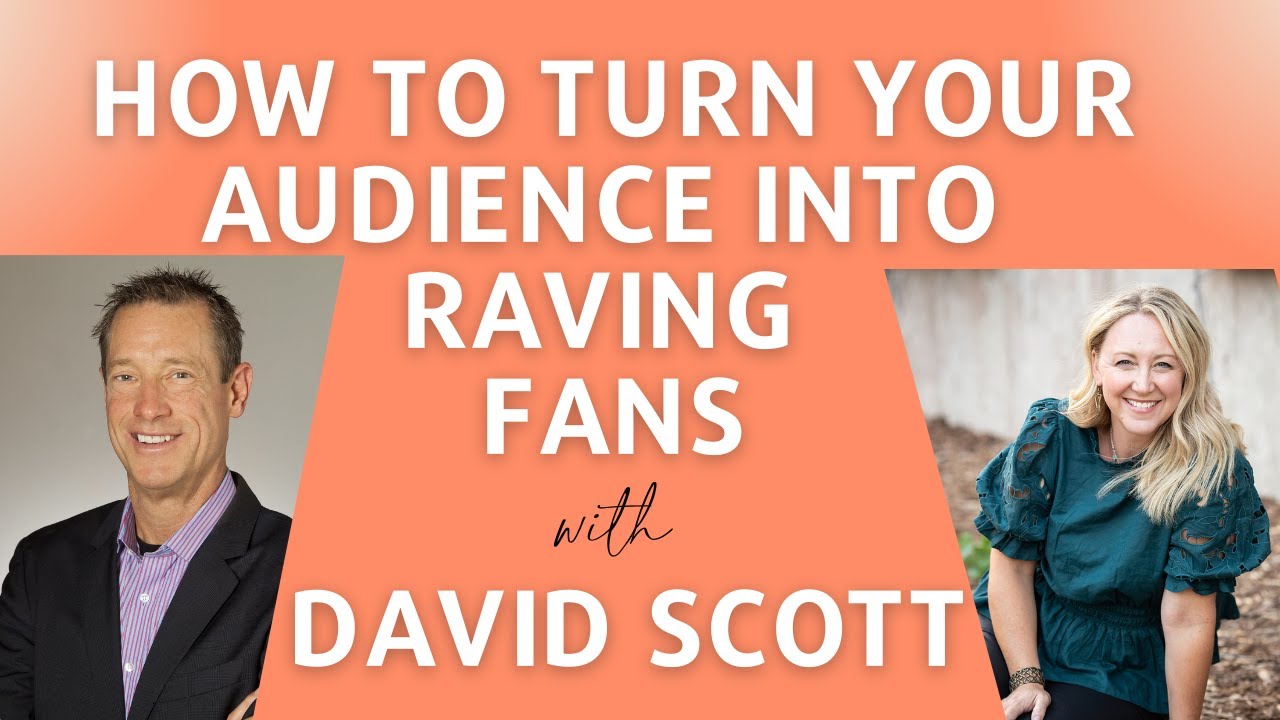
David Meerman Scott discusses his book Fanocracy with Sally Koering Zimney, explaining how speakers and organizations build emotional connections with audiences to turn them into raving fans through post-event engagement and tribe-building.
Chapters
Do you wanna build an audience of raving fans? Like people who are so jazzed to hear from you every single time you open your mouth? Of course we do. And on the show today, I'm bringing in author, stage speaker, marketer, David Meerman Scott to talk with us about how we can really take our audience from audience to raving fans. Hey everybody, my name is Sally Koering Zimney. I empower purpose-driven entrepreneurs and changemakers and coaches like you to leverage the power of speaking on behalf of your business so that you can grow your audience, grow your revenue, and grow your impact. On the show today, I have with me an interview that I did with David Meerman Scott. Now here's what's funny about this interview, you guys. I did it in January of 2020 and we were gonna share it in March of 2020. Remember what happened in March of 2020? Yeah, the world changed. And this conversation, a, a part of it is about David's absolutely amazing approach as a stage Speaker. And so part of me was like, I think we gotta save this till we're back out in front live with people. So I waited and I waited and I waited. So here we are. I think we're on the precipice and we're gonna start coming back out front. So there's part of this conversation that you're gonna hear from David about how he just wowed on some of the biggest stages in huge stadiums with 10,000+ people. I mean, this guy knows how to work a room and leverage the power of that speaking. Now, the entirety of this conversation exists over in Movers U, so it's just for my students, but I pulled out some of it for you here on the podcast. So you're gonna hear a little bit about his speaking, but really the core of this conversation is about David's book called Fanocracy. And about how we can take advantage of this connection that we get to have with people when we step out front and how to turn it from more than just like audience and speaker and turn it into fandom. How to create raving fans, I think is really important for us as we are scaling our business and growing our impact. So I'm really excited for you to hear from him on this. I've been sitting on this conversation for so long. Here he is, David Nirman Scott. So let's talk about your book.
Yeah, thank you.
And because that's what you've— you've been traveling the world recently talking about your book Fanocracy that you wrote with your daughter.
Yeah, my daughter Reiko. She's now 26 years old. I'm a massive fan of the Grateful Dead, a massive fan of live music. My daughter Reiko is huge fan of Harry Potter, read every book multiple times, seen every movie multiple times. So we were both massive geeks about the things that we love, you know, live music and Harry Potter. And our thesis in the book was that, that organizations of all kinds, or even thought leaders, can create fans just like entertainers, just like Harry Potter and the Grateful Dead. And we spent 5 years researching this idea. And the answer is absolutely positively yes. Anybody can develop fans. Any organization can develop fans. Any person can develop fans. And what it's about is a true human connection. One of the things that we really enjoy digging into is the idea of neuroscience around fandom, of how people, how and why people become fans is actually hardwired into our brains as humans because we have a deep-seated need to be a part of a tribe of people because within our own tribe we're safe. And when we're not within our own tribe, we feel vulnerable and we sense danger. So what that means is that any organization, if they're building a tribe of people, can develop strong emotional connections because that is how we humans are built. And it's, it's just a fascinating, fascinating topic. We found examples of all kinds of different organizations and people, nonprofits and government agencies and software companies.
So what does that look like when you think about us as speakers, and oftentimes you're building your brand and your audience around an idea, and yet you, the person, you are the source of connection. And, you know, the part that I'm leaning into and love so much is the part about the emotional connection.
Yeah.
Because when we're speaking, that's the great opportunity that we have, is to create an emotional experience experience. So these worlds colliding for you as a speaker and as an expert on creating your fan base from a marketing perspective. How do these come together for you?
So what's interesting to me about this is that this idea of human connection is very, very important. It's actually an essential element of the idea of developing fans. So here's what this means outside of the actual speaking itself. What it means is that you show up early to your event and you make sure you do a good job. That's a given that you'll do a good job on the stage. But then afterwards, you don't do what so many speakers do, especially the high-end professional speakers, is they finish their talk and they run to the airport. Because you're not having a personal human connection. You're not making those people a part of your tribe. Better yet, stick around. As long as you possibly can. At a minimum, what I'll do is I'll get off the stage and then hang by the stage for as long as I can, meeting people, saying hello, taking selfies, trading business cards, whatever it is. I stay around for the break, you know, the coffee break. I stay around for the cocktail party. I stay around for the dinner. If I can, I'll go to breakfast the next morning. And there are very few speakers who do that. You at least at the level that I'm at of my keynotes and so on. Most speakers who share the stages that I work will run away. They're running to the airport to go home or to the next engagement. So that's really important. Another thing that's really important is right when you get off the stage, immediately after you've had a chance to meet people, is to go into the social networks and reply to every single person who has taken the time to mention you in social media while you were speaking. You know, people who posted photographs of you, people who mentioned you, people who shared one of your thoughts or your ideas. And, you know, on Thursday night, I got off the stage at some— I don't remember exactly when it was, call it 9 o'clock. I was in the room until 10:30. It was an hour and a half of meeting people and taking selfies. An hour and a half. And then after I was done with that in my room, it was another hour to answer everybody on social media. 2.5 hours. It was longer than I was on the stage. I was on the stage for 2 hours. 2.5 hours. I tried to engage with every single person who engaged with me, either in person or on social networks. That takes a lot of time. That's not part of your job description, but it is a way that you can grow fans. Because you can develop a connection with every single person.
I don't think you can underestimate the power of that. And like you said, I think it's just a matter of time and us recognizing it as part of the job.
That's exactly right. And every one of those people are people who can support you for years or decades. They can buy, you know, every book you publish. They can recommend you to the conferences that they go to. I mean, and, and that's, that's what's allowed me to work 30 or 40 or 50 stages every single year for 13 years without ever having to pitch.
You've got tons of great strategies and tips and really specific things that people can be doing. Congratulations on the huge success of this book.
Thank you. Thanks, Sally. I really appreciate you having me on. To learn more about Fanocracy, we've got a cool website at www.fanocracy.com.
I hope you enjoyed that conversation with David Mearman Scott. All the links to his books are over in the show notes. And in fact, I want to point out that since David and I had this initial conversation, not only have we been dealing with a pandemic, but he wrote another book. And this book is so applicable to all of us. It is called Standout Virtual Events. I'll include notes to all of that over in the show notes. You can find it all at bemoove.com. All right, my friends, it's moved me. What is moving you? I can't wait to hear. See y'all next week.
More from Sally







Speaking My Story: The Talk That Changed Everything (Sally Z's Epilogue) | Speaking Story


The Walk-'n'-Talk and the Stumble-Through: Two Rehearsal Methods That Actually Work | Ch. 39