AI Instead of a Degree: How to Build a $1B Company
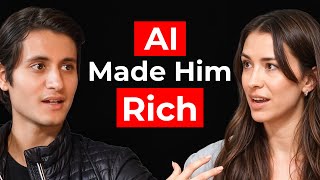
Samir Vasavada dropped out of high school to build Vise, an AI wealth-management platform now worth $1 billion. He taught himself finance through books and YouTube, got credibility from a Lightspeed fellowship, and uses AI to automate portfolio work that once required teams of advisors.
Chapters
You were the youngest person to become a billionaire at 20, right?
Realized we thought money was free and I could make 2 phone calls and raise tens of millions of dollars. And I was like, how am I going to get out of school? Like, the only way I can get out of school is if I make a lot of money.
Have you had any moments of regret? Like, oh, I should have just finished high school?
No. College has kind of started to lose its credibility. University system now teaches you what to think and not how to think.
Your product is helping financial managers manage capital with AI.
So when a client calls and says, hey, Trump just announced these tariffs, How is this gonna impact my portfolio? You can just ask Vise and Vise is going to tell them.
What's your north star now?
Functionally brings down the wealth access gap. Understand what your superpower is.
Samir is the youngest founder of a billion-dollar company. He founded it at the age of 16 and it got a billion-dollar valuation when he was 20. He grew up in a traditional Indian immigrant family in Cleveland. Like many immigrant families, they valued stability and had a classic vision for Samir's future. Finish school, go to college, get a secure job. But instead, he dropped out of high school at the age of 16 to start a company, Vise. Now it's a billion-dollar business, and he achieved all this without a college degree. How is that even possible? And how can we learn from Samir's journey? Let's dive deep into interview. But before we start, let me ask you this question. I want to understand you guys better. I want to understand your problems and what are you trying to achieve. Let me know in the comments down below where you're watching from and what is your biggest goal right now. What are you working on? What are you trying to achieve? And how I can help you with these podcasts. I'm looking forward to reading your comments, and I'm excited about building this entrepreneurial community here on Silicon Valley Girl. Samir, welcome to the podcast. Thank you so much for coming.
Thank you so much for having me.
How old are you now?
I'm 24.
24.
I'm getting old. My knees start to hurt.
Okay, I'm not going to comment on my age, but you became, uh, a billion-dollar founder at the age of 20, so you were the youngest person to become a billionaire at 20, right?
I wasn't a billionaire, but the, the billion dollar—
yeah, you can, you know, media. Yeah, got it. Can you talk, walk me through your childhood? Because your parents are immigrants from India, and I feel like immigrant upbringing really contributes to success of people. Uh, were— how were you growing up? Were like your parents pushing you towards traditional education? Was money an issue?
Yeah, so my parents came from India to the US, luckily when they're a little bit younger versus my co-founder's parents. They came, like, I call them, like, it's like they got here last year. They were like fresh off the boat. But they had a lot of kind of traditional Indian values. So going to school, doing a doctorate, becoming a doctor or an engineer. As much as it is stereotype, it is true. They really pushed me growing up to be a doctor. And I just didn't want to do that. I always loved building things. So very early on, you know, The first thing they ever got me was a Lego set. I started playing around with Legos and I'm like, I like to build things. So how can I express my need to build things? And I eventually discovered entrepreneurship, but that was such an uncharted path and territory for anyone in the Indian community that they kind of rejected it. And it's interesting because there was such this kind of aversion to risk. So the idea of, You know, spending money frivolously, taking risks, skipping college was a completely foreign concept to them. And for such a long time, they tried to push me in the direction of, you need to take the traditional path, you need to go down. But like, I rebelled on it from an extremely early age. Um, and for a while I was just kind of confused until I figured out the kind of entrepreneurial path. And I just thought from like kind of a first principles perspective, I'm like, okay, what would college help me with? What would the traditional path help me with if I want to start a big business and become really successful in that? Facet, and I couldn't really think of anything other than network. So I tried to understand if I can build a network on my own outside of going to university before you would even go to a university, and I could do that by cold emails, then I would eliminate any need to have to go to a university.
So when did you understand this, that you're not going to college?
I had started to say it at the end of like 7th grade, 7th, 8th grade. So I was like already kind of thinking about it, you know, 6th grade, but at the end of 7th, 8th grade, I kind of knew I wasn't going to, I wasn't going to do it. And I remember like the, the, the story was there was this, um, you know, honors society and like at the end of school, um, you know, they give all the kids awards for like who got first honors and second honors. And I remember I didn't get any of the awards cause I decided I was no longer going to spend my time and effort on school and my grades took a huge hit. And my parents were so depressed. They were like, you know, we had a dinner after the graduation ceremony and everyone had a pouty face. I'm like, why are you guys so upset? And they're like, you didn't get first and second honors. How are you going to get into a good college? And my answer was like, I don't really care. I'm not going to go to college. And it just started this huge fight. And, you know, I eventually kind of recovered from it. But it was, you know, a really kind of challenging thing to, you know, kind of change the conventional means.
From college dropout to CEO of a billion-dollar company at just 20 years old, Samir Vasavada's journey proves that with the right skills, everything is possible. But what if I told you that you could access those same career-changing skills completely free? If you're ready to build your own success story, check out SkillUp by Simplilearn, an online learning platform offering free courses with certificates in today's most in-demand skills. In partnership with industry experts and companies like Google, Microsoft, and AWS, SkillUp delivers courses designed to build strong foundational skills for real career growth. Whether you're a student, a high school dropout, developer, engineer, or a manager looking to level up, they've got something to boost your career. What makes SkillUp stand out? They've got courses in everything that's in demand right now: generative AI, data science, cybersecurity, project management, cloud computing, digital marketing, and more. They offer super flexible learning. It's not like going to college and sacrificing your career for 4 years. With SkillUp, you just grab your phone, tablet or laptop and learn whenever you have time. Tons of free resources like career guides, salary info, interview tips, and exactly what skills you need to land that job you want. And the best part? Complete any course and earn a SkillUp certificate you can proudly share on your resume or LinkedIn. Click the link in the description to start your free learning journey today. Your future self will thank you for taking your first step. You started— you met your co-founder at 12, so you started your first business at 14. Was that some kind of a proof for your parents that you are actually making it without formal education because you started making money?
No, it wasn't.
Okay.
I wish it was. It was the thing that was actually a proof point was we— and this was almost right around when we were funded at our seed round. I got Lightspeed Ventures has a fellowship program. and they invited us to be a part of their fellowship program. And the only reason why we were able to get into their fellowship program is because my co-founder was going to UPenn, and a fellowship sounded really, you know, exciting and really kind of formal and like a certification almost. So they thought, oh wow, this kid is getting a fellowship. That sounds legitimate. And they didn't really— they weren't all too excited when I raised my seed round, but it was probably 5 or 6 years into our journey that we've like finally got some accreditation. Where they were like excited about it. But for a long time, until it was like such a foregone conclusion that the business was going to work, they weren't too excited about me taking an atypical path.
Yeah. Well, what do you think? Why do you think your co-founder became your co-founder? What are the traits that you were looking for? You just connected with him on a personal level.
So we became friends and we, you know, to the opposite end of the spectrum. So my parents had said you couldn't really do traditional summer camp as a kid. And they sent me 6th grade onwards to Northwestern to do college classes. Classes. So it was math and physics and all kinds of, you know, interesting college classes that, you know, gifted youth, you know, got to do. And I started doing it like, you know, 5th, 6th grade onwards every year, every summer. It was 3 weeks. I live in Chicago. And like the value to that program was I like learned how to live independently and, you know, be in my own dorm and, you know, do laundry and things that I wasn't excited to do. But I learned how to be independent to some extent. And the summer of 8th grade, My co-founder, Runeck, was in the dorm across the hall from me, and we started to become friends and hang out. And I was like, you know what, how am I going to get out of school? Like, the only way I can get out of school is if I make a lot of money. I'm like, how do I think I'm going to make a lot of money? Well, I think I could start building, you know, mobile apps for small businesses. So iOS came out with this programming language called Swift. It was easier than Objective-C, their previous language. I thought I could learn and teach myself Swift. And Runeck said he already knew how to program. The, you know, the real truth was he wasn't an amazing programmer, but you know, he said after the course ends, we can, we can build apps together. So it was more out of necessity than anything else. But the interesting thing was he was on a path. He was much more traditional than I was. So, you know, he was doing math classes on Saturday and, you know, school was the most important thing in his life. And I kind of like took him to the dark side and said, no, like capitalism, building a business is the actual path you should follow. And over time, I slowly kind of cracked away at him to the point where I was almost able to to sculpt him into the person I needed him to be in order to build the business we were looking to build.
So since then, have you had any moments of regret, like, oh, I should have just finished high school, should have done college?
No, not one moment.
Never? Not a single time?
No, I don't. I look back and I don't regret a single thing. I think that, you know, maybe I could have moved. I could have focused a little bit more. So like, I think the challenge is that most businesses take a long, long time to build. So we've been building our business for 8.5 years, and I think we could have sped up time a little bit. So part of the immigrant mindset is to, like, conserve capital. So for a long time, we were bootstrapping the company with all the money we made building apps. And then we started consulting with big financial institutions and, you know, we charged $500,000 an hour, which is a lot. But, you know, bootstrapping a company is also pretty expensive. So for a long time, we weren't willing to spend money. You know, we weren't really willing to raise money or no one would give us money for a while. So we're always in this constant capital conservation mode. And the challenge with that was sometimes money can be used if you use it the right way to speed up time. So I think that if we had, you know, spent a little bit more money pushing growth earlier on or running more experiments or things like that, I probably would be further, even further along, you know, than where I am today. But the important thing is you do make mistakes and you have to make mistakes in order to kind of learn and grow. So. It was one of those immigrant mindset that I had to kind of unlearn.
I never got rid of it. How did you unlearn it?
Well, so I unlearned it a little bit too much because after we raised a lot, we had back-to-back financing rounds, raised well over $100 million. The investors had kind of said to us, your job is to grow really fast. And the way you grow really fast is by spending a lot of money and hiring people and scaling. And the reality is hiring more people doesn't oftentimes make you grow faster.
Especially now.
Especially now, right? Especially in the world of AI. And we actually spent a little too much and we just realized we thought money was free because people were willing to give us money left, right, and center. And I could make 2 phone calls and raise tens of millions of dollars. So, you know, that kind of gave us this weird relationship with money because for so long money was such a scarce asset. You know, for 6+ years we had basically no money personally. The business had no money. It was so hard to get money that, you know, any money we had, we were trying to conserve as much as we could. And then, you know, overnight we get hundreds of millions of dollars and we start to think, wow, with money free, our equity is more valuable than our money. We should just spend money at whatever cost. And like, that was the wrong way to think too. So like, the reality was it was somewhere in the middle and we had to course correct. But, you know, some things that we've kind of learned along the way is that, you know, we had the right idea in the beginning and we unlearned some of those lessons and we had to relearn some of those lessons. And, you know, it's, it's kind of been an interesting journey from that standpoint.
Do you have a rule now of what perfect spending for a startup looks like?
There's no perfect spending, but the simple way to think about it is you should find the people, like find the few people. It's usually like people are why you're going to be successful. Like your team is why you're going to win. So like work extra, extra hard in the interview process, in the, you know, the diligence process and finding and the sourcing process to find the few right people. That you think are going to make a world of difference and understand how to compensate them, how to align your incentives with their incentives. So they're going to work just as hard and be just as excited as you are. And I think it's worth making that investment, whether it's cash or with equity, and then understand what are the few areas it's important to spend money on. So like if you, for example, are an in-person company and you work in the office, having a nice office is really important because you're going to spend a lot of time there. So like that's something that's really important and you should spend a lot of money on. Or if, you know, sales is a key aspect of your business and driving is probably something you should invest in, but you can't invest in every single area, otherwise you're going to run out of money. You have to understand what are the few things that are really important to you and then how can you invest in those areas and then how can you kind of consistently track and understand what are your metrics for success. So think about almost everything as an experiment. If you're running an experiment like you're running an ad campaign, you know, rather than spending a ton of money on a ton of different ad campaigns, run one small ad campaign And if it works, then put a little bit more money and a little bit more money. Think about it iteratively as opposed to I'm going to take this huge pile of money and just throw it at something.
Can you define a good hire? Because you said identifying that person, is that through experience, like you start working with them or you know exactly what you're looking for when you start to look for a person?
So it's oftentimes I have two frameworks on this. The first is there's this idea of skills, knowledge, and quality. So SKQs, most people overemphasize and overly focus on skills and knowledge, and they forget about those things in, in, in, in, in replace for skills and quality or skills and knowledge. So I think really understanding someone's qualities, who are they as a person? What does the 360 person look like? What are the struggles they've had to overcome in life and how did they go through those struggles? Because skills and knowledge, if you have the right qualities, can be learned. So I think that's one really important thing is like, who is the person? What are their qualities? I think the other aspect is kind of this idea that how do you think that person is going to fit in your culture? Do you get along with them? Do they buy into the overall organization? Do you feel like you have a close kind of personal connection with them? You're going to be really, really invested. You're going to be really involved with that person. So it's really important you get along and you like each other. And I would say the last is one of our investors, our first investors, this guy named Keith Rabois, and he has this idea of barrels and ammunition. So there are barrels, and barrels are the types of people that can take a project from start to finish. You can give them high-level directives and they can just kind of run with it, right? And you need these barrels in your company in order to kind of move the company forward. You need people that you can trust and say, I'm going to let you handle marketing and you're going to be able to kind of figure it out with some high-level direction, or I'm going to, you know, give you a vague problem. You know, you need to work on driving adoption of our existing customers. And they can figure it out versus ammunition are people that, you know, they can, if you give them a highly scoped, highly directed thing and do this specific thing, they'll be able to do it. But if you give them some vague, you know, complex problem, they're not gonna just be able to figure it out on their own. And not everyone is gonna be a barrel. You're gonna only have 10 to 20% of your companies be these barrels, but you need to find those barrels.
I love it. Has your hiring changed with AI? Are you still actively hiring or you think it's gonna just slow down?
So we are, We are hiring, but we're hiring. I'm trying to find as many of those barrels as I can, but people that I can give kind of high-level, you know, big directives and then they can understand, here's where we're going to use AI agents. Here's where we're going to, you know, kind of parallel process certain things. Here's how we're going to create everything, scalability in every single thing we do. And I think that we can be a company that does hundreds of millions if not $1 billion in revenue with 100 people. And I think it's funny because we had 150 people, 160 people at one point in time, and now we are closer to 40 and we are doing 10 times better from a metric standpoint with 40 people than what we were doing with 160 people.
What changed? AI?
I think AI changed. I think scalability changed, like the idea that how do we think about automating everything we do? And I think sometimes with AI, sometimes with this kind of idea that we are going to manage 10 times the amount of accounts next year and 20 times the account the years after, how do we figure out how do we design everything from scratch, from, from a scalability standpoint? So a good example is like client service. So we had a 6-person, 7-person client service team that was automatic, like they were manually sending out DocuSigns and, you know, doing account openings and processing and all of these different things. And now we have a 3-person team or 2-person team that handles probably 20 to 30 times the amount of accounts we had back then. And they figured out how to automate everything. And the first thing they did was, I'm actually not going to focus on client service. I'm going to focus on all the jobs to be done with.
How do I eliminate myself?
Exactly. And then they're overseeing all the systems so they can be highly, highly scalable.
So, and those people that you hired to manage customer service are really the barrels, right? So when you interviewed them, you asked them questions like, can you guide me? Because I'm trying to hire barrels for my company, what are the questions that you ask those people to determine whether they're a barrel?
Well, one, you want to understand— first, you want to understand who they are as people, understand their lives, understand like what, what have they gone through. And some people have gone through struggles, some people haven't. And you want to understand what is something that you had to take from maybe in a previous career? What is something that you had to take from start to finish and you had deep ownership over? And then they'll tell you a story like, I built this product. I was— we had this problem. Here's what we were solving for. And the thing that I'm looking for is, can they operate at all levels? Can they operate from the top down? But they can— can they understand from the bottom up? Which is, you know, the best CEOs in the world, even the CEOs of trillion-dollar companies, understand every single part of their kind of, call it, assembly line of their production, of, you know, the customer problem, the nuances of the customer problem, the way their product works. People with a deep understanding of what they did typically have the agency and the ownership to be able to have a deep understanding of what you do.
Okay, I'm going to call my COO after this interview and I'm going to change the hiring process. I love it. Can you walk me through your product? So your product is helping financial managers manage capital with AI. I want to start with like the basics of it. Do you think financial managers are still going to exist?
Yeah. So when you zoom out, the financial advisory wealth management space is one of the biggest markets in the world. These advisors manage over $160 trillion globally, $80 trillion in the US, most affluent and mass affluent wealth is managed through a human. And the reason why we had a unique perspective is because I grew up in the Midwest. I grew up in Cleveland. My co-founder grew up in Detroit. We had a— we had, you know, classic Midwestern values, but we had a family financial advisor. It was like a person my dad grew up with. It was like my dad's best friend. And every major life decision went through these advisors. These advisors were oftentimes coaches, marriage counselors. They do so much more than just managing the money. And the challenge is, you know, this idea of personalization is kind of taking over our lives in every single thing we do and how we shop with Amazon, how we consume content with Netflix, personalized movie recommendations, personalized shopping recommendations, personalized news. But investors for the first time want personalization in their portfolios. And the challenge is advisors can't deliver deep personalization in their portfolios because it's so time intensive. To understand all their clients' needs, understand what companies fit into those client needs, how to manage the asset allocation towards those client needs, and to actually scale their firm and manage a lot of clients. So our belief was rather than advisors having to make a tradeoff between managing a handful of high net worth clients versus, you know, generic one-size-fits-all solution for a lot of mass affluent clients, they should be able to deliver deeply personalized portfolios that help their clients hit their financial goals and manage a lot of clients. And the way they'll do that is through the merger of investment management and artificial intelligence, through one platform that can deeply understand their clients' financial needs, goals, and objectives, their investment strategies, and can do the execution, do the management all in an entirely automated way. So I think the reality is that true AI is going to empower these human advisors because the relationship is going to be too hard to replace. And advisors need to be able to deliver a more efficient experience. And manage more relationships, but they have to leverage technology in a way to do that.
So did you get this idea from talking to your father's friend, or you just looked at the industry and you're like, oh, this is—
I actually didn't. I was really fascinated by AI. So the long story—
8 years ago.
Yeah, 8 years ago. So the long story short was we had been building apps for these small businesses and we thought every small business should have an app. What if we use AI to automate app development? What if we put all of this recycled code we've been developing into a neural network and you could type in your app idea and it would generate you an app? So we were a little ahead of our time in that sense. But because we were ahead of our time, we didn't quite understand how the technology worked. It was too difficult of a technical problem. The reality is maybe we should have stuck at it. We could have built an OpenAI-like business. But, you know, you miss out sometimes. But one of our advisors at the time had said, you guys know so much about AI and machine learning, you should start consulting with these investment institutions on these expert consulting networks. So we started consulting on, you know, Gerson Lehrman Group and Coleman Research. And these expert consulting networks would connect us with big investment banks— MassMutual, RBC Royal, Deutsche Asset Management— and we would teach them about how AI worked. And one of those projects was with MassMutual. And they said, we have all these financial advisors. They're really good at relationship management. They're not the best people at managing money. Is there a way we can use AI to kind of augment these advisors? Is there a way we could use them so they can kind of tap, lean into our investment resources and AI would kind of recommend advice and advisors could deliver that advice? And we thought, wow, this is like a super interesting idea. And what if— and the market sounds really interesting— what if we build AI and sell it to, you know, big banks and insurance companies and big wealth management institutions? So Jamie Dimon was speaking at Detroit Startup Week, and I told my co-founder, you need to rush him on stage and pitch him Vise. And it was actually called FSAI, Financial Services Artificial Intelligence at the time, and see what he thinks. And he did. And Jamie said, look, JPMorgan has a lot of data scientists. I don't think this is too interesting to us, but a lot of our competitors have advisors leaving and going independent. You guys can power the independent advisors. And with, you know, every day after school, I would cold call independent advisors. How do they think? How do they make decisions? And trillions of dollars a year was leaving big institutions and going independent and people were starting these like small financial advisory firms. And we thought, wow, we could power these firms. And that's how we, we first started.
And how many nos have you heard when you called them?
Oh, I mean, we got an unbelievable amount of nos, but we get more nos from people we tried to recruit and people who tried to, you know, pitch to give us capital. A lot of what kept us going was kind of talking to these advisors when we could get them on the phone. And, you know, them talking about how interesting this idea could be and how transformative it could be for them in their lives and understanding the problem and seeing that this is where the industry is going. So the one area we didn't get nos on was kind of customer insights, and that's why we kept going. Like, that was the fuel. Every time I talked to a customer, that was the fuel that kind of refilled the tank. So I kept going and kept driving forward because, you know, I got a ton more nos in a ton of different areas, but The one area that I found success was, you know, learnings talking to my customers. And that was super important to kind of continue moving forward.
That, that's amazing. Can you also talk about the AI itself? Can anyone use it? Maybe like tips for portfolio building in this age, or can you just upload your portfolio and AI will tell you what to do? Yeah.
So you can functionally upload your portfolio and understand your financial goals. We're going to understand who you are as a 360 person. And what portfolio should be kind of— and what asset allocation should fit for you, and then understand how to customize that portfolio and the individual nuances.
Is it going to do rebalancing?
It'll do the rebalancing and tax management. So every single day we'll look for tax loss harvesting opportunities. So when a client calls and says, hey, Trump just announced these tariffs, I'm freaking out, how is this going to impact my portfolio? The advisor, instead of having to understand what the client was in and how Trump tariffs are working and you know, how their portfolio might have been impacted, they can just ask Vise and Vise is going to tell them, here's how the Trump tariffs impacted your portfolios. It really hit shipping companies. And those shipping companies are only 3% of your portfolio. And we actually rebalanced out of shipping companies and your, you know, tech positions are not hit all too hard and you're still on your portfolio goals and you're going to be okay. And the advisor can ask Vise and we'll tell them very quickly, So they can, you know, build more trust with the client and tactically answer those questions and handle it in real time and be proactive in areas they couldn't have scaled or been proactive before.
It's interesting you're talking about this like a financial advisor. I understand the market. How did you learn the craft of investing without a college degree, without going to high school?
So I spent a lot of time reading, like I spent an unbelievable amount of time reading. I spent an unbelievable amount of time watching YouTube videos. I was lucky that I grew up watching YouTube videos, some, some yours actually, and just trying to understand how do, how does the markets work? How do, how do advisors think? Like, how do you like just all these, like, you know, interesting kind of historical, you know, backdrops to the industry? How has the industry evolved? But the most important way I learned and the way I learn best is just talking to people. People, like learning from all these different advisors, watching them work. Like, the most interesting way to actually learn from someone isn't just to talk to them, but it's to shadow them. It's to observe them. So I actually do this with, with new hires, which is instead of just trying to teach them things, I just have them follow me around and shadow me for a month, or shadow my co-founder for a month, or shadow other people on the team, because you will learn by observation and you'll pick up new insights or takeaways and you know, things that, you know, someone might not have thought to teach you, but you'll see it and you'll realize it anyways. So I think books, YouTube, and talking to people is the primary way.
Have you had any backlash from the industry? Like, hey, you don't have a formal degree. Why are you building this for financial advisors?
So for a while, I was really scared about the, you know, my age. Like, I basically lied to people or not tell them my age.
Yeah, you weren't even an adult.
Like, I would be video off, like, I would, I would try and avoid the conversation as much as possible. I think until I turned 20 and we'd raised a lot of capital, I wasn't— I didn't lean into it all too much. Once it was like 20-ish, I started to talk about it more and then people actually started to like, like us more because we were young. But for a long time I was very scared. But I think the big breakthrough was it doesn't— your credentials, your status as a byproduct of credentials doesn't really matter. What matters is How, how, in how much detail or how much depth, how much understanding can you talk about an industry, a set of problems and prospective solutions to that? And if you do, you will build a lot of credibility as a result. So I just tried to understand how can I know more than anyone else in this industry and have a differentiated perspective? I will build credibility as a result. And that works. People are like, okay, this kid is smart. He seems to know something. We'll give him a shot. And then all of these learnings, all these wins start to compound on on each other. The other aspect was credibility by association. How can I surround myself with people that are really smart, with people that have credentials that I can kind of rely on, and people say, okay, those people are associated with him, so he must be, you know, he must be good, he must be okay. And surrounding, you mean your clients, your investors, investors, clients, most, most importantly, my team. So, you know, we might run the company, we might be the youngest people at the company, but our co-CIOs have been both working you know, in the investing world for 20+ years running. We have a lot of, you know, I call them high y-intercept people or high experience people that have pedigree and they have, you know, experience and status in the industry and they can kind of lend that credibility to the overall organization.
And when you were building this in the course of 8 years, have you ever had thoughts of like, this is not the right industry for me? There are so many things happening, like you mentioned, building an OpenAI, another—
All the time. I've wanted to quit. 15 times at least. Like, I've just like been, this is so hard. I had a bad client call, some issue with an investor, like a bunch of my team members quit, the platform broke, and like I would just come home super duper depressed and like put my head in a pillow and just like beg, wish I was quitting. But the reality is like every business is really hard. You'll feel that way about any business. It's just, it's hard until it's not. And you just got to keep pushing forward.
And I think the last time you felt it, Maybe like a week ago. Okay. This is still going on.
Usually goes away pretty fast now. But I think the challenge is it takes a long time to build these businesses. And if you really want to be disruptive, like everyone, you know, if it was kind of easy, everyone would do it. And like your true alpha is in your resilience, your ability to stick it out and continue learning and iterating and growing where no one else will. And I think that very few people are willing to do it. Very few people think on long time horizons. So I think the most important thing is you have a vision for yourself, you have a vision for your business and where you're going to fit into it and where your company will fit into the vision for your industry. And you're willing to be stubborn about that vision. And for the most, you can change it on the margins. But if you have a vision, you will fall through into that vision. If you don't and you're just trying to make money or you're just trying to kind of get rich quick or, you know, build something that attracts attention very quickly, you're not going to stick it out when times are tough. Because you don't have a vision.
So what's the phrase that you tell— keep telling yourself when you feel like quitting?
I, I come back to two things. I come back to one, like, I believe it's kind of my destiny to be, to be successful in this. Like, I've— it's very rare you're able to build a business when you're, you know, in your teens and kind of stick it out through today with the same fundamental vision, the same fundamental business. And I think it's this idea of how the world's gonna look different with eyes in it. I believe the world's largest asset manager should be a technology platform that can deliver true personalized portfolios across every asset class, all in one place that functionally democratizes wealth. It functionally brings down the wealth access gap. It allows, you know, the same advice that the ultra-wealthy had to go to everyone and set them all up for an advantage to hit their financial goals and to win. And I think that, you know, that vision, that mission really inspires me. And it always has inspired me. And as long as I remember what's the big picture, what's the thing, you know, what's the destination I'm heading towards, you know, the bumps along the journey will, will all get smoothed out.
Can you give advice to someone who is 17, 18 deciding whether they should go to college or not? And they do realize that college gives you network, but also this credibility.
I think that college has kind of started to lose its credibility. And I think the, you know, university system now teaches you what to think and not how to think. And a lot of students that are coming out of college now are realizing they wasted so much time there and they didn't really learn as much as they could. So I would say that the best way to grow yourself is to find someone who you think is really impressive and you want to be in 5 years and 10 years, shadow that person, learn from that person. And the way that person will take you seriously is you do the work. You learn about their business or you learn about their job. You, you know, get introductions, get a warm introduction to that person or send a really thoughtful cold email and like really show that person, I'm going to go above and beyond for you and you hustle and like they will take you seriously and then you will get credibility as a result. And then those things will compound over and over again. And when you're ready to do their, your own thing, you'll, you know, start to build your network. You'll start to have a little bit of experience. And that'll help you carry forward. And then I would really say that it's important to like think long-term of like, who do you want to be over, you know, a 10-year period, over a 15-year period? Like I had an idea when I was 15, I had written down a set of things, what I wanted my life to look like when I was 20, and I had accomplished every single thing on that list other than getting a dog. Um, that was on my list and I do not have a dog. Um, and I have another version of that for when I'm 30. And, you know, sometimes you're going to miss it on the margins, but when you have this kind of vision, this thing you're working towards, this North Star that, that'll guide you to some extent, you will, you will fall into that. But you really have to be introspective and understand what are the things that I care about, what are the things that I'm good at, and where's the intersection, and am I willing to like make this my life's work?
What's your North Star now? What's on your list on your 30 30-year dream list.
What's my North Star now? I mean, I think it all fits back to that vision of like, how do I build a truly generational transformative company that can have a positive impact on the world? But as a byproduct of, you know, how do I bring down the wealth access gap? How do I, how do I democratize the entire investment industry? But how do I, how do I transform the investment industry from what was a pure people business into a platform business that's empowering people. And it sounds kind of vague at its highest level, but at the end of the day, it is a— your North Star has to be a bit broad, but you will start to sort out the details. You're not going to know all the details when you first start. You will start to sort out the details and the picture will become clear. The puzzle pieces will all fit in over time.
What would be your advice for everyone who's investing these days as a person who is deeply involved in the industry, especially in the current economic climate with tariffs?
Don't— like investing in stocks or investing in private companies or all of the above?
In general, like what should we do with our money? So if I upload it, like this question to Vice.
There's a really great TED Talk called Where Are the Missing Billionaires and Why Should You Care? And the reason why I like this TED Talk so much is because it starts out with this story that in the 1900s there were 4,000 millionaires. So, like, not as many as there are today, but there were 4,000 people with $1 million or more. And if you had looked and they—
all that—
that those 4,000 people had just invested their money in the U.S. stock market over a, you know, 100-year period, and they had kids at the standard birth rates, they paid taxes at the standard rates, they spent at the standard rates, there should be, based on their descendants now today, 125,000 billionaires. But they're not. There's like 3,000 billionaires. So the question is, is like, where are all the missing billionaires? And it's all a byproduct of we as humans are really bad at financial decision-making. We make short-term decisions. We try and chase the hot thing. We try and, you know, we can't necessarily think about long-term compounded interest. And the correct thing to do with your money is to, if you care about multiplying it and leaving money behind for your children and their children and creating truly generational wealth, the right thing to do with your money is to invest in the US stock market or a broad-based index, rebalance that index a couple of times a year, consider taxes and fees and try and optimize for taxes and fees and just continue to contribute. And there will be ups and downs and volatility. But over a long period of time, that index will go up 8 to 10%. And if you compound every year and if you compound it year over year over year, you will have and continue to contribute to it. You will have a significant sum of money by the time you are ready to retire, the time you need the capital, or it's time you want to pass it on, rather than constantly doing what most people are doing, which is chasing whatever hot thing, whatever bucket of upside they think they could have in the shortest possible time. No one wants to get rich quick slow. Everyone wants to get rich quick. And getting rich slow is Sure way to get rich.
So S&P 500, basically, that will be your—
yeah, it could be the S&P 500. It could be a combination of the S&P 500. And maybe you believe in emerging markets. You can build your own index based on what you care about. But the key is you want to get the value of diversification across whichever indexes you feel are, you know, exciting. And I think you could take some specific bets. Maybe you really believe in AI, you know, overweight to AI companies, or you really believe in, telecommunications or space. Like, I believe in space. I think SpaceX is a great company. I think this— the space industry is going to be a huge industry. So I overweight a little bit of my portfolio to there. So you could take some, call it active bets in your index because it'll keep life a little bit interesting. But for the most part, you want to index and you want to invest in a lot of companies and stay invested in a lot of companies over a long period of time and continue to rebalance and manage that index. It's a lot of what Vise does. I think that some people have the insatiable need to chase short-term gains and to chase the, the hot thing, whether it's AI or meme coins or whatever is exciting in the present time. But I think the idea is for the vast majority of your money, you should have it in this long-term index and you can have a small kind of a little bit of money to play with. So I have a little bit of money in Robinhood I like to play with, and if I lose it, it sucks, but it's not going to impact my life. And I have fun with it. It's gambling. At the end of the day, you can have your gambling.
What percentage of your portfolio is that? The gambling part?
Probably 50 basis points.
Oh, zero.
A very— 0.5%. So very small amount.
Yeah. Are you going to open Wise to general public or as part of democratizing?
Part of the idea is can you allow advisors to service clients they couldn't have serviced before? So if you could only service a million-dollar-plus client, now with Vise you can service a $10,000 client. So more people should have access to a financial advisor and hopefully will give more people access to a financial advisor. But at some point, the idea is how do we meet a client at every single step in where they are in their journey? How do we meet them when they are, you know, just starting out and maybe don't want to have a financial advisor? So at some point we probably will. And the idea is we'll service advisors, we'll service end consumers, we'll service institutions. Will be at every single step of the client journey.
Love it. Are your parents happy now?
Yes, I think they're happy.
Yeah. Are they still on the margins? Maybe PhD or like go back to college? No, no.
I mean, I don't think— I don't think college makes sense, but I think for the first time they're kind of starting to realize that college is not what it used to be. And there's tons of different paths in life. And the other interesting thing with AI is that information is going to be basically free and accessible to everyone. And most people aren't necessarily like— in college they teach you facts, they teach you things that you learn and you memorize and like, you know about different things. And I think that that's no longer going to matter. The thing that's going to matter is how do you like, how do you learn how to learn? How do you learn how to, um, you know, be a good person and communicate effectively and build things?
Solving problems, right?
And like, how do you, how do you dynamically problem solve? And like, the only way to do that is the real world. You can't learn how to problem solve in class. Like entrepreneur classes make no sense to me because the only way to be an entrepreneur is to go be an entrepreneur. So I think that there's tons of different examples and a ton of different segments. So I saw Palantir is now looking to hire kids right out of high school and say, skip college, come work at Palantir, you know, join as an apprentice. And I think there's going to be a number of companies that start to take that on. It's like, let's find the best and brightest high school students and let's have them skip college and let's have them shadow us and they will learn more on the job in a 3, 4 year period than, you know, exponentially more than they would have learned in college.
So do you think there is still room for college in 10 years? Are there any types of people who would benefit from it?
I don't believe that I would send my children to college. I mean, if they really want to, great. I think it's a great way to be independent, but I think if you have a job and, you know, you live with your friends, I think that's also another way to be be independent. So I think there's other ways to get the same benefits you would have gotten in college in the real world. I don't really know if I think there is a tremendous amount of benefit to go to a non-top school if you're looking to start a company. If you are looking to be a doctor or a lawyer, you kind of have to go to college, and that's the path.
But you think, is AI going to remove that as well for those professions?
Maybe. I think it'll, it'll change the bar. It'll change how people are taught. Um, but if you want to be an entrepreneur, if you want to start a company, I think just starting a company is the best way to do it.
And back to building company.
Yes, exactly.
How interesting, because I'm coming from this background, you know, bachelor's, master's, study abroad, but I totally see the point in what you're saying. And I feel like my daughters, when they're going to grow up, it's not going to be a traditional path. It's going to be something different, uh, probably some type of education, probably like AI simulated. Yeah, probably business.
It's like, how do you work with AI? How do you communicate? Who knows? I mean, maybe there's a superintelligence and we don't exist by then, but hopefully that doesn't happen. But we'll see. We'll see.
So let's wrap up this interview with one advice for everyone, like everyone who wants to stay ahead in the new AI environment. What is the one skill that they should be learning? Adults, kids, everyone.
Understand how to— like what your area of— like what your superpower is. What's your area of competency? What's— where do you spike? What's the thing that you are best in the world at and you feel like you can be best in the world at?
How do you understand it?
Ask your friends. Ask the people closest to you. Why are you friends with me? Why do you— why do you like to work with me? What makes me great? And those people are all going to coalesce on one thing. You're a great communicator. You're a great salesperson. You're great at thinking about complex product problems, and you'll find the one thing that makes you great and become the best in the world at that thing. Forget about your weaknesses. It's really hard to, like, you know, compensate for your weaknesses. If you're really lucky, you can get a little better on your weaknesses, but on your strength, you can get significantly better. Because I think that too many people jump from thing to thing to thing. And the reality is, like, all of the alpha comes on sticking at one thing for a long period of time and reaping all of the compounded rewards, because careers compound no different than capital does.
Is there a number of years? Because I recently made this video. I think it's 5 to 6 years.
I think that there's the whole like 10,000-hour thing. I think there's some truth to that. I think that for most companies, we get the maximal value out of an employee or a team member in years like 3 and 5, 3 to 5. So probably takes a few years to really kind of understand the business and understand where their area of competency is and really kind of hone that in. So I think years 3 to 5, but I think really like, I think it's like a 7 to 10 year thing. It's like, it's like deep mastery of craft. It's like the best sushi chefs in the world, you know, learn exactly how to craft the rice for a decade before they, you know, you know, can really be a head sushi chef. So I think like, think about yourself as a sushi chef. Like you want to really understand that deep mastery of craft, that deep details and all the nuances of it, because it's more than what it looks like from the outside.
I love it.
There's so many layers.
Yeah, absolutely. Totally agree with you. Thank you so much.
Thank you so much for having me.
It was so inspiring, and I think it's really actionable, like everything you said, from hiring to changing mindset to focusing on one thing instead of jumping to the next shiny thing. Thank you so much, Samir.
Thanks for having me. It's really great.
I just want to thank you so much again for watching this, and I actually have a newsletter that goes out every time we have a new video. Where I share most actionable takeaways from every interview. Because whenever I have a guest like Samir Vasavada, after the interview, I just call my team and we tweak some processes within the team. I'm going to definitely, um, slightly change the process of hiring. So if you want those tips that you can put into action right after reading the email, please subscribe. The link will be down below.
