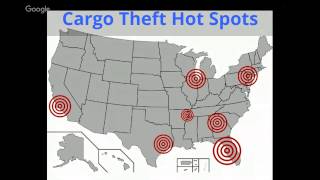
In this presentation, Sam Tucker, CEO of Carrier Risk Solutions and president of MySafetyManager, outlines where cargo theft is most prevalent in the United States and offers practical measures to reduce risk. He identifies five primary hotspots—Southern California, Southern and Southeast Texas, the Atlanta/Georgia corridor, Florida, the New York/New Jersey corridor, and the Chicago area—plus an emerging hotspot in Memphis, noting that 80‑85% of cargo theft occurs within these zones. Tucker advises facilities to strengthen physical perimeters with electric fencing, robust locks, and controlled access, and urges carriers to engage in careful route planning, avoid “red zones” (a 250‑mile radius around load origins or destinations), and limit overnight stops. He highlights the effectiveness of air cuff locks (approximately $75) combined with heavy‑duty padlocks as the most reliable deterrent against tractor theft. Additionally, Tucker introduces MySafetyManager’s Cargo Alert service, a smartphone‑based reporting tool that notifies insurers and mobilizes a network of 5,000 LinkedIn followers and cargo‑theft task forces to aid in recovery. Contact information for MySafetyManager and a toll‑free number (1‑855‑211‑5550) are provided for further assistance.
Chapters
Sam. Hi, thanks for joining us today. I'm Sam Tucker, CEO of Carrier Risk Solutions Incorporated, also president of MySafety Manager, a community dedicated to helping truckers and other logistics service providers save money and prevent lives from being lost out on America's roadways. Today we're going to be talking about cargo theft hotspots. Specifically. You see on the screen that there are about five or six different hotspots spread out across the country. We've estimated about 80 to 85% of all cargo theft occurs in around one of these five hotspots, including the six which is in Memphis. That area right there you can see a little bit different there, but as time goes on, I'll be interested to see how that turns out. Five major hotspots are the Southern California region, Southern Texas, Southeastern Texas, the Atlanta, Georgia area, pretty much all of Florida, the New York, New Jersey area, and then up in Illinois, the Chicagoland area, up that way too. Pretty much anywhere there are major port areas, with the exception of course, again being Memphis. Anywhere there are major port areas, it's easy to get cargo in and out of the country. Pretty easier to get cargo in and out of the country. And that makes it very attractive to cargo thieves. As you can see here too, we have Memphis on the list. Memphis is kind of an up and coming place. Lots of crossroads of railroads and highways going through there as well as some large major manufacturing and distribution places as well. So as time goes on, that's continued to grow in terms of relevance on the cargo theft scene across the country. Some things you can do to protect yourself if you're stationed or based in one of these areas, or if you have a lot of trucks rolling through these areas at any given time. If you have a terminal facility or any kind of distribution warehouse, it's always good to have strong physical security perimeters, especially if that includes things like electric fencing, strong security locks, controlled access points into and out of your facility. And then if you're may or may not have a facility there, but if you have trucks traveling through these areas at any given time, always good to participate in some good route planning with your shippers and consignees. Be sure you're getting there when the facility is actually open versus having to sit there and try to park in one of these areas overnight, always a bad idea. Also, red zones, generally speaking, just a good cargo theft prevention tip in general is to stay out of the red zone. What we mean by that is the red zone is defined as essentially a 250 mile radius around Any place where you're starting your trip or coming close to your destination. So you don't want to be stopping in those places. Most importantly, if it's moving away from places where you just load it up. Cargo thieves have become accustomed to actually physically stalking motor carriers. And what they'll do is they'll wait and follow you to see where you're going. They have a pretty good idea of where things are coming off of, so they'll follow you. And then within that first 200, 250 miles, they'll wait for you to pull over and, you know, have a shower, have a rest break, go to dinner, do whatever, and then they'll make off with your load. What we found is though, without that 250 miles, once you get past that, it's pretty much smooth sailing from that point that chances of that type of loss happening decreases pretty substantially. So that's very good if you do actually end up having to park in one of these locations or in any location overnight or for an extended period of time even to run in to grab a shower, grab a bite to eat. Always good to have an air cuff lock on your tractor. It's usually about 75 bucks. You can get them in a number of different places. Just Google air cuff locks on Google or another search engine, you'll be able to find those out there pretty inexpensively. We found that those are pretty much by far the most effective physical theft deterrent out there. And once a criminal sees that inside a cab, they actually end up moving on to the next one pretty quickly because those are so hard to defeat, not impossible, but pretty much the hardest thing we found. In addition to that too, the aircraft lock doesn't necessarily prevent pilferage or things happen to the trailer. So combine that with a good solid padlock, heavy duty padlock. Also, a couple different companies who specialize in transportation security have a couple packages out there that are able to be found, and you can definitely use those. A couple other things to look at too, you know, just to have kind of a good analysis and understand and have your drivers be very aware of their surroundings, very aware of what's going on. If they see a, you know, see something that doesn't look right, feel something that doesn't look right, obviously just a good idea not to stop there, you know, definitely try to again, go back to the route plan and analysis situation and find out what's what and try to avoid doing that. The community we have is called my safety manager. In that community, we actually help transportation service providers all kinds of truckers, owner operators and fleet directors at large fleets actually go out there and try to, you know, reduce the amount of cargo theft, amongst other things. And one thing we've come up to help folks do that is called Cargo Alert. And what Cargo Alert does is if you actually do have a theft loss, you can have a driver reported in on our smartphone app that takes it directly to us and reports it to us. We can then at that point notify your insurance company to go ahead and start the claims process. It's on, you know, the driver to actually physically contact the police. That's a good first step. But once he does that, you know, once he gets the smartphone app engaged, he can then come across the top of it. And we'll go and reach out to our 5,000 LinkedIn followers, as well as everybody on social media that we have and the group of cargo theft task forces that we know interface with on a regular basis. So the Cargo Alert is available. MySafetyManager.com is my s A F E T y m a n-a g-e r.com, mysafetymanager.com and that's full service safetymanagement, regulatory compliance and risk management services for low monthly cost. So if you want to check that out, it's mysafetymanager.com again. This is Sam Tucker, CEO of Carrier Risk Solutions. I hope you had a great time enjoying this broadcast today. Please give us a call if you ever need us. Our Phone number is 1-855-211-5550.