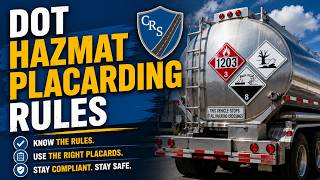
Samuel Tucker explains DOT hazmat placarding rules to help drivers avoid violations. Placards are required on shipments over 1,001 pounds, must be placed on all four sides of the vehicle, and common violations include faded, wrong, or blocked placards.
Chapters
Hazmat placards aren't just stickers they're the warning system that first responders rely on. Instantly getting them wrong can mean violations and CSA hits first. HAZMAT is grouped into nine DOT hazard classes. Placards tell the class at a glance so people know what the risk is before they get close. Class one is explosives Class two is gases Class three is flammable liquids like gasoline Class four is flammable solids, including dangers when wet Class three. Class five is oxidizers and organic peroxides Class six is toxic or infectious Class seven is radioactive Class eight is corrosive and Class nine is miscellaneous. Now the key when do you need placards? A common rule is the 1,001 pound threshold. If your load meets or exceeds it, placards are usually required. But pay attention. It's not always about weight. Some materials require placards in any quantity. That's a common reason drivers get surprised during inspections. Also remember, aggregate weight means you add up the HAZMAT weight across the shipment. Several smaller items can combine to trigger placarding, even if each one seems minor. Next, you can have the right placard and still get sighted if it's displayed wrong. Placards must be clearly visible, readable, and securely attached. Use the four sided approach, one on the front of the tractor, one on the rear of the trailer, and one on each side. Make sure nothing blocks them. Common violations include faded placards, wrong placards, old placards left on empty equipment, and placards covered by toolboxes, tarps, chains or doors. Build a quick placard Check into every HAZMAT pre trip correct class, correct placement, four sides secure, clean and unobstructed. If you want fewer roadside headaches and stronger compliance, train to this every trip. It just takes a minute to prevent big problems. For more DOT compliance help, visit mysafetymanager. Com.