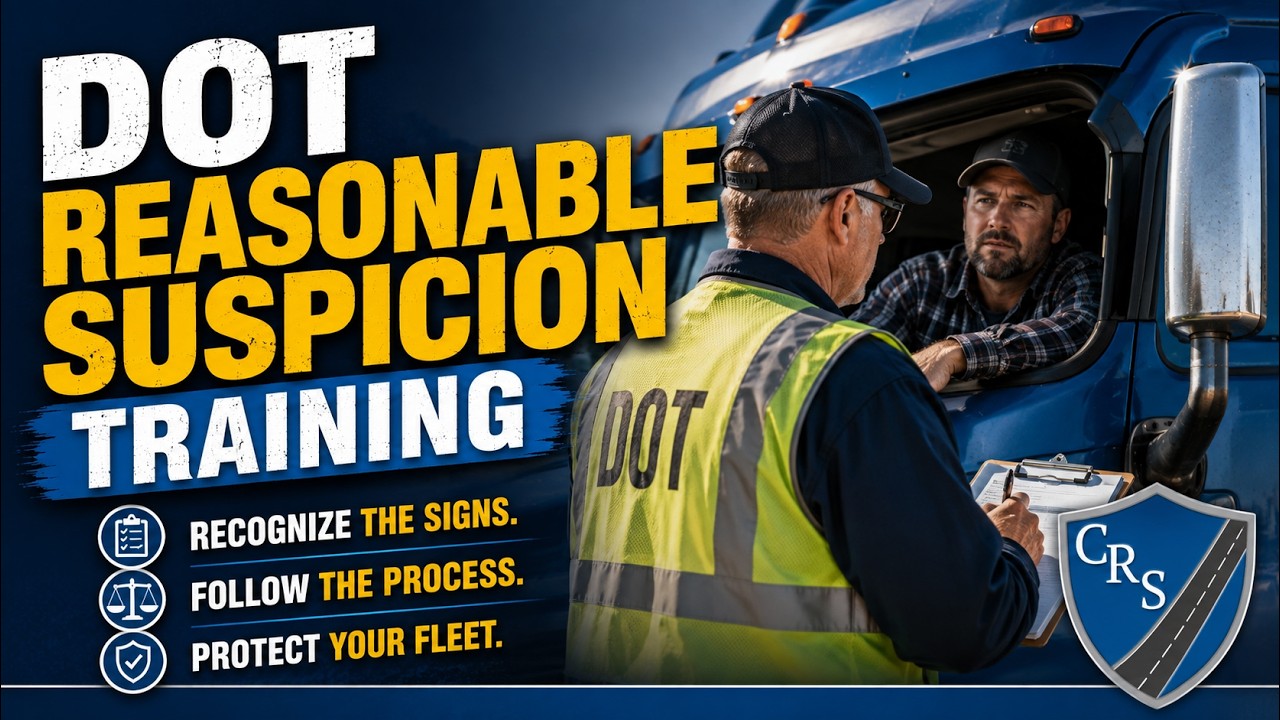
Supervisors learn to spot signs of alcohol or drug impairment in commercial drivers using observable facts: slurred speech, bloodshot eyes, balance problems, pupil changes, shaky hands. The protocol is observe, document privately, remove from duty, arrange safe transport, and escalate to the Reasonable Suspicion Manager if needed.
Chapters
Let's discuss how to spot a driver who may be potentially impaired by alcohol or drugs. This is a quick supervisor awareness talk, not the full Reasonable Suspicion training. The goal is to help you notice red flags early and know when to escalate. You are not diagnosing anyone. You're deciding whether there is enough concern to involve the Reasonable Suspicion manager right away. When in doubt, think safety first. A delayed decision can turn into a crash, an injury, or a compliance problem. Start with one rule that keeps you out of trouble. Rely on what you directly observe, not rumors or someone said. Use a simple checklist mindset. Appearance, behavior, speech, and smell are the big buckets. Document what you see in plain language. Write facts, not opinions, and use timestamps when possible. Avoid arguments and accusations. Keep your tone calm and matter-of-fact. If you believe a driver may be impaired, remove them from safety-sensitive work. Do it discreetly and do not let them keep operating. Bring in a second supervisor, when possible. 2 sets of eyes can reduce mistakes and help protect everyone involved. Now let's break this into alcohol indicators and drug indicators. These can overlap, but there are patterns that show up often. Let's discuss alcohol indicators first. Alcohol tends to show up with smell plus behavior changes. Not always, but often. Start with odor. The smell of alcohol on the breath or coming from the driver is a major red flag. Also watch for attempts to cover it. Strong gum, mints, mouthwash, or cologne used heavily can be a clue. Speech is another common sign. Slurred words, unusually loud talking, or repeating themselves can suggest alcohol use. Eyes and face can change too. Bloodshot eyes, watery eyes, flushed face, or an unfocused stare can be key indicators of alcohol use. Balance and coordination matter. A driver stumbling, swaying, leaning on objects, or fumbling with their keys or paperwork could be concerning. Behavior often shifts. Pay closer attention to drivers who may be acting overly friendly, unusually confident, argumentative, or having quick mood swings. Judgment issues show up in small ways. Poor decision-making, ignoring instructions, or taking unnecessary risks. Time perception can be off. They may be confused about what day it is or what load they're on. Alcohol can also show up as slowing down, delayed reactions, sluggish movement or dozing would be concerning. If you see multiple indicators, trust your instincts and escalate your concerns to your Reasonable Suspicion Manager. Now let's look at indicators of drug use. Drug impairment can look different depending on the substance. Focus on observable signs, not on guessing what might be causing impairment. A driver's eyes are a big one here. Pinpoint pupils, very dilated pupils, glassy eyes, or heavy eyelids are all concerning. Speech can change in a different way than alcohol. Rapid speech, very slow speech, or trouble tracking a conversation are warning signs. Behavior changes are common. Look for signs of agitation, paranoia, confusion, extreme anxiety, or unusual laughter. Watch a driver's attention and memory carefully. Often losing their train of thought, forgetting instructions, or repeating questions should raise a red flag. Also look at their motor skills. Shaky hands, poor coordination, dropping items, or clumsy movements would be concerning. Odors can still matter here, too. Strong chemical smells, burned smell, or an unusual odor on clothing could be tip-offs. Personal appearance sometimes slips when drivers are using drugs. Unusual sweating, pale skin, tremors, or very dry mouth and lips can be signs of use. Signs of drowsiness can be drug-related, too. Drivers who are nodding off, Providing slow responses or appearing checked out should be checked out. Another red flag is inconsistent performance. They seem fine one day and clearly impaired the next. We're not just talking about illegal drugs here. Medication issues and side effects are real. You don't need to know what they took, you just need to know if they are safe to work. If they mention taking something that affects driving, treat that seriously too. Escalate the issue to your reasonable suspicion manager for the proper next steps. How to escalate the right way. When it comes to addressing your concerns with the driver, keep the conversation private and don't do this in front of other drivers. Try to use a neutral script. Make statements like, I'm concerned about your fitness for duty based on what I'm observing. Do not negotiate or debate symptoms. You're not trying to win an argument, you're trying to reduce risk. Have a plan for transportation. Don't let a potentially impaired driver drive themselves anywhere. Follow your company's chain of command. Contact your reasonable suspicion manager immediately and document your observations. If the driver becomes combative or unsafe, involve security or law enforcement as appropriate. Your safety and everyone else's safety comes first. The best way to think about this is simple: observe, document, escalate, remove from duty, and ensure safe transport. You are not alone in the decision. Your job is to raise your hand early when the signs are there. Thanks for your time and please reach out if you have any questions.