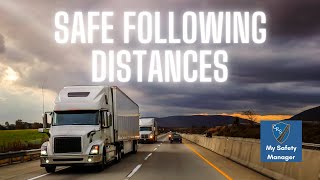
The video presents an instructional safety briefing for commercial truck drivers on maintaining proper following distances. It explains why safe following distance is critical for defensive driving, allowing sufficient stopping time and decision‑making space. The presenter cites FMCSA guidance: below 40 mph, drivers should allow one second for every 10 ft of vehicle length (yielding about four seconds for a typical tractor‑trailer); above 40 mph, add an extra second for each 10 mph increment. In normal conditions, a 7‑10 second gap is recommended, and this should be doubled in adverse weather or road conditions. The video highlights the longer stopping distance of a loaded tractor‑trailer (≈196 ft at 55 mph) versus a passenger car (≈133 ft). It then enumerates factors that require increased following distance: heavy traffic, following another semi, load weight, speed, road surface, visibility, and weather (wet, snow, ice). Practical advice includes adjusting distance for these variables, slowing down, and ensuring enough space to avoid hydro‑planing or jackknifing. The overall message is a cautionary, supportive call for drivers to consistently apply these guidelines to reduce crash risk and vehicle damage.
Chapters
Safe following distance is a constant challenge for commercial drivers. Passenger vehicles can often make erratic lane changes and exhibit other questionable driving behaviors. Heavy traffic and the kinds of other vehicles around you can also impact the amount the space you leave in front of you. In addition to providing enough stopping time, proper following distance allows for more time for you to make better decisions and to drive more defensively. The length of proper following distance depends on a variety of factors, but there are some key points that everyone should keep in mind. According to the FMCSA, if you are driving below 40 miles per hour, you should leave at least one second for every 10ft of vehicle length. For a typical tractor trailer, this results in four seconds between you and the leading vehicle. For speeds over 40 miles per hour, you should leave one additional second for 10 miles per hour. In most road and traffic conditions, you should be leaving about 7 to 10 seconds of space between your truck and the vehicle in front of you. A good rule of thumb is to double that amount when driving in adverse conditions. Since you're driving a vehicle that has a longer stopping distance, it's critical to keep a safe distance between you and the vehicle in front of you. That distance gives you enough time to stop if you have to brake suddenly or react quickly to changing traffic conditions. Leaving enough space gives you enough time to avoid other vehicles, reduce your speed if needed, and keep control of the vehicle. When following too close, you run the risk of causing damage to your vehicle, other road users, and even yourself. Did you know that the average stopping distance for a loaded tractor trailer traveling at 55 miles per hour in ideal conditions is 196ft? A car only takes about 133ft to stop. You should always adjust your following distance to appropriately match weather conditions, road conditions, visibility, and traffic. One of the primary things that affects safe following distance is how much vehicle traffic or other road users there are on the road. If traffic is heavy, you should increase your following distance. When following another semi truck, you should increase your safe following distance more to account for their increased stop stopping distances too. Other key factors that affect safe following distance include the weight of your load, your current speed, and the condition of the road. If you're unloaded, you'll need even more time to stop safely, so leave more distance in front of you. Also, the faster you're traveling, the more space you will need to slow or stop appropriately. The condition of the road is especially important because it affects your vehicle's handling. If the road is wet, snowy, or icy, you may hydroplane or jackknife more easily. In adverse conditions, you should always slow down and leave more space to maneuver.