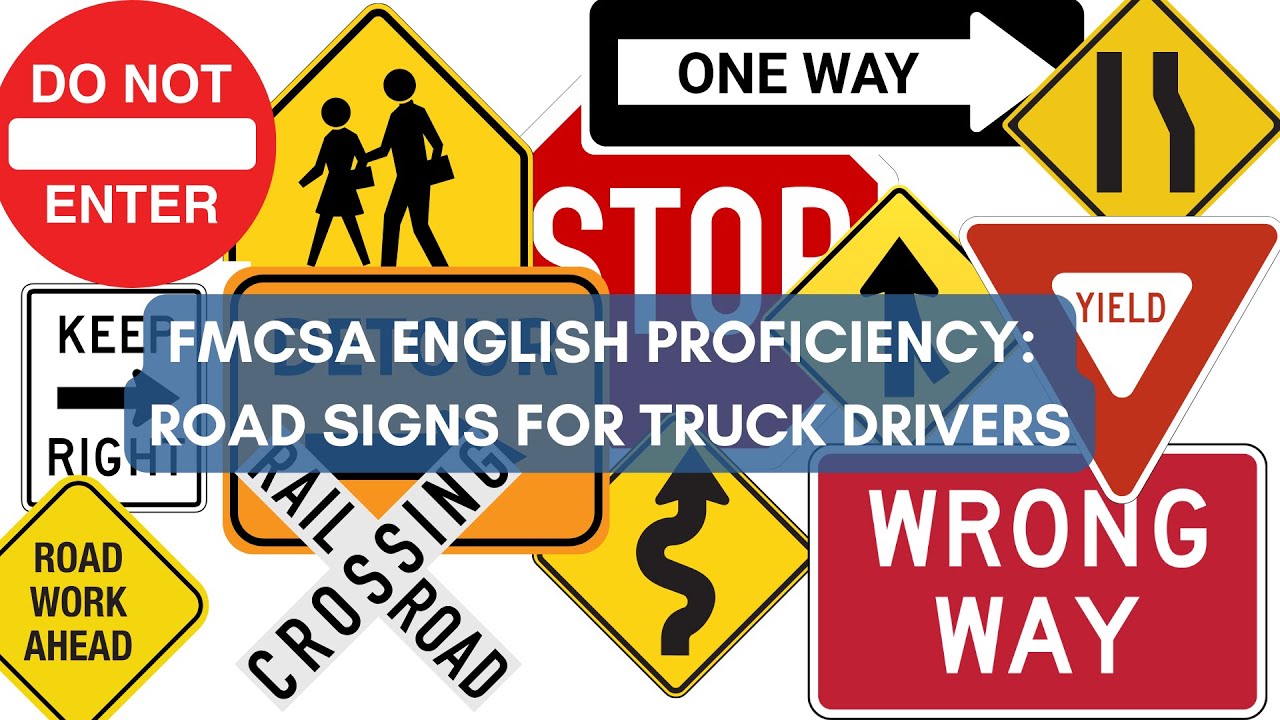
Samuel Tucker teaches CDL drivers how to explain road signs in English during inspections using a three-step method: Look, Say, Explain. He covers common signs with exact wording, pronunciation tips, and Spanish translations, emphasizing clear speech and safety over perfect grammar.
Chapters
Today we're going to practice a skill that helps you stay safe and confident during roadside inspections: identifying common road signs in English, and saying them clearly. We'll keep it simple, practical, and easy to repeat. Some roadside English checks can include reading signs and explaining what they mean. You don't need perfect grammar. You need clear words, correct meaning, and calm delivery. Here's our memory hook: Look, Say, Explain. Look at the sign, say the words in English, then explain the action. Look, say, explain. Keep it short and confident. Let's start with the most important sign: stop. Say stop. Explain: I must stop completely. In Spanish: alto, parar por completo. This is a full stop every time. Next, yield. Say yield. Explain: I slow down and give the right of way. In Spanish: ceda el paso. Yield is not a full stop unless traffic requires it. Speed limit. Say: speed limit. Explain: This is the maximum legal speed. In Spanish: límite de velocidad. Practice the stress: speed limit, not speedy. Do not enter. Say: do not enter. Explain: I cannot drive into this road. In Spanish: no entra. It often means you're facing the wrong direction or restricted entry. Wrong way. Say, wrong way. Explain, I am going the wrong direction. I must stop and correct safely. In Spanish, dirección equivocada. Take this sign very seriously. One way. Say, one way. Explain, traffic goes only one direction. In Spanish, una sola dirección. Combine with do not enter and wrong way to avoid dangerous turns. No turn on red. Say, no turn on red. Explain, I must not turn when the light is red. In Spanish, no doblar con luz roja. Keep right. Say, keep right. Explain, I stay to the right side. In Spanish, manténgase a la derecha. You'll see this at splits, islands, and work zones. Merge. Say, merge. Explain: 2 lanes become one. I blend safely. In Spanish: Incorporarse. Use a calm sentence: I merge safely with traffic. Lane ends. Say: Lane ends. Explain: This lane finishes. I must merge. In Spanish: Termina el carril. The key action is early signal, mirror check, and smooth merge. No passing zone. Say: No No passing zone. Explain: I cannot pass here. In Spanish: Zona de no rebasar. It's common on 2-lane roads and hills. Truck route. Say: Truck route. Explain: This road is approved for trucks. In Spanish: Ruta para camiones. It helps you stay legal and avoid low bridges or restrictions. No trucks. Say: No trucks. Trucks are not allowed on this road. In Spanish: Prohibido camiones. If you see it, don't guess, follow your routing plan. Say: weigh station. Trucks may need to stop for weight and inspection. In Spanish: estación de pesaje. A simple phrase works: I stop at the weigh station. Say: inspection station. Explain. Vehicles may be checked here. In Spanish, estación de inspección. Speak slowly and clearly. Inspección. Low clearance. Say, low clearance. Explain. The height is limited, my truck may not fit. In Spanish, altura baja. This sign protects you from bridge strikes. Railroad crossing. Say, railroad crossing. Explain. Train tracks ahead. I slow down and look. In Spanish, cruce de ferrocarril. If you haul certain loads, your company may require full stops. School zone. Say, school zone. Explain, I reduce speed and watch for children. In Spanish, zona escolar. If you see flashing lights, treat it as extra caution. Work zone. Say, work zone. Explain, roadwork ahead. I slow down and follow signs. In Spanish: Zona de constricción. Work zones change fast, so follow posted signs, not habits. Detour. Say: detour. Explain: This is an alternate route. In Spanish: Desvío. A good sentence: I follow the detour signs to rejoin my route. Exit. Say: exit. Explain: This lane leaves the highway. In Spanish, salida. Many exits have numbers. Practice: Exit 23, instead of two-three. Rest area. Say: Rest area. Explain: A place to stop, rest, and use facilities. In Spanish, área de descanso. If you're tired, this is a smart decision sign. Slippery when wet. Say: Slippery when wet. Explain: Traction is reduced in rain. In Spanish, resbaloso cuando está mojado. Slow down before you feel the slip. Bridge ices before road. Say, bridge ices before road. Explain, bridges freeze first. In Spanish, el puente se congela antes. It's a warning to reduce speed and increase space. Now let's tie it together for an English check. Use look, say, explain. Example, speed limit. My maximum speed The speed is the posted limit. Clear, calm, and correct beats fast and perfect. Practice 5 minutes a day. Pick 10 signs. Say them out loud. Explain each in one short sentence. If you're unsure during a stop, stay respectful, ask for a repeat, and answer with what you know clearly. Learn the words, practice your pronunciation, and match the meaning to the action. Focus on safety signs first: stop, yield, speed limit, do not enter, wrong way, and low clearance. Look, say, explain.