Growing on YouTube: What Finally Worked
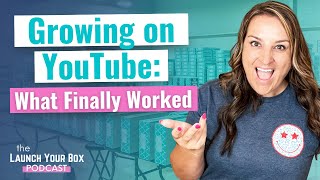
In this episode of the Launch Your Box podcast, host Sarah Williams shares the step‑by‑step transformation that took her YouTube channel from a slow‑growing 2,300‑subscriber hobby to a thriving 16,000‑subscriber asset. She begins by explaining why YouTube matters—its long‑shelf‑life content, status as the second‑largest search engine, and evergreen visibility—especially for subscription‑box businesses that rely on trust and discovery. Sarah recounts her initial low‑effort approach of cross‑posting live streams, Shorts, and audio‑only podcasts, which yielded modest growth. After a pivotal conference, she adopted five strategic changes: (1) producing video‑based podcast episodes, (2) launching a concise 10‑minute “Friday Fuel” series for quick, high‑value videos, (3) running low‑budget YouTube ads that promoted top‑performing organic videos, (4) systematically studying competitor channels to mine proven topics, and (5) obsessively monitoring analytics, thumbnails, and titles to improve click‑through and watch‑time. These tactics collectively 10‑x’ed her view counts, accelerated subscriber growth to over 16 K, and attracted higher‑quality, engaged viewers. Sarah wraps up with mindset advice—prioritize action over perfection, serve before selling, and continuously iterate on visual branding—while warning against common pitfalls like neglecting thumbnails, titles, and analytics. She also promotes a YouTube course with a discount code for listeners who want deeper guidance.
Today we're talking all things YouTube, specifically what finally worked for me. After 18 months of slow and steady growth, I made a few changes that completely shifted my strategy and my results. I'm breaking down exactly what I did, what I learned, and how you can start growing your own channel without needing to go viral. Grab your earbuds and come listen.
Welcome to the Launch Your Box podcast with weekly tips, tricks, and strategies to start, launch, and grow your subscription box. Now here's your host, Sarah Williams.
Welcome back to the Launch Your Box podcast. Today we're talking YouTube, and it's interesting because I'm one of those people that have been very Facebook focused. We've been diving into Instagram strategies and that's been growing as well. But I was at a conference back in February of this year here, and I was listening to all the speakers on stage. It was like a week-long conference, and every single speaker was on stage talking about YouTube. They weren't talking about Facebook. They weren't talking about Instagram or TikTok or any other platform. They were talking about YouTube. And it was interesting because some of them showed like their early day YouTube channels and then how one video made the difference and how one speaker was even talking about how they made a video a day. And finally it took off. And I was sitting there thinking, okay, I have a YouTube channel and for the last 18 months I've been posting on YouTube and I've been seeing slow, steady growth. And I thought, that's, that's good, but what can I do differently? And I started to think about some things based on listening to these conversations, having some conversations with my friends that have hundreds of thousands of YouTube followers, and everything started to shift for me. And I look at YouTube as a game changer. And what I, what I want you to listen to is that if you're Facebook heavy like me, our audience is going to age out soon. Like, our audience is aging out of social media. And so then, then we focus on Instagram because that's the next generation. But something that I love about YouTube is that the content has a longer shelf life. If you were to go search something on YouTube right now, you're going to find videos from last month and 5 years ago. So today I'm going to break down what I actually changed with my new YouTube channel, what worked, and why I believe that YouTube is a goldmine that we're just sitting on. And it doesn't matter if you have a membership or tutorials or if you're selling a product or a subscription box. We can all do this. Now let's talk a little bit about why does YouTube matter. I want you to really— you have to understand this to get on board with me because you're thinking, oh my gosh, Sarah, one more platform, one more thing to do, right? But YouTube matters because it is the number 2 search engine right behind Google. Excuse me, Google heard me say that. Let me get a drink of this coffee right here. YouTube is the number 2 search engine. People are actively searching for what you offer, and even though it's the number 2 search engine, it is often found in the searches of the number 1 search engine because they're owned by the same company. So when you're using the number 1 search engine, you're going to find a lot of YouTube. You don't find a ton of Facebook. You don't find a ton of Instagram or TikTok, YouTube is always on top of that search engine. So whether you're using YouTube as your search engine or you're using Google as your search engine, you're going to see YouTube right in those top hits for the content. Now, I've already talked about how the content has a longer shelf life. So our, our Facebook Lives, our Instagram videos, our TikTok videos, they don't have as long of a shelf life as a YouTube video. So I want you to think about the content that you're building and what if that could last longer and longer and longer? That's what I love about a podcast is that the content that I build for a podcast has a long shelf life and it does on YouTube too. Also, YouTube has a lot of educational type videos. So if you have a subscription where you are teaching something, maybe it's an arts and crafts, maybe it's a home organization, maybe it's decorating, it has a really good trust and visibility factor because people are watching and seeing. This is really a great platform no matter what industry you're in for unboxings. Think about all those behind-the-scenes videos if you're doing tutorials that go along with your boxes or the product in your boxes and repurposing the content that you're already building for these other platforms that have a really short shelf life. So if you're making reels, YouTube Shorts, period. You're already making the content. If you're making packing videos, you're already halfway there. That is some of the content that's really great for YouTube, and it just gives you more staying power. Okay, now let's go back to July 2023. So about 2 years ago, I started my YouTube platform, and I started it because I really wanted to see if I could find more people, right? I'm trying to get in front of more people. I'm trying to find my ideal customer. And I was very Facebook and Instagram heavy, really mostly Facebook. Instagram was really small at the time. It's growing now. And so I thought, let's dig into YouTube. And I started and I focused on my weekly live. I do a live every Monday morning on Facebook called Monday Momentum, and it was very easy for me to connect my YouTube channel and stream in both places. So I started going live on Mondays on YouTube. And that grew very quickly. I could see in the chat who was watching me from YouTube versus Facebook, and that was an aha moment for me because it's really easy to find videos on YouTube. Sometimes it's challenging on Facebook to go back and find an old live or a video. They're right in order on YouTube and you don't have to search very far. Then I was doing, um, 2 to 3 Shorts a week. So YouTube Shorts are Reels basically. So it's those short Reels that you're making for your other platforms, whether you're doing them for TikTok, whether you're doing them for Instagram, whether you're doing them for Facebook, you're already making them. Let's put them on YouTube Shorts. And then the other thing that I connected was I had connected my podcast over there, but it was all audio only. And so they were getting a podcast episode, a weekly live, and then 2 to 3 Shorts every single week. And I grew 2,000 to 3,000 subscribers slowly and consistently. But did you hear me say I was already doing those 3 things? I was already going live on Facebook. Now I'm going live on, on YouTube at the same time. It took no more effort to do. I'm already making my weekly podcast. It was audio only, and I just uploaded that to YouTube. No extra work. I'm already making reels all the time. And so I wasn't making anything specific for YouTube. And I grew to 2— it was like 2,300 YouTube subscribers over that 18 months. Okay, I was present on that platform, but I wasn't being strategic, and I wasn't treating YouTube like the opportunity that it really, really is. So let's talk about what changed for me. So I decided that I really need to dig into this YouTube thing after going to this conference, really seeing how I can uplevel my YouTube content and get strategic about it. It's one thing just to put things there because you're a I'm already making them for other platforms, but what if I were to be more strategic about YouTube? What could that change for my business? So that one weekly podcast that I would do, I started filming it on video. And so I was uploading a video podcast instead of the audio only. I instantly 10x'd my views because people on YouTube are video driven. They want to watch. They don't just want to listen. I was getting hundreds of views. I say views with air quotes because they weren't seeing anything, but they were listening to the podcast. But now that I was showing up on video, it made a difference. And what that difference was, was they were seeing me. So now my views were really getting, you know, they were, they were 10x-ing on that one video podcast. All I had to do is change from, you know, looking homeless for the day and just sitting down and recording an audio. I had to put put some clothes on, I had to do hair and makeup. So that was the shift I had to do. Then what I was noticing was that a lot of the, um, highly viewed videos were 5 to 10 minutes on the platform. And I thought, how can I make a short 5 to 10 minutes? But I didn't want to just do that for YouTube. I started that, I made like probably 6 videos, and I thought I need this content to be available more than just on YouTube because I have so— I have so many listeners to the podcast or that watch me on my live on Monday morning. I need this to be accessible other places. So I decided to create a short podcast. I was going to do now 2 episodes a week, and one of them would be on Friday, and I would try to keep it 10 minutes or less so that I would have a short video for YouTube. And so I created this episode series called Friday Fuel. It's my new 10-minute or less, high-value, action-driven format that's perfect for YouTube and also great for my podcast listeners. And so I started that 2 months ago, and that has really helped because now I have another video piece of content that is driving my YouTube content in that shorter form, in that 5 to 10 minutes, but it's also helping my business in other ways because I am having huge downloads on my podcast with it and people can consume stuff in a shorter amount of time. So more video content was what I was doing. I wasn't just uploading my audio from my podcast anymore. I found a way to incorporate this short 10-minute podcast episode video style in there as well. And then it was all about action-driven content. How could I solve a problem? How could I help you with one thing you're working on in the business? And that's what started to get a lot a lot of views. Then the other thing that I did was I was running ads. So the thing about any platform that we use is that we have to get visible. We just have to get visible. And sometimes we can do that organically, and I was doing that organically. It was slow and steady, and I had grown to 2,300 YouTube subscribers in 18 months. But how do I get visible faster? And that's really what we want to do on any platform. And so I started to run some YouTube ads. These were the simplest ads I have ever ran on any platform. So even a dummy could do it. Even if you've never run ads anywhere else, you can totally do this. I spent about $5 to $15 a day, and I was just picking the content that already had organic views, that had the highest organic views on my channel, and I would promote them. Them. I would use the promotions tab, I would run an ad, I let it go for 30 days and it was, it was getting me new followers and they were coming fast and it was like this game. I was like, oh, I wonder if I could get 1,000 new followers a month. I wonder if I could get 3,000 new followers or 4,000 new followers a month. So I started to increase my budget and I was growing so fast. I went from 2,300 followers to over 16,000 subscribers— I would say 2,300 YouTube subscribers— to over 16,000 in just a few months. And I saw really great quality subscribers, um, from that. They were asking questions about subscription boxes, they were engaging in the chat, they were showing up on my lives and they've never shown up before. So I was getting more visible on the channel, and then I was studying my competitors. So here's one of the tricks that I did. I started to search on YouTube some of the keywords in my industry, and I started to look and see what my competitors were doing in my particular niche. And I would just go to their channel and I would look at their most popular videos because there's a little tab that's like most popular, and you could see. And I would start making notes on— I wouldn't even watch their video, I would just make notes on the title of the video. I'm like, oh, I could talk about that. Oh, I could show how to do that. Oh, I could do this. So I was just looking at their most popular videos and getting ideas for my own content. And then I would show up and I would talk about that on a Monday Momentum, or I'd show up and I'd have a small 10-minute episode about that particular topic. And this was my original content, but it was on proven topics. It was on proven ideas. So all I had to do was go searching and doing a little research on YouTube to see what videos were getting the most views, what were the topics that they were talking about? And so any one of us could do that. Then I was regularly, regularly checking analytics. So every 3 to 4 days I would go into the analytics tab and I was checking. I was looking at what was working on my promotional videos. I was looking at my watch rate. I was looking at the video performance. And that was giving me insights on what to promote next, what to turn off, what to increase the budget on. And I was just checking this regularly because you don't want to just set it and forget it and never look at it. We want to spend our dollars wisely. So I was checking those analytics and I was really dialing into what content I wanted to promote. I noticed that Shorts were getting me the cheapest new subscribers, new followers. Um, it was the shorts where there was some really good content, longer content that was getting me a lot of engagement and, and comments. And so I was just checking to see what was working so that I could do more of that. And then I started to look at my thumbnails and titles. I— this is something that I kind of neglected, and I was like, okay, we need to have better thumbnails. We need to have different pictures of Sarah. Even though I hate doing pictures, I got into a habit of every time I recorded a video, I took a picture of me in that shirt. So you're gonna see the thumbnail for this episode is exactly what I'm wearing in this video. And so I had different looks, I had different outfits, and it wasn't the same thumbnail over and over again. That's one of the biggest mistakes that I see when I go to someone's YouTube channel, is that they've got the same the same thumbnail, the same image of themselves over and over and over again. So nothing stands out. Then I needed to give them a reason to click. And that comes in with your headlines, with your titles. They need to be curiosity-driven. We need to give them clarity about what they're going to spend their time, you know, watching or listening to. And so it's one of those things that you only get one chance to earn a click when someone searches something on YouTube, they're not even reading the description most of the time. They're looking at your thumbnail, and that is your little billboard on YouTube. And you've got to get that right, and you've got to keep tweaking it because we didn't always have it right, but we're getting better and better at it as we go. So let's talk about how you can start growing on YouTube. So long-form video builds trust. So long-form video, that would be anything I would say over that 15-minute time frame. I was doing my 20 to 30-minute lives. That's long, long-form video. You can show your product, you can show your process, you can show those things in a way that you can't on other platforms. I like to do box openings on my framed YouTube channel, and they live there forever. People can go back and look at them. They don't have to search through your Facebook feed to find them. These videos are evergreen now, and they're getting more views month over month. So long-form video would probably be a box opening. It would be making something from start to finish. I think about monogramming and what that involves for me, like programming the monogram, hooping it, stitching it, and putting it in a subscription box. You could either make that short form, a medium form, or long form. And so start by using the content that you're already making the same way that I did. If you're going live, let's connect our YouTube channel and go live at the same time. If you're making Reels, let's add them to YouTube Shorts. If you're doing unboxings, let's start with that. Let's build your channel with maybe the past 6 months of your unboxings. You can download them and upload them, give them a cute thumbnail, um, and that's how you can start. And then I want you to start filming things specifically for YouTube content, and you can use it on different platforms. You could film more pack with me videos, you could film some behind the scenes, you could film some let's, let's ship an order today videos. But I want you to think about what you can start doing that you're already doing. We're just going to film and add it to YouTube. And I want you to have some mindsets, mindset shifts with this. Done is better than perfect. I didn't have it all figured out when I started, but if I would have never started, I never would have got those first 2,300 people. I never would have gotten content on my page that would attract people. So done is better than perfect. And you don't need a huge following to see traction. I'm getting people telling me they're subscribing and they're joining my member membership or my subscription with just one video. I— it's that know, like, and trust factor. They've never seen me before because they've never found me on the other platforms. It's new people. So focus on helping, focus on serving, focus on showing behind the scenes, and then, and then a little bit of selling in there. And then let's talk about some mistakes to avoid. Don't avoid your thumbnails and titles. It's one more thing to do, but it makes a huge difference in someone actually consuming the content that you're building. And then let's not avoid our analytics. Yes, it's numbers, but I need you to look at that and I need you to look at it regularly so you know what's going on. And then let's not just promote selling content. Like, we don't want to just go on there and sell, sell, sell. We want to go on there and really serve and then sell. So let's talk about those 5 changes. Okay, there's 5 big changes. More video content. More video content. Getting visible through ads. Checking your analytics. Studying others and seeing what's most popular on other people's channels. And then really tweaking and honing into better thumbnails and better titles. YouTube is not this big new magical platform. It has been there for a long time. And what we're seeing is people stay on YouTube for a long time. Once you have a strategy to build content for YouTube and grow with YouTube, it's absolutely a platform that can grow with your business long term. So if you've not been thinking about YouTube, this is your opportunity to do that. That. Now, if you want to go a little deeper, there's a YouTube course that I got some of these great, um, tips from. It helped me kind of rethink some things. It's simple, it's actionable, and it made a big impact. I've got the link for you in the show notes today, and you can grab $50 off that course with coupon code Sarah. So check that out in the, um, show notes if you want to go deeper into YouTube, or if you're just not been on YouTube at all and you want to actually get get started and start the right way. It's going to help you a lot. All right, don't sleep on YouTube. It's a platform that we all need and we can all grow on and we can find more of our perfect person on. I'll see you guys next week.
More from Sarah




I Almost Sold My Subscription Box… Until the Numbers Changed Everything with Ciara Stockeland






