Live with Tamara B. - Digital & Physical Subscriptions
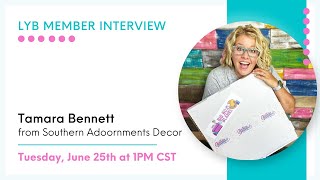
Tamara B. built three subscription streams around door-hanger painting: a $27 monthly membership with 400 members, a $25 template club, and a $75 quarterly box of blanks. She started with craft parties in 2015, grew through Facebook groups and community, and now makes $16k monthly from memberships alone.
Chapters
I'm like, what's happened? I'm like concerned about your safety. I'm like, Tamara would never not do this, like never do this to me. So, okay, here we go. I don't know if we're live. This, this whole delay. We're here, Tamara. Listen, Tamara made me sweat today because I'm like, it's 10 minutes ahead of time. I'm working on a few things. And I send her the link and she gives me a thumbs up so I know she's got it. And then it's like 2 minutes. I'm like, hey, Tamara, you're making me nervous. I'm Voxering you, I'm texting you, I'm Facebook messaging you. Like, where are you? And then I'm like, did something happen to Tamara? Like, I'm panicked that something has happened to you. And I'm like, who do I know in Kentucky that I can call? About to call Whitney and tell her to go check on you. Um, Tamara's here! Tamara's here! I'm glad you're here. Relax. I feel like you've been running in. You like ran in and turned the camera on.
I glanced at my Google Calendar earlier and all I saw was 1:30 because I had it scheduled 1 to 1:30, so I thought it started at 1:30 and I was live in my group and I had looked down while I was live. I was like, okay guys, gotta go, bye.
Were you still live when I'm like, where are you?
But I was done. I was just chit-chatting because I thought I had 30 more minutes to kill. Yeah, I got plenty of time.
And I'm like, where are you?
Well, I also had do not disturb turned on because it never fails when I go live, I get so many notifications.
Yeah, well, I'm glad you're here and I'm glad everybody's joining us. Um, you can't see on your end, but we've got the, the chat is hopping already. Um, they're saying they love your glasses. Let's talk a little bit about, um, let's talk about your business. What is it? What do you do? And then we're going to break down your 3 recurring revenue streams. So just give us an overview of what you do.
I teach door hanger painting, so you can probably see a couple of them hanging up behind me here. If you don't know what a door hanger is, they're big wooden signs that you paint and hang on your front door. Kind of like you would hang up a wreath or something. So this is not the little do not disturb thing you hang on the doorknob for the hotel. This is— you hang it up as a decoration on your door. They're really popular here in the South. Up north, not so much. So I'm really just trying to, uh, you know, expand awareness so that the whole world has cute doors. But I teach how to paint these, and so lots of crafters come to me barely having any painting knowledge whatsoever, and then after painting with me a few times, they realize, oh, If you just follow a few simple steps, you can do this. It doesn't take a ton of like artistic talent to be able to do this kind of painting. It's really fun.
Okay, so let's go way back. Let's go back to the start of your business. And how did you get started with these door hangers? Like when and what year was that? Like when did, when did we start all this?
Um, I started the business in 2015. For a couple of years prior to that, while my husband was deployed to Afghanistan, I was having craft parties once a month in my home as a way to save my sanity being home with 2 kids. I would just be like, you come, bring all your kids, and we'll just craft together and we'll send the kids to the playroom in the back. It was just a way for me to be social. And I did several different crafts over those 2 years, but the door hangers were the most popular. And then, um, fast forward, my husband came home from deployment and I was kind of like, I probably need to get a job. Like, our income had dropped a bit because, you know, that deployment money's tax-free. And when he came home, I'm like, oh, I guess I need to get a job now or something. But I still I had people being like, hey, you gonna do any more of those craft parties anytime soon? So I'm like, maybe there's something to this. Maybe I could start a business.
Were you charging any— anybody to come over? It was just like, hey, get your craft supplies and come over and we're gonna do this together? Just— was it just like that? Were you charging people?
I did charge a little bit, but it definitely wasn't a business. I charged enough to cover the supplies.
Okay, you were picking out the projects, so you were— you were literally doing— you were basically teaching this and, and providing this before you actually knew it could be a business, right?
Yeah, I was pretty much doing it for free. I was just covering my supplies and it was saving my sanity, so I was getting something out of it, just not financially. And then, like I said, after my husband came home, we were trying to turn it— I was trying to turn it into a business, but I didn't know how. And so I had, I had done parties before for like direct sales type companies And I'm like, well, what if I structured this kind of like that and I went into somebody's home, they were the hostess, and the hostess gets to paint for free as long as she has a certain number of friends show up? Okay, so that's how it all started. And my first party only had 5 people, and the hostess got to paint for free as long as she had 5 friends show up to paint. And we painted like mason jars and sunflowers or something. It was very simple, like 2 colors of paint. It was really easy.
Okay, so then fast forward Let's fast forward to 2018 when you and I meet.
We were in—
we were part of a course that we had both purchased to kind of help our businesses grow. This is how Tamara and I meet, 2018. I'd already started my subscription box and you were teaching lots of parties. You were making money teaching parties. What happened in 2018 for you?
I finally figured out exactly how I needed to serve my customer. Is what it all boils down to. So I had tried several things before this. I'd been painting on Facebook Live every week, practically just giving it all away for free, teaching people. It just flows out of me. I can't help— I can't just paint and let everybody watch. I end up teaching. I just— it's just what happens. And I had tried a couple of different things where I would like mail the wood blank to somebody and they would paint along with me on a video. We called it a virtual paint party. What I soon discovered was those customers A lot of them were crafty enough they were cutting their own wood blanks. They just needed like the template so that their shape was the same size and shape as my shape, and they could follow the— they needed the painting list.
Okay, wait a minute. For us non-crafty people, you just said a whole lot of things that we don't understand. So a wood blank is the wooden piece that you were painting the door hangers on, right? Yeah. Yes. So if I— you say template, That's— I'm gonna trace that flower onto a piece of wood, and I'm, and I'm gonna trace it on there, and then I'm gonna take my scroll saw and cut it out, right? Is this what we're talking about? I need to give everybody that has no concept of craftiness a little, a little insight here.
Tracer, template, they're kind of the same thing. But yeah, essentially, the people who— so this is the problem that it solved. The people who could not draw but could paint, this kind of solved that hurt— that problem for them. It allowed them to be able to draw the same shape I'm drawing and then get painting instruction from me. So they could have some— some of them I think had some basic painting skills, but they needed the more technical skills.
Yeah.
And so I started my membership, The Painter's Clubhouse, and the very first time I launched it, I got like 407 new members.
It was crazy. It was crazy. Um, she had just been you know, doing paint parties. She'd been showing up on her social media and just really serving her audience, just teaching people what she did, how to do it, and making them feel like they could do this. Like, this wasn't super complicated and hard. They could really do this, and Tamara was showing them how. So you start recurring revenue stream number 1 in the form of a membership, and you had 407 people said, I want to do this with you. I want to show up in a Facebook group with you and start painting with you and learning how to do door hangers. And what were you charging at that point?
The, the founding member price was $27.
$27 a month. Let's, let's do a little—
all digital too. I don't know if we said that, but there was no physical deliverables for this. It was a digital template download and digital, you know, video that they got.
Tamara just shows up, starts a membership. She's got 400 and some odd people at $27 a month. She just generated $10,000 worth of income for herself. First try.
Before this, my husband didn't consider it an actual business, or like, they never do, Tamara, they never do. No, because he was like, you can't count on that income month to month because you might have 3 parties this month and 12 parties that month. You might sell 5 door hangers this month and 10 that month. It's never like a stable income, right? The minute we started this membership, I remember when that second month of payment started coming through, I was like This is gonna be happening every month.
They're coming again. What is going on?
Yeah, they didn't quit. They didn't leave.
Yeah, somebody says in the chat, I bet that shut him up immediately.
Oh yeah, he was like, whoa. And my kids didn't understand either. I had to— I remember the day that, like, I was gonna go live in my, in my membership, and I was like telling the kids, like, y'all gotta stay out of here. Mama's got to work. They didn't feel— see, like, it was a legit thing.
Mom's just in there painting. What does she mean work, right?
Well, you can't see my customers. They're all online. But imagine that we had 400 people lined up down our driveway, every single one of them holding $27 in cash.
Yeah.
How much money would I have? And they're going, I don't know, that's a lot. And I said, and then imagine they come back the next month. Immediately they were like, oh, mom does have a business.
Okay, so we get started with our membership. And I know because I know you, we're very close. Tamara and I are like BFFs. We go on vacation together twice a year. We talk every day. Tamara's also in my mastermind. We also, when we go on vacation, we share a bed because we lay up in bed and talk all night long and we have some of our best ideas. So I know Tamara very well. But Tamara's membership grew and grew and grew, 2000s. And then you started your digital subscription. So you really perfected the membership. You went all in with that. You grew that and you said, you know what? I think these people that are in my membership, might need something else from me. So talk to me about your digital subscription.
So it was one way that I took something that I was already doing anyways and provided a convenience and a discount for my member— for, for my, my followers. Already every week I was coming out with 5 new door hanger designs every Friday, so that's like 20 or 25 designs a month. That's a lot. I don't know what I was thinking when I started all of that, but once you start it, you can't like dial it back and do less.
You can't take it back, right? Once you— once it's out there, it's like— I call it a busted biscuits. Anybody in the South, we have like these fun sayings, right? It's like a busted can of biscuits. Once you open the can, you can't put those biscuits back. You gotta eat them.
And in the membership, I was only teaching 2 designs a month. And so, you know, once you've painted those 2 designs, you might need— like, there's more designs that you could paint for any given season than just 2. And so of course I have a million ideas for door hanger designs every month. And so we were coming out with 5 new ones every month. and they would be like $5 to $7 a piece. Well, if somebody wanted to buy all of those, they would be spending like $150 a month on templates. And so I provided this convenience where I'm like, hey, it's like Sam's Club. You buy in bulk, you buy a big quantity, you get a discount. So the Template Club was born sometime in the summer 2 or 3 years ago, actually 3 or 4 years ago now. And so for one low price, they could get all the designs we released that month, so they didn't have to wait Number 1, they didn't have to wait till like the 4th week in June to get those designs. They didn't have to try to catch them on sale the weekend they're released. They didn't have to pick and choose if they wanted this one or that one. They just got all of them, and they're saving like 77% off retail price. So it's a no-brainer.
Did you hear what Tamara just said? I want you— I want to see if you're picking up on this language. She provided a convenience. For them. Okay, so with her digital subscription, number one, she was already making these designs anyway. She was selling them in her shop. She was releasing them every Friday. She didn't have to do really anything extra except for create the product where they could have a recurring subscription, and her digital subscription was born. And when you launched the Template Club, how many subscribers did you have? Do you remember?
Um, I think it was around 200 or 250. I don't know, it was so long ago. I'd have to go back and look at the numbers.
And what were you charging in the beginning? We're gonna do some more math.
Um, I think the founding member price on that was like $25.
Okay, so now we've got 250 brand new members in our digital subscription at $25. Um, she just created another $6,000 in revenue, and by this time her membership has over like what, 1,500, 2,000 people in it. So she's making well beyond $10,000 a month in her membership. Now she has another $6,000 a month revenue stream. And again, all of this is digital, okay? All of this is just delivering in a digital form. She's teaching digitally from her computer. She's creating these files, uploading them, emailing them out to their— to her customer. She's doing all of this, sitting in her little craft room in, in Kentucky. And creating a heck of an income for herself and her family. Now, we were laying in that bed— I don't know what trip we were on— we were laying in bed talking business as we always do. And talk to— tell them about the physical box subscription.
So, um, we about 2 years ago built a shop on the back part of our property, and we now have large lasers. So previous to all of this, if we were selling wood blanks a third party was cutting them and giving them to us, and then we were shipping them to you. But when— now that we have this shop and the ability to cut our own, I'm like, we could— like, we could do a subscription box. Because we were limited with this third party on how much we could actually sell, because at that time, yeah, they only had so much. He couldn't keep up with us at the time. Um, and so now I'm like, oh, the possibilities are endless now that we can cut our own stuff. And so we launched this subscription box, and so it's a quarterly box. They get 3 door hangers every quarter. So if you're a— if you are in it for the whole year, after a year you have 12 door hangers, one for every month of the year. So right now we're getting ready to ship our July 1st box, and it's going to have 3 door hanger designs, one for like back to school, fall, and Halloween. Okay. And so it's got video tutorials that go along with it. It's perfect for the person who's not ready to cut their door hangers yet still needs painting instructions and likes the convenience of just having it delivered to your door and being able to watch the video.
And what is your quarterly subscription cost?
Um, it is $75.
And how many subscribers do we have in the Big Box of Blanks?
Right at about 300.
300. We're doing math today. Here's another revenue stream that hits her bank account every 3 months. Here's, here's what I want you to learn from— Tamara's amazing, and she's just figured it out as she's gone. But here's, here's what I want you to, um, get out of this. So she's got the Painters Clubhouse, that's her membership. She's got the Template Club, that's the digital subscription. And she's got the Big Box of Blanks, that is her subscription box. And all of this is housed under her business name called Southern Adornments Decor. Okay, now Tamara started with one person. She started with that ideal customer. We talked about it on Sunday night, really niching down to who that was. Tamara, tell us who your ideal customer is.
My ideal customer is somebody who maybe has found themselves with a little bit of extra time and they need something to fill that time, something that's going to provide them joy, provide them a sense of stress relief to help them really just kind of get away from the stress that they're feeling, or to help like channel their emotions into something. A lot of times this person is going through grief, a loss of a loved one, a difficult like illness, or maybe there's— maybe it's nothing negative. Maybe they've simply just retired from a job and they're finding themselves with way too much time on their hands and they need something to do. But then there's—
typically your customer is a woman. Typically they're in the older age range, right? Because they're either retired, they're not working full-time, they're not caring for young children because we ain't got time for nothing when we're that— when we're in that season of life. So they're older women that are looking for something to fill their time or to take away from something mentally, to help mentally heal from something. Is that what you're saying?
Yes. If they're not older and retired, they're generally somebody who is working a stressful job like a teacher or a nurse or something like that, and they're looking for an escape at the— like, whatever they can fit in their month. And those people aren't necessarily doing all the things. They might only be painting once a month with me, but it's providing them that escape.
Okay, so now you figured out your ideal customer pretty early on when you started your membership, and I don't think you knew kind of the totality of who your customer was. You just thought it was a woman who loved to paint door hangers, or that wanted to try to paint door hangers. But as time went on, you realize it was kind of this older, older generation of women. I call you the Grandma Whisperer because you know, you're all the little old ladies, the cute little old ladies in your membership. But when you really dialed into who your customer was, you just listened to what they needed, right? And if you look at her 3 subscriptions, they're all for the same person. Tamara's not out here trying to find a different audience, to sell something to. She's not out here working and trying to find something else that she can sell. Every one of these recurring revenue streams are dialed into her ideal customer. First, she started the membership. She started to learn that they needed templates to draw these things. They couldn't freehand these things like Tamara could. And so she gave them templates. And when she realized that these people wanted all the templates, she designed the Template Club from something she was already doing. She was already making the templates. She was already selling them one-off. She was already doing the work, why not put it into an offer that's a no-brainer offer? And that's what we have to think about when we think about our subscriptions. It is a no-brainer offer for her audience that buys templates one-off to be a part of her digital subscription. Okay, then she provided those templates. Now she realized through that journey not everybody wanted the templates because not everybody wanted to cut the door hangers themselves. Who either didn't have this skill, maybe their hands were shaky, or if they were like me, they didn't want to bother with getting dirty. Okay, I'm not going to go out in the shop and get dirty and, and cut me some wood. I'm just not going to do that. So she realized that there was a portion of her membership, her audience, that was not using the templates, but instead they wanted her to provide the blank wood items that they could just get and start painting. It was the lowest barrier for her to get her members in her membership to actually make the project projects. Because one thing that we talk about in Launch Your Box a lot is that we've got to get our subscribers to consume the contents. And for her, she needed them to consume the tutorials in her membership in order to keep them. If they weren't doing any of the projects because they didn't cut their own wood and couldn't figure out how to do the templates, she was going to lose them. So she had— she started making the wood blanks, and when she started selling them one-off she realized, oh, this is kind of lucrative. People are buying all the time. People were buying in batches. People were buying a lot of these. I could put this on a subscription as well. And that's where the Big Box of Blanks came from, right?
Yeah, it's just about meeting them where they're at along their journey. And so some of them have never painted before, and I've got stuff for those people. I've got offers and freebies for the people who don't even know where to begin. And then some of them have been painting for a while and they're ready to dive right in with the templates, and they, they're like, oh, You just showed me how to trace that on there. I've got this, I can do this.
Yeah, there's a great question in the chat that I'm gonna grab for us, but Christy's asking, was there a revenue dip in the membership when the template club started? And I— before you say anything, I'm— I had this fear when I started my t-shirt club, right? So it's really similar. I was providing t-shirts in the box like once a quarter, but they kept telling me they wanted more and wanted more, so I was gonna create this low-dollar subscription, it was $20 a month to get a t-shirt every month, was that going to cannibalize my subscription box? Would I see a dip in box subscribers because this was cheaper and they could just get a t-shirt? Did you see a dip in revenue from your members over launching the Template Club?
Uh, no, no. And that wasn't as much a worry for me as the subscription box was. I was afraid that when I started the subscription box, people were going to cancel the digital membership because they're like, oh, Well, this, I get the physical blank and the video, but there's not a community attached to the subscription box, like, like a Facebook group, like there is with the Painters Clubhouse. So I've got members who are in all three.
Yeah, well, Amy calls them the Triple Dipper, or Triple D's, Triple D's. Um, so you've got— it's, it's the same as me, right? And I think this is what I want to share with all of you. When you create something for your perfect person, your ideal customer, um, they're gonna want everything you've got. And that's what's happened with Tamara. That's what's happened with me. Um, I told you that my highest subscription, the Ultimate Box, earlier when we were talking about curating the box, um, most of my subscribers are Ultimate Box subscribers. They want all the things. And we have— I'm sure you have some that are just in the Template Club. I'm sure that you have some that are just in the membership. And I'm sure you have some that are just getting the blanks. But when we can provide— when we figure out what the gaps are for our customers and we can provide that to them, they're going to want more of you. They're going to want more of what you can provide. And that's exactly what happened to Tamara. They just want like, oh, I'm our— I'm in the membership, I'm buying these templates on Fridays, why wouldn't I join the template club? It, it makes sense.
You know what I'm realizing? You know a Venn diagram, right? You've got your bubbles. You could really put your customer in bubbles of Venn diagrams, and within that you could put their pain points, and then you could create products that overlap those pain points.
That's what you just did.
So in the Painters Clubhouse, the— and the Template Club overlap. That person wants to learn how to paint and they want the, the template, all the templates. That person I know is probably teaching paint parties and needs lots of designs to offer to their customers, or they're selling door hangers. And so if you know what their pain points and their desires are, you can create products that kind of overlap those specific needs.
Yeah. Um, Renee says, I'm worried that I'm not tech savvy enough.
I'm tech savvy in some ways, but I have a whole team that helps me with all the things.
You're talking to two dangerously tech savvy ladies. We know enough to be dangerous, and we could probably shut our whole site down with one wrong keystroke. But here's what I can tell you about being tech savvy is you learn as you go. We didn't know how to build online businesses when we started. We didn't know what we needed to put tutorials on a website. We didn't know how to make all the things. I'm sure Tamla didn't— Tamara didn't even know how to create a template inside a program when she first started. It's something that you figure out if you want it bad enough.
And I think you improve it as you grow. Like, I started on a cheap Wix website, and that— I created that myself, and it was not the most user-friendly, it was not the most aesthetically pleasing, but it got the job done in the beginning and helped me generate revenue. And eventually I could afford to upgrade and get somebody to build me a better website.
Same. We start with what we have, and that's what I want you to hear from me. You don't have to have a whole business plan and a team of people hired out when you start your business. That is unrealistic. We can't afford that. We're broke. We just started with what we knew how, and that was a Facebook group, and that was going live. And both of us started our memberships. Um, Launch Your Box started with a Facebook group, and I would just show up once a week live. I had no library, I had no worksheets, I had no swipe files and PDFs and all the fun things I have now. I just did it. Same with Tamara. She just did it. And you know what happens when she got those 400 members? She had $10,000 a month in recurring revenue. She was able to hire some help. She was able to hire out some tech things because we don't know all the things, nor do we want to do the things. We're just creative people. So that's— you just have to start with what you have. And you can't say, well, I'll wait to start my business when I have saved up $10,000. You'll never start. No, you'll never start.
I can't tell you how many of my things started with a Facebook group and a PayPal link. Yeah, join here. And I didn't have a community manager, I didn't have pretty graphics. It was me and my cell phone. Yeah, and going live in a closet or from my dining room table or something so basic. Yeah, but what you see now is the evolution of how it's grown and how it's evolved over the years. I now have a community manager, I have somebody who makes graphics for me, all the things. But you don't have to have all that when you started out. Just, just start.
When we started, it was just us, and I think that's where our friendship really came into play because, um, there's 8 of us that are in a friendship group. Um, we are very close, and we all started out with a solo entrepreneurs, and we used our little Facebook group to help each other, to ask questions, to ask advice, to figure out how to hire people. Like, all the things we had to figure out, we had each other to lean on. And that's something I want you to get out of this too. Like, you're in this group, you probably are connecting with people in this group because there's similar things that you guys are relating to. Lean into that. Walk away from this week with a connection with someone that you can go on this business journey with, because the people in our lives— I just call them regular people, not entrepreneurs. They don't get it. They don't understand it. And, and Tamara's husband didn't understand it until she made her first $10 grand. And, and so it's hard when the people in our life don't understand. And I'm going to tell you that your friends will stop asking you out for, for margaritas and chips and queso if all you do is talk about your business when you go out with them. I'll tell you, I lost a few friends because I just couldn't stop talking about my business. But that's why you need business friends. That's why you need someone to connect with that is doing the same thing as you. And I have this entire community here of thousands of people all wanting to do subscription boxes. This is your place. This is your people. That's exactly how I found Tamara. We were in a group like this learning the same thing, and we connected, and we have talked every day since. And, um, you need people. You need people to go on the journey with you, because I don't know about Tamara, but if I didn't have Tamara and the other 6 ladies, I probably would have given up long before now, or not done some of the scary things that I have done, um, because they were there right by my side and pushed me to do them. How do you feel about that, Tamara?
I agree completely. And I— and it didn't start out as just the 8 of us. It was a larger group, like the creative niche. And it eventually, like, people dropped off. They just didn't, like, engage. But there was eventually a core group of us who stayed in touch, who really were in it, you know. And it— what's interesting is that several of us had the same customer, like we had the same customer avatar, and what we're teaching is just slightly different. But we found that by collaborating with each other, we actually all grew together instead of seeing each other as being competitive. And, you know, it, it didn't work against us, it worked for us.
Yeah. Absolutely. And I see in the comments it says the rules say no DMing. Thank you for reading the rules. Um, that in particular is no DMing without that person's permission. So what I've had in the past is people come in and poach people and try to sell you things. I don't want that. But if you say, hey, do you want to connect outside of this group? I'm all for that. I'm all for that, of you connecting with someone on a personal level. Um, but just get permission before you reach out to someone. That's all I want you to do.
No soliciting.
Yes, no soliciting, no spamming, no selling, no weirdness. Like, we're not doing that. Everybody just be cool. We can be friends, we can grow together, we can build together. Rising tides lift all ships, as Allison is saying. Absolutely. So let's, let's just wrap this up for everybody. Tamara, you did over $1 million in revenue last year, and that revenue came from 3 recurring revenue streams. And your one-off shop, right?
Yeah.
What advice would you give for someone that has no revenue streams at this point? They want to get started, they're feeling overwhelmed in this process. Take them back to Tamara 2015, and what advice would you give Tamara from 2015?
Um, I would say what it— like whatever your customers are buying on repeat, whatever they're asking for on repeat, you just need to listen and dial it in and create the solution. And one of the things that I worried about back then was, oh no, if I start this thing, I'm gonna have to keep at it, because what if they stay in 6 months or a year from now? And I worried about committing myself to that longevity, like, do I still want to do this a year from now? And I'll be the first to admit, there have been things that I started that I knew 3 months in, I shouldn't have started, and I had to kill it. I started a business coaching membership teaching people how to do like painting and selling door hangers and teaching paint parties, and that was fun for a hot minute until I realized, no, my passion really is teaching the painting, not teaching the business. So it only lasted about 6 months before I killed that membership. But those customers didn't leave me, they just continued on with my other things that I was offering, and I was able to really give the things that I was offering more attention. So don't be afraid to have to change it partway through, and don't be afraid that you're not going to stick with it. Because I mean, if you had asked me back in 2015, are you going to be able to paint door hangers for the next 9 years and be able to keep it fresh and fun for 9 years and continue to come up with designs, I would have probably been like, nope, I've only got 3 designs in my head right now. I don't— I can't do that.
Yeah, I think, um, I think what they could learn from us, Tamara, is to know that we didn't have it all figured out. And how many followers did you have when you started your membership? Do you remember?
Hmm, it was less than 10,000, but I don't remember. It might have even been like 4 or 5,000.
I think I had 3 or 4,000 when I started my subscription box. And I think that people get wrapped up into these vanity numbers that I have to have 20,000, 50,000, 100,000 followers to be successful, and it's just not true. We grow over time. We start with where we're at and we continue to grow. And, um, recurring revenue has built your business and it has made things stable, it has made things consistent. And it just starts with one of those revenue streams. And when you can figure out who your ideal customer is, really lean into providing for them, serving them. And then you're— Tamara saw the gaps as she went along and she created the next thing, but she didn't try to do all of it at once. She didn't try to do all of it at once. Um, and I think that that's really, really important, is you got to stick with something, you got to make it work, you got to hone into it, you got to make it better before you start the next thing. And I see a lot of you are like, you know, I only have 400 members in a Facebook group. Wendy, I have a podcast episode. I don't know if the group, if my team can find the episode for you, but it's with Amanda Stuckey and she had 300 YouTube subscribers. That's all she had. And she would go on to YouTube and she, she had planner stickers is what she sold. She had a very specific planner. She sold stickers and she would put them into her— once a month she'd go plan out her month and she'd lay out her planner with all the cute stickers and all the embellishments. And when she launched her planner sticker subscription, those 300 followers turned into 100 subscribers and she sold out on her first launch. You don't have to have a big audience. You have to have the right audience. And that's what's important. Um, Krista has a question. Who did you hire first on your team? Who was the first person you hired in your business, Tamara?
I think it was just a VA to help me.
Um, tell them what a VA is.
A virtual assistant. Um, I hired one. She was a stay-at-home mom who was really good with a laptop, and I mean, she, she— I don't even remember what I had her do first. It was probably helping me with my email list because I didn't really— I had just kind of like a list of people who would click that little box that says, yes, I want the weekly newsletter on at the bottom of my website, but I didn't have opt-ins. I wasn't sending newsletters or anything like that. So I think I had somebody like that. And thank goodness for my email list. Let me just throw this in there. I got hacked back in April and lost my Facebook page of 300,000 followers. And if I wasn't already super consistent on all the other channels I didn't miss a beat. I started another page and just kept on going. And now that new page— if you wonder why I'm, I was talking about how I used to be at 10,000 followers, I'm only at 11,000 now because I had to restart the page. But those— now that I'm realizing those 300,000 followers were probably vanity numbers, and I really have the right people now. It's a really highly engaged page. But yeah, that VA helped me like with social media content, helped me with email lists, She even helped me get my first Shopify store set up. She helped me with the background stuff of that terrible Wix website I used to have.
Terrible.
She helped me every time I transitioned to a new level and got new things set up that were better than the old things that I had in place.
Another question here in the chat is from Ashley. How did you initially grow your audience? And because you just got hacked with your giant audience and you've had to restart Give us some tips for how you've been restarting your audience now.
Uh, lots of different ways. I made posts and asked people, um, to like comment down below if you— like, the very first post I made on the new hacked page was, I'm still here, the old page got hacked, blah blah blah, drop me a comment if you found me here, or something like that. And that post has probably 400 comments underneath it. And all of my friends— I've made lots of connections, I've made friends in the community and those people have shared that post as well. I've gone live, I've done reels almost every single day, um, and then there's something in the back end of Facebook in your business, um, business manager, whatever it's called now. They keep changing the names of those things. Meta manager, whatever it's called. You can like invite people to like if— or to like your page if they have liked a post. And so I've been doing that about once a week, going in there, and then sometimes I'll just go to the little like place where they've liked my post, and I'll click the little invite buttons. And, and then I'm also going every day when I see people post in my feed that share like Made It Monday, what's a craft you've done lately, I've been sharing my crafts under their Made It Monday because I know other crafters watch that and will likely click over and follow me just because they like the craft that I posted in somebody else's comment section. Yeah, just little things, building engagement, building community.
Brenda's asking, how often are you interacting on your Facebook page?
Um, every day, but I'm going live twice a week, Tuesdays and Fridays, posting reels almost every single day. But every day I'm in there in the comments replying to comments, because if you don't make your people who have taken the time to comment on your page feel seen, they probably aren't going to come back.
Okay. Are you running Facebook ads? There's a question in the chat.
Yeah, I've got, I've got a page like ad running right now, which is bringing in lots of new followers. That's running really well. I've got several of them running to my freebies and opt-ins because I've got a launch coming in the fall and I'm trying to make sure that I've got a really strong email list before that launch starts.
Okay, let's talk about Launch Your Box. It's been a part of my world since I started Launch Your Box back when I had 19 members.
And I remember you planning this out on an airplane.
Here's something to know about me. I'm either gonna do something right away or I'm gonna wait 6 years for to do it. Like, there's no in-between. It's either gonna happen now or 6 years from now. Okay, so, um, Launch Your Box, uh, you've been around for a while. You've been through Launch Your Box, Scale Your Box, you're in the Mastermind now. Talk to people that are on the fence about joining, um, Launch Your Box. What would you say to them?
I would say that Sarah makes things really simple, tactical, templatized. Like, if you're the kind of person who's like, I just need a plan, I just need a plan to follow, Sarah lays it out really clearly. Last summer, for example, I was struggling with— I wanted to do another launch for my subscription box, and I was struggling with how to plan it out. It was feeling overwhelming to me because I have so many other things going on already. But Sarah's like, here, here's a template you can follow. Just plug this into your calendar. That made it so simple for me. And then I was able to like give that to my team. Now, if you don't have a team, you just kind of do what you can along that plan. Maybe you don't do all 10 steps of the plan. Maybe you just do like the first 3 steps, but you get it going. And then eventually, like, you'll have your stuff ready so that when you want to do it next time, you rinse and repeat. You don't have to make the graphics again or write the copy again or whatever. I just really love how you break it down. You make it super simple. You make it very easy to digest. The modules are very clear and concise.
I try to give— I try to— at first when I started Lunch or Box, you know, I try to just give general ideas of what you could do and let people like have their own ideas. But over time I realized people just want me to tell them what to do and I don't have any problem telling people what to do. And so I just really love to lay out a plan for you so that you can implement, because I know that's the quickest road to you making money is you just implementing what I'm teaching, not having to figure out what to do and when to do and how to do it and why. But here's what Sarah does. This has grown her business. This is what Sarah tells everybody else to do. Look at all these amazing people that are doing it and successful. I should just do what this says. And, and when you get into your business and you get, you know, a year under your belt or you get some time under your belt, you can tweak things like, oh yeah, this worked really great. This one, not so much. I'm gonna do it different. I'm gonna do it my way this time. But sometimes you just need a plan to get going, and that's what I've really done, and I've really honed into it. We've redone a lot of modules over the last year, more worksheets, more templates, more done-for-you, more swipe files, so you don't even have to write the email. I've written it for you. All you have to do is put your words in there on top of mine, and that is the quickest road to getting things done, um, and that's And that's really what I love about, I love about Launch Your Box. And I love that Tamara loves that too, because Tamara's an amazing business owner and she could think of all the strategic things for her business. But like she just said, sometimes we just don't have the brain space, the capacity, or the time. And so if somebody says, here's the blueprint, Tamara's gonna go implement it and tweak it later, right?
Think of it like a recipe when you're gonna cook. If you saw a beautifully like 7-layer cake, you'd be like, there's no way I can make that. But if somebody breaks it down for you and tells you exactly what ingredients you need, exactly what steps to follow, it makes it a lot more manageable. Yeah. I saw that Cynthia in the comments said, I'm not ready to do a subscription since I'm new to business, but would joining now be beneficial? I don't know if it would be beneficial for you now, Cynthia, but I will say Sarah has modules about audience building and that is important. Even if you're not ready to start your subscription, you need to start building your audience now. Because you need that long runway. That's why when I started my first digital membership, I got 400 members on the first launch. I'd been serving those people and playing the long game. I didn't realize that's what I was doing at the time, but I had been audience building for a long time before I launched that.
Yeah, the more audience building that we can do before we actually sell the thing is going— that's why Tamara had 400 members when she first launched her membership, because she spent time building a community, building an audience. So even if you're not ready to start the subscription right now, Cynthia, you could start, you could come into Launch Your Box, start audience building, start learning how to set your business up the correct way so you don't have to go back and redo anything. Because even if that's 6 months from now, what you're gonna get in 6 months is an audience of buyers if you go through the training and you implement the audience building, the marketing, the strategies there. So, um, Jennifer also says, um, Cynthia, in my opinion, I've been a member for 2 years, um, it will help you prepare for what and when you want to do, and it might also help you clarify, um, what it is that you want to do and make it really streamlined. Okay, all right, so I'm gonna let Tamara go. She, she apparently she's got to get back in her group because they're waiting on her to come back. You're like, bye. Um, But, uh, come join Tamara and I inside Launch Your Box. Again, if you join today, you get to come to after hours tonight at 8 Central. Remember, 6 Pacific, 7 Mountain, 8 Central, 9 Eastern. Okay, we got it. We're gonna remember this. If I teach you nothing this week, I'm going to teach you how to figure out time zones. Um, but come hang out with us— with me tonight. Tamara won't be there, she's busy. Um, but come hang out with me tonight on Zoom if you join Launch Your Box. Tamara and I are in Launch Your Box. Come hang out with us and all the amazing people inside our community that are doing great things. And they're not all 7-figure business owners. We start somewhere. We start with 10, with 20, with 50 subscribers, and we continue to work and build our business along the way. All right, I'll see some of you tonight, and I'll be back with another amazing interview tomorrow. All right, bye guys. Thanks, Tamara.
Thanks.
More from Sarah




I Almost Sold My Subscription Box… Until the Numbers Changed Everything with Ciara Stockeland






