Scott D. Anthony's videos and podcasts
This week


Gutenberg to Zuckerberg: How to handle disruption without hitting an iceberg - Big Think
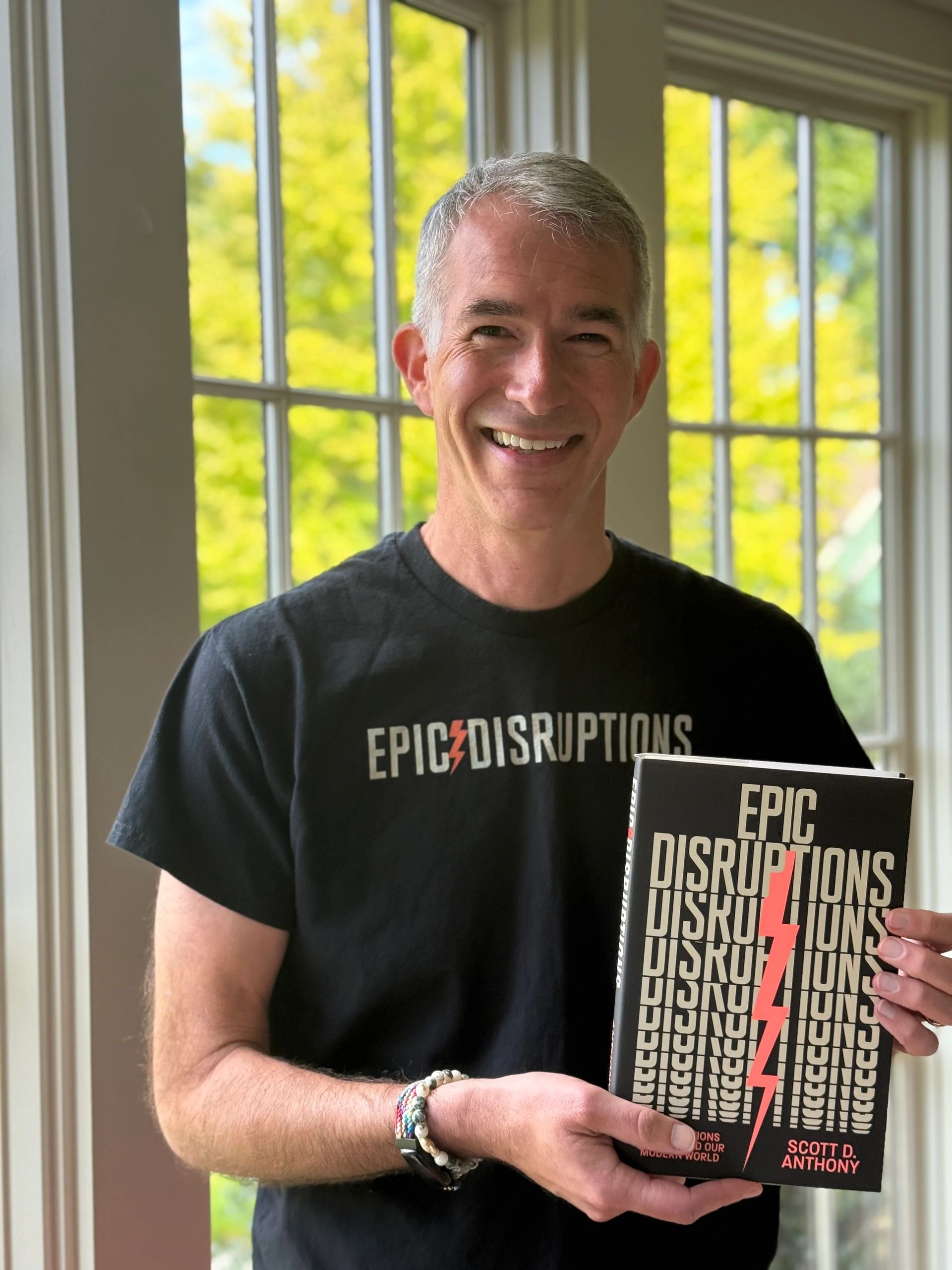


Earlier this month
Writing is a form of telepathy, a way to transmit ideas between minds. And books, well, they are a "...
I have my biases, but in my view, there's just nothing like this time of year at Dartmouth College. ...
Florence Nightingale was a data scientist. History remembers Florence Nightingale as "the lady with...
If you are an Harvard Business Review Executive subscriber, I invite you to join me at the HBR Innov...
The worst advice comes from the people who love you. When you're weighing a genuinely new idea, be ...
I think "disruption" might be one of the most misused words in business. Clay Christensen used to sa...
Disruption isn't done by superheroes! We love a lone-genius story, but the history of disruption do...
AI can make your innovation process faster - it can also make it more mediocre, faster. I got into ...
Who's the bigger disruptor: Musk or Jobs? I gave Guy Kawasaki my answer, and the caveat I'd give my ...
Some of the biggest growth stories of the last century share one move: they took something an expert...
Want a simple checklist for spotting disruption opportunities? Look for barriers. "Anytime there is...
Very much looking forward to being part of the Thinkers50 studio next month along these great people...
It was great fun to join the Illinois Health and Hospital Association Summit today. Particularly sin...
Why do good leaders sometimes have to act against the data? I joined Lisa Kay Solomon and Chris Shi...
September 2026
Want to know what actually makes someone an innovator? The list is shorter than you'd think. In thi...
"For a theory nerd, this is the Super Bowl." That was my favorite line from a fascinating discussio...
A journalist recently asked me to distill Epic Disruptions into a single prompt for the next generat...
One last reflection on Epic Disruption's birthday week. Over the past year, I've shared content fro...