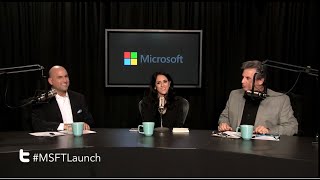
Richard Swart: NextGen Crowdfunding

Richard Swart explains why traditional venture capital falls short and how crowdfunding fills the gap. Reward platforms like Kickstarter work for products, but equity crowdfunding under Regulation A lets companies raise from regular investors. NextGenCrowdfunding provides education, tools, and live events to connect startups with funders.
Questions this video answers
Between 600,000 and 700,000.
About 3,000.
About 300.
Makes over $200,000 a year or is worth $1 million.
$31 billion.
Chapters
Welcome back to the Microsoft Launch Program. I'm Alan Taylor from Inc. Radio with Scott Duffy. He is the author of the book Launch. And Scott, joining us right now, Richard Swart. And he is the number one expert around the globe on crowdfunding. Next gen crowdfunding.
I'm just going to jump right in. I am so excited to have Richard here with us today because when you mentioned he's the number one expert in the world on crowdfunding, like, this is the person that the White House reaches out to, this is the person that the Gates foundation reaches out to to learn about, about this space. Before I really jump into things, I'd like to say this. The number one question that I get from entrepreneurs, the most frequent question, is how do I raise money and what are my options? So I'd like to ask you, Richard, if you could start by helping us get an understanding of, of what the market looks like for raising capital today.
Well, let's start with the bad news. The bad news is there's between 6 and 700,000 businesses started in the US every year. Only about 3,000 of those will receive any angel financing.
Wow.
And about 300 of those will ever eventually get venture capital financing.
Wow.
Wow. So it's an extremely difficult. So literally, it's easier to get into Harvard than it is to get venture capital money. Wow.
And you know what's amazing about that is if you read the paper, if you cruise around the Web, if you read any of these stories about Silicon Valley, it makes it sound number one, like there's capital everywhere being thrown at every company except for a lot of entrepreneurs feel. Except for theirs. Right.
And you hear this on the news all the time, but it's really not true by those facts.
It's not true. And so it's actually kind of reassuring, actually, to hear that we're not alone if we're having some challenges raising capital. Right.
So if you're feeling that and you're doubting yourself, this may be the right podcast for you to be watching.
It's a new opportunity. The crowdfunding laws are trying to address problems that have been here for decades. And unfortunately, most Americans don't know about the problem. They certainly don't know about the solution.
So what are your current options as a entrepreneur, a business owner?
Raising capital, credit cards and personal finance is the first step. Then it's your friends and family. Although in today's social media, I call it friends, family, followers, and fools. So you add in some social media to that, but you reach out to your Networks try to engage people. You then try to find the rich uncle or the angel investor to write you a check to get, you know, proof of concept, get you going. You know, the dark secret of entrepreneurship is it takes resources to be an entrepreneur. The idea that you can just launch a company from your room and be successful in a competitive market is actually a fallacy. It takes some resources. And the question is, are those your resources or do you get those resources from somebody else? And so crowdfunding can step in the gap and help you provide access to, you know, some seed money or actual investment dollars through equity crowdfunding.
So where do we start?
Depends on what you're trying to do. And we need to be really clear. There's different types of crowdfunding. There's crowdfunding where you do things like Kickstarter, Indiegogo and you sell inventory before you manufacture. It's called a pre sale model. Or you say, I want to do something, I want to do a play or have a community project. But basically people are backing your passion because they want to support what you're trying to do.
And with the current form of crowdfunding that a lot of people are familiar with, you go to Kickstarter, you go to Indiegogo as an example. In return for the capital that somebody's investing in your business, you're typically getting like a reward or a perk or something like that.
Absolutely correct.
So you're not getting any kind of equity, you're not getting any kind of ownership. It's all kind of perk or what we reward or give.
Yeah, it's a perk or reward. I jokingly call it the NPR club. You get a T shirt or a mug or some sort of a contribution acknowledgement. But you're making a contribution to back somebody's startup idea. You're not investing in that company. If the company does well, you get nothing back other than, you know, the good feelings for having helped that entrepreneur.
So I think for a while was actually a feel good thing for people.
Well, it still is and it's not going away. The good news is there's now different models which are going to expand the market. Indiegogo and Kickstarter and GoFundMe and hundreds of other crowdfunding sites are alive and well and doing great things for entrepreneurs. And it's still an option to consider, but there's new options as well.
The existing way of crowdfunding for perks and rewards, it's gotten really tough and competitive. I have friends that have used services Like Indiegogo and Kickstarter. In the past, they would work hard to market their deal online. But now you're fighting against or competing against agencies and bigger companies for those dollars. And so the barrier, I think, to being successful is it's a little tougher. You have to put a lot more marketing energy and effort into that campaign rewards.
Crowdfunding space has become very competitive and there's multiple agencies. And what we're finding is large corporations will invest in a small startup and they'll have that startup do a crowdfunding campaign to do market testing. So Sony has done crowdfunding. IBM has done crowdfunding. Honda has done crowdfunding.
Wow.
So if you're actually competing against Fortune 100 brands, you don't even realize it many times that you're dealing with very sophisticated marketing campaigns from huge companies.
All right, so a new law that has enabled a new way of crowdfunding.
There's actually three, so let's very quickly walk through those.
Sure.
So the first one has been around for a couple years. It's called a Title ii raise using 506. Consult your attorney for the details. But it basically means you can go to accredited investors, which are people that are wealthy, that make over 200,000 a year or worth a million bucks. And only wealthy people can buy equity stakes in your company. 31 billion of financing has happened in the last two and a half years using that model. So it's real money supporting real companies.
So those that have the ability to lose a little accredited people can actually take advantage of that. What if you're not accredited?
If you're not accredited, the laws are just now catching up with that. In September, what was called a regulation, a raise, went live. Only one company has got through the paperwork so far, and they raised $17 million.
Wow.
So real. It's called Elio Motors.
Oh, Elio did that.
Elio did that. He did great. There are many other companies lined up. It's like a lightweight going public. In the old days, you could go public when you were small companies. A little tiny company you might have heard of called Home Depot. They went public with four stores in Atlanta. They had a $20 million IPO when they went public. So if you roll back the clock 25, 30 years ago, you could go public much earlier, let people get in early on your business, get some capital, and you were allowed to expand. Nowadays you have to be a billion dollar company, spend millions on legal and compliance costs, and then you're a slave to the stock market. So regulation A Allows companies to raise money just like Home Depot did, just like Yahoo did 30 years ago. Small amounts of money, you know, tens of millions. But relatively speaking, small compared to an IPO market. You can raise money from anyone, accredited investors or non accredited investors.
Is there a limit?
50 million a year.
It sounds like what's really exciting is this is really a new era of crowdfunding that's about to take place.
Well, it sounds like it's next gen crowdfunding. Maybe you could tell us what next gen does.
Well, next gen crowdfunding is a site that allows issuers, which are small companies issuing stock and and investors and the general public to learn about all these new developments. We don't actually provide funding ourselves. Think of us as the kayak of crowdfunding. We're a place you can come and learn and discover and then we will send you to other platforms. Those platforms typically are actually registered broker dealers. I won't go through all the legalities, but basically they can take commissions for selling stocks. We don't actually sell you any stocks. We don't give you investment advice. We're here to help you navigate and make sense of this whole new industry, learn about it. We have the best experts in the world who come together in this company. We're doing educational video and content just to help people understand this new era which is really upon us where the average person can get back in the business of investing in businesses they care about. So it almost bridges that gap which shouldn't be there where customers can now be owners, people that care about your business can now participate with you in the growth of your company. That didn't used to be true.
It almost sounds like next gen crowdfunding is serving as the educational glue to between the issuers on one side and investors as a central place that they can go again to learn and discover how they may be able to use equity based crowdfunding.
Yeah, education is part of our model, Scott. We also are doing events called Ignite events which are opportunities for the companies using this reg a to showcase the fact they're launching in the market. So we are going to provide some services to companies as well as provide education as well as provide some software tools to make sense of and track what's happening.
Well, this is perfect for the Microsoft launch program because now you have one more resource at your fingertips. NextGenCrowdfunding.com Correct.
Anything we're forgetting here, that's the essentials. It's a new era. It's gonna be a fascinating journey for all of us.
And the ignite programs that you're gonna do, will those be all around the country?
Yes, we're still planning on the first one will be at south by Southwest happening March 14 in Austin. But there will be more.
Awesome.
Richard, thank you very much.
It's been my pleasure, Alan.
Again, NextGenCrowdfunding.com this is once again Microsoft Launch Program. You can find more of these shows at MSFT Launch. We're celebrating National Entrepreneurship Week presented by Microsoft. Scott and I will be back with more, so hang with us.
More from Scott









Business & Burgers-Sequence Collection bracelet for National Entrepreneurship Week