From Startup to Success: The Michael Caito Story | Game Changers w/ Scott Empringham Ep.1
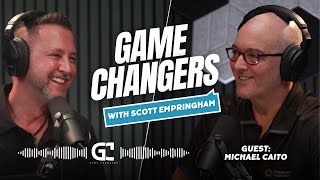
Scott Empringham interviews Michael Caito about his entrepreneurial journey: early work washing windows and learning from his mother, moving to California, and co-founding Restaurants on the Run in 1993 (sold in 2015). Major turning points include early market mistakes, securing an investor who challenged his CEO skills, and discovering MAP (Management Action Programs). Michael describes attending MAP's two-and-a-half-day workshop (DISC and 360 feedback, goal-setting, Monday action plans), ongoing MAP coaching, Vital Factor Team (VFT) meetings to track KPIs, and the six managerial functions (leadership, communication, planning, controls/accountability, staffing, organizing resources). He emphasizes focus, alignment, and accountability, using data as the standard, and the importance of surrounding yourself with people who can help. Personal topics: family (three sons), ADHD (diagnosed later; views it as a superpower), service and EO involvement, and advice to get a coach and peer community. Contact: mapconsulting.com and Michael's email (MC@mapconsulting.com).
Chapters
All right. Welcome to Game Changers. My name is Scott Abraham. Game Changers is all about interviewing top performing CEOs, top performing business people, and finding out what makes them tick, what makes them special, what makes them different. Finding out a little bit more about Michael Cato. I'm here with Michael Cato. He's the CEO and owner of MAP Management Action Programs. He's a friend, he's a mentor. I've learned a ton from Michael. He's somebody I look to to be inspired. I look to him for a variety of reasons. He started a company called Restaurants on the run in the 90s was 6,000 bucks. Built the company with his brother and another partner. We're going to get all into it. Built it 6,000 bucks. Sold it in 2015 for 12 times EBITDA. And was so transformed by using MAP with Restaurants on the Run that you later went on to buy map.
Pretty good. My story down better than I do. Thank you.
Went on to build it, and now you're running map. I went through the MAP program, so there's so much I want to get to. We only have 45 minutes, but tell me, Michael, where did you first get the entrepreneurial bug? Like, take us back to, like, Comic Book One. Where did you first get the entrepreneurial bug?
Okay, Comic Book One, thanks for having me.
Of course.
Grads on the podcast. Yeah, I love the name. It's going to be a lot of fun.
Yeah.
And listen, you know, like, I thought about this a lot, and my initial reaction was when I was, like, 12, you know, I would, like, go to my neighbors and I'd, like, offer just to do any kind of jobs for them. I would, like. I remember I'd mow their lawn, the normal stuff, and I would wash windows. And I remember my neighbor a couple doors down, she's like, listen, Michael, I need you to wash the windows for me, but I need you to wash them with newspaper because it doesn't leave a streak. And so that was my first foray into it. But what I didn't realize until later in life is that my mother was actually an entrepreneur. And I never realized it. She was a dancer, a choreographer. She had two or three hundred kids in her studio, in her. In her dance school. And it wasn't until literally probably five, six years ago that I was like, maybe I got this from watching my mother and everything she used to do to run the business as an entrepreneur and her hard work. And so I told her that eventually a couple years ago, and it was a fun moment.
So Your mom gave you the bug?
I think she did, yeah, I think I. But I didn't know it at the time. You know, you're a product of your environment sometimes. Like, you know, I like to say you are who you're, you're who you hang out with. And you know, I was with my mom all the time and I just, I guess I didn't realize it. I thought it was normal to just kind of have a business.
So your mom sort of inspires you. You're washing windows with newspapers. Now fast forward. Do you have to continue kind of the entrepreneurial journey throughout high school or college or.
Not really. You know, I moved to California from Buffalo when I was 18 and came out here on my own and couch surfed and met my best friend and worked in restaurants and so I was doing the like seven year old kind of college. Well, I was in year seven of like the four year degree.
Right.
Okay. So I did Saddleback, went to Fullerton, and When I was 24 years old, I just like, it just hit me one day and I was like, I need to find an idea for a business. That's what I want to do. And I did what a lot of people do. I wrote it down and I stuck it on. Well, I did what a lot of people are supposed to do. I didn't know the power of this at the time, but I wrote, wrote it down on a post it note, stuck it on my mirror and I saw it every day. And literally a couple months later, my brother and his best friend Matt came to me and they were like, hey, we got this idea for a crazy business, you know, where we deliver food. And I was like, sounds great. Let's drop out of school and do it.
So you did it literally just. They come to you with an idea. Do you do a business plan or just. You literally. Was it inspired? Like, fuck it, let's do it. Let's just do it.
Listen, as you know, My partners were 2020 when I was 24. You know, we, we took business classes, but we didn't really like, I mean, come on. Like, we didn't like, we bought a. Believe it or not, we bought. There was a food delivery business plan kit that Entrepreneur magazine sold back in the day. This is 1993. We bought that and kind of played with it. I don't know how much it helped, but we just, we just kind of like launched, just started, you know, did as much as we could to prepare for it and then just launched it and just totally launched it the wrong way. The whole bit. But, you know, we figured it out sort of eventually.
So I want to talk about. So let's talk about the wrong way. And then a coup of a couple of steps along the journey. So you start out, everybody starts out a business inspired. What was the first big roadblock you hit, which was like the oh moment. Like, oh man, this is going to be a lot harder. Or was there an O moment?
There's always lots of them.
The first.
First big problem we had is, okay, listen, we opened up a food delivery business in 1993. Nobody knows what that is. And we. We somehow sign up six restaurants and we print them in this little, like, pamphlet magazine that cost way too much and way too long to make. And. And we start like, and we print up some little flyers and we get all these restaurants in one part of Irvine. But we decide for some reason to go fly our cars in a different part of Irvine. And as we're flirting in these cars, we start. Occasionally we'll get an order. It takes a long time, but the food is like 10 miles away in a different part of Irvine. So that was the first big mistake. The second thing is we start flyering all these cars, and the next thing you know, the property managers are calling us saying, you gotta remove these flyers. So we're literally flyering and then deflying cars as we're trying to start this business.
Were you doing the flyering?
I wasn't doing the flyering. My partners were younger than me, so I made them do that. And I got to sit in the office and probably take naps because the phone wasn't ringing. But organized work behind the scenes on what was going on in the business.
So you were flirting cars. So two mistakes. One, some people were calling you saying, take the flyers off. And then two, you were also flirting them in the wrong neighborhoods.
We misread the market. Meaning, you know, we thought that our business. So we looked at our. If you talk about it in terms of that, we'd all understand. It's like our supply chain and our client were not in the same place. They. When you're delivering food, they need to be sort of on top of each other. You want to make sure your supply chain of restaurants is near the clients you're trying to serve. And this is Irvine, California. There's plenty of restaurants and plenty of places. So. And we just somehow didn't figure that out. That's funny.
Okay, so. So at what point or what was the cue that you first realized, hey, this, this could take off?
I think what really was the cue was we finally started getting some orders coming in and they started coming in on Fridays, which that was when customers were eating and companies were feeding their food. So when we got our first big order on a Friday, that's when we sort of started to realize, okay, we're onto something here. And, you know, so we doubled down and we, you know, really, we were running this business during the day and we were working in restaurants at nighttime, you know, because we needed cash flow for our personal lives because the cash from the business wasn't going to pay for it. So once we got a little traction during the day, we, you know, quit the jobs at night and then go full time into the business and make sure that what we, we were already full time. It's just we were now instead of working, working on the business during the day and working in a restaurant at night, now we were working day and night in the business, which was great. And so it slowly got some traction and then it just started building on top of it.
And how many employees did you finally. How many employees did you have at that time? Any employees or would you just be three?
In the very beginning, we would just be the three of us. And then we started bringing on people and we would, you know, as my partners would deliver food, they'd bring back the money and the tips that they would get and we'd put it in an envelope and we use the tips to pay the other drivers their hourly rate. So we were bootstrapped to the max.
Do you remember your first employee?
I don't. I remember a bunch of the first crew.
Yeah.
And, yeah, and we're, we're still friends with some of those people. Like, we're, we still stay in touch.
And who are some of the initial restaurants now? I was, I was now I remember in like 84 or 83, somewhere in there, I lived Emerald Bay. And we were big restaurants on the run. Interesting fans. Yeah. Emerald Bay. We, my dad, my mom and dad ordered it all the time. We ordered all kinds of food right there from restaurants on the run.
So we were, yeah, when we first started, it was like, it was. We took what we could get. Sandwich shop, Green burrito one. One really high profile restaurateur. And chef David Wilhelm.
Yep.
He gave us a chance out of one of his restaurants in Irvine. And that was kind of a big break for us because it gave us a little credibility. Listen, we were, we made a lot of mistakes, but the one thing we did right not knowing it is that as we were building this business from scratch and going at a market that people. There was no marketplace for it yet because people didn't understand what we were doing. We would position ourselves with restaurant brands that were credible already. And so we were co branding. And so when we would go to corporations and drop off the flyers, they would see brands that they knew. They probably didn't even know who we were, but they were like, oh, restaurants down there where you guys deliver food from these restaurants. They trusted the brands, which meant that we were leveraging the trust of the partner. And I still think partnerships are one of the greatest ways entrepreneurs can grow their business. It's a channel that they can work through. And especially if you've got the right channel that's got access to the kind of clients that you want and that's a trusted brand. And we were doing that and didn't realize we were doing it. And we were lucky.
And I want to touch on that for a second. So people talk about their ideal customers. I think if I remember your story correctly, you didn't always know it was businesses first. You thought your customer was maybe the end consumer. Just, you know, residences.
Right. We started the business. We were right when we started. We started with business to business, and then as we got more successful, we opened up for the business to home, business to consumer market. And so as time, you know, grew, we were. We were working in both segments. So during the day was businesses and at night there would be businesses. And then in addition to evening, also included residential delivery to homes. So we were doing both, which to the outside world looks like the same business. But internally they both run the systems you need to run. Those two businesses are different. And so there were literally two businesses within one, which eventually we learned the hard way was maybe not the right way to go.
What was the hard way? Tell me about the hard way.
Well, the hard way was when we weren't making any money. And you know, I had an investor, we had a small investor because I made some bad choices. I blame myself on some things that we spent money on around technology. We were. My partner, Anthony and Matt were brilliant in what they did. And. And Matt came to us and said, hey, we need to get. We need to be early on the Internet. Yep. And so we started really investing in technology, a platform that we could own. And we lost a bunch of money with the wrong partner on that, the wrong, you know, vendor. And so we raised a little bit of capital. And one day I was sitting with the investor, like, we're sitting right here and he'd ask. He was friendly and he asked me a lot of great questions and I couldn't answer him. And after rounds and rounds of that, quarter after quarter, he eventually told me, in so many words that. And you've heard me say it before, if this was a publicly traded company, we'd fire you as the CEO. I didn't understand what the drivers were for our business, which meant I didn't understand the profitability and where all the cash was going. And that was the first big slap in the face.
And so he tells you, he gives you a slap in the face. He says, all right, if you were. If this was a public company, you'd be fired.
Right.
What was your first step? Now, was he a MAP guy at the time?
No, no, no, no. He was just a. Just an investor, you know, corporate lawyer, great investor. And, you know, he saw what we were doing and was able to recognize that there was something here and, you know, invest in us. We met him through our cpa. So, yeah, that's kind of the way that story came together. Yeah.
And you tell a story, you have like a philosophy of humble, hungry and smart. Is that right? Do I have the right ones?
Well, I talk a lot about, like, you know, you want to be around people that are hungry, but hungry to grow and. Humble. Yeah, humble but willing to learn. Like, those are traits that I like as far as, like, entrepreneurs and CEOs that I like to be around.
Well, and that's one of the things I admire about you is despite your success, you're humble. And at that moment, you got that sort of wake up call and you were humble enough to say, okay, how am I going to get help? How did you find map? What was that process?
Yeah. So, you know, fortunately I was in EO at the time, the Entrepreneurs Organization. And coincidentally, my partner Matt had actually introduced me to it. And he never joined and I did. And so that was a life changing event for me when we. When I found EO and my closest friends, now you. Other people I've met through eo, so I went to my forum and I said, I'm a mess. I need help. And they were like, well, we're a mess too. We need help. And fortunately, there was a cp, my friend Chris, who is in eo and he was in the forum and he was a cpa. And we all talked for a little bit. And then a couple days later, I get this phone call from a guy by the name of a guy by Ed Stein from MAP and shout out to Ed Stein, Philadelphia Eagles fan. And he said, you know, this guy Chris said that you might want to talk to us. So I talked to him and I told him what was going on. He goes, well, you should really go to this workshop. We do this two and a half day workshop that MAP does that really focuses on you as the CEO and also shows you really how to run a business. I said, okay, sign me up. So I go to this two and a half day workshop and I'm just like, oh my gosh. Like, it was like the transformational moment for my career, one of the transformational moments in my life, because I figured out like, okay, this is what it means to lead, this is what it means to manage. This is what it means. This is how I get balance in my life. This is how I work on my business. This is how I train. I mean, it was just like I had a toolkit to run the business. And so I walked out of there and my two partners went. And then we're like, we need to do this. They trained us. But we're like, okay, they trained us in all this great stuff, but now we got to put it into our business and put it into our people. And I'm like, Mr. Shiny Object Entrepreneur. Michael isn't the right guy for that. So we brought in a consultant from Mappin. For 15 years, we had a coach in our business working with our executive team every month for a half a day. Really, like, looking at what matters. Like, are we measuring the right things? Are we goal setting against it? Who owns it? Are they being held accountable to it? Pushing that through the entire organization, up and down the organization, every city we were in, every person knew exactly what they were measured on. It was, everybody was goal setting. And so as we're doing that in the business, we're simultaneously skilling up all our managers. Because we're sitting here saying, we want to work on the business, but what about the managers working in the business? Is anybody going to train them on how to be great managers? So MAP helped us with both the accountability system in the business, which was the meat and potatoes of execution, and then skilling up our managers to actually be managers. So that's the story on how I got connected to map.
So can we talk about the workshop just for a second? Now? I had the unique opportunity. Oh yeah, you went to go to the workshop. And so a lot of people would say, well, two and a half days, what am I going to learn? What's the takeaway value? How would you describe. Because I've got my own sort of Version of the description of my experience. And it is an experience, that two and a half day workshop. How would you describe or how do you describe the two and a half day workshop for entrepreneurs who are saying, all right, I do want to scale my business, I do want to grow my business. I got those common problems. I'm working like hell and I'm not getting the results. How do you describe the workshop to people to give an idea of what it's going to be like?
Well, listen, it's like I said, it's really a deep. First of all, you're in a peer group of about 12 to 15 people from different industries. Nobody from your employee, nobody from your company. And it's really. We do a lot of pre work. Matt did a lot of pre work on me, you know, talking to people, doing surveys, really understanding who I was so that they could customize my experience in that workshop. So I'm in there with 12 to 15 people. But it's, it's. And we're running one the same workshop, but everybody's got a customization to how we're interact, how they interacted with them, because we knew what made them tick from their, from their employees, from their peers, from their bosses. We also did a behavioral. You know, you also do a behavioral style test on you as well. It's called disc. So when you're in there, you're like having all these aha moments of like, okay, so this is where I'm good, this is where I'm bad. This is where my people think I need to be better. This is why I'm not better, because of my behavioral style and how my personality is. Oh, but on top of that, there's six things you really need to get right in your business. And I just learned about those six things and how to do them in my business. And so you just walk out of there with like, okay, I just had the light bulb turned on on how to run a company, on how to run myself. So that's the way I describe it. How do you describe it?
Yeah, I would describe it similarly. I would describe it as an experience. I love the way you described the very. The first day is super eye opening because you've got the disc analysis. So you're looking at your behavioral style. Some of those things you get in the360 from people you work with, your, your team, and you're getting that unvarnished feedback and input about some of your strengths and weaknesses. I remember, I remember one of the experiences I had is you've Got everybody's. Everybody's sort of description up on the wall.
Yeah, yeah.
And I remember the. My coach, man, he was fantastic. And he's like, okay, pick, pick which one you think you are. And there was one up on the walls, like, strong leader, great communicator, all this great stuff. And then a bunch of crappy ones and some other good ones. But I was convinced it was like number nine, which was the good one. And so of course he matches up. He goes to 6, 7, 8, and he averaged up 9 to some woman next to me. I was like, damn, all right, well, which could be me. And I remember the next one was. Was me is the one I didn't want. And it was like Mrs. Details, you know, lobs things over the fence with no communication, like all this feedback from my team. That was tough, but it was exactly what I needed to actually address the problem. So it's like a dose of reality. It's unvarnished feedback to really see where you are accurately. And it's like in EO we talk about the blind spot. So it was a major blind spot reveal, and then it was the tools, the techniques and the experiences to actually work on those blind spots. Because during the course of the two days, you actually are working on some of those things and coming up with action plans and writing down what you're going to do and how you're going to do it. And then of course, there's a graduation event that I know is a pretty prized secret sauce, but it's a great sort of. There was that exercise that we did as a team at the end that was phenomenal.
Well, you know, it's so funny when you said that, you know, MAP is about action. Like I like to say it's meat and potatoes management action program, you know, but we just call it map. And a lot you can do a 360, you can get that stuff done for you, but it's really about what's the work that's gonna happen after you get it. So, you know, you get that on the first day and for the next day and a half, you're working on you, you know, and you're learning what it's like to be a great manager and a great leader, but taking everything you're learning and applying it to use that, you're developing your, you know, you're building your Monday morning action plan. Like, how are you gonna be better on Monday? And that's the difference. Like, we lean towards. We're biased towards the action. So it's not just, hey, let's give you this stuff. No, it's like, okay, what are we gonna do? You're making commitments in that room and then you're following, you know, get together with that group again, you know, six to eight weeks later. And it's like, well, how did I do on everything I said I was going to do? And you're learning about setting goals. You're walking out. Everybody walks out of there setting tangible personal and business goals. I don't mean fluff, I don't mean action steps. I mean real goals that are going to drive the business. Real goals that are measurable, that are going to drive the business. And that's the power. Because then once you take that concept that you learn and you say, let me put this in my business, and you've got everyone in your company goal setting about the right things that they should be goal setting about the right drivers of their job, of their team, of their division or department. You talk about alignment in the organization and focus, and ultimately what happens is your business accelerates.
Yeah. And there's a tipping point that occurs too, because I sent my manager there through it too. And so her and I were on the same page. My CEO is now through there. And so now when we're talking about the daily huddles, the vital factor team sheets, she can run a vital factor team meeting. I can run a vital factor team meeting. And there's not that, that dissonance that occurs if you and some, a key player are not in the same. They don't value huddles the same way you do. They don't value the VFTs the way you do. Now, we speak the same language, we value the same things, and we're going the same direction. Just that, that 1, 2 and 3. And now our whole team, we do the VFT meetings every Monday. And it's been a game changer.
Well, it's like. So VFT is the acronym, is Vital Factor Team Meeting. And what that means is. And you learn this in a workshop, vital Factors are their KPIs, except they're the most important KP. There's a principle called the Pareto Principle, where 20% of the work or 20% of the people can create 80% of the results. The same thing in your business. We can measure a million things, but there's 20% of those KPIs that really, really matter. And the trick is identifying and discovering what are the KPIs that matter at the executive level. What are the KPIs that matter by each department. And so that's great. So once you do that, now you can have this vital factor team meeting every month in every part of your company. And the meeting runs the same way. And everybody's goal setting, everybody's being held accountable. You're all talk the same language. It's all cascading up and down the organization. Because what's vital to you as a CEO in your business, there's things that aren't vital, but they're vital to somebody else. And the trick is figuring out where those layers are so that everybody's focused on what's vital to them at their level of the organization.
I love that. Oh, sorry, sorry.
Go ahead. Super powerful.
You touched on something so much, I want to dig in there. So there's companies out there that might be listening and they're saying, okay, I think I get benefited from that, but I've got a bigger problem. Me and my partner aren't the same page. So how can map help me with that? Because there's personality conflicts. We're not. We don't value the same things. We're going in different directions. Can MAP help those businesses that maybe key people are not agreeing right now?
Well, yeah, and the way that happens is, you know, let's just take that scenario. Those two. Those two partners would probably go to the workshop, sit in different classes, potentially at the same time. And so a lot is going to come out of that. And they're both probably going to walk out of there seeing things a little differently. If they bring a consultant in or a coach into their business, the coach's job is to make sure that that team is what happens with the vital factor team meeting process. Okay? It's so simple. It's just so simple. And the outcome of having those meetings, having a coach facilitate that meeting at the executive level is you get. We don't even talk about it much. But like, I'm sitting here and I'm watching this, and I'm like, the teams really are formed. Teams really come together through that process. You know, not only do they come together, but they learn how to communicate better. And they all get on the same page and start rowing in the same way. So you're creating by discovering vital factors and understanding who owns what and goal setting and having this regular cadence once a month, which, in essence, all you're doing is measuring performance and comparing what we should. Where we should be going as a company to where we're actually going, making sure we're on track individually as a team and as A company. And so what happens when you go through this over and over and over again? You get great alignment, you get great focus, and ultimately, you get the discipline you need to accelerate the performance of your company. Like I said, you've heard me say it. We, as an individual or as an organization, we are what we think about. So think big. We are what we repeatedly do. We are who we hang out with. And it's the same thing in business. What's our vision? Where do we want to go? That's our job as a leader. Okay, and then what are we repeatedly doing? I believe that this meeting is the most important habit because it's where you get alignment on what we're doing as a company, how we're performing as a company, and we're measuring it. So. And then, of course, we are who we hang out with is you get to kind of get a coach in there. If Tiger Woods, Kobe, everybody can.
Why?
Why do we not have coaches in our business? It's insanity.
Right, Right. Which is. Which is part of the accountability. So one of the cool things about the workshop that I loved was I don't know whether it's like 30 days or 60 days. I forget that the number maybe. Maybe, you know, off the top yet, but I remember, like 30 days afterwards or six days afterwards, we had an accountability call.
Yeah, like 60 days. Yeah.
That's. Everybody from our graduating class jumped on a call, with the exception of maybe a handful of people. And we had to step up and talk about where we delivered, where we fell short, why we fell short. But just that one accountability gave me a taste of how important it was. Because in the back of my mind, being competitive, I wanted to be on that call in 60 days and actually say, yeah, I did this. And so I was looking at my sheets, I was putting them in front of me saying, I set these goals. And just that difference. Having a coach, having accountability, being accountable to somebody, even if it doesn't even work for me. I did this workshop, so I owe him nothing. But there's that thing in my brain that wants to.
Yeah, well, that's because you're an A player. And guess what? A players want to win. And we have people in our business. We want to have the best player. Not only do they want to win, they want help. That's why I love the map. That's why I bought map. It's like we show a players how to win. We give them the accountability. We put the accountability. The metrics, they. They're competitive. And you sit in that meeting and you're reporting out on each other. Oh, my goodness. Nobody wants to be the person that gets two goals of five. So your top people want to be measured. That's what MAP helps you with. The second thing they want is they want development to get to the next level. We help with that. That's why I love what we do. And for me, like, I just came out of an EOA accelerator training for the. I trained strategy today for all the accelerators for about 50 people today. And, you know, I learned so much. And I said to them at the end, when I said, what's everybody's key takeaway? I said, listen, my key takeaways, we've got to be laser sharp on who our customer is because we want to make sure that our customers are the ones that really understand we want customers. We want to focus on clients that we can really help by what we're really good at. Meaning the clients that are, you know, 5, 10 million, 20, 30 employees that are blue collar from a standpoint. They believe in developing their people, but they also know that they need to put accountability in place because they want to grow their business. Those are our clients. They don't. That's what if that's what they need, guess what? We're the answer. And that's part of strategy. That's really zeroing in and focusing. And I'm off topic here, zeroing, but I'm talking about it all day. That's really the power of focusing on understanding who your client is and making sure that your activities, your capabilities, your capabilities of delivering value match up to that client really, really well. Really well. So much so that you're hard to copy. So much so that your customers look at you and say, yeah, there if you got this issue in your business, you want to develop your people, you want to put a guy. This is the company, that's the only company. And that's how we all got to think about our business.
Yeah. And I love the three sort of principles. Focus, alignment, capability, or, excuse me, accountability. One thing I want to just get your, get your take on is I think accountability is a huge part of MAP and having everybody accountable for those businesses that have people in their business. I love what you said to this. You said something about this about the data is the.
Is the.
Is the data is the end, not the data is the enemy, but the data's the teacher. Rather than you've got businesses where maybe somebody at the business doesn't want to confront the bad performer. Performer. But the data then becomes the bad.
Guy, the data, the standard. The standard. Let the standard be the villain.
Tell us, tell us a little bit about that. So now picture a business owner's watching this saying, I've got a couple underperformers, and I'm. I suck at giving them the feedback, and I struggle with that. So tell. Share how the data can be the standard.
Listen, I think when people, like I said a players want to win, they want to know how they want to be measured. Our people want to be and need to be measured. So picture that you've got a player, they've got three to five, you know, things that I call them vital factors. These are the things that, you know, we really measure you on that are vital to your performance. And they set goals against those every month. And so if they're not hitting their goals, like the standard is the villain. Listen, you set this goal. This is the standard. You're not hitting it. And so what makes it easy? Right? Listen, these conversations are difficult, and they're really hard for me. I consider it one of, definitely one of my areas that I need to focus and be more. Be better at, have more improvement of having these candid, difficult conversations. But holding people accountable doesn't have to be a difficult conversation because if someone doesn't hit their goal, their performance is low. And you're not going to know their performance is low unless you're measuring it. Too many people are like, oh, you're not doing well. How do you know I'm not doing the work? Well, if you're measuring their goal setting and you're measuring it, you can see. And if they're not, if they're not hitting their targets, you can ask them, what's your corrective action? Put it back to them. Don't be like, well, no, no, no. What's your corrective action? That's it. And then you can watch them over the next couple months and see how it's going. So it's so powerful. It's, it's so, it's got, it's easy. But, like, we don't know it sometimes because we get caught up in the complexities of our own business and we don't realize that something as simple as measuring the right things in your business and letting people go set and having a way to a cadence to review it, how powerful that can be in changing a culture.
Sometimes you don't realize how important something is until you lose it. In 2018, I had a business, $10 million in sales. We're going to 11, 12, 13 million everything was going right. I wasn't managing my KPIs. I had people that. And I want to hear your take on it. I had people in my business that were on board. Terrorists, they were just terrorizing the company. But I wasn't managing things. I wasn't holding people accountable, and I lost everything. When I restarted my business, I barely had two nickels to rub together. And the first thing I put on my annual goals was map. I knew you. I knew about map. I'd heard all this amazing things, but then I knew 100% that one of the reasons I lost that business was I didn't have a system. I didn't have a process. I didn't have coaches. I didn't have accountability. I didn't have somebody looking over my shoulder. So there's so much I want to dig in there. How many people come to you in that state where they're like, I get it. I'm on board. Or are more people kind of, like, new to it? Well, how can you help me? And where are they in their process? Or is it all over the map?
No pun intended, all over the map. I think it depends where they come from. Most of our business will come from, like, referrals. So people are like, okay, I see this guy, this company, doing this. This guy or girl. And they're like, we kind of want to do that. And that's mostly how it comes in. But they generally. But we interview them, go through the process, make sure it's a good fit. But, yeah, they're generally having any one of those challenges you just mentioned, from, like, overworked to, you know, they can't measure their people to. There's no accountability to, you know, any of those scenarios that you can imagine. You know, those are. We all put systems in our business for the most part, around marketing, sales, maybe some operational stuff, you know, but we rarely say, well, what do we have a system to manage the people, manage the company.
Right.
That process of making sure that we're actually getting done everything that needs to get done. And that's the power of putting a system, whether it's, you know, MAP has one, Gazelle's Scaling up has one. There's eos, There's a couple different out there. And as long as you're running something, you know, that's really going to help you make sure you've got your eye on the ball all the time.
And I like how you guys simplified, too. And maybe we don't have time to dig into all of these, but, like, there's six functions of management. Could you just point out a couple of the functions of management that people will be able to walk away with, not just from the workshop, but when they hire a coach that they're going to be focused on every week, every month, every quarter to crush it.
Well, listen, first of all, I want to make sure that whoever's listening here is getting good value. So thank you. This is a good question because I want to make sure there is something that they can take away. So we look at a business and we say there's six fundamental. There's six fundamental things managers need to get right in any business. That's it, six. And you can drill down underneath them. The first one is leadership. Okay. You know, from a CEO's perspective, it's our job to make sure we own strategy, make sure we own the vision, but we need to be able to lead our people. We need to inspire and empower people to performance. Okay? That's number one. Number two, we need to be able to communicate. Okay, can we, you know, what we talk about and teach in the workshop is about the communication loop. Playing back what you hear from somebody. So you're listening. You're not listening to respond, you're listening. And even if you are listening to respond, you're still listening. And then you're playing back what you hear for clarity and alignment. Just a simple little tool. I mean, there's more to everything in communication, but that's like, that's an example of something that managers don't get right. Okay. They may say something to somebody about what to do and then they don't ask them. Play it back for me. Okay, so there's that. Then you've got planning. A lot of managers don't know how to plan, don't know how to put a plan. And I don't mean just the company plan. How about the plan for the department? Okay, how about a personal development plan? How about a corrective action plan? So that's planning. You have controls. Controls is really about accountability. Controls is about is your business under control or out of control, and how would you know it? So controls are about the dials, the vital factors in your business that are either going to hold you back or propel you forward. Propel you forward. And understanding what those are, making sure there's owners and making sure that people are setting goals against it. That's a fun. That's one of the six fundamentals functions of a manager. It's 4, 5. Staffing. Managers are notoriously bad at recruiting, hiring, onboarding developing and we've got to get that right. And the last one's organizing resources, which is, you know, do you have an org chart? Do you know how to delegate? How's your time management? Those are the things that go into organizing. So six clear things that the manager has to get right. And there's another level that I could go into where it's six across those same six dimensions. Things that the company needs to get right. But those are them. Do you, are you leading and is there a vision for you, your department? Do you know how to communicate? Because you got to be able to talk about this on a regular basis and inspire. Do you have a plan? Do you have metrics to see if you're on track for that plan? Do you have the right people to execute that plan? And do you have all the resources and allocated in the right spots to help you succeed at executing that plan?
And one of the things I love about each one of those functions, by the way, if you like checklists, if you, if you're like, well, that's all great theory. One of the things that you guys did, which I think is brilliant, is for each one of those functions there's literally checklists and worksheets. So if you forget, it's like an airplane, it's like a pilot taking off. You could literally go down and say these six or ten things make great communication. These things are things of common mistakes. But it's literally a checklist that you can go through with you, your team, team. And it's scalable. You could hand it to your manager.
I love this. It's like what you do, what you don't do, that's the step. Everything is simple, everything is geared to be simple. And like listen, management, we're talking about management leadership. It's not sexy. But guess what? When you get it right, it can be sexy because you become a great leader and your company performs and you have time to do the things you want to do, like be fit and work out and stay healthy because that's what your family needs.
It's so true. I've, I've only been using MAP now for I think a year and a half, two years. And I've been able to let go of the day to day within a year and a half, two years and do things like this good and start to scale up. And I so grateful your growth.
I've watched you over the last couple years. I mean that story you just told about, you know, going from, you know, double digit million dollar business to not Having nickels and everything going on in your life and like, to be able to, you know, the hero's journey, to be able to come back and do what you're doing right now and be taking the time to have these great podcasts. It's like giving. Not only building your business, but giving back to other entrepreneurs. It's like you're a hero to a lot of us. Congrats.
Well, it's funny, along those same lines, I think that. And I was going to ask you the same thing about the work you do in EO and accelerator. I had a unique good fortune. It was sometime in 2018, 2019. I just lost my shit. And I was a member of eo. Keith Fiskus, the president of the time, he calls me up, says, I want you to be the Markham chair. And I said, I can't be in the chair right now. I don't even know whether I'm gonna be in this house. I don't know how I'm gonna. You're gonna be in the Markham chair. So I'm in the Markham chair, and I get an interview with a guy doing a podcast named David Meltzer. David Meltzer. And I asked him for advice on how to rebuild. And he gave me some great advice that you are a living embodiment of. And he goes. And I was asking about the things I need to do. He goes, forget what you need to do. Here's what you need to do. You need to serve, you need to give. And I said, dude, I don't have shit to give. And he says, you're missing my point. Next meeting, you go to think to yourself how you could serve. Think to yourself how you could give to another person. Maybe it's just a great attitude. Maybe it's a great question. Maybe it's. Help them with their business, be thinking how you can help them, and it'll shift everything. When you start thinking about how you can add value, it'll change everything. I was just getting ready to go to the. The S. Salt Lake City GLC deal, and I started asking that question, and I started thinking, well, wait a second. I'm the Marcom guy. I will take my phone. I'll just start interviewing everybody, and I'll bring it back to EO Orange County. And I met some great people. Mark Eaton and the Iron Cowboy and all these guys I was doing these interviews with. And I just thought, how can I serve? And so I want to get to this before I run out of time. I have to ask you on a personal level. And I hope this doesn't make you uncomfortable. You have one of the most beautiful houses and the most beautiful family. You don't need this. You don't need to do half of the shit, 90% of the shit you're doing. But you're with EO, you're with entrepreneurs. You spend time with me like when I had nothing, dude, you were spending time with me coming over my house. Have me over to your house. The stuff that you do blows me. Why the fuck do you work so hard when you don't have to? Half of us don't want to work. And you're still in the trenches helping people like crazy. Why do you do that?
That's very nice of you. Serving others is what life is about. Like to me, that's where the greatest joy and gratitude comes from, you know, filling buckets, you know, being kind. I love to see other people win. I like to see, I love to see other people succeed. And I get more joy from that. I'll tell you a quick story. You know, with kids you like, you try to, like, you try to teach them that, you try to teach them that. The power of giving and serving and what you get from that, like there's nothing like those moments when you're doing something and you help a stranger with something and they look at you like, did you really do that? That feeling you get is really hard to recreate of when you help somebody and you give that. You don't want anything back, you're just helping somebody. And today, especially in this world, you don't get that as much. My son, my 18 year old son, I was so proud of him. Like, I didn't know he had this in him. And one of his best friends, one of his best friends was like having trouble sleeping. And my friend, my son's got his first job and he's making money. Of course he spends it all. And a Fitbit sitting on my counter. I go, he goes, dad, do we have any wrapping paper? I'm like, for what? He goes, well, I got this Fitbit for my friend Ryan and I'm going to wrap it up. He spent 200 of his own dollars. I'm going to give it to him because he's having trouble sleeping and this is going to help him. And I'm like, I didn't even know what to say. I was so proud of him. And I said, you know, what's that feel like when you know? And I'm going to ask him because I know he just gave it to him. What did that feel like when you gave it to him? Anyways, that's a long answer. Thank you. It's. I don't know. It's like you said. How do you get better? How do you stay. How do you stay on top of your game? You serve. You serve and you learn.
Fatherhood. Being a husband. You have this amazing company. You have all these employees. You help all these different people. How do you balance it? What advice do you have for entrepreneurs that are growing their business, trying to scale their business, and are finding, trying to figure out a way to integrate all the different parts of their life, their family life? Like, you're a family man of how many kids you have?
Three boys. Three boys.
Three rambunctious.
Yeah, it's a nightmare.
Three rambunctious boys, all these employees. How do you balance it all? What advice do you have for people to help integrate the different parts of their life? And you're at your baseball games, your football games, you're all this stuff. How do you do it all?
Well, listen, I'm not an expert in any of this, especially if you'd ask my wife. But it starts with my wife, number one, having the right partner. I've been blessed to have an amazing wife that supports me and supports the family and then allows me to do the things that I love to do and the things that I have to do. And once you get beyond that, I have a philosophy that I learned from Warren Rustand, who is an incredible mentor to a lot of us that listen to this. And, you know, he taught me the power of. And I frame it like a bullseye. And like, when I would speak to audiences with an eo, I'd say, listen, you know, EO empowers us all to be better, better in our personal life, better in our family, better in our business, and better in our community. But what another way that I state that is, I say, like, listen, it's really important that as a CEO or an entrepreneur that we're really strong. I. For me, it's physically first. Like, I like to make sure that I'm taking care of myself physically first, because that. That puts my mind in a better spot. So if I'm focused on me, that means the next rung out of the bullseye is my family. I'm going to be better in my family. I'm going to be a better dad. I'm going to be a better spouse. If I feel better physically and I feel better mentally about myself, if I'm feeling better about myself, I'm better in my Family. If I'm better in those two areas, I'm going to be better in my business. I've seen too many entrepreneurs that go to work, they're going through all kinds of chaos in their personal life. It's like you can't optimally perform. And so that's the way I structure my life. And I say, you know, start from the inside, personal, family, business. And then if I'm clicking on all those areas, it allows me to really engage in the community and serve in whatever ways I can serve. And so that's how I look at my life. I'm not saying I'm great at time management, because I would say that I. Everybody I feels like they could be better. I mean, you know, but that's kind of how I look at it. And if you. And if. And if we're doing things we love with people we love or people we like, you don't have to love everybody you work with. But I mean, like, you know, if you're doing something you're passionate about, you're doing something you're good at, doing something, you know, if you're talking about your business, something you can make money at, I mean, I think you put those things together and you can enjoy life.
How did you manage, and I hope you don't mind me asking this, you're pretty public about adhd.
Yeah.
How did you turn that into, like an advantage? Like people who might be struggling with something like, like ADHD or anything else, You've seemed to turn it into almost like a superpower where you've pointed in a direction to create businesses and create opportunities and focus on these opportunities. How did you do that? Was it a process? Did you do it on purpose? Did you do it accidentally? Did you have a mentor now?
I just think I eventually got to the point where I realized, like, first of all, I was never diagnosed until my oldest son, Dominic, was being diagnosed as a 4 year old. So this was 16 or 14 years ago he was diagnosed. And as they're telling us about Dominic, the therapist looks at me and says, michael, how do you deal with it? And I'm like, it's hard. Like, that's why we're here. We need help with this. And she's like, no, no, no, no. I mean, how do you deal with yourself? And it was then that, like, I really was officially, like. She was like, you have adhd. And I was like, well, that explains a lot. And I looked at it as a positive because the energy, the focus, the way I can get into things I get distracted and stuff, but, like, I'm okay with that, like, once we're doing something. So I look at ADHD as a superpower, and, you know, they. My son had to have medication in school in order for him to be successful. So, of course I tried the medication because I wanted to know what he was feeling from the meds. And so I liked it. And so I'll. Not every day, but occasionally I'll do my 10 milligrams of Adderall, and I'm like a madman, and it's great. And what I learned is Adderall is people are like, well, you have adhd, you can't focus. And, you know, but the meds help not only help me focus, but they're also very motivational. They're very, like. They, like, get you going a little bit. So, anyways, this isn't about meds. I take a little bit of here and there, but it was more about that. That story is more about, you know, I took the meds to understand what my son was feeling. But I think ADHD is a superpower, and I think every entrepreneur does. I mean, this is. This is obvious. Like, if you're. If you're an entrepreneur, you're probably adhd. Not everybody is. You know, but it's. It can be. It can be a curse at times. My wife will tell you, you know, she's like, did you take your meds today? Anyways, whatever. It's. I'm okay with it. And I believe we all have. We all have to look for our superpowers and figure out what they are and leverage them and to, you know, to make sure that we're using them for good.
Speaking of which, what. What situation or challenge in your life, you know, biggest setback, biggest problem, like mine for sure, was losing all my stuff in 2018. You know, family, wife, everything.
Yeah.
Transformed me was. Can you think of a time in your life that was absolutely. A pit, like Troy Hoffman calls the pit of a period in your life that absolutely transformed you for the better. Like, no question, no if and.
Or.
But it taught you X and if. So what was that pit? What did it teach you?
That's interesting. I mean, the pit, professionally, was when my investor told me, you know, you're crap as a CEO. I've been told that twice. I was told that, like, a year ago when one of my really close friends who's a consultant and successful author and business owner, multi businesses, she came out to my workshop, and she's like, I don't know what you're doing here. But like, like everybody wants this. You've got yourself. This is a hundred million dollar company. I'm not sure what you're doing right now, but like you better get crap together because this thing can change lives and change businesses. And so I've been like, I've been really thinking about that. I would say when I was a teenager, I was going through a rough patch as a 17 year old and my in back in Buffalo, New York and my uncle, who I didn't really know, flew me to California and showed me a different, I mean I was in Buffalo, like I didn't see anything. I'd never even really been on a plane besides a couple of trips. And I came to California and saw what California was. You know, I had only seen it on TV and I was hooked and I loved it. And a year later, after I graduated, you know, from high school, I moved to California. I didn't end up in Hollywood where he is, but I ended up down in Orange County. And that was a tough time in my life, like in my teenage years. And my uncle and aunt, I credit them for like really, my Aunt Sue, Aunt Susan, Uncle Buddy, really credit them for like bringing, pulling me out. Like they didn't even really know me that well and they just pulled me out, showed me something different and it transformed the rest of my life. You know, I don't know if that's so that, that's another one of those moments. We've had a lot of business moments, but most of the moments are more, more like those two that I mentioned, three that I mentioned.
What single piece of advice would you have for an entrepreneur that wants to grow and scale the business? What's like the best scaling advice or professional business advice you think you ever got or you'd give to somebody that's just starting out their business? They're at 1 million, 2 million. They're struggling in that area. They want to break out to 5, 10, 15, 20, 30 million. What's the single best advice you could.
Possibly, possibly get around? People that are doing it, that have been there or going there. People that want to help you, that want to, that want what's right for you, that want to help you get to where you want to go, get around those people, Get a coach, get in a community of like minded people and, and start listening and then start doing. That's the bottom line. Like there's no, like it's, it's just do it. You just got to start the work, but you've got to get around people that can help you get to where you want to get. And that. That doesn't only apply to, like, your peers. It's your advisors or your coach. It's also the people you hire in your business. Like, I tell you right now, we're the biggest challenge I have with map. The people that challenge me the most with map are some of the newest people we're hiring. Like. Like, let's go. And that's powerful. And it's hard at times because you're like, well, I'm sort of. I'm not. Am I ready yet? And they're, like, pushing me, like, oh, yeah, we're ready. Let's go. So I guess, I mean, there's a lot of different things we talk about, but to me, it's always starts with get the right people around you in all areas, in all aspects. It takes a village. Good TED Talk. It takes a village by Michael Cato. You can look it up.
Oh, that's right. I think I saw that that wasn't.
A setup, and I wasn't planning on saying that, but, like, when I was talking about get the right people, it was like, it takes a village. And it just reminded me that. I love that anyways.
But we talked about some early inspirations. Your mom being an early inspiration. We talked about the road from restaurants, on the run, scaling up Map. We talked about the six function of management. We talked about Buddy and Susan. Susan and the trip out to California. Is there a question before we wrap up? Is there a question that I didn't ask that you're like, dude, you missed it. Here's the one question I really. I want to talk about this one thing, and this is, like, something everybody needs to know. Was there a question I didn't ask?
Gosh, I think you've covered most of it because I work. Even if you didn't ask it, I worked some stuff in there for you just to be safe, to make sure we got it. Listen, you've heard me say this. This isn't. This isn't my main pitch, but I'm like, as I. As I look back on things, it's. It's what I said earlier. It's like, you know, we are what we think about. We have to think big. We have to be intentional about where we want to go. I don't mean I'm not one of those people that's like, oh, you think about it. You manifest it. That's not what I'm saying. I'm like, have a vision in all areas of Your life think out, not just your business. Where do you want to be in 10 years? What's your life look like in 10 years? Okay, and then the second part was you repeated. You are what you repeatedly do. Make sure you're doing the right things every day. You know, I tell my kids, make sure what you're doing every day is matching up to where you're trying to go. Stop looking at your screen and start looking at the world. And then the third one is what I said, you know, who we surround ourselves with is going to dictate who we become. So listen, not rocket science. But as I get older, I realize the importance of all that.
Well, it's so true. I know that for me, when I again, 2018, the game changer for me, I tried to get around you. I tried to get around other people at EO that were performing at the highest level and just praying to God something would rub off on me. And little by little, stuff started rubbing off. I started learning things and doing things differently and waking up at different times and doing just so many different things. And so I credit you and Map for a lot of things and particularly you, because you are the driver over there. And for me, that was relationship that changed everything.
So, wow, I appreciate it. You're inspirational. Is what I should be doing these podcasts too. I love what you're doing here. This is great.
Well, how do people get a hold of you? What's the first step? How do people get a hold of you?
Listen, if you want to reach me, you know, we obviously have map consulting.com map consulting.com my email is MC as in Michael Cato, mcapconsulting.com so that's the best way to get a hold of me and, you know, anything I can do to help you, whether it's about MAP or not about map, I mean, I just like to see these entrepreneurs grow their businesses.
So I love it. And if you are an entrepreneur and you are struggling, any of this is connected with you, I would reach out to Michael. I would reach out to the MAP folks, set up a call, go check out that workshop. It's an absolute game changer for me. That was a game changer. It took me from zero to well above a million dollars in a very short period of time. And I am so grateful to Michael. I'm grateful to Map and the road back has been amazing. Thanks to you.
Love it.
Yeah. So thank you, Michael, for joining us.
Pleasure.
Great time today and we'll see you again soon.
Sounds good. Thanks, Scott.
More from Scott

🔥 PRESSURE IS A PRIVILEGE #PressureIsAPrivilege #LeadershipMindset #MentalToughness


🚨 YOUR NEXT LOCATION WON’T FIX YOUR PROBLEMS #BusinessScaling #MarketingSystems #FranchiseGrowth

🚨 AI CAN ACTUALLY MAKE YOUR MARKETING WORSE #AIMarketing #MarketingStrategy #BusinessGrowth


🔥 STOP RUNNING FROM WHAT’S CHASING YOU #FaceYourFears #KeepGoing #MentalStrength

🎥 STOP EDITING EVERY CLIP YOURSELF #AIVideoEditing #ContentRepurposing #ContentCreation