How Ford & WPP Are Reinventing Automotive Marketing
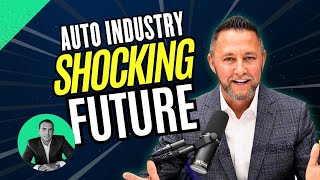
This is a recorded podcast interview (Game Changers) hosted by Scott Empringham with guest Bo Smith (WPP Ford lead and former dealer). The conversation covers Bo’s automotive career path from dealership sales to leading WPP’s Ford business; leadership lessons and mentors (John Wooden, John Maxwell, Sam Pack, Matt Van Dyke, Andrew Frick); the importance of growth mindset, culture, and trust; dealer relationships and anecdotes (including a memorable Wyoming dealer meeting); marketing strategy tradeoffs (brand vs lead generation, attribution, customer experience across propulsion choices and electrification); and the role of AI/tools (Lead Max, Auto Qualify) in lead qualification and CX. The tone is experienced, practical, and mentorship-focused.
Chapters
Welcome to Game Changers. This is a podcast where we spotlight innovators and leaders who are redefining industries driving massive growth. I'm your host Scott Impreham, CEO of Emprega Media Group and we specialize in helping OEMs, dealerships and entrepreneurs achieve 100x leads and sales with AI powered marketing. This is a really cool episode. It's brought to you by Lead Max and Auto Qualify our game changing AI platform. Today I am with Bo Smith. Bo Smith is a legend in the automotive business. He's a dear friend. I believe I met Bo gosh over a decade ago, something like that. Yeah, somewhere in there.
That's probably 15 years ago.
15 years ago. Bo Smith has earned the respect of the Ford team and the Ford dealers and all the agency partners. He's worked closely with Ford leadership and the dealers as the president of WPP for North America. He understands better than everybody, better than anybody where we're going and the outcomes that we need to achieve across business. In the automotive space. With nearly 20 years of experience managing all aspects of franchise and multi franchise dealerships including Ford, Lincoln, Honda, Mitsubishi, Mazda, Volvo and many more, his unique skill set is, was, is serving the partnership with Ford extraordinarily well. He's a legend. Like I said, Beau leads the US WPP Ford business is a regional client lead as well as the VML Y&R Ford marketing business. I am honored to have you today. I want to just start at the very beginning. Let's go way back. What inspired you to, to jump into advertising? What inspired sort of this direction?
I think first, thanks for having me. It's great to see you. This industry has a way of just people, people who have great energy and a passion for other people. Then they keep coming together. So it's good to see you again and it's a great question because I think the automotive space, I've always said some sometimes can be a bit of a default industry. So you find yourself there and then you're, then you're hooked. Right. So I, I worked at a car dealership growing up just sweeping parts shelves and parking cars and I still not a good part, I still don't park cars well. But after college, coached college basketball for a little while and wanted to get out of that was going to take the LSAT and so I was a sales manager at a Ford store and ultimately you know, just, just caught the bug and never the lsat, never went to law school, worked my way up in automotive retail, did all the jobs inside of a, of a Ford dealership. I had an opportunity to get a, you know, a sweat equity buy in and then the rest just keeps going. Right. I was just around great people. The first time I sold a car, I never wanted to stop selling cars. And you still do that in a way. Even on the marketing side. I'm probably one of the very few agency people who looks at the global sales report every day to see how each region's doing and every dealer is doing. So, you know, I've been very, very fortunate. And then I found an industry that I fell in love with and then, you know, more importantly, probably Scott is just, just a lot of really good people.
Excellent. I'm curious, you know, a lot of people have like a defining moment. Was there a defining moment early in your career that you mentioned maybe selling cars? Or was there a defining moment or person or mentor that you bumped into or happened and you're like, that's what I want to do. I want to get into this business. Was there a defining moment?
I think, I think it was the industry and then there were people along the way. I think the fact that it was so entrepreneurial that, that you could be successful every day and then every month and there was a scoreboard. And so I'm just like a scoreboard guy always. I want to know how I'm doing, how the team's doing, how our partners are doing. So part of the success algorithm for me has always been that I want to keep score, but not just for myself, for the team. And so the automotive business, like it's a 12 round fight, so every single month. And you can make a difference every day no matter what you're doing. And you've never learned at all. Right. One, the industry is changing at, at a crazy pace now, but you can have a bad day in the car business and you wake up tomorrow and you can change it. And I think that's one of the fascinating things about our business. It doesn't have to be a, a one year or five year, ten year plan, we all have those. But we can change what happens in 10 years, starting again tomorrow if today's a bad day.
You know, I want to touch on that too because I was going through some of your LinkedIn. I saw the John Wooden, I saw Maxwell, I saw all these different folks. Leadership is obviously super important to you. And I'm curious, you touch on something, you can have a bad day, but it's not what happens, it's what you do with what happens. Did you, looking back, were there any big challenges or what was one of the biggest challenges you faced early on that you remember, that was a big challenge. It maybe knocked you down, knocked you back, held you back, but you overcame it. It was a defining moment.
I think I was, I was fortunate enough to work for a dealer and then partner with a dealer, Jack Tarahar, who allowed me to make mistakes. So he wasn't, you know, didn't really stand over the top of me and tell me how to do it. Made the investment in my mistakes, knowing that those mistakes would ultimately pay off. I think the defining moment are always some of those mistakes. For me, the successes feel like we just have to, like we're just so eager and hungry to get the next success. But it's those small failures that happen or sometimes big failures that happen. So I can remember, you know, a number of things got. But buying too much inventory and then you got to pay the floor plan expense. Making a bad marketing decision, changing a pay plan that was ineffective in a way that it didn't motivate people or land you in, in a place that you had the results that you wanted. And so the defining moment for me was the, the ability to learn. And then I just wanted to keep learning.
Was there. You know, I always love stories. You, you touched on a few of those challenges. Maybe it was inventory, maybe it was a, a marketing campaign. Is there one story you feel comfortable sharing where it was just maybe not a debacle, Maybe it wasn't debacle. Maybe it was just something that fell apart. But what did you do? How did you overcome it? Because there's a lot of people that work for you that are inspired every day to come to do what they do, and they have challenges. Could you share one story, maybe that. Just specific what happened? How did you overcome it step by step, kind of walk through that story?
Yeah. I think you go back to, you know, 70809, a really difficult time in the car business. So, you know, a bit of a recession or maybe the last time we had a, A, a real recession. And so I got elected to the National Dealer Council at Ford, and I got a chance to look not at a micro level, but at a macro level. How the inability to deliver volume can hurt businesses in so many different levels. So up until that point, I had only seen it through the lens of a dealership. But when I got a chance to see it through the lens of an OE and then, you know, 20 other dealers who are sharing the same concerns. I think you learn the best in tough times, and that's why I just. I lean so much on and I still do this to this day. I'll read books that motivate me, whether it's. It's John Wooden or John Maxwell. There's a number of really good ones. And sometimes I'll reread them and rereading them, oftentimes it's more impactful. The second or the third or the fourth time. The lessons aren't complicated. If you follow them, it's just like, oh, it's like I forgot. That's right. I remember that if you read Maxwell and I'm, you know. And I know that you do if you read Maxwell, you know, when you read it, like, gosh, I knew that and I just didn't stay the course. So I think when you. When you talk about coaches or leaders or people that you admire and there's been a lot. There's been a lot of those in the car business. Right. I think Sam Pack at Five Star Ford, you know, Sam. Sam was kind enough, as well as Bert Bachman and the Bachmann family, kind enough at a very young age to allow me to visit their dealerships and see how they did it at a bigger level. You know, see what not only what good could look like, but what people are. When groups are really focused on leadership and culture, then the rest of those processes just fall in line. And I think if you've got it right with leadership culture, then the processes fall in line. You're going to run a good business. That could be automotive, it could be automotive retail, it could be automotive marketing. It could be multiple agencies like we do at WPP Ford. But if you don't have a good culture and you don't have good leadership, it's just not any fun for anyone. Yeah.
Yeah. So we're going to dig into that a little bit. I mentioned Sam Pack, one of my favorite B2B campaigns I did. I was doing some work for. Grateful to do work for you guys. I was sharing a case study with the dealers and with the folks at Ford. My phone rings. It's a Texas phone number and it's Sam Pack Senior. And I rec. And he said, is this Scott Abraham? I chatted with him. I flew out, I met with him. But I remember when he called me, it was like when a campaign works and somebody picks up the phone and actually calls, that's the best. It's. There's an opportunity to meet the. The Packs and. And visit their store.
Yeah. Isn't it crazy, Scott? And I think I see this with really, really Leaders And Sam, I've got an example. Sam is one of those guys still and he was just inducted into Ford Motor Company's hall of Fame. He's done that much for, just for his dealership and dealerships. But so many people in automotive, if I call or text Sam, as big as Sam has gotten, we never get through the day without him responding to me. And I think, you know, it's. Can all learn as leaders the, the importance of, of responding to people, having the respect of others and the, the respect of others time. And Sam really taught me that not, not by telling me I should do that, by showing me how to do it.
Well, then let's touch on that. It's a tangential thing, but it is connected on, in, in various platforms. You've shared reflections on the growth mindset as, you know, diametrically opposed to say, the victim mindset. How do you, how do you tap into that, how do you stay in that growth mindset? How do you avoid kind of that victim mindset? And then how do you, how do you encourage your team to share that, that, that, that belief system and share that?
Yeah, I think you have to believe in it. There's a psychology to it. I was, I was really fortunate. Dr. Harry Cohen, who's done a lot of work at Ford, he wrote a book called Be the Sun, not the Salt. It's about heliotropic leadership and how you know people. A plant that grows and it'll, it'll grow towards the sun and a plant that doesn't have sun won't do that. I, I think it's such an important part of creating a culture is that you have to remind yourself how important that is. And so you not only talk about it, but you have to live it. And the more people that you can get to live it. I recently put a post on LinkedIn that Nick Saban did about you got to get the right people on the bus and the wrong people off the bus and the people that are on the bus in the right seats and you're either in or you're either all in or you're in the way. And if you can, if you can create a culture where you have no right no matter what your role is, if you're all in and you surround your people with better all in then those motivational speeches, they don't have to be every day because people are making their own motivational speeches every day when they wake up in the mirror and just want to do a good job at whatever it is their role is. And you're not always on one of those teams. I think you have to remember that. So when you are on a good team, and I've talked about this at WPP just in the last six months, because I feel like we're not quite there. We're really close. We've got some super talented people that are all in. And I refer to that as catching lightning in a bottle. Because it doesn't matter if you're the Bulls championship team or the Lakers championship team or the, the Patriots championship team. Those things don't last forever. So hold on really tight to those cultures know, hold on to those leadership principles. Hold on to your own personal principles. Because if you catch lightning in a bottle and you have a two or a three year or four year run with a great team, it's. It's not only good financially, which is important to all of us, but it's even more important when you put the, your head on the pillow and you get a chance to recognize, man, I'm just around so many good people, I can't wait to get up and go, go to work again tomorrow.
You know, not too long ago, it was probably 2018, not sure whether you were aware of this. I actually lost my business. I had to just get it all back. And I struggled with the victim's mentality. I blamed my partner, I blamed everybody until there's nobody left to blame. And it was just, now is time to step back up to the plate, take another cut at the ball and move forward. Can you think of a time either in recent memory or in your career where maybe, maybe you defaulted or maybe you always had that mindset? Was there ever a time when you felt yourself slipping into that why me? Kind of thing and you caught yourself and you move forward and was there a trigger for you? Was there a book, was there a mentor? Was there a situation that occurred?
Yeah, yeah. There's a leadership triangle called the triangle of death, okay. It's on each point of the triangle, it's got, you know, perpetrator, hero and victim.
Okay?
And so think about that. The hero, a perpetrator and a victim. And who's the most, the, the teaching point is who's the most powerful person in the triangle of death? And a lot of people say the hero, right? Like the natural answer is the hero. But the most powerful person there is the victim. Because the victim gets to decide who's the hero and who's the perpetrator. And when you have people in your organization who say, oh, this person over here they'll go to the hero and say, this person over here is really doing something wrong. They're not holding up their end of the bargain. They're a bad apple, they're not talented. And then they talk to that person. So then that person can come and be the hero. And it's just a really bad place to get in. I've been in that place before, and you start to. You start to have to own it, to get out of it, you have to own that triangle of death. As a leader now, I can see when people are in that space and, you know, in a very direct but positive way, you can coach them out of it. It's like, listen, let me show you how the triangle of death works. This is the space you're playing in right now. And if you. You just can't get out of it, if you can't recognize it. But I can tell you I've drawn that triangle 10 times a year in coaching sessions. And sometimes they're to myself and said, all costs have to stay out of the triangle of death.
Well, I love that. You may have just answered my next question, which is, I see that you are a student of Maxwell, student of Coach Wooden. You know, both advocates are. Are advocates for bringing out the best in people. Are there specific strategies or cadences? You said you've drawn that triangle 10 times during the year. Are there specific things you do to encourage that, to elicit that, to make sure that's part of your system or approach during the year, during the months, during the quarters, to do that with your people?
Yeah, there's two things that I think about, two quotes that I think about all the time. One is, nothing great can be accomplished without enthusiasm. And if you wake up in a day and you. Sometimes you have to. Sometimes you have to try to be enthusiastic. That doesn't mean you have to be a raw person, but at your core, you have to have enthusiasm. Nothing great can be accomplished without enthusiasm. And the second one is you can't be great at anything you can't do consistently. So we lay a process into what we do at WPP Ford, and we learned this from Alan Mulally at Ford when I was with Dealer there. But it's transposed down to Jim Farley and Andrew Frick and the team that leads there today. And if you find some consistency, then you can improve that. But if, but if you're all over the place, if you don't have consistent processes that people can count on, it's very difficult to be great at something you're not consistent at true.
And that probably goes for everything. Relationships, health, fitness, you name it. Business, everything.
Putting. Putting. There's a lot of free putts. If I don't practice a lot of three putts and say, yeah, it's everything.
Want to touch on this, too? Before we shift gears, how do you identify? Is there a marker? Is there a. Is there a tell? You're in a meeting with your team or maybe somebody, maybe somebody you're interviewing? I don't, you know, without being too specific, is there a tell that either says that man or woman, that young person is all in, or that person is going to be in the way? Or how do you distinguish those things? Is there a tell?
I think there's a lot of tells. And, and I don't think it could be. I don't think that can be. I don't think you learn that in an interview process. There's a lot you can learn and you can do. You know, you can use a disc and see, you know, where people land and where you think they're going to be. But until you're put in a place where you have to learn something, execute it, then teach it to somebody else so they can learn it, then you just don't know if you're all in or you're in the way. And you can also be coached in and out of it. So I think one of the things is if you've got good people with strong core and strong principles, then you can't give up on people. Right? Especially talented people who care. I mean, they're going to find their way in and out like we all do. Like you. You referenced your company and the position you got in. I think, you know, you never give up on people. And if, if you keep that in mind, when you wake up every day, there's going to be difficult conversations, there's going to be difficult business decisions. There's going to be years that aren't as the last year, but maybe better than the next year. But if you keep in mind, like just begin with the end in mind and if you have good people, then you're going to have good results. Yeah, yeah.
Along those same lines, success stories. You've mentioned the importance of listening to real people as you get out there to help communicate the Ford story and, and the advertising and particularly around community support with Ford. Can you share an example where maybe listening to customers or how you all listen to customers at WPP through the ad agencies, how do you listen? Or how do you, how do you listen more Carefully, how do you get more information and then how do you help use that to start to drive breakthrough in communications or breakthrough in campaigns?
Yeah, I think we, we live in a world now that has so much data, it's like we, we have more data than we have insights. And so as we can really start to clarify and your group does this really well, Scott, as you can really start to clarify, you know, what are the important KPIs and I hate to just like use a KPI metric, but it's really like what's going to make a difference in our business? And follow the data, let the data set you free. But you have to have the insight of what to do. There are a lot of people and I would, I would give this advice to folks that are just entering any industry that is, you know, data driven is if you can take that data and be a good enough student of the game that you can have an insight that drives a strategy that changes a business, you know, that changes how your business works. Now, now we're cooking with Greece. Now we're talking about like, now you're talking about high flyer, future leader, someone you know is going to be successful whether it's in a publicly traded company, their own business and as an entrepreneur, a husband or wife, you know, an athlete, doesn't matter. But I think if you can do that, those are the people at the end of the day, take what you can learn from the data, have an insight and then, you know, have the knowledge and the leadership ability to make an effect on what you're doing with Ford.
I was looking around and I found out that Ford, WPP, you all have maintained an 80 year plus partnership. Some relationships don't last a week, some relationships, that's a month or a quarter, let alone 80 years. Obviously it's a rare achievement. What do you think the key is to that relationship or just relationships in general? What do you think is a key to relationships maintaining that partnership with agency clients or partnerships?
I think any relationship needs to be good on both sides. It needs to work well for both sides. So as an agency that supports Ford, I treat the Ford account like it's my own money. They spend money with the, with the agency and WPP, Ford and all of our OPCOs, which is a publicly traded company. I don't think about it like I'm spending the agency's money to support Ford. I think about it like I'm spending my own cash when I was an entrepreneur. And so every dollar that Ford spends or invests in wpp I think about it as my own money and I think about it at that level. So if a strategy is about to change or business about to, is about to change, subject matter expertise is changing because our industry changes. I feel like it's our responsibility at WPP to get ahead of that and work with the leadership team at Ford to make sure we're making those changes before they tell us we have to. I think that's a good partnership. The other piece of that is because I think we're, we're really good out on the WPP side. We have great clients. So Ford is still a family owned company and Bill Ford is still the chairman. Elena Ford has worked there for a long time, probably works as hard as any Ford employee there is has since she's worked there. And there are multiple Fords inside of that, but culture inside of that, like all organizations, not perfect, but they have an organization that they treat us as their agency of record, like family. And so sometimes that's tough conversation. When we need to make some changes or do some things better, that happens and you have to expect that. But I think having a client as good as, as the Ford team really helps that. And then having people on the other side that understand that everything that we do for Ford, every dollar they spend with us is investment, we should spend like our own money.
That makes sense too because when the one, the very first times I met you, you got one of the highest compliments I, I've heard or can hear when I meet someone who is starting to move into that corporate role. I think you were a dealer at the time or you're moving somewhere in there and as you sort of make the transitions people said about you, all the dealers trust him. So he's going to be great, he's going to be a great advocate. He understands how it all works. But equally, if not more importantly, when you're at the top, it's absolutely key that people out on the front lines have that faith, have that trust, have that confidence. And that was one thing I always heard about you as you started to move into the new role, having that faith and confidence.
Yeah. And it wasn't easy. Right, because you go, go from being a dealer on a successful dealer and the head of the dealer council to then making a life change in a transition change. But what I, what I had the comfort of was the trust. But trust doesn't happen overnight. And I share that with our teams and the leadership team at VML and WPP when we make big mergers and acquisitions. Because you don't really catch momentum until you have trust. But trust doesn't happen overnight, right? Trust takes time and sometimes you have to go through good and bad and then you have to stand up to the principles by which you built the trust. But once you have it then one it's a lot more fun. But to be on either side of trust, I think it's something I cherish for sure.
Yeah. Reminds me of the book, I think it was. Stephen Covey wrote a book called the Speed of Trust and he was just talking about how there's an, there's an economic benefit to trust too. Instead of 10 meetings, it can take one meeting. If you have a built up trust over a period of a decade or whatever it is that trust can accelerate things innovation. Ford has moved into and made big investments in electrification. Is there a mindset shift? Is there an advertising shift? Do you approach lead gen? Do you approach branding? Do you approach marketing differently with some of those shifts in investment compared to maybe traditional vehicles?
I think it's at the core it's the same if you put the customer in the center of how you approach it. So I think the industry is in a place where you know the propulsion selection. So whether it's an internal combustion which Most of the OEs, with the exception of Tesla cell hybrid technology which Ford is the best at, or electric, that we do a good job making sure where the customers are at and what their best needs are. So you know, the first time I sold a car then you need to go through a needs assessment with a customer and so whether, you know, 1995 that was me sitting down with a piece of know paper, you know, number two pencil and taking down what the customer's needs were. Now we can see those online, we can track those online. What are the customers needs and let's go to the customer and make sure on the Ford side that we're providing them options. Because it difficult for a customer to understand the difference in those propulsion choices by just watching, you know a, a 30 second TV spot they can start to feel energized about it. They can, you know, yeah, have some enthusiasm around going to test drive but then they have to know how that going to ultimately affect their life. So that's where you know, in our world the cross between brand experience and customer experience. So that DX portion is so important. Right. So the experience you have when you sit in the cockpit of the vehicle on your test drive that has to go all the way through the ownership process. So if you make the, if you make the choice to choose an electric vehicle, then what's my ownership experience? It's completely different. But I think part of our job at wpp, it's certainly part of Ford's job, it's part of the dealer's job and all the market is that sit in between there, specifically around tier three is, you know, giving customers a choice and then making, making them feel really comfortable inside the choice so that we have a loyal customer. Because in a lifetime value, we don't want to sell them one car. Right. We want to sell you a lot of cars and we want you to buy, do all your service with us. So it's not about just what can we do for you today. And I think that's the beauty of where BX and CX work. So, you know, so well together.
You know, you just reminded me the first time I bought a car with my own money after I was out of the house, it was a Mercury Mountaineer and then it was Lincoln's MKX Navigator and now an Explorer. I forget how many Fords I've had. But yeah, the, the lifetime experience, I think that's so important. And you know, it reminds me of the. One of the biggest challenges in advertising is do you face or when you face, how do you address the ROI of maybe positioning and branding versus lead gen? It's oftentimes in my world I'll put together a campaign, particularly if it's a digital marketing campaign. And one of the first question is, what's the roi? What's the metrics and how many leads am I going to get? How prevalent is that now with what you're doing with the dealers? How important are leads? What importance is put on leads versus roi? Branding and lead generation.
Yeah, well, branding is. Branding happens every day. And, and on the Ford side, we've got a brand that's been around 120 years that means so many things to so many people. So we have to stand that up every day at wpp, our dealers do. It's a challenge, but I think it's a great challenge because we've got such an iconic brand. I think the bottom of the marketing funnel is one of those places that, you know, depending on who you're talking to, it's the highest level of debate. Right. So we talk about lead gen and I think, I think what we have to remember when we do that, and this can be highly debated, we may debate this at mada. I think you really have to look at attribution because 80 or 90% of our customers are not going to fill out a form lead, and they're not, you know, very few people are going to fill out a form. You have to follow that attribution and they have to follow that customer through the process. Because the car buying experience, it's not linear anymore. Right. So don't follow the same steps, but so you have to have a really strong strategy to how you're going to follow attribution so that you can put an ROI to it. And I think if you can decide on an ROI and stay consistent with it, no matter what that number is, it can go up or down depending on what you spend and what the return is. But I think you have to be careful about just following just a form lead. So many of our customers don't fill out a form. They're just going to walk on the lot. Then they're going to search online and they're going to show up and some of that then, then if your brand message worked and your mid and lower marketing message worked, then they're going to show up and they're going to buy the brand of vehicle you had at the dealership that you represented. Ultimately that ROI is going to work. But if it all works together, ROI is a lot better. It's very difficult to put a specific number if you're not willing to look at attribution outside of lead gen. Oh, true.
Because I was thinking about that as you were mentioning that Brian Boda sent me a text this morning and it wasn't a form. He didn't see a post and say, oh, I know, I'm going to talk to him about this campaign. It was accumulation of, you know, gosh, 20 years of working with him and probably all the stuff that we've done, but it wasn't necessarily a form. But now we're, we're, we're chatting about an assignment. And you're right, it doesn't. I don't know what it would equate that to, you know, other than a lot of different things. A lot of different things, yeah.
I mean, and by the way, Brian's phenomenal teammate of mine. He's done a great job WPP for a long time and he's had a lot of different roles. So it's funny, he reached out to me this morning, he said, I need some big ideas. And he did. He didn't even ask me who to call. And he called you.
Yeah.
How your brand works and all the things that you do. And I think we can learn a lot. And it doesn't matter what side of the aisle on. I think we can learn a lot from the election and things that just happened and the number of things like you doing a podcast. Very effective. But how do you, how do you put an ROI to that? Because there's not going to be a lead that comes off of this. It's going to be everything we just talked about. The relationships, the trust, the time you spend, whether it's reading, listening to a podcast, you know, watching something you're streaming. You put all that in your mind. I think you can make a big difference. But I think the more you can do more of it. And it all aligns to your brand. Yeah, it all lines to your brand. You got a great chance. If it doesn't, once you can get outside of like delivering outside that brand, it's probably ineffective. Yeah.
Along the lines of, say, marketing or branding, what do you think might be one of the keys to Ford's long term success? Casting vision. 5, 10, 15, 20 years out, I suppose you could go even further than that. But next 5, 10, 15, 20 years. Besides immediate sales, what are some of the long term outcomes you see as critical for Ford's marketing success?
I think we've got a strong, I think we've got the best dealer network in the world. So I think that entrepreneurs, especially car dealers, are always one step ahead because they can move so quick. And I think Ford is in a place that they really trust their dealers. And so, you know, obviously if you, if you go up the funnel and you talk about product planning and making sure that we're listening to the customer, all those insights and the, the team at Ford works diligently on that. I have a ton of, you know, a ton of confidence that they'll continue to do a great job and you'll have the next generation F150 that's got 48 years of leadership. It'll be 59, 58 years of leadership in 10 years. But if you have a relationship with your dealer partners, it doesn't matter if they, if customers choose then to start to buy online more or shop online more, or transact in a different way, or we start to sell, you know, software as a service inside of vehicles, your dealers will know the customers best. They are on the ground level. And if you have good relationships, a good communication strategy with your dealers and you're willing to work together, not against each other, then I think you have an advantage in the marketplace and I think that's where Ford has the best chance to win.
You mentioned the dealer network. Some of my favorite Memories favorite memories bar none are when I was with the agency and even when I was just working for the agency. But going from the dealer meeting to the dealer meetings across the country I must have been in I don't know 100 plus dealer meetings. I've never met straighter shooters. More candid feedback. I mean it's been some of the best memories do you have if you feel comfortable sharing some of the best deal. Is there like one dealer group meeting that goes down in history for you is you'll never forget that particular meeting?
Well I was I was chairing dealer council but my region was the Denver region. So yes inside of that then we go back and we represent our constituents in the Denver region and we go back and do return to council meetings. And so I would do one in Denver similar to one in Colorado Springs, do one in Idaho, do one in Salt Lake City and then I had to do one in Wyoming and so I go to the return to dealer council meeting in Wyoming and I I'd not met dealer from Wyoming yet. And so I I go into the meeting and it's I think the meeting was in a best Western. So we go into the meeting and I think I the 15 dealers are carrying pistols. So I was like oh I was like I'm like whatever they want at this point I'm going to do a heck of a good job representing because it was like 16 cowboy hats, 13 pistols and a dealer council agenda. And so we got through it pretty quick but I sure listened close.
I bet I bet so great. I you know it's funny when you it just now clicked in Denver Rocky Mountain dealer group was the dealer group. We introduced our product lead max that we're now that it's the the legion ply meta advertising leads go directly to the dealers and that we've added auto qualify which is a sweat set of AI tools to immediately qualify that lead before it gets to the dealer. And I was just thinking that was where we came up with that is in a deal group meeting right there they were showing their frustrations. They wanted a big idea. We brought in the big idea and we rolled it out there and it might not have been too long after we are chatting with you or I first met you.
Yeah I think for sure you did that. I think one keys especially as we put that customer in the center that you all are doing. You just talked about that ability to find financing you know before or at least feel comfortable that you have financing before you walk into a dealership or before you agree To a price is such a it's point for customers. The amount of time it takes the financing piece based on your credit score. Because we've all been through a number of different things and like if you, if you can do that inside of of transacting with the dealer, you know, before you have to be face to face it saves a lot of time but it's also just puts people at ease. A lot of the AI tools that you're using and what a wonderful thing by the way we're using in a number of different ways at WPP4 with WPP open, you know how we're doing media with, with Group M and Mindshare, how we're doing creative can use a lot of AI on how we build assets. So it's made us so much more efficient. But I think in the buying process it's, it's super critical. I think when you talk about lead generation attribution, when once you starting engaging with the customer, a meaningful two way dialogue, I think you know the ability to transact with credit or learn a little bit better about what your options are, I think what a fantastic way, you know, to continue to move the car business forward.
Yeah, future leaders, people that are going to watch this, they, they're going to meet BO down the, down the road in the future. For those looking to make an impact in advertising or maybe leadership, they're younger, they're growing in their career and they want to be a leader. They want to seat at the table, they want to have influence and impact and they've got the stuff. What advice would you give them based upon your journey, where you are? What advice would you give them to be the most impactful and have the biggest impact in a positive way on leadership moving forward?
I'd say surround yourself with, with good people and, and be real clean. You know who your mentors are, whether you're reading a book or it's your, you know, your everyday, who you report to directly. You know my, my grandfather said you have two ears in one mouth for a reason. Just do a lot of listening and then once you find your principles, you find your core and you know what you want to do. Like just don't let any, anything hold you back. Right. So you know, I think courage is something that it takes to be a really good leader and it's something that they're not going to talk to you about in, in school. They're not going to talk to you about the importance and courage. Scott, going through what you went through in 2018 to get out of bed the day it hit the bottom. Like, that's courage, right? To make in yourself. Because you're responsible now for, for your family, you're responsible for everybody that works for you and you're responsible for all your clients. That takes courage. And so find what that means to you. Find out what courage means to you. Read about it, ask other people about it. But I think if you really want to lead one, it's not for everybody, but. But if that's what you choose to do, understand that that part of getting to be a good leader, you have to include courage.
I'm curious. You may have answered this, but I'm going to ask the question maybe in a different way. What's maybe one mistake? You see young leaders or folks maybe in advertising, leadership and advertising that they make and how they can avoid it. What's one common mistake? You're like, oh man, this person, they're making this mistake and, and they should avoid this.
Patience. Patience. And. And I did as much as I wish I'd had. And I. And I think it's still something that I have to continue to push myself to have. But they're so quick to jump around. I mean, it's in all parts of our life now. You look at the transfer portal and in college sports, you look at the number of kids who even trade club baseball teams or they trade high schools, or they're not forced, the generations before them were to make it through tough times. And I think if you can learn to do that, that's not easy for somebody who's highly motivated, that has courage, who wants to be a leader. Patience is one of the most difficult things I can tell you for sure. It's one of the biggest challenges I've had as a leader because I want to go fast and hard and win. I want to keep score. And so then to be patient, it's like, what. How do I breaks when it's important to tap the brakes. And so do everything you can to understand that. Listen to the folks around you and have some in. In. It's hard to do when you're, when you're motivated. And I know a lot of young folks out there are, I think, I think the generation you know, behind us. And I've got kids that are, that are that age super, super intelligent. I mean, they have a us have the opportunity of a lifetime. They can be anything they want. And so it's like, go out and do it, man. Like, go get after it, because you can do anything you want. So I I mean, I always tell them, one, don't back off, you can do it. But, you know, have some patience along the way.
You know, this isn't in the sheet, but it just reminded me, this is a question I'm really curious about. What was one of the toughest, maybe the toughest you had to make in your career, where you were making a change, you chatted with your wife, or how, how did, how did you do, how did you. That decision? What was the decision that you were faced with? Toughest decision, you know, top one or two. And what was a decision? And then what was the process in making it? And then how did it come out?
Yeah, I think, I think that to, to work for a publicly traded company after being an entrepreneur was a. Was a dip for me. And, you know, I'd done a little bit of that. I consulted there. But a little bit of what I talked about earlier, I really trusted a couple of people that I was close to. And so maybe, maybe the best I've ever been around in that space and maybe the marketer also is Matt Van Dyke. And so I talked to Matt Van Dyke, I talked to Andrew Frick, and guys that I'd known for a long time, they not only my capabilities, they knew who I was, they knew the background and where I felt like I needed to go, and they helped guide me through making the decision. But I certainly didn't make it without, with, without consulting of people. Then sit down with the people that are affected most by that, which is going to be your spouse and your family, talk the decision through. Then once you, once you decision, then you gotta, then you button on the car and go out, go 100 miles an hour, go as hard as you can at it. But that's, that's, I think it probably one of the toughest decisions I made to do that. But the only way I made it through is, you know, talking to the folks that, that I knew about me and what I was capable of and helped me get in the right place to do that.
You know, it's funny, the cream does always rise at the top, doesn't it? You mentioned Matt Van Dyke and Andrew Frick, and I've only probably met Andrew once or twice. May, maybe. However, I was told that with the program, the lead man, 2014, he's the one that approved it. And so he had the courage to say, all right, let's give this a shot. And then Matt Van Dyke has cropped up in my career where I've just called him, messaged him, and he's been a source of wise counsel any number of times. And he's one of those guys that takes the call too.
Matt's, Matt's like Sam Pack. So Andrew, it's funny how everybody that gets to that level is just like that.
Yeah, yeah, yeah. I love that. I love that. As you start to look forward, what's next for you at, at WPP Ford in the automotive space, what are you most excited about coming up in the, in the or a couple years?
I'm excited. This is, this is going to sound wild because I think the time that there was no inventory felt like an easy time in the car business. But I'm excited that we're back in the car business. I'm excited that customers have opportunity to choose. The cream will rise to the top with the OEs. The cream rise to the top with the dealers. The cream will rise to the top with the GMS of those stores, with the ad agencies. So, so I'm encouraged by fact that we now, now it's game off. We're in full competition mode and the best agencies in the world and, and WPP is one of those. Have a chance to get even better and grow our business and affect, affect change and affect results more. And those who aren't those who. You could fake it during those Covid years, if you're not all in right now, then you're going to get run over. And I, I love that I know how I work and I know how the team at WPP forward works. So I, I think I'm. That we're, we're back in a very competitive environment and that I'm 100% betting on our team. I love it.
Love it. Have you got a quote or a mantra or anything sort of you live by? Maybe it's all in. But what's that one sort of quote or mantra that you are reminded of in tough times, good times, it just keeps you moving.
So we, I played college basketball for four years and coached for four years but we always had a quote of the day and so there are a bunch of them. But I think about this all the time and that is the man on top didn't land there. And so it's a, it's a fight and a struggle at times. But if you keep working at it, that's how you get to the top. And I think about.
I, I love that. I've never heard that quote. That's good.
Well, our college basketball coach didn't let us forget it and so I didn't forget it.
That's really good. Is there a question I didn't ask you? They're like, oh man, he should ask me this because this is something I'm super excited about. But I wanted to touch on this.
No, I, I think I asked a bunch of good questions. I think, you know, just keep doing what you're doing. It's, it's just fun to be in an industry with, with people like you and there are a lot of them. The good news is there are really good people and really smart people in our industry. I've, I've just, I've been you now for 15 years. I love that you're doing the podcast and anybody out there that, that needs help or guidance, it'd be good to call you. And we'll continue to do that. I'm glad, I'm glad.
Best text at 4:30 in the morning ever. Yeah, it's like 7:30 his time.
Yeah, yeah, I, I, I missed something terrible at wpp. I get up pretty early, but we'll see everybody at Nada. I think that's a fantastic event. Been going there for 25 years and what a great way to kick off. It's like, you know, North American International Auto show was, was last week in Detroit and, and nada next week. It's like opening day for automotive 2025. So let's go.
Love it. Love it. And as you turn off the lights for the last time at wpp, your office, you hang, hang up your hat, walk out the door. What do you want to be remembered for? What do you want there? Sort of the lasting impression to be the thought to be. What do you want them to say?
I think that Bo is trusted. Beau was trusted and he created value when he was in the room. And if, if I can live that then, then I'm, I'm good with every gut.
Done.
Love it. Love it.
Thank you so much for your time as always. It's just a pleasure to catch up with you again after all these years and throughout the years. And I, I can't tell you how much I appreciate you making time for me today and, and sharing your, with your experience and your background and your, your thoughts and your ideas and your advice with the audience.
Right on. Thanks a bunch of.
More from Scott

🔥 PRESSURE IS A PRIVILEGE #PressureIsAPrivilege #LeadershipMindset #MentalToughness


🚨 YOUR NEXT LOCATION WON’T FIX YOUR PROBLEMS #BusinessScaling #MarketingSystems #FranchiseGrowth

🚨 AI CAN ACTUALLY MAKE YOUR MARKETING WORSE #AIMarketing #MarketingStrategy #BusinessGrowth


🔥 STOP RUNNING FROM WHAT’S CHASING YOU #FaceYourFears #KeepGoing #MentalStrength

🎥 STOP EDITING EVERY CLIP YOURSELF #AIVideoEditing #ContentRepurposing #ContentCreation