How THIS Automotive Legend Transformed the Industry!
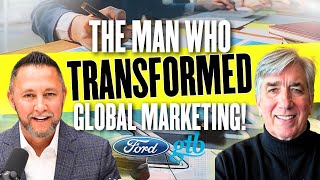
This is a verbatim transcript of a 2025 YouTube interview on Game Changers where host Scott Empringham interviews Pete Rentschler about his advertising and automotive-marketing career. Pete recounts his start at Campbell-Ewald, early mentors, regional-launch strategies (notably Geo and California), leadership principles (‘‘do right by the client,’’ raise your hand to solve problems), building GTB/Blue Hive teams across Asia Pacific, creating WELL-certified offices in Shanghai, and methods for proving big ideas via beneficiary/test-market pilots. The interview closes with practical advice for young professionals and contact guidance (Pete is reachable on LinkedIn).
Chapters
Welcome to another episode of Game Changers. We spotlight leaders, innovators, people who are making changes, visionaries, and that's somebody we've got on today. These people that we interview are people that are setting the spot, setting the pace. My name is Scott Impingham, of course CEO of Africa Media Group and we specialize in transforming automotive marketing. We've got an automotive marketing legend today. Before we introduce him, I want to let you know that we specialize in transforming with AI solutions where we help dealers, OEMs and entrepreneurs drive more leads and better qualified leads with products like Lead Max and Auto qualify that car companies like Mazda, Ford, Lincoln and soon to be other OEMs are going to be using these things. With over 20 years in the automotive space, we've seen firsthand better leads generate better sales. So let's dive in. Today's guest isn't just another industry leader. He's somebody who's played a pivotal role in my career. Pete Rentschler is, is not only a very dynamic international business person, ad exec, automotive exec, he's responsible for changes, big changes, big transformations. He's a people focused guy. I know this firsthand because he gave me my break in advertising. He is the, was the president of WPP's GTB from 2010 to 2020 and he's led massive global initiatives for Ford Motor Company. He's expanded global Team Blue GTB's footprint across Asia Pacific. So we're going to dive into that, built high performing teams. We're going to talk about how to build high performing, performing teams and drove measurable, measurable results for Ford, for GTB and all that. So before we get into all that, like I said, Pete was my first boss in advertising. So today we're going to be diving into his journey. We're going to talk about some of his leadership philosophies. I know he's a big reader. We're going to talk about some of the books he's reading or he's ready and maybe even some stories from the early days. So we're going to get into that. So let's get started. Pete, if I may, let's start with the beginning. Where did it all start for you in advertising? How did you get your start so pretty?
You know, it was a little bit out of design and a little bit out of desperation. I graduated from college with an English degree and or a history degree with an English minor. And I had no idea what I was going to do and through some contacts in Detroit ended up interviewing at Campbell Ewald and literally started, you know, as a traffic person and just started out in the business because I was looking for something to do. Honestly, it sounds kind of trite. That had a lot of people involvement. I was interviewing in New York for finance jobs, and it just didn't feel like it was me. So, you know, started out there and working on the Chevrolet account and had a lot of great opportunities along the way, obviously.
Were there any defining moments early on that really caught your attention, that maybe started you down a path or caught your attention as, hey, this is what I want to do more of or less of?
Yeah. So for me, I tell people this all the time. I mean, when I started, you know, there's a lot of kind of. I started about three years older than everybody else because I screwed around in college. So I was a late graduate. I was a ski bum in Vail. I had done other things, and so I was a little bit older. And by the time I got into this sort of traffic position, I realized really early on that the most important thing to do and it pretty much followed me, and I followed the idea throughout my career, was raise your hand to solve a problem. Anytime anybody's looking for you to go do something or they have some problem that they need solved, put your hand up and say, put me in, coach. I'm ready to go. So literally, I've been at Campbell Lewd nine months, and they had a job in Tarrytown, New York, working in an office there that was myself and a secretary, slash assistant. And I said, sure, I'll go. I had no idea what I was doing. Great, great client relationships, great agency structure. It worked out terrific.
Were there any agency mentors or mentors that you had at that time where you're like, that's the leader I want to be. That's a great boss. That's a great mentor. Early on, that had a big influence on you.
Yeah, there were a lot of different guys, actually. So Tony hopped. Ended up running the business for a long time, was running the Chevrolet business. Tommy Thompson, who ran, I think, the truck business at the time, Jim Birchfield, who was a media guy that ended up going into this dealer association business, sort of quasi dealer association business, because the Chevrolet dealer associations were independent early, early steps into regional marketing. And yeah, I mean, those were guys that were always looking forward to try to do things differently.
And what were some of the key lessons they taught you or you learned from them that you ended up really applying, like that kind of the bumper stickers at the headlines.
Yeah. So Tony and Tom for sure, were the two guys that always focus on the client's business first. I mean, our business will follow. And it's always been, again, one of my bumper sticker phrases, just do what's right for the client, the revenue, and the business will follow. Don't worry about the revenue in the business. Just do what's right. And then with Jim in particular, he was really pretty innovative, and it was early stages of bringing together media and account in a different kind of way. Lou Schultz ran the media, the media side of the business. And he was very. He was very proud. You know, innovation, sure, let's give it a try. You know, whatever works. Let's try it. So, you know, I think that again, the idea of just saying, yes, I'll go do it. I mean, one of the things I'd been at Campbell Lewald, did the job out in Tarrytown, came back to Detroit. We started early stages, as I said, of sort of regional marketing. And then between Dick o', Connor, who was the CEO, and Bill Wythis, we became part of ipg. They had this commitment to loan somebody to the American association of Advertising Agencies. That is the, you know, sort of the. The lobbying arm for the agency business in D.C. at the time. They said, we need somebody to go do that. Do you want to go do that? And I was like, sure. I mean, again, no idea what I was getting into, but sure, I'll go. I'll give it a try. And, you know, came back from that. Again, this is a long time ago. And at the time, Chevrolet had partnerships with various Japanese manufacturers and brands. And we were launching at the time a brand that obviously doesn't exist anymore, more underneath Chevrolet, called Geo. And again, it was another one of those opportunities with the client to say, we want to try something different, let's try something different. And I said, I'm the guy, put me in. I want to do Geo. And it was great because again, the basics are there, but the roadmap isn't laid out. You know, we were designing it with the client, we were working with the dealers, trying to figure out what distribution was going to. Was going to look like. As I said, we were early in this idea of regional marketing and we had three different products that were coming from a variety of different manufacturers. Suzuki, Toyota. Was it Suzuki and Suzuki and Toyota. I can't remember who made the Geostorm, but anyway, so. And that led me to go to California and say, look, part of the strategy was we can't launch these things everywhere. I built a brand nationwide in the late 80s. It was just too, too, too daunting. And we didn't have the volume, we didn't have the distribution. We didn't have enough throughput into the dealers to make them happy with the volume. So we literally started a regional launch process that really focused on California, where Chevrolet was not winning at the time, and products were really meant to go after that market and go. Go after the Japanese dominance. So that was the next move. Raise your hand. I'm ready to go.
I'm curious. California on that. On that note of raising your hand, there's a great video that's kind of floating around on social media of Leo DiCaprio in one of his movies where he's excited to. I forget what he's doing. It's in one of his movies where he's like a. A trader and not Wall street, but one of those. And Leo DiCaprio is talking about going to some place in his boat. He's all excited to go. And then, of course, he gets stuck in a storm. And it's likened to winning a big client, conquering this opportunity or going into this opportunity to create some regional business or a national brand, and then finding yourself in the middle of a storm after you win the business, after you win the opportunity. Now, trying to put it all together, did you ever find yourself in that situation where there's said, right, Pete, you're the guy, you're going to go do this, and then two days later, five days later, a week later, you find yourself in the middle of the storm, trying to pull it all together, and it's just absolute pandemonium.
Yeah. I mean, a lot of the stuff, A lot of the moves I made were somewhat like that. I mean, it was kind of, here's what we want to go do, here's what we want to achieve, but we don't have the foundation or the path or the footprint to get us there. So design it. Figure out who you need to get together with. Figure out who the partners need to be again. When I went out to California the first time with Campbell Ewald, I was inside a Campbell Ewald office there that didn't have automotive, that was working on all sorts of other things and had United Airlines and pieces of business around the country. And I show up and we're going to try to start launching. And by the way, at the time, Campbell Lewald had lost the California business to Vic Olson and Partners, which was an independent agency that had Chevrolet connections. And they were some of the early guys when you Talked about mentors. Vic was not a mentor, but his philosophy and his entrepreneurship was. I mean, he's 88, 89. I mean, he had a small agency where he had basically five, six guys that were on staff and everything else was basically farmed out to independent resources. And it was a great model at the time. I mean, he was handling all of California. And my task, although it was ostensibly to launch Geo, was how do we get Chevrolet back in California? From Vic Olsen Partners.
You mentioned one of the pieces of advice that you got was really good advice, and I agree with it, is put your client's business first. They win, we win is the agency. And I'm curious, did you ever get advice as a younger man or just getting into advertising? We heard the advice. You thought, that's the worst advice I've ever heard. I'm not going to take that advice. And if so, what was it?
Other advice than that.
Yeah, well, other advice that was bad advice. Were you thinking this may be like a prevailing sort of wisdom in advertising that you heard over and over and over again that you always fundamentally disagreed with and said, that's lousy advice. I'm not going to do that.
I don't know if it's lousy advice. I think the key, the most important thing is determine what your magnetic north is. In my case, it was, has always been do what's right for the business. Find out what their problems are, what is it that is keeping your clients awake at night, what is their challenge? And then define those things that we agency can do to help mitigate those and help solve them. And I don't think it was advice as much as learning how to very much have an entrepreneurial spirit. And the entrepreneurial spirit is very much go out there into territory and do things that other people haven't done that can be surprising, innovative and results oriented for your client, while at the same time, and this is the hard part, when you say, was there something you said ignore. It was, frankly, what you ignore is the ongoing inside chatter, which is, you know, it's the quarterly financial reviews. And recognizing this quarter isn't the one that matters, it's the next one that matters. Don't worry about that one now. It's. Don't have the resources to fund that now. Don't worry. Let me show you what the projection looks like over the next two years and how this will work over time. Even back then there was a mentality which I think can be debilitating, which is just, you know, what my financial performance this month what's my financial performance this quarter? And I learned early on, and some of my finance partners would know this, that I became known a little bit as a sandbagger. I always played my numbers very conservatively so I didn't have to reach for numbers internally and could always overachieve by satisfying the client needed. And again, the revenue will follow.
Gotcha. Now, did you notice any regional differences as you started to work? New York, Shanghai, Detroit, all over the world. Did you notice different regional differences as.
Yeah, I mean they were dramatic in terms of clients.
Yeah. Or just how you approached your role?
Well, again, I mean, you know, Scott, it's going to sound repetitive but if you let the data speak and you don't get too caught up. So thinking just in terms of the U.S. i mean, I ran businesses and regional businesses for Campbell Lewald and then for Chiat Day where we launched a regional marketing program with some fantastic folks there with Tom, Patty and Steve Goldman from a business standpoint and some fantastic creative and media partners and thinking partners, strategy partners. And it was really about finding, you know, so in that world I was in San Francisco managing San Francisco and Denver and then I moved to Chicago and was managing Chicago in the Dallas offices. And those markets were all completely different and the dealers were different personality wise, but the dealers are all motivated by the same thing and it's basically moving metal. I know those things sound trite, but that's what it is. And it's not just moving metal, it's their overall business. And that business is based upon getting customers in, getting them to buy, getting them to come back and buy services, getting them to come in for ongoing, you know, service requirements and, or repair anything that may be needed. So it was really a, you know, a sort of a business look at what could drive the business. I remember when I was at Chiat Day in San Francisco, Chiat Day, very, very oriented agency. And when Chite took on Nissan, there was a time when, you know, Jay and Lee Clow and kind of the organization, Jay's famous quote, I don't know if it's real or not, was how big do we get before we get bad? And he was concerned about the business being too big and overtaking the agency. And there was a little bit of time in there in the early 90s when Shy Day was sort of trying to find its way and, and Lee led a process I wasn't personally involved in that I thought was one of the most innovative approaches to thinking about transformation which is he called Chrysalis Project. The Chrysalis project. Okay, we know who we are now, but we're going to go into our cocoon and we determine how we come out and where we're going to come out as so to speak, the butterfly and the chrysalis. So one of the things that I did at the time was determine that business results did not have to be exclusive from creative product. Meaning there was a whole world that was based upon winning creative awards. And a lot of people thought that that did not have to tie to winning business awards. So at the time, in the regional marketing program, we won, I think maybe wrong in this, the San Francisco office, little office, 20, 24 people. We set it up. It was fantastic. Office on Maiden Lane in San Francisco. And we won the first FE for shy day on the regional business. And it was with, you know, very limited creative budgets, very limited production budgets, almost, you know, pre cell phones and stuff, done very, you know, very much down, down and dirty. And it was based upon a customer insight at the time. All the programs are built around packages. So the truck came with a package. We said, well, wait a sec, people don't want everything that's on this package. Can we just take all the pieces that are in all the package and let people determine up to a certain amount, fifteen hundred dollars of added value. Can people make their own packages? And so it was built around the idea of build your own truck. So as opposed to saying you get the, you know, the off road package, you get the appearance package, you get whatever it was, it's like, no, I want a little bit of this. I want to, you know, I want a. Across the top, a light bar, but I want to have these, you know, rims, and I want to have whatever it was. And it was a home run. It worked for the business. The creative was really pretty cool and rambling there a little bit, but never really had a. Never had a conversation where I said, I'm absolutely not going to do that. It was more about an entrepreneurial spirit, is always about looking ahead and what problem can I solve for somebody that is important to me?
I'm curious. Everybody I've talked to has had one big, you know, debacle where they launched a campaign and they were like, oh man, this is going to be great. Including myself, I've had more than one. Was there any one campaign that you remember? And then I want to have a follow up to that where you thought, this is going to be a home run. And it absolutely turned to just the worst and you had to recover. What did you learn What'd you take away from that? But what was one of your biggest clunkers that the campaign just did not turn out the way or for any.
Think about that. You know, I mean, when you listen to guys like Tom Brady talk about his Super Bowls, he only talks about the ones he, you know, the ones he remembers are the ones he lost. Yeah, they're the ones that keep them awake, I would say. It's interesting you say that. I don't tend to think of it that way. I just think we took away learning. I don't think that there were. I can't think of a campaign that I thought was just like we thought this was going to be a home run. It was a disaster. I think that there were definitely times when we tripped on certain things, but nothing I can think of, you know, that doesn't sound too cocky, but yeah, not really.
It's like Trump. We never get tired of winning. We're going to get tired of winning so much.
Well, I was going to say that I'm starting to think that sounds a little bit cocky there. But no, I mean we had falls and we had some major issues and not to bring up, I'm jumping way ahead, but we had a situation in India where a couple of creative guys unauthorized created some work for a, a, a creative award show that was very much common in the industry in India.
Okay.
I mean you just you one time, one place or if it's a print ad, you just ran it in some newspaper in some far flung city and you know, you quote unquote had an ad that actually ran. Right. And that was the only time that we ran into serious problems. But in that case, again, that was because work used celebrities that were us celebrities that hadn't been authorized. And gosh, I think I remember something like that. Yeah, it was quite a disaster. But not mention the fact that it happened as at the time, you know, Mark Fields and Alan Mulally were on their way to India and literally it happened like the day before they arrived. I had to fly there, meet with them again though, when you do what's right for the client, your relationship becomes a little bit different. And so, you know, we very much as part of that commitment and this was a whole of agency commitment. This was a whole of a GTV Blue hive at the time said, you know, this is wrong. The irony in it all was it ended up changing the rules for how the creative awards show at the time changed and the kind of sign off you had it you have and other kinds of proof of performance, that it was a legitimate ad and not just an ad created for an award show.
You know, I want to touch on something you said, and it just crossed my mind. You've had the opportunity to lead some of the biggest organizations on the planet, and it's never easy. Turning even a small ship around and getting a team of five or 10 or 15 or 20 people on the same page isn't easy. As any husband has tried to get his family to go to the same restaurant. Getting everybody on the same page is hard. You've led some of the biggest organizations on the planet. Is there a guidebook, a rule book, a rule of thumb you use to help transform a big company, a big organization? Is there a blueprint that you, you use?
Is there a blueprint? I don't know if there's a blueprint there. There is a, an orientation to an organizational intent that needs to be shared amongst a key leadership group. I mean, generally speaking, and I know that this sounds kind of maybe a little funny, but I was always focused on making sure I had the most intimate possible relationships I could have with my key clients, my boss and the two other people, my head of finance and my head of hr, because ultimately those are the people to get everything done. And obviously there are tons of other people involved. I mean, you know, we forget about people that are intimate to the relationship, people that are in procurement, people that are in purchasing, people that need to understand why you're asking the commit for the commitment that you're asking for the investments you're asking for. You know, Scott, you were part of the process when we together with Lincoln Mercury decided, well, we didn't Lincoln Mercury, Ford, Lincoln Mercury decided that we were leaving Detroit and taking a shot at could we reinvent the brand and the distribution and the whole model by moving to California. And you know, in that case, we had 350 or 400 people in Detroit. I was running the LMDA group at the time, and we ended up with, you know, 50 people made the move. So it takes a whole of house, it takes a whole of organization, and it takes a lot of, you know, key pillars in that organization to make a transformation happen. In the case of setting up GTB in Asia Pacific, it was a little bit different in that we were leveraging out of existing major brands like JWT and Ogilvy and Mindshare and Wonderman and working with those partners to pull resources together while also building from resources outside. So it always takes, in my opinion, it takes a good balance of people that are inside the organization that sort of know it, that are open to a cultural change like moving from Detroit to California. And if the 50 people that said they're going to go are going to go, they're people that are willing to make the cultural change and be open to bringing in people like you. And you know, the host of people that are in the LMDA group from Brad Johnson and Ed Collins and a whole bunch of other folks that were willing to be part of something new and want to start with a little bit of, a little bit of a, I guess playbook, but no roadmap, if that makes any sense.
Sure.
You know, when we first went out there, we were in temporary office space. I don't even think you were with the team then.
Not yet.
It was before we moved into the Irvine office. That was the final location. And I'm also a big believer by the way, that office space is, is really, really into a demonstration to, of the kind of culture and commitment you're making the team. You know, not to, to the sports analogies too far, but I liken it to you know, football teams investment in their gyms and their workout facilities. You know, you see some of the colleges, you look at what Indiana Fever doing from a WNBA standpoint to their commitment to women's basketball and their commitment to their team, but also women's sports in general around Indianapolis and you know, they're building a 75 million dollar facility to help facilitate that space is if you're running a space based business, it can also be virtual. So when I say that that's whatever your office space is needs to reflect that.
Well, I remember the Irvine space was fantastic. I remember the very first time I walked in for an interview, I met Amy, Jeanette, Brad Johnson and there was a party going on in the team room and one of the brand team rooms and I looked around and I thought this is exactly what an ad agency should look like. I mean it was full of just people of all varieties, all ethnicities. They were creative, they were having fun, different ages. It was a great environment. The physical location was fantastic. And I remember that just being a great experience. When I walked in, I was already halfway there thinking this is something I want to be a part of. You had the energy, you had the architecture, you had everything.
And part of it was in that case, I remember when we were talking about it, you know, the Irvine office buildings kind of look like the Irvine office buildings. Right, right. So the idea was we wanted to have a place that people wanted to come to Both the people working there as well as the clients.
Yeah.
So when the clients were at our place, they knew that they were at the agency having agency conversations and agency mindsets. Murphy, when Murphy took over, David Murphy, he was really focused on just that and making sure that we are clear that we were having agency conversations and that there was a reason to have the meeting at the agency. If it was a business meeting that could be have had at the client, let's have it at the client, you know, let's have it in their offices. So I've always appreciated, I mean one of the things just to take that a little bit further. When in Shanghai we had, we had dramatically when I first went to Shanghai we had about 12 people, three or four wonderment people, about eight, seven, eight people that were JWT people housed inside a space inside JWT. And as we continued to grow, we eventually became our own Blue Hive team which is the predic, the precursor to gtb. And we co located media people, wonderment folks and JWT folks. But we were hiring as well as Blue Hive. And then when we all moved from that independent space into what was a WPP building that again had all these power brands back in it and you know, we had grown to about 200 people and you know, we were feeling kind of loud and proud, you know, we're 200 people. But when you put that up against Ogilvy and you put that up against JWT and you put that up against Mindshare and their heritage and their credentials and in particular their stature in China, it was really important for us to differentiate. So we moved into the building. The building was LEED certified. You know about buildings being LEED certified? No, I think it stands for leadership and energy efficient design.
Okay.
And buildings, it has to do with, you know, everything that goes into making sure that the building operates as footprint neutral in terms of its impact on quote unquote the world. So everything's smart about how it's done. One of the things that the. There was an organization that was a A or a sister to lead called well and well was working with LEED at the time and well certification. I mean it's quite a process. Was focused about the people that were going to be inside a lead building.
And this is what you were. I saw you launched the first, well W E L L certified office in Asia Pacific.
So across all of Asia Pacific. Well was I think based out of Hong Kong or Singapore. And as we were looking at this, you know, this floor WPP building going okay, how are we Going to distinguish ourselves as GTB inside this. When somebody can get off on an ogilvy floor and you've got a heck of a lot more heritage story stature, especially within a Chinese cultural standpoint. Why go to blue? Why go to blue? Hybrid at the time gtb. So we did the, well, certification and it was real. I mean, we had. We used different glue to put down the carpet. We had to use different carpets so that the vapors that the carpet gave off met the certifications. In terms of air quality, we had some high AQI days, air quality index days where people came to the office as opposed to stayed at home.
Oh, for better air.
For better air.
Wow.
So we had filtration systems. We had water filtration. We also got all the garbage out in terms of food and beverages and got to better food and beverages. And it was just a way to try to distinguish and identify our brand and have a reason to be a gtb. Wow.
So, okay, so, well, certified is literally taking care of employees. From the glue on the floor to the carpets to the food, the air, filtration, everything. It's creating a real healthy environment.
Filtration, snacks, all that kind of stuff. I mean, the paint, everything, the furniture, everything had passed a. I think it's. I can't remember what the. They come in and test it all to see what kind of vapors and fumes and stuff it gives off. And we had sliding doors when you got off the elevator, as opposed to having an elevator that opens to a huge lobby, which could be fantastic and grandiose. We got off the elevator on our floor and there were sliding doors so that the air that came up the elevators didn't get into the office.
Wow. Well, I think it's interesting because I know Kev Klein, who just made just such a beautiful office in Irvine. And I remember being the beneficiary of just an amazing office environment. And I. Which. Which I be into a question about leadership. Leadership is so, so important because you can't have the beautiful, beautiful office right away. And I'll give you just a. A quick story and then a question for you. I'll never forget when we're going back from Irvine to Detroit, the employees of YNR were making the move, or some of them were. And I went and I talked to my wife at the time. Masha is my wife now.
Yes.
And I said, masha, it's an opportunity in Detroit. I really am excited about this. I think I want to go and Pete's going to be my boss and. And he's got a vision. And I remember you had a quick chat with me about the vision and the opportunities that would be there. And we talked about it. We decided as long as I got a vp, a car, and a raise, I would go. I mean, yes, no brainer. So I knocked on your door. You turned around, and I said, pete, I'm excited. He said, have a seat. I said, I'm excited, like a. A vp, a car, and a raise. And he said, can't do any of those things. We had a nice conversation. I said, I'm in.
So I went back and I told that conversation. But I, you know, you do it.
With a smile on your face. And my point was, this really is. Is you said, I can't do this. I can't do this. I can do. And it was a nice conversation. And I remember. And I remember saying, having a big smile on my face and said, go, Red Wings. We shook on it. It was done. And I left your office. And I remember coming back to Masha saying, she go, how did it go? I said, we're going. She said, oh, did we get one or all three? I said, we got none. I said, but I'm going to be working for Pete. And he's basically saying, look, this is a brave new world. You're going to be leading this department. I mean, you're like a department of one on this tier two dealer group side, and I want you to reimagine what it looks like. I said, this is an opportunity of a lifetime. I say that because your leadership was the only reason I went. Literally, that changed my life. It changed my career. It changed everything for me. There's zero chance I would have gone had it been for a couple other folks that I had the opportunity. When you moved on, I worked for one other person for about a week, and I went to my, I can't do this. So he became up again.
Well, you know, but. But, you know, I don't know that specific conversation, but if I know my reaction to what you just described there, there are two. I always told people, most importantly, I tended to be very focused on the business and, you know, sort of head down, like, thinking, you know, the human ostensibly has 60,000 thoughts that come into their head every single day. You know, from, you know, what you're having for dinner to what your child's doing. You know, these things are all rolling around. So I was business mode. I was always trying to focus on what we could do to help solve the client's business challenges and making sure that we could get those from them as clearly as possible. I always told people, if you need my attention, don't just knock, grab me by the shoulders and shake me and say, I really need your attention. So the fact if you came in, I probably would have answered by what you described, which is, don't worry about that stuff. You want opportunity. And I tell people all the time, take an opportunity. Don't worry about the stuff that comes along with it. The trappings, those will come. They always do. If you perform at the opportunity. Now, you always have to negotiate a certain thing here and there. So I don't want to sound cavalier about it, but pursue opportunities, especially midwise.
Yeah, yeah. Well, that. Because for me, when I got on the ground in Detroit, I realized I had the opportunity to execute campaigns. You gave me the title of E Business Incubator and it stuck. And I just thought of myself as somebody who is taking entrepreneurial ideas, problems that I could fix in one dealer group. And how could I apply that to other dealer groups? Or could I find common problems that I could aggregate a solution across an entire enterprise? And to me, that was really exciting to come up with a campaign that could have this massive, massive impact.
Title was kind of, from a DNA standpoint, was. Was set my time at Chia Day, where we had no titles on our cards, because the idea at the time at Chia Day was this is, we're not gonna have to cards. Everybody is, whoever's got ideas, let's take ideas. Whoever has innovation, let's take innovation. And I remember continuing to try to carry it through, recognizing different cultures are different cultures. But E Business Incubator was not a title that existed. Right. That was just a title. It was like, what do we want a title to say? What do we want it to indicate? What kind of stature do we want it to give? And I remember we talked about this a little while ago, and it was like we just made that up out of thin air.
Yeah, yeah.
And it's fine. Do more of that. I mean, the VP account supervisor, slash group, blah, blah, blah, is the hierarchy of the agency. But it's not necessarily descriptive for people outside.
Yeah.
And I was always focused on how do you get titles to describe what somebody does as opposed to what their stature is inside the organization.
It definitely set the tone. I was in my job probably about three or four weeks, maybe a little longer. It's hard to remember. And you asked me to put together a campaign called Dare to Compare Mercury, which was essentially a micro site that was going to suit all the different 27 or 28 dealer groups. I have local offers. It had some variable content and, and it was be a micro site that different dealer groups could participate in and utilize for their own regional marketing. And it was a pretty aggressive idea at the time, particularly because I was still learning some of the language. You asked me to do this. You said, get started on it, work with the rads, roll it out to the LMDAs. I wasn't totally sure what a rad was. Regional account director. I wasn't totally sure what an LMDA was, but I was starting to figure it out. And Wes Alexander, you walked up to me, you got, you were flying everywhere. You walk up to me. And he said, hey, how's it. Do you have any traction with this program? The dare to compare. I said, well, and I, I gave you a non answer. I'm talking to this person, I'm talking to this. And you could just tell right away that like nothing had been done other than a lot of conversations. And he said, listen, you got to get started on it. If you can't do it, you got to let me know because I got to find a way to get it done. You were pleasant, you were professional, you were kind. It wasn't a, it wasn't a threat. It was just, this is our situation. You got to get some traction. Scott, you walked off and Wes Alexander leaned over to me and said, dude, you better get some traction on that thing, like now. And it fired me up. And I said, well, is there any reason, like. And I remember people were telling me no internally, but that was a catalyst to go find people that would say, yes, I will try it here. And I will try. I will try it here. Because I was finding a lot of people that said, no, here's my question. How do you break those bottlenecks at a big organization? We're facing that right now, politically or with bureaucracies here in the United States, and we're breaking them, it appears on a pretty massive scale. How do you break those bureaucracies at a company like Y and R or Blue Hive or some of the big agencies you've led?
Well, what you just described, I mean, you know, when I think about it again, whether it was dare to compare mercury.com or time within the organization when we were trying to integrate everybody and still keep the brands and we had. What was, what was the Mercury business call or the Lincoln business called? For a while they were under a different group. Group name.
Wasn't the Premier Automotive Group?
Yeah, the Premier Automotive Group. So there's always all these changes and things are happening at client side as well. So they're always, they're thinking about themselves. You know, they're not thinking like we are every day about what we're trying to do. So what I found is that success has many followers and many sponsors. So as opposed to trying to do massive, you know, titanic shifts, I found at least. And it was beautiful being in Asia Pacific because you had markets like Australia and India and Thailand and these markets that would be. Somebody always want to try something. It was no different than the dealer association groups that you worked with. If you just find somebody that wants to give it a try. And there was, you know, the dealers are all entrepreneurs. I mean, by definition they're running independent businesses. I mean, even though there's, you know, public ownership and stuff like that now. So if you, if all you do is find a couple of guys or a dealer association that says, yeah, let's give it a shot and the proof performance is what gets everybody behind it. Right. I mean, it doesn't take, especially in the dealer world, if something starts working, nobody is embarrassed by copying. It's like, that's fantastic. If that works, let me use it.
Which reminds me of probably one of the most fundamental things I learned from you and have applied to this day. You sat me down and you drew a big idea chart on a sheet of paper. Eight and a half I11 sheet of paper. You landscape and you drew a big idea chart. You had a star at the top. You got a big idea and then you had, I don't know if you remember this, you had some boxes and you try to go through this box, this box, this back and forth and back and forth. By the end at the bottom, it's a rounded out circle. It's not a big idea. Can you, can you kind of describe the big idea chart and apply it to somebody who wants to make something happen at a big company?
Well, you know, I have, I probably still have some markers around here and a whiteboard and a few flip charts. That's the way I like to talk actually in meetings is, you know, with people at whiteboards and flip charts. You know, it, it's just because I'm a visual person and that big idea that's at the top, or doesn't even matter if it's top, left, right or bottom. If you try to move that through most organizations and you start bouncing internally between all the people internally and all the client constituents that are involved with that and that big idea is going to deliver against this client up here. That product, by the time it gets up there generally is probably not what the Big idea thought was down here. It's going to be a homogenized version of it. Not to mention the fact that by the time you get there, you've probably lost the opportunity for the impact of the Big Idea because it's taken too long. So the idea is to go out, figure out, figure out who that Big Idea is designed to provide business impact to. So commerce, I mean, ultimately commerce for somebody, and then go have the conversation with the person that's going to be that beneficiary and say, what do you think? Get some input. And honestly, it's not about going around, it's about going up and getting it more validated with the beneficiary first so that you have protection as you try to move through the system.
I love that.
And the system is. The system is not bad. I mean, the system is designed to prevent bad things from happening sometimes, though, as a result of that. And it's also designed to help great things happen. But big organizations in particular, you have to sort of shuck and jive a little bit around some of the blockers that aren't designed, they aren't there to be blockers. They have responsibilities as well. Because you're just saying, look, I don't want to do all the checks up front. I want to go give this thing a try. I mean, label it as something, call it a, a test market program. All of a sudden you've got a different concept, right?
It's so funny. That's exactly what we did. At the top of the hour, I mentioned that we launched something called Lead Max and Auto Qualify. Auto Qualify is a suite of AI tools, text, email and voice. When we, we generated 25,000 leads for LinkedIn in very, very quickly in four months, the challenge we saw was the dealers were in many cases unprepared for that volume of leads. They wanted leads, they got them. But in mass, we went to your old friend Peter Spina and Peter Spina Jr. Which happened to be one of my.
He would, he would try anything.
He said, yeah, what do you got? I said, well, this thing called Auto Qualify, it's brand new. Have you done it with anybody? Nope, Nope. You're the first. He goes, yeah, let's try it. We launched it. 25 of all the leads generated ended up getting through this AI qualification down to the CRM system. They're closing like crazy. They're excited. And now we're rolling it out to other OEMs and. And dealers and dealer groups. That one. It's with one. And it was your big idea. How do we go to some place that's willing to try it and would be the beneficiary. And we know if it works there, it should work in these other dealer groups and dealers and. And now we're rolling it out. So you are the. The beneficiary.
Yeah. So the other example, a couple others of that. And. And these are less as specific as that at kind of even a higher level. So in 2008, after we had come back, or let's see, 2008. Yeah, I think it was 2008, we came back from California. I was in Detroit for a little while. That didn't work well. I was not a cultural fit in the move back. We only came back about 35 people. It was being restructured. So I ended up going to Toronto because there were some issues with the Ford business in Toronto and came back from there and Malali had come on board and between Fields and Malally and a whole host of other folks, it was so what is. You know what. And the financial crisis had happened. Everything was in a mess. We had some great global marketing clients. So I started doing global marketing with Anne Bellick and David Greenberg and a whole bunch of folks. And we got the assignment to sort of what. What is Ford? And I remember with combination, I think of my partner Bentley and George Rogers and a couple other folks, we said, well, how do we get that answer? And this is where you've got to. Have you got to. We said, well, the only way to figure out what is Ford is we need to talk to the top 50 people inside Ford one on one, not with a room full of people. Right. And we got a simple questionnaire, Mike and I did, and we talked to the top 50 people inside Ford to answer some very basic questions to get the data. And the best way to get the data, what Ford stands for, is to talk to the people. What is Ford to you? Right? So, I mean, we sat in Mulally's office with Mike and I did, asking him. We sat in Bill's office asking him. And we sat around the world with the various clients of all the different, you know, Ford finance, Ford parts, all of it. And it was incredibly clarifying. And then transferring it out with Joe Henriks out to Asia Pacific. He was running Asia Pacific. You know, we did kind of the same thing there. It was born out of what was a creative exercise in Canada. We were doing kind of the first brand Transformation. We did. And that brand transformation ultimately was expressed by a fantastic writer who was able to get it down into the emotional language that work internally. And there was a line in there that everybody just immediately got, which is, it's not time to take off the gloves. It's time to take off the blinders. Which is a way of saying, we've got to stop talking to ourselves internally. It's not about fighting more. It's about taking the blinders off and figuring out, wait, where are we and how do we succeed? What's changed and what do we need to do differently?
Were there any surprising answers that you got when you met with the top 10, top 20, whatever, top 50? Were there any, like, one answer, one meeting that really sticks out? Because I would imagine that's a pretty surreal experience. I remember the first time I went to the. The top. The world headquarter and met with like, Scott Monty or Al Gambetti and I got to the top floor and met. It was a surreal experience. As you're meeting these folks, was there any one thing that really just caught you by surprise or just really shook your. Made you think differently?
It was. It was relatively. When you get the emotional core of. And you know, it's no, you know, the company's done a fantastic job of it, you know, in the last, you know, when was that was 2008. 2008. I mean, the team. I mean, Farley's brilliant. I mean, it's just. He is the guy that represents this. And it is this idea of one Ford and innovation and entrepreneurship. I mean, people got it at the core. It was about how to get it into execution. Not advertising execution, but execution for the company. And it was. It was. It was, you know, different leadership at the time, and leadership that was open and willing. And that is a luxury that is unbelievable.
Gosh. Time flew and I still have a bunch of questions. Here's what we're going to do. Do a lightning round fireway.
Minute, minute, minutes or so I can talk.
No, no. This is fantastic. It's been awesome. Advertising. What's a trend you're not excited about? What's a trend you are excited about?
The pendulum swings so far and so fast and so hard. You know, the AI thing, I don't know exactly what that is. When I say that has many, many benefit opportunities. We're going to find it over time. I think people should be playing in it, but I think we have to be very, very careful. I mean, when I saw the. I think it was an insta TikTok X sorry video that somebody had already done relative to I think it's Jay Z and his response to and they put all these people in it that are celebrities that are not endorsing the message that's in it. If we're going to believe that everything is some version these days of communication, whether it's paid or not, I think we have to be very, very careful. The thing I do love is that there are so many different kinds of places that creative could come from from. I mean what Toby's done at Lafayette is fantastic to people are threatened by it. But I don't know exactly from what I've read. The Harrison Ford two minute Jeep manifesto video ad they ran during the super bowl was developed and produced internally demonstrating different kind of bandwidth that we haven't seen in the past, maybe threatening to ad agencies. But the question is then how do you work around it? How do you work with it? Not around it. That's the wrong way to phrase it. How do you work with it and recognize it and honor it? I think the thing that's exciting about advertising is that there's a certain democratization that's taking place that is platform based. But ideas are still the most important thing. And there are lots of different ways that people can in a week with the technology that people have on their in their homes, on their computers and their laptops and their systems and CG AI generative, you can create just about anything. But you still have to have an idea, you still have to have an insight. You still have to be solving some sort of problem if it's going to have importance to the marketplace.
Brutally honest piece of advice that you give young people getting into advertising today, would it be.
Be prepared to sail as opposed to plow ahead? Meaning I think I've talked about this in the past using sailing as a reference. You don't get to your destination if the wind's coming from it. You're going to have wind against you all the time. So you have to learn how to tack. You're going to have to go left, you're going to have to go right. It used to be you have to leave your job to get paid more to go work somewhere else. Don't do it for that reason. Go someplace to become smarter, to become more valuable, to learn a different skill and make yourself more valuable to more people as you go forward. And in our industry that can exist inside some of the big organizations. So I the big holding companies, the big ogilvies of the world, the big IPGs and WPPs. There are lots of ways to move inside organizations so it doesn't have. You don't have to leave to get paid more, but look for opportunity.
Okay, there's a bunch. I'm going to ask. Best dealer meeting or worst dealer meeting you ever had?
Worst dealer meeting. I showed up, I just taken over the LMDA business. I went to the Lincoln Mercury Dealer council meeting at the Park Hyatt in New York, and I. So these are the, this is the, the, the dealer association reps, the key presence. And Jim o' Connor was the lead at Lincoln Mercury. I don't know. I don't think he'd been there a long, long time. Steve Lyons was there. I think Darrell Hazel might have been there. And I was given a presentation to say, this is what we're going to talk about today. And it had to do with, you know, this is how long ago Kate Jackson and her Mercury campaign and blah, blah, blah. And I stood up to represent work that I hadn't been involved in the process of getting to that work, both the PowerPoint presentation or slides or whatever we used and ultimately the work. And it was a disaster because I couldn't answer the questions. You know, I mean, I, and I, my instincts told me not to do it, but I was the new guy. I showed up and I should have just said, I'm not going to present, I'm not going to represent. There are two things I always say. Respect the client, protect the work. And you've got to make sure that you have those two things connected. And I didn't.
Reminds me of a meeting I was in and I was asked to present. Just went to work with Southeast Toyota, left Y and R, went to work at Southeast Toyota. One of my introductory meetings, somebody said, hey, I need you to just do 15 minutes on CRM Digital, how it all connects. I said, listen, why don't I just introduce myself and tell them I'm going to go out and see their markets. I'll give them a brief introduction to my background and let me keep it really high. These are dealers. They don't care about flowcharts and stuff like that. Let me just tell them I want to learn their business. I'll give them a brief background. No, no, no, no. You need, you need slides, you need flowcharts, you need data, CRM lines. And reluctantly, I agreed. This person gave me the presentation. You know this person, he gave me the presentation. Lots of slides. He was famous for lots of slides. I made the presentation within first 30 seconds. Toyota person raises his hand says, why don't you just introduce yourself and tell us who you are and maybe you're going to go out to the field. Like nobody can even see what this is. You're so right. You're so right. I looked at the, the gentleman who gave me all these slides. He just kind of slunk down in his chair and said, you're so right. I should have done that. I should have done that. What advice would you give the young Pete Renler is 20 something starting in traffic and he's starting traffic back in the day. You show up on day one. What advice would you give Pete Renshaw on that day?
Listen more. Don't, don't get ahead of yourself in general. I feel like I was always sort of leading with my chin and wanting to get out there and not to necessarily get to the next job but pushing forward too hard and too fast at times. Not always. But listen more. I did not, as I mentioned before, I felt like I was always head down, not literally or physically, but just really, really, really focused. And I wish I had taken more time just to listen a little bit more. I probably would have learned a lot more, frankly. I think we probably would have gotten to certain things faster. And just listen, listen, listen, listen.
I've always wanted to ask you this. I have one, one or two last questions, but I would always want to ask you this. I was a former gypsum miner when I went in to interview with you back in the day. This is 1998 or 1999, I think. In the early days, did you have any reservations about hiring a gypsum miner that had turned digital marketing person? Do you even remember that? Do you remember that is. That was my past actually. It was an entrepreneur. Started as a gypsum mine. It created a gypsum mine or sort of work raise money for a gypsum mine and transportation. That was in my background but also was working at a little ad agency at the time. Any reservations about hiring a guy like me in the mining business?
No. I will tell you that attitude, motivation, desire is a fantastic. Are fantastic qualities to have and maybe even called a talent. And a willingness to learn and not have the answers is an incredible, incredible gift. And honestly Scott, at the time we were making it up. Yeah, we didn't know and Lincoln Mercury Ford at the time didn't know. Wonderment we were. It was, it was a different time. I mean I would still hope that we are capable of doing that. We were probably at the time, Scott, honestly reaching. You know, there's Sort of three stages to any job. The first stage is wild enthusiasm. I can't believe I've got this job. This is overwhelmingly fantastic. Second stage is, this job is fantastic. I love this job. I can get this job done easily and I can still do other things in my life. The third stage is I'm bored stiff. I've got to get on to the next job. We were hiring people that frankly were probably barely qualified for that first phase. Right, right. So there was a lot of. We weren't very good. Nick Saban talks about the fact that the best coaches don't tell you what to do. They tell you what to do, how to do it, and most importantly, why. So when he's coaching his players, he always, you know, he says their coaches say, I just want you to go block. Just go do this, go do this. We weren't doing any of that. We were quickly sorting out the what, how and why with people in real time.
Amazing time. Amazing time. What's next for you? And then how do people get ahold of you? What's next for you? What's like the next year, two years?
You know, I, I'm always motivated just to talk to anybody who wants to talk and, and see if I can help them in any way just by talking or if it turns into something Fantastic. I'm on LinkedIn. People can reach out to me through LinkedIn and I'll give them a call or they can give me a call.
Pete, what's one question? I didn't ask you that. I probably should have. I'm remiss in not asking you what.
Makes you happiest in this business. And it is, it's, you know, it's that scene in Ted Lasso when nobody knows that you can throw darts and you stand up there and you know, you can throw darts and you get the, you know, you get the suite with, without the ex owner in it with his ex wife. I mean, it's being able to hit the bullseye when nobody knows you can because you've done the work, you put the time in, you've practiced, you're prepared. Love it.
Well, Pete, I, I can't tell you how much I appreciate the time that we had that you gave me the insights on leadership, transformation, some challenges and how you sort of navigated the, the idea, the big idea, and certainly the impact you've had in on my life. Like I said, I've had the opportunity to work with lots of different businesses now in my career, lots of different owners, CEOs and leaders and you are of among the very, very best I've ever had the privilege of working for and with. So I, I really appreciate you for all those.
We were too, too kind. And Venmo's on its way. Thank you.
Perfect.
Thanks a lot, Scott.
Absolutely. Absolutely.
Congratulations to you on everything.
Thank you.
More from Scott

🔥 PRESSURE IS A PRIVILEGE #PressureIsAPrivilege #LeadershipMindset #MentalToughness


🚨 YOUR NEXT LOCATION WON’T FIX YOUR PROBLEMS #BusinessScaling #MarketingSystems #FranchiseGrowth

🚨 AI CAN ACTUALLY MAKE YOUR MARKETING WORSE #AIMarketing #MarketingStrategy #BusinessGrowth


🔥 STOP RUNNING FROM WHAT’S CHASING YOU #FaceYourFears #KeepGoing #MentalStrength

🎥 STOP EDITING EVERY CLIP YOURSELF #AIVideoEditing #ContentRepurposing #ContentCreation