How to Unlock Your Communication Superpowers: Reach New Heights 🚀🗣️✨
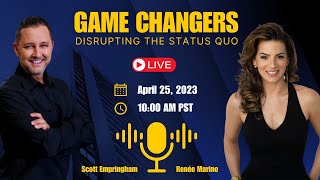
This content was created by Scott Empringham. This content was uploaded by Scott Empringham. This is a YouTube video titled "How to Unlock Your Communication Superpowers: Reach New Heights 🚀🗣️✨" featuring a conversation between Scott Empringham and Renee Marino. The video, created on April 26, 2023, involves Scott interviewing Renee, a professional communication coach and TEDx speaker, about effective communication strategies, overcoming imposter syndrome, and the importance of authentic storytelling. They discuss Renee's journey, her Connect method, and practical tips for improving communication skills.
Chapters
Game changers. This is the podcast that brings you insightful conversations with industry experts who are disrupting the status quo. I'm your host, Scott Impingham, and we are sponsored by the AI Training Academy. If you want your next marketing campaign written by AI and you wanted all your ads, emails, blogs, social media posts, video scripts, and more written by the very best marketing AI mind, you could do that with AI Content Pro in minutes, just by answering six questions. Questions. And now with AI Content Pro, all of that and more is possible. Click the link in the comments section. Use our free trial code. We'll be posting that momentarily, but now we're really excited. Our guest today is Renee Marino. She is a professional communication coach, TEDx speaker. She just put together I saw this just yesterday. Happiness is not where you're looking. TEDx speech. She's an actress, singer, bestselling author. She starred in Jersey Boys and a hit Broadway show and even worked with Clint Eastwood, who produced the movie adaptation. We're super excited to have Renee here. Renee, welcome to the podcast.
Hi, Scott. Thanks for having me so excited for our interview.
Absolutely, absolutely. I had the privilege of being trained and coached by you personally. And the thing I have to say that everybody saw was not only your insight, but about communication and your mastery of communication, but the energy that you bring and the energy that is just so contagious with everybody else. So I want to compliment you on that. The impact you made on me and everyone else is tremendous. So thank you for that.
Thank you so much, Scott. It was my honor. And there's nothing like working with and being around genuine people. Good, genuine people. And you are one of those people. So it was such a joy for me.
Excellent. Excellent.
Thank you.
Well, today we're talking about unlocking your limitless potential with masterful communication. We're gonna be covering a lot of subjects. Now, the first question I really wanted to ask you was to get everybody enrolled. Why is communication important? And who should care about communication?
Everything starts with communication. And when we learn to master this skill. Skill. We become limitless. Communication is the foundation of our lives. It's like breathing. And like breathing, we often don't think about how we're communicating until something goes wrong. So my mission is to help people to prioritize communication in their lives before things go wrong. Because whether you're an engineer, an entrepreneur, a teacher, everything starts with communication. And we all must start to open our eyes to it so we can live the lives that we dream, dream of.
How did you get started as a communication coach? Where did it start take us all the way back to little Renee Marino growing up. And when did communication become important to you? Where you decided, hey, this is for.
Me, as a girl who grew up in a tight knit Italian American family, you could often find us sitting around the table eating, always eating, laughing, sometimes arguing, but nonetheless communicating. And I never realized how important the four words that my parents would always say to me when something was bothering me, let's talk about it. Those words allowed me to open up, to share my feelings, get the thoughts out of me instead of pushing them down. And I assumed growing up as this, as this young girl in New Jersey, that every family communicated in this way. And I didn't realize that that wasn't true until I started seeing the world on my own. And I attended college and I started being amongst people from all different cultures, backgrounds. And I said, oh, wow, we all communicate in different ways. And that made me so curious to understand how people communicate and why they do in the way they do. And I realize now the reason I love communication so much is because communication for me is about connection. I love people, I love connecting with people. So to be able to be what I call a master communicator, it allows you to create those genuine connections that lead to connections, creating connections in your business that lead to making the impact you want and the income. And that really didn't start happening until 2020, when I went from decades as a professional actress on Broadway and film and tv, to then moving over to becoming a communication expert because I started writing my book. I was doing my most recent Broadway show, Pretty Woman the musical, in 2019, and I started writing my book. And once that show closed, I said, you know what? I'm ready to activate my other gifts, my gifts of writing, of speaking, of coaching. And that's when I decided to become a communication coach. And it kind of became perfect timing because then the world shut down, Scott. So I wouldn't have been able to perform even if I wanted to. And that's how I started my business. The first primary part of communication I helped with was being able to connect on camera, speak on camera and feel natural. And I started helping business owners and entrepreneurs with that.
I love that. And so we're going to go into all kinds of strategies. We're going to pick your brain with is a really wonderful opportunity. I already see questions are coming in, so I'm loving this. Thank you, Ma, Rena and others. We're going to get to your questions while we get to your questions. You mentioned about communication and I thought this was really interesting. In your TEDx talk, you mentioned that happiness is not where you are looking. And I get the idea that there's obviously external communication connecting with others, but there's also internal communication which can limit you or hold you back. Could you talk a little bit about how what you're referring to when you say happiness is not what you're looking. Can you elaborate on what you mean by that?
In this day and age of digital technology, we have so many outlets with which to communicate, which is a blessing, but can also allow us to start choosing convenience over true connection. And that begins with the communication we have with ourselves. Because we have so many things to allow us to escape from ourselves. We, we are not taking the time to connect within. And communication with self is the first step to my connect method is the first step to empowering yourself with great communication. It's that communication with yourself. And in my TED talk, I refer to the beautiful classic film of the wizard of Oz where we see Dorothy on her farm, unhappy in Kansas, dreaming of a better life out there. See somewhere over the rainbow, right? She's talking about out there one day. And we're doing the same thing in this digital culture. When we don't want to deal with what is hard, maybe a certain emotion or a situation we're involved in, we escape binging a show on Netflix or hopping on social media for what I call the good old S and C. Scroll and compare. And it's so detrimental to our mental health, to our overall being when we're not taking the time to make the first person that we connect with ourselves.
And how do you, how do you start that process if you are caught in that loop of snc? I like that. Scroll, scroll and compare. How do you break that habit? How do you break that sort of pattern and connect to a new pattern?
Very simply, Scott, I am all about simple, simple and easy tools to start to prioritize. You prioritize your communication today. So a really great practice that I share in the book I share with my clients is to wake up every day and once you open your eyes, you go to the bathroom, do your business, come back to your quiet space alone. Do your best. I know that phone is tempting. I know you want to roll over and start scrolling and checking your email. I encourage you to leave the phone aside and ask yourself this one question. How am I feeling? Then take five to 10 minutes to put pen to paper. Yes, my friends, I'm talking about that old school way of communicating writing which is so powerful. Because it allows us to really dive deep into our subconscious mind to understand and unlock what's going on within and answer the question. Let the pen flow. And even if for the first minute you're like, I don't know why Renee told me to do this. This ain't helping. Keep writing. Keep writing because what you're doing is you're getting in tune with, with your innermost self. And then when you move about your day, you're starting from a place of being grounded and not stressed out and activated from worrying about what other people are doing in their lives. You're starting with yourself.
I love that. I love that. And that whole process takes how long?
Five to ten minutes. Listen, if you have more than ten minutes, great. Let the can let the pen keep flowing. But for most of us, we're so busy, we have so many people depending on us. I say five to 10 minutes will do the trick.
Love it. Love it. Everybody's got five to 10 minutes.
Yes.
So, Ma and Kurt, I'm loving the comments. If you have questions, please hit us with questions for Renee. I'm going to jump in with this question. Can you tell us a time when you struggle with communication either externally or internally, and what you did to overcome it?
When I was in the process of writing my book, I was seeking out a book coach. Not to help me with the writing, but to help me with the publishing of the book and all of the whole long process that I didn't know about. And I found this gentleman online and I really loved his work, and he offered a one on one session and to read the first 50 pages of your book. So I'm like, yeah, awesome. So I'm researching him and I decide to pay the fee to. To have this one on one and it's all done online. So I pay him. And 10 minutes later, Scott, the fear set in. And I was like, oh my God, what did I just do? What if he's. What if this is a scam? I just sent money to someone. Oh, my goodness. So I research his phone number. I call up frantically and I'm like, hi, this is Renee Marino. I just sent you payment. I just want to make sure this is legit. I mean, I just. I didn't take the second. The power of the pause. I just went for it. He messages me back or yeah, he called. He emailed me back because I had all. I had also emailed him and he said, hi, Renee, this is so and so. Yes, this is legit. I was on a client phone call. Great. You know, no worries. Awesome. So then the next week he sends me the 50 questions because there was a 50, 50 question survey I had to fill out first. And I'm at Starbucks and I'm so excited. I'm answering the questions and a question pops up about an NDA, a non disclosure agreement. And as someone who had never written a book, I didn't know about NDAs. And I thought to myself, I wonder if I have to have anyone who reads my book sign an NDA. So again I email him and I'm like, hey, I just wanted to ask if I'm supposed to have anyone who reads my book sign an NDA, do I have to have you sign an NDA? And he writes me back, Scott. And he's like, okay, I think we shouldn't work together because you seem more nervous than you are excited and I wouldn't want you to do something you don't feel, feel comfortable doing. And in that moment I was like, oh my goodness, we all know that feeling, right? Where it's like the moment where you're like, oh, I need to insert my foot in my mouth. I didn't take the time to think this through, but it was this beautiful moment of communication with myself where I said, renee, this is perfect that this happened. This is the precise thing you're talking about in your book. So of course it has to happen to you. So I wrote a beautiful email back from the heart and I said, listen, I completely understand how this looks and appears, but I want you to know that was a sincere question. And I only asked you because I'm looking to you as the expert. I'm so excited to get started. He wrote me back, he thanked me, and then when we hopped on the phone for our first call call, we had a great laugh because I said, I have to tell you, this was the perfect timing for this to happen because this is exactly what my book's about. Making sure that we take the time to think about what we're writing or communicating before we do.
I love it and I can't wait to grab a copy. Now that I've got the link, I'm going to grab that. I. We've got a bunch of questions in here, one from someone I believe you know. Oh, Diana Swillinger.
Question. Goodness, Diana, what's the best way to.
Prepare for difficult conversations? So apropos for me right now and others I know what's the best way to prepare for a difficult conversation? So we can show up with humility and a plan to communicate effectively. So we are more likely to get positive results. Fabulous question.
Yes, fantastic question, Diana. Step one, do a brain dump again. Take pen to paper and write down everything you want to say. Think of this as the first draft of your book. So don't edit yourself. Just let all the feelings and thoughts go onto the page. Then when you're finished with that, look it back over, look it back over and do what I call trim the fat. Create some bullet points for yourself of those main points that you want to address with the person for this difficult conversation. Then step three is to read it aloud. What I love to do is call in my English bulldog, Frank the Tank and I put him in the room with me and I read it aloud and I go through those points and by verbalizing, you hear back what you are saying and it gives you clarification to know, is this matching my intention? Is my tone matching my intention? And then the next step is to record yourself. You can do this either on your camera phone. I love to say, you can just set it on your windowsill, press record and pretend it's that person. Or you could use the wonderful voice recorder app on your phone. And again, this gives you more clarification around what you want to say and how you want to say it. After doing that a few times, reach out to the person, whether it's through text, voice memo, or a phone call and say, hey, Scott, I'd love to sit down and have a talk with you. When can we do that? And then talk from the heart. And remember, it's not about perfection, it's about connection. And when you're speaking from the heart with this preparation, only good things will come from that.
I love that. I love that. And so many people. I literally just came from a conversation where. Yes, I can't wait to share that with somebody who shared a difficult conversation they're having. Here's a great question, Kurt. I know Renee pushes through the hard days and shows up even when the feelings aren't there. I think he means aren't there. What are some tips for pushing through and still being authentic when maybe feelings or energy doesn't feel like it's showing up? I know I felt like that many, many times.
Yeah.
Oh yeah. Kurt says in the follow up notices, aren't there?
Yes, yes, that's a great question. Because the truth is we aren't always going to feel like doing it. We're not always going to feel like making that video for our business or we're not going to feel like having that difficult conversation. But it's about taking the moments before all of that happens to sit with yourself and remind yourself of why this is important to do, always being clear of your why to do things. And that's important with the last question, too. When it comes down to a difficult conversation, it's so easy and common for us to shy away because we. We believe communication means confrontation, and it does not. And when we believe that, it holds us back from that authentic communication. But thinking about your why, why I want to have this conversation, why I'm going to show up for my Facebook group, even though I'm having a tough day of grieving, even though I'm feeling anxious today, I'm going to show up because it's not about me. It's about the people that I'm helping to serve. And when we take ourselves out of the equation, sometimes it makes it so much easier because then we get out of our head, we get out of the overthinking, and we think about that other person who needs us to show up.
Which leads me to the next thing, because I think you, you made that abundantly clear. At Global Speakers Academy put together by Entrepreneur Organization, we had an opportunity to get in front of the group over and over and over again and have conversations and connect. And you made that point really well about us, about connection. Now, when somebody gets up to speak, if there's somebody that's listening or watching and they have a speech coming up, maybe it's to a small group of people, maybe it's to a big group of people, and they start getting nervous, what suggestions or strategies or things do you recommend to them to get them out of that state and get them moving in a more productive state?
Nerves are just energy. Think of nerves as neutral. Nerves are the same energy as excitement. Same exact energy with a different label. So I want you to start to change your perspective. Flip the script on what nerves mean to you. See, what often happens is we. We say, I'm nervous. Oh, my gosh. And then our shoulders concave and our heart's beating out of our chest, and all of a sudden we want to hide. But I want you to think of a time in your life that was the most exciting moment you could think of. Oh, my gosh. When you met the person you fell in love with. If you think about it, it was the same physical manifestations as when you're nervous. Your heart's beating out of your chest, your mouth goes dry, maybe your mind goes blank. So before you even get on that stage to speak, starting today, I Want you to reframe your thoughts about nerves and look at nerves as fuel, baby. When I was a performer for all those years on Broadway, I had to learn this because there was a time in my career I was doing Chaplin on Broadway, and I found myself starting to get really anxious before I went on out on stage to dance. And I was like, all right, Renee, we need to figure this out. And then I reminded myself, okay, Renee, this is amazing. You're getting to do what you love. Whoo. You're about to go out there, entertain people, make them feel happy. And I would pump myself up and use those physical manifestations of my heart beating and my mouth going dry as excitement. So then after a while of practicing this and reminding myself every time I felt those feelings that it was just excitement, then I started looking forward to performing.
I love that. So the idea of actually maybe relabeling the experience, is it excitement or. Excuse me, is it nervousness or is it excitement? And then. And then I know you do this to create a physical sort of response or environment. And so I'm wondering what are the non verbal things that you do specifically to. To get you to bring your best and help you connect? And what can people do at home or in meetings before they go to the meeting? What can they do non verbally either before the meeting or in the meeting to just come across better and connect more?
The E of my connect method, Scott, is energized through movement. Movement is our medicine. Movement is our gift to move around that stagnant energy and change it into fuel. When I first started my business, it was all behind the computer. And as a girl who's used to dancing eight shows a week, constantly active, I was like, oh, my goodness, I don't think I could do. I can't. And I found myself low energy, not feeling myself until I realized, Renee, you haven't taken the time to move. So here's a fun, simple practice. Create a hashtag power prep playlist of those songs that pump you up. I'm talking about those songs. And when you hear them, you're like, yeah, baby, I'm unstoppable. Let's do this. Make you feel, feel so good. And put that playlist on before any meeting or communication you have. Play it while you get ready. Move the body however it feels good for you. I love to do high interval workouts. I love to dance. That's what I choose. But for you, it could be walking around your house. It could be jumping on a trampoline and take some time Again, it could be 5 minutes, 3 minutes. And shift that energy to use it into fuel.
I love that. I have to ask, though, what is in your. What are a couple of things in your playlist?
As I explained before, JLo, my spirit animals. So we have some JLo. Let's get loud. We definitely have, you know, the Rocky soundtrack. I mean, I have the tiger. How do you go wrong? I mean, anything. Pitbull. Like, anything that just gets me. Gets me dancing. I'm like, oh, yeah, let's do this. Let's get on this interview with Scott, baby.
I love it. I love it. Here's a question from Kurt. How does one stay on track between objectives we want to communicate and the summary at the end? Or how do we get back to a topic when the conversation takes a different route? Great question. How do we get back on. On task when things come off? Or how do we just stay on track?
First of all, remember, it's not about perfection. It's about connection. And I re. I reiterate that because all of us get caught up in this perfectionism mentality, and it holds us back. Some of the greatest speakers that you admire, you can watch videos of theirs. They go off on tangents. They flub their words sometimes. So first of all, know it's not about perfection. It's about connection. And when you have been in the midst of the conversation and you realize, oh, I've gone off on a tangent, take a pause, embrace the silence. This is something I talk about a lot because we are so afraid of silence. We think that it means the other person's going to think we don't have a response, or we're not smart or we're stupid. And then what happens is we fill with filler words. You know what I mean? Like, and, yeah, so take that pause, Embrace the silence. And when you take deep belly breaths, you allow your nervous system to calm down to get you back on track. And there's nothing wrong with saying, hold on a second. I think I got off track here, so just give me a moment to remind myself of what I wanted to bring forward in this conversation. And there's nothing wrong with that. Owning up to it is a sign of authenticity and relatability.
I love that. And that relates to one other thing. I have so many questions I want to ask you. They're colliding now. Can you give us a synopsis of the Connect method? I'm super interested. Tell us about the Connect method, because that sounds like absolute gold. I heard you talk about that summarize that for us, if you would, or if you can.
My expertise is in the communication of connection, connecting with people to create those genuine connections that lead to impact and income. And the first step of the connect method is communication with self. As we discussed, taking the time to wake up and ask yourself, how am I feeling? The next step is to own who you are, Be the person that you are in your spirit, whether that's an introvert, extrovert, whatever that may be, own that person and show up how you are. When I meet you in your neighborhood, the same way you show up online, own who you are. The next step is to nail down your information. That means before you enter a meeting, before you enter that conference and you're going to be connecting with people, take the time to gather some information about that person or about that event before you enter the space, just like you did today. Scott, you told me I've been working for an hour. I was looking at videos of you gathering my questions. That's nailing down your information. Because then when we meet a person and we let them know that we know this, these few things about them. You live in New Jersey, I'm from New Jersey. Boom. A commonality happens, and that's where connection is created. So, first step, communication with self. Second step, own who you are. Third step, nail down your information. The fourth step, next level storytelling. Human beings connect through story. So I invite you, encourage you, to start to think about your own story, start to make notes and write about what your business is and the why behind your business, why you decided to become a part of that career, the why you became a part of that field of work that you're in, and start to gather the stories in your own life, the fun stories that you can share when you are working with clients or you're meeting people for the first time. Next level, storytelling. The next step is, as we discussed, the E energize through movement. Anytime you're about to communicate with a person or a group, move your body first. And this is not for my dancers out there or my professional athletes. This is for everyone. When we move, we change that stagnant energy into fuel that allows us to focus on and then get to our next step, which is being a complete listener. A complete listener is a person who listens not just to respond, but to hear, Taking the pause to allow that person to have an open platform to be heard and to catch the commonalities as that person is speaking. And then when it's your time to talk, you can share those commonalities and as I said, a connection is made. And the last step is to talk from the heart, to understand that communication does not mean confrontation. And to understand that as long as you've taken the time to prepare and understand what you are saying and why you want to say it, the rest is just about speaking honestly and authentically. That's the connect method for you.
I love that. I love. That is pure gold. That is pure gold. There's so many gems in there. I want to touch on storytelling for a second. One of. I think your, your amazing gifts is telling stories. And you, you use stories so passionately and so vividly. At Global Speakers Academy, how does one become a good storyteller? Like, I get the concept. I just don't know if I have your gift from somebody who says, I'm just not a good storyteller. What do you tell them and how do they become a better or great storyteller?
Practice makes progress. Practice, my friends. Anything that we plan on getting good at and great at, we must put the practice in. I'll take it back to my career as a professional dancer. Singer. That didn't just happen, Scott. Every day, each and every single day, I was in the dance studio, I was taking private voice lessons. When I was at home sitting down on my couch, I was envisioning myself on that stage. It's a process, practice. And all of the 1 percenters in this world, everything that they do, they make sure to put the practice in. So if you would consider yourself not a good storyteller, great. Awesome. Honor yourself for, for owning up to that. And then the next step is to start. Start to gather those stories. Start small. The stories that you've already told a million times to your friends. Do yourself a favor. Press record on that handy dandy camera that we have on our smartphones. It's such a gift. And pretend that there's a person behind that lens listening to you and start to tell that story. It could be a simple story about how you went to the store and you got your milk and it spilled all over. Whatever it may be, it's getting you in the practice of sharing these stories and then document them. Find a place to gather all of your stories so that way when. When you, when they come to mind and, and you think about, oh, I forgot that happened, you can write it down so it reinforces it for you. And then each and every day, take one of those stories and start to tell it aloud. Then when you get more comfortable, bring in a friend to be your audience. Someone you trust someone who can be a sounding board for you and say, I'm going to share this story with you, Tell me what you think. It's all about practice.
And you practice. You said you have a bulldog?
Yes. Frank the Tank.
Frank the Tank. Frank the Tank. So you sometimes sit him down and give him your best?
Scott all the time. I mean, he, I, and I, I pray. I really believe he wants to talk back to me at this point. And every day I'm like, frank, just tell me, what do you think? But, you know, his little face says it, because he's staying there, so it must be good.
You know, I, I really do think you should actually post a video with Frank the Tank. You, you chatting with Frank the Tank.
I think, I think I will.
By now. You've seen hundreds, if not thousands of other speakers, probably thousands of other speakers, some of the greatest in the world. The Tony Robbins, the Grant Cardone, the Renee Marinos, the Pat Quinn, the Diana Swillingers. You've also seen Average Joe's. Like me and other entrepreneur organization members or business owners step up and speak and present to a group what are like the top one, two or three, or maybe just the top one or two mistakes that you see. And right away you go, oh, gosh, they're making this mistake. If they just eliminated that one mistake, they would just connect and communicate and persuade so much better. What's like the number one mistake, you see that if people could fix that, they would just immediately open up and be a better speaker.
The number one mistake I see people make time and time again is the belief that it should be a certain way. Let me give you an example. My husband was taking this online course, and I joined him downstairs as he's watching these modules. And I was just taken aback because in each and every video the person teaching, I could tell, was coached to hold their hands in this way. And if you, if, if they held their hands in this way, they would appear confident and smart. And I just couldn't take my eyes away from the screen because I told my husband, this is so unnatural. I can tell that this is not innately how the person speaks. So they're doing this thing that they believe they should do because someone told them to do it, and it's coming off inauthentic. So for me as the viewer, I couldn't even pay attention to what they were saying. I couldn't connect with them because I was distracted by this motion they were doing with their hands that they believed they should do. So that's the first, the first I would say problem that holds people back. The second one is the belief that they can't make a mistake. I'm going to say it again. It's not about perfection, it's about connection. My friends, look at some of the people that you think are the best speakers in the world. They have messed up, they flubbed their words, they've gone off on a tangent or two, but you connected with them so deeply that you didn't even care. And the third thing that I see is leading with ego. Starting out their talk with, well, I have been on Broadway and I'm a best selling author and I have helped thousands upon thousands of people not just as a, as a communication expert, but as a singer, dancer, actor. And they lead with me, me, me, I, I, I look how great I am. And that makes it really hard for people to connect with you. And that's why leading with story, leading with the problem that you know your audience has and sharing a story with how you or someone you know overcame that problem. It's such a better way to start connecting with your audience because it allows them to find themselves in your story.
I love those. And it connects to something else that I hear a lot in on the marketing side and on the digital marketing side and the social side. When I, when I try to get people creating content as an example, one of the things I see, and it's often labeled as the imposter syndrome, it's this fear of looking foolish, it's this fear of being found out, it's this fear of saying, look, I really don't know as much as I, you know, what is that? Do you run into that when people are speaking and how do you help people overcome that? And if somebody's struggling, maybe even equally, if not more important, if somebody's struggling with that imposter syndrome and they feel like it's holding them back, what can they do today to break through, to go over, under, around or through that challenge?
I want you to hear this and hear it in a complete and full way. You are not alone. I've had the honor of working with some of the biggest names in the film industry, some of the greatest actors on film in the world that you would assume they never get imposter syndrome. Look how good they are. They're making millions of dollars by communicating on film, on tv. And I'm here to tell you, I know firsthand that they also feel imposter syndrome. So yay, you're not alone. So that's step one Know that you're not in this by yourself. And number two, the parts of ourselves that we often want to hide the most are the ones that often connect us with others the most. And when we are open and vulnerable and honest about our insecurities or like, oh, man, I. I gotta be honest, I hate the way I look when I'm on camera. So I'm probably gonna watch this back and I'm gonna be like, oh, that sucks. When we share those moments, that allows our audience to take the pressure off of themselves that they need to be perfect. And what a beautiful way to connect.
I. I love that. And I think that part of that connect methodology starts connecting the dots for somebody to help overcome that. And I found one. One piece of advice you gave was you don't have to be an expert in everything. Just own your area and own what problems you solve for that customer. And that took a lot off my shoulders. And giving a presentation recently and giving a presentation next week, I started to freak out thinking about, what if I get questions on this? What if I get question on this? And I realized the answer is, I don't know, but I can help you in this area and just own that.
Yes. And Scott, you just said it. That's step two of the connect method. Own who you are. That also means own who you are means also own what you're not good at. Own who you are and own who you're not. Be okay with not being great at. Say you're not great at marketing. Not being great at analytics. I don't want to do analytics. Okay? I'm here to say it to you all. I'm being really transparent here. That's not my zone of genius. I do not want to go through analytics. I want to have someone else do it. And. And that's okay. So if someone comes to me, a client or someone in the audience when I'm speaking with a question that I don't know the answer to, there is nothing wrong with saying, this is not in my area of expertise. But I'm happy to reach out to some of my colleagues and friends who are in this area, and I'm going to get back to you with an answer. How awesome is that to see someone being honest? There's nothing worse than watching someone try to be something they're not. It makes you uncomfortable. They're uncomfortable. Own who you are and own who you're not.
Can you tell a story of maybe a client that came to you with one of the biggest challenges where this person said, hey, I'VE got this speech coming up, I've got this big meeting or this thing. And he said, well, let's get it, let's give it a shot. And also you see them present, you think, oh my gosh, I've got my work cut out for me. What was it? Without, you know, maybe crossing any lines. But what was the challenge? Or could you tell us a story? What was the breakthrough and how did you approach that?
I have a wonderful client who came to me to be able to get on camera and share about his business. He is the owner of a wonderful solar power company, one of the most charismatic human beings that I've ever met. And he would not even put light on when he was on video because he didn't want to be seen. Very insecure about his appearance. And this is something that many clients come to me for, which is why they're held back from getting on video and being able to reach the people they're meant to reach. He and I work together and I explained to him everything that I'm sharing with you, that it's about leaning into your vulnerability. It's about thinking about what you're helping with and not thinking about yourself. And once we went through these, these tools and these simple practices with the practice putting the camera on the windowsill as he would just speak and get comfortable with seeing himself on video, he got to this point where he said, oh, my goodness, I don't even, it's like I don't even see myself now on camera because I'm so concerned with seeking to understand than to be understood. And once he got past this block, Scott, it was the most beautiful, like, aha moment because he started just speaking from the heart. And I was like, you don't need my help at all. You're the best storyteller I've ever heard. You're so good at talking about your business. And because he stepped into who he was and feeling confident about who he was and what he had to offer, he just went off and now he's doing videos all the time. People are aware that his business is out there and he's flourishing.
I love that. And, and with, with those stories, I saw it Global Speakers Academy in Cancun. I saw people come in to the program. I think it was like a three or four day program or four or five. I don't, I forget how many days it was, but start in one place and end in a completely different place. And it was just a game changer for everybody, for everybody, because we all.
This is the beautiful thing, we are all in this together. We all have our insecurities, we all doubt ourselves. So when we're in a space like this, a beautiful platform to speak to other people that have been where you are. It allows us to step out of our shell and to be who we are without thinking that it has to be a certain way or I have to emulate this person.
Person.
No, let's be ourselves. Let's be the best selves we can be. But let's not worry about trying to be a carbon copy of someone else.
I think, like, how did you, how did you start to evolve? Where did. Was it always something you were comfortable with when you started to do that? Or was it a. A progression where you started to feel more comfortable in front of the camera and on stage and Broadway and all these different things in film?
Like many of you, when I first started getting on camera, I was like a deer in headlights. My heart would raise, my mouth would go dry, and my mind would go blank. And for me, I was already at the point in my career where I was on Broadway performing in front of thousands of people on a nightly basis, yet I couldn't speak in front of one video camera. Think about that. Now you want to talk about self judgment? I remember sitting in the car after one audition being like, renee, what is wrong with you? Are you kidding me? You speak on a live stage and you can't speak in front of one video camera. And that's what spawned me to start taking course after course to understand the fundamentals of being able to get on camera. And even though I took seven years of these courses, I learned a lot of great tools, but still nothing was clicking. Until I worked with one coach who said three. Three words that made the light bulb go off. Just be yourself. And once he said that, it was like all of the lessons and the tools I learned from all those courses wasn't for nothing. Now I applied this, this authentic approach to everything that I learned in all of those courses. And I hired a. A coach to help me. And it was like that trifecta approach was like, boom. It allowed magic to happen. And I went from feeling so frustrated to feeling fearless. I went from feeling insecure to like I could do anything. And I went from feeling like this was the end of my career to this was the start of a new chapter. And it, it all comes down to practice. Practice makes progress. No, I was not always comfortable, but I got there and it was only through practice.
I love that. And that actually dovetails in my Next question is a question about you. In the last five years, what was a habit? I was gonna say, what is a habit or a belief that most significantly impacted your life? Now it sounds like practice was one of them, but maybe not the last five years. What was something in the last five years, either a habit or belief that's impacted your life perhaps more than any, Any, any other thing?
It was the overcoming of a belief, which was the belief that I had to be perfect. Oh, I can't put that video out there until it's absolutely what I think it should be. Oh, I can't share my story until I have all the words of it perfectly. And Scott, let me tell you, that could not be further from the truth. One day I shared a video, and this was off the cuff from my gut, I was in a moment, didn't worry about my hair, my makeup, anything. And I pressed record and I shared what was on my heart. And that was the video that got the most likes of any videos I've ever done. And I'm thinking to myself, all the time I've wasted, like many of you, wasting time sitting on the sidelines until it was perfect. Don't put it out there until it was perfect. And here I am thinking, you gotta be kidding me. This took me three minutes. I pressed send, and I have all these comments, people reaching out, being like, wow, thank you for sharing that. I needed to hear that. The irony.
It's so true. It's so true. And in my workshops by social media workshops, I used to show a video of Gary Vaynerchuk. And everybody knows Gary Vee, but not too many people have seen his very first YouTube video for wine Library. It is the funniest video ever. It looks like he shot it on, like an old flip phone. He's sitting at his desk, and there's like a little spiral sort of emoji or some kind of graphic that shows up. It's bad lighting, like bad everything. And yet it was his very first one. And so it was the start of something where it just got better and better and better.
Scott, I want to. I want to add this because I think the audience will really appreciate this story. In 2020, when I decided to become a coach, I was a part of a challenge by Dean Graziosi called the Start Over Challenge. And Dean would go live and teach us in the group. And then the homework was to go live on Facebook and talk about the material he taught that day. And the first day I go live, same situation where I was in my backyard I just got finished with the gym. I was all over the place, but I was just speaking what was on my heart. I share it with the group. About a half hour later, I get a flood of messages from people in the group. A hundred thousand people in the group reaching out to me, saying, how did you do that? Can you teach me how to do that? And I remember my first reaction was like, what the heck are they talking about? What is that that I'm doing? And then after a week of this going on, I realized, oh my goodness, they want help with being themselves on camera. This is how I came up with my whole course, connecting on camera. At the end of that week, Dean's team reached out to me, asked me if he could interview me live in front of the group. Dean Graziosi interviews me, and while he interviewed me, he said, and I'd love for you to be on my podcast. So from this one video, just think of all these opportunities that were created. This one imperfect video. So then I'm on Dean Graziosi's top 1% podcast to about a month later, Tony Robbins has a challenge called the comeback challenge. 300,000 people in the group, same thing. I go live every day, flood of messages. Can you teach me how to do this? At the end of the whole challenge, Tony Robbins, national speaker says, there's one person who showed up every day, delivered so much value to the group. Renee Marino. You just won five days to Tony Robbins private resort in Fiji. Okay, wow, crazy. And then fast forward, Scott. Six months after starting my brand new business, being going from a performer my whole life to now a business owner, Dean's team reaches out to me and says, Dean would like to know if you would be the co host of his and Tony Robbins World Summit. So six months after starting my business, I was on stage with, with Tony Robbins, with Dean Graziosi, Russell Brunson, Pat Quinn co hosting this event. And it all came about from that one first imperfect video. So embrace the imperfection, baby.
I love that. I love that. That is such a great way to sort of draw sort of the connection between. Just start, just start. Take the first step. Have faith and start the first step. I love that. You know, it's so funny, I just had a follow up question for you, but I was so caught in the story, I just completely, completely vanished. Yeah. Now I'm curious. Tell me more. I remember what it was. Tell me more about the course. I want to know more about the speaking course. How do people get a hold of it and tell us what we'll learn for the people who want to get better at speaking.
Yeah, this, the course that I have right now that I'm referring to is connecting on camera. And this is to be able to bring your real self to the video with confidence. Whether it's live videos on Facebook, whether it's for quick reels on Instagram, whether it's for a video on your landing page. What I see is that so many of us are held back from this number one marketing tool that allows you to grow your business, grow your audience because they just don't feel comfortable on camera. So what it is is a course that teaches you the five power PS for connecting on camera. And the great part is after day one. So this is a live two day workshop. And after day one, Scott, you can start making your videos and feel good doing it because you get the permission, you get the understanding that it's not about being something you thought you should be. It's just about bringing yourself to that video and understanding that it's just a conversation. And I show you how to do that. And in the course you also get to see my personal. You get a VIP behind the scenes pass to watch my personal videos from one of the largest virtual stages in the world and personal videos of mine to show you that even when you're an expert, you're not perfect and it's okay. And we get to break down the videos together. You learn how to network with grace and confidence, whether that be in person or virtual. You learn how to create a following of raving fans. You get a 30 day social media calendar that helps you to start create consistency with sharing videos on social media and so much more. But it's a really fantastic live two day workshop course over zoom. So I say live, but it's over zoom. And it's just amazing because I'm there with you and you know, it's so great to have that expert, that coach there with you holding your hand. If you have any questions, you can ask them in the moment.
I love that I just reposted your information and they can find that on Rene Marino.com yeah, absolutely. All right, I've also got The Instagram, the LinkedIn, Facebook, all the other information there as well as that a couple of people say they've read your book, absolutely love it and recommend it. So also the Amazon link is there. In the last few minutes, we have just a couple other questions. What's a book aside from your own or you can include that as well. What's a book that you Recommend everybody read right now. What is the book that you're reading and you recommend? Recommend everybody read right now.
The universe has your back. GABRIELLE BERNSTEIN and it's funny you asked that because I just, look, I even have it right here. I literally have it right here because I was sitting eating lunch and sometimes I just like to take out those books that I need that quick hit of inspiration. And that's one of the books. The universe has your back. And it's interesting because I modeled my book after what helps me. And what helps me with books is not a book that's like, oh, this is so entertaining, boop on the shelf to collect dust. But a guidebook, one that you can come back to time and time again for a check in. And that's what I say my book is. It's like a communication check in if you've ever traveled to Europe. RICK Steves GUIDE to EUROPE When I went to Italy, I had his book with me everywhere at all times to be like, oh, where am I going? I want to get gelato. Where should I go? And it was this beautiful reference that I could keep going back to. And that's how I modeled my book. And that's what Gabrielle Bernstein's book is for me.
Love it. Love it. Next question. I love this question too is I'm super curious what your answer is going to be if you could go back to 10 year old Renee Marino, show up at her second, third grade, whatever grade you're in, and give her a piece of advice. What advice would you tell her from your heart? Anything you tell her to do or avoid.
Avoid the self judgment, avoid beating yourself up because you think things need to be perfect. Renee they don't. The juice is in the journey. The beauty is in the imperfection. And when you lean into that love, that accept it, that's when life gets really fantastic.
I love that. I love that. Finally, is there any question that I didn't ask that you just really were hoping I would ask?
Wow. Let's. Yeah. Renee, what do you mean by assumption? Animosity? Yes, assumption animosity. My friends, it's something that you will find in my book. And what that refers to is the animosity that one feels from assuming what you think to be true. Let me give you an example. My book is really about balancing these worlds of new school technology, texting, emailing, everything that's all encompassing of communication, communicating through these technological vessels versus old school simplicity. Those old school ways of connecting face to face conversation, a phone call or even a handwritten letter. So when I talk about assumption animosity, I'm referring to times when you get a text message and you read it and you're like, well, what's Scott's problem? He seems like he's pissed off. Guess he doesn't want to do this interview today. And then I text back from a place of assuming I know what his tone is and assuming I know what he means. And then I text back maybe from a place of being a little sassy or passive aggressive. And then he receives it and he's like, oh, great, I have to interview this girl today. And slowly but surely resistance is building. Problems are arising, all because of assumption animosity, without taking the time to communicate in a more clear and effective way. So I encourage you all, I invite you all to take this, this small principle of when you're text messaging or. Or in an email exchange and you feel any sense of, ooh, there's some miscommunication here, or some resistance, I invite you to pick up the phone and say, hey, I just want to clarify that this is what you mean. Or send an email back and say, hey, can we meet for lunch? Or can we hop on a zoom? That way you get right to the heart of a communication matter and you cut out all the unnecessary, wasted time.
I love that. I love that. I've. I've experienced it and been on the other end of that I don't know how many times. And that's great, a great suggestion. And in the final minute, I do have one other question. I feel like people could benefit from this. If there are men or women that are facing great change in their business and they're facing the unknown and they know that they've got to take a step out into a new direction, and maybe they're hesitant, maybe they're nervous or scared, what piece of advice would you give them? What encouragement would you give them to take that step and move forward?
The beauty of life resides outside your comfort zone. I'm going to say that again. The beauty of life resides outside your comfort zone. And take a moment to communicate with yourself and think about past times in your life where you did something incredible or you got past a milestone that you didn't think you could, I will bet to say that all of those times you had to step outside your comfort zone and remember that it's about taking what I call imperfect action. It's not about eliminating fear. It's not about knowing every step that's in front of you before you take the step. It's about taking that step even when you're afraid, even though when you don't know the next 10 steps that come after it. Because when you do that, that's when you develop that little nugget of confidence that builds upon each other that turns into an armor of self belief. So action comes first, confidence comes second.
I love that. I love that. Renee, I want to thank you so much for the last hour we got to spend together. I want to thank you for the contribution you made in Cancun for all 60 or 70 of us and the continued groups that get to work with you and benefit from you. I just think you are a marvelous, marvelous, spectacular example of what can be and such an amazing communicator. I want to invite everybody to take advantage of grab those links, get some of the dishes. Got some free tools on the site. I've already downloaded them. I get your emails. I read your email this morning. I love that and so many great tools and grab that book. And Renee, for the bottom of my heart, thank you so much for being on our podcast today.
Thank you Scott and and truly, I mean this. Thank you for being such a beautiful soul and thank you for this platform. You are helping so many people through your light.
Thank you so much. See you soon.
More from Scott

🔥 PRESSURE IS A PRIVILEGE #PressureIsAPrivilege #LeadershipMindset #MentalToughness


🚨 YOUR NEXT LOCATION WON’T FIX YOUR PROBLEMS #BusinessScaling #MarketingSystems #FranchiseGrowth

🚨 AI CAN ACTUALLY MAKE YOUR MARKETING WORSE #AIMarketing #MarketingStrategy #BusinessGrowth


🔥 STOP RUNNING FROM WHAT’S CHASING YOU #FaceYourFears #KeepGoing #MentalStrength

🎥 STOP EDITING EVERY CLIP YOURSELF #AIVideoEditing #ContentRepurposing #ContentCreation