How You Can Use AI to Level Up Your Business | Scott Empringham E240
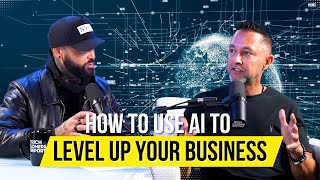
This content was created by Scott Empringham. This content was uploaded by Scott Empringham. This is a YouTube video titled "How You Can Use AI to Level Up Your Business | Scott Empringham E240" created on September 10, 2024. It features a conversation between Scott Empringham and Rich Summers discussing AI marketing strategies, personal growth, and the impact of quitting alcohol on personal and professional life. The discussion includes insights into AI's role in transforming businesses, personal anecdotes about overcoming challenges, and the importance of personal branding and content creation.
Chapters
What he put on me was something really interesting. He said, right now, you're looking at all the things that you have to do. He goes, but what you're not doing is. Is looking at what your kids are seeing right now. Do you want your kids to see somebody who didn't give up and still failed or didn't even fucking try? And that got to me. That got to me. And I thought to myself, I would rather have my kids see somebody who gave it a thousand percent and failed than somebody who didn't try.
All right, guys, welcome to another episode of the Report Day. We got a little sunshine outside, and somehow it's already the month of September. But I'm excited because I got a special guest who specializes in a technology that's really changing the world right now, a little AI marketing. I got my man, Scott Impingham. Scott, welcome to the show.
Thank you for having me.
Yeah, man. Appreciate you coming down. I think it was our guy, Kyle Gorman, who initially connected us. And you're out here in Laguna, so not too far, man. Appreciate you coming down.
My pleasure.
Likewise, dude. So I always say, man, like, this technology right now is just. It's not slowing down. It's continuing to evolve quicker and quicker. We got social media, we got AI. And I always say the entrepreneurs out there, the business owners, the folks that are moving the needle, if they're not taking advantage of the technology that's out there, it's very hard for them to compete with the folks that are. But regarding AI marketing, man, why don't you give us a brief overview of what that is, and what do you do in the space?
The simplest way to do describe it would be somebody my age remembers a thing called Mad Libs. Do you remember Mad Libs? Okay. Mad Libs is back in the day, when you're in the back of mom and Dad's car, you're driving on a road trip, you had this little story, and you had to fill in nouns, adjectives, adverbs, and then when you got done, it told the story. What I discovered with AI is people didn't know where to start. They didn't know what to say and how to get it all done. So I created pretty sophisticated sets of prompts with variables so people could fill in the blanks, the name of their business, the niche they're in, and it literally creates their Persona, their prompts, everything. It creates a Persona and their marketing plan step by step. So it's a marketing plan layered on top of AI, but makes it dirt simple for anybody to Do. So a small business owner, like a barber or sushi restaurant, whatever it is.
Yeah, absolutely. You know, I know there's a bunch of different AI platforms out there and they can help you with a lot of things. I mean, when you. We use them on the property management side to help write descriptions for different, you know, Airbnb listings we have or some of the boutique hotels that we have, our VAs use them all the time. But what are some common areas that AI marketing is utilized in?
Oh gosh. We have people in our program that are in real estate, that are in finance. We serve large car manufacturers. We're working with Ford right now and Lincoln all the way down to the individual dealership. So I can't think of a space that it's not touching. And if it's not in your, if somebody's in an industry and it's not touching their industry, it's because they're not aware that their competitors probably using it.
What's the craziest like form that you've seen AI used that you're like, wow, this is crazy.
No, man. Well, right now we, okay, here's, here's something that's, that's crazy, but it's transformative or it's, it's actually, we have a dealership that was doing meta ads and they were performing decently. And what we found is Meta loves creative. And so what we started using is a hybrid of hey Gen Video, AI video and some mid journey prompts and things like that. So what we did was we are loading about 250 ads, we're maxing out the platform for this particular car, car company or car dealership. And we have hey Gen videos calling out every county, every city, every, every local landmark. So if it was down in San Diego, think about it. A video comes on and says if you're in the Gas Lamp district and you're this and this, and they call it every single particular city and landmark for a fraction of the cost without any spokesperson, without any talent fees, without any, anything like that. And they're able to generate leads beyond anything they'd ever seen before simply by using AI video and then localizing it. Like hyper localizing it. So they can call it every city, every county, every little local landmark and just make it really, really appropriate for everybody in that market.
That's crazy, man. That's crazy. So what are some ways? Because you know, we're always looking at new ways to improve the business and utilize technology. So we, we do a lot of social media marketing. We're bringing in influencers to come stay at some of our hotels so we can collab with them and get a little bit more exposure, more eyeballs, if you would. I always say, you know, personal branding is one of the most important assets that you could build for yourself today. And then, of course, AI. AI is changing the world in a lot of different ways. It's kind of scary to think about, you know, what it's going to do to the workforce long term. But as you look, you know, over the next three to five years, how do you see AI affecting the workforce out there?
Oh, wow. Great question. So it's, I think it's decimating marketing agencies if they don't change. For example, my previous agency, I had 40 employees. We did 11 million in sales every year. And we had copywriters, designers, editors, ad planners, ad managers, analytics team. Now, with one virtual assistant and the right AI tools, you can have an agency like expertise at your fingertips, as opposed to having 25 employees. And now they're in Philippines. So we, we work with virtual assistants. They come into our program, they run through the coaching program. They get weekly coaching, they get monthly coaching, they get daily coaching, and they act as agencies. So the marketing agencies that aren't pivoting and aren't using AI tools and technologies, I think are getting decimated. I've got people in my program that used to have a AI age or a marketing agency, and they're just gutted. They're gutted because they didn't adapt quickly enough. So one person with technology could do the job of the old agency with 40 employees.
Yeah, so what we mean, like, give us an example. So someone listening to this and let's say they got a, a smaller business, more of a, you know, traditional business, like, let's say laundry map business, for example. How can one use AI to maybe transform or improve their business?
Yeah, great question. So I'll give you one actually closer to, to maybe. Real estate guy came to us and he does reverse mortgages. Reverse mortgages. And he had a real specific niche. And he said, I think my ideal customer, retired homeowners. What we found out when we actually use some AI tools, his real target market was financial planners that had homeowners as clients. That was step one. So it's identifying the real ideal customer. And then it was a question of how do you get in front of them? LinkedIn, a podcast, inviting him on a podcast. So he created a podcast, but he said, well, I don't know how to create a podcast. The virtual assistant created the Podcast. He did it on Zoom. He cut it up using video AI and he had to do nothing except a zoom call with a financial planner. The name of the podcast was done by AI. The podcast was run by the virtual assistant. They took the recording of the video when it was done, ran it through Video AI. It gave him 60 clips that he could now push out on LinkedIn, Facebook and whatever. And it gave him the ability to act like he had an agency, when really he had just a virtual assistant. There was a little bit of coaching there where he'd started a podcast, but it was nothing more than a recorded zoom call. He had content, an email campaign, Facebook meta, LinkedIn, a direct outreach, and a follow up email campaign, all done with one virtual assistant for about $1,500 a month and about a couple hundred dollars in AI tools. That's a lot of work to get done for reverse Reverse Mortgage guy. Within about 60 days, he had 250 leads of financial planners. He was now working with 25 or 30 of them came on his podcast, his zoom call, and he started getting referrals. That was all he needed. It took about 90 days, 120 days to get there and he had all the deal flow he needed and now he's cranking.
So did he actually start a podcast in this example or. Yeah, he did.
Yeah, but I mean, in the loosest sense, it wasn't like a setup like this, but it was a zoom call. He called it Wealth Wisdom. He targeted financial planners. And first he said, well, I don't want to do a podcast. Who wants to know about reverse mortgages? I said, don't worry about reverse mortgages. It's going to be a lead magnet for you. So what do you want to, what, what are you suggesting? And so we called it Wealth Wisdom. And he would invite financial planners on to talk about their view of what, what wealth positions people should be in over the next 90 or 120 days. And he got lots of people, financial planners on his podcast. And then afterwards they would say, what is it you do? Well, I do reverse mortgages. And then he got referrals from him. And it was a zoom call. Yeah, recorded zoom call.
Yeah. That's interesting, man. My first podcast. For the folks out there that don't know, this is my second podcast. And I had a, I had one before this. It was called the multifamily takeoff. And I had two co hosts. There are two partners of mine, we bought real estate together and we just started interviewing apartment investors. And that was all virtual. It was done via Zoom. And I remember having a Grant Cardone on like episode 22. We didn't even have videos. Audio only. And talk about an opportunity to have Grant Cardone on. And we didn't have any video. And I was so nervous. I didn't know what I was doing. And I was just interviewing people. I was literally just asking them questions that I legitimately have. But dude, that through that podcast we raised a lot of money. I built a lot of relationships, I got a lot of answers. Questions or a lot of questions answered that I personally had about the apartment space. And that's why I said, dude, like the podcast is one of the best things that anyone can be doing right now. And so when I split up with those partners, I started this one. I said, hey, you guys keep the podcast, I'm gonna start my own. And they still have that going. It's called the Real Estate Takeoff. And now I got this one. So I took everything I liked and didn't like and I put it in this one. And yeah, it's been fun. The in person though is. Is where it's at. That's where you really build the relationships. And yeah, it's been great. But this is my second go around.
I love what you said though because a lot of people think that you have to do it perfect. And the idea is just get it started. And he was like, think about the reverse mortgage business.
It does not need to be perfect at all. Yes, yes.
And he's in a category where that was really innovative for him to do a zoom call and then to cut it up and then tell the other guy, the financial planner, don't worry about it. My team will edit all the content. We'll send you all the content. It was so easy for him to get guests because everybody in the financial planning space, if they're a mid level guy or a decently that like they're Newport Beach, Orange county, they want content. If they say that you'll get content for free, that's great. And that was a great lead magnet for him and he just needed to just start at the very beginning. It didn't have to be perfect at all.
That's a good example. So Kyle, mention you do some traveling too. What are some cool spots that you go to?
I'm off to Singapore in two weeks with my wife and I'll be speaking to the EO Singapore Entrepreneur Group. It's entrepreneur organization, the Singapore chapter. And I'll be going and doing a two day workshop walking business owners through basically two hours One day and then two hours the next day of designing an entire marketing plan from scratch using AI tools and, and my, my marketing platform, my, my approach and then executing it. So they'll walk out in two days with absolutely nailed two, two or three core niches where all their money is going to be a marketing plan, all their ads, emails, blogs, video scripts, videos, all using AI tools, all for free, and walk out with an entire campaign ready to go to execute that day.
Yeah. Now, now one thing I will say is this though. Like you know, for the, the people out there that are like building their personal brands, creating content, I think AI does have a lot of tech out there. They can do subtitles and captions and they can even chop up videos. But I will say this, if you want to grow and you want to strategically grow your audience and really make a splash, you got to put a lot more work into it. The stuff that we do with our content and our team is we are trying to identify clips through this podcast that have the best chance to do really well on social. And so sometimes that might mean taking a hook from minute 17, having a body from minute 42 and having a call to action from minute 31. And then we'll run through at four or five versions and be like, okay, if I was an audience watching this, this 45 second clip, where would I fall off? Where would I drop off? Okay, let's remove that part now. Let's run it from the top and watch it again. What can we do to improve it? Okay, let's make that change. Let's watch again and we'll run through like four or five versions before we actually put it out. We might even test it on, you know, TikTok's movies that are platforms before we put it on Instagram. And so I do love the AI and we do, we do use some of it. Like our content teams always ask me, hey, let's, let's use some of the AI stuff. And I'm always like pushing back on it because I know what it takes to really do it the right way is you got to put in more work than just relying on the AI.
Yeah.
As much as AI does cut a lot of time and it allows you to do certain things without utilizing a ton of time. I do feel like in order to really go to the top with some things, you still gotta do the hands on approach 100%.
So clients come to me all the time and they say, my emails aren't working, my ad campaign isn't working, my content isn't working. And then I'll ask them who is your ideal audience? Who are you actually trying to target? And one of the biggest mistakes they'll make is, well, everybody. And so I think that AI for, for us and for me, I apply AI to solid marketing for a business. So for example, one of the first things that when they go through our course, they identify an ideal customer. And so all of that is, is all based on an understanding of how to actually focus on a market design, core messaging design hooks and lead magnets and offers for that particular audience. And that's not an AI thing. AI can help you get to some of the answers faster. But you're right, there is a human touch to it. A big part of my client base, big part of my clients are folks that want to get started with market. They just don't know how and they don't have the resource to do it. So I could give them that jumpstart. It's, it's free if it's done properly and in sequence. At least it gives them content, gets them, gets out there so then they can start optimizing like doing some of the things you're talking about.
Yeah, absolutely. So I see. Once called the Billion Dollar Man. What is this all about?
So a handful of years ago I had the opportunity to work with Ford Motor Company and I still work with Ford Motor Company today. And we were the first to bring social media to all their dealer groups, 38 dealer groups. We launched a campaign that the morning it launched I got a call about 4 o' clock in the morning from their IT department and they said all of Ford Motor Company has been brought down like the IT all the lead. We were generating so many leads in such a short period of time so fast every minute that we brought their IT system down. Turns out the campaign was really successful, too successful. So we had to change with the way we're delivering leads. Over the course of 13 months we delivered over a million leads to Ford and their dealers. And then it's. There's a thing called a sales match and you could take all those leads and bump it up against a database of the DMV and see how many cars that we actually sell. And we sold over $1 billion worth of cars with those campaigns for in the course about a 13 month period of time. And so we submitted that to an auto show called Digital Dealer in Las Vegas. And they introduced me as the Billion Dollar man because we had a billionaire that actually was sort of the epitome of when my agency really Started to take off. Then also things, Things change. Not too, too long after that as well.
What was the key to selling the billion dollars for the cars?
Scale. Scale. One offer.
It's.
It's funny. It's one offer across an entire network. So this is going to sound really silly, but there was a register. It all started with a register for a chance to win an F150 in one dealer group, which is the Kansas City. Four deals like 130 dealers. They did a register for a chance to win, and then three dealers came up to me for that dealer group. And we did that campaign. And we typically generate 10,000 leads, 20,000 leads over the course of 60 days. Three dealers came up to me after the meeting and they said, hey, since we paid for this as a dealer group, could we run the same promotion, the same sweepstakes? Register for a chance to win at F150 at our dealerships or our three dealerships? And can we keep the leads? We looked into the legal. We figured out the technology. We said, yeah. So we plugged it into their store. They then advertised it to their local market. They ended up generating four or five thousand leads per dealership. That spread to the entire deal group. Now all 150 dealers wanted to use the same campaign for the Next go around. One vehicle giveaway. 150 dealers all promoting the same thing. Now watch this for a dealer group, and this gets really into the weeds. I don't know if this is going to be interesting to anybody, but. But me or your car dealer. Let's say you got $50,000 of advertising for that dealer group to promote that vehicle giveaway. But you got 125 or 150 dealers in that market, and they all put $2,000 in media behind that same campaign. The dealer spend outspends the dealer group spend by a significant margin. That thing took off, and one vehicle giveaway ended up generating hundreds of thousands of leads. And then that duplicated across the entire system. So. So Ford Motor Company said, what if we did one vehicle giveaway and all 38 dealer groups picked it up? And all the dealers picked up. They have 2500 dealers. They said we'd need a vendor to be able to pull that off. And it was our idea. We got to execute it. So we had one vehicle giveaway, one register for a CH to win. 38 dealer groups, and 2500 dealers support it with individual media buys. The thing exploded. And one offer, one platform, one sales event four times a year crushed it. And beyond anything we could have Ever.
Imagined the dealers that paid 2,000 a pop, what were they getting out of it?
Great question. Leads. So, for example, dealers typically say, well, I do social media, but I get nothing for it. I get nothing. Like I get some awareness, I get impressions, I get clicks, but I don't get these. We're getting registered for a chance to win. Emperor was getting the leads into their own CRM system and then we'd be able to match it back to sales. And so, and the best part is you can do a register for a chance to win an F150. You don't have to pay for the vehicle, you don't have to pay for the creative, you don't have to pay for all the legal and all the stuff. It's like a quarter million dollar campaign for all the creative and everything. You have to pay like $2,000 and another $500 to my company to run that campaign. And you get the five or ten thousand leads. You sell two cars, two trucks, you're, you're, you're, you're making money. So they got 100% of the leads and they didn't have to pay the freight on the entire campaign. That was scale and leverage. And when we had that, all the dealers started to pick it up. And all of a sudden our business took off because everybody's paying us the $500 a month happily. But $500 a month times 2000 is a great number. And all the dealers were getting the leads individually.
Yeah. So even the dealers that sell, let's say BMW, they're going to give away the Ford.
No, no, sorry, it's just for Ford.
Only for Ford. Okay.
Yeah, it was. Ford Motor Company sponsored it. And then for all the Ford dealers.
Okay. I was going to say it's a little bit cross promotion right there. Yeah, yeah. That's cool though. Yeah. I feel like the giveaways, if done correctly, can be a big pull.
100% because then you got all the follow up. Then we installed an entire follow up campaign for them. They're upper funnel, but these people are interested in a truck, they're in the local markets, very inexpensive leads, and gave them an opportunity to talk to new customers.
I love that. What are some other like unique promos like that that have worked well?
We did one where we got a chance to work with Rolling Stones producer Don Was, and again, Chris Sharma. It was called Give Me the Gig and it was one of the very first campaigns of its type. We got a call from Ford Motor Company guy named Tom Grill, and he's in the western United States. He ran the entire market and he was close to the, the, the Rolling Stones guys. And we were having sushi one night and he goes, you know, wouldn't it be cool if we did something totally different for Ford? I said, well, what do you have in mind? And he goes, we should do something for the Ford Fiesta. At the time it was a younger vehicle. It was like a 15, 000, 20, 000 vehicle for a younger market. And he goes, you know, be really cool is if we tied it in with musicians because he's a mu. He plays guitar, he's got like 100, 200 guitars. He goes, I'd love to do a music related campaign. We started talking about it a little bit and we decided to do kind of like an audition type of campaign. Almost like. We called it Give Me the Gig over Sushi. And at the time I drank, we were drinking some sake. We called it Gimme the Gig. And he said, what if we gave musicians all around western United States a chance to not only win a car, but get produced by Rolling Stones producer Don Was and Chris Sharma. And then Gibson will sponsor this. We brought in all these partners. Some of the partners fell out, but Rolling Stones guys were in. Ford was in. We gave him all kinds of equipment. We gave him a shot to play at the Roxy. Was it. I think it was a Roxy in LA with all these great sort of people that were judging the finalists. The campaign took off. I forget how many people ended up like, gosh, it was probably 10,000 bands entered, but when they entered, they're talking about the Ford Fiesta. It went crazy and absolutely put my agency on the map where we were the agency behind it. It was a first social media campaign of its type. It was a register for a chance to win. It went viral before it was like, this is way back in the day too, before, like viral was a thing. And that was a really cool campaign that just, just put us on the map early on.
Yeah, that's interesting, man. If you love real estate investing, passive income and tax benefits, but don't have the time, my company, Summers Capital is buying boutique hotels right now. We source the deals, we renovate the properties, and we even handle all the day to making it truly hands off for our investors. If you want to learn more to see if we can help you, visit summerscapital.com invest to book a call with our team. Again, that's summerscapital.com invest. Now back to the show. So Kyle mentioned you went on his podcast and that's kind of how we connected. You, you don't drink?
No, no, I, I quit.
You quit. Okay, tell me about that. Because I, I recently started a new season. So I did 76 days, no drinking for the first time in my life. April through end of June, early July, and then I drank July, August, and then today's day two. I'm starting another season. I'm gonna do at least another 75 days. It was, it was life changing for me. Everything was like this. Business, fitness, my relationships. I became a better version of myself, leader, all that stuff. And so I'm like, I want to do it again. Right after two months drinking. So why did you do it?
One, I, I was baptized into the LDS Church. And so we have a thing called Word of Wisdom. And the idea is it's wise to avoid things that are going to come between you and God in Christ and wise to avoid things that could be harmful to your body. For me, there was two reasons though. One is I wouldn't call myself an alcoholic, but alcohol certainly didn't help my life. I mentioned that I went to Vegas and there I was on stage accepting an award. They called me the Billion Dollar Man. I was at the top of what I thought my game was, and I was in the process of thinking about selling the business. That night I got absolutely blasted. My wife and I were not doing well. And within about 30 days, everything came unwound. Two of my largest clients had lost their business, so I lost mine. I had to shut the business down. My wife had filed for divorce. I was doing some really stupid things. So I went from at my peak thinking that the next level was to sell the business or started a second business. And I lost everything. And as I started to lose everything, I started drinking more. I started taking sleeping pills. And then one morning I woke up and all the smoke had cleared. I lost my family, I lost all my money. I was a half a million dollars in debt and I had about $46 in my bank account and my kids were at my wife's, my ex wife's at the time. And for the first time in my life, I was so hungover on 4th of July, my buddies were calling and I wasn't picking up the phone. And I was thinking about, you know, the proverbial long term solution to a short term problem. I wanted to end it. I was thinking about my gun case. Who would find me? How would I do this? How bad would it be? Could I make a call beforehand? And the phone rang and there's a Buddy of mine, and he was in my entrepreneur group and the reason he was calling me over and over, because I wasn't answering WhatsApp. And he asked me here, are you okay? And I said, no, I'm not. And I just started crying. And he's like, dude, I'll be right over. And he was at a fourth of July party in Laguna. Bangs on the door and opens the door, and he could see I was in a horrible shape. And, and he, he made a couple of points.
He.
It was a great visit. And one of the things he pointed out was something that I think you'll be able to identify with or anybody that's ever been in a tough spot will identify with. He got me to look at the cost of not taking action versus the cost of taking action. What I mean by that is I was looking at this hill, this mountain that I was going to have to figure out how to climb. And I didn't know how to climb it. There's no way out of this. The bank had called and they said, you have to start making payments on the debt.
What was this note on?
I was a million dollar line of credit. Yeah, I was into it for about 750,000. But when all the smoke cleared and I liquidated everything for my company, I still had a half a million dollar line of credit. I'd forgotten about it. I mean, my life was in such shambles that just didn't even think about it. And there I was, broke, hammered most of the time. Still an entrepreneur organization. And the bank called and they said, you gotta come on in because we need a payment in about 30 days. We can extend it to about 90 days, but it's gonna be around 30,000 bucks because we gotta accelerate the payment. You no longer have any asset other than your home behind it. So I went from three homes now to one home, no money, nothing. And I said, what am I gonna do? And I knew I needed to make some big, big, big changes. And alcohol was one of the changes. And even before that was faith. Faith for me. It brought me to my knees and that brought me to a decision about. About Christ, about God.
So tell me a little bit about how the alcohol affected you by stopping, because obviously that was your low point. And yeah, no one wants to be in that position, but, you know, I. I just saw it firsthand, right? It was like 76 days, no drinking. I saw what that did for me. Drank for a couple months. And, you know, I say, like, we're either growing or we're dying. There's there's no such thing as just maintaining, right? People say I'm gonna take my foot up the gas and maintain for a month or two, and there's really no such thing. You know, you're, you're, you're gonna get passed up in. It's a competitive world and space that we play in. So for me, I noticed a big difference in a lot of things. And so now I'm back on the no drinking game and I'm gonna do 75 days at least, maybe more. But how did that, you know, you went, you just mentioned your low point. How did the no drinking change things for you?
I stopped making like most of the big mistakes I've made in my life have been self inflicted. You know, it's, it's me making really bad choices. I still make bad choices, but I don't make as bad a choice as I did when I was drinking. The second thing I noticed was I'm, I'm reading a great book, the Gap and the Gain. A Gain in the Gap. And he makes a great point. Typically, children will amplify the mistakes of their father. Meaning like, do you have kids?
No, not yet.
When you do, if you do, if you choose to have kids, you'll notice that your kids emulate you. They copy you. I was with a friend and a friend of my wife's and she was taking her kids somewhere and she, she'd had a bad day and in front of her children, they were walking somewhere and she said, I'm walking because I'm going to get hammered and go get some margaritas and I don't want to drive. And her son was right there. And, and I'm saying that only because that's what I was doing. I was making decisions in front of my kids, drinking, knowing that I don't want them to be drinking, particularly young. I don't want them to look forward to drinking. My dad was a, was an alcoholic. He was enormously successful. He was sober for a lot of years, but once he got sober, I noticed that that had a huge impact on me. Like when he was drinking and just going absolutely nuts, I was doing that and I was copying him and I thought that's the way we did it. That's what men did. Men drink, they watch porn, they, they gamble, smoke cigarettes. Oh, sure, he was, he was a smoker. I mean, he'd go to the liquor store, God love him, he'd go to the liquor store and load up on everything. And I was tiny and I was like, all right, that's what we do. And on the weekends, he'd gamble with his buddies. And. And. And what I noticed was when he made a change in his life and he got sober, it had a sobering impact on me. It provided stability for the family. He was home by 5, still a. Just a. A beast in terms of a provider. But he changed. He changed, and that had a. And he didn't tell me to change. It just had an impact on me because I saw my dad living differently. I want to be that guy for my kids. And that's what that guy pointed out to me. He was like, my buddy came over and he. And what he put on me was something really interesting. He said, right now, you're looking at all the things that you have to do. He goes, but what you're not doing is. Is looking at what your kids are seeing right now. Do you want your kids to see somebody who didn't give up and still failed or didn't even try? And. And that. That got to me. That got to me. And I thought to myself, I would rather have my kids see somebody who gave it a thousand percent and failed than somebody who didn't try, who just quit and rolled over. And that really bothered me. And that. That. Then. That forced me to start asking some questions of what do I need to change? And the old Jordan Peterson quote, sit on the edge of your bed. Ask yourself the question, what am I doing in my life right now that could be royally screwing up my life? And I remember it popped into my head, and it was alcohol. And I noticed that. No hangovers, more energy, more clarity. I got some pushback. A woman I was dating at the time, she's like, I don't want to. I want a guy that drinks. I want to be able to drink my guy. And as I kiss that relationship goodbye, I almost knew instantly it was a right decision. You know, I mean, when the. When. When people are leaving your life because you're not drinking alcohol, I think that's probably a good thing.
Yeah, no, absolutely. I can resonate with literally everything that you said. And. So how long has it been since you've drank?
Two, three years?
Yeah.
Yeah, it's been a while. I stopped. I stopped counting the days, but it's been a while. I don't think about it anymore. For me, that's.
Did you ever go back to it?
Would I ever go back?
Did you ever. Or are you stopped and that was it?
No, no. I did two things. One is I was with a buddy, and same buddy having sushi probably about six months after, we're getting sake, and I've been baptized and I'd quit, and I drank some sake almost automatically. One sake was done. Another time was far more conscious. And this is actually. I went to my regular Thai restaurant. This is probably about a year after been sober and been just sailing. I used to go to this Thai restaurant every night. Or like, when I was a single guy. After I got a divorce, I would go to this Thai restaurant while they're making my food. I was like, get a glass of wine. Red wine. And. And so I go to this Thai restaurant, and I get my food, and she goes, glass of wine, I said. And I knew this time I was thinking about it, and I thought, nobody will probably see me. Yeah, I'm gonna get one. She gives me a glass of wine, and I'm sitting it on the table, looking at it, and I'm debating in my head whether I'm gonna drink this thing or not. A buddy of mine from church comes up with his entire family. And to his credit, he doesn't even look at the wine. He just. He gives me a big hug. Hey, how you doing? Good to see you. And I felt like that was a sign. I felt like that was a beautiful moment. He didn't say a word. He didn't point it out. He didn't shame me. He didn't guilt me. In fact, he did the opposite. Great to see you. I hope you're doing great. I love this restaurant. My wife and my kids come here all the time. Guy was a total stud. He went and sat down, and I looked at the glass. I was like, I'm done, man. I'm done. Thank you. Thank you. That was perfect. That was maybe the kick I needed. And for me, it was an ingrained thing. I mean, this. I. I made some changes in my Life at, like, 52, and I'd been living a certain way since pretty early on.
Yeah, man. I mean, I went back to it for a couple months. Cause I was, like, I had done and accomplished everything I wanted to in those 76 days. I was ready to be back for a little bit, enjoy it. So I did for, like, July, August. But I quickly realized, like, the difference of how good I felt when I was not drinking. That was the first time I ever did it. And I got used to, like, all that energy and, like, all the production. And for me, happiness stems from growth and progress. And so the second I start progressing, I stop, you know, growing or I knew that I'm not living my full potential. It kills me. It kills me. And so I enjoyed it, I think. I think life is, you know, everyone's different. Right. So for me, I think it's important to enjoy a little bit. I did, but I was like, dude, I cannot wait to get back on it. So I said, after Labor Day weekend, I'm gonna get back on it. And. And so today's. Today's at the time of this recording, it's September 4th, and it's day two and get back on the no drinking thing for a while and reinvent myself. And so excited to see where this goes. But I'm gonna probably do this three or four times a year where I just go seven, five, 100 days sober and then drink a little bit.
Good for you. Congratulations, man.
So we'll see.
Do you notice that it's actually starting to become a flex not to drink?
It is 100 when I'm. And I'll still go out. I love going out socializing. So I'll still go out a little bit here and there. And, you know, sometimes I'll go and get a table and I'll pay for the whole table. Everyone's drinking around me, and I don't even drink. And, like, you know, the. The bottle girl, like, hands me a drink, I'm like, hey, I don't drink. You know, so it. The people like, oh, like, it is kind of a flex.
Yeah.
Because it shows that you're dialed.
Yeah, yeah. And I. David Goggins. This. This hit me, too. You're in. David Goggins. Can't hurt me.
No.
It's a great book. God, you dig it?
You.
You'd like it. In that book. One of the concepts is how to be elite among elite men. Like, that's the goal. So he was. He was a. He was Navy seal, and he was all these other things, one of the most elite fighting force. But then when he got into that club, he realized that he's in this group of elite fighting men. But then he started thinking, how do I actually become the best of this best? How do I become the best? And then he kind of concedes that maybe he's not going to be the best in everything. But that's the. That's the mindset. That's the mindset. So I'm an entrepreneur, organization. These men and women are total studs. I lose everything. And I'm reading this book, and I'm thinking, how the heck am I going to pull this off? I mean, there's no. There's zero chance. These guys, these Guys and gals have $100 million companies, $200 million companies. But then it hits me. I could still be the best of the best in some areas that I could control. What if I controlled my diet? What if I controlled alcohol? So then I would go to these things. I went to this. I went to this thing called Global Speakers Academy. Everybody go out partying. We were in Mexico, Puerto Vallarta. It's this beautiful thing. About 8:30, 9:00, clock, I disappear. I go back to my hotel room, get ready for bed, get. Climb into bed, be up at 3 o' clock in the morning, do my morning routine, get down. The gym would open up at like 4:30. I'd be the first one there. The guy come in and just. He and I got to be friends. He'd open up the gym at 4:30. I'd go in, I'd work out, I'd be all done. And then when I'd go into that session in the morning session, I'd see this guy's hungover, this guy's tired. That woman, she's not as sharp. Then there's a handful of people. But then I thought I could still be. I could compete with the best and be among the best. In here, at least in my state of mind, I can control that. And that was, it gave me an edge too. Because, because it's that, it's that comparison that, that, that the trap of comparison. When you, when you compare ourselves to other people, we get in trouble. But I could compare myself to at least myself and say I'm doing something nobody else is doing. And it gave me an edge. It gave me a feeling of confidence. I could control that.
That was probably one of the, the most surprising things that I didn't realize about not drinking is it, it gave me so much confidence. I'm already confident, man, but like, wow, when I was not drinking, I. My confidence level was so high I felt like I couldn't. I could run through a brick wall, walk on water. Like whatever I wanted to accomplish, I felt like I could do.
Gives you an edge.
It does, yeah. And just clarity, you know, the memory was so good and crisp. Every, everything. There was not one bad thing that came out of it. So.
Yeah, I mean, yeah, there's, there's no, there's no question. There's some wisdom in avoiding things that might be harmful for you.
Yeah, no, absolutely, absolutely. So what you said something about before we started recording 70, 75 days hard, but you do 100 days hard. What does that mean?
Yeah, sort of Morphed when I lost everything. After my buddy came over, I, the next morning I woke up and I wrote down a plan. And I have a, basically an eight step marketing plan, you know, and it's nothing fancy, you could Google seven sentence marketing plans. My ha, mine's happen happens to be eight. And it hit me, I thought to myself, wait a second, if I could do for myself what I'd always done for all these other companies, then I could, I could figure this thing out. So I wrote down a 90 day plan, I wrote down who I was going to target, what core offers I was going to make, what my offer ladder was all the same stuff that I always did for clients. And I started executing like crazy. And I took a picture. The very next day I called my dad and said, hey, could I pop into, you know, he, he worked at an office. I said, could I borrow one of the offices at your office? He said, sure, come on over. And I get there and he gives me a chair between two filing cabinets in his office. And so I went from this beautiful office in Newport beach to literally a chair between two filing cabinets. And I asked my sister who was in the office, I said, take a picture of this. And I have this on my social channels. And I was like, this is day one. I'm going to get my shit back and I'm going to do it in 90 days. I'm going to pay off the bank. I don't care what I'm going to do. So I said all this on social media. And afterwards, Anthony Gerasi, the guy at eo, the guy that came by, he's like, he goes, this is your, this is your opportunity. What have you declared that this is where you are, but this is no grant Cardone. Hey, I'm going to do this on tv. This is my real life. I'm going to do this. He goes, if you could pull it off or even come close, it could be the greatest marketing tool ever. And he's like, you're the marketing guy. And I got inspired by it. So I had him take a picture I post on social media. I said, in the next 90 days I'm going to build my business back and I'm going to show you exactly how I do it. So I shared my plan, I shared everything I was doing. And in 88 days I went back into the bank and there's a picture of me. I asked the branch manager, I said, do you mind? Because I paid off the final loan. It was like $11,000 for the final $500,000. I said, hey, can I take a selfie? She goes, I'd prefer you didn't. It's like, I got it. So I took a picture. It's on all my channel. I show it in workshops. And it was 88 days. And 88 days. Now, I was still broke. I was still, like, just exhausted. But I paid off a half a million dollar loan. I saved my house. I relaunched my agency. I relaunched a social media at the time as a social media coaching company. A social media course to build, to build it back. As it evolved, it became A hundred days because I saw the biggest mistake people were making is not that they didn't understand marketing, not that they couldn't market to an audience, but most people gave up. It's like anything else. You, you, you start an exercise plan. I don't know how, I don't know what the statistics are, but I bet you after about 30 days, people call it quits.
Yeah. I mean, you go into the gym on New Year's, the first week of the New Year, everyone's in there. Right. It's a New Year's resolution. Get in shape. And then you go back February 1st, and no one's in there.
It's gone.
Yeah.
And. And the key is, you ever seen that thing called the Valley Disappointment? Valley Disappointment. So you got a chart like this. And in the beginning, when you start something, first 10 days, you feel great, you feel unstoppable. You're getting great results. The marginal returns exceed the marginal effort. You're getting great returns for a little bit of effort. Then after about 30 days, 40 days, it sets in and it starts to level off. And your expectations are up here, but the results start to level off. And then the worst thing happens. It gets hard. Your mom calls, your dad calls, your brother calls, your sister calls. You break a leg, you do this, whatever life happens. And then you actually, your performance, actually, it starts to get more challenging to get to the gym because you're busy as heck. There's a death in the family, there's a this, there's a breakup, and then what are you going to do? And then the results start to dip. Your effort starts to dip. Your expectations are still high, so you quit and give up the value. Disappointment is your expectations are here, your results are here. And you're in this gray space where your, your expectations aren't matching.
Yes.
What you thought. And 99 of the people call it quits right there. Where if they just kept going, like your guy, Ryan Blair, I think, is Ryan Pineda right? Yeah, he was on, he was on your podcast. He's like, do it for 90 days. I say do it for a hundred days. Same difference. You do it for a hundred days, a hundred videos a day or whatever it is. Something happens, you figure it out, you break through. You have to overcome all those stories. Limiting beliefs, limiting stories, limiting habits. You have to deal with all of that to get to a hundred days. And you keep track. And we track it on Habit Share. There's a basic free app. So everybody in my program gets Habit Share and they just log their numbers and they keep track of their. Did they do it or not?
Yeah, I think like months, you know, two, three, four are the toughest with any new thing because it's not exciting anymore. And so it's not, you know, it gets a little bit boring. But also, you know, any new thing, you're not going to see a ton of results in the first two, three, four months. Right? But it's, you do it every single week, week in, week out, compounded over weeks, months, and then get to 12 months, 18 months. That's when you really start to see the progress. Right. Like I think a lot of new things are like the hockey stick model, right? You grind, you grind, grind. It's kind of flatlined. And then you, you hit a turning point somewhere down the road. It might be after one year, it might be in year two or three or four, but eventually you hit that, that pivotal point and then boom, the trajectory just goes straight up. And a lot of people drop out in that first flat line to where they never actually hit that pivotal point.
Yeah. And you touch on something really key. The reality is a lot of times it takes two and three years, but nobody wants to hear that. Nobody. Especially if you're a new business owner. I'm an entrepreneur organization. We do these things called Lifelines. I've done Lifelines with all these different business owners. Inevitably, 80, 90% of them have a story about they started a business. I don't care where they are. 10, 20, 50, 100 million. The first two or three years is an absolute grind. And it's a death defying act of just hanging a first year survival. Second year could be survival. Hermosi talks about. Your first year is not about making money, it's about learning. And nobody wants to hear that. But when, if you can make it a hundred days, something happens where you're like, no, I can grip, I can, I can do another a hundred days. And now the year's almost over. And now you've got your first year almost under your belt. A couple of those, and it's under your belt. And you've had to deal with beliefs, limiting beliefs, limiting habits, limiting behaviors, and limiting stories. And you had to deal with all that in a hundred days. And if you could deal with that successfully and just get through, you could deal with it better the next time.
Yeah, that's so good. And, you know, it's fitness, it's podcasting. Most pod, I think 80% of podcasts die after, like, episode eight or nine. You know, with the podcast, you're not gonna see a ton of results in the first three, four, five months. But it's. You do it week in, week out like clockwork. Put out a new episode same day of every single week, same time. And then it starts to build trust at scale. Right? People start to expect it. People start you to view you as the expert, and then people start sharing it. And then you get into year two, three, four. That's really where the growth happens. Um, so I love that you said that. Love that you brought up. Brought that up. Um, so, you know, you stopped drinking and you got this. This marketing business. Where do you kind of see the next couple years navigating in terms of your personal growth? What. What are you most looking forward to?
Yeah, I met a guy years ago. His name is Skyler, Skyler Lewis. And he introduced me a concept of faith, fitness, family, and finances. When I was a kid, I thought success was money. I grew up in Emerald Bay. Beautiful area. My neighbors were, you know, the folks that put on the Olympics. And I mean, they were all my dick started.
Emerald Bay is in Laguna.
Emerald Bay is in Laguna.
Okay.
Private gates.
There's another one in Catalina.
I believe is Emerald Bay.
I believe so.
Okay. Buffett. Howie Buffett, Warren Buffett's son was. Lived right next to. I gave him tennis lessons. So that's. That's the crew that was in Emerald Bay. And I thought money was number one. And. And I. I helped launch this company called Rise Up Kings. And Skyler Lewis was my client, my friend, and he introduced me this concept, and it really resonated with me. And for me, that made a lot of sense, which is, where am I going? Over the next couple of years, I'm going to worry about my foundation. For me, the foundation is sort of like a tabletop. I have my faith, my fitness, my family, and my finances. Finances come last. They're super critical. I don't want a wobbly table. I need to be able to provide and protect for my Family, but faith is number one. If that's in place, everything. It's like I'm playing in a different space in my head. When I have my faith solid, then everything else starts to make sense. Then it's fit. I'm actually exercising. If you met me a year ago, I was. I was at 24.7% body fat. I'm at 17 now, and I'm not looking to be Charles athletes, but I work out. I'm in Wes Watson's program, and exercise is a. Is a staple. Eating right is a staple. No alcohol, obviously. I don't do any drugs or anything. I never really did. I want to continue to grow that so I can have longevity for my family. I'm taking my. My family on vacations almost every month. We just did Guadalajara, Monterey, Mexico, Portugal. So I get. I get to speak all over the world. I take my family with me, and, of course, finances. I want to grow the coaching business, grow my clients. And I work. I have the privilege now of working with people I love to work with, which is the best part of being an entrepreneur in the whole world. I say no to projects. I say no to clients. I fire clients. So I want to do more of the stuff I love to do and less of the stuff I don't want to do. That's a goal.
Yeah. What. What was the. I'm curious, what was the favorite city that you visited out of Guadalajara, Portugal, and the ones that you mentioned?
That's a tough one. Um, I would say. I would say Guadalajara, and here's why. Uh, and it has very little to do with the city as much as the moment that was created with my family. I'm in Guadalajara. It's. It's like day two, and we get done with dinner, and I just got a message on my phone that they're picking me up in other, like, all over the world. I'm. I'm now speaking, and we go back to the hotel after dinner, and my wife and my two children, 11 and 15, we sit down on a couch, and we're listening to this guy play some guitar. And I'm sitting there, and I'm thinking how blessed I am. A few years ago, I was at the bottom of the barrel, Dead broke in every sense of the word. I lost all my money. I lost my family, lost everything. And here I am tomorrow morning, I'm going to go speak to a hundred some entrepreneurs and help them with their marketing plans and their. And I'm sitting there with my kids, and I have my sunglasses on, and I'm crying like a baby, and my wife looks over, and she goes, are you crying? And. And I said, yeah. She goes, what's the matter? I said, I just feel like the luckiest guy in the world. I feel like the lucky. I can't believe this is my life. Three years ago, I'd lost her. I lost my family, and I had the miracle of sitting there with my family. I mean, and health and money doesn't get any better. So I'm gonna say Guadalajara, because that moment hit me really hard.
I've been. I've been to Lisbon, Portugal. I've never been to Monterey, never been to Guadalajara, so definitely got to check it out. And the food's pretty good, I imagine.
Oh, my gosh. Yeah, Yeah. I mean, it's so good.
I'm a big fan of Tacos El Pastor.
Oh, they got them. They got them.
Some pico de gallo, some limes. I always like the street taco versions, too. Like, they got the. The pineapple up top. They chop it into the. The tacos up Pastor. It's so freaking good, man.
Yeah, yeah, yeah.
Well, Scott, I appreciate coming on the show, My man, and big fan of everything you're doing, dude. And next time I'm up in O.C. i'm from San Clemente, so I go up there every other Monday to visit the fam and have a little dinner. So maybe we'll have to connect, man.
I'd love that. Yeah, I'd love that. Thanks for having me.
Where can the folks get in touch with you?
They get me. Get in touch at Scott and Bringham.com and that's the easiest place. I'm on LinkedIn, Instagram. Hit me up on Instagram or LinkedIn or anywhere.
There it is. And congrats again on the no drinking, man. How long's it been?
Oh, gosh. I want to see. Three years.
Three years. Congrats, dude. That's amazing. He's Scott Abraham. I'm Rich Summers, listeners. Thanks for tuning in. We'll see you next one.
Peace.
More from Scott

🔥 PRESSURE IS A PRIVILEGE #PressureIsAPrivilege #LeadershipMindset #MentalToughness


🚨 YOUR NEXT LOCATION WON’T FIX YOUR PROBLEMS #BusinessScaling #MarketingSystems #FranchiseGrowth

🚨 AI CAN ACTUALLY MAKE YOUR MARKETING WORSE #AIMarketing #MarketingStrategy #BusinessGrowth


🔥 STOP RUNNING FROM WHAT’S CHASING YOU #FaceYourFears #KeepGoing #MentalStrength

🎥 STOP EDITING EVERY CLIP YOURSELF #AIVideoEditing #ContentRepurposing #ContentCreation