Inside Ford, GM & Cadillac: The Power, Politics & Betrayals They Never Talk About
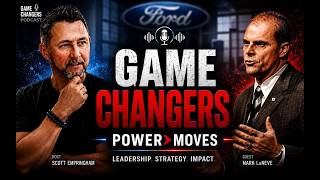
In this 2026 YouTube interview, host Scott Empringham sits down with veteran automotive and advertising executive Mark Lanave to unpack the pivotal moments, mentorship, high‑stakes campaigns, internal power dynamics, and personal trade‑offs that have defined his 40‑year career across General Motors, Volvo, Cadillac, Ford, and Allstate. The conversation opens with a vivid recollection of Lanave’s first phone introduction via a vendor, illustrating the importance of relationships. Lanave credits Pete Gerosa, a General Sales Manager at Cadillac in the 1980s, as his formative mentor who accelerated his rise through bold reassignments. He then details the "Breakthrough" Cadillac Escalade campaign, which paired a Led Zeppelin song with a Super Bowl debut, reviving Cadillac’s brand image and driving sales from 120,000 to 240,000 units. The interview explores how Lanave navigated internal resistance—whether from agency partners, dealer councils, or rival executives—by confronting adversaries directly, using one‑on‑one conversations, and framing decisions as "above" or "below the waterline." He shares his advocacy for a one‑price selling model, his role in the Allstate "Mayhem" campaign, and the controversial employee‑discount incentive at GM that reshaped dealer pricing. Personal challenges surface when Lanave recounts the impact of his two autistic sons and the emotional toll of GM’s 2009 bankruptcy, prompting a career pivot to Allstate and later to franchise equity investing. He reflects on leadership lessons: stay grounded, avoid groupthink, keep the customer at the center, and remember personal replaceability versus family irreplaceability. Finally, Lanave outlines his current work with Franchise Equity Partners, AI‑driven BDC services, and advisory roles, and offers a concise billboard mantra for future leaders. The interview weaves together career anecdotes, strategic insights, and personal philosophy, providing a rich source of high‑signal information about automotive marketing, executive decision‑making, and work‑life balance.
Chapters
Today I am thrilled to be joined by Mark Lanave. He's had one of the most fascinating careers in automotive, in advertising, marketing, sales. He's an executive at the highest level, and he served in major leadership roles. General Motors, we're going to get, uh, get into that. Volvo North America. Allstate, where he transformed one of the most iconic ad campaigns anybody's ever seen. Global Team Ford and Ford Motor Company. At Ford, he became the vice president of US marketing and sales and service. Overseeing marketing, sales, service, customer care, dealer relationships, and more. But we're not here for that. We're actually here for some of the coolest real stories and pivotal moments that shape careers, that shape industries and transform things. Uh, we're talking about high-stakes moments and campaigns, pressure, people, maybe even pivotal moments between power players getting things done. So before I dive in, I just want to just share one, one short story and ask you, do you remember the very first conversation that you and I personally had on the phone?
Vaguely. I remember something about it stood out, but I'm trying to piece it together. I'm 67 now, Scott, so it's not working as good as it used to.
No, I hear you. Greg Heath and I are out to dinner.
Oh, that's right.
And he's And you and I never met, but you, I mean, you were the man. You were, you are the man. You, you were the man. And it was like, I was working for the vendor, the vendor, vendor, vendor that worked for you. And, and he was saying, hey, have you had a chance to meet Mark Lineo?
You were with a digital company that he really liked.
Yes. Yes.
And he said, he said, you, he goes, all knowing Greg, like I know him. He's like, I can't use the language you use, but he's going, all the rest of it is basically horseshit. This is the guy you want. I remember that. Yes. I was in a car with his dealer that he works for, Chris Leggio. We were going somewhere. I remember now I was in Southern California when you called, I think.
Yeah, I did. Okay, so I have a— this is really cool. This is really cool. There's two parts of the story. He's asking me if I'm doing work for you, and I said, no, no, he actually is moving in a different direction. I was doing some work and he's going with another vendor. From what I understand, there's another vendor and he had something to do with the decision. And I said, I think it was a big mistake. And he goes, you think Marc Leib made a mistake? I said, I think so. I didn't know he knew you as well as he did. And I said, yeah, I think— I mean, I wish I, I wish I could talk to the guy and tell him I think he made a mistake. And so Greg, Greg Heath goes, you do, huh? And, uh, he just, he picks up the phone and I'm like, wondering what he's doing. And he goes, uh-huh, hey Marc, I'm here with a guy named Scott Empringham who says you made a bad decision. Here, Scott, here. And I'm like Are you kidding me? And you're like, who is this? To your credit, and this is— I said this in the LinkedIn post just now— to your credit, you said, hey, who is this and what are we talking about? I had to collect myself and realize, holy crap, I'm talking to Mark, the guy who, like, you got to get— you got to go through a lot of layers. And Greg just puts me on the phone with you, and you said, what are we talking about? I told you, you listened to it, you're like, well, listen, I think I made a good decision. But I'll tell you what, if you have a different opinion, I respect Greg. Get on my calendar, send me an email. My email is blank. Email me and get on my calendar and let's talk about it. I was like, holy shit, that was the coolest, the most scary introduction I've ever had in my entire 25-year career with anybody. But to your credit, you were like still open-minded. You said, get on my calendar, let's talk about it.
You know, it's funny, Scott, is, you know, I started in '81. That's when I graduated college and answering complaints on the phone. That's what I— we didn't have call centers. That's how dated that situation is. But I grew up in traditional media, print, you know, newspaper, television, radio. Then digital comes like this tidal wave, and I never I understood the traditional media, you know, soup to nuts.
Yes.
I didn't really get the sausage making. I understood the outcomes of digital media. You know, I could tell good was good and results and measurement and, you know, scorecards and all that. But so I was always at the mercy of the younger people working for me. And sometimes they had, you know, brain freeze or, you know, what have you. So I always was open-minded to hearing what, you know, what was going on. And you guys were doing a great job at the time. So, but Greg, believe me, he's made a couple of those phone calls to me like, yeah, the bloke woke me up because, you know, the time change. Yeah. Hey, Mark, I got somebody who needs to talk to you. I'm sound asleep. I mean, he's unbelievable. But that's what made the retail car business so great was the dealers and guys like Greg.
It was amazing. It was amazing. There's so much I want to cover and I want to thank you for that moment. But Let's talk about origin story for a second. For all the titles, all the big roles you've had, some, some of the biggest roles you could possibly have in advertising. But I want to ask you, think of, if you can, one of the first people, one of the first people who really shaped how you handled your career, tough situations. Think of one pivotal person. Who was one of those most pivotal person in early in your career that was like, man, that shaped the way I'm going to approach my my career, maybe my life.
Yeah, there's no question about that. It was a guy named Pete Gerosa. So I, I'm coming up the ranks of Cadillac, a young guy, and Cadillac was very, uh, kind of traditional organization. This is 1980s and was having a lot of problems, a lot of quality problems. They had the HC4100 engine, one any good. When I hired in '81 answering complaints We had a diesel engine that blew every head gasket. We had an 864 engine that stalled out at speed on the highway. We had a V6 that shook so bad I had a customer call me and said it shook the dentures out of their teeth. I swear to God. And the brand was kind of in decline. And Mercedes, BMW, Audi were just kind of entering the market and giving customers an alternative beside Cadillac and Lincoln. And so I'm, you know, working my way up in the field and younger guys did not get promoted early at Cadillac at the time. And then Pete Gerosa comes in as the general sales manager in like 1986 or '87. And he was head of— he came from Oldsmobile, so he came from outside and he was a young guy. He was in his mid-40s. I think I was in my mid-20s. And he took a real interest in some of the younger people at the company. Myself, a guy named Steve Hill, who's still a GM and in a real big job. Uh, Curt McNeil, bunch of us. And, you know, and he, and he moved us along. And me in particular, he was my mentor. And at that time, the general sales manager had marketing reporting to it. And, and I remember he brought me in to run, uh, like our promotion department. That was like my first assignment in Detroit, like in 1987, uh, '88. Then he moved me back out to New York as the marketing manager, and then back into Detroit and in charge of like my first unclassified or executive job. And I'm in the job about 3 months and he comes to me and he says, your boss just isn't cutting it. I'm going to switch you. I said, you know what? He says, I'm going to switch you. And like nobody did stuff like that then. And he did. And, you know, so he— and then, you know, moved me up to the head of like what was called merchandising at the time. So I had advertising, all the tier 2, you know, a lot of stuff. I'm like, 30 years old. So he moved me along. He believed in me, gave me a lot of— he— there's always somebody that believes in you before you believe in yourself, or sees what you can do before you can see what you can do. And he, and he was the guy. He had a— he was a gruff old grizzled sales manager. I'm still friends with him. He's 82 years old now, lives in Chicago. I'm still in touch. In fact, I talked to him yesterday. And, uh, he, he was, uh, he was the mentor that gave me the guiding hand and Now, did he give it a ton of marketing advice? He had great instincts for it. Wasn't dealer relations and sales were kind of his thing, but, but he knew good when he saw it. And he gave me really a lot of independence to kind of make mistakes and learn and break things. And he was a tremendous— you know, I'd be— and he likes to remind me, he goes, hey, kid, you'd be flipping burgers if it wasn't for me. So, you know, and he's probably right. So I'm very grateful.
I love that. I love that. Then Flipping from people to maybe make or break moments early in your career, either in the agency or automotive days, whatever you could think of. Was there a pitch or a campaign or a client meeting or decision that when you went into it, you felt like it was a make or break? Like, this is the freaking moment of truth. I'm either going to go this way or this way. It doesn't matter if it really was like that, but in your mind, was there a make or break moment, pitch, campaign, or client meeting that felt like a make-or-break moment. What was it? Unpack that for us.
Yeah, the one that stands out— there are probably quite a few if I really thought about it, but the one that stands out is— so I left GM in '97, went to Volvo as CMO, and then Volvo got purchased by Ford while I was there, which is eventually— I met Mark Fields and eventually led me back to Ford, you know, 20 years later. But But I left Volvo to come back to be general manager of Cadillac, where I grew up. And all new product program, Escalade, you know, with the art and science design of the new CTS, STS, SRX. And we were going to launch the Escalade. The first Escalade was a rebadged Tahoe. This was the first kind of legitimate Escalade was, I believe, an '01 model or an '02 model. And And Cadillac was getting its ass kicked by the Europeans, by BMW, Mercedes in particular. And so they were really trying to kind of emulate that ethos of understated, you know, luxury ride, driving performance, which was fine in the vehicle. But having grown up with Cadillac and then all the research that I had, a great team, Kim Brink, who's gone on to do great things, Susan Dougherty, had a really terrific team. You know, I'm looking at this and all the research saying, you know, what made Cadillac great was not being understated. What made Cadillac great was being ostentatious. You know, Cadillac was, was the car of Eisenhower in the, in the ticker tape parade, and Elvis Presley. And we shipped them all over the world to royalty and kings and, you know, you know, presidents of different countries around the world. And it was such a symbol of American power and success that, you know, that's the ethos that we need to recapture, not in an obnoxious way, but in a smart, clever way. So we came up with, you know, A, on the Escalade, where I took the wreath and crest was about this big and made it this big, put a big giant colored one on the steering wheel. We did a lot of work and we landed on an ad campaign called Breakthrough, like we're going to breakthrough again.
I remember that.
And the song we picked was a Led Zeppelin song, "Been a Long Time Since I Rocked and Rolled." It was kind of symbolic in a way because it'd been a long time since Cadillac rocked and rolled. And I went in to pitch it to the North American strategy board. At the time was Rick Weiner, who was a dear friend, Ron Zarella, who I really liked, that was head of North America. And I knew their mindset was where it had been going, which was understated European car rolling down the Autobahn And I come in with Led Zeppelin and we're going to spot— we're going to be the— we're going to— we're going to be the official car of the Super Bowl. And I said, we're going to be on the biggest, best media: Academy Awards, Super Bowl, NFL, Country Music Award, you know, wherever, wherever it's big and Cadillac can see big again. Oh, I want to do the presidential limousine, which cost them, by the way, they don't really pay for it. It costs a fortune to provide the, the beast, you know. And I come in with this whole marketing plan and They bought it hook, line, and sinker. I mean, they didn't really change one thing. And they asked how much I was paying for the Led Zeppelin song. It was the only question I got, if I remember it right. And we hit that Super Bowl. It was Tom Brady's coming out party, I think the Super Bowl of '02, during right after 9/11. So the Louisiana Superdome was under max. I brought my top 400 dealers in for meetings and to go to the game. And when that ad hit, we showed it to the dealers and they went nuts. I had a big screen. I'll never forget Kim Brink up there showing the ads and the dealers went crazy and we took them for a drive and then we all went to the game and the car, you know, we debuted in the third quarter and I kept hoping for a close game because that was St. Louis Rams versus New England Patriots. That's the first one Brady won. And they were like 18-point underdogs. The Patriots. I'm praying for a close game. It was super competitive. Patriots end up winning and that hits in the third quarter and God, the brand took off, Scott. We sold 120,000 units in 2000 retail. We did 240,000 in '04. Double. We doubled. And Escalade, we sold a lot more of everything, but Escalade went from like basically 5,000 a year to 60,000. and Cadillac was off and running. You know, since then it's been up and down a little bit. But I think, you know, we truly put it back on Cadillac. I think it'd be gone if it wasn't for my team at the time and the work that they did. So I'm very proud of that. And that was a very pivotal moment.
Yeah, that was a breakthrough campaign. I was working on Lincoln at the time, and I remember one of the reactions from a lot of Lincoln dealers and the agents was, oh, shit, this is good.
And that was back.
Yeah, yeah, yeah, yeah. I want to talk about— now, you started, you, you, you, you quickly, uh, maybe, maybe sometimes personally it didn't feel like it, but you were quickly succeeding. And with success comes, comes people that are gunning for you. And I want to talk about— if you could change the names, you could change however you want to do this, but I want to talk about maybe one of the first times that you realized somebody was gunning for you, internally or externally. It happens across the board. You can't play at that level without having people being competitive or just seeing things totally different than you. And can you share a time when you knew that you were in a meeting or you were approaching a campaign where you knew you were facing an adversary or something that was adversarial? What was it, to the best of you feel comfortable describing it, where somebody was coming in for you, maybe another agency, maybe another client, another internal person What was that situation? How did you handle it?
Yeah, great question. I was blessed to have some really good bosses. I mentioned Pete DeRosa, Rick Wagner, who was end up being CEO, GM, and he knew what to do to fix it. It was just so unfortunate he got caught up with the financial meltdown and, you know, had to leave the position. Tom Wilson, terrific leader. I believe he's still CEO of Allstate. That's where we did the the Mayhem campaign. I've had a lot of terrific— Troy Clark, who went on to run Navistar, a lot of terrific bosses. I've had some clunkers. Okay. And mainly, you know, you know, you're going to be challenged when they change things and ask questions just to seem smart or to have input. You know, like I said, that one meeting I went into, They bought the whole marketing plan for CalEx, hook, line, and sinker. A lot of people, they have to change stuff to kind of justify their position in their existence, to put it mildly, I guess. And I've had a couple of those. Scott, I've always had both— both my adult sons are 34 now, are autistic spectrum. And raising them was far more of a challenge and scarier than anything I ever faced at work. So like I was always blessed with great perspective on this is just work. Okay? We're not solving cancer. We're not trying to raise, you know, two sons with all these learning disabilities and challenges. This is just— it's just work. And a lot of people are dependent on you. But if that campaign's a 9 or it's a 6, the world's not going to end tomorrow. And so, you know, I would, you know, I would take the feedback. You know, if it was really a make or break thing, I'd have to go back in. I try to do that one-on-one so that they weren't in front of a group. You know, the boss that was giving me problems, sometimes the grandstand where you get with them one-on-one, it's a lot easier, a lot better. You've got to concede some points, especially like I used to call decisions above the water. Like, I'm not a boater, but if you are a boater, you talk about— or in the Navy, you talk about hits to the ship above the waterline or below. So, you know, if the ship gets hit and breaks an antenna off, ship's still going to, you know, sail. You get hit below the waterline, you're sinking. So I always told the team, is this below the waterline or above? This is above. Can we live with this? Were we still okay? And below the waterline, you got to go back in and make your case. And I would try to do that one-on-one. I try to concede where, you know, sometimes I was wrong. Sometimes they had a perspective that I just didn't see because I was in the weeds and in the battle. So I try to listen and I didn't think I had all the answers. And my team, I would try to shield them. I always wanted my team to believe they were the best at what they did. And my last team in marketing at Ford, I had Andrew Frick, who's gone on to do great things, was head of sales. Matt Van Dyke runs a big digital company now. He was head of marketing, Matt Bradley. I mean, I had a great team and I wanted them to believe they were the best. So when there was shrapnel flying, you know, whether it was their GM, I'm not single out Ford, I tried to take it, you know, because I wanted them to perform. And, you know, if they're going to get negative feedback, I wanted it to be done in a constructive way for me and not from other people, you know, that really weren't in the trenches with us. Does that make sense?
Makes total sense for a couple of reasons, too. One is it's interesting how the cream always does rise to the top. Matt Van Dyke, I'm working with today, he's over at Shift. I saw him 2 weeks ago in Detroit.
Yeah.
And Brian Frick is the gentleman who, uh, when I was pitching the thing we're doing now, LeadMax and Auto Qualified, that was back in like '15. Andrew Frick saw that. I didn't know who he was. He approved it because it was going to die. He kicked in money from Ford and said, no, let's bring this to life. Wow. He was responsible for a big part of my career, as was Matt Van Dyke, for helping roll out a massive bunch of campaigns for us.
I was blessed. I was blessed to have those two guys. And Chantelle Leonard, it was— I had a lot of terrific people at Ford. I did a GM too. You know, I've been blessed to have, you know, really good people. And, you know, I've inherited some of them. Like when I came back to run Cadillac in '01, I inherited a team. 5 of my 6 direct reports were women that I inherited, which back in '01 wasn't, you know, there was You know, there's plenty of women now, thank goodness, in the car business. Back then it was fewer, you know, and they were— I didn't make one change. They were terrific. I mean, just terrific. Jeff Coleman was my PR guy, was sensational. And so I've been blessed to have good people. I've been blessed, you know, really good bosses, good peers. You know, you're going to— it's a curve, you know, any big organization, you've got 20, 25% stars, you got a lot of people in the middle that are really good, and then you've got a few clunkers on one end. So, you know, that's just— that's life in a big city.
100%. It's funny because Chantel Leonard, one of my biggest clunkers— I got a call, Chantel Leonard called somebody at Ford who called me and said kill this campaign that I was working on. That was one of my clunkers. And which is a good— which is a good segue— is what was one of the most dangerous ideas? One of the most like, um, what was— what was one of the most dangerous ideas that just went off the rails and didn't go well? How did you recover from that? Like, this is one of those times where I, I literally got the call from Chantel Leonard's boss who said, Chantel. I was like, the Chantel? Yeah. She said, pull the campaign. I drove back to the— called all my employees in and said, no, Friday's not done. You're coming back in. And we worked till midnight or 1 just pulling all this stuff offline. Yeah.
I wish I could remember. I should— it's probably— was it when she was working for me? I'm trying to think what that was.
I think so.
I think so.
Yeah.
I'm trying to think when it was, but Scott, that's hard for me to come up with because I tend to mentally move on. You know, I could come up with a lot more that, you know, that were successful getting through. Let me— let's come back to that. Okay. Let me think about that one for a second.
Then maybe this is that because I was going to ask—
I'll give you one. I'll give you one.
Okay.
Is I'm a big advocate And it's not as simple as it sounds, but I'm a big advocate of one-price selling because remember, I handled sales and marketing. So, you know, and always prided myself on understanding the dealer business. Got great— to this day, well, that's what I do now is the investment fund. We buy dealerships. And I always felt like the negotiation process of a customer walking into a dealership was wasted energy. 'cause in the end they're selling it, you know, a certain percent above invoice. Pricing's pretty consistent from dealer to dealer unless, you know, a product's smoking hot or unless it's way overstocked. And so I always felt like customer wants to go online, see the price, send the lead, walk in, and that price that they saw online is the price when they get in, just value their trade, arrange financing. F&I products and get them out the door. It's one of the only— homes and cars are the only things you still negotiate. Digital technology was enabling a lot closer to a seamless one-price type of experience. I made a number of futile attempts to implement it on a wide scale and some success, but not— and we improved the process, I think, We didn't get to where I wanted, but I think we improved the process, you know, and for the customer and the customer experience in the, in the meantime. But that, that would be one. It's not a marketing example, but that'd be one where— and I believe that to this day that it's, you know, we— and I think we're getting closer to it just because customers are doing the negotiation for the most part online. You know, uh, the average customer now only visits one dealership. When I—
I didn't know that.
Yeah, they do almost everything online. Go in and, you know, finalize and drive out. When I started, I think it was 5, you know, back in the mid-'80s, you visited 5 or 6. Yeah, that's one, you know. So 1.1 is what the average is. So it's crazy different.
Yeah, it's like I remember the data being like 3-point-something a handful of years ago. So it's come down since then.
Yeah. And see, to me, Tesla was an example how one price works. I mean, you negotiate the price online and there's no dealers now. Does Tesla lack a lot of stuff in their customer experience that dealers would be helpful? A lot. Okay. And I believe companies like that eventually are going to have a dealer body, but I think it proved that scale, that one price kind of works. You know, customers, you know, well, you know what, they, they don't want to go in and some do, but most don't want to go to negotiate.
Mayhem. Allstate. The Allstate Mayhem campaign became one of those rare campaigns that Everybody remembers. I mean, everybody remembers my age or even close to my age. Everybody remembers the Mayhem campaign. But behind a campaign like that, and I was reading some blogs about it actually this morning, I would imagine there was some risk and some resistance and some internal tension at some point. This is a question for those advertising people out there that are in their career that have a gut feeling. The research said one thing, their gut says one thing, and they want to go in a direction, but they're getting internal pushback all across the board. Did you ever feel like you had that internal resistance or feel that risk or tension? And if so, how did you navigate that as you were pushing through?
That's a great question. When I got to Allstate, which was 2009, fall of '09, they had a really successful— well, first of all, they got "You're in good hands" as the tagline, which they still use. And it's one of the best ever invented for any category. And they were using Dennis— what's the actor's name? He played the president in 24. Dennis, uh, God, I can't think of his name, but, um, terrific guy. And the ad campaign was actually quite good. It was really good. Um, and it was him talking to people, and he's, you know, he's got that very huge presence, great actor, not overly exposed like I'm telling you, some of the stuff I see on TV today, it's like I feel like there's 10 celebrities that do every ad I see. I'd fire a lot of these agencies if they brought me another— I'm not going to name the celebrity, but I think you probably do. 10 people I see over and over and over. But I think that was the only thing he did. And it was a good, solid campaign. But what was happening at the time was Allstate was starting to get nipped at and State Farm and the big traditional players by Geico, Progressive, the online lower-cost alternatives were just starting because you could— digital technology was coming in. You could go to a website and get a quote. And I'm like, look, we got a big risk here. You know, we're agent-driven. We're a little more expensive than those guys. And I said, we got it, you know, we've got it. We can't put our head in the sand about this. And so what we wanted to do is I asked the agency, uh, was Leo Burnett Chicago, to come up with, uh, an idea that would show bad things happening and then say, say to the customer at the end, kind of the, the brief was, you know, accidents are going to happen, and if they do, do you really want to be in the hands of these cut-rate carriers. Now, in reality, Geico, Progressive, and all have terrific claims experience, but that wasn't my job to help them. My job was to help Allstate. And so they came up with the— and what our research showed is people really didn't want to see real accidents. It's too startling and scary. So they came up with Mayhem, which was a comical way of showing the stuff that could happen And then at the end, I think to this day, that campaign's still running.
Yeah. Yeah.
And it's still— it's still the same actor, Dean Winner, I think his name is. And at the end he says, you know, and if this happens to you, do you want, you know, cut rate or do you want, you know, an agent and a company like Allstate? And the very first ones, I'd love to dig them out, were a little dark. There was still a little tiny bit dark. So we lightened up on the humor. And then, and I said to the team, I didn't have any resistance above me. I had resistance with my team because the existing campaign was, and they were good. Lisa Cochran was the head of terrific marketer and they were very proud of the Dennis Leary, you know, Good Hands campaign. And I said, look, we'll keep running that. You know, we'll go like 50/50 and then we'll kind of see what's, you know, we'll test them and, you know, do beta testing and see what's working. And But the, but the Mayhem campaign exploded and our market share went up and we got a lot, a lot of notoriety, won a lot of awards. And I made a lot of money for Mr. Winter because we got him cheap. He was the— I believe he was like Tina Fey's boyfriend, like in the Office movie back at the time. I can't think of the name of it. He was a beeper salesman.
Yeah, yeah, yeah.
Trying to, you know, 30 Rock or something like that. And yeah. And it came down to him and the actor. The agency screened it down to him and the actor that played Elaine's boyfriend on Seinfeld. And I felt like he was— Buddy. Buddy. I felt like he was a little too exposed. I wanted somebody that wasn't as recognizable. Yeah. And we picked Dean and he was terrific. He was really— he was just perfect. And he's, you know, so he's had 15 years of paychecks. He, you know, should send me a commission, but I'm out of touch with him. But he did a terrific job and the campaign just exploded. And so I'll bet you there's not 5 campaigns that are still running after 15 years. Flo's done it, Progressive, it looks like, the Geico, you know, ironically in the insurance category. But I mean, you know, you got major brands that have had 10 campaigns in that 15-year window.
Every year or so.
Yeah, exactly.
I've shared on LinkedIn, I've shared pretty much everywhere in podcasts some of the costs I've paid in winning. I was married for 15, 16 years. I got a divorce. I remarried my wife. I had a very big meltdown on my business and then rebuilt it. But I shared some of that because I was pretty public on social media before. Then I got a divorce, my business meltdown, and my personal, like everything, it was a disaster. And I chose to actually embrace it and talk about the road back. There was a big ad campaign, like if I lost it all, Here's what I would do. I have a picture of me on LinkedIn, Facebook, and Instagram of me in a chair between two filing cabinets in my dad's office where I restarted everything after I had this big office in Newport Beach and I collapsed. And I shared a little bit about the price I paid of prioritizing professional life over personal life. Thank God I've had— I fought my way back to light. Like I said, remarried my, my first wife and So we're— we have our third anniversary in two weeks.
Wow.
Yeah.
How many— if you had the first— how many years have you had the first trip around?
Oh gosh, like 28.
God bless you.
Yeah, yeah, yeah. Um, now as much as you feel comfortable sharing, you've succeeded at the highest level. Did you ever feel like there was a personal price that you were paying, a, a, a pro— a relationship price or a family price where it just stressed you or maxed you out where you had to come to a crossroads and say, where is Mark Lenave's center going to be? Did you ever lose that center and come back to it? How did you navigate that? Because this is the crossroads that all men and all women that are in business at a level of success have to navigate.
Yeah, yeah. Great question. Well, I got thrown a real curve when GM went bankrupt. You know, I was, I think, the youngest vice president at the time. I was like 44 or something like that. Yeah, 44. And I had a big job at sales, service, and marketing. And, you know, the board, you know, I knew I was in good standing with the board and with Rick Wagner, CEO. And then, you know, it gets— it goes bankrupt and they seat a whole new board, a lot of telecom people at the time. That didn't really know anything about the car business. I mean, they went on to do a really good— along with the government reorganization. So I think of the 38 GM vice presidents at the time of the bankruptcy, I think a year later there was like one left, like everybody left. And I often wondered what would have happened had I stayed because I love General Motors. You know, to this day, I love General Motors. And but I decided that I just wasn't going to wait to be a victim. I just wasn't. It's just not in my makeup. So, you know, I got in touch with a couple of headhunters and was very fortunate to have two really good offers. Ironically, both in Chicago. And I took the Allstate one at the time. And, you know, but, you know, to get more specific to your question, frankly, Scott, like, I really prioritized my two sons with their, with their special challenges and You know, I cut a lot of— I cut more corners at work than I did at home and supporting them. Now, I was very fortunate that I had bosses that understood because there was a lot of therapy. You know, there was just, you know, special schooling, a lot of different things. And, you know, I made it like I was very fortunate. I had a corporate access to the corporate plane a lot, so I could— I'd make day trips, you know, I'd fly to California for me and fly back in the same day if I had to. And You know, so I probably paid more of a price with my career than I did with my family. And people who really know me will— that really know me will tell you that. Now, there were times, you know, stuff would happen. You'd just be stressed and, you know, you're just not very good company to be around. That happened. You know, my late wife— I lost her about 4 years ago— was very understanding about that. But But the great thing is, is that it makes you tougher. You know, I played college football and I'm not the biggest guy. I get to University of Virginia, major college program. It's about 100 degrees with 100% humidity and you're 18 years old and you go out and you're competing against 22 or 23 redshirted 23-year-olds. You're a boy, they're a man. And yeah, I got my ass kicked. Okay. But I didn't quit. End up having a great career, played in every game, have great friends to this day. And I still look back during my career, look back and go, you can make it through that. You can make it through selling this campaign or this bad month of sales or, you know, the kids driving you nuts or a bad report from school. So you got to look back and in your past, you know, as an indicator of, you know, it's the greatest indicator of future success. You're tough enough to make it through these things and don't try to keep somewhat of an even keel and don't go super high, super low, you fall back on your experiences and that, that's always served me well.
This is going to be an interesting question. I, as, as a vendor to the vendor to the vendor, many times when I was working with the agency, there was an unspoken rule. You don't talk to the client, you guys, Ford and whoever it would be. And then during the course of a handful of things without naming names, I would share ideas and those ideas would show up in their meetings. and then they would do it without me. And I figured one of the lessons I learned was as much as I want to be serving that agency, one of the things that served me well was to get to know the clients, the actual clients, and serve, make sure I was serving them as well and build relationships with, well, with them as well. Because at times I was blocked and the relationships with the Fricks, with the, uh, Matt Van Dykes, even with you through Greg. It helped because I knew I had it. Was there ever a moment— you could change the name or leave it out or whatever— was there ever a moment where there was somebody you trusted turned on you or just didn't block you or undercut you and it changed the way you led or managed your career moving forward? Mine was safeguarded by having relationships with the client as well.
Yeah. Before I get to that, like, one of the things I did, you know, because of— yeah, you do. If you get high enough, you get shielded by your team and agencies and all that. And I made it a point to— I would meet directly with a vendor probably once a week, but sometimes twice a week. Just, you know, is there ideas out there? And it might be I run into them at a charity event or, you know, who knows? And You know, and I'm going to see, okay, is my team— what are they doing? You know, are they, you know, are they just— they got tunnel vision with certain way of thinking or, you know, certain vendors and, you know, and now it's hard to bring somebody in that the folks under you and they just don't want because then they do everything to prove that you're wrong and they're right. You know, they— that just happens. But I made it a point to do that just to kind of keep myself in the game and keep it enlightened. But Yeah, I've had some bad, you know, I had to fire a couple of people. Not many. I was very blessed. A couple. But I used to tell the team when I came in, look, my natural instinct is to trust you. Some people just don't trust anybody. Okay? My natural instinct is to trust you. But if you prove to me you can't be trusted, then we're not going to be able to work together. I mean, that's a breach that— but I'm going to give you right up front, day one, I trust you. And I always did. And I got to tell you, Scott, I got disappointed over 40— now, 40-year career, 2, 3 times, 4 times, you know, not that many. And, and that's part of luck. I was blessed to have good people around me, above me, beside me. And then I think part of it is people live in— they live into what you think about. And that's why I always said I wanted my team. And it goes back to my sports background. You know, we went down with our best player hurt when I was a senior in college and beat Tennessee in Knoxville. And, you know, if we didn't believe we could beat them, we'd never beat them. But we believed we could. We said, who the hell are these guys? And, you know, so I wanted my team to believe they were the best. And if they couldn't live into that, you know, they would— I kind of hopefully made it so they self-select out. And that happened too. I had people come say, look, I don't like the way you're doing this and this and that. I'm going to try to go move over here. Okay. You know, and I don't do it, you know, and, but I've had very few friction points either, you know, people working for me, above me, beside me. I've been very blessed. I've worked alongside a lot of great people and for the most part, very supportive.
Love it. I don't know if I think you may have already answered this, but was there ever a sit-down meeting, like a sit-down meeting where the future of your role or your team or your campaign Uh, or even career was like decided in that one conversation. I know you mentioned the Cadillac, but was there ever a meeting you remember sitting down to— you're going to a board meeting, a dealer meeting, a whatever meeting, and you're thinking, this is make or break, this one is a lot of chips around this. And, and I'll give you one example. Algie and Betty. Remember Algie and Betty? Oh yeah, Algie and Betty. When he was at Ford, I was the LMDA digital guy. Nobody knew me. I was stuck in the corner, you know, by the coffee machine or something.
Nobody knew what digital was.
Nobody knew. This was back in the day. He says, I want to do an email campaign this weekend. And I— and it was like Tuesday, and, and I was sitting on a lot of emails that we were going to launch for the LMDAs. And I wasn't his client, like, or I wasn't his agency person. The agency person sat on their, their hands, but he was the head of the Lincoln and Mercury group. So he said, I want to do an email campaign. He goes, can anybody help me with that? Everybody sat on their hands. I was like— and he looks over, I'm in a leather jacket because I wasn't even supposed to be at the meeting. I was grabbing coffee for people. And he looks at me and goes, who, who are you? I said, I'm Scott Empringham. He goes, can you do an email campaign for me? I said, yes sir, I can. He goes, come with me to the next meeting. The National Wonderman people looked at me like they wanted to beat the shit out of me. Like, how did he— so as you come with me, We ended the meeting. I'm walking with him to his next meeting. When I sat down, they're like, who's this guy? He goes, he's gonna do an email. What do you do? I said, I'm on the LMDA team. He goes, he's gonna do an email campaign for the SUV driveway event or whatever it was. I got the team together. We pulled together an email campaign. We launched it. I started going to meetings with them. The national team hated me, but that one put me on the radar to now do all these sales events. And other people started noticing this guy can get things done.
Right.
Inside the agency. Was there that sit-down meeting, that moment or something you remember where you're like, that was a frickin' awesome moment that helped me be put on radar earlier in my career someplace?
Yeah, there was a bunch of them, but one that I remember distinctly was Ron Zarella comes into GM and it was a big deal at the time, institutes brand management, and they hired— they did a big search in the company. I think they had 15 of us from internal company became brand managers. It was like the Procter Gamble system they instituted. It was big news at the time. And then they recruited 10 or 12 people from outside, from P&G and Nestlé and all these companies. And he was right to bring in more professional marketing talent into the company. And I went through the interview process. I was like 37, 38. I was a Pontiac. No, I was a Cadillac at the time. I had a marketing and I got selected to get to be the Bonneville brand manager. I'm telling you, and I forget how many brand managers were, 30 with Silverado would have been top. You know, that's the biggest.
Sure.
I had to be bottom 2 or 3 because Bonneville, for one thing, was like 10 years old and it was going away like they were going to do a new one. So I'm thinking, okay. But I knew how to do incentives. I knew the dealers. A marketer coming in from the outside don't know any of that stuff. I knew tier 2. I understood all the leverage points. We did a new ad campaign. Lynn Myers was my boss at the time. And I took sales up like 30% my first year. Profitability went up because I knew how to operate. And so we're at a meeting of the brand managers, and Jack Smith, who was president and CEO at the time, it's right before Rick, he gets up and he goes, you know, he goes, we've had a little bit of mixed reviews on how brand management gets a lot of publicity. He goes, but let's look at what Mark Leneve did with the Bonneville. I'm the only one that got pointed out. And everybody's looking. And I can remember it was at the Renaissance Center. I can remember where we were to this day. Or no, yeah, it was at the Renaissance Center. And Jack, I'd never even met him. I'd never met him. And so I can remember that. And then that got me on a couple people's radar. But then what happened was some people were getting promoted who, I thought I was better than, you know, I mean, I just thought I had better results. You know, I just thought I did a better job. And I'm like, why are these guys, gals getting promoted ahead of me? And I didn't— wasn't my way to complain. So I got approached by Volvo, who was independent at the time, to be CMO. Literally doubled my salary. I had to move from Detroit to New Jersey, but I'd already lived in New Jersey twice with GM. So I was very familiar. And I like New Jersey. In the New York metro area. You know, so I, you know, so I left, you know, and then, you know, that kind of— and then we get to— we had a lot of success at Volvo and then they bring me back to run Cadillac where I grew up, which was like a dream come true. Still to this day, the best job I ever had by far in terms of fun and success and notoriety. So things happen for a reason. And I think you got to— I tell people, folks will come in and complain about their career. They didn't get this job. They got stuck, this and that. I said, A, wait a year. Things look different a year from now. And they do. In big companies, they look different in a year. And I said, A, wait a year. B, just keep working on situational awareness. Don't get locked into what you're doing. Take a look at what everybody's doing and how do you fit into the bigger picture and how can you contribute beyond just what's in your job description? And, you know, I always try to do it and I think they're really good people. And like I said, 20 times on this podcast, I've been blessed with really good people. They do the same thing.
A couple more questions. Tell me about a time you made a call that was really unpopular, but you knew it had to be done. One of those decisions that a leader has to make that hurts, that might be scary, or just unpopular, but you're like, this has to be done. Maybe it's a below the line, below the water thing that you said, this was what we got to do. And describe the situation if you can.
Yeah, we, so I just get moved into the big job. So I got promoted from general manager Cadillac, basically right into running sales, service, and marketing back in '05. And usually the head of sales, service, and marketing came from outside of sales or was the head of Chevrolet because they were the big dog. So they moved this young kid from Cadillac. I'm only like 43, 44, and we've got cars everywhere. I mean, everywhere, like 1.3 million in inventory. I think GM today carries like 700,000, like half. And a lot of them were trucks, expensive trucks and utilities. And we're trying 0%, we're trying rebates, we're trying, you know, and it's none of us really working. And so Steve Hill comes to me, who's still there, brilliant guy. And he says, my team's got— and he was in charge of incentives. He goes, my team's got this crazy idea to do employee discount for everyone. I go, what? Say it again real slow. He goes, you know the employee discount that we get and employees get? He goes, we can do it for everyone. I said, well, it costs like 6%. That's the commission we pay. It's fixed price, pay the dealer. I don't know what it is today, but it was 6% then. I said that, you know, 6% would have been like billions of dollars. He goes, no, we'll take down the base level of incentives to cover the 6%. So if the The rebate's $2,000. We'll take it down to $1,400, but we'll offer employee discount. So it'll be even. And I remember we were flying to Dallas for a dealer meeting and I said, okay, get your kids that are working on this on the plane with me. And these young kids get on the plane on the GM G5. They're scared to death. They come on, I go, show me how this is going to work. And the whole flight down, boom, 2 hours to Dallas, had the dealer dinner, 2 hours back. We got back like at 1 in the morning. I said, this could work. So we sold it within the company. It took some explaining, but then the dealer council was like, they didn't want anything to do with it at first blush because it's fixed price, fixes their commission, gives a lot of pricing transparency. Go back to, I kind of like pricing transparency.
Yeah.
So they're fighting, fighting, fighting at the dealer council meeting and finally they go, Hey, Mark, we're kind of stalemated on this. You make the call. So we're going. And Scott, I don't know if you remember when we break that was '05, something like that. We did like if GM did 300,000 cars a month, the next month we did 600,000. The next month. Yeah. And, and the dealers did great and every, you know, so it was once where one, my idea and it was controversial and it was scary, but You know, it really, it really worked out. You know, I've had a few that didn't work out so good, but, you know, that one worked. That one worked out pretty good. I remember that it became a phenomenon. Everybody copied us, and then they were running— like, furniture stores were running it, you know, swimming pools. And man, it was crazy. It became a huge phenomenon. And we used our own employees in the ads. You know, you pay, you pay what we pay, not a penny more. That was the That was the tagline. It was sensational. I love it. Every now and then to this day, it gets brought back, you know, every so often.
That was a game changer too.
Yeah. So I've been involved in a lot of— now I think about it, I've been involved in a lot of cool stuff. I should write a book. I should do a podcast.
You should.
You should.
Dealer reality. What did dealers teach you that boardrooms often miss? I tell people I learned more— like, I speak all around the world on AI marketing and all this stuff. And like, where did you get comfortable in front of rooms? I was like, I got my, I got my chops at dealer meetings. Yeah, I've had some awful ones and some great ones and lots in the middle. But what did dealers teach you in those horseshoe meetings or the dealer retail meetings that boardrooms often miss?
Yeah, they, they're the pointed end of the spear with the customer. I mean, you know, the OEMs in the car business would, you know, do the research, design, engineer, design, design, engineer, build the cars, ship them to the dealer, but then very little customer interaction from the OEM. Um, so the dealers, the vast majority of them, and I mean 95%, really want to do what's right by the customer. I mean, they want to take care of their customer. There's a few that, you know, just interested in making money, really don't care, but I mean, might be 99% really want to take care of the customer. Now, do they want to make money? Sure. You know, nobody runs a business to lose money. And then so, you know, they really— if you listen, you learn a lot about what's really important to the customer, you know, like, and the dealers all along were saying, we're way out, we're way out in front of our skis on EVs. You know, they're great products. There's a market, a market, it will grow, but it's not 50% today just because Tesla's worth more than all the other car companies combined. There's other reasons for that. And they were right. They, they knew they were right. Like, you know, God, Scott, 10 years ago everyone was acting like autonomous cars were coming out the next year. You know, I had a speech I did, it was a little tongue-in-cheek. I'm going, we've always had rideshare. It's called buses and taxis, you know. I mean, people still want to own a car. This is, you know, crazy talk, you know. And dealers knew that. Like, so, and if you really look— and I had a dealer tell me one time, this dealership's been in my family for 100 years, and we love you, Mark, but you're gonna go. There'll be somebody replace you, somebody replace that person. We'll still be around. And it's the executives come and go and, you know, they're in Beaver Falls, Pennsylvania, where I grew up, in Grand Rapids, Michigan, where I'm at right now. And they serve the community and they employ people and they're involved with Little League and a hospital and the Fourth of July and the parades. And they're the best of the pure American entrepreneurs and so vibrant in the communities. It's so important. The most fun thing I've done in my career is getting to know dealers and hang with dealers. I swear to God, it's been great.
Yeah, yeah. I shared a little bit about this is there was a, there was a person at an agency that I thought we were very good friends. I found out later after our careers changed directions that he wasn't such a good pal after all, it turns out.
Yeah, you find that out.
Yeah, yeah. You know, as time goes on, you start talking to people and they're like, no, he hated you. Not that he hated me, but he was, he was not trying to help me. Let's put it this way. Who was— again, you can change the names if it's, uh, if it's better. Was there anybody in your career that was either just a formidable, uh, opponent or adversary gunning for a position, or a nemesis that you bumped into over and over? Uh, they weren't evil, but they were smart and they were strategic and maybe a little dangerous. Is there one person you could think of that just you bumped into every once in a while as a nemesis that would fit that general description?
Yeah. There was a guy at Volvo, you know, because I'd spent 16 years with General Motors. I go to Volvo and there was a— there was a guy there who was head of sales, a very talented executive, smart. You may know the name. I'm not going to give you the name, but very talented, very smart. He'd been at Volvo for years, had also come from Ford, I think, many years. Well, I came from GM. I think he'd come from Ford. Ford, by the way, had such a great executive pipeline in the '80s and '90s. People that ended up being the senior people at Toyota, Honda, Hyundai, Kia, a lot of them were from Ford. Ford had a real good executive pipeline. And so this guy, he saw me as the competition from day one. I was a young guy, you know, I wasn't trying to get the next job. I was just trying to sell Volvos and do it. You know, we did a really good ad campaign. We changed it from Drive Safely to Volvo for Life. And, and, and then when Ford bought it, he— they made me president. They promoted my boss to Sweden, Hans-Olof Olsson, to be the head of Volvo worldwide. They promoted me to be and I was 42 years old, Scott, and, you know, and it was never— I was never expecting to get the job. You know, it almost shocked me when they gave me the job. And he got so bent out of shape that he left. And I didn't want him to because he was, you know, he was good. He was popular with the dealers. So that was one I distinctly remember. And he went on to go other places and do just fine. But it was almost uncomfortable for me. You know, I I grew up in such a close family. My dad was a steelworker and we didn't have any money, but we had each other. I had great parents, great siblings. And then I get in sports where it's you against the world. And so I always felt like the unity of the team was precious and the sanctity of the team. And so when there were breaches in that, I just didn't understand it almost. Maybe I was naive. You know, could I have done better, gotten a few more jobs if I had stepped on a few more, you know, clawed a few— clawed my way up a little bit, maybe. But I don't have any regrets. You know, I could sleep nights. So I love it.
Last couple of questions. I promise we'll wrap it up. This is a good one. Presidents, when they— when they leave office, they apparently they write a letter to the incoming president. You know, it's a tradition. If you could put one belief or maybe a behavior or something on a billboard at Volvo, GM, Mazda, any of the organization or the agencies at any of those agencies. One billboard with a belief, 3 or 4 words, and stick that on a billboard that new Ford people, new GM people, new agency people could see, uh, that they, you know, every ambitious leader or marketer needs to see. Or executive, what would that billboard say that came from Mark Lenave?
It'd have probably been different at different points in my career. Like, I got so tired toward the end. When you get older, you get a little cynical. I try not to be, but, you know, some of the buzzwords and groupthink and stuff that was going on, you know, like, like AI now. Okay. I know it's going to change everything. It's like the, you know, the internet revolution and Wi-Fi revolution. I know. But like, people are using AI that don't even know what the hell they're talking about, okay? Like, like, it's going to do this and this and this and that, and you can tell, and it's not what they're talking about, you know? We heard— and I give some examples with the EV revolution, this and that. So I don't know why I went on that tangent, but, you know, I think you gotta stay grounded, you know? Don't believe your own— you know, don't smoke your own supply, you know? Try to Have people close to you that will tell you, you know, get your head out of your ass, you're wrong here. You need to have people around you that will tell you that, you know, the best leaders do that. You know, so it'd be be close to the customer, be open-minded, don't get caught in groupthink and don't get overly caught up in trends. You got to be future thinking. But some of this stuff is, you know, leading indicators. Not like the world has changed overnight. It's that we're heading down. AI is going to change a lot. It's not all changed today, but it's going to change a lot. So there's a difference on riding that bow wave and, you know, stay grounded, you know, stay grounded and keep the— remember what's important. You know, I used to tell my team, I know we get all caught up in this. And back when I had the jobs, every month you're getting graded on market share. Now nobody seems to report it, but I was like, we need you at work. We need you to be a contributor. We need you. We don't need you near as much as your family needs you. You're replaceable here. I'm replaceable. You're replaceable. You're irreplaceable to your family. So don't ever, ever lose sight of that. Is that, you know, Daddy or Mommy ain't coming home. That's a whole different story than if you leave to go to, you know, Toyota and we got to replace you. You know, it's an altogether different ballgame. So I try to keep some perspective and give my team perspective around that. I love that.
Love that. What's one question, Mark, I didn't ask you, but I probably should have? Tell me what you're doing now, what the road ahead looks like for you, what you're doing now and what you're doing moving forward.
Yeah, I'll keep it real brief. Is my primary job. I'm very blessed. I was recruited immediately after leaving Ford 5.5 years ago by two ex-Goldman Sachs partners that were starting a fund based on taking permanent or long-term positions, minority positions with franchisee networks, car dealerships, fast food restaurants, beer distributorships, health clubs, home improvement like garage door installation repair. And we're now— so I was employee number one. that they recruited. The company's called Franchise Equity Partners. Uh, we've invested $1 billion, um, in 3 auto verticals. We'd be a top 50 dealer if you aggregated our 3 investments. We have, um, 8 or 9 restaurant, fast food restaurant investments. We own 50 Valvolines in West Texas. We're a big franchisee building a bunch of what, 7 Brew, a new coffee, uh, concept. We have 2 beer distributorships. We're big Precision Garage Door franchisee. We're early into early education. So I've learned about all these other verticals. I'm working with smart, great people out of New York. They're so smart. And the young kids we got work, the analysts and that, you know, churn the, you know, do all the modeling are unbelievable. So I've been very blessed. We've got $1 billion invested and we're starting on our next billion. So Any dealers that hear this or any of the franchisees are looking for growth capital or taking chips off the table, give me a ring. Then I've also been very fortunate. I'm advising several companies that are in the digital space. One's called Pinnacle Intelligence, where they have an offshoring setup in Manila for live people and then AI backup in India that can really replace it. Fraction of the cost, BDC activity at dealers or warranty clerks or incentive clerks. So, you know, and I've been over to see the operations in Manila and the people, it's not random. They work for the dealership. They're not your employees, but they're not like a call comes in and goes anywhere. The call comes in from Smith Motors. It's going to, you know, Susie or Jimmy in Manila. And, and it's amazing now with the data what they have, the live person if you need it, or even now is they record every call that goes into the AI machine. They had me listen to 10 calls. I couldn't tell if it was AI or— I could not tell. It was scary. It was so good. So, and a couple other things I'm involved in. So I'm really blessed to have great kind of post-OEM career jobs and, you know, take advantage of my, you know, relationships and experience. There's a book out there called From Good to Great, and it talks about like all the big tech companies were started by people in their 20s and 30s. And that's when you're at your absolute height of your creativity and energy. But then as you get older, what do you get? You get experience. And so it talks about— was it Good to Great? Yeah, I can't remember, man. I might be getting the wrong name. It might be a different book, but I really try now to just, you know, take advantage of my experience. Any former employee that calls me that's, you know, just got retired or let go, wants to do, wants help, I meet with them. I try to help. I write referrals and recommendations. So I was very blessed and now I try to, you know, help out where I can. Yeah.
You referred to Jim Collins' Good to Great. Yeah. Fantastic.
Yeah.
Where can people get a hold of you? What's the best way for people to get a hold of you if they want to connect with you on the stuff that you mentioned that you're doing now with dealers? Manila, some of the investments you're making. What's the best place for people to get a hold of you?
I'm not great on checking LinkedIn, but I do check it. You and I connected on it, but— or my name, MarkLenave@icloud.com. Perfect. Is my email.
Perfect. We'll have all that stuff in there. Uh, this episode of Game Changers is brought to you by X100 Lead AI Marketing, the creators of LeadMax and AutoQualify. We help automotive brands and dealers generate high-intent leads directly through platforms like Facebook and Instagram and qualify them using AI tools that, that you mentioned. Uh, we help dealers power up, filter out those leads, and get better leads to dealers. Um, thank you for watching this episode of Game Changers with Mark Lanave. Mark, Thank you so much for your time.
Thanks for having me on, Scott. Great being with you. Thank you.
Absolutely.
More from Scott

🔥 PRESSURE IS A PRIVILEGE #PressureIsAPrivilege #LeadershipMindset #MentalToughness


🚨 YOUR NEXT LOCATION WON’T FIX YOUR PROBLEMS #BusinessScaling #MarketingSystems #FranchiseGrowth

🚨 AI CAN ACTUALLY MAKE YOUR MARKETING WORSE #AIMarketing #MarketingStrategy #BusinessGrowth


🔥 STOP RUNNING FROM WHAT’S CHASING YOU #FaceYourFears #KeepGoing #MentalStrength

🎥 STOP EDITING EVERY CLIP YOURSELF #AIVideoEditing #ContentRepurposing #ContentCreation