Master Your Mindset - Master Your Life
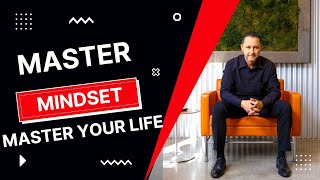
Live coaching session (YouTube) hosted by Scott Empringham with guest Ollie Herman Taylor presenting a condensed workshop on personal development. Key themes: the hero's journey as a coaching and marketing framework; defining core values; creating a personal definition of success; 'reality hacking' via choices, decisions and habits; practical goal-setting (SMART, 90-day sprints, reverse engineering); and Ikigai for uncovering purpose. The session includes short writing exercises and a Q&A about values, marketing stories, and overcoming fear to take action.
Chapters
Foreign.
Welcome to Million Dollar Consulting. My name is Scott Impingham and I am joined by Ollie Herman Taylor. And let me just give you a quick intro of Ollie. And I want to welcome all of our Million Dollar Consulting clients. We're broadcasting live on Facebook and LinkedIn. And so I want to welcome everybody in the next 45 minutes, I want to introduce you to Ollie. And for the past past 14 years, he's been immersed in health and fitness and executive coaching. He holds qualifications in some of the most highly regarded institutions in the world, not to mention just a few. But level two Czech practitioner for the Czech Institute. Level two holistic Life coach at the Czech Institute, Advanced Metabolic Typing Advisor, Health Excel Certified Personal Trainer, Card of our Heart Rate Variability Advisor and member of Fit Broad Fit Pro, to name just a few. He's a coach to business leaders and executives wishing to build mental and physical toughness, resilience and uncover their purpose and perform at peak level. So we're really excited to have him. He's married with three kids, lives in the south of England, nestled in the heart of South Downs National Park. And by way of introduction, I just want to share a couple of really cool tidbits about Ollie Herman Taylor and, and how we sort of, how we sort of met and really where he is today. In January of 2010, he had a really unique wakeup call. He had a heart scan and was told that 25% of his heart wasn't working and left unchecked, it could lead to a heart attack within the next three to five years. So he really took that time to go inside, look deep and make some profound and significant changes both in his professional life and his personal life and his health and fitness and really how he looked at the world. And in short, he took that time to really take a holistic look at his life and today we're the beneficiaries of that. He does these presentations and these workshops for peak executives to get peak performance and talk about how to unleash your inner hero. Uncover your purpose so you can create the life of the business you deserve. And if you've ever found yourself asking a handful of questions like what is the hero's journey? And why is it relevant to you as a CEO, as a business person, or as just a member of your family? Why is it relevant to you? What are the values? What are your values? And how do you create new values that support you and encourage you at the highest level? How do you uncover your personal definition of success? This is one of my favorites. How do you Understand and how to manipulate your own reality and how to better set goals, get laser focused and accomplish your dreams. It gives me great, great, great pleasure to introduce a good friend of Million Dollar Consulting, Ali Herman Taylor. Ali, I'll let you take it away.
Hey, Scott. Hey, everybody. Good, good afternoon, good evening, good morning. I don't know where in the world you are at the moment. If you could pull up the slides, that'd be amazing. Scott. So before we get started, I'm just going to say this is going to be kind of a little bit different. Perhaps the usual trainings you're used to. It's going to be a little bit lower key than some of the things I've done in the past. I'm just going to go full screen here, so give me a second. So the first thing I want to sort of talk to you about is the fact that I'm going to try not to motivate you tonight. That sounds a little bit weird, but what I'm going to try to do is actually inspire you instead. Now, I've been in the coaching industry. I've been sort of coaching people for nearly 20 years now. And I've attended a lot of seminars, workshops. I've done a lot of courses and I've done a lot of coaching myself, personal coaching. I've invested like tens and tens of thousands of pounds. One thing I've noticed is that a lot of coaches, they really hype things up and they try and motivate people. The problem with motivation is it's like a temporary pump. For me, I always find it's a temporary pump, which is why I've got this kind of fist bump image. So you get excited, you go to a seminar, you do something, you maybe walk on fire or people kind of, you know, attack you with their kind of their messaging. And then it stays, you stay motivated for a few days, but then it sort of tails off and eventually the motivation kind of wanes. And motivation is very much like a muscle. You have to kind of exercise, you have to use it every day. So I wanted to set motivation to one side and that's why I want to keep this a little bit low key, a little bit informal for tonight's kind of training because I'm introducing some new ideas. So instead I want to talk about inspiration. So hopefully I won't motivate you, but I hope to inspire you a little bit, sow some seeds for you to kind of explore further and have a look at some of these ideas in your own time. I'm Going to move really, really fast because I'm conscious that we're kind of limited for time. Normally this would take about three hours or so, this kind of training. But I'm going to give you the whirlwind version, hope you enjoy it. And we'll do questions at the end if that's cool with you, Scott. So I'm going to start off with my favorite quote. I've got about two or three favorite quotes. I use them all the time. So if you look at my social media, you're going to see them time and time again. I absolutely love this one. It took me a long time to understand this. It's very simple, but you need to think about it deeply. Obviously, if you can't see the screen, I'll read it. It's life is not about finding yourself. Life is about creating yourself. I think this is really relevant and really important, especially in today's world. So many people are looking for external fixes. So many people are looking to hire coaches, go on courses, attend webinars, seminars, etc. Looking for answers, searching for answers. And generally you won't find what you're looking for, especially on social media. What you have to do is at some point you have to draw a line in the sand and you have to understand that life is about creating yourself. It's about creating the life you want because you can spend a lifetime searching and not find it. And so at some point you have to flip this around. So that's why I love this quote and I wanted to share it with you. To start off with, Scott's done an amazing intro. He's found one of my old websites and dug up some cool stuff that even I'd forgotten. So you've heard the intro. I won't kind of touch on it. I don't want to waste any more time. A couple of things I wanted to mention is that I've been an entrepreneur for over 20 years now. I started my first business in my early 20s. It was clothing business and I made snowboarding clothing, designed T shirts, made kind of apparel and technical apparel and I absolutely loved it. It was a really creative business and I hadn't, didn't have any clue what I was doing. I started it from scratch. I had no design training. I made it all up and it became successful and I ran it for seven years and I scaled it to over seven figures, which in my sort of mid-20s, you know, I was very proud of. But I came to the end of that journey and then I went through another Seven year period, which was a very different kind of story where I was working in fitness, I was trying to make a living as a personal trainer. And so I went from this amazing dream business where I was making great money, living a wonderful lifestyle. Seven years later, I found myself in this kind of pit of debt and depression. And I was very stuck in my life and I didn't know where to go. And so I started to kind of rebuild my life and look for answers and try to kind of find more meaning and find more purpose. And eventually I built out this framework which I now use to coach other people, particularly other entrepreneurs, high performers. And at the end of the day, I really want to help people optimize their mind, their body, their health, understand what their definition of success is. Not the traditional definition. Definition of success, which we'll cover in a minute. Why? So that you can create a life and a business that you love? Because a lot of people are in businesses that they don't necessarily like that much. They're chasing the wrong goals and they find that they're lacking meaning and purpose in their life. So I wanted to mention those things before we dive into the meat of this training. So story, I'm going to start with story. Scott mentioned the hero's journey and it's become an increasingly important part of my work. And we'll, we'll come on to that specifically in a moment. But story is. Hence the photo. Story's been around for as long as humans have been sitting around campfires. And it's not just an entertainment vehicle as we use it now. We use it for entertainment primarily, but it was how we used to learn and kind of share information and teach. And that's ultimately what story is. One, it's about transformation. For a story to work, the character always has to go through this. It's called a transformation arc. So the character always has to change. Usually it's an internal transformation. They really learn something about themselves. But ultimately, story as well as transformation, it's a sense making device. It's how we kind of learn about the world around us, how we learn about ourselves and how we understand and we kind of gain meaning. And story is this perfect kind of vehicle for humans. It really works well with the human brain. And it's probably the best way to convey complex information in a memorable way, in a way that people remember and that makes people take action, motivates them, excites them. And we'll maybe have to do another training separately on story and marketing and how you can use the power of story to share. Really powerful. What I call aspirational marketing. Most marketing is manipulation. It's hyping up stuff, it's getting people, it's hooking in, it's digging, twisting the knife on their problems. I really dislike that. Instead, I prefer aspirational marketing. And story is incredible for aspirational marketing. So you're probably going to find that if you pay attention to films, novels, speeches, plays, anything, any, any good story, there's actually an underlying structure behind the story, underneath the story. And that's what makes it work. It's like if you imagine music, you could take a random jumble of sounds and notes. When you put them to music, you have a sort of formulaic structure to them. It makes sense. It sort of sounds beautiful, hopefully. And it's kind of the same with story. You're taking specific pieces of information, events, happenings, scenes, whatever, you know, chapters. But you're weaving them into a particular kind of template. And that's what we now know is the kind of the hero's journey. So a big part of my work has been about helping people unleash their inner hero. So first of all, I want to sort of show you the hero's journey. You may be familiar with it, you may not. This is based on Joseph Campbell's work. Now he's a guy who studied myth world mythologies and found this series of 17 different kind of stages to the hit what he now called the monomyth, which, which we call the hero's journey. We've adapted this. I run a creative agency, I have a couple of business partners and we, we help other businesses communicate in a powerful way using story. And so we've adapted this and simplified it for kind of business usage. But I'll take you through our version of the hero's journey. There's always a hero. Obviously there's a protagonist. That person want something. They have specific things that they want, but they also have problems. They have a set of problems and they're in what we call the ordinary world or the world of departure. So things are okay, but, you know, there's. There's some challenges that they face. The hero then meets a mentor. This is a very key figure in the world of story. And the mentor gives the hero a magical gift. I don't know if you can see the little streamyard thing there, if it's blocking it, but underneath it says a magical gift. So the mentor gives our hero a magical gift, which is usually training, weapons, knowledge, something that helped them complete their quest. The mentor also Calls the hero to action. Another really important part of story in the hero's journey is calling the person to action. Usually the hero refuses to call at first, but then something happens to change their mind and tip the balance. And so they respond to the call to adventure. And if they do, if they say yes, then they go through this, what we call lighting the beacons. It's this sort of stage, this series of stages, usually challenges, kind of pitfalls, fighting monsters in films, kind of, you know, overcoming kind of the bad guys, whatever it may be. And then eventually, hopefully, they get to what's called the happy ending, or we call it the lighthouse. And we'll come back to the lighthouse in a minute when we talk about goal setting. But the lighthouse is success. It's the happy ending. But for a story to work as well as the happy ending, we have to have the possibility of tragedy. We have to have what we call the rocks. Everything could go wrong. Maybe, you know, the bad guys win and the good guys get defeated. So in order to have dramatic tension and in order to make the story work, you have to have that possibility of failure. Now, why am I talking to you about story in particular, and why am I talking to you about the hero's journey? Apart from marketing and messaging and films and novels and things like that, this is also a really powerful coaching framework, and it's a framework that you can use to coach yourself, because when you understand this structure and the stages of the hero's journey, you can see where you are on your own journey. You. You can see where you are in life, and it really helps you, again, make sense and find meaning in what's happening to you. So I don't have time to dive into an example of my story here, but you can look at this, you can use this. We'll share the slide deck after this training, this presentation, you can try and plot your life and the things that have happened to you and your business on this hero's journey. But ultimately, especially when you're facing challenges, the lighting, the beacon stage over here on the left of the screen, the trials, the pitfalls, the challenges where you feel like you're going to be defeated. When you can think of it through the lens of story and you can zoom out and think of it as part of your quest, your life's quest, your hero's journey, when you could start to think of yourself as a hero, it's very inspiring, especially if you can add one key element. Now, the second part of the hero's journey, after the hero, you See, it says the desire. There are several parts to the desire. There's a tangible thing that the hero wants. They want to achieve something, they want to find someone to love, they want to defeat the bad guys, they want to lose weight, they want to make money, whatever it may be. There's a very tangible, specific thing. Then there's another layer to it. There's an emotional desire. Why does someone want to lose weight, for example, or make lots of money, for example? Because it'll make them feel a certain way. They'll feel successful, they'll feel fulfilled, they'll feel happy, they'll feel more confident, etc. But then there's a third level to desire which is really, really important. And it's called the higher call. And this, I think is the most powerful part of the hero's journey. For you to see yourself as a hero, your life, your challenge, your business, as a quest that you're on is when you add in this layer of higher call. And that's about having a purpose. It's about having something that's bigger than you, more powerful than you, and making a contribution to the world around you, the society around you in some way. So if you can add those elements together and if you can use this kind of framework of the hero's journey linked to a higher call, which I'll help you uncover in a few minutes time, then it's a great, great framework. We can come back and I can answer questions on it at the end, if anyone has them. I'm going to spend. I'm going to play you a video really, really quickly. It's one minute long. Okay. And then we'll move on. But I want to just show you this video and I'll just talk about it afterwards, Every possible way. So we found this video when we were teaching. We teach courses on story to corporate clients of ours and we found this little video and it's amazing. In one minute it covers all the pieces of the hero's journey and it tells a powerful story with no words. It's a little bit cheesy, but it's very, very cool. It's a really good example of story. When you study, when you look at the hero's journey and the elements and the structure of story, you're going to notice this time and time again. And it's really useful for you to understand your life where you are, but also your messaging and your marketing, which obviously Scott helps you with. I know. So let's come on to our first kind of exercise, if you like. Defining your values. I'm always amazed because big companies, corporate sort of clients of ours in particular, spend a lot of money defining values, coming up with core values. And, you know, they get teams of executives together, they invest a lot of money into the process, and they work hard to come up with core values that can, you know, be used within the business to steer the business in certain kind of parts of its business life. Entrepreneurs, solopreneurs, micropreneurs, small business owners, like I have been for most of my life, we generally don't set values and individuals as well. Even if you're not a business owner, we generally don't set or think about values. And having our own core values. Now, what are they? Why are they important values? Core values really help you understand what you stand for. And they can act as a compass, which is why you've got this image of a compass here, a compass that will act as a set of guiding principles in your life and they can help you make better decisions. And this is my amazing, sophisticated graphic, my little flowchart for decision making. When you know your values, when you've done the work to establish strong, meaningful core values that you really care about, that really resonate with you, it really helps you make better decisions. So at the top, you put a decision in. So maybe an opportunity comes up. It could be a business opportunity. Whatever you put it through this little funnel, through this little flowchart, is this a good opportunity? When you filter it through your values, you, you look at your values, does it match up with the values that you have? And we're going to look at setting some in a minute. And then really, when you, when you look at the values attached to your dream and your definition of success and what you really want to build in your life, it's a very effective way for making decisions and realizing if an opportunity, essentially, does it line up with your values, is it going to get you closer to your dream? Then it's probably a good choice, decision, opportunity, is it going to take you further away? It's probably not such a good opportunity. So I want to just pause for five minutes now, and I'm going to ask you to take out a piece of paper, you know, a journal, kind of something like that in a moment. And I'm going to get you to actually just spend five minutes thinking about and writing down some values. But first of all, I want to show you a few of mine. So connection, honesty, nature, spending time in nature, beauty, beauty with regards to design in particular, health. Massive, huge one for me, creativity, it's essential in my life, adventure, freedom in the middle. Because it's possibly my most important. That freedom is very specific. A lot of people talk about freedom, freedom, freedom. I'm very specifically interested in freedom of time, freedom of location, freedom of income, freedom of kind of thought and freedom to move my body. Health we got twice because it's super important. Family, a huge one. Flow activities that create flow justice. So making sure things are done properly and you know, standing up for people perhaps who can't defend themselves. Intuition and integrity. So these are an example and I've got more than this, but I didn't want to take too long. These are, are examples of some of my most important core values. And I didn't used to have these, particularly when I was running my clothing business. And I found that after I'd been running the business for about seven years, I came very much to the end of that journey because we were manufacturing technical apparel in China, in the, in the Far east, and I was constantly having to drive the prices down and, you know, make new gear every year and encourage people to buy it every year. That was the business and it gave me a great lifestyle and I was making really good money. But on the other hand, I had a set of core values which were very much in opposition to that business and how it was operating. And I didn't know I was too young and too kind of green and I didn't have anyone to tell me at the time to establish core values. If I had had core values earlier on in the business, I would have steered it and shaped it in a very different direction. So core values are very, very important. I think nowadays more than ever. The world's in a strange kind of place nowadays and a lot of people are floating around anxious, lacking meaning, lacking purpose in their life. A great place to start is by establishing core values. As Katy Perry says, if you don't stand for something, so I'd love you to grab a piece of paper. We're going to take five minutes and I'd love you to write down some core values. And here are three questions to prompt you. Number one, what is important to me? What's really, really important in my life? Number two, what could I never live without? What is absolutely essential, non negotiable, and I couldn't live without fitness. For me, when I was last totally motivated, I what were you doing? Where were you? Who were you with? So these questions are going to prompt you. I'm going to set a timer for five minutes and I'm going To ask you guys to just get writing, Write down as much as you can and I'll show you how to tidy it up and shape it into values in the, in a minute. So Scott, is that all right with you? If we hit a. I'm going to set a timer for five minutes. Maybe we can play a song, play a little bit of background music.
Sure, sure. I'll get it going.
Five minutes on the clock. So try and use these questions, what's important to me. Write down anything. You don't have to shape them into perfect values yet. Just, just write down as much as possible. We may, we may kind of go three, four minutes. We may shave off a minute off the end. Just conscious of time. Question two, what could I never live without? What are those essentials, those non negotiables in your life that you may find that you sacrifice for your business sometimes? I certainly did in my life. And when we lost totally motivated. You know, I did this exercise myself a while ago and with the third question, when I was last totally motivated, I couldn't remember several years back when I was in a challenging period of my life, I could literally could not remember when I was last totally motivated, fired up and actually kind of inspired to do something. So that's enough for me. We've got four minutes left. I'm going to give you three of those minutes and then we'll, we'll stop the timer, Take about 45 seconds more and then we're gonna move. Okay, last 10 seconds. Cool. Okay. So obviously, you know, that's not very much time we've given you. This is a kind of taster of a few of these bits and pieces in this training tonight and hope you'll be able to have the recording of this and you'll have the slide deck. So if you, if you want to do, take a moment to go deeper on this again when you can, it's really worthwhile spending time writing out your values and kind of diving into them and establishing some really strong, strong core values for you. Now, I don't know if you've done this before, you may well have done and if you have, you, you, you know, you should be set. But a lot of people, when they write down values, they find it challenging, they find it really, really hard and they come up with things that are not sort of one word values like mine, like honesty, beauty, kind of, you know, etc, creativity. There's a little kind of process you can use is take whatever you wrote down so whatever your answers were and the more the better. That's fantastic. And if you do this again, set yourself 10, 15 minutes, answer those questions, go as deep as you can, and then take each of those things that's meaningful to you, that you need in your life that's really important to you, that you know you were really motivated when you were doing it. And you can take the answer, and then from that, you can extract the value. But then values, core values are only useful if they become behaviors, if they become actionable, if you can actually use them. And so many corporate businesses, big businesses have these lofty core values that really are empty and they don't mean anything, and they sound wonderful on a mission statement or kind of core values section of a website. But ultimately, they don't help people do a better job. And so that's why you need to make them behaviors that you can live and breathe and use every day. So just to show you really quick example, is that for me, an answer is that, you know, I was last really, really motivated when I did this a while ago when I was creating, when I was designing and writing and creating programs, and years ago when I was creating and designing ski wear and coming up with all these new ideas. So that's a long, rambling answer. How do I turn that into a value? The value within that is creativity. It's creation, creativity. How do I turn that into a behavior, an actionable behavior? For me, it's just to use creative thinking in everything I do. So any. Anything I do, I want to bring in an element of creativity daily. So that's how you can turn it from your general answer to a value to a behavior. So I'm gonna. I'm gonna speed up now because I don't want to take too much, go too much over my time. We're gonna come into the definition of success. Your definition of success. This is the bit of the training that I haven't been sharing with people for a long time. I've held back from talking about this, actually to many audiences because, you know, not everyone loves it or agrees, but I really don't care anymore. I used to worry a lot more about what people thought, and then I did some work with a great coach and mentor of mine, and he taught me a very important principle, which is you just need to have nothing to hide and nothing to prove. And it's really informed a lot of my training and how I approach things nowadays. So I want to talk specifically about your definition of success. But before we do that, we need to look at the traditional definition of success. I don't know about you, but I'm sick and tired of seeing all of these things being thrust down my throat, particularly on sort of social media channels, as the purpose to life. This is what we should be working towards. We're talking about Lamborghinis, luxury, always spending time in luxury surroundings, hot tubs, going to have the biggest mansion that we can have, just traveling in private jets. Now, I don't want to judge people. If these are the things that really bring you alive and are absolutely your purpose in life, then more power to you. However, I would like to challenge you and ask you if that really, really is what brings you alive and really is what you think your purpose is in life. Because I think that this is a very traditional definition of success. That in the absence of our own personal definition of success and understanding what we really want in our life and why we really want it, we default back to these societal norms, these things that we see other people chasing and these things that other people tell us we should want. And I think it's a very tired conversation now, and we have to change it up. We have a responsibility to change it up. And it's very, very important that we do. We speak up and we, you know, we kind of share perhaps an alternative definition of success. Because a lot of people, when they achieve the. These things don't always end up being happy, fulfilled, having meaning and having purpose in their life. Some people do, and that's absolutely fine. Like I said, I don't want to judge, but I want to challenge. Here's one big reason it's planet Earth. We can no longer afford to chase that traditional definition of a success. Overconsumption has led to a huge array of global challenges and problems. And I think we have a responsibility. I have four kids now, not three. I think we have a responsibility to future generations to actually check our behavior and to kind of change our definitions of success and change the conversation around success. It doesn't mean you shouldn't earn money. It doesn't mean we shouldn't earn businesses. I do both. It doesn't mean we shouldn't want to be successful, but. But we should perhaps start to look at different targets and metrics for that success. Also, humans don't do particularly well with luxury. We all think we want it, but we tend to be fatter and sicker and kind of less happy than we ever have been before in history. Despite our wonderful technology and our amazing lifestyles. It wasn't that long ago that we were doing stuff like this. We were out there Hunting, gathering, surviving, hunting, big, woolly, kind of dangerous animals. So the point is that humans are tough, we're adaptable, and for most of our evolution, we have had to adapt to our circumstances and we've had adversity and we've had some hardship in our life. Now, I'm not for a minute suggesting that we swap out success and we go back to being a hunter gatherer. That would be really, really silly. But the point is, is that we thrive, we do best, we feel happiest, and we have more meaning and purpose and fulfillment in our lives when we are challenged and when we have a little bit of adversity and perhaps when we're less comfortable. And also on a health side, mental, physical, emotional health as well. We thrive when we're pushing ourselves, cold exposure, when we're doing breath work, when we're eating as we're designed to eat, and when we're moving and we're spending time in nature. So this is to open a conversation about success. And I want to offer up this slightly alternative kind of view. I want to really get you to challenge your default version of success. Is it what you really want, what you're chasing, what you're building? There's also this little piece of research which, you know, like all research, you can find things to counter this, you can find things to support this. But there does seem to be a certain level where money helps you feel happier. And you know, based on US incomes and some research, it's around the 75,000 kind of dollar annual income mark. And then the curve seems to flatten off. Now, this is not true for everyone again. But as long as you can take care of your basic needs and not be stressed about money all the time and have surplus left over to enjoy life and go on holidays and do some nice things, then actually above that, it doesn't kind of the, the curve doesn't keep going exponentially. You know, it's kind of. It flattens off, it plateaus off. And so perhaps we need to start looking at other things in terms of success and the definition of success. Another. Another of my favorite quotes. It's quite scary stepping away from the traditional definition of success and what society tells us we should want and do and be and spend our time chasing and admitting the truth and admitting that you want something different. And this lovely quote from Joseph Campbell, the cave you fear to enter holds the treasure you seek. Now, we all know, and I'm pretty sure that everyone in the back of their mind has an idea of what really they would love to do in life and what their calling is and what their purpose is, even if it's not properly defined. But often it's really, really scary because it's often something that it's hard to admit to or it's something that's hard to put into practice. And so this is a really powerful quote because usually that fear that, that cave that holds so much fear is where we really come alive and we find the things that really make us happy and fulfilled. So how can you start to uncover your personal definition of success? Well, it's really, really super simple. Like all the best things in life, there, there are several really difficult questions for people to answer. In my 20 years of coaching people, possibly the hardest questions people have found to answer are, what makes you happy in life? A lot of people do not know. They do not come up with an answer. They can list what doesn't make them happy, but they don't know what does. So what makes you happy and what do you want in life? And almost more important, why? Why do you want it? Why is it important? Why is it meaningful? So I think these two now when you come to look at your own definition of success, your personal definition of success, they're super powerful questions. And if you can take the time to be brutally honest with yourself about what you actually want in your life in specific detail and being honest and admitting what you really want and then why, like uncovering the why, why is it meaningful to you? Why is it powerful? Why does it bring you to life? Kind of why does it motivate you or inspire you? These are really, really powerful questions that will give you a lot of clarity about what you want in your life, what your dream lifestyle is, what your definition of success is. And the why leads to what I call emotional ammunition. Because usually achieving big things is challenging. And as I said at the beginning, motivation doesn't last. What you need is what I call emotional ammunition. It's the sort of. It's the ammunition you can get on yourself, the leverage you can get on yourself to overcome the short term discomfort, to kind of build something matters, something that's meaningful. So we're gonna, we're gonna pause for another couple of minutes and this is the last, last kind of little writing exercise I want to get you to do. But I'd love to get you to just think about your what and your why. Start to flesh out your definition of success, your personal definition of success. And you can do it by designing your perfect day. It'll give you some kind of Insight into what you'd like to be doing, how you'd like to live your life. Now, here are five prompts you can use. One is, how would you spend your morning? Like, what would you do? Two, what would you learn? What would you study if you didn't have to work, if money wasn't a concern? I'm not saying that you've kind of won the lottery or you've made you know your financial targets. You know, what I'm saying is that basically, if you didn't have to sort of worry about money and spend your time kind of chasing financial goals, what would you learn? What would you study instead? Who would you spend time with? What sort of work would you do if you had the choice to do anything you could? And number five, what would you invest your time and energy into so you don't have to answer these questions? They're just little prompts to get you thinking again. I'm going to set the timer for four, four minutes or so, and just get you to start writing down, diving into this personal definition of success and what your perfect day would be like, because then you can add those perfect days together and you can start to design your dream kind of lifestyle. So I'm going to hit the timer again for four minutes, use one or more of these little prompt questions, and just write down anything that comes to you in the next four minutes. So here we go. Four minutes on the clock. Scott, if you've got some more of that lovely, epic cinematic music, that would be super cool. Thank you very much. So don't put pressure on yourself. Come up with a perfect day. Perhaps is not the best. The word perfect might be misleading. Basically, just write down whatever comes to you. Try not to filter, try not to edit, try not to think. Just get down, rewrite it. Okay, we're gonna go for one more minute. Sam, Ten seconds. Okay, cool. Thank you. Thank you so much, Scott. That was lulling me into a kind of relaxed mood there. Um, just before we move on to the next bit of reality hacking, how to manipulate your own reality, which, Scott, I know you were excited about. I wanted to just say that often we. When you. When you're faced with exercises like this, like design your perfect day, write down your values. We're often busy, you know, entrepreneurs, business owners. We're kind of. We're often in hustle mode, and we have this message beamed into us, you know, hustle, grind, kind of never give up. And we'll often skip exercises like this. Basically, we'll kind of think, oh, I Don't really have time, they're not that important, they're not that valuable. That's a huge, huge mistake. You know, one of the most important things you can do actually is taking less information. You know, Tim Ferriss wrote about the low information diet in the four Hour Workweek and it's literally the best diet in the world. We all need to have far fewer inputs nowadays and we need to take in a lot less information. Kick everybody else out of our head, apart from me and Scott. And we need to spend time going deep and spending time answering questions like this because they really, really do help us in the long run. They help you kind of design something that you really love, a life you will really love and a business that you will really love, rather than being trapped in one that you don't particularly like, which is the reality for a lot of people. So talking of reality, I hope, I hope you're not going to feel let down by this. Reality hacking. This is a term I've borrowed from a guy called Jesse Elder, who I think borrowed it from someone else, I'm not sure who. Cool. It's a super cool term, reality hacking, obviously you got Neo here in the Matrix. I love that film. And this is the moment in the story where he realized, he believes, he realizes that actually maybe he is the One and he can control the Matrix and he can see it and he can manipulate it and it's a super cool moment in the film and it's a perfect slide for this discussion about reality hacking. My third favorite quote. I said I'd put them all in tonight. And here's the third one. Reality is merely an illusion, albeit a very persistent one. This is really true. It's an Albert Einstein quote and he kind of knew what he was talking about. This is, this is so simple. I hope it's not an anticlimax for you, but I like this. I like the fact that it's simple because all of the best things are. This is it. This is, this is the reality hacking formula. This is how you can manipulate your own reality. Not many people know this, not many people think about this, not many people really understand this. But you are in the driving of your life and you can change and control most things within reason. And how do you do it? C +D +H or P and P equals R. Choices. C is choices. The choices you make and the decisions you make and your habits. The H and patterns equal your results. So basically the choices that you make, the decisions you make, the habits you have around food around money and financial kind of security and success, around, around relationships, around your fitness, around anything you can think of. The choices you make, the decisions you make, the habits you have, and the patterns, particularly around food and health and money. The patterns you have equal the results you have now. Your reality, your current reality. So how do you change that reality? How do you manipulate that reality? How do you hack that reality? You make different choices and different decisions and you create different habits, which takes a little while to turn those choices and decisions and actions into new habits and new patterns. But if you can do that, if you can have these new inputs, you get different results. Okay, it's super, super simple, but don't be deceived by how simple it is. Because every action, every decision, every choice you make at every moment is leading to your reality. It's creating the reality around you. And if you want to change an aspect, if, if there's an area of your life, one of the core domains of your life, I have six mind, body, soul, tribe, wealth, legacy in my system. If one of those is not working, if your relationship's challenged, if you're financially breached now, you're having problems, struggling financially, if you're really finding it hard to lose weight or get fit, whatever it may be, if you're really struggling kind of, you know, with depression, with something like that, you can basically make different choices, you can make different decisions, form habits and patterns and you can get different results. And basically I wanted to use this photo because there's a little bit of shock factor to it, but it kind of tells the story in a very simple picture. Weight loss. I have a kind of weight loss and fitness and holistic health background. A lot of people really, really struggle to lose weight, in particular to strip off excess body fat. And they tell me that they go to the gym and they're working out really hard and they're doing CrossFit. That's not really where the kind of where the results come from. It's about food. It's about what you put into your system generally and about food choices. So if you are struggling to lose body fat, to lose weight, to change your body composition, then you need to make different choices and decisions and create different habits and patterns around food and what you put into your body. And you will get different results. So that is, that's it. That's the reality hacking model. It's super simple, but it is incredibly powerful. And if you think about it, if you made different choices and decisions tomorrow, starting tomorrow, in one key area of your life, Better choices, better decisions in 30 days and 60 days. In 90 days, you'll get different results, hopefully better results if you make better choices. So give it a try. So we're gonna. I'm gonna, I'm gonna rattle through here because I want to save a little bit of time for Q A and I know I have run over Scott. Interrupt me if, if you want. Please do.
No, man, this is absolutely fine. This is, this is great. This is great.
Cool. I'm gonna, I'm gonna motor on. I'm happy to stay longer and answer questions if anyone wants afterwards. How cool. How do you set the goal? So we've talked about values, we've talked about the hero's journey, we've talked about story. We've, you know, I've challenged you a little bit on the traditional definition of success. You've had a little tiny taster of writing down some values, of maybe sketching out your perfect day, your definition of success. Now, how do you bring it to life? How do you make this stuff happen? We've looked at the reality hacking thing, we've looked at choices, decisions, patterns, and you understand how simple this stuff is, but how powerful. And it's always the simple stuff that works, never the complex to really bring it to life. Basically, you need to set better goals. I'm still amazed with all the research, with all the books, all of the sort of books I've got behind me, all of the things, trainings like this, where people tell you to set goals. Very few people actually have good written goals that they update regularly, weekly, monthly, quarterly. You know, sometimes we do it annually, but we don't do them regularly enough. We don't update them. More importantly, they're usually not good goals. They're goals that are kind of a bit empty, a bit meaningless because we don't have our own really crystal clear definition of success. They're all often based on someone else's goals and what someone else wants for us or, you know, so they're not always that meaningful. So I'm sure you've seen this, the SMART kind of acronym for goal setting. I'm going to rattle through it really, really quickly. I still think it's the best way to set goals is to use the SMART kind of formula or acronym to set your goals. And, you know, I'll give you a refresher. S is specific. Every goal or target you set needs to be very specific. A number, kind of a figure, a challenge, a specific object. It needs to be measurable. The M measurable. You need to Know that from point A, where you're starting to point B, are you making progress? Are you heading in the right direction, Are you getting closer to your goal and can you measure whether you achieve it or not? Yes. No A. Is it achievable? A lot of people get confused between the A and the R. Is it achievable? And that means could people achieve it? Can it be achieved? Can anyone make $10 million? Theoretically, yes. Could I deadlift 500 pounds? Theoretically, yes. Is it achievable? Other people have done it, other humans have done it. So yeah, it probably is achievable. Are realistic. This is what I, this is how I interpreted it. Is it realistic? It's not realistic that everyone will make $10 million. It's possible to achieve it, it's achievable, but it's not realistic for you necessarily. Deadlifting £500. I could achieve that, but it's unrealistic for me. I'm busy, I'm getting on now. I'm 45 years old. I don't really care about it that much either. It's just one of those arbitrary goals that people have in the fitness industry. So is it realistic for you, given what you know about yourself, your personality, your traits, the time you have, your willpower, all of those things and then T. Time based. It always has to be time based or time bound. You have to have a deadline and you have to kind of commit to it. So it's such a powerful formula. Again, people don't have written goals, they don't use the formula and if they do have them, they're kind of shitty goals that, you know, probably need to be improved. So this brings us on to reverse engineered production. And I know this is something kind of Scott's a fan of and has probably talked about to you in the past is how do you put all of this together and how do you go and attack big meaningful stuff to you? Not necessarily lamborghinis, private jets, etc. But stuff that's really meaningful to you based on your own personal definition of success that brings you alive and makes you feel really fulfilled and, and is linked to some kind of higher purpose that matters. So I call this reverse engineered production. And I've got this lovely worksheet for you which I will share with you as a PDF. It's not been designed yet. It's super, super simple. I'm going to rattle through it quickly and then we'll do some Q and A, we'll do the Ikigai thing very quickly and Then we'll do a bit of Q and a. So 90 days is a great framework for attacking big, juicy, meaningful targets, stretch goals if you like, Things that feel a little bit challenging and a little bit scary. It's a business quarter, but also for a 90 day period, a 90 day sprint. You can sustain energy, focus, you can stay inspired and you can kind of put the pedal to the metal for 90 days, especially if you're a reverse engineer from 90 days back to 60 day benchmarks and back to 30 day benchmarks. So I'll share this worksheet with you and please use it and if there are any questions, you can email me about how to use it in the future. Essentially, I want to get you to focus on three domains and you'll see there are three boxes at the top. Domain 1, Domain 2, Domain 3. I want you to write down some kind of fairly broad but really meaningful targets for you in specific areas of your life. I'm going to give you three examples. Domain one for me will be fitness, Domain two will be family relationship stuff, and Domain three will be my business and financial kind of domain world if you like. And I want to keep it narrowed down to three because three is a really nice number that we can work with. Three milestones, three big rocks, etc. Etc. So domain one, I'm going to write down something that's really meaningful based on my values, but based on my personal definition of success and my dream lifestyle and what I'm working towards. And I'm going to write down something that I really want to achieve within the 90 days and I'm going to do the same for domain 2, which will be my family, my fitness, and I'm going to do the same for domain 3. So like domain 1 really quick example could be doing 5 strict ring muscle ups in the next 90 days. I can do 2, haven't hit 5 yet. It's really meaningful to me. Much more meaningful than the 500 pound deadlift. Domain 2 is about taking off Fridays to spend with my family. It's been super busy in the last three years building a new business and I have not had enough work balance. So for me it'd be about achieving being able to take off Fridays within the next 90 days. And domain sorry, that's two. And domain three will be financial targets for my business which have some very, very specific ones for my agency, which in the next 90 days specifically is going to be about launching an academy. We're launching a kind of academy full of online courses and teachings and trainings so take your domains and write out the meaningful thing to you and you can be descriptive and you can kind of, you know, make it fairly general there. But then what I want you to do, under each box you'll see there's a smart goal box and I want you to then distill it into a spot smart goal. So turn that kind of general target into a smart goal specific, measurable, achievable, realistic, time based goal. So I already did it with the fitness side. It's five ring strict, not none of the kipping nonsense that people do in crossfit strict ring muscle ups in the next 90 days. Is it measurable? Yes. If I do them, I do them. If I don't, I don't. Is it achievable? Yeah, people do it. Is it realistic for me? Yes, I can do two, I know how to train for it. Time based? Yeah, 90 days. So that's how it works. So distill everything into a smart goal. Then you follow the arrow that comes out of the third smart goal box on the right down into the 90 day targets. Take your smart goals and write them down as the three 90 day targets that you're shooting for that you're going to hit in 90 days. And then you reverse engineer from there. Then you need to set a series of 60 day benchmarks and then reverse engineer to there, from there to a series of 30 day benchmarks. So basically this is the kind of big strokes of the master plan. And then from here once you've hit 90 day targets, 60 day benchmarks, 30 day benchmarks, I would then encourage you to actually go even further, which is not shown here on this worksheet but I kind of figured you'd be able to work this bit out for yourselves. Basically take it into weekly actions. What do you need to do mission criticals weekly in order to hit the 30 day benchmarks and in order to hit the 60 day benchmarks and then eventually the 90 day targets and then take it down even a step further. What do you need to do daily? What are your daily mission criticals that you need to do daily, weekly, monthly, 30 day, 60 day, 90 day. And so from here this is how you reverse engineer big, meaningful, juicy, stretchy, challenging goals and targets and how you can really put kind of work in for 90 days concentrated periods of time and you can achieve some really, really big stuff. Last but not least, I'm going to go super quickly through this. I would, I would be very happy to do a separate like video training on Ikigai and uncovering your purpose. Because I know I've talked for a lot tonight and I would happily send that to everyone, if that's okay with you, Scott. You can let me know in a minute. But basically, how. How can you uncover your purpose? There are lots of ways. There's one I really, really like. I love this image as well. It's super cool. It really brings me to life, this image, for some reason. Infinite possibility. Ikigai. So there are books you can read on Ikigai. There are endless kind of websites and people's opinions you can read on it. It's a sort of ancient Japanese philosophy more than anything else, and kind of a system perhaps for finding value and meaning in life and leading a virtuous life. And perhaps in the west, we've simplified it down a little bit to how to find your purpose. And that's what I use it for. And it's really good framework. It's lovely, it's powerful, it's useful. And this is how it works. It's based around four areas and four questions. What do you love? What does the world need? What are you good at? And what can you be paid for? And the intersection of these, where these circles overlap creates a lot of kind of powerful fuel for the kind of rocket fuel of motivation and inspiration that you need to kind of achieve big stuff. So the intersection between what you love and what the world needs is your mission. The intersection between what you could be paid for and what the world needs could be your vocation. And the intersection between what you're good at and what you can be paid for is your profession. And the intersection between what you are good at and what you love can be your passion. And there's a sweet spot in the middle that contains a little bit of all of these important areas of life. And if you can tick that, if you can find that sweet spot that kind of strays into all of these domains, then you're in really, really good territory. And here are the questions that can prompt you. And obviously, 40 to 60 minutes is. If you're going through this again in your own time, I really, really would encourage you to sit down, switch off your phone, turn off all social media, shut the door, Get. Get quiet, take a few deep breaths, and spend 40 to 60 minutes really answering these questions. What do you love? What does the world need? What are you good at? What can you get paid for? And you probably know, perhaps you know what you want to do, perhaps in your business territory. That's why you're in Scott's group. But do you know what? I've been chasing business goals and financial targets for quite a few years and a lot of them have left me feeling quite empty and kind of lacking meaning and purpose. And so I think this is an incredibly valuable exercise which I hope you will enjoy. And we've done those. That was a spare slide. I've got a podcast. You can find it here. And that is it. That's it for me. Thank you. I hope you enjoyed that. I haven't been able to see anyone. Haven't even been able to see myself during the year.
This is great. This is great. I've got your LinkedIn information down at the bottom and there's a handful of questions that came in and with a few minutes, a few minutes left, I'd love to ask some of the questions that came in.
Please, please do. And thank you so much for your time, everyone.
Oh, Abs, absolutely. This is one that I think is a really good one. You talked about values, you talked about core values and talked about uncovering core values. So this two part question number one is, is there a hierarchy of values? Do you see conflicts? So why the hell don't people do the things that they know they should be doing? You know, like somebody will say family health and they value those things or they'll say freedom on one side and then security on the other. Is there conflicts? Why don't people do what they know they should do when they've identified their values and they're still stuck?
So I think there's so many different systems and, you know, like Paul Check says, opinions are like assholes. Everyone has one. And, you know, you can, you can go down endless loops and rabbit holes on this. Is there a hierarchy? No. You know, I think that you should be creative with these kinds of exercises. And it's really, you know, I think if you can spend the time getting quiet and going deep and being really brutally honest with yourself, you know, a lot of this stuff deep down inside, you know, I was chasing certain things for quite a few years, but actually what I wanted to do is hang out with my family, spend more time in the woods, work out in my little gym. I've got, go skateboarding, play with my steel maces, you know, coach people. And I actually realized I didn't need half of the things that I was chasing and they weren't making me happy. So there's no particular hierarchy apart from if you decide that there is one. So for me, freedom, family, health, adventure. And I'd probably put them in an order Based on what really ticks my box. But freedom for me is very, very specific. And you know, what if they oppose each other? What if you have freedom and security? I think they're the same thing. I don't think those are two, those two are opposing at all. You know, for me, I said freedom's very, very specific. Freedom's a very nebulous big idea that lots of people talk about. You know, freedom, freedom, freedom. It's kind of bullshit. For me, it's freedom of mind so I can express myself and think in the way that I want to. Freedom of my body so I can swing maces and skateboard. I'm 45, you know, so, so I can move my body in any way that I want to and, you know, play around. So that for me, that's freedom. Freedom of time, freedom of location. So I can take the day off, I can take a week off, I can spend time with my kids. And a lot of that is based on having a certain amount of money to kind of keep the wheels in motion and having financial security. But that, for me, that doesn't come from having a job, it comes from being an entrepreneur. So, you know, some people say that might say that's not security, but the scariest thing I ever did in my life was sign a three month contract.
How about the hero's journey? I thought that was a really interesting idea. In, in marketing, a lot of times what we'll do is we'll just, we'll create a hero's journey around the CEO so that we can define, you know, what his or her initial goal was, what obstacles they encountered, how they overcame them. You know, what that sort of magic formula was, how that plan of attack was. But I thought you showed something really interesting, which is also taking the hero's journey from the perspective of our ideal customer. And when you work with small businesses, is that something small businesses can do with you and kind of create that ideal customer? And what's the. Sorry. Create that hero's journey around the ideal customer. And what's the value if you can make that connection 100%?
Really, really good point. So we teach that there are three key stories that you need for marketing and messaging to share a really powerful message that engages your audience, gets you heard above the noise and gets people to do something, to take action. There are three key stories. One is your genesis story, which is you just, you describe, it's like, how did I get to be this 45 year old coach standing in my house doing this training, you know, what's my story. What led me to this point. That's your genesis story. The second story is your vision story. You know, like I challenged the traditional definition of success and the fact that we are over consuming and we need to change that conversation. And my vision and my kind of MTP to use a Peter Dim Anderson, my massively transformative purpose is to kind of accelerate humanity's transformation to a sustainable future, which is big and lofty. So that's a vision story. I want to attack the status quo and I want to challenge that default model and I want to show there's a better way. That's a vision story which is super, super powerful. The third one is your customers hero's journey and that's the main one we teach. And the thing we teach, the first paradigm shift is the fact that you are not the hero. Your brand, your business, your product, your service. You are not the hero. Your customer is the hero. You are the mentor. So as a coach, as a business owner, as someone who sells a product or a service, you have to set your customer up as the hero and talk about them and their story and what they want and what problems and challenges they face, as I'm sure you know. And then you are the mentor and you tell them your genesis story and you tell them your vision story and you have credibility and empathy and. But you're the mentor. You give them the thing that's going to solve their problems and help them achieve their desires.
I love that. In our eight step, in our eight step blueprint, Ali, the very first thing we talk about is defining your avatar, which is the biggest misconception of marketing. People talk about how am I going to promote my business, what am I going to say on social media about myself, about my products or my service? And the very first thing we teach them is inside about you. It's about your ideal customer. And then once we get them to understand what really motivates them, the ideal customer, what their challenges are, what their hopes are, what their dreams are, when we can tune into that, we can start to craft a message and it's perfect, perfect time with what you're talking about.
It's such, it's such a powerful thing. And I'm going to recommend the book here, the Story wars by Jonah Sachs. Story Wars. It's such an awesome. If you want to learn a little bit more about using aspirational marketing and the power of story versus inadequacy marketing, it's, it's a, it's a, it's a gold mine. It's such a cool book. It's really good.
I love that. A couple more questions. One is, is how many, what percentage of people do you think have ever sat down outside of going through your workshop or a handful of others have ever sat down and actually defined what it is success, what, what success looks like for them or versus that default Lamborghini thing they're taught over and over and over that that's the definition of success. That perfect body, that perfect Lamborghini, that whatever it is. How many people, what percentage of people you think ever actually really sat down and defined success on their own terms?
I think I've probably worked with about one person in 20 years who has had a fairly clear, it's needed developing, but has had a clear, clear, clear definition of success. It's, it's scary. It's so hard because you're going against the every everybody else. You're going against what people tell you you should want, what people tell you should do. You'd be conditioned from, you know, early on at school that you've got to do certain things, you've got to fit in, you've got to conform. And this is how we behave and this is the sort of job we have. Being an entrepreneur is a bit weird anyway because, you know, you kind of, you know, you're taking a risk, but if you do that, then you know, there are specific things you should want. And we have these weird metrics in life. You know, you get to a certain stage and you get a certain type of car and you've made it, you know, you kind of, you get to houses. Difficult one because, you know, I have a big house, but you know, you know, like, that's different. But you know, we, we want to judge ourselves on certain status metrics. And I personally think one of the most powerful things you can do is like put a hand grenade in the status game. So we, you know, we, a lot of people get their value from something. It's called object referral versus self. Subject referral, which is basically my job title, how much money I have in the bank, my Rolex, my Lamborghini, defines who I am, gives me status and, you know, fulfills me. But that stuff can go away and at the end you can't eat it, you can't take it with you. And a lot of people are unhappy when they spend a life chasing that stuff. Subject referral is like, you could drop me naked in the woods and I'm happy and I'm, you know, I can start a fire and go and, you know, crack on and find food and, you know, enjoy my life and find fulfillment, and I think that's much more powerful. And then if you can find a balance between the two, because it's great having some cool things in your life, then. Then I think you're onto a winner.
You know, you. You remind me of two past things.
And then.
Then the final question is, is I think. I think you're right in the money about the definition of success. I know for me and early in my life, it was. It was money. If I could accomplish financial abundance, success, and that was my definition, then I would be happy. And I was very fortunate. After a period of time working, got the company to a million, five million. And I certainly am not suggesting that abundance isn't a fantastic goal, because I think it is, but it certainly isn't a panacea. At 10 million, I was no more happy than I was at 5 million and 4 million. So you're 100% right. There is that thing. The thing that actually gave me the most sense of gratitude of. Of. Of this, an overwhelming feeling of abiding joy was when my dad told me he's proud of me.
That was beyond.
That was worth 100, 200 million. I mean, just, you know, just having him look at me and say, you know, I'm really proud of you. Oh, man.
I mean, it just.
That was everything. That was better than all the freaking money in the world.
Yeah. I love that. That's. That's meaningful, isn't it? You know, I mean, at the end of the day, this is the beauty of your personal definition of success is for some people, it would be purely financial. That's absolutely fine. My. My brother is very materialistic and very financially motivated. We're very, very different. It's awesome. And that's the beauty of life, this variety. You know, I'm just here to try and spanner in the works and question things for people.
I love that. I love that. So let's. Let's end on this. I love the quote about the cave you fear to enter holds the. Oh, I can't. The something. The treasure.
You see. Yeah. Okay.
So normally I would. I would say, like, one of the questions, and I suppose it could apply to an entrepreneur, but here I would love for you to sort of picture somebody working at a job, and maybe that job is as fulfilling as he or she's always wanted. Maybe that job doesn't give them the joy that they've always sought. And the clock is ticking and they're getting on in years, year after year after year, they keep saying, I'm gonna try this this year. And every freaking year they get to 1231, the end of the year at midnight. And they haven't done it. That cave you fear to enter holds.
The treasure you seek.
What would you tell them? What piece of advice, what magic formula would you tell them for once and for all to shock them and get them to move forward?
This is a really, is a really deep, and it's actually a challenging question to answer because 10 years ago I would have been, you know, screw it, just do it, you know, like pull the plug, take the leap. I've never, I've always just taken the leap. You know, I've started businesses, I've leapt into things feet first. Some of them have really worked, some of them have been a terrible, terrible mess. And the thing is, the older you get, you have a family and you have responsibilities and you have, you become a little bit more risk averse, I think sometimes. And you know, you realize that you can't always, sometimes it's not fair to make those leaps and take those kind of decisions without involving other people and that you're, you're responsible for these other people and you're taking them with you. So I would kind of, I would say that, you know, I'm going to refer to Tim Ferriss again and I, this is what I give people in these situations is in the four hour work week, he's got this really cool exercise which is called fear setting. And I think it's really, really powerful because basically in that scenario you want to take the leap. Write down what's the worst that could happen if you did take the leap. So like if you go for it, you're going to lose your job. You know, maybe you won't earn money or get any clients for three months, you know, X, Y, whatever, whatever could happen. But actually what's the, what's the worst that could happen? Like how bad is that? And you know, invariably you can come back, you can get another job, you could, you know, pay off a little bit of debt that you may have accrued if you haven't got a client for three months. You know that often the things are not as scary as we think and it's the sort of thoughts around them and it's the anxiety we have around them and how we build them up on their head. So I would, I would read the four hour. Okay. And I would do the fear setting exercise and I would just write down what are the benefits of doing this and making this change and then what's the worst that could happen? And then I would go for it. Yeah. And, you know, I think, you know, if you, if you can get quiet and if you can turn off all the noise and go literally go into the woods or something like that, go to the beach, go into a green space, you have the answers inside you. You know the answer to that question. You are, you know the answer to most questions you have. You just. They, they're in the cave. Yeah. And it's scary going in there. I love, I love.
Oh, sorry, go ahead.
I was just, I was just gonna say go into the cave.
Go into the cave. I love that because that's what started the journey in 2018 for me when I shut my business down. I was really in a dark place and a buddy of mine came and banged on the door and he essentially did exactly that. He said. He got me to look at two things. He said, number one is you've been looking at what you lost. I get you lost a lot. I get you're in a lot of pain and you're regretting some things that occurred. But now I want you to look forward and I want you to look the cost of not taking action. You've got kids, you've got a future, you've got a family, you've got parents, you've got people counting on you. What's the cost of not taking action? But he got me to shift that focus. So I'm going to go back to that and take another look at that Tim Ferriss thing because shifting that focus and look at the cost of not taking action is something very powerful. That hit me hard.
Yeah, I think there's nothing worse than, you know, like that first quote by George Bernard Shaw. You know, life's not about finding yourself, it's about creating yourself. I think there comes that point where you have to draw the line in the sand. You have to step over it and say, okay, I'm going to create it because no one else is going to do it for you, that's for sure.
Ollie, that's a great place to end. I, I want to thank you very much, your time. Thank you for the coaching. Really, really appreciate. I'd love to have you back and teach our class on either the hero's journey or you said the icky guy. Love to do that or that finding that purpose. But I can't thank you enough for your time. I really, really appreciate your time today, Scott.
It's been my absolute pleasure. Thank you so much. For having me. And I'll come back anytime.
Absolutely.
All right.
I look forward to seeing you again.
Okay. Take care. Bye. Bye.
More from Scott

🔥 PRESSURE IS A PRIVILEGE #PressureIsAPrivilege #LeadershipMindset #MentalToughness


🚨 YOUR NEXT LOCATION WON’T FIX YOUR PROBLEMS #BusinessScaling #MarketingSystems #FranchiseGrowth

🚨 AI CAN ACTUALLY MAKE YOUR MARKETING WORSE #AIMarketing #MarketingStrategy #BusinessGrowth


🔥 STOP RUNNING FROM WHAT’S CHASING YOU #FaceYourFears #KeepGoing #MentalStrength

🎥 STOP EDITING EVERY CLIP YOURSELF #AIVideoEditing #ContentRepurposing #ContentCreation